



Table of Contents
TogglePackaging is not just about holding liquid. It shapes how customers experience your product from the first glance to the last sip. If you manufacture water, sell it wholesale, or retail empty bottles, you have likely noticed a growing trend: buyers are moving away from plastic and toward glass. The reasons are simple. Consumers want their water to taste clean. They want packaging that feels premium. And they are increasingly worried about what plastic might be doing to their health.
Smilebottles is a manufacturer of glass packaging that helps brands stand out. This guide will explain why a glass water bottle delivers better taste, how it compares to other materials, and most importantly, how to choose the right glass bottle for your specific needs.
Why Water Tastes Better in Glass Bottles: Science Behind Glass Bottles
Let’s start with the question that matters most to your end customer: Does water actually taste different depending on the bottle? The short answer is yes. And there’s real science behind it.
Glass is Taste-Neutral (No “Plastic Taste”)
Glass is made from natural raw materials: liquid sand, soda ash, and limestone. Once it is melted and formed, it becomes non-porous and chemically inert. It doesn’t react with anything.
Compare this to plastic. Polyethylene Terephthalate (PET) is the standard for bottled water. While generally safe, PET is permeable on a microscopic level. If a pallet of plastic water bottles sits in a warm delivery truck or a hot warehouse, the heat can cause the plastic to degrade slightly, leaching compounds into the water. This alters the flavor profile.
A water glass bottle doesn’t have this problem. It acts as an impermeable vault. Whether it’s stored for six months or two years, purified water in glass bottle packaging will taste exactly the way it did when it left your filtration system.
Glass Doesn’t Absorb Odors, Oils, or Flavors
This is a critical point for brands producing flavored carbonated water in glass bottle product lines. If you use plastic to bottle lemon or lime-infused water, the acidic oils from the fruit can interact with the plastic wall. Over time, the plastic absorbs the scent.
Glass creates a barrier. It doesn’t hold onto odors. This is why a sparking water in glass retains its crisp, sharp carbonation bite and its clean fruit essence without any muddy aftertaste. For the consumer, this purity justifies the higher price tag.
Cleaner Aroma Means Better Perceived Taste
Here’s something many people forget: about 80% of what we perceive as “taste” actually comes from smell. When a consumer opens a plastic bottle, they sometimes catch a faint chemical whiff from the manufacturing process. It’s not strong, but it affects how the brain perceives the drink.
When they crack open a mineral water glass bottle, there is no scent. They smell only the water. If you are bottling a high-end spring water glass bottle from a natural source, you want the consumer to experience the minerality of the source, not the smell of the packaging factory. Glass protects that sensory experience.
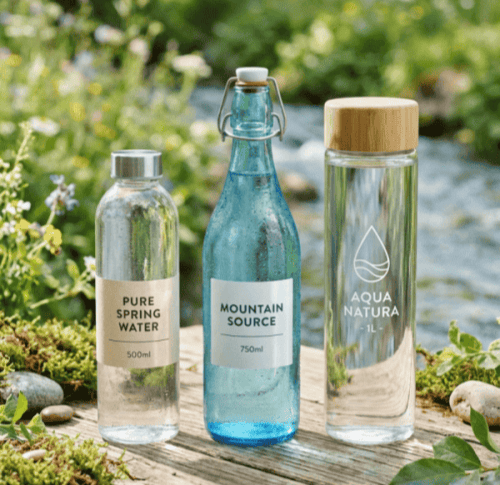
Glass Bottle vs Plastic vs Stainless Steel (Quick Material Comparison)
As a buyer, you have to balance quality against logistics and cost. Here is a realistic look at how the glass water bottle compares to its main competitors: plastic and stainless steel.
Glass vs. Plastic
Plastic wins on weight and initial unit cost. That’s undeniable. But it loses value.
Shelf Perception: A plastic bottle says “commodity.” A glass bottle says “premium.” You can sell the same volume of water for 2x to 5x the price just by changing the material.
The “Premium” Gap: Look at brands like Voss or Antipodes. Their entire brand identity is built on the weight and clarity of glass. Even the Perrier water glass bottle is an icon because of its shape and material. You cannot build that level of brand equity with plastic.
Glass vs. Stainless Steel
Stainless steel is great for rugged, outdoor reusable bottles, but it has flaws for water brands.
Metallic Taste: Some drinkers, especially those with sensitive palates, can taste metal when drinking from steel, especially if the water is slightly acidic.
Visibility: You can’t see the water. Humans are visual creatures. We want to see the clarity of the purified water in a glass bottle. A clear or lightly tinted glass bottle showcases the product’s purity in a way metal never can.
Summary Table
| Feature | Glass Bottle | Plastic (PET) | Stainless Steel |
|---|---|---|---|
| Taste Purity | 100% Neutral | Prone to leaching | Risk of metallic taste |
| Gas Barrier | Excellent (Holds carbonation best) | Good, but loses gas over time | Good |
| Consumer Perception | High Value / Luxury | Low Value / Cheap | Utilitarian / Outdoor |
| Recyclability | Infinite (Bottle-to-Bottle) | Limited (Down-cycling) | High |
| Weight | Heavy (Higher shipping cost) | Light | Medium |
Is Glass Safe for Drinking Water? (What Consumers Care About)
Glass is a Stable, Non-Reactive Packaging Material
In the food and beverage industry, glass is the only widely used packaging material that is designated “GRAS” (Generally Recognized As Safe) by the FDA without requiring chemical additives. It doesn’t need a liner (like aluminum cans do) to prevent corrosion.
Microplastics & Chemical-Leaching Concerns
This is a hot topic right now. Studies have found microplastic particles in bottled water sold in plastic containers. Consumers are worried, and rightly so. Glass offers a simple solution. It’s solid and non-porous. Nothing sheds off into the water. For health-conscious markets—think wellness brands, baby water, premium hospitality—glass is becoming the expected standard.
By offering bottled water in glass bottles, you provide a solution to their anxiety. Glass creates a physical barrier that doesn’t shed microplastics. For brands targeting the baby food market or the high-end wellness market, this safety factor is your strongest selling point.
When Glass May Not Be Ideal
We have to be honest—glass breaks. It’s heavy. It’s not the right choice for a marathon runner or a toddler’s backpack. But for the dinner table, the office desk, the boardroom, and the restaurant, it is the superior choice.
How to Choose the Right Glass Water Bottle:10 steps help you choose the right glass water bottle
This section is for the procurement teams. Sourcing the right bottle is technical. You need to consider your filling line, your cap supplier, and your logistics. At Smilebottles, we guide our clients through this 10-step selection checklist.
Step 1 — Choose the Right Glass Type (Borosilicate vs Soda-Lime)
Not all glass is the same.
Soda-Lime Glass: This is what 95% of water bottles are made of. It’s clear, cost-effective, and fully recyclable. If you are selling mineral water glass bottle products or sparkling water in glass bottles, this is what you need.
Borosilicate Glass: This glass has boron added to the mix. It is incredibly resistant to thermal shock (rapid temperature changes). It’s more expensive. You typically only need this if you are selling high-end reusable bottles meant for both boiling hot tea and ice-cold water.
Pro Tip: If you are cold-filling water, stick to soda-lime glass. It keeps your unit costs down without sacrificing quality.
Step 2 — Decide Your Capacity Based on Your Routine
The volume you choose dictates your market placement.
Water glass bottle 500ml: This is your standard “on-the-go” size. It competes directly with the standard plastic bottle in convenience stores.
Water glass bottle 1 liter: This is the table water size. It’s designed for sharing. If you are selling to restaurants, this is the SKU (Stock Keeping Unit) they want.
330ml glass water bottle: Classic single-serve size for Glass sparkling water meant to accompany meals or coffee.
250ml glass bottle or smaller water glass bottle: Often used for premium events, airlines, or mini-bar service.
Step 3 — Pick the Best Bottle Shape for Grip and Storage
Shape affects logistics.
Round water glass bottles/Cylindrical glass bottles: The easiest to label. Most filling lines handle round bottles faster than any other shape.
Square water glass bottle: great for shipping efficiency (less air space in the box), but labeling can be tricky.
The drop-shaped glass bottle: Similar to the waterdrop glass bottle style. It’s ergonomic and trendy, but make sure it has a wide enough base so it doesn’t tip over on your conveyor belt.
Step 4 — Choose the Mouth Type: Narrow vs. Wide
Narrow Mouth Water Glass Bottles(28mm standard): Best for drinking directly from the bottle. It minimizes spillage. If you are selling Glass sparkling water, a narrow neck is better because it reduces the surface area for gas to escape, keeping the water fizzy longer.
Wide Mouth Glass Bottle(38mm or more): Better for reusable bottles where the user might want to put in ice cubes or fruit.
Step 5 — Select a Lid/Closure That Protects Taste
A glass water bottle is only as good as its seal.
Screw Cap (ROPP): Aluminum Roll-On Pilfer-Proof caps are the standard for premium waters. They provide a hermetic seal.
Crown Cap: Used for beer, but also for many heritage sparkling waters. It holds the highest pressure.
Swing Top: Great for a retro glass jar drinking look. It implies “artisanal” and “small batch.”
Liner Quality: Ensure your cap liner is PVC-free. If the liner smells like plastic, the water will smell like plastic, defeating the purpose of the glass bottle.
Step 6 — Add Protection: Silicone Sleeve, Carry Strap, Base Pad
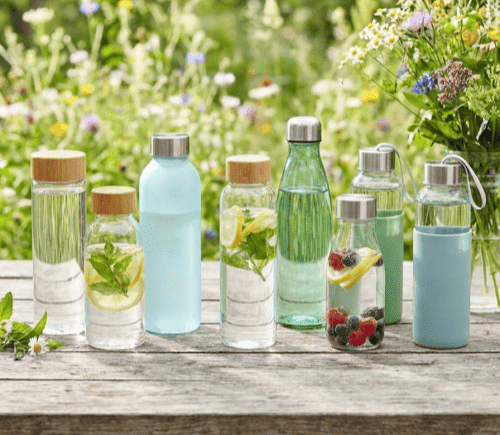
Silicone sleeves: Act as shock absorbers. Also, provide grip and reduce condensation. Very popular for reusable bottles. You can customize the sleeve color to match your brand.
Thicker base: Bottles with reinforced bottoms survive drops better.
Protective coating: Some manufacturers offer a scratch-resistant coating that reduces breakage during handling and shipping.
Step 7 — Check Temperature Use: Cold Water, Room Temp, or Hot?
Most water bottling lines are cold-fill. However, if you are doing a hot-fill process (for pasteurization of flavored waters), you need to tell your glass manufacturer. We can adjust the tempering process to ensure the glass withstands the heat shock.
Step 8 — Verify Quality Standards & Manufacturing Checks
As a B2B buyer, you need to trust your supplier’s Quality Control (QC).
At Smilebottles, we look for:
Sealing Surface: The top rim must be perfectly flat. If it’s uneven, the gas will leak out, and your sparkling water in glass bottles will go flat.
Wall Thickness: We check for uniform distribution. Thin spots are weak spots.
Thermal Shock: We test samples to ensure they don’t crack under normal temperature shifts.
Step 9 — Evaluate Sustainability: Reuse + Recyclability
Glass is heavier to ship, which uses more fuel. To potentially offset this, ask your manufacturer about “lightweighting.” Technology now allows us to make thinner, lighter bottles that are just as strong. This reduces your shipping carbon footprint, allowing you to market an eco-friendly glass water bottle more honestly.
Step 10 — Consider Aesthetics & Lifestyle Fit
Color is your silent salesman.
Water in a blue glass bottle: Suggests freshness, glaciers, and purity. Very popular for still spring waters. Think of the famous Icelandic water glass bottle aesthetic.
Water in a green glass bottle: Classic European mineral water look. Also provides some UV protection for the contents.
Clear glass water bottle: Shows off the purity of the water. Best for purified water in glass bottles brands where clarity is the main selling point.
Decoration options for glass bottles: Screen printing (ACL) directly on the glass looks premium and won’t peel off in an ice bucket. Embossing your logo into the glass adds a tactile quality that stickers can’t match.
Who Should Choose a Glass Water Bottle?
High-End Water Brands
If you’re bottling water from a unique source—glacier, volcanic, artesian—you need packaging that matches the story. A heavy-based spring water glass bottle or a distinctive shape like the iconic Perrier water glass bottle tells the customer this is worth paying more for.
Sparkling Water Manufacturers
Carbonation holds better in glass. Period. If you want your Sparkling water in glass bottles to stay fizzy for a year or more on the shelf, glass is the only reliable choice. Plastic slowly loses gas. Glass doesn’t.
Hotels, Spas, and Restaurants
The hospitality sector is aggressively banning single-use plastics. Hotels are buying customized water glass bottles and 1-liter carafes to fill in-house. It looks elegant on a bedside table and saves them thousands of dollars in waste disposal. Restaurants serving Glass sparkling water at the table project a premium image that justifies higher prices.
Health & Wellness Retailers
Shops that sell yoga mats and supplements are doing great business with reusable glass. The **waterdrop glass bottle** trend has shown that people treat their water bottles as a fashion accessory.
Smilebottles Recommendation
Choosing a manufacturer is a partnership. You don’t just need a bottle; you need a reliable supply chain.
At Smilebottles, we specialize in glass packaging for the beverage industry. Here’s what we offer:
Range of sizes: From a single-serve water glass bottle 500ml to a large-format water glass bottle 1 liter and everything in between.
Glass types: Standard soda-lime for most applications, borosilicate for specialty needs.
Customization: Want a unique shape? We can develop custom molds. Need a specific color like water in a blue glass bottle? We can produce it. Logo printing, embossing, and custom sleeves are all available.
Closures: We supply matching caps—ROPP, crown, swing top, or plastic—so you get a complete solution.
Quality assurance: Every batch is inspected for defects, dimensional accuracy, and food-contact compliance.
Wholesale capability: We serve factories, brands, and distributors with reliable lead times and competitive pricing.
Frequently Asked Questions (FAQ)
**Q1. Does water taste better in glass bottles?
A1.Yes, Glass is non-porous and odorless. It prevents the water from picking up the “plastic” taste of PET bottles or the “tinny” taste of metal cans.
**Q2. Is glass safer than plastic for drinking water?
A2.Yes, Glass is chemically inert. It does not leach chemicals like BPA or antimony, even when stored in warm conditions.
**Q3. Is borosilicate glass better for water bottles?
A3.It depends on the use. For hot drinks, yes. But for regular water, standard soda-lime glass is strong enough and much more affordable for mass production.
**Q4. Are glass water bottles heavy?
A4.They are heavier than plastic, yes. However, we offer “lightweight” glass options that reduce the weight by up to 20% while maintaining structural integrity, which helps save on shipping costs.
**Q5. How do you stop a glass bottle lid from smelling?
A5.The smell comes from bacteria trapped in the moisture under the gasket. Regular cleaning and letting the bottle air-dry with the cap off will prevent this.
**Q6. Can I put hot water in a glass bottle?
A6.If it is a standard mineral water glass bottle, avoid boiling water as it may crack. If you need to fill with hot liquids, ask us about our heat-resistant borosilicate options.
**Q7. Do glass bottles break easily?
A7.Glass is brittle by nature, but modern bottle designs use thicker bases and optimal geometry to make them surprisingly tough. Adding a protective sleeve or coating further increases durability.
**Q8. What size glass bottle is best for daily use?
A8.For personal use, the water glass bottle 500ml is the most popular. For table service or sharing, a water glass bottle 1 liter is the standard.
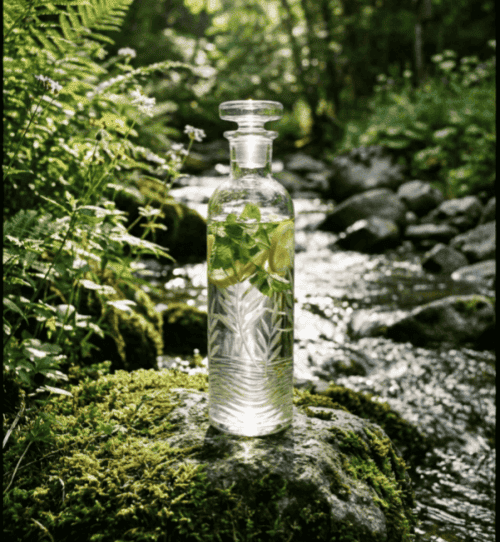
Conclusion
The shift toward glass packaging is not a passing trend. It’s driven by real consumer concerns about taste, health, and sustainability. Whether you’re bottling premium spring water glass bottle products, launching a new flavored carbonated water in glass bottle line, or sourcing reusable bottles for retail, glass delivers benefits that plastic simply cannot match. For brands, the glass water bottle is an opportunity to elevate your product. It allows you to charge a premium price and appeal to eco-conscious, health-focused consumers. For retailers and wholesalers, it is a category that offers higher margins and better customer loyalty. Don’t let your premium water lose its value by putting it in cheap packaging. Choose glass for taste. Choose glass for safety. Choose glass for your brand.


