



Table of Contents
ToggleThe champagne bottles are not just containers. It is a piece of engineering designed to hold pressure, protect the wine from light, and look good enough to justify a premium price tag. If you run a winery, manage a beverage brand, or buy glass packaging in bulk, you have probably asked yourself: Which bottle size should I choose? What are the names of the champagne bottles for the big display formats? How do I balance cost, safety, and shelf appeal?
At Smilebottles, we manufacture glass bottles for wine producers around the world. We talk to buyers every week who are trying to figure out the best packaging for their product. This guide is built from those real conversations. We will walk you through every champagne bottle size, explain the engineering behind the glass, and help you understand how to pick the right bottle for your specific needs.
Why Champagne Bottles Are Different from Regular Wine Bottles
If you are new to sparkling wine production, you might wonder why you cannot just use a standard Bordeaux bottle. The answer comes down to one thing: pressure.
Sparkling wine is carbonated. The CO2 dissolved in the liquid creates internal pressure that can reach 5 to 6 atmospheres—around 90 PSI. That is roughly the same pressure inside a bus tire. A regular wine bottle would crack or explode under that force.
To handle this, champagne bottles are built differently:
Thicker Glass Walls: The glass is significantly heavier. A standard 750ml champagne bottle might weigh 400 grams. A standard champagne bottle size often weighs 800 to 900 grams—sometimes more for premium brands.
The Deep Punt: That indentation at the bottom of the bottle is called a punt. In sparkling wine bottles, the punt is deep. This is not just for looks. It adds structural strength to the base, which is the weakest point under pressure.
Sloping Shoulders: The classic champagne bottle shape has gentle, sloping shoulders rather than the sharp square shoulders of a Bordeaux bottle. This curved shape distributes pressure more evenly across the glass surface.
Precision Neck Finish: The opening of the bottle must be perfectly formed to accept a cork and wire cage (called a muselet). If the neck finish is uneven, the cork will not seal properly.
When sourcing champagne bottle brands for your own line, you are looking for structural integrity first, and aesthetics second.
Different Champagne Bottle Sizes And Names
Small Champagne Bottle Sizes
Small-format champagne bottles are growing fast in the market. They are perfect for sampling, single servings, and gift packaging.
Mini Champagne Bottle (187.5 ml) – The Split
The smallest bottle of champagne commonly available is the 187.5ml size, often called a Piccolo or Split. This is exactly one-quarter of a standard bottle.
Who buys these? Use Case: Airlines for in-flight service, Hotels for minibars, Event planners for wedding favors, Corporate buyers for branded gifts
If you are looking for mini bottles of champagne for bulk orders, this is the size to focus on. These tiny bottles of champagne are also popular for promotional sampling. You can give potential customers a taste of your product without the cost of a full bottle.
We also see creative uses. Some confectionery companies buy this champagne little bottle format for a champagne bottle of candy product—filling the glass with chocolates or sweets for parties.
Production Note: These mini bottles of champagne can be tricky on filling lines because they are small. They tip over easily. You may need bottle “pucks” (plastic holders) to keep them stable on the conveyor.
Half Champagne Bottle / Demi Bottle (375 ml)
The half-bottle of champagne holds 375 ml—exactly half of the standard size.
Servings: About 2 to 3 glasses.
Who buys these? Use Case: Restaurants offering a “by the bottle” option for couples, Retailers targeting customers who want variety without committing to a full bottle
Aging Consideration: Because the volume is smaller, the wine ages faster in a half bottle. There is more oxygen relative to the amount of wine. This is not necessarily bad, but it is something to consider if you are selling a vintage product meant for cellaring.
Medium Champagne Bottle (500 ml)
The 500ml size is less common but growing in popularity. It sits between the half bottle and the standard size.
Who buys these? Use Case: Niche brands looking for a different shelf presence, Promotional markets
This size is not as easy to source because fewer manufacturers produce it. If you want a 500ml bottle, you may need a custom mold order.
Standard & Party-Size Champagne Bottles
This is where the bulk of the market is. If you are producing sparkling wine commercially, most of your volume will be in these sizes.
Standard Size Champagne Bottle (750 ml)
The standard champagne bottle size is 750 ml. This is the global benchmark.
Why It Is the Standard: This size offers the best balance of production efficiency, shipping cost, and retail price point. It is what consumers expect. When someone pictures a champagne bottle, this is the shape and size in their head.
Volume and Servings:
– How many ml are in a bottle of champagne? 750 ml.
– How many oz/ounces in a champagne bottle? Approximately 25.4 ounces.
– How many glasses of champagne are in a 750ml bottle? If you pour a standard 4-ounce flute, you get about 6 glasses per bottle of champagne.
Technical Dimensions: Buyers often ask about the physical footprint for shipping and storage. The typical champagne bottle dimensions in mm are about 85-90mm in diameter and 300-310mm in height. In centimeters, the champagne bottle dimensions are roughly 8.5-9cm wide by 30-31cm tall. The exact dimensions of a champagne bottle vary slightly depending on the mold style.
Magnum Champagne Bottle (1.5 Liters)
The magnum of champagne holds 1.5 liters—equivalent to two standard bottles. In the wine industry, the champagne magnum size is considered the gold standard for aging.
The Science: The air space in the neck of the bottle (called ullage) is roughly the same in a magnum as in a standard bottle. But there is twice as much wine. This means less oxygen exposure per milliliter of liquid. The wine oxidizes more slowly and develops more complex flavors over time.
If you are producing a premium vintage meant to be cellared for years, offering a magnum size champagne is a smart move. It signals quality.
Key Facts:
Bottle is a magnum of champagne: 1.5L
Magnum of champagne, how many glasses? About 12 glasses.
Champagne sizes magnum: 1.5L / 2 standard bottles
Production Note: Because a magnum is larger and heavier, you need thicker glass. The champagne magnum sizes require reinforced cartons for shipping. A filled magnum weighs around 2 kg. Dropped boxes will break bottles.
Jeroboam Champagne Bottle (3 Liters)
The Jeroboam is sometimes called a “Double Magnum.”
Volume:3 liters.
Equivalent standard bottles.
Servings champagne bottle is how many glasses (Jeroboam)? About 24 glasses.
This is a big bottle of champagne. You see these at podium celebrations, yacht christenings, and large weddings. They make a statement.
Handling: A 3L bottle is heavy. When full, it weighs over 4 kg. You need sturdy hands to pour it. Some buyers purchase pouring cradles for display.
Large & Monumental Champagne Bottle Sizes (Biblical Names)
When you get into the really massive formats, the industry uses names from Biblical kings and figures. These names of champagne bottles have been used for centuries. They add a sense of history and prestige.
These are rare. Manufacturing the biggest champagne bottle formats requires specialized molds and often hand-finishing. They are used for marketing events, luxury releases, and display purposes.
Here is the full list:
Rehoboam (4.5 Liters)
– Equivalent to 6 standard bottles.
– A large champagne bottle size for events.that bridges the gap between a party bottle and a display piece.
Methuselah (6 Liters)
– Equivalent to 8 standard bottles.
– Excellent aging potential due to low oxygen-to-wine ratio.
Salmanazar (9 Liters)
– Equivalent to 12 standard bottles (a full case in one bottle).
– The champagne bottle shape must be perfect because the pressure on this much glass is enormous.
Balthazar (12 Liters)
– Equivalent to 16 standard bottles.
– These are large bottle wine formats often seen at luxury events.
Nebuchadnezzar (15 Liters)
– Equivalent to 20 standard bottles.
– One of the largest champagne bottle sizes produced by machine.
Solomon (18 Liters)
– Equivalent to 24 standard bottles.
– Very rare. High production cost.
Sovereign (25 Liters)
– Equivalent to about 33 standard bottles.
– Mostly ceremonial.
Primat / Goliath (27 Liters)
– Equivalent to 36 standard bottles.
– Used by a few luxury champagne houses for special releases.
Melchizedek / Midas (30 Liters)
– Equivalent to 40 standard bottles.
– This is currently considered the biggest champagne bottle in standard production, as this weigh well over 50 kg when full.
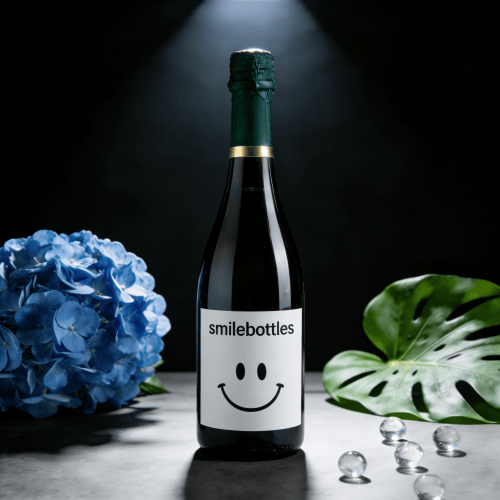
Champagne Bottle Sizes And Names Chart
Here is a quick reference table for your team.
Bottle Name | Volume | Equivalent Standard Bottles | Champagne bottle oz | Glasses per bottle champagne |
Split / Piccolo | 187.5 ml | 0.25 | ~6.3 oz | 1.5 |
Half / Demi | 375 ml | 0.5 | ~12.7 oz | 3 |
Standard | 750 ml | 1 | ~25.4 oz | 6 |
Magnum | 1.5 L | 2 | ~50.7 oz | 12 |
Jeroboam | 3.0 L | 4 | ~101 oz | 24 |
Rehoboam | 4.5 L | 6 | ~152 oz | 36 |
Methuselah | 6.0 L | 8 | ~203 oz | 48 |
Salmanazar | 9.0 L | 12 | ~304 oz | 72 |
Balthazar | 12.0 L | 16 | ~406 oz | 96 |
Nebuchadnezzar | 15.0 L | 20 | ~507 oz | 120 |
Melchizedek | 30.0 L | 40 | ~1014 oz | 240 |
How to Choose the Right Glass Champagne Bottle
So you know the sizes. Now, how do you pick the right one for your product? At Smilebottles, we walk our clients through a few key questions.
What Is Your Market?
Mass market/supermarket: Standard champagne bottle 750ml is the way to go. It is what consumers expect.
Premium/luxury: Consider offering a magnum. It signals quality and aging potential.
Hospitality/sampling: Stock up on mini bottles of champagne bulk(187.5ml splits).
Events/marketing: The large Biblical sizes create buzz and photo opportunities.
What Is Your Brand Identity?
At Smilebottles, we know that sometimes “standard” isn’t enough. The market is crowded. To stand out, many of our clients are moving toward customization.
The bottle color and shape send a message before the customer even reads your label.
Classic Green champagne bottles: Traditional, trusted, French heritage vibe.
Flint (Clear)champagne bottles: Modern, fresh, often used for Rosé. Be careful—clear glass offers less UV protection.
Black Champagne Bottle: A black champagne bottle looks ultra-premium. It also provides excellent light protection. We are seeing more and more champagne bottle brands requesting this finish.
Custom Shapes: While the basic champagne bottle shape is dictated by pressure physics, you can customize the shoulders, the punt design, and add embossed logos.
What About Glass Weight?
There is a perception among consumers that heavy bottles mean better wine. But heavy bottles also cost more to ship and have a larger carbon footprint.
We offer options that maintain the pressure rating (safe for 6+ atmospheres) while using optimized glass distribution. You get a bottle that feels solid but is not wastefully heavy.
Sustainability
This is the biggest topic in the glass industry right now. We are working hard to reduce the weight of our bottles without compromising safety. A lighter bottle means less fuel used in shipping, which lowers your carbon footprint. When you buy champagne bottles from us, ask about our “Eco-Glass” options.
Closure Compatibility
Before you order bottles, confirm the neck finish matches your corks and cages. The internal diameter of the neck (the bore) must be precise. A mismatch means leaking closures and flat wine.
Customization Options for Your Brand
Many champagne bottles brands want something unique to stand out on the shelf. Here is what we can do at Smilebottles:
Embossing
We can create molds with your logo or crest embossed directly into the glass—on the shoulder, the base, or even the punt. This adds a tactile quality that labels cannot match.
Custom Colors
Beyond the standard green, we can produce bottles in black, amber, or even custom tints for large orders.
Unique Shapes
While you cannot change the fundamental physics of the champagne bottle shape, you can customize the profile. Some brands go for a taller, slimmer look. Others prefer a wider, heavier base.
FAQ About Champagne Bottles
Here are questions we hear regularly from buyers.
Q1: Why are champagne bottles heavier than regular wine bottles?
A1: They need thicker glass to handle the internal pressure from carbonation. A sparkling wine bottle might be double the weight of a still wine bottle in the same volume.
Q2: What is the most popular champagne bottle size?
A2: The standard size of champagne bottle (750ml) accounts for the vast majority of sales. For premium releases, the magnum of champagne (1.5L) is a popular choice.
Q3: Do larger bottles age wine better?
A3:Yes. Larger bottles like the magnum have a lower oxygen-to-wine ratio, which slows oxidation and allows the wine to develop more complex flavors over time.
Q4: How do I ship large bottles safely?
A4: Shipping a magnum of champagne or larger requires reinforced dividers. A large champagne bottle carton needs to be double-walled. The weight of the liquid combined with the heavy glass creates a lot of inertia during transit.
Q5: What is the champagne bottle height of a standard bottle?
A5:About 30cm (roughly 12 inches). A magnum of champagne is taller—around 37cm.
Q6: Can I order champagne bottles with my logo on them?
A6:Yes. We can emboss logos directly into the glass or produce custom mold shapes. Minimum order quantities apply.
Q7:What is a black champagne bottle used for?
A7:Black glass offers maximum UV protection and looks very premium. It is popular with luxury brands and limited-edition releases.
Q8: Are all champagne bottle size formats safe under pressure?
A8:As long as the glass is manufactured correctly, yes. We test all our bottles to handle at least 6 atmospheres of pressure. The larger formats require thicker walls and more careful handling, but they are safe when produced to spec.
Q9: Can I get mini bottles for samples?
A9: Yes. Mini bottles of champagne (187ml) are the standard for samples. However, they are harder to fill and cap than standard bottles because they can be unstable on the conveyor belt. You might need “pucks” (holders) for your filling line.
Conclusion
Choosing the right champagne bottles is one of the most important packaging decisions you will make. It affects your production line, your shipping costs, your shelf presence, and the perception of quality before your customer even tastes the wine. Whether you need a standard champagne bottle size for everyday sales, a magnum size champagne for your premium vintage, or mini bottles champagne for promotional sampling, the glass must be right. It needs to look good, feel good, and most importantly, keep the wine safe under pressure.
At Smilebottles, we have been manufacturing glass champagne bottles for wineries and beverage brands for years. We understand the balance between aesthetics, engineering, and cost. We can help you choose the right bottle, customize it for your brand, and ship it reliably to your facility. If you are ready to talk about your packaging needs, get in touch with our team. We are happy to send samples, discuss custom molds, or provide quotes for bulk orders.


