
Table of Contents
ToggleAuthor: SmileBottles Editorial Team
Estimated Reading Time: About 18 Minutes
That amber glow on the whiskey shelf. The crystal clarity of the vodka section. The deep green of traditional cognacs. These aren’t random choices. Every successful spirits brand has thought carefully about their bottle color, and there’s a good reason for that. If you’re reading this, you’re probably in the business of making or selling spirits. Maybe you’re launching a new brand. Maybe you’re looking to refresh your packaging. Or maybe you’re a retailer trying to understand why certain bottles sell better than others.
Whatever brought you here, this guide will walk you through everything you need to know about liquor bottle colors—from the science of light protection to the psychology of consumer perception, and all the practical manufacturing details in between. At Smilebottles, we’ve been making glass bottles for spirits brands for years. We’ve seen what works, what doesn’t, and what questions come up again and again. Consider this guide our way of sharing that knowledge with you.
Why Bottle Color Actually Matters
Let’s start with the basics. Why should you care about the color of your liquor bottle?
There are two main reasons: protection and perception.
Protection
Alcohol isn’t as indestructible as people think. Sure, it won’t spoil like milk, but it can degrade. Light—especially ultraviolet light—is the enemy. When UV rays hit certain compounds in spirits, they trigger chemical reactions that can change the flavor, aroma, and even the color of the liquid.
This is especially true for aged spirits like whiskey, brandy, and dark rum. These drinks get their character from years of sitting in barrels, absorbing complex flavors from the wood. Expose them to too much light, and you start undoing that work.
Colored alcohol bottles act as a filter. They block some or all of the harmful wavelengths, keeping your product stable on the shelf.
Perception
Most buying decisions happen in seconds. A customer glances at a shelf, and something catches their eye. The shape of the bottle matters. The label matters. And the color of the glass matters a lot.
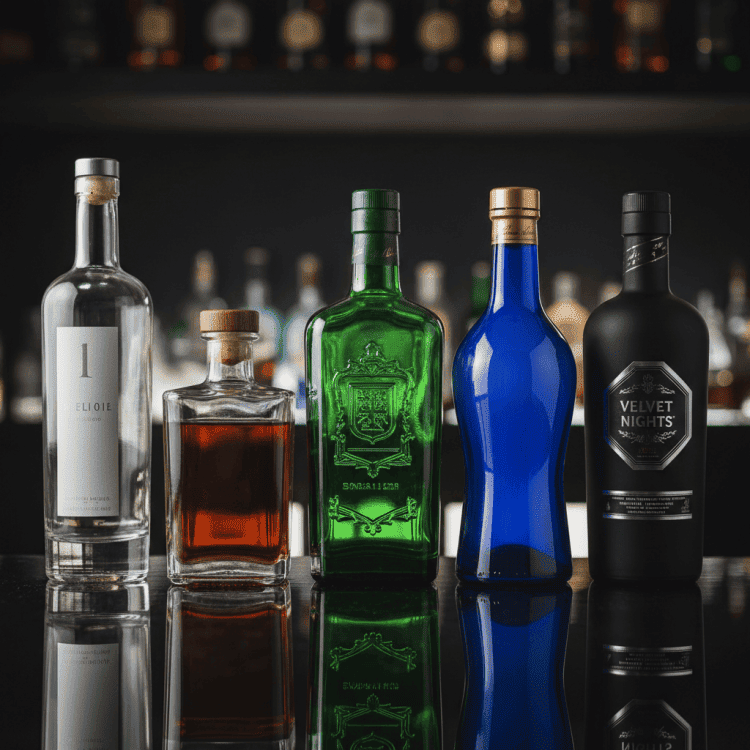
Green glass liquor bottles suggest tradition and heritage. Clear glass liquor bottles suggest purity and modernity. Frosted glass liquor bottles suggest premium quality and sophistication.
Get the color right, and you’re speaking directly to your target customer before they even pick up the bottle.
The Science Behind Bottle Color
Let’s get a bit technical. Understanding liquor bottle colors color function will help you make smarter decisions.
1 Light and Oxidation
When light hits a liquid, it transfers energy. In spirits, this energy can break down organic compounds—the esters, aldehydes, and tannins that give your drink its unique character.
The result? A whiskey that tastes flat. A gin that loses its botanical punch. A brandy that looks faded and tired.
This process is called photo-oxidation, and it’s the main reason why bottle colors matter from a technical standpoint.
2 Different Colors Filter Light
Not all glass offers the same protection.
Clear (Flint) Glass: Offers almost no UV protection. Light passes straight through. This is fine for spirits that are chemically stable and meant to be consumed quickly, but risky for anything that needs to sit on a shelf for months or years.
Green Glass: Blocks a moderate amount of UV light. This is why green cognac bottle designs have been around for centuries—they offer a balance between visibility and protection.
Amber (Brown) Glass: The gold standard for light protection. Amber glass blocks nearly all UV radiation, which is why it’s the go-to choice for beer and many aged spirits.
Blue and Black Glass: Blue offers some protection but is mainly chosen for aesthetics. Black color liquor bottles block almost all light but are harder to manufacture and inspect.
3What Color Is Alcohol, Really?
Here’s something that confuses a lot of people: what color is alcohol itself?
Pure ethanol is completely clear. It has no color at all. The golden hue of whiskey comes from the barrel. The colour of brandy comes from aging and sometimes added caramel coloring. The color of vodka is… nothing. It’s water-white.
So when you choose a bottle color, you’re not matching the liquid—you’re framing it. A clear bottle shows off a clear spirit. An amber bottle makes a pale whiskey look richer. A green bottle adds a sense of history and craft.
How Colored Glass Bottles Are Made
If you’re going to order colored liquor bottles in bulk, it helps to understand how they’re manufactured. This knowledge will save you money and help you avoid common mistakes.
1 The Basics of Glass Manufacturing
Glass is made from three main ingredients: silica sand, soda ash, and limestone. These are melted together in a furnace at around 1500°C until they form a molten liquid. This liquid is then shaped into bottles using molds.
The process sounds simple, but the details matter. The quality of the raw materials, the temperature control, and the cooling process—all of these affect the final product.
2 How We Add Color
There are two main ways to create coloured alcohol bottles:
Tank Coloring: We add metal oxides directly to the molten glass in the main furnace. Iron and chromium create green. Iron and sulfur create amber. Cobalt creates blue. This method produces consistent color throughout the glass, but it requires large production runs because you can’t easily switch colors mid-batch.
Feeder Coloring: For smaller runs or custom colors, we add concentrated color frit (small colored glass beads) to the glass stream just before it enters the mold. This allows more flexibility but requires careful quality control.
3 Special Finishes
Sometimes the color you want isn’t a glass color at all.
Frosted glass liquor bottles are created by acid etching or sandblasting the surface of clear glass. This creates a matte, translucent finish that feels premium to the touch.
Spray Coating: We can apply organic paints to clear bottles to create virtually any color—including matte black, metallic finishes, or gradients. This is how most black-colored liquor bottles are actually made, since true black glass is rare and expensive.
Red, white, and blue bottles for special editions or patriotic themes are typically created using masking and spray techniques.
4 Quality Control
Bottle coloring consistency is critical. If you order 10,000 amber bottles, they all need to look the same. At Smilebottles, we use spectrophotometers to measure color density and ensure batch-to-batch consistency.
Popular Bottle Colors and When to Use Them
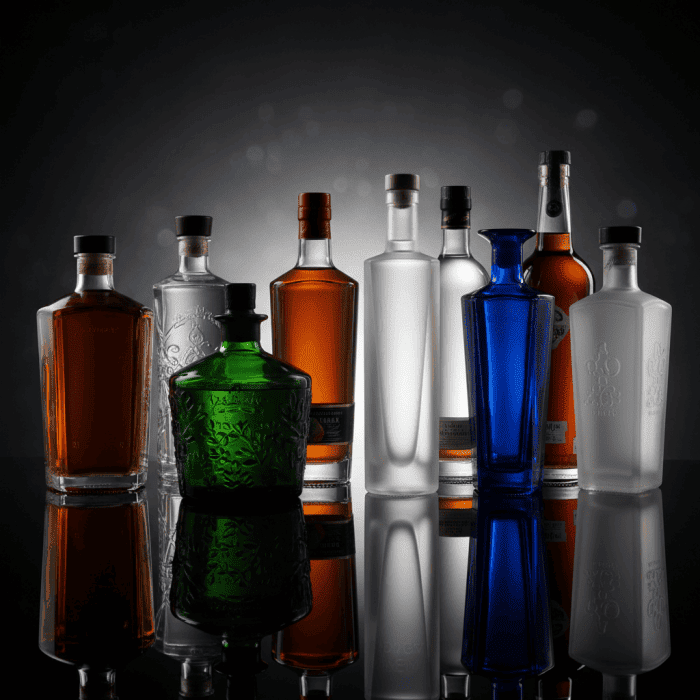
Now let’s look at the most common bottle colors and their typical applications.
1 Clear (Flint) Glass
Best for: Vodka, gin, white rum, blanco tequila, flavored spirits
Clear liquor bottles are the industry standard for white spirits. They communicate purity, cleanliness, and transparency. When someone asks what color are alcohol bottles for vodka, the answer is almost always clear.
The downside? No UV protection. If your product will sit in a sunny store window, you might have problems.
Pro tip: We offer “super flint” glass that’s extra clear and heavy—perfect for premium vodka brands that want that crystal look.
2 Green Glass
Best for: Scotch, Irish whiskey, gin, brandy, herbal liqueurs
Green glass liquor bottles have a long history in the spirits industry. They suggest tradition, craftsmanship, and European heritage. Many iconic green liquor bottle brands have built their entire identity around this color.
There are actually several shades of green available:
Antique green (dark, almost olive)
Champagne green (lighter, more yellow)
Dead leaf green (brownish-green, very traditional)
Emerald green (bright, modern)
A liquor bottle green finish can help you stand out in a sea of clear bottles on the gin shelf.
3 Amber (Brown) Glass
Best for: Bourbon, rye whiskey, dark rum, añejo tequila, brandy
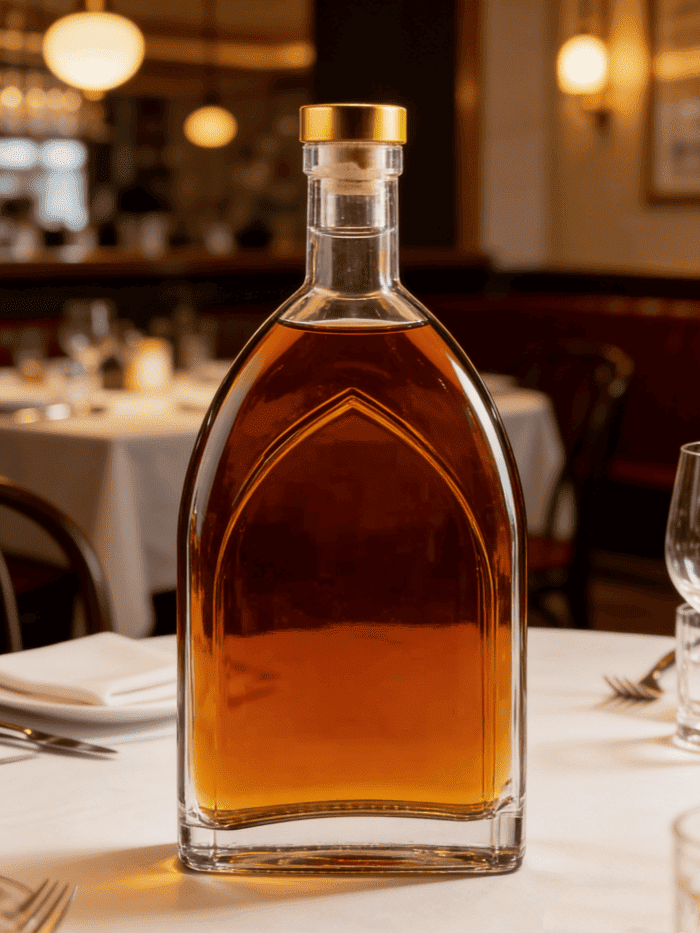
Amber is the workhorse of the spirits industry. It offers excellent UV protection and communicates age, warmth, and complexity. The colour of brandy looks natural and rich through amber glass.
If you’re bottling anything that’s been aged in wood, amber is usually the safe choice.
4 Blue Glass
Best for: Premium vodka, modern gin, flavored spirits
Blue is eye-catching and relatively rare on the spirits shelf. It suggests coolness, modernity, and innovation. Some brands use it to stand out; others use it to reinforce a “cold” or “pure” brand message.
5 Black Glass
Best for: Ultra-premium spirits, limited editions, mystery/luxury positioning
Black color liquor bottles are the ultimate statement of exclusivity. You can’t see the liquid inside, which creates intrigue. But they’re expensive to produce and difficult to inspect for defects.
Most “black” bottles you see are actually spray-coated clear glass, not true black glass.
6 Frosted Glass
Best for: Premium vodka, gin, limoncello, cream liqueurs
Frosted glass liquor bottles have a soft, matte appearance that feels expensive. They diffuse light beautifully and hide fill-level variations. Grey Goose popularized this look for vodka, and it’s now associated with premium positioning.
7 Regional Preferences
It’s worth noting that preferences vary by market. Liquor bottle colors Australia trends, for example, show a growing interest in unique colors for craft spirits—seafoam greens, soft blues, and custom tints that reflect local botanicals and landscapes.
How Color Influences Consumer Perception
Let’s talk psychology. When customers see colorful alcohol bottles on a shelf, their brains make instant judgments.
1 Color Associations
Different colors trigger different associations:
Clear: Purity, cleanliness, lightness, modernity
Green: Nature, tradition, herbal, European
Amber: Warmth, age, complexity, premium
Blue: Cool, fresh, innovative, modern
Black: Luxury, mystery, exclusivity, power
Frosted: Premium, smooth, sophisticated
These associations aren’t random—they’re built up over decades of marketing and cultural conditioning. You can work with them or against them, but you need to be aware of them.
2 Perceived Value
Studies consistently show that darker, heavier bottles are perceived as more valuable. A whiskey in a thick amber bottle feels more premium than the same whiskey in a thin clear bottle.
This is why colored liquor bottles often command higher prices. The packaging signals quality before the customer even tastes the product.
3 Standing Out vs. Fitting In
Here’s the tricky part: you want to stand out, but you also want to fit in.
If every gin on the shelf is in a clear bottle and you show up in bright pink, you’ll definitely get noticed. But will customers understand what you’re selling? Will they trust you?
The best approach is usually to work within category conventions while finding a unique angle. Maybe you use clear glass, but with an unusual shape. Maybe you use liquor bottle green, but in a shade no one else is using.
4 Colorful Liquor Bottles vs. Colorful Liquids
One more thing to consider: colorful alcoholic drinks in bottles are different from colorful liquor bottles.
If your liquid is naturally colorful—like a bright red aperitif or a blue curaçao—you probably want clear glass to show it off. The color of the liquid becomes your selling point.
But if your liquid is clear or pale, colorful alcohol bottles can add visual interest that the liquid itself doesn’t provide.
How to Choose the Right Bottle Color
Okay, enough theory. Let’s get practical. Here’s how to actually choose a bottle color for your product.
1 Start with Your Spirit Category
Different spirits have different conventions. Here’s a quick reference:
|
Spirit Category |
Recommended Colors |
Notes |
|
Whiskey/Bourbon |
Amber (85%), Green (12%) |
Dark glass dominates; clear is rare |
|
Vodka |
Clear (78%), Blue (15%) |
Purity is key; color of vodka bottles is almost always light |
|
Gin |
Clear (65%), Green (25%) |
Craft brands increasingly use green |
|
Rum (Aged) |
Amber (68%), Green (22%) |
Clear only for white rum |
|
Brandy/Cognac |
Green (60%), Amber (30%) |
Traditional green cognac bottle still dominates |
You don’t have to follow these conventions, but you should know them before you break them.
2 Consider Your Brand Positioning
Mass market: Stick to standard colors (clear, amber, green) to keep costs down
Craft/artisan: Consider unique shades or finishes to stand out
Ultra-premium: Heavy glass, dark colors, or frosted finishes signal luxury
Young/trendy: Bold colors or unusual finishes can attract attention
3 Think About Your Sales Channel
Where will your product be sold?
Retail stores: Lighting varies; test your bottle under fluorescent lights
Bars and restaurants: Bottles are often backlit; consider how light passes through
E-commerce: Photography matters; some colors photograph better than others
4 Factor in Practical Considerations
UV protection: If your product is light-sensitive, prioritize darker glass
Labeling: Dark bottles need front labels; you can’t read through the glass
Inspection: Very dark bottles are harder to check for defects
Cost: Standard colors (clear, amber, green) are cheaper than custom colors
5 Consider Sustainability
Glass bottle alcohol packaging is inherently recyclable, but some colors are easier to recycle than others. Green glass often contains the highest percentage of recycled content because it can absorb mixed-color cullet.
If sustainability is part of your brand message, this might influence your color choice.
6 Budget and MOQ
Custom colors require larger minimum order quantities. If you’re a startup, you might need to start with stock colors and upgrade to custom as you grow.
At Smilebottles, we offer a wide range of stock alcohol bottles in standard colors, plus custom coloring options for larger orders.
Smilebottles: Your Partner for Colored Glass Liquor Bottles
Now that you understand the options, let’s talk about how we can help.
1 Who We Are
Smilebottles is a manufacturer specializing in glass bottle alcohol packaging. We work with distilleries, brand owners, and retailers around the world—from small craft producers to major international brands.
We understand the liquor packaging business inside and out. We know what works in different markets, from the US to Europe to liquor bottle colors Australia preferences.
2 Our Product Range
We stock a full range of liquor bottles in standard colors:
Clear glass liquor bottles(standard and super flint)
Green glass liquor bottles(multiple shades)
Amber glass bottles
Blue glass bottles
Frosted glass liquor bottles
We also offer custom bottle coloring services, including spray coating for virtually any color you can imagine.
3 Customization Services
Need something unique? We can help with:
Custom color matching (provide a Pantone code, we’ll match it)
Frosting and etching
Gradient effects
Metallic finishes
Embossing and debossing
Custom mold design
4 Quality and Consistency
We know that colored alcohol bottles need to be consistent batch after batch. Our quality control processes ensure that every shipment matches your specifications.
5 How to Work with Us
The process is straightforward:
Consultation: Tell us about your product and brand
Samples: We’ll send samples of relevant stock bottles or create custom samples
Quotation: We’ll provide pricing based on your specifications and quantities
Production: Once approved, we manufacture your order
Delivery: We handle logistics to get your bottles where they need to be
Practical Tips for Choosing Your Bottle Color
Before you make a final decision, keep these tips in mind:
1 Match your brand story. If you’re selling a “pure mountain spring” vodka, clear glass makes sense. If you’re selling a “secret family recipe” whiskey, traditional amber or green fits better.
2 Protect your product. Don’t sacrifice quality for looks. If your spirit is light-sensitive, use darker glass.
3 Study the competition. Visit stores and look at the shelf where your product will sit. What colors dominate? How can you stand out while still fitting in?
4 Test under real conditions. Bring samples to actual retail environments. See how they look under store lighting. Take photos for e-commerce.
5 Don’t forget secondary packaging. If your bottle goes in a box, the box provides UV protection. This might free you to use clear glass even for aged spirits.
6 Start simple, then upgrade. If you’re new to the market, start with stock bottles in standard colors. Invest in custom glass once you’ve proven your concept.
FAQ Frequently Asked Questions About Spirit Bottle Colors
Q1:What color are alcohol bottles usually, and why?
A1:Most alcohol bottles are clear (for white spirits) or amber/green (for aged spirits). Clear shows purity; dark colors protect against light damage.
Q2:What color is alcohol itself?
A2:Pure alcohol is completely clear. What colour is alcohol in a finished spirit depends on aging and additives—whiskey gets its color from barrels, for example.
Q3: Why are whiskey bottles usually dark?
A3: Dark bottle colors protect aged spirits from UV light, which can degrade flavor compounds developed during barrel aging.
Q4: Why are vodka bottles usually clear?
A4: The color of vodka is nothing—it’s clear. Clear liquor bottles show off this purity and signal that there’s nothing to hide.
Q5: Are green glass bottles better than clear?
A5: Green glass liquor bottles offer better UV protection than clear, but not as much as amber. They’re a good middle ground for spirits that need some protection but also benefit from visibility.
Q6: Do colored bottles affect taste?
A6: The glass itself doesn’t affect taste. But colored liquor bottles protect against light damage, which can affect taste over time.
Q7: What’s the difference between colored glass and painted bottles?
A7: Colored liquor bottles have color throughout the glass (permanent). Painted or coated bottles have color applied to the surface (can be any color but may scratch).
Q8: Are black bottles more expensive?
A8: Yes. Black color liquor bottles are typically spray-coated, which adds a processing step. True black glass is rare and expensive.
Q9: Is frosted glass recyclable?
A9: Yes. Frosted glass liquor bottles made by acid etching are fully recyclable, just like regular glass.
Q10:How do I choose between clear and colored bottles?
A10: Consider your spirit type, brand positioning, and practical needs (UV protection, labeling, cost). When in doubt, look at what successful competitors are doing.
Conclusion
Choosing the right bottle color is one of the most important decisions you’ll make for your spirits brand. It affects how your product is perceived, how well it’s protected, and ultimately how well it sells. The good news is that there’s no single “right” answer. Clear glass liquor bottles work beautifully for some products. Green glass liquor bottles are perfect for others. Frosted glass liquor bottles, amber, blue, black—each has its place.
What matters is making an informed choice. Understand the science. Understand the psychology. Understand the manufacturing realities. Then choose the color that best serves your product and your brand. At Smilebottles, we’re here to help you navigate these decisions. Whether you need standard stock bottles or fully custom colored liquor bottles, we have the expertise and the production capacity to deliver.