



Table of Contents
ToggleAuthor: SmileBottles Editorial Team
Estimated Reading Time: About 16 Minutes
If you have spent any time managing a winery, overseeing a bottling line, or purchasing inventory for a retail chain, you know that wine bottle size is far more than just a measure of volume. It is a strategic tool. The physical dimensions of your packaging affect everything from your carbon footprint and shipping costs to the way a collector perceives the value of your vintage. As a glass wine bottle manufacturer, we at Smilebottles see the technical and commercial sides of this daily. We know that when you are looking for bulk glass wine bottles, you aren’t just buying containers; you are making a decision that impacts your entire supply chain.
This guide is built to help you navigate the world of wine bottle formats. We will look at why size matters, break down the technical wine bottle dimensions you need for your logistics planning, and help you choose the right glass wine bottles for your specific product lineup.
Why Wine Bottle Size Matters in the Wine Industry
Before you decide on a specific mold or volume, you can first learn about the structure of wine by reading this article, “Anatomy of wine bottle: main parts of wine bottle“. It is helpful to look at how size influences the lifecycle of your product. It isn’t just about how much liquid is inside; it is about how that liquid gets to the consumer and how they feel about it.
Influence on Branding and Consumer Perception
Your choice of wine bottle shapes and sizes tells a story. A standard wine bottle size suggests a reliable, everyday premium product. But if you move toward large wine bottle sizes, like a magnum, you are immediately signaling “celebration” or “investment grade.”
On the other hand, miniature wine bottles or a half-bottle wine size can make a high-end, expensive wine more accessible to a customer who wants a premium experience without the high price tag of a full 750ml. As a brand owner, you can use these different formats to tier your portfolio—standard sizes for your core range and large format wine bottles for your flagship releases.
Impact on Production, Cost, and Packaging
From a manufacturing perspective, different wine bottle types and sizes come with different overheads. Smaller bottles, like the 187ml wine bottle, require more closures, labels, and glass per liter of wine compared to a 750ml wine bottle.
When you change sizes on a bottling line, you deal with “changeover time.” You have to adjust the fill levels, the labeling arms, and the corking pressure. If you are a high-volume producer, choosing too many different wine bottle sizes can actually hurt your production efficiency. However, for a boutique winery, offering a variety of sizes can be the key to hitting different market segments.
Effect on Distribution and Channel Strategy
Where do you plan to sell your wine? If you are targeting airlines or hotels, you need a mini wine bottle size like the 200ml wine bottle or the 250ml wine bottle. If you are selling to high-end steakhouses, they might be looking for magnums to display in their cellars.
Logistics also play a role. The wine bottle shipping packaging you use must be optimized for the specific dimensions of a wine bottle you’ve chosen. A bottle that is just 5mm wider than the industry average might mean you can fit one fewer case on a pallet, which adds up to thousands of dollars in wasted freight costs over a year.
Operational and Sustainability Considerations
Today, many of our clients are asking for “lightweight” glass. The volume of the wine bottle remains the same, but the weight of the glass is reduced. This lowers the carbon footprint and shipping costs. Understanding the relationship between wine bottle capacity and glass weight is essential for any modern sustainability program.
The Industry Standard: Understanding the 750ml Wine Bottle
In our world, the 750ml wine bottle is the sun around which everything else orbits. It is the global benchmark, but do you know why?
How 750ml Became the Global Standard
Historically, bottle sizes have varied significantly. It wasn’t until the 1970s that the 750ml size was standardized to facilitate international trade between Europe and the United States. It was a compromise between the European metric system and the US fifth (1/5 of a gallon). Today, it is the standard wine bottle size recognized by the EU, the US TTB, and the OIV.
Why 750ml is the Reference for the Trade
If you look at any wine bottle size chart, the 750ml is the 1.0x multiplier. It is the basis for how restaurants price their wine by the glass and how retailers manage their shelf space. Most commercial wine racks are designed specifically to hold this size.
Technical Dimensions of a 750ml Wine Bottle
For those of you planning your warehouse or designing labels, you need the exact numbers. While shapes (like Bordeaux vs. Burgundy) change the silhouette, the typical wine bottle dimensions for a 750ml bottle are:
How tall is a standard bottle of wine: Usually between5 and 12 inches (approx. 300mm).
Wine bottle size diameter: About9 to 3.2 inches (75-80mm) at the base.
Wine bottle width at the shoulder: This varies by shape, but typically stays under 3.25 inches.
Wine bottle circumference: Roughly 25 to 10 inches.
When you ask, “How tall is a wine bottle?” or “How tall are wine bottles?” you have to account for the “finish” (the top). A screw-cap bottle might have a slightly different height than a cork-finish bottle. At Smilebottles, we provide a detailed wine bottle size chart for every mold we produce so your wine bottle packaging fits perfectly.
Smaller Wine Bottle Formats: Single-Serve and Specialty Uses
Sometimes, less is more. Small wine bottle sizes are perfect for occasions where a full bottle is too much, or for premium “tasting” sets.
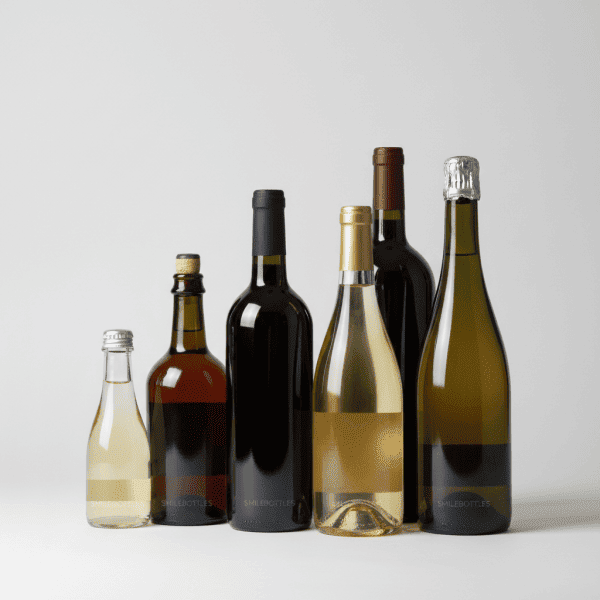
Common Small Wine Bottle Sizes
Split / Piccolo (187ml wine bottle):Holding roughly one glass of wine, this is the standard for airlines and event favors.
The Half Bottle (375ml wine bottle):Exactly half of the standard wine bottle volume. It is a favorite for high-end dessert wines and for solo diners in restaurants.
Single Serve (200ml wine bottleor 250ml wine bottle): These are common for sparkling wines and are becoming popular in the “grab-and-go” retail sector.
500ml wine bottle: A niche size often used for premium sweet wines or “Tokaji” style wines.
Trade Advantages of Small Formats
As a wine bottle producer, we see wineries using these sizes for “trial packs.” If you have a high-end vintage, a customer might hesitate to buy a 750ml, but they will happily buy a 375ml wine bottle. It lowers the barrier to entry. Also, these smaller formats often command a higher price per liter, which can improve your margins.
Technical Considerations
Keep in mind that wine in a miniature wine bottles evolves faster. The ratio of oxygen to wine is higher because the “headspace” is relatively larger compared to the volume. These bottles are meant for quicker consumption, not for 20-year cellaring.
Large Wine Bottle Formats: Magnum and Beyond
If you want to impress or if you are producing a wine meant to age for decades, you look toward large wine bottle sizes.
Wine Bottle Size Names and Traditional Names
The naming of these bottles is a bit of a history lesson. Most are named after biblical kings. Here is a quick wine bottle sizes chart for reference:
Magnum (5 liter wine bottle): Equivalent to two 750ml bottles. This is the “gold standard” for aging.
Double Magnum / Jeroboam:3 liters. (Note: In Champagne, a jeroboam wine bottle size is 3L, but in Bordeaux, it can sometimes be 4.5L).
Rehoboam wine bottle size:5 liters (mostly used for Champagne).
Imperial /Methuselah wine bottle size: 6 liters (8 standard bottles).
Salmanazar: 9 liters (a full 12-bottle case in one bottle).
Balthazar wine bottle size:12 liters.
Nebuchadnezzar wine bottle size:15 liters.
Oenological Benefits: Why Size Matters for Aging
Winemakers love the magnum wine bottle size because of the “ullage” or headspace. A magnum has roughly the same amount of oxygen in the neck as a 750ml bottle, but double the wine volume. This means oxidation happens at half the speed. If you want your wine to taste fresh 20 years from now, the wine magnum bottle size is the best choice.
Marketing and Event Applications
Oversized wine bottles are the ultimate centerpiece. Whether it is a wedding or a corporate launch, a double magnum wine bottle creates a “wow” factor that a standard bottle just can’t match. As a business, you can also release these as “limited editions” to generate hype and prestige for your brand.
Regional and Category Differences in Wine Bottle Sizes
Not all glass is shaped the same. Tradition dictates the wine bottle formats based on where the wine comes from.
Champagne and Sparkling Wine Bottle Sizes
Sparkling wine requires thicker glass to hold the internal pressure. A champagne wine bottle is heavier and has a deeper “punt” (the indentation at the bottom). When you are looking at sparkling wine bottle sizes, you have to ensure the glass is rated for the correct BAR pressure.
Classic Regions: Bordeaux and Burgundy
The bordeaux wine bottle is the one most people recognize—straight sides and high shoulders. It was designed this way to catch sediment while pouring. The burgundy wine bottle has sloping shoulders and a wider base. This affects your storage; Burgundy bottles usually require more space in commercial wine racks because of their wine bottle size diameter.
Glass Colors: Amber and Green
Tradition also dictates color. We produce green glass wine bottles for most reds to protect them from UV light. Amber glass wine bottles are often used for specific regions like the Rhine or for beers and fortified wines because they offer even higher light protection.

Logistics, Storage, and Racking
As a buyer of bulk glass wine bottles, you have to think about the “afterlife” of the bottle. How does it sit in a warehouse? How does it fit on a retail shelf?
Case Configuration and Palletization
A standard case holds 6 or 12 bottles. But when you move to large format wine bottles, you might only fit 1 or 3 bottles per case. You need to calculate the weight of the glass to ensure your pallets don’t exceed weight limits. A tall wine bottle might look elegant, but if it is too tall, it won’t fit on standard grocery store shelves, which usually have a 13-inch clearance.
Wine Bottle Storage and Cellaring
If you are selling to collectors, they care about whether your bottles fit in their racks. A bottle with an unusual wine bottle width or a very tall wine bottle profile can be a nuisance for a collector with standard shelving.
Retail and On-Premise Display
Using different sizes of wine bottles in a retail display draws the eye. A jeroboam wine bottle size sitting in a window is a beacon for customers. But from a logistical standpoint, you must provide your retailers with the dimensions of a wine bottle so they can plan their displays.
How Bottle Size Affects Wine Quality and Aging
This is a point you can use in your own marketing. The wine bottle capacity directly impacts the chemistry of the wine.
Oxygen, Volume, and Aging Speed
We touched on this with magnums, but it applies across the board. The smaller the bottle, the faster the wine “ages” (or oxidizes). If you are producing a fresh, crisp Rosé, a 250ml wine bottle is fine because it will be drunk within months. But for a vintage Port, you wouldn’t want anything smaller than a 750ml.
Temperature and Physical Stability
Larger bottles have more “thermal mass.” This means they are more resistant to small temperature swings. If a delivery truck gets a little too warm for an hour, a big wine bottle sizes like a 3-liter Jeroboam will likely be fine, whereas a miniature wine bottles might suffer heat damage.
Strategic Use of Wine Bottle Sizes for Your Brand
How do you use this information to grow your business? It comes down to portfolio planning.
Aligning Size with Brand Positioning
If you are a high-volume, “everyday” brand, focus on the standard wine bottle size and maybe a 1 liter wine bottle for value. If you are a premium, boutique brand, you should definitely have a magnum wine bottle size in your lineup. It justifies a higher price point and builds your reputation among connoisseurs.
Pricing Strategy
You don’t just double the price for a magnum. You often charge a “prestige premium.” Similarly, for a 375ml wine bottle, you can charge more than half the price of a 750ml because the consumer is paying for the convenience of the smaller format.
Smilebottles: Your Professional Wine Bottle Factory
Choosing the right glass wine bottle manufacturer is the most important step in your packaging journey. You need a partner who understands that a bottle is a technical component of your production line.
Complete Range and Customization
At Smilebottles, we offer everything from the 187ml wine bottle to the large format wine bottles used for special releases. We aren’t just a wine bottle producer; we are a partner in your brand’s growth.
If you need a specific wine size or a unique shape, we can work with you on custom molds. We handle private-label wine bottles for some of the biggest names in the industry, ensuring that their glass is as unique as their wine.
Quality and Consistency
When you order wholesale wine bottles, you need to know that bottle #1 is the same as bottle #10,000. If the wine bottle size diameter varies by even a millimeter, your labeling machine will jam. We maintain strict tolerances on:
Height of wine bottle(ensuring every height of a wine bottle is consistent).
Wine bottle dia(for a smooth fit in cases).
Glass wall thickness (for durability during shipping).
Support for Logistics and Sustainability
We help you with the technical specs. Need the wine bottle dimensions in inches for your US distributor? We have it. Need the average height of a wine bottle to design your retail shippers? We provide it. We also offer lightweight glass options to help you hit your sustainability targets without sacrificing the premium feel of a glass wine bottle.
FAQ Frequently Asked Questions About Wine Bottle Sizes
Q1:What is the standard wine bottle size?
A1:In the modern industry, the standard wine bottle size is 750ml.
Q2:How many liters in a wine bottle?
A2:A standard bottle is 0.75 liters. A magnum is 1.5 liters. A Jeroboam is typically 3 liters.
Q3:How tall is a standard bottle of wine?
A3:The average wine bottle height for a 750ml bottle is approximately 12 inches (300mm).
Q4:What are the dimensions of a 750ml wine bottle?
A4:Typically, it is about 3 inches in diameter and 12 inches tall. The wine bottle circumference is usually around 9.5 inches.
Q5:Why do different wine bottle sizes affect aging?
A5:Because of the ratio of air (oxygen) to wine. Larger bottles have less oxygen relative to the volume of wine, which slows down the aging process.
Q6:Can Smilebottles provide bulk glass wine bottles for small wineries?
A6:Yes, we work with both large-scale commercial brands and boutique wineries to provide high-quality glass wine bottles.
Q7:How do I choose the right wine bottle size for my product?
A7:Consider your target market, sales channel, wine style, and brand positioning. Everyday wines work well in standard wine bottle sizes. Premium wines benefit from half-bottle and magnum options. Collectible wines deserve large format wine bottles. Our team at Smilebottles can help you decide.
Conclusion
Selecting the right wine bottle size is a balance of science, art, and economics. Whether you are sticking with the standard wine bottle volume or exploring the world of oversized wine bottles, your choice will define how your brand is perceived and how your wine matures.
As your glass wine bottle manufacturer, Smilebottles is here to provide the technical expertise and high-quality glass you need to succeed. Don’t just choose a bottle—choose a format that fits your brand’s future. If you are ready to discuss your next project, or if you need a specific wine bottle size chart for your planning, contact our wine bottle factory today. We are ready to help you find the perfect fit.


