
Table of Contents
ToggleAuthor: SmileBottles Editorial Team
Estimated Reading Time: About 17 Minutes
You’ve spent months perfecting your product. Maybe it’s a craft IPA with carefully selected hops, a Vitamin C serum with active ingredients, or cold-pressed olive oil from a single estate. Whatever it is, you know the liquid inside that bottle represents your brand’s reputation.
But here’s the problem: the moment your product sits on a shelf under store lighting or near a window, it’s under attack. Light doesn’t just illuminate your bottle—it actively degrades what’s inside.
At Smilebottles, we speak with brands every day that are trying to determine the right packaging. The question usually comes down to this: should you go with blue glass bottles or amber glass bottles? Is one actually better, or is it just about looks? Let’s break down the science and practical applications to help you make the right choice for your product.
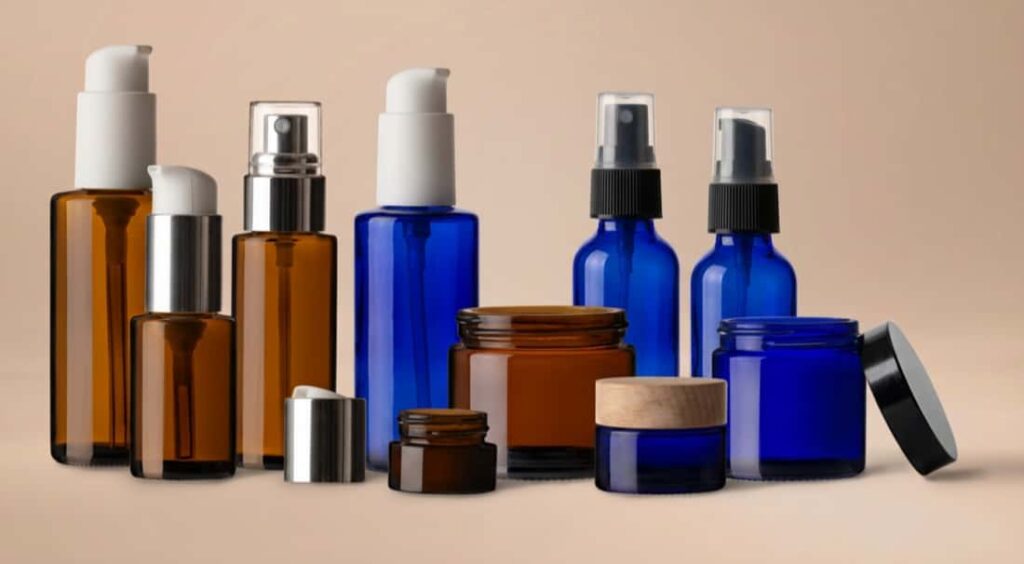
How Light Actually Damages What’s Inside Your Bottle
Before we compare colors, you need to understand what you’re protecting against. It’s not just “light”—it’s specific wavelengths that carry enough energy to break down your product’s chemistry.
UV Radiation, Visible Light, and Product Damage
When light hits your bottle, it’s carrying energy across the visible light spectrum and beyond. The most dangerous part? UV radiation. This invisible energy (both UVA and UVB protection matter here) triggers a process called photodegradation.
Think of photodegradation as light slowly “eating” the chemical bonds in your product. This leads to oxidation—the same reaction that turns a cut apple brown or makes cooking oil go rancid. For your products, this means:
Beer develops that skunky smell (lightstruck beer)
Oils turn rancid and lose flavor
Skincare actives break down and stop working
Wine develops off-flavors
Medicines lose potency
The light wavelength that causes damage varies. Some products react to UV (below 400nm), others to blue light (400-450nm). This is why product stability testing matters, and why your choice of bottle colors isn’t just aesthetic—it’s functional.
Why Bottle Color Changes UV Protection
Here’s where colors in glass become critical. Glass isn’t colored just to look pretty. The color determines which wavelengths pass through and which get absorbed before they reach your product.
When manufacturers add specific minerals to molten glass—iron, cobalt, sulfur—the resulting colored glass bottle gains light-filtering properties. Clear glass lets almost everything through. Darker colors act as a barrier. The question is: which color gives you the protection you actually need?
Glass Bottle Colors Explained: Clear, Blue, and Amber
Walk through any store and you’ll see three main types of glass bottles. Each serves a different purpose, and understanding the differences will save you from costly mistakes.
Flint (Clear) Glass Bottles
The flint glass bottle—what most people call clear or white glass color—is the default choice when you want maximum product visibility. If someone asks what color clear glass is, technically, it’s glass without added colorants.
Clear glass is perfect when your product’s appearance is part of the appeal. Think premium vodka, rosé wine, or a beautifully colored juice. The problem? It offers almost zero protection against light damage.
You’ll sometimes see glass bottles coloured with external coatings or labels, but unless the glass itself is tinted, you’re not getting real protection. Clear glass blocks some UVB rays but lets UVA and visible light flood right through. If you’re using clear glass for a sensitive product, you’re gambling with shelf life.
Cobalt Blue Glass Bottles
There’s something undeniably premium about a cobalt blue glass bottle. It catches the eye immediately. You see blue glass water bottles marketed as luxury hydration, blue color wine bottle designs for German Rieslings, and cobalt blue medicine bottles that suggest both efficacy and elegance.
To create cobalt glass (or real cobalt blue glass), manufacturers add cobalt oxide to the molten batch. The color isn’t painted on—it’s part of the glass structure. You’ll find everything from large blue glass bottles for decorative purposes to practical blue glass dropper bottles for essential oils.
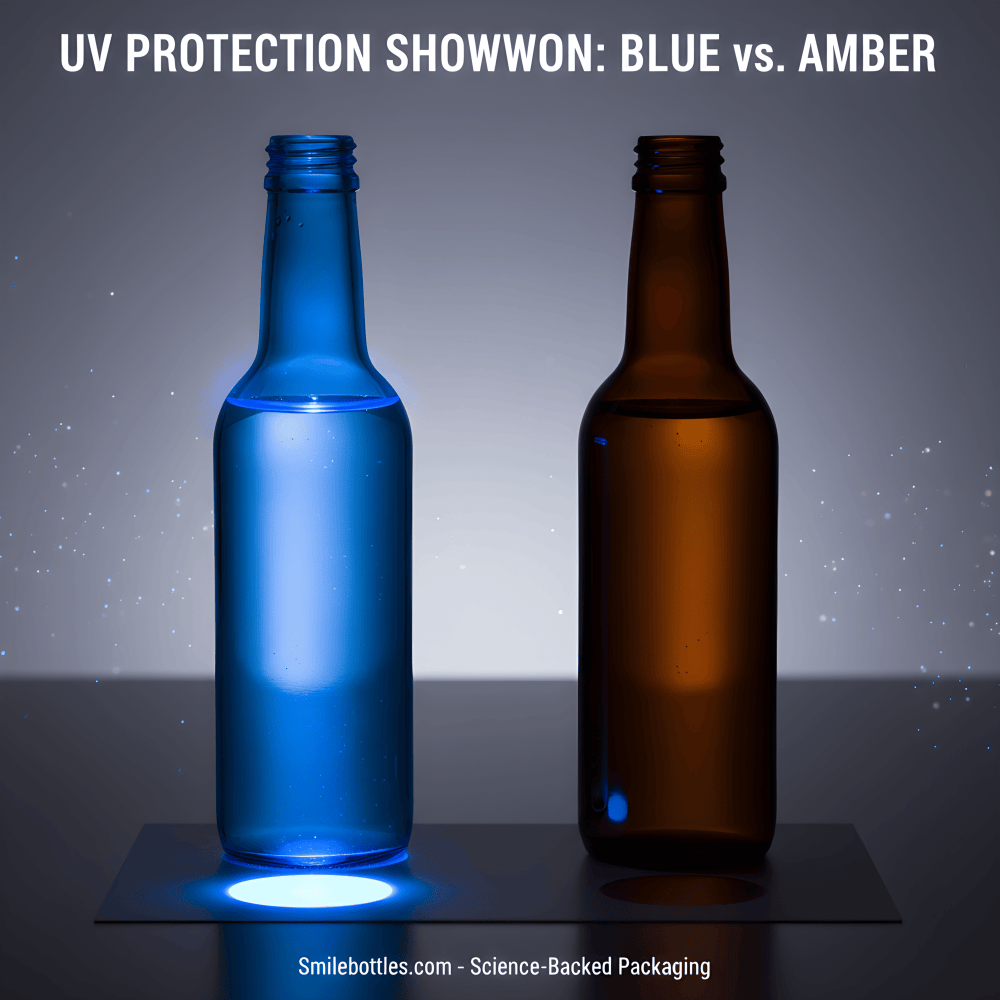
But does it actually protect your product? Cobalt blue glass bottles offer moderate protection. They filter some visible light and provide better UV resistance than clear glass, but they’re not a complete barrier. Blue light still gets through, which matters for highly sensitive formulations.
The appeal of cobalt bottles is often about branding. A blue glass collection on a shelf signals “premium” or “natural.” Items like cobalt blue glass jars, cobalt goblets, and blue-tinted glassware are popular in cosmetics and tableware because they look sophisticated.
Amber (Brown) Glass Bottles
Now we get to the workhorse: amber glass bottles. Also called brown glass, this is the industry standard when protection matters more than showing off your product.
To make an amber color bottle, manufacturers add iron, sulfur, and carbon to the glass mix. The result? A bottle that blocks nearly all radiation from 200nm to 450nm. That covers UV and the blue end of the visible spectrum—exactly where most damage occurs.
This is why you see amber medicine bottles in every pharmacy. The pill bottle color meaning isn’t arbitrary—it’s a safety standard. Amber protects medications from degrading. It’s why a vitamin c serum bottle is almost always amber; Vitamin C oxidizes rapidly in light, turning brown and useless within weeks if not protected.
From large amber glass bottles for bulk storage to delicate amber glass bottle with dropper assemblies for facial oils, amber is the functional choice when product stability is non-negotiable.
Does Clear Glass Offer Any UV Protection?
Let’s address a common misconception head-on: does glass block uv light if it’s clear?
How Much UV Does Clear Glass Block?
The answer is: not enough. Standard clear glass blocks most UVB rays (the ones that cause sunburn), but it allows UVA rays to pass through freely. If you’re wondering how much uv does glass block in practical terms, clear glass stops maybe 25% of damaging wavelengths.
For a vitamin c serum bottle or craft beer, that’s nowhere near sufficient. Ultraviolet rays through glass will still trigger photodegradation and oxidation, shortening your product’s effective shelf life.
When Is Clear Glass Acceptable?
Clear glass works when your product isn’t light-sensitive, or when you’re using secondary packaging (like a box) that blocks light. You’ll see alcohol in glass bottles sold in clear glass all the time—vodka, gin, white rum. These spirits are relatively stable.
For wine, coloured wine bottles (green or amber) are standard for aging, while wine glass colour in clear is reserved for wines meant to be consumed young. Some brands use a wine glass with a wine bottle attached as novelty packaging, but that’s more about marketing than preservation.

How Tinted Glass Protects Bottled Products
Now let’s get specific about how uv protection bottles actually work and why the color you choose matters.
The Science: Tinted Glass as a UV Filter
UV protected glass bottles work by absorbing light energy in the glass wall before it reaches your product. Think of it like sunglasses for your liquid. The colorants in the glass (cobalt, iron, etc.) absorb specific wavelengths and convert that energy to heat, which dissipates harmlessly.
Ultraviolet glass (a marketing term for very dark violet glass) claims to block UV while allowing some beneficial wavelengths through, but for most applications, standard amber or blue is sufficient. The key is matching the glass bottle function to your product’s sensitivity profile.
The Purpose of Cobalt Blue Glass Bottles
Let’s be honest: you choose cobalt blue bottles primarily for branding. They look incredible. A blue glass collection on a retail shelf stands out in a sea of clear and brown.
There are claims about cobalt glass health benefits or benefits of drinking from cobalt glass (usually related to color therapy or “energized water”), but these are marketing concepts, not chemistry. The real benefit is that cobalt glass filters more light than clear glass, offering moderate protection while maintaining visual appeal.
You’ll see blue beer bottles (like Corona) or cobalt blue beer bottles used by craft breweries that want to differentiate. However, these beers often use modified hops or are consumed quickly enough that lightstruck beer isn’t a major concern.
In cosmetics, cobalt blue glass jars and cobalt blue glass jars with lids are hugely popular. A cobalt blue jar for night cream looks luxurious on a bathroom counter. Items like cobalt blue canning jars, cobalt blue glass containers, and even cobalt blue butter dish designs leverage the color’s aesthetic appeal.
For tableware, blue cobalt wine glasses, cobalt blue margarita glasses, and cobalt blue juice glasses add visual interest. Blue-tinted drinking glasses and cobalt glass cups are popular in restaurants and homes.
Collectors look for vintage items like Pyrex cobalt blue dishes or unique pieces like cobalt blue oil lamps and cobalt blue glass lamp shades. Some even ask what glass glows blue under UV light—though that’s usually uranium glass (which glows green), not standard cobalt.
The Purpose of Amber Glass Bottles
If you’re serious about protection, amber is your answer. The chemistry of amber glass blocks the wavelengths that cause the most damage.
This is why amber medicine bottles are universal. An amber vial’s meaning in a pharmacy context is simple: this medication is light-sensitive and needs protection. From 2 oz amber glass jar containers for supplements to large amber glass bottles for bulk chemicals, amber is the standard.
For beer, the question of why beer bottles are brown has a clear answer: to prevent light-struck beer. Hops contain compounds that react with light (specifically around 350-500nm) to create sulfur compounds that smell like skunk. Amber glass bottles block these wavelengths. Blue beer bottles or blue glass beer bottles don’t offer the same protection, which is why blue-bottled beers often taste different or use chemically modified hops.
In beauty and personal care, an amber perfume bottle protects fragrance compounds from breaking down. Amber bottle spray assemblies and glass spray bottle amber designs are standard for essential oil blends and natural cleaning products. Spray bottle amber packaging ensures the active ingredients stay potent.
For storage, amber glass apothecary jars with lids are popular for herbs and teas. Amber canisters protect coffee beans and spices. Even decorative items like vintage amber glass plates (think Anchor Hocking amber glass from the mid-century) or amber glass spray paint for DIY projects leverage the color’s protective properties.
The technical terms you’ll hear: amber UV, UV amber, amber UV light, amber ultraviolet light, and UV light for amber all refer to the same thing—amber glass’s ability to block UV and blue light wavelengths.
Blue Glass vs Amber Glass: How to Choose the Best Colored Glass Bottles
Here’s the bottom line when choosing between blue glass bottles and amber glass bottles:
Choose Amber if:
Your product is highly light-sensitive (beer, pharmaceuticals, natural oils, Vitamin C)
Shelf life is critical
You need maximum uv protection bottles performance
Function matters more than showing off the product
Choose Blue if:
Your product has moderate stability
Brand differentiation is a priority
You want the “premium” or “natural” aesthetic
You’re willing to accept moderate protection for better shelf presence
Choose Clear if:
The product is stable or consumed quickly
Visual appeal of the liquid is a selling point
You’re using secondary packaging (boxes) for light protection
Which Products Benefit Most From Colored Glass?
Let’s get specific about which industries and products need which bottle color.
Beer, Wine, and Spirits
Beer: This is the textbook case. Why are beer bottles brown? Because amber blocks the wavelengths that create lightstruck beer. If you’re brewing a hop-forward IPA or lager, amber glass bottles are essential. Blue beer bottles or cobalt blue beer bottles are used by some brands (Corona, Kronenbourg), but they either use modified hops or accept shorter shelf life as a trade-off for brand recognition.
Wine: Colored alcohol bottles vary by wine type. Coloured wine bottles in green or amber are standard for reds meant for aging. Wine glass colour in clear is typically for whites or rosés consumed young. Some sweet wines use blue color wine bottle or light blue wine bottles designs to stand out, but these are usually consumed quickly.
Spirits: Color liquor bottles range widely. Dark spirits (whiskey, rum) often use clear glass to show the liquid’s color. Gin sometimes uses light blue glass bottles or cobalt bottles to suggest botanical freshness. Colored alcohol bottles are as much about branding as protection since spirits are generally stable.
Oils, Vinegars, and Other Foods
Olive Oil: Premium olive oil contains chlorophyll and polyphenols that degrade in light. Dark blue glass bottles or amber are standard for high-quality oils. The glass bottle function here is preservation—protecting the oil’s flavor and health benefits.
Vinegar: While vinegar is acidic and relatively stable, premium balsamic or infused vinegars benefit from amber glass bottles or dark green glass to maintain flavor complexity.
Pharmaceuticals and Nutraceuticals
This is strictly amber territory. Amber medicine bottles are the standard because medications degrade in light. An amber vial meaning in a pharmacy is universal: this drug needs protection.
Supplements and vitamins, especially vitamin c serum bottle products, require uv protected glass bottles for maximum stability. The pill bottle color meaning (usually amber or opaque white) signals light-sensitive contents.
Cosmetics, Skincare, and Home Fragrance
Beauty brands love the look of cobalt blue glass bottles, but functionality often demands amber. A vitamin c serum bottle must be amber. Retinol products need amber. Essential oils in amber glass bottle with dropper assemblies stay potent longer.
However, for products with stable formulations, blue glass dropper bottles or cobalt blue glass bottle designs offer a premium look. Night creams in cobalt blue glass jars or cobalt blue glass jars with lids look luxurious on a vanity.
For home fragrance, glass spray bottle amber or spray bottle amber designs protect essential oil blends in DIY cleaners. Small colored glass bottles or small coloured glass bottles are popular for sample sizes.
Decorative and Tableware Glass
Sometimes it’s purely about aesthetics. Blue decorative bottles and colored vintage glass bottles are collectibles. Vintage amber glass plates (like anchor hocking amber glass patterns) and cobalt blue glass plates are sought after by collectors.
Tableware like cobalt blue water glasses, blue tinted drinking glasses, and cobalt goblets add visual interest to table settings. Lighting pieces like cobalt blue oil lamps or a cobalt blue glass lamp create ambiance.
Even specialty items like cobalt blue glass fish sculptures or amber glass spray paint for craft projects show how versatile glass colored bottles and items can be.

Matching Glass Colors to Your Product Needs
At Smilebottles, we help you navigate these choices based on your specific product and market positioning.
A Simple Decision Guide: Protection vs Presentation
Here’s a quick framework:
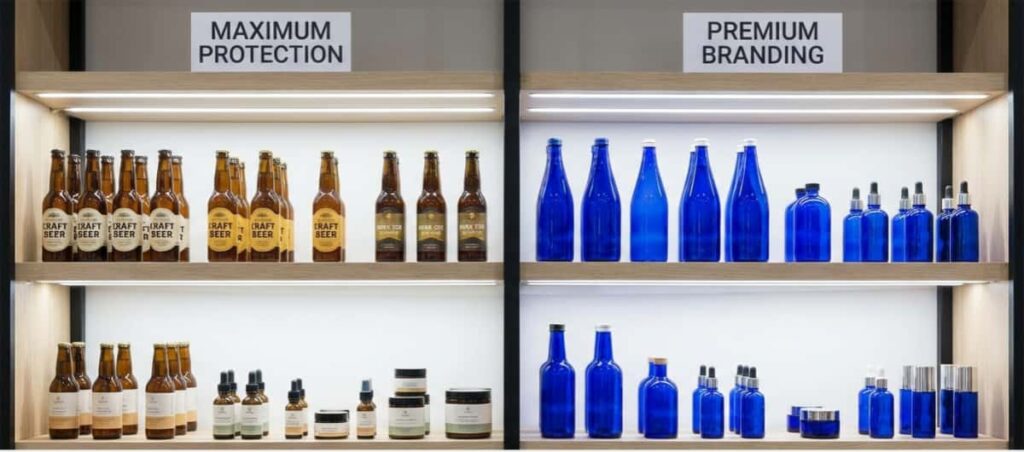
Maximum Protection Needed: Use amber glass bottles. This includes beer, pharmaceuticals, natural oils, vitamin serums, and anything with a long shelf life requirement.
Branding + Moderate Protection: Use blue glass bottles or cobalt blue glass bottle designs. Good for premium water, stable cosmetics, spirits, and products with shorter shelf life.
Maximum Visibility: Use clear glass or flint glass bottle options. Acceptable for stable spirits, products in secondary packaging, or items consumed quickly.
Example Pairings
Craft Beer: Large amber glass bottles or standard amber to prevent lightstruck beer
Essential Oils: Amber glass bottle with dropper for maximum protection
Premium Water: Blue glass water bottle or cobalt blue glass water bottles for brand differentiation
Vitamin C Serum: Vitamin c serum bottle in amber, always
Gin or Vodka: Clear or light blue glass bottles to show the liquid
Face Cream: Cobalt blue glass jars for luxury positioning, amber for active ingredients
Olive Oil: Amber or dark green colored glass bottle designs
Tableware: Cobalt blue margarita glasses, blue cobalt wine glasses, or cobalt glass cups for visual appeal
Special Cases and Custom Colors
Sometimes standard options aren’t enough. You might want colored vintage glass bottles aesthetics or specific shades like electrum glass color (a pale amber-green) or brite glass (ultra-clear).
We often get asked how to color glass bottles. While you can paint glass (amber glass spray paint exists for DIY projects), for commercial packaging, the color must be in the glass itself for food safety and durability. Glass colored bottles manufactured with integral color won’t chip or leach.
Whether you need small coloured glass bottles for sample kits, large blue glass bottles for decorative purposes, or specialized items like blue prescription bottles or cobalt blue glass containers, we can manufacture to your specifications.
Why Smilebottles Is the Right Partner for Colored Glass Bottles
Choosing between cobalt glass and brown glass is just the beginning. You need a manufacturing partner who understands both the science and the market.
Technical Expertise in UV-Safe Glass Packaging
At Smilebottles, we don’t just sell glass bottles—we understand the chemistry. We know the difference between uv light vs blue light damage. We can explain why amber glass blocks certain wavelengths and how cobalt glass benefits compare.
When you ask us about bottle of uv protection levels or ultraviolet glass specifications, we give you data, not marketing speak. We understand photodegradation, oxidation, and product stability because we work with chemists and formulators daily.
Wide Range of Standard and Custom Bottle Colors
We stock an extensive range:
Amber glass bottles in every size (from 2 oz amber glass jar to gallon jugs)
Cobalt glass bottles and cobalt blue glass jars
Blue prescription bottles and cobalt blue medicine bottles
Specialty items like botellas azules de vidrio for Spanish-speaking markets
Colored glass bottles for sale in custom colors
We also offer accessories: amber glass apothecary jars with lids, dropper assemblies, spray tops, and more.
Branding Support and Consistent Quality
Color consistency matters. Your cobalt blue bottles need to be the same shade in every production run. Your amber color bottle needs to meet the same UV-blocking specs batch after batch.
We ensure quality control across:
Color matching (critical for real cobalt blue glass or specific amber shades)
UV transmission testing (verifying uv protected glass bottles performance)
Custom shapes and sizes (from small colored glass bottles to large amber glass bottles)
Global shipping and logistics
Whether you’re launching a craft beer line, a skincare brand, or a premium olive oil, we help you choose the right glass bottle colors and ensure consistent supply.

FAQ: Blue Glass vs Amber Glass for UV Protection
Q1. Which glass color blocks the most UV light: clear, blue, or amber?
A1 Amber glass bottles block the most UV light, filtering wavelengths from 200nm to 450nm. Blue glass bottles offer moderate protection, better than clear but not as comprehensive as amber. Clear glass blocks minimal UV.
Q2. Are blue glass bottles good enough for beer?
A2 Generally no. Blue glass beer bottles allow more damaging light through than amber, increasing the risk of lightstruck beer. Some breweries use blue bottles with chemically modified hops or for beers consumed quickly, but amber is the safer choice.
Q3. Why are beer bottles brown instead of clear or blue?
A3 Brown glass (amber) blocks the specific wavelengths (350-500nm) that react with hops to create skunky flavors. This is why amber glass bottles are the industry standard for beer.
Q4. Does glass block UV light completely?
A4 No glass blocks 100% of all light, but uv protected glass bottles in amber block nearly all damaging UV and blue light. Clear glass blocks very little UVA, which is why sensitive products need tinted glass.
Q5. What is blue glass made of, and how is cobalt glass made?
A5 What is blue glass? It’s glass colored with cobalt oxide added to the molten batch. This creates cobalt glass or real cobalt blue glass, which is chemically stable and food-safe.
Q6. Are there real health benefits to drinking from cobalt glass?
A6 The benefits of drinking from cobalt glass are primarily aesthetic and psychological (color therapy concepts). Chemically, cobalt glass health benefits relate to protecting the liquid inside from light degradation, not to the glass itself, imparting health properties. Cobalt glass benefits are about preservation, not mystical properties.
Q7. When should I choose amber glass bottles for skincare products?
A7 Choose amber glass bottles for any skincare product with light-sensitive active ingredients: Vitamin C, retinol, certain peptides, natural oils. A vitamin c serum bottle should always be amber. For stable formulations (like thick creams), cobalt blue glass jars can work if branding is a priority.
Q8. Can I get custom bottle colors from Smilebottles?
A8 Yes. While amber glass blocks light best and cobalt bottles offer moderate protection, we can produce glass bottles coloured in custom shades including greens, blacks, or specialty colors like electrum glass color. We work with you to balance protection and branding.
Q9. Do UV protection bottles really extend shelf life?
A9 Absolutely. UV protection bottles prevent photodegradation and oxidation, which directly extends shelf life. For light-sensitive products, the difference between amber and clear glass can mean months of additional stability.
Q10. What glass glows blue under UV light?
A10 What glass glows blue under uv light? Typically, uranium glass glows green under UV, not blue. Standard cobalt blue glass absorbs UV rather than fluorescing. Some specialty glass with manganese or other additives may show fluorescence, but this isn’t common in commercial packaging.
Final Thoughts
The choice between blue glass bottles and amber glass bottles comes down to your product’s chemistry and your brand’s positioning. Don’t leave your product’s shelf life to chance. At Smilebottles, we manufacture colored glass bottles that protect your investment and enhance your brand. From vintage cobalt blue glass candle holders to industrial amber UV barriers, from small coloured glass bottles for samples to large blue glass bottles for bulk products, we have the manufacturing capability and technical expertise to support your growth. Contact us today to discuss your specific needs. Whether you’re launching a craft beer, a beauty line, or a premium food product,