
Table of Contents
ToggleAuthor: SmileBottles Editorial Team
Estimated Reading Time: About 15 Minutes
Introduction
If you are in the fragrance business, you already know that the scent inside the bottle is only half the story. The other half? The bottle itself.
Think about it. When someone picks up a perfume, they don’t smell it first. They look at it. They feel the weight in their hand. They notice the shape, the color, the way light passes through the glass. All of this happens in seconds, and it shapes their opinion before they ever press the sprayer.
That’s why choosing the right perfume bottles matters so much. Whether you are launching a new brand, expanding your product line, or sourcing empty perfume bottles for retail, the packaging you choose will directly affect how customers perceive your product.
At Smilebottles, we’ve been in the glass business long enough to know what works and what doesn’t. As a glass perfume bottle manufacturer, we’ve helped hundreds of brands find the right bottles for their needs. This guide is designed to share that experience with you. We’ll cover everything from the history of fragrance bottles to the practical details of choosing perfume bottle sizes, decoration options, and sustainable packaging. By the end, you’ll have a clear picture of the different types of perfume bottles available and how to pick the one that fits your brand.
Let’s get into it.
Why Perfume Packaging Matters
A Quick Look at History: How Perfume Bottles Evolved
Perfume packaging has come a long way. Thousands of years ago, the Egyptians stored their fragrant oils in carved alabaster jars. The Greeks and Romans used small ceramic and glass vessels. Back then, the container was purely functional—something to hold the liquid and keep it from evaporating.
But as perfumery became more refined, so did the bottles. By the 1900 perfume bottle era, glass makers in France and Bohemia were creating true works of art. Antique fragrance bottles from this period featured intricate cut patterns, colored glass, and hand-blown shapes. These vintage glass perfume bottle designs weren’t just containers; they were status symbols.
Today, you can still see the influence of that history. Many brands deliberately choose vintage-style perfume bottles to tap into that sense of elegance and craftsmanship. Others go for sleek, modern designs. Either way, the lesson is the same: the bottle tells a story.
How Bottles Shape Brand Image and Marketing
Your bottle is your brand’s handshake with the customer. It’s the first physical touchpoint.
A heavy, angular bottle with a metal cap says “luxury.” A slim, rounded bottle with a pastel finish says “fresh and feminine.” A bold cobalt blue perfume bottle design says “confident and distinctive.”
When you’re competing for attention on a crowded shelf or in an Instagram scroll, the shape of perfume bottle you choose can make all the difference. Unique perfume bottles stop people in their tracks. Decorative perfume bottles get shared on social media. Luxury perfume packaging justifies a higher price tag.
This isn’t just about looking good. It’s about communicating value. The right bottle tells your customer what kind of experience they’re buying before they even open the cap.
How Packaging Affects Consumer Behavior
Here’s something that might surprise you: many people keep perfume bottles long after the juice is gone. They display them on vanities, use them as decor, or simply can’t bring themselves to throw away something beautiful.
This “collectible” factor is real, and smart brands take advantage of it. A perfume bottle with a fancy design creates emotional attachment. Customers remember the brand and come back for more.
There’s also the sensory side. The weight of the glass, the smooth click of the cap, the fine mist from a quality sprayer—all of these details add up. They make the product feel worth the price. Cheap packaging does the opposite. It makes even a great scent feel ordinary.
What Are Perfume Bottles Made Of?
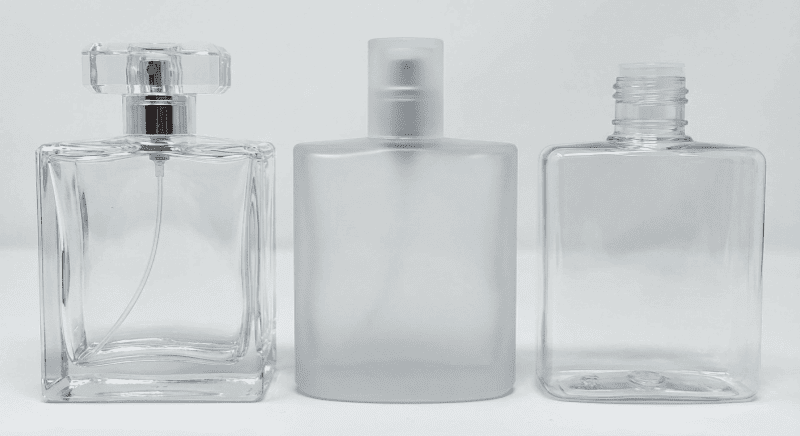
Glass Perfume Bottles
Glass is the standard for a reason. It’s chemically inert, meaning it won’t react with the alcohol or oils in your fragrance. It preserves the scent perfectly and looks premium.
When we talk about glass perfume bottles, there are several types to consider:
High-flint glass: This is the top tier. It’s clear as crystal, heavy, and has excellent optical clarity. If you want your liquid to sparkle, this is the choice.
Soda-lime glass: The most common type. It’s affordable, durable, and works well for most applications.
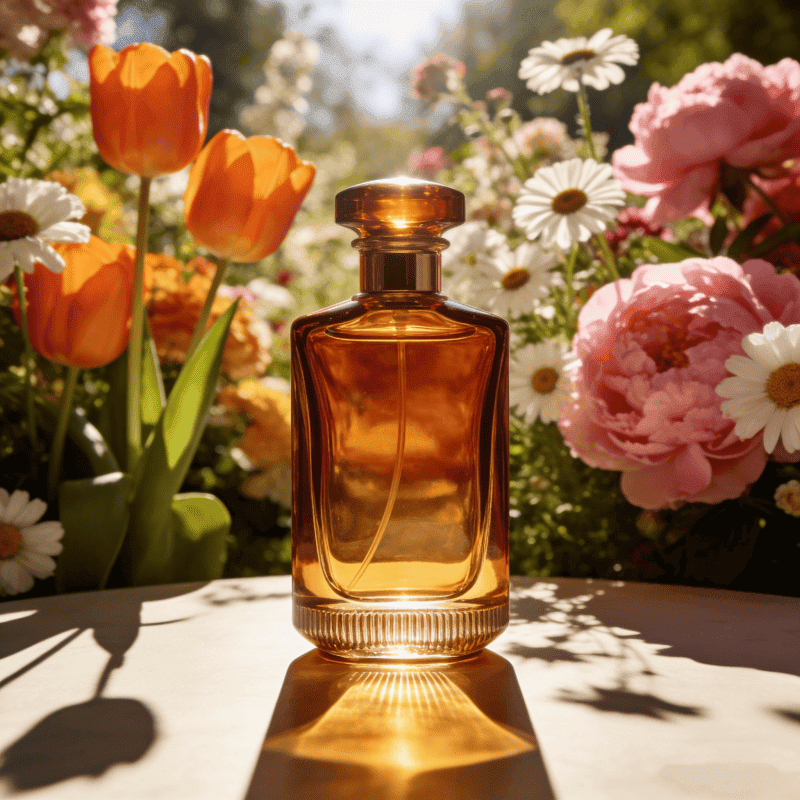
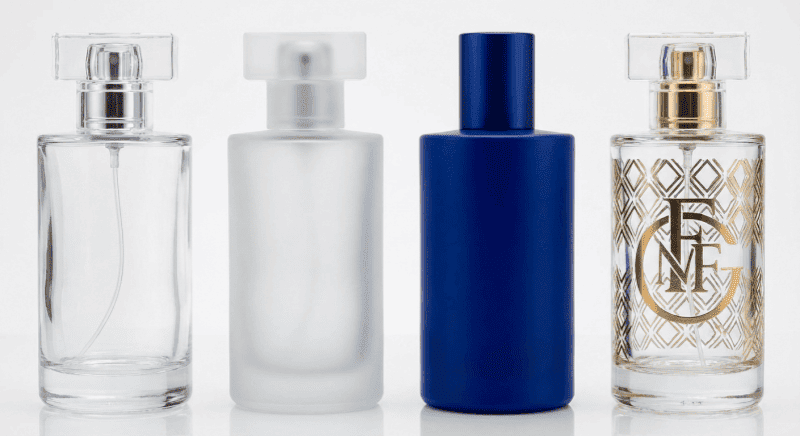
Colored glass: Cobalt blue perfume bottles, amber, green—colored glass adds visual interest and can offer some UV protection.
Frosted glass: Frosted glass perfume bottles have a soft, matte texture. They hide fingerprints and give a sophisticated look.
The main downside of glass is weight. It’s heavier than plastic, which affects shipping costs. It’s also breakable, though proper packaging can minimise that risk.
Plastic Perfume Bottles
You’ll see plastic perfume bottle options in the market, especially for body mists and travel sizes. Common materials include PET, PP, and acrylic.
Plastic is lightweight and shatterproof. It’s cheaper to produce and ship. For budget lines or gym bags, it makes sense.
But there are trade-offs. Plastic doesn’t feel as premium. Over time, some plastics can interact with fragrance ingredients. And in today’s market, sustainability concerns make plastic a harder sell for eco-conscious customers.
Other Materials
Some brands go beyond glass and plastic:
Metal perfume bottle: Usually an aluminum shell over an inner glass vial. Sleek and travel-friendly, but you can’t see how much product is left.
Ceramic perfume bottle: Heavy, opaque, and artisanal. Great for niche brands going for a handcrafted vibe.
Wood, stone, and leather accents: These are often used for caps and decorative elements rather than the bottle itself.
How Glass Perfume Bottles Are Made
If you’ve ever wondered how those beautiful bottles come to life, here’s the short version:
Melting: Raw materials (silica sand, soda ash, limestone) are heated to around 1500°C until they become molten glass.
Forming: The molten glass is dropped into a mould. Depending on the design, it’s either blown with compressed air (blow and blow method) or pressed and then blown (press and blow method).
Annealing: The formed bottle is slowly cooled in a special oven to relieve internal stress. This prevents cracking later.
Surface treatment: This is where painted perfume bottles, frosted finishes, and coatings happen.
Decoration: Logos and designs are applied through screen printing, hot stamping on glass, decals, or UV printing.
Quality control: Each bottle is checked for leaks, cracks, and visual defects.
Understanding this process helps you appreciate why custom moulds cost more and take longer. It also explains why working with an experienced perfume bottle supplier matters—quality control at every step is essential.
Main Types and Components of Perfume Bottles
When you’re browsing a catalog, you’ll see lots of terms thrown around. Let’s break down the main types of perfume bottles and their components.
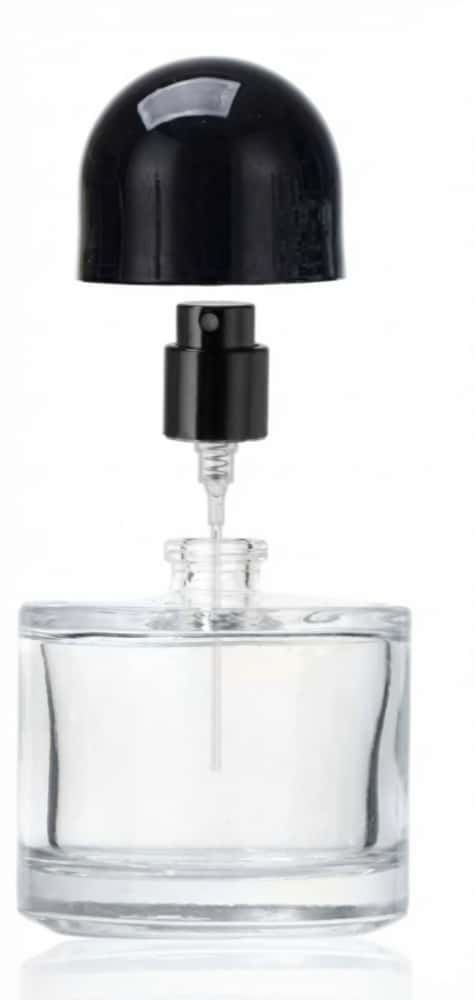
Spray Bottles (Atomizers)
Spray perfume bottles are the most common type today. They use an atomizer mechanism to deliver a fine mist of fragrance.
Key things to know:
Fine mist sprayers produce a delicate, even cloud of scent. This is what you want for luxury products.
Perfume atomizers vary in spray pattern and output volume. Some deliver a soft mist; others are more forceful.
Neck finish matters. Crimp necks (sealed with a machine) are tamper-proof and standard for high-end perfumes. Screw necks allow users to open and refill the bottle.
Pump Bottles
A perfume pump sprayer looks similar to an atomizer but typically delivers a larger dose. You’ll see these on body mists, hair perfumes, and larger format products.
Some premium brands use airless pumps, which protect sensitive formulas from air exposure and deliver a consistent dose from first spray to last.
Roll-On and Splash Bottles
Not every fragrance needs a sprayer.
Rollerball perfume bottles: These use a small ball (plastic or steel) to apply the scent directly to the skin. They’re popular for perfume oil bottles, travel sizes, and purse-friendly formats.
Splash bottles: These have no spray mechanism. You tip the bottle or use a stopper. Classic cologne bottles often use this format, as do decant bottles and some vintage perfume bottles.
Attar bottles: Traditional Middle Eastern perfume oils (attars) are too thick to spray. They use a glass dipstick or roll-on applicator.
Bottle Closures and Caps
The cap might seem like a small detail, but it completes the design. Options include:
Plastic caps: Affordable and available in many colors.
Metal caps (Zamac, aluminum): Heavy, cool to the touch, and luxurious.
Magnetic caps: Self-aligning with a satisfying click.
Wood caps: Popular for natural and organic brand positioning.
The collar (the ring that connects the cap to the sprayer) is another design element. It can be plain or decorative, and it needs to fit the bottle’s neck finish perfectly.
Perfume Bottle Design: From Function to Art
The Art and Strategy of Bottle Design
Good design balances beauty and practicality.
A bottle needs to look amazing, but it also needs to be easy to hold, easy to spray, and sturdy enough to survive shipping. Square perfume bottles offer flat surfaces for labels and a modern look, but sharp corners can chip. Curved shapes are comfortable in the hand but might roll off a shelf.
Perfume bottle shapes communicate personality:
Angular, geometric shapes feel modern and masculine.
Soft, rounded shapes feel classic and feminine.
Unusual, sculptural shapes feel artistic and niche.
Color plays a role, too. Clear glass perfume bottles showcase the liquid inside. Colored or opaque glass hides it, creating mystery.
How Bottle Types Serve Different Markets
Different audiences want different things:
Luxury market: Heavy glass, complex shapes, metal accents, custom perfume bottles with proprietary moulds.
Mass market: Simple shapes, lighter glass, vibrant colors, cost-effective decoration.
Niche/indie brands: Simple silhouettes, minimal labels, artisanal finishes.
Travel and on-the-go: Miniatures, refillable perfume bottles, roll-ons.
Home fragrance extensions: Reed diffuser bottles that match the main perfume line.
Testers and samples: Perfume tester bottles and decant bottles for retail displays and discovery sets.
Decoration and Customization Options
Even if you use a stock bottle, decoration can make it feel custom.
Surface finishes:
Frosted glass perfume bottles: Soft, elegant, hides fingerprints.
Painted perfume bottles: Inside or outside coating in any color.
Gradient effects, metallic finishes, soft-touch coatings.
Printing and embellishment:
Silk screen printing: Durable, cost-effective for logos and text.
Hot stamping on glass: Gold, silver, or colored foil for a luxurious metallic look.
UV printing: Full-color images and complex graphics.
Embossing/debossing: Your logo is molded directly into the glass.
Labels vs. direct printing: Labels are flexible and easy to change. Direct printing is more permanent and often looks cleaner.
How to Choose the Right Perfume Bottle for Your Brand
This is where theory meets practice. Here’s a step-by-step approach.
Define Your Brand Positioning
Before you look at samples, be clear about who you are.
Are you luxury, premium, mid-range, or mass market?
Who is your target customer? Gender, age, lifestyle?
What’s the personality of your fragrance? Fresh, bold, romantic, mysterious?
Your answers will guide every decision, from glass weight to cap material.
Consider Functionality and Usability
Perfume bottle sizes matter. Standard sizes of perfume bottles include:
5ml, 10ml: Samples, travel sizes
30ml: Entry-level full size
50ml: The most common full-size (50ml perfume bottle size comparison is useful when designing your product family)
100ml: Value size, often for hero products
Perfume bottle measurements also include height, diameter, and neck size. These affect your secondary packaging (boxes) and your filling line compatibility.
Usability factors: Does the sprayer produce a good mist? Is the bottle easy to grip? Does the cap fit snugly? Is the bottle leak-proof?
Stock vs. Custom: Make the Right Call
You have two main paths:
Stock bottles: These are existing mould designs available for perfume bottle wholesale. They’re faster, cheaper, and come with lower minimum order quantities. You differentiate through decoration.
Custom moulds: You design your own perfume bottle shape from scratch. This requires tooling investment and longer lead times, but you get a proprietary design that no one else can use.
For most new brands, starting with stock bottles and investing in great decoration is the smart move. As you grow, custom moulds become worth the investment.
Quality, Safety, and Regulatory Issues
Your bottle needs to work with your formula. Alcohol-based, oil-based, and water-based fragrances have different compatibility requirements.
Key tests include: Leakage testing, Drop testing (impact resistance) ,Chemical compatibility testing, Spray functionality testing
An experienced glass perfume bottle manufacturer will help you navigate these requirements and provide testing support.
Sustainability: Eco-Friendly Options
Consumers care about the environment, and so should you.
Eco-friendly perfume packaging options include:
Recyclable glass (glass is infinitely recyclable)
PCR glass (Post-Consumer Recycled content)
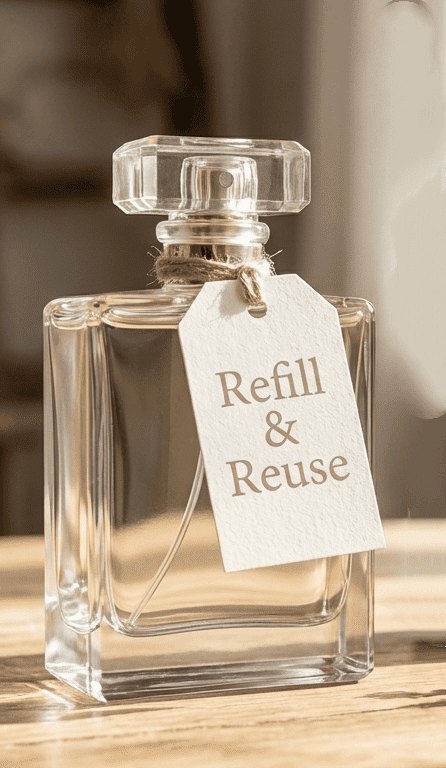
Refillable perfume bottles with screw necks
Lightweight glass designs that reduce shipping emissions
Sustainable closures and pumps (metal or mono-material designs)
Sustainability isn’t just good ethics; it’s good marketing. Many retailers now require eco-friendly packaging for shelf placement.
Why Smilebottles Is Your Best Partner for Perfume Bottles
Who We Are?
Smilebottles is a professional glass perfume bottle manufacturer and perfume bottle supplier. We specialize in glass packaging for the fragrance and beauty industry.
We’re not a trading company. We own our production facilities, which means we control quality from raw materials to finished goods. Our team includes engineers, designers, and quality specialists who understand the specific demands of fragrance bottles.
Our Perfume Bottle Solutions
We offer:
A wide selection of stock kinds of perfume bottles: cylinders, squares, ovals, vintage style perfume bottles, and more.
Custom mould development for brands that want unique perfume bottles.
Matching components: perfume atomizers, fine mist sprayers, perfume pump sprayer options, caps, and collars.
Full decoration services: frosting, painting, hot stamping on glass, screen printing, and more.
Extended product lines: perfume oil bottles, attar bottles, perfume tester bottles, decant bottles, reed diffuser bottles.
Whether you need bulk perfume bottles for a mass-market launch or small batches for a boutique brand, we can help.
Quality Control and Technical Support
Every batch goes through strict inspection:
Visual checks for clarity, bubbles, and scratches
Dimensional checks for perfume bottle measurements
Leakage and spray functionality tests
Compatibility testing support
We also provide technical advice on bottle selection, filling line compatibility, and decoration feasibility.
Sustainability and Innovation
We’re committed to reducing environmental impact:
Offering lightweight glass options
Developing refillable perfume bottle systems
Using recycled glass content where possible
Continuously improving energy efficiency in our furnaces
Service Advantages
Flexible MOQs: We work with startups and established brands alike.
Global shipping experience: We know how to pack glass perfume bottles to survive international transit.
Responsive service: Quick quotes, clear communication, and after-sales support.
Design support: Our team can help you identify perfume bottle options that fit your vision and budget.
FAQ About Perfume Bottles
Q1: What is the best material for perfume bottles?
A1: Glass is the industry standard. It’s inert, preserves fragrance integrity, and has a premium look. Glass perfume bottles are recyclable and offer endless design possibilities.
Q2: How do I choose the right perfume bottle sizes for my product line?
A2: Consider your pricing strategy and target market. 50ml and 100ml are the most common for full sizes. 10ml or 15ml works for travel and discovery sets. Perfume tester bottles are usually stripped-down versions of your main bottle.
Q3: Can I create fully custom perfume bottles with my own design?
A3: Yes. We offer custom mould development. You provide the design (or work with our team), and we create the tooling. Lead times are longer, but you get a proprietary shape.
Q4: What decoration options are available?
A4: Many. Frosted glass perfume bottles, painted perfume bottles, hot stamping on glass, screen printing, UV printing, embossing, and more. We can help you choose based on your design and budget.
Q5: Are glass perfume bottles recyclable?
A5: Yes. Glass is infinitely recyclable. Customers should remove the pump and cap (often plastic or metal) before recycling the glass body.
Q6: How can I make my packaging more eco-friendly?
A6: Consider refillable perfume bottles, lightweight glass, PCR glass content, and sustainable closures. Eco friendly perfume packaging is increasingly important for brand image and retail requirements.
Q7: What do I need to provide for a custom quote?
A7: Bottle shape/style preference, size, quantity, decoration requirements, and timeline. The more details you share, the more accurate our quote will be.
Q8: How long does custom bottle development take?
A8: It depends on complexity. A simple custom mould might take 4-6 weeks for samples. More intricate designs take longer. Stock bottles with custom decoration are faster.
Final Thoughts
Choosing the right perfume bottles is one of the most important decisions you’ll make for your fragrance brand. The bottle is the first thing customers see, the first thing they touch, and often the last thing they remember. From vintage perfume bottles inspired by the 1900 perfume bottle era to sleek modern designs, the types of perfume bottles available today are practically endless. Glass perfume bottles remain the gold standard for quality and perception, offering the clarity, weight, and chemical stability that serious brands need. But a great bottle is just the start. The right fine mist sprayers, the perfect cap, the ideal decoration—all these details add up to create a cohesive, memorable product. At Smilebottles, we understand that every brand is different. Whether you need perfume bottle wholesale quantities, custom perfume bottles with unique moulds, or specialized perfume oil bottles for your attar line, we have the expertise and the inventory to help.
 English