


Table of Contents
ToggleAuthor: SmileBottles Editorial Team
Estimated Reading Time: About 16 Minutes
If you are a business owner, a brand manager, or a purchasing director looking for the ideal packaging, you have likely narrowed your choices down to two of the most popular colored options on the market. You are probably wondering: when it comes to amber vs blue glass, which one actually does a better job of protecting your sensitive products from light damage?
In this comprehensive guide, we will break down the exact science of light protection, compare the specific features of blue and brown glass, and help you determine exactly which option is best suited for your specific industry. As an industry-leading glass bottle manufacturer, Smilebottles is here to provide you with the professional, actionable insights you need to make an informed, confident purchasing decision for your supply chain.
Introduction: Why Glass Color Matters More Than You Think
To the average consumer, a colored bottle is just a pretty package. But to you, as a manufacturer or brand owner, it is a functional barrier. Not all glass is created equal, and the color you choose directly dictates how long your product will last, how potent it will remain, and how it will taste or smell when the consumer finally opens it.
The packaging industry relies heavily on colored glass to preserve the integrity of goods across the food, beverage, cosmetics, and pharmaceutical sectors. While clear glass (flint glass) is excellent for showcasing the pure color of a product, it offers absolutely no shield against the elements. Colored glass, specifically amber and blue, is engineered by adding specific metal oxides to the glass formulation during the melting process. This does not just change how the bottle looks; it fundamentally changes the physical properties of the glass, allowing it to act as a selective filter for different wavelengths of light. Understanding this difference is critical to your bottom line.
Why Light Protection Is Critical for Product Stability
Before you can choose the right packaging, you need to deeply understand the enemy: light. We often think of ambient sunlight or indoor store lighting as harmless, but for many organic and chemical compounds, constant exposure to light is highly destructive.
How UV Light Damages Products
When evaluating packaging, many buyers ask: can uv light pass through glass? The answer is yes, absolutely. Standard clear glass allows the vast majority of ultraviolet (UV) and visible light rays to pass right through it, acting almost like a magnifying glass.
When UV light (which sits in the 10nm to 400nm wavelength range) and certain visible blue light hit a light-sensitive product, they trigger a destructive chemical process known as photochemical degradation or photo-oxidation. This is a chemical reaction where the high energy from the light photons breaks the molecular bonds inside your product. It causes ingredients to oxidize rapidly, changing their chemical structure entirely. The result? A product that loses its potency, changes color, separates, or develops a foul odor.
Products That Require Strict Light Protection
Depending on the industry you operate in, light damage manifests in several specific, highly detrimental ways. Here is why light-shielding packaging is non-negotiable for certain sectors:
Beer and Beverages: If you brew craft beer, light is your biggest threat. Beer contains hops, which are full of compounds called isohumulones. When UV light hits these compounds, they break down and bind with sulfur proteins, creating a chemical nearly identical to a skunk’s spray. This is why light protection is paramount for breweries.
Essential Oils and Aromatherapy: Pure plant extracts are highly volatile and delicate. Light exposure causes the organic compounds to oxidize, which ruins the scent profile and completely destroys their natural therapeutic properties.
Pharmaceuticals and Supplements: Liquid medicines, homeopathic remedies, and chemical reagents can lose their active efficacy or even become unsafe for human consumption if they are not shielded from UV rays.
Skincare and Cosmetics: Active, high-end ingredients like Vitamin C, retinol, squalane, and certain antioxidants degrade incredibly fast when exposed to light. A clear bottle might look beautiful on a vanity, but it will render an expensive serum chemically useless in just a matter of weeks.
How Glass Color Affects Light Protection
To stop these photochemical reactions, you need packaging that acts as an impenetrable physical filter. By adding specific minerals to the raw glass mixture during the manufacturing process, we alter the color and, consequently, change the exact wavelengths of light the glass allows to pass through.
Clear glass offers zero protection. Green glass offers slightly more protection, filtering out some visible light but still letting a dangerous amount of UV light through. This brings us to the two heavyweights of the packaging industry: blue and amber. They interact with the light spectrum in very different ways, which is why your choice between the two will define the shelf-life of your product.
Blue Glass Bottles: Features, Benefits, and Limitations
When you are looking at packaging options for a new product launch, blue glass immediately catches the eye. It is undeniably gorgeous. But exactly what is blue glass? Also known in the industry as cobalt glass, it is created by adding trace amounts of cobalt oxide to the molten sand and glass mixture. This addition gives the glass its striking, rich, and vibrant blue hue.
Blue glass is incredibly popular, but as a buyer, it is crucial that you understand exactly what it can and cannot do for your formulations.
Moderate UV Protection
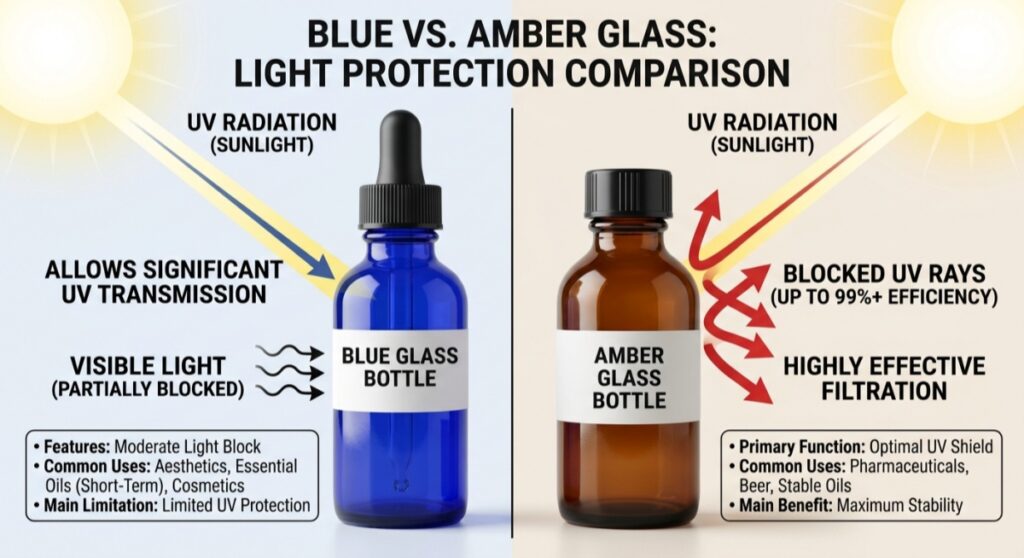
Does blue glass protect against light? Yes, but it offers what we classify as moderate protection. Blue glass does a decent job of filtering out some visible light, specifically blocking out the warmer wavelengths like red and yellow.
However, it is not a complete block against ultraviolet rays. It will protect your product significantly better than clear or frosted glass, but it still allows a portion of UV light to penetrate the container wall. If your product is highly, violently reactive to light, blue glass might not be strong enough. But for many businesses, this level of protection is perfectly adequate. If your product has a rapid turnover rate, is meant to be stored in a bathroom cabinet away from direct sunlight, or is only mildly sensitive to light, blue glass is a fantastic, highly marketable option.
Health, Wellness, and the Cobalt Appeal
There is a powerful psychological and holistic element to blue glass that lifestyle brands leverage to increase their profit margins. You will frequently hear discussions about cobalt glass health benefits or cobalt blue glass benefits within the wellness, yoga, and alternative health communities.
Many holistic practitioners believe that storing water in blue glass and exposing it to sunlight creates “solarized water.” This practice is said to help the water absorb the calming, healing frequencies of the color blue, promoting tranquility and better hydration. Because of this strong association with purity and wellness, blue glass water bottles are incredibly popular among health-conscious demographics.
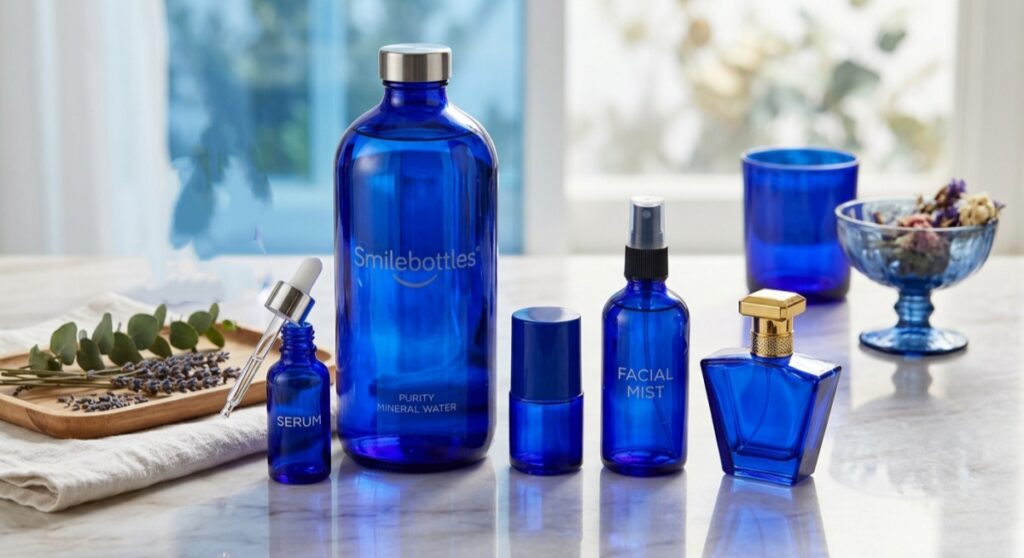
Brands frequently use blue glass mineral water bottles and premium cobalt blue glass water bottles to visually communicate that the beverage inside is pure, refreshing, and untouched by modern contaminants. When consumers see water in blue glass bottle packaging on a grocery store shelf, they immediately perceive it as a higher-end, healthier choice compared to water in standard plastic or clear glass, allowing brands to charge a premium price point.
Aesthetic Appeal and the Psychology of Branding
When you select your product’s packaging, you are tapping into consumer psychology. People actively decorate their homes with vintage and contemporary blue glass items. Collectors aggressively seek out classic anchor hocking blue glassware and rustic, textured hobnail blue glass to display in their dining cabinets. People love to set their dining tables with elegant blue glass plates, serve cold summer drinks from a stunning blue bubble glass pitcher into matching blue bubble glasses, or offer homemade treats from a decorative blue glass cookie jar.
You will often see modern homes utilizing a decorative blue glass bell on a mantle, serving after-dinner treats in delicate blue glass dessert bowls, or using a classic blue glass compote as a dramatic centerpiece. This deep love for the color extends to everyday drinkware, with families preferring to sip from heavy blue glass tumblers, elegant blue glass wine glasses. When you choose decorative blue glass bottles for your brand, you are capitalizing on this deep-rooted consumer appreciation. You are giving them a beautiful package they will likely keep, repurpose, and display in their homes long after your original product is gone, creating long-term brand visibility.
Common Commercial Use Cases for Blue Glass Packaging
If you are a B2B buyer sourcing containers, you will find that blue glass is highly versatile across multiple sectors. Here are some common ways our clients successfully use these products:
Cosmetics and Skincare: A fine-mist blue glass spray bottle or a precise blue dropper bottle is perfect for facial toners, rose waters, and lightly sensitive hyaluronic acid serums. The color communicates clinical luxury and spa-like tranquility.
Fragrances: A beautifully designed, heavy-bottomed blue glass perfume bottle stands out prominently on a crowded retail shelf, giving off an air of mystery, freshness, and high-end elegance.
Beverages: While less common than brown glass, some specialty beverage brands use blue beer bottles or blue wine bottles to aggressively differentiate themselves from competitors in a visually crowded market.
General Storage: Many businesses purchase large blue glass containers and dark blue glass bottles for storing premium dry goods, bath salts, and high-end spa products.
If you are looking to source these for your business, you can easily find wholesale blue glass bottles for sale through a reliable manufacturing partner like Smilebottles, where we can customize the exact shade, capacity, and closure to fit your brand identity.
Amber Glass Bottles: The Industry Standard for Light Protection
While blue glass undoubtedly wins on aesthetics and moderate protection, we need to talk about the heavy-lifter in the packaging world. When absolute maximum protection is your goal, brown or amber glass is the undisputed, scientifically proven champion.
An amber color bottle is created by adding precise amounts of iron, sulfur, and carbon to the molten glass mixture. This specific chemical combination is what gives the glass its rich, earthy brown color. But far more importantly, it completely changes the physical way the glass interacts with the light spectrum.
Superior UV Protection (Up to 99%)
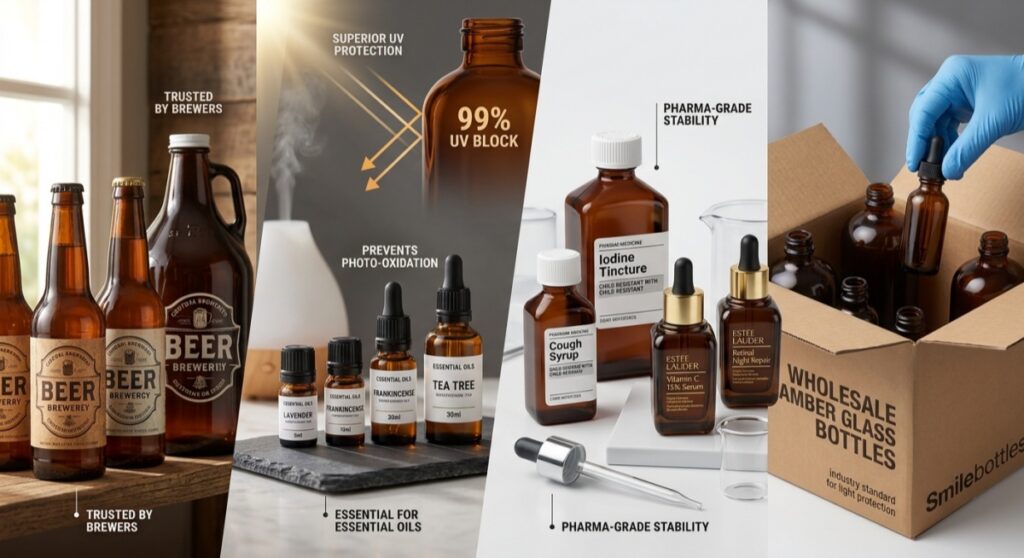
When evaluating the primary amber glass bottle function, it all comes down to aggressive light filtration. Amber glass is capable of blocking out virtually all harmful UV rays—often up to 99%. It provides a near-perfect barrier against the specific short wavelengths of light (under 450nm) that cause catastrophic photo-oxidation. This is the core of the amber glass benefits.
If you have a product that is highly sensitive to light, amber glass is not just a stylistic option—it is a strict regulatory and functional necessity. It ensures that your product remains stable, effective, safe, and potent from the day it leaves your manufacturing facility, through the logistics chain, and all the way to the day it is finally consumed by your customer.
Prevents Photochemical Reactions and Extends Shelf Life
Because amber glass stops UV light dead in its tracks, it prevents the photochemical reactions that destroy active ingredients. For you, as a brand owner, this translates directly to a longer, more stable shelf life. A longer shelf life means less product waste, fewer customer complaints about expired or ineffective products, and a much stronger return on your manufacturing investment.
Trusted Across Major Industries
Because of its superior protective qualities, amber glass is deeply trusted and often mandated by several massive global industries:
The Brewing Industry: If you have ever wondered, why are beer bottles brown, it is entirely due to the UV-blocking properties of the glass. As mentioned earlier, UV light destroys hop compounds, creating a “lightstruck” or skunky flavor in minutes. By using amber glass, breweries guarantee that the complex flavor profile they spent weeks brewing reaches the consumer tasting exactly as intended.
The Essential Oil Market: Pure, therapeutic-grade oils degrade incredibly quickly. If you are a brand selling high-potency lavender, frankincense, or tea tree oils, you absolutely must use amber essential oil bottles. Using anything less risks the oils losing their medicinal properties, which will quickly ruin a brand’s reputation among aromatherapy enthusiasts.
Pharmaceuticals and Medicine: Liquid medicines, cough syrups, iodine, and laboratory chemical compounds are strictly regulated. The pharma industry relies almost exclusively on brown glass to guarantee absolute shelf-life stability and prevent chemical breakdown that could harm patients.
High-Performance Skincare: For clinical skincare formulas containing aggressive, rapid-oxidizing acids (like L-ascorbic acid or Retin-A), amber glass ensures the product does not turn brown or lose its effectiveness before the customer finishes the bottle.
Blue vs Amber Glass: Key Differences at a Glance
To make your purchasing decision easier, here is a quick breakdown of the primary differences between the two glass types:
|
Feature |
Blue Glass Bottles |
Amber Glass Bottles |
|
UV Light Protection |
Moderate (Blocks some visible light, allows some UV) |
Maximum (Blocks up to 99% of UV rays) |
|
Aesthetic Appeal |
Luxurious, premium, calming, artistic, wellness-focused |
Classic, apothecary, clinical, vintage, organic |
|
Best Suited For |
Cosmetics, mineral waters, toners, perfumes, spa products |
Pharmaceuticals, pure essential oils, beer, reactive serums |
|
Shelf Life Impact |
Good (Best for moderate turnover products) |
Excellent (Best for long-term storage and sensitive items) |
|
Brand Perception |
High-end beauty and modern holistic health |
Trusted science, natural purity, and traditional reliability |
Which Is Better for Light Protection: Blue or Amber Glass?
So, returning to our main question: which color is empirically better for light protection?
When looking at the direct, scientific comparison, the winner is clear. Amber glass offers far superior light protection compared to blue glass. Amber acts as a near-solid wall against UV radiation, whereas blue glass only blocks a moderate amount of light and still allows a significant amount of damaging UV energy to pass through.
However, in the world of product manufacturing and marketing, “better for light protection” does not always mean “the best choice for your specific product.” Your ultimate choice as a buyer should depend on a careful balance of your specific chemical formulation needs, your required shelf-life expectations, and your visual branding strategy.
How to Choose the Right Glass Color for Your Product
Making the final purchasing decision requires you to look at your business holistically. Here is a step-by-step approach to ensure you order the right packaging for your next big product launch:
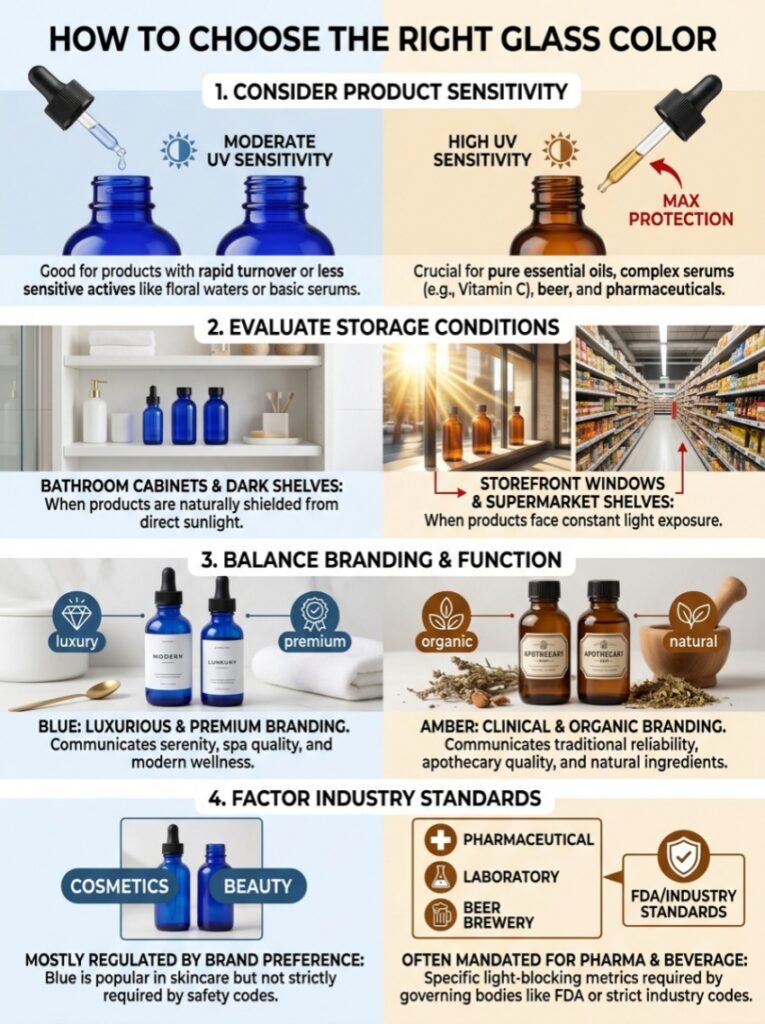
Consider Product Sensitivity First:Talk to your lead formulator, chemist, or laboratory. Ask them exactly how sensitive the ingredients are to UV degradation. If they warn you about rapid oxidation or strict light-avoidance requirements, do not take the risk—go with amber. If the product is relatively stable, blue is on the table.
Evaluate the Retail and Storage Conditions:Where will your product physically live? If it will be displayed on a brightly lit supermarket shelf under harsh fluorescent store lights, or in a storefront window exposed to direct afternoon sunlight, you need maximum amber protection. If it will be sold inside an opaque secondary cardboard box, or stored mostly in a dark bathroom cabinet, you have the flexibility to choose blue glass.
Balance Branding and Function:Your packaging communicates your brand’s core values before the customer even reads the label. Amber glass looks classic, clinical, and organic. Blue glass looks luxurious, modern, and premium. Align the color tightly with your target audience’s visual expectations.
Factor in Regulatory or Industry Standards:Are you selling a registered pharmaceutical or a certified therapeutic compound? Check your industry regulations. Some governing bodies require specific light-blocking packaging metrics that only amber can pass.
Why Smilebottles Is Your Trusted Partner for Colored Glass Packaging
Once you have decided on the color, finding the right manufacturing supplier is your next critical step. You need a B2B partner who deeply understands the technical nuances of glass manufacturing and can deliver consistent, premium quality at scale. That is where we come in.
Smilebottles is a premier, internationally recognized china glass bottle manufacturer dedicated to helping brands elevate their product packaging. Whether you are looking for massive quantities of wholesale amber glass bottles for a new line of wellness supplements, or vibrant blue glass for a luxury cosmetic launch, we have the state-of-the-art infrastructure to meet your exact needs.
As a deeply experienced glass bottle manufacturer, we offer:
Uncompromising Quality Control: Our colored glass is manufactured using high-quality raw materials, ensuring that the color is baked into the molecular structure of the glass itself—it is never just painted or sprayed on. This guarantees the UV protection will never scratch, peel, or fade over time.
Extensive Customization: We specialize in producing custom glass bottles. If you need a unique, proprietary shape, specific threading for a specialized serum pump, or custom screen-printing, frosting, and labeling, our dedicated OEM and ODM services are designed to bring your exact vision to life.
Scalability and Reliability: Whether you are a mid-sized boutique brand testing a new product line or a massive multinational corporation needing large bulk shipments, we offer highly competitive wholesale pricing and reliable global shipping logistics.
Partnering with Smilebottles means you are not just buying empty containers; you are making a strategic investment in the safety, stability, and marketability of your products.
FAQ Frequently Asked Questions About Colored Glass Bottles
To help you finalize your supply chain decisions, we have compiled detailed answers to some of the most common questions our B2B clients ask us during the purchasing and quoting process.
Q1: Do blue glass bottles block UV light completely?
A1:No, they do not. While blue glass provides a moderate barrier against visible light and is a massive upgrade over clear glass, it does not block all UV rays. If your product is highly sensitive to UV degradation, amber is a significantly safer and more reliable choice.
Q2: Can I use clear glass if I put the bottle inside a protective box?
A2:Yes, you can. If your brand aesthetic strictly demands the look of clear glass, you can use secondary packaging—like an opaque, thick cardboard box—to block the light while the product is on the retail shelf. However, remember that once the consumer discards the box in their home, the product will be completely vulnerable to light damage on their bathroom counter.
Q3: Are amber bottles only used for medicine and beer?
A3:Not at all! While those industries rely heavily on the functional benefits of amber glass, it has become incredibly trendy in the modern skincare, haircare, and home fragrance markets. The rustic “apothecary look” is highly sought after by millennial and Gen-Z consumers who prefer organic, clean, and natural branding.
Q4: How do I clean and sterilize colored glass bottles for reuse or production?
A4:Because the color is integrated into the glass matrix, colored glass is just as durable and heat-resistant as clear flint glass. You can safely wash, boil, autoclave, or run both blue and amber bottles through commercial factory sterilization processes without any risk of the color fading, warping, or leaching into your product.
Conclusion
If your primary priority is uncompromising, scientific-grade light protection to ensure product stability and guarantee a long shelf life, amber glass is the undisputed winner. It is the protective fortress your sensitive ingredients need. On the other hand, if your product is slightly less sensitive to light and your marketing strategy relies on projecting luxury, tranquility, and premium wellness, blue glass offers stunning visual appeal that consumers love, while still providing a moderate, acceptable level of protection. By understanding the physics of light, the chemistry of your formulations, and the psychology of your consumers, you can confidently choose the packaging that will protect your investment and delight your buyers.


