


Table of Contents
ToggleAuthor: SmileBottles Editorial Team
Estimated Reading Time: About 16 Minutes
As demand for premium wine packaging continues to grow globally, finding a reliable wine bottle supplier is more important than ever. Whether you are actively looking to buy wine bottles in bulk or simply comparing your current procurement costs against the broader market, you need a partner who can deliver on quality, price, and timing.
Perhaps you have been searching for wine bottles wholesale near me to cut down on shipping times, or maybe you are ready to look overseas to maximize your profit margins. Whatever your strategy, this comprehensive buyer’s guide will walk you through exactly why high-quality glass matters, how to evaluate potential partners, the main purchasing channels available to you, and a detailed look at the top five wine bottle manufacturers in the market today.
Why High-Quality Glass Wine Bottles Matter in the Wine Industry
When you order bulk wine bottles, it is easy to view them simply as a commodity. However, the glass you choose plays a massive role in the success of your wine. Here is why you cannot afford to compromise on quality when selecting your packaging.
Shelf Appeal and Brand Differentiation
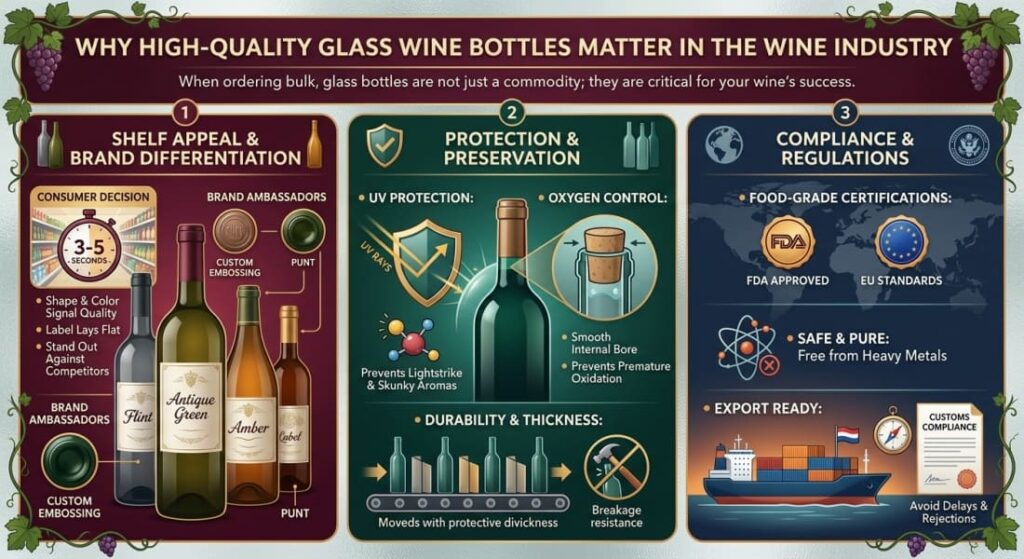
In the wine industry, the first impression is often the only impression that matters. Studies show that consumers take just a few seconds to make a purchase decision when browsing a wine aisle. Your bottle’s shape, color, and finish are the silent ambassadors of your brand.
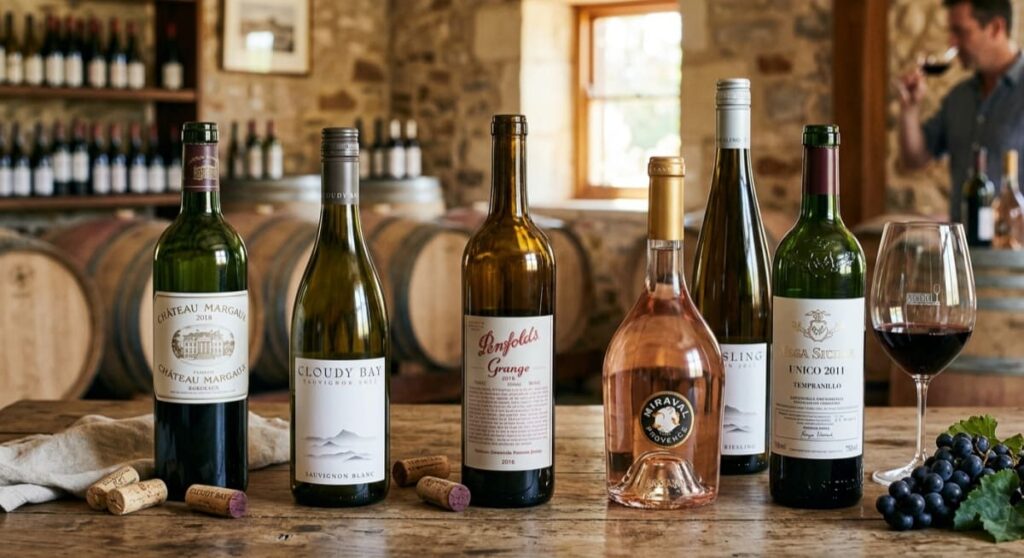
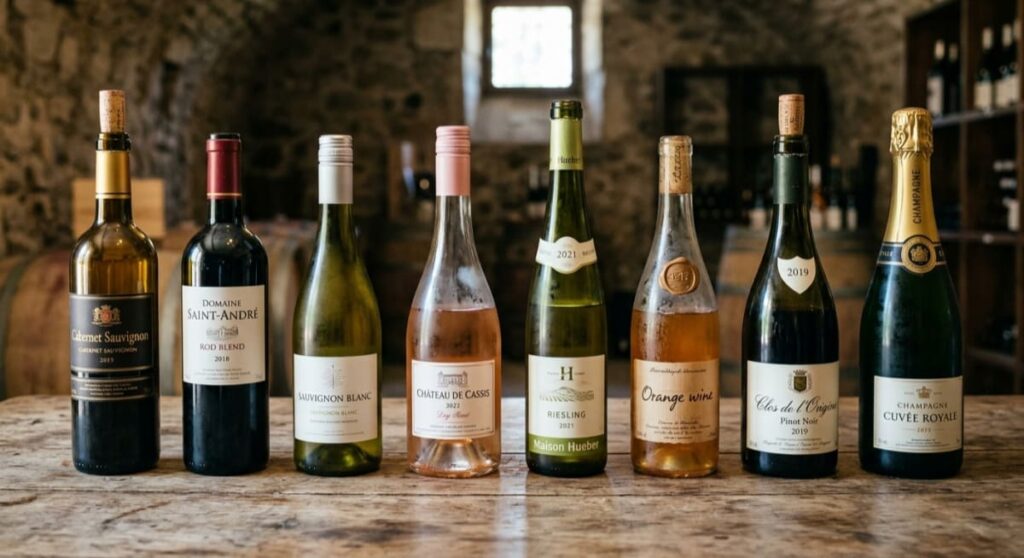
When you source wholesale glass wine bottles, you have choices ranging from clear flint glass for crisp white wines and rosés, to deep antique green and amber glasses for aging robust reds. The weight of the bottle, the depth of the punt (the indentation at the bottom of the bottle), and custom embossing all signal quality to the consumer. A well-crafted bottle allows your label to sit perfectly flat and your brand to stand out against competitors.
Protection and Preservation of Wine Quality
Glass is not just a container; it is an active protector of your wine’s chemical composition. When you work with experienced wine bottle makers, they engineer their glass to provide essential safeguards:
UV Protection: Lightstrike occurs when ultraviolet light penetrates the glass and reacts with the amino acids in the wine, creating unpleasant, skunky aromas. High-quality colored glass, particularly dark green and amber, acts as a filter to prevent this degradation.
Oxygen Control: The integrity of the bottle’s neck and finish is crucial. If the internal bore of the neck is not perfectly smooth and perfectly sized, your cork or screw cap will not seal correctly. This leads to premature oxidation, turning a beautiful vintage into vinegar.
Glass Thickness and Durability: Whether your bottles are moving through a high-speed automated bottling line or bumping against each other during international transit, they need structural integrity. Weak glass leads to breakage, which means lost product and potential damage to surrounding inventory.
Compliance with Industry Standards and Regulations
The food and beverage industry is heavily regulated, and your packaging must comply with strict safety standards. When buying wine bottles in bulk, you must ensure your supplier meets food-grade certifications, such as FDA approval in the United States or equivalent EU standards.
Your glass must be free from harmful heavy metals and contaminants. Furthermore, if you are exporting your wine, different countries have specific packaging safety requirements and import restrictions. Working with a compliant manufacturer ensures your goods will not be held up at customs or rejected by retailers.
How to Choose the Right Wine Bottle Manufacturer
Navigating the landscape of wine packaging suppliers can be overwhelming. Not all manufacturers operate at the same level of precision. When evaluating a potential partner for your business, you should scrutinize the following five areas.
Quality Control and Production Standards
A manufacturer’s quality control process is the only thing standing between you and a warehouse full of defective bottles. Look for factories that hold ISO 9001 certifications. Ask them about their inspection processes. Do they use automated camera systems on the production line to detect micro-fractures, bubbles, and uneven glass distribution?
Consistency across batches is critical. If you order a specific shade of dead leaf green in January, the batch you order in November needs to match it perfectly. Strict quality control guarantees this consistency.
Customization Capabilities
As your brand grows, you may want to move away from standard stock bottles to something uniquely yours. Your chosen supplier should offer robust customization options. This includes:
Bottle Shapes: Ability to produce standard Bordeaux, Burgundy, Hock, and Champagne styles, as well as custom molds.
Embossing and Debossing: Adding your logo or brand name directly into the glass mold.
Closure Compatibility: Offering precise finishes for natural corks, synthetic corks, or modern BVP/Stelvin screw caps.
Sustainability and Eco-Friendly Practices
Consumers are increasingly demanding environmentally responsible products. They gravitate toward trusted direct-to-consumer wine brands with clear sourcing and sustainable practices. Your packaging plays a huge part in this.
Ask your supplier about their use of “cullet” (recycled glass) in their furnaces. You should also inquire about lightweight wine bottles. These bottles use significantly less raw material and require less energy to manufacture and transport, allowing you to reduce your carbon footprint and lower your shipping costs simultaneously.
Lead Time, MOQ, and Global Logistics
Understanding a supplier’s Minimum Order Quantity (MOQ) is essential. Some massive factories require you to buy millions of bottles, which is not feasible for mid-sized distributors. You need a supplier whose MOQ aligns with your cash flow and warehousing capacity.
Additionally, discuss production timelines. How long does it take from placing a purchase order to the bottles leaving the factory floor? Do they offer FOB (Free On Board) or CIF (Cost, Insurance, and Freight) terms? A supplier with a strong global logistics network will save you countless headaches.
Pricing Transparency and Scalability
When sourcing glass wine bottles wholesale, the cheapest unit price is not always the best deal. You need pricing transparency. Are there hidden costs for palletizing, shrink-wrapping, or custom mold fees? Look for a partner who offers clear bulk pricing tiers and shows a willingness to scale with you as a long-term strategic partner.
Main Ways to Buy Wine Bottles in Bulk
Once you know what to look for, you need to decide where to source your inventory. There are four primary avenues for securing your packaging, each with its own pros and cons.
Local Manufacturers and Distributors
Many wineries start by looking for a local option. The main advantages are faster delivery times, lower domestic shipping costs, and easier communication. If there is a quality issue, resolving it locally is usually straightforward. However, the major downside is cost. Local manufacturers in regions like North America or Western Europe often have significantly higher labor and overhead costs, which translates to a higher price per bottle. Furthermore, local bottle distribution companies often act as middlemen, marking up the price of stock they imported themselves.
International Suppliers (China, India, Europe)
To maximize profitability, most large wholesale distributors turn to international wine bottle suppliers. Countries like China and India have massive glass manufacturing hubs that benefit from economies of scale, offering highly competitive pricing and high-volume production capabilities.
While the unit cost is much lower, you must factor in longer lead times and the complexities of international ocean freight. Partnering with an experienced overseas factory that has a dedicated export team is crucial to mitigating these risks.
B2B Online Marketplaces
Platforms like Alibaba and Made-in-China have made it easier to connect with overseas factories. While these platforms offer vast selections of empty wine bottles wholesale, they come with significant risks. It can be difficult to verify if you are talking to an actual factory or a trading company marking up the price. Quality can be highly inconsistent, and resolving disputes across borders can be frustrating.
Trade Shows and Industry Events
Attending packaging and wine industry trade shows is one of the best ways to find reliable partners. Walking the floor allows you to network directly with manufacturers, physically inspect the weight, clarity, and finish of sample bottles, and negotiate terms face-to-face.
Top 5 Wine Bottle Manufacturers for Bulk Wholesale Orders
To save you time in your procurement process, we have compiled a list of the top five manufacturers in the global market today. This list covers a range of needs, from massive global scale to specialized custom flexibility.
1. Smilebottles (Best for Customization & Wholesale Flexibility)
If you are looking for an exceptional balance of quality, competitive pricing, and outstanding customer service, Smilebottles is a premier choice. As an experienced manufacturer based in China, Smilebottles has built a strong reputation as a highly reliable custom wine bottles manufacturer.
Key strengths:
Wide Customization Options: Whether you need a unique mold, specific color matching, or intricate embossing, their engineering team brings your vision to life.
Competitive Bulk Pricing: By leveraging advanced manufacturing technology, they offer highly competitive rates for wholesale wine glass bottles without sacrificing quality.
Strong Export Experience: Smilebottles understands the nuances of global logistics. They expertly palletize and secure shipments to ensure minimal breakage during ocean transit.
Ideal for: Wholesale distributors, private label brands, and wineries looking for high-quality packaging with flexible MOQs.
2. Saverglass (Premium Glass Packaging Specialist)
Based in France, Saverglass is world-renowned for catering to the ultra-premium and luxury beverage markets.
Key strengths:
Known for producing exceptionally clear flint glass and heavy, luxurious bottle designs for high-end wine and spirits.
Strong in-house design capabilities and trend-setting shapes.
Ideal for: Ultra-premium brands where packaging cost is secondary to luxury aesthetics. The downside is that their pricing and MOQs are often prohibitive for everyday or mid-tier wine brands.

3. Piramal Glass (Global Manufacturing Scale)
Piramal Glass, headquartered in India, is a massive player in the global glass industry. They serve not only the wine and spirits sectors but also cosmetics and pharmaceuticals.
Key strengths:
Massive production capacity capable of fulfilling incredibly large orders.
Consistent quality across huge production runs.
Ideal for: Very large, multinational beverage corporations that require tens of millions of identical bottles annually.

4. Vitro Packaging (North American Leader)
For brands operating strictly within the Americas and looking for a localized supply chain, Vitro Packaging is a dominant force. Headquartered in Mexico, they have a strong presence in the U.S. market.
Key strengths:
Reliable, fast supply chain for North American customers.
Broad range of stock bottle options.
Ideal for: U.S. and Canadian distributors who prefer a near-shored supplier and are willing to pay slightly higher prices than overseas options for faster regional transit.
5. O-I Glass (Owens-Illinois)
O-I Glass is a historic giant in the glass industry. They have been shaping the way the world uses glass for over a century. Long before they became a dominant force in the wine industry, early collectors and historians might recognize vintage items from their past, such as the classic owens glass medicine bottle 3ii, which showcases their century-long expertise in glass molding and innovation.
Key strengths:
One of the largest glass manufacturers globally, with facilities on multiple continents.
Strong corporate sustainability initiatives.
Ideal for: Massive domestic wineries looking for standardized, high-volume production from an established corporate entity.
Latest Trends in Glass Wine Bottle Packaging
The wine market is constantly evolving, and packaging must evolve with it. When you purchase wine bottle wholesale, staying ahead of packaging trends ensures your product remains relevant to modern consumers.
Lightweight Bottles for Cost and Sustainability
Historically, a heavy bottle was equated with high-quality wine. Today, that perception is shifting. Distributors and consumers alike are recognizing the environmental impact of shipping heavy glass. Advanced manufacturing techniques now allow factories to produce lightweight wine bottles that maintain the structural integrity and pressure resistance of traditional bottles while using up to 20-30% less glass. This significantly reduces freight costs and lowers your overall carbon footprint.
Premiumization and Unique Bottle Designs
As the market becomes more crowded, brands are fighting for attention through premiumization. This means moving away from standard stock shapes and investing in custom molds. Unique neck profiles, geometric punt designs, and striking glass colors are becoming more prevalent. Distributors are increasingly seeking out a wine bottle supplier who can provide these bespoke services.
Eco-Friendly and Recycled Materials
Sustainability is no longer a buzzword; it is a purchasing requirement for many demographics. Using recycled glass wine bottles is a major trend. Glass is infinitely recyclable without loss of quality or purity. Wineries are proudly displaying their commitment to the environment on their labels, and they require glass suppliers who utilize high percentages of post-consumer recycled glass in their manufacturing process.
Smart Packaging and Branding Innovations
We are seeing an increase in the integration of technology with glass packaging. From QR codes printed directly onto the glass to NFC tags embedded under the label, brands are finding ways to tell their story directly to the consumer’s smartphone. Furthermore, advanced screen printing directly onto the glass is replacing traditional paper labels for a sleek, modern look.
How Smilebottles Supports Distributors and Wholesalers
If you are a wholesale distributor, your reputation relies entirely on the reliability of your supply chain. You need a partner, not just a vendor. Finding a good bottle supplier wine professionals trust can transform your operations. Here is how Smilebottles supports your business when you need to source bulk empty wine bottles.
Flexible Bulk Ordering and Competitive Pricing
We understand that cash flow and warehouse space are critical components of a wholesale distribution business. Smilebottles offers flexible MOQs that allow you to test new bottle designs or stock up for seasonal demands without over-leveraging your capital. Because we are a direct manufacturer, you bypass the middleman markups associated with standard bottle distribution companies, ensuring you get the best possible price.
Custom Design and Branding Support
If your clients are asking for something unique, we have the engineering expertise to deliver. From minor adjustments to standard Bordeaux shapes to completely custom molds featuring intricate embossing, our design team works closely with you. We provide detailed 3D renderings and physical samples before mass production begins, ensuring the final product matches your exact specifications.
Reliable Production and Quality Assurance
We know that a delayed shipment or a batch of defective bottles can cost you a major client. Smilebottles operates with rigorous quality control standards at every stage of production. From raw material inspection to automated inline defect detection, we ensure that every bottle meets strict international standards for strength, capacity, and aesthetic perfection.
Global Shipping and Supply Chain Support
Manufacturing the bottle is only half the battle; getting it to your warehouse safely is the other. We have years of experience loading and securing ocean freight containers. We use high-quality, export-grade pallets and shrink-wrapping techniques to ensure your wine bottles wholesale arrive intact and ready for the bottling line.
If you are ready to upgrade your packaging supply chain, contact Smilebottles today for a free quote or to request a sample. Let us show you why we are the preferred partner for growing wine brands worldwide.
FAQ: Frequently Asked Questions About Buying Wine Bottles in Bulk
To further assist you in your purchasing journey, we have compiled answers to the most common questions buyers ask when looking to procure glass packaging.
Q1:What is the minimum order quantity for wine bottles?
A1:The MOQ depends entirely on the manufacturer and the type of bottle. For standard, off-the-shelf stock bottles, some suppliers might allow orders as small as one or two pallets (roughly 1,500 to 3,000 bottles). However, if you are working directly with a factory for custom wine bottles, the MOQ is typically higher to justify the machine setup time, often starting around 10,000 to 20,000 units.
Q2:How much do bulk wine bottles cost?
A2:Pricing fluctuates based on global raw material costs, energy prices, and shipping rates. Premium heavy glass or highly customized bottles will cost significantly more. Buying directly from an overseas manufacturer like Smilebottles will secure you the lowest unit cost compared to buying from domestic distributors.
Q3:Can I customize wine bottles with my logo?
A3:Yes, absolutely. Working with dedicated wine bottle suppliers allows you to create custom molds that feature your brand’s logo embossed (raised) or debossed (indented) directly into the glass. You can also customize the punt depth, neck profile, and glass color. Keep in mind that creating a custom mold usually involves a one-time mold fee.
Q4:How long does production and shipping take?
A4:Lead times vary. If you are ordering stock bottles that are currently in inventory, they can ship almost immediately. For new production runs of standard bottles, expect 3 to 5 weeks of production time. If you are developing a custom mold, add an additional 2 to 4 weeks for mold creation and sample approval. International ocean freight typically takes 3 to 6 weeks, depending on the destination port.
Q5:Are glass wine bottles recyclable?
A5: Yes, glass is 100% recyclable and can be recycled endlessly without any loss in quality or purity. The use of recycled glass (cullet) in manufacturing new bottles reduces raw material consumption, extends the life of factory furnaces by lowering the melting temperature required, and significantly cuts CO2 emissions.
Conclusion
Selecting the right partner for your glass packaging is a strategic decision that directly impacts your bottom line, your operational efficiency, and your brand’s market perception. When you set out to find the best wine bottle supplier, you must look beyond just the lowest per-unit price.
By taking the time to vet international manufacturers and understanding the nuances of glass production, you position your business for scalable success. Smilebottles stands ready to be that reliable partner, offering the perfect blend of premium quality, wholesale flexibility, and direct-from-factory pricing. When you are ready to elevate your packaging and streamline your supply chain, we are here to help you pour success into every bottle.


