


Table of Contents
ToggleAuthor: SmileBottles Editorial Team
Estimated Reading Time: About 16 Minutes
Among all the materials available today, glass remains the premium choice across industries—from gourmet foods to luxury fragrances. But with so many options on the market, how do you know which glass bottles and jars are right for your products?
This guide is designed specifically for buyers like you—brand owners, procurement managers, and product developers who need practical, actionable information. We’ll walk through the main types of glass bottles and types of glass jars, explain how they differ by shape, application, and color, and help you make confident purchasing decisions. Whether you’re sourcing containers for a new cologne line or looking for the perfect jar for artisan honey, this quick scan will give you the clarity you need.
What Are Glass Bottles and Glass Jars?
Before diving into specific categories, let’s clarify the fundamental difference between these two container types. Understanding this distinction will help you communicate more effectively with your glass packaging manufacturer and ensure you’re ordering the right product.
What Is a Glass Bottle?
A glass bottle typically features a neck that’s narrower than its body. This design isn’t just aesthetic—it serves a functional purpose. The narrow opening controls the flow of liquids, making bottles ideal for products that need to be poured, sprayed, or dispensed in measured amounts. Think of a bottle of wine, a perfume atomizer, or a dropper bottle for essential oils. If your product is liquid and needs controlled dispensing, you’re looking at various glass bottle types.
What Is a Glass Jar?
A glass jar, on the other hand, has a wide opening—often nearly as wide as the container itself. This design makes it easy to scoop, spoon, or reach inside. Jars are your go-to choice for thick creams, solid foods, powders, and anything that needs to be accessed with utensils or fingers. When you’re evaluating glass jar types, you’re typically dealing with products that are semi-solid or solid.
Key Differences Between Bottles and Jars
The choice between a bottle or jar comes down to several factors:
Neck size: Bottles have restricted openings; jars have wide mouths
Dispensing method: Bottles pour or spray; jars require scooping
Product form: Bottles suit liquids; jars suit thicker consistencies
Filling process: Bottles often need specialized filling equipment; jars are easier to fill manually
User experience: Bottles offer controlled dispensing; jars offer full access to contents
Types of Glass Bottles by Shape
The silhouette of your packaging creates an immediate visual impact. When you’re browsing different types of glass bottles, understanding the standard bottle shapes and their proper bottle shape names will help you communicate clearly with suppliers and make informed decisions.
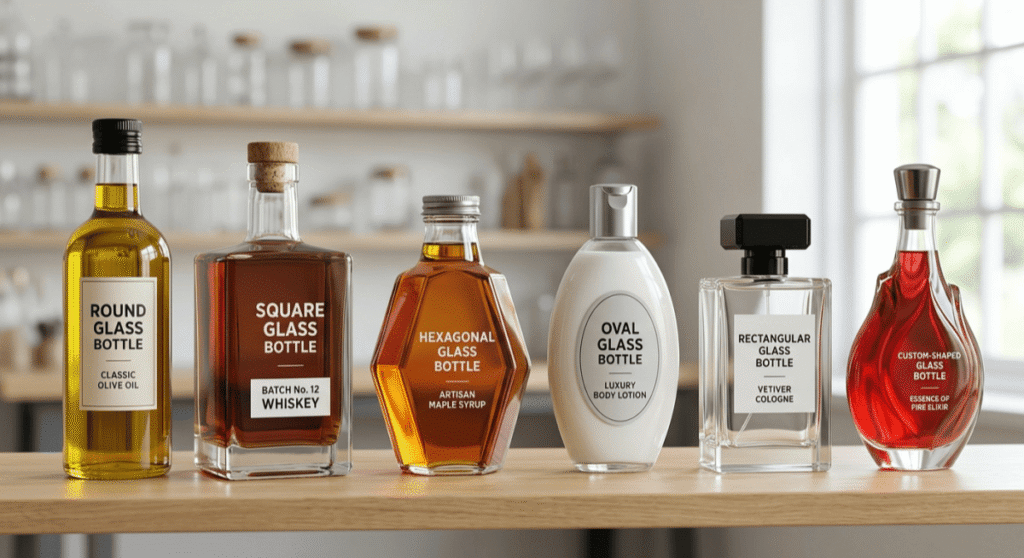
Round Glass Bottles
Round bottles are the workhorses of the packaging world. Their cylindrical shape is structurally sound, distributes pressure evenly, and is the most cost-effective to manufacture. Round glass bottles are incredibly versatile—you’ll find them holding everything from beverages to essential oils to cosmetic serums. They’re easy to label, comfortable to hold, and stack efficiently in shipping cartons. If you’re looking for a reliable, budget-friendly option that works across multiple product categories, round bottles should be your starting point.
Square Glass Bottles
When you want a more contemporary look and maximum shelf efficiency, square glass bottles deliver on both fronts. Their flat panels create a modern, structured aesthetic that stands out on retail shelves. More importantly, square bottles sit flush against each other, eliminating wasted space in shipping boxes and on store displays. This shape is particularly popular for premium spirits, reed diffusers, and high-end skincare products. The flat surfaces also provide excellent areas for labeling or direct printing.
Hexagonal Glass Bottles
If you’re aiming for distinctive, eye-catching packaging, hexagonal glass bottles offer a unique six-sided profile. The multiple facets catch light beautifully, creating visual interest that draws the eye. This shape has become synonymous with artisanal and specialty products—think gourmet hot sauces, craft syrups, and boutique bath oils. While they cost slightly more than round bottles, the premium positioning they provide often justifies the investment.
Oval Glass Bottles
For an elegant, ergonomic profile, oval glass bottles provide a sophisticated middle ground. Their elongated, flattened shape feels natural in the hand and fits easily into bags and cabinets. You’ll frequently see this shape in personal care products—shampoos, body washes, and luxury lotions. The oval profile projects refinement while maintaining practical functionality.
Rectangular Glass Bottles
When you need to convey authority and luxury, rectangular glass bottles make a powerful statement. This shape is a staple in the fragrance industry and premium liquor market. The wide front panel provides ample space for bold branding, while the slim side profile maintains shelf efficiency. If you’re developing glass cologne bottles or high-end spirits packaging, rectangular bottles should be on your shortlist.
Custom-Shaped Glass Bottles
Sometimes standard types of bottles won’t capture your brand’s unique identity. When you need something truly distinctive, working with a custom glass bottle manufacturer allows you to create proprietary molds. Custom shapes can range from subtle modifications of standard designs to completely unique sculptural forms. While they require higher minimum order quantities and longer lead times, custom bottles provide unmatched brand differentiation.
Types of Glass Bottles by Application
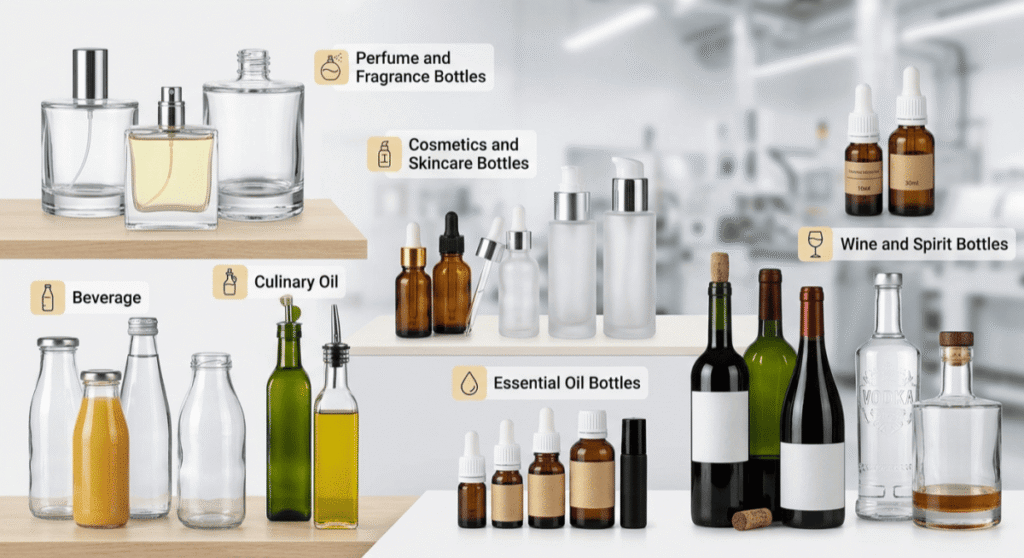
Your product dictates your packaging requirements. When evaluating different types of bottles, you need to consider not just aesthetics but also functional compatibility with your specific application.
Perfume and Fragrance Bottles
The fragrance industry demands absolute perfection in packaging. When you’re sourcing perfume glass bottles, clarity and precision are non-negotiable. You need “super flint” glass that’s crystal-clear to showcase the color of your fragrance. The base should be thick and heavy to convey luxury when held.
If you’re helping customers choose the right glass cologne bottles, focus on crimp neck compatibility. The neck finish must precisely match your atomizer specifications to prevent evaporation and leakage. Whether you’re buying standard empty perfume bottles , sourcing wholesale perfume bottles, or developing bespoke custom perfume bottles , partner with an experienced perfume bottle manufacturer or glass perfume bottle manufacturer. A specialized perfume bottle supplier understands the technical requirements for luxury perfume bottles and can guide you through atomizer compatibility, decoration options, and quality standards.
Cosmetics and Skincare Bottles
Beauty formulations are often delicate and expensive. Cosmetic glass bottles and glass cosmetic bottles are preferred because glass is completely inert—it won’t react with active ingredients or leach chemicals into your product. You might need skincare glass bottles for daily-use products, small serum glass bottles (or glass serum bottles) for concentrated treatments, or elegant lotion glass bottles paired with pump dispensers.
Working with a knowledgeable cosmetic bottle manufacturer ensures you get containers that protect your formulations while projecting the premium image your brand deserves. If standard options don’t meet your needs, custom cosmetic bottles can be developed to your exact specifications.
Essential Oil Bottles
Essential oils are volatile compounds that degrade rapidly when exposed to light and oxygen. That’s why essential oil glass bottles and glass essential oil bottles are typically small (10ml to 30ml) and made from dark-tinted glass. Amber essential oil bottles are the industry standard because amber glass blocks harmful UV rays. These bottles are almost always paired with specific closures, creating dropper glass bottles that allow precise, drop-by-drop dispensing.
Wine and Spirit Bottles
The alcohol industry is glass packaging’s largest customer.
Wine: Wine glass bottles follow centuries-old standardized shapes like Bordeaux (high shoulders) and Burgundy (sloped shoulders). Wineries typically purchase empty wine bottles in bulk, often by the truckload.
Spirits: Spirit glass bottles need to stand out in crowded bars and liquor stores. Liquor glass bottles often feature thick bases for a premium feel and custom embossing for brand recognition. Specific categories include tall vodka glass bottles and stout whiskey glass bottles.
Beverage Bottles
For non-alcoholic drinks, beverage glass bottles ensure no plastic taste contaminates your product. Health-conscious brands favor juice glass bottles for cold-pressed juices, water glass bottles for premium mineral water, and nostalgic milk glass bottles for dairy and plant-based alternatives.
Culinary Oil Bottles
In the kitchen, the right type bottle prevents messy drips and protects product quality. Glass oil bottles typically feature elongated necks for smooth pouring. Premium olive oil glass bottles are usually tinted dark green or amber to prevent oxidation from light exposure, while standard cooking oil glass bottles might be clear to showcase the golden liquid inside.
Types of Glass Bottles by Color
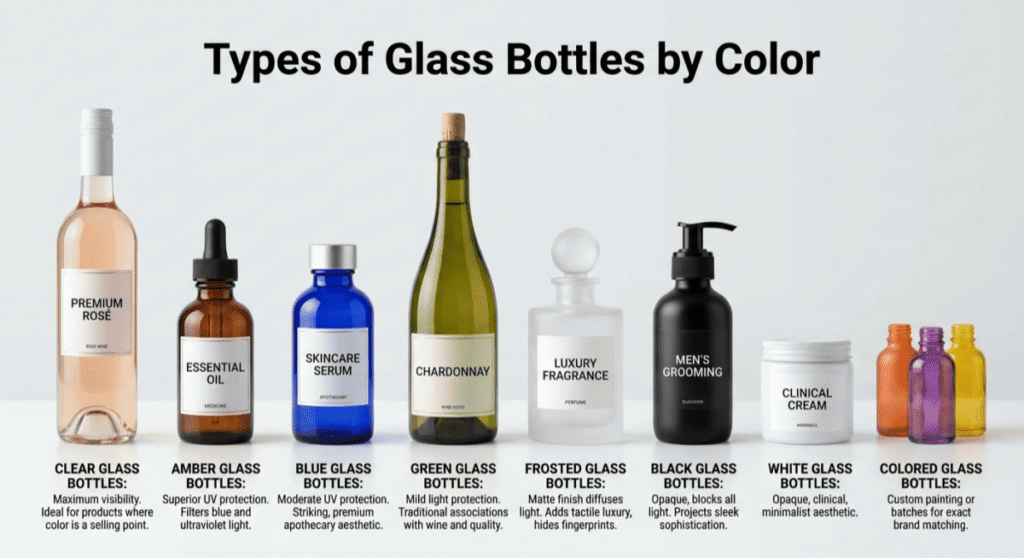
The color of your glass isn’t just about aesthetics—it’s a critical functional decision that affects product stability and shelf life. When reviewing different types of bottle colors, consider your product’s sensitivity to light.
Clear Glass Bottles
Clear or “flint” glass offers maximum product visibility. Clear glass bottles are ideal when the color of your product is a selling point—think pink rosé wine, vibrant cosmetics, or premium cologne. They project cleanliness and purity, making them popular across multiple industries.
Amber Glass Bottles
Amber is the industry standard for UV protection. Amber glass bottles filter out blue and ultraviolet light, protecting light-sensitive contents from degradation. They’re essential for pharmaceuticals, essential oils, and certain beverages like craft beer.
Blue Glass Bottles
Cobalt blue offers moderate UV protection while providing a striking, premium appearance. Blue glass bottles have an apothecary aesthetic that’s particularly popular in skincare and aromatherapy products.
Green Glass Bottles
Ranging from antique green to bright emerald, green glass bottles provide mild light protection and carry strong traditional associations with wine and olive oil. They’re a classic choice that signals quality and heritage.
Frosted Glass Bottles
Frosting creates a soft, matte finish that diffuses light and hides fingerprints. Frosted glass bottles add a tactile, luxurious element to packaging and are frequently used in high-end cosmetics and fragrances.
Black Glass Bottles and White Glass Bottles
Opaque glass completely blocks light. Black glass bottles project sleek sophistication (ideal for men’s grooming), while white glass bottles offer a clinical, minimalist aesthetic.
Colored Glass Bottles
Through custom painting or color-injected glass batches, you can create colored glass bottles in virtually any shade to match your brand’s exact Pantone color.
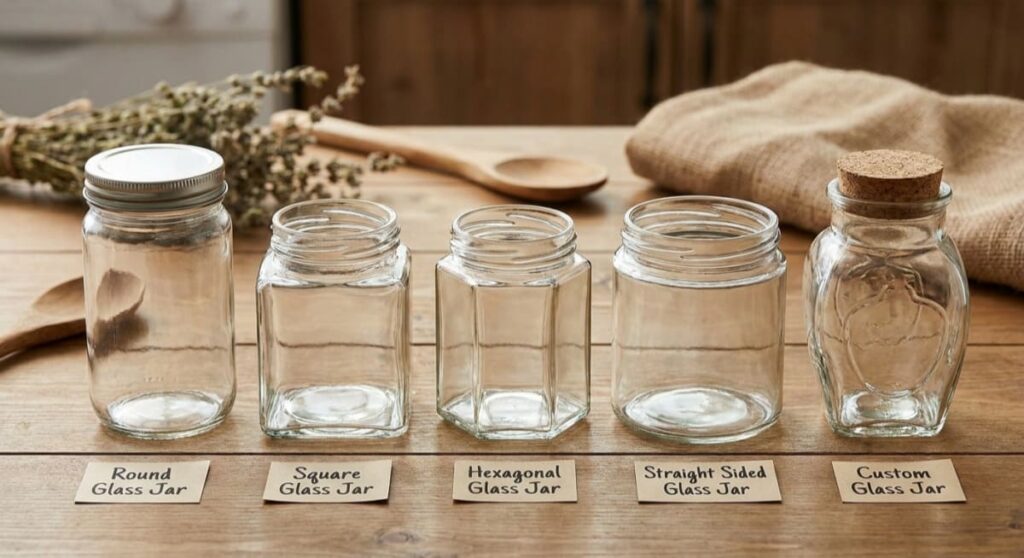
Types of Glass Jars by Shape
Just like bottles, the shape of your jar impacts both functionality and brand perception. Understanding the various jar shapes and types of jars helps you select containers that work for both your product and your customers.
Round Glass Jars
Round jars are the most common and cost-effective option. Round glass jars are structurally sound, easy to fill on automated lines, and comfortable to hold. They work for virtually any application—from food to cosmetics to candles.
Square Glass Jars
When shelf space is at a premium, square glass jars maximize efficiency. They sit flush against each other, creating clean visual lines on retail shelves and eliminating wasted space in shipping cartons. This shape is popular for honey, jams, spices, and storage applications.
Hexagonal Glass Jars
For gourmet and gift packaging, hexagonal glass jars provide distinctive visual appeal. The multiple facets make contents look jewel-like and premium, which is why they’re favorites for artisan honey, specialty jams, and boutique food products.
Straight Sided Glass Jars
These jars feature uniform diameter from top to bottom with no inward curve at the neck. Straight sided glass jars make it incredibly easy for customers to scrape out every last bit of product, which is why they’re beloved for thick creams, balms, and body butters.
Custom Glass Jars
When standard options won’t differentiate your brand, working with a custom glass jar manufacturer allows you to create unique custom glass jars that belong exclusively to your brand.
Types of Glass Jars by Application
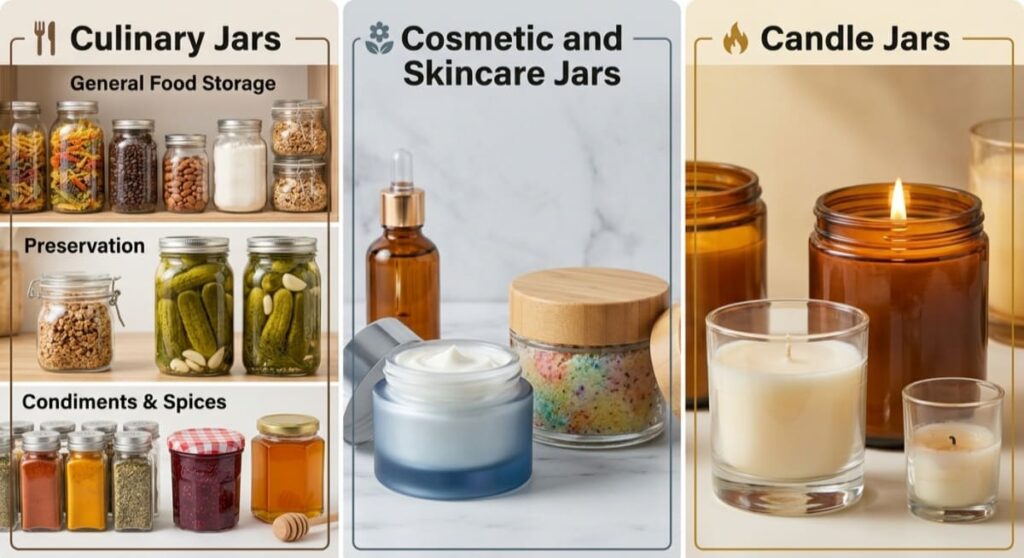
The intended use of your jar determines its required specifications—from wall thickness to thermal resistance to clarity.
Food and Culinary Jars
Glass is the ultimate food-safe material because it’s completely inert and non-reactive.
General Food Storage: Glass food jars come in countless sizes. You’ll find large food storage glass jars, glass storage jars, and general storage glass jars used for pantry staples like pasta, coffee, and nuts.
Preservation: The pickling process involves high heat and acidic vinegar. Pickle glass jars must withstand thermal shock and resist corrosion.
Condiments & Spices: Smaller spice glass jars are perfect for dry seasonings. For sweet spreads, brands use jam glass jars, glass honey jars, and versatile glass sauce jars.
Cosmetic and Skincare Jars
The beauty industry values glass for its weight and premium feel. Cosmetic glass jars elevate perceived product value. You’ll commonly source glass cream jars for rich night creams, exfoliating scrubs, and hair masks.
Candle Jars
Candle making requires glass that can endure sustained heat. Candle glass jars feature thicker walls and heavy bases to prevent cracking when wax burns down to the bottom.
Types of Glass Jars by Color and Finish
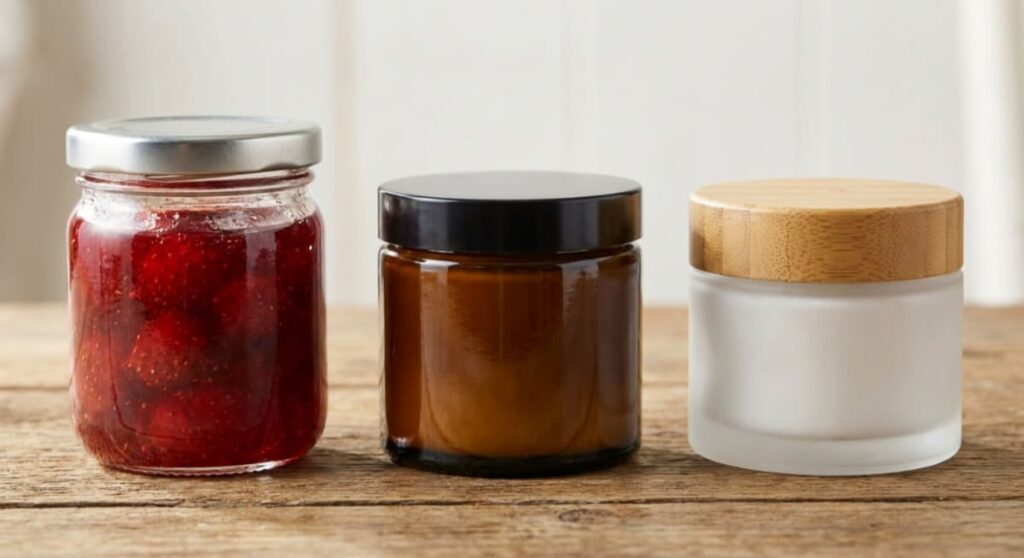
Like bottles, jars come in various tints and finishes to protect contents and enhance branding.
Clear Glass Jars
Perfect for showing off colorful contents like strawberry jam or layered cosmetic creams, clear glass jars maximize product visibility.
Amber Glass Jars
Ideal for light-sensitive face creams, natural salves, or herbal supplements, amber glass jars provide UV protection.
Frosted Glass Jars
Adding an elegant, muted aesthetic, frosted glass jars are highly popular for premium skincare packaging.
Types of Glass Jars by Mouth Finish
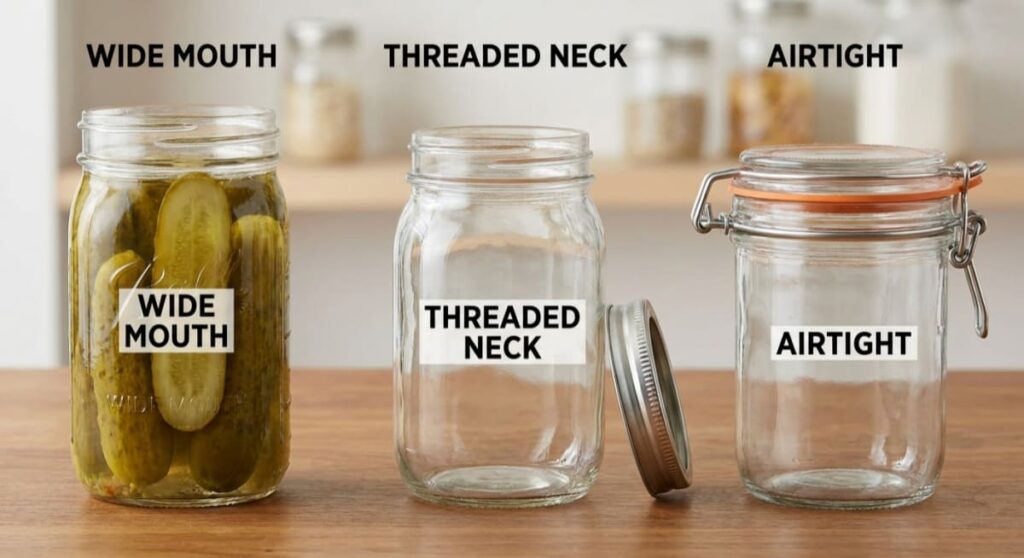
The opening of your jar—technically called the neck finish or mouth finish—determines how it seals and how customers access the contents.
Wide Mouth Glass Jars
These jars have openings nearly as wide as the base. Wide mouth glass jars are perfect for large pickles, scoops of protein powder, or thick body butters—anything that needs easy access.
Threaded Neck Jars
Designed with continuous threads molded into the glass, these jars pair with screw-on caps. You’ll often see them marketed as glass jars with screw lids.
Airtight Glass Jars
Featuring clamp lids with rubber gaskets, airtight glass jars are essential for long-term food preservation and keeping dry goods fresh.
Other Ways to Classify Glass Bottles and Jars
Beyond shape and application, several other factors affect your purchasing decision.
By Closure Type
Your packaging is only as good as its closure. You might need:
Glass jars with lids (metal lug lids or plastic domes)
Glass bottles with caps for standard pouring
Glass bottles with corks for traditional wine and spirits
Glass bottles with pumps for lotions and liquid soaps
Glass bottles with dropper assemblies for serums and tinctures
Specialized containers like a laboratory bottle with precise measurement markings
By Decoration and Customization
Standard glass can be transformed through glass bottle decoration. Services include:
Glass bottle printing: Screen printing logos directly on glass
Glass bottle frosting: Acid-etching for a matte finish
Glass bottle coating: Spray-painting custom colors
Glass bottle embossing: Creating raised glass lettering in the mold
By Sustainability
Positioning your brand with recyclable glass bottles, and recyclable glass jars is powerful marketing. Glass can be recycled infinitely without losing purity—the glass used to pour water from bottle to glass today can become a new container tomorrow.
How to Choose the Right Glass Bottles and Glass Jars
With so many options, how do you narrow down your choices? Follow this strategic checklist:
Consider Your Product Type
Is your product a thin liquid, thick emulsion, or dry solid? Liquids belong in bottles; creams and solids belong in jars. This fundamental decision guides everything else.
Think About Compatibility
Does your formula contain essential oils or high acids? Ensure the glass—and specifically the liner inside the cap—won’t degrade or react with your product.
Determine Light Sensitivity
If UV light will ruin your product, eliminate clear glass and choose amber, opaque, or heavily coated options.
Choose the Right Shape and Size
Consider your retail footprint. Do you need a tall bottle to stand out, or a square jar to stack efficiently? Think about shipping costs, shelf display, and user ergonomics.
Select the Best Glass Color
Decide whether product visibility or UV protection is more important for your specific application.
Check Mouth Finish and Closure
Ensure the thread size of your bottle matches the pump, dropper, or cap you intend to use. A mismatch leads to disastrous leaks and returns.
Evaluate Decoration and Branding Needs
Will simple labels suffice, or do you need direct printing, frosting, or embossing to achieve your desired brand image?
Review MOQ, Customization, and Supply Stability
Are you testing a small batch, or do you need to order bulk glass bottles, and empty glass bottles wholesale? Ensure your supplier can scale with your growth.
Can Glass Bottles and Glass Jars Be Customized?
Absolutely. In crowded markets, standard off-the-shelf packaging might not provide enough differentiation. This is where custom glass packaging becomes invaluable.
By working with a custom glass bottle manufacturer, you can engage in custom bottle packaging and custom jar packaging from the ground up. This involves creating a completely new, proprietary steel mold for your brand. You control the exact dimensions, base thickness, unique shape, and any raised embossed logos.
While custom molds require higher initial investment and larger minimum order quantities, the result is packaging—like signature custom glass bottles or custom glass jars—that belongs entirely to your brand and cannot be replicated by competitors.
Why Work with Smilebottles as Your Glass Packaging Manufacturer
Selecting the right container is only half the battle—selecting the right manufacturing partner guarantees your success. If you’re searching for a reliable, high-capacity glass packaging manufacturer, Smilebottles delivers comprehensive solutions.
Wide Product Range
As an experienced glass bottle manufacturer and glass jar manufacturer, we offer extensive inventory across all categories. Whether you need a dependable glass bottle supplier or a flexible glass jar supplier, we stock everything from standard shapes to specialty designs.
Wholesale Expertise
We specialize in wholesale glass bottles and wholesale glass jars, ensuring your production lines never experience delays due to packaging shortages. Our warehouse capacity and logistics network support both large-scale operations and growing businesses.
Manufacturing Power
Operating a state-of-the-art glass bottle factory and glass jar factory, we’re a leading china glass bottle manufacturer and china glass jar manufacturer. We have the scale to handle massive orders while maintaining strict quality control at every stage.
Perfume Bottle Expertise
We’re industry leaders in fragrance packaging. We understand the precise requirements for luxury cologne bottles—from heavy bases and flawless clarity to tight crimp tolerances. Our experience as a specialized supplier means we can guide you through atomizer compatibility, decoration options, and quality standards.
Complete Customization Capability
Beyond standard inventory, we excel at developing custom glass bottles and custom glass jars. Our in-house design team and mold-making facility can bring your unique vision to life, whether you need subtle modifications or completely original shapes.
One-Stop Packaging Solutions
We don’t just sell empty containers. We provide total glass bottle packaging and glass jar packaging solutions, including perfectly matched caps, pumps, droppers, and premium decoration services—all coordinated under one roof. This integrated approach saves you time, reduces coordination headaches, and ensures all components work together flawlessly.
Quality Control
Every piece of packaging that leaves our facility meets strict international quality standards. Your lids will fit tight, your glass will be flawless, and your customers will receive consistent, reliable containers every time.
FAQ: Frequently Asked Questions About Glass Bottles and Glass Jars
Q1:What is the core difference between a glass bottle and a glass jar?
A1:A bottle has a narrow neck designed for pouring or pumping liquids (like wine or serum), while a jar has a wide mouth designed for scooping or storing solids and creams (like jam or body butter).
Q2:Which glass color is best for light-sensitive products?
A2:Amber glass is the most effective at blocking UV and blue light, making it the industry standard for essential oils, pharmaceuticals, and certain food products.
Q3:What types of glass bottles are best for cologne and perfume?
A3:Perfume requires high-clarity “flint” or “super flint” glass. The best bottles feature thick, heavy bases for luxury feel and standard crimp necks to securely hold spray atomizers without leaking.
Q4:Are glass jars better than plastic jars for food storage?
A4:Yes. Glass is non-porous, completely inert, and impermeable. It won’t absorb food odors or leach chemicals into food, making it far superior to plastic for long-term storage.
Q5:Can glass bottles and jars be customized with logos and colors?
A5:Yes. Through professional manufacturers, you can customize packaging using screen printing, color coating, frosting, or by creating custom molds with your logo embossed directly into the glass.
Q6:How do I choose the right closure for a glass bottle or jar?
A6:You must match the neck finish (diameter and thread style). For example, a bottle with a 24/410 neck finish requires a cap or pump that’s also 24/410. Always ask your supplier to provide matching closures and perform leak tests.
Q7:Are glass bottles and jars recyclable?
A7:Yes, glass is 100% recyclable and can be recycled endlessly without any loss in quality, making it one of the most sustainable packaging materials available.
Conclusion
Choosing the right packaging requires balancing function, aesthetics, and user experience. Whether you need versatile round glass bottles, space-saving square glass jars, or bespoke luxury cologne bottles, the types of glass bottles and types of glass jars available to you are vast and highly customizable.
Your packaging is your brand’s silent ambassador. It must protect your product, appeal to your target customers, and align with your operational needs. By partnering with an experienced, comprehensive manufacturer like Smilebottles, the complex process of sourcing, customizing, and scaling your packaging becomes streamlined and stress-free.
Ready to find the perfect containers for your products? Contact our team today to explore our extensive catalog and discover how we can elevate your brand’s presentation with premium glass packaging solutions.


