



Table of Contents
ToggleAuthor: SmileBottles Editorial Team
Estimated Reading Time: About 15 Minute
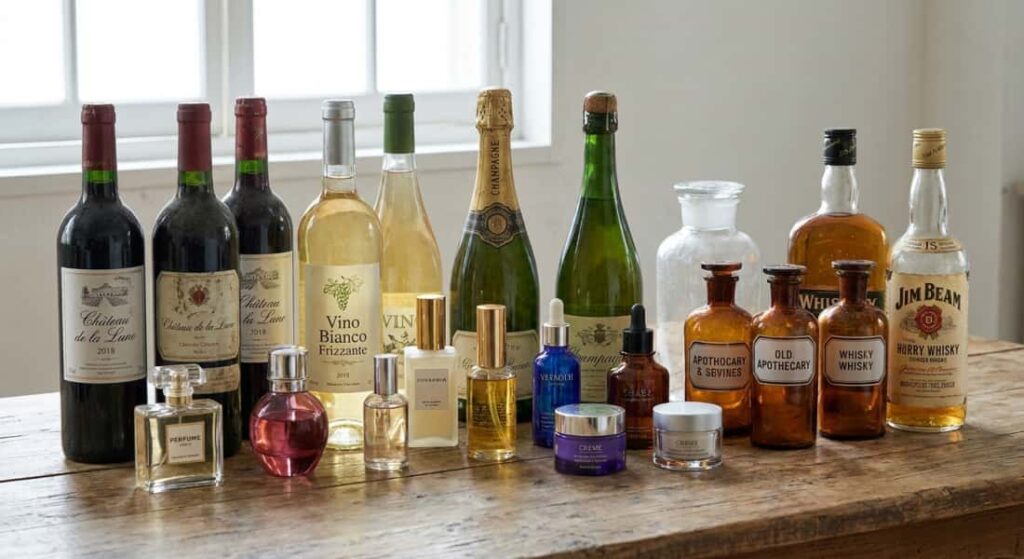
If you are launching a new product line or looking to rebrand an existing one, choosing the right packaging is one of the most critical decisions you will make. Your packaging protects your product, communicates your brand’s value, and influences a customer’s purchasing decision before they even try what is inside. Among all the packaging options available today, glass bottles remain one of the most trusted and preferred solutions across the globe.
You might wonder why, despite the rise of cheaper plastic and lightweight metal alternatives, glass packaging continues to dominate so many industries. From high-end beverages and delicate cosmetics to everyday food items and life-saving pharmaceuticals, glass maintains a reputation for uncompromising quality. The secret to its enduring success lies in its premium appearance, infinite recyclability, unyielding safety standards, and superior performance on the shelf.
In this comprehensive guide, you will discover the core reasons behind the popularity of this material, explore the many glass bottle uses across different markets, and learn exactly how to choose the right bottle for your specific product. Finally, you will see why partnering with Smilebottles, a leading manufacturer, can streamline your supply chain and elevate your brand.
Why Glass Bottles Are So Popular in Modern Packaging
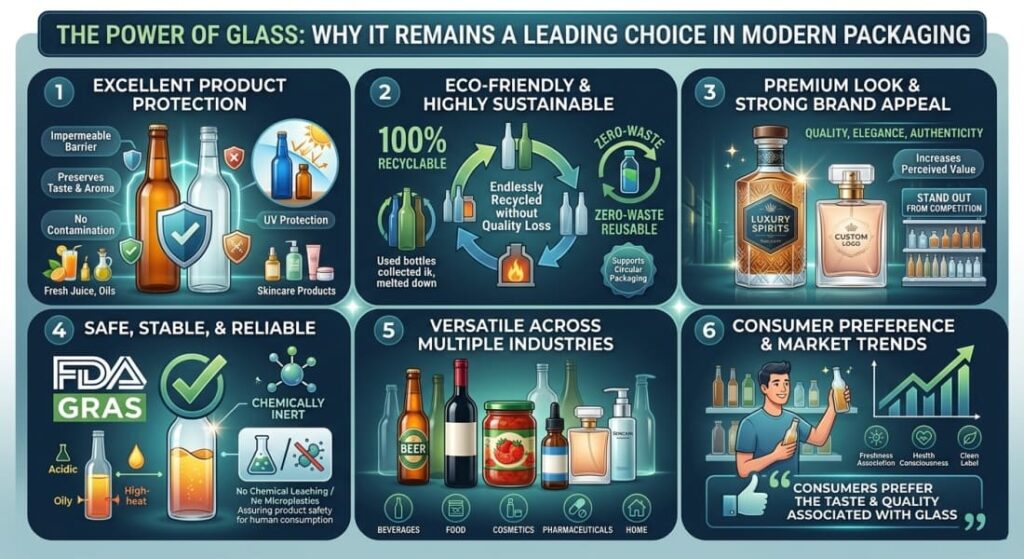
Glass continues to be a preferred packaging choice for brands and consumers alike. When you analyze the market, you will quickly see that its popularity does not stem from just one feature. Instead, it comes from a powerful combination of functional, environmental, and marketing advantages that other materials simply cannot match. Here is a detailed look at the core advantages of glass bottles.
1. Excellent Product Protection
Product protection is the primary job of any packaging, and glass excels in this area. Glass is inherently non-porous and impermeable. This means it creates an absolute barrier against oxygen, moisture, and outside contaminants. When you package your goods in glass, the material does not absorb flavors, odors, or chemicals, ensuring that your product reaches the consumer exactly as you intended. It perfectly preserves the taste, aroma, purity, and overall quality of the contents.
This level of protection is especially critical for products that are highly sensitive to contamination or oxidation, such as fresh juices, organic sauces, essential oils, medicines, and active skincare formulations. Furthermore, if your product degrades when exposed to light, you can utilize colored options like amber, cobalt blue, or uv protection glass bottles. These colored variants block harmful ultraviolet rays, significantly extending the shelf life and maintaining the integrity of light-sensitive contents.
2. Eco-Friendly and Highly Sustainable
In today’s market, sustainability is no longer just a buzzword; it is a major requirement for consumers and businesses alike. One of the greatest benefits of glass bottles is their environmental profile. Glass is 100% recyclable and can be melted down and reformed repeatedly without ever losing its structural quality or purity.
By choosing eco friendly glass bottles, your brand actively supports circular packaging goals. Compared to single-use plastics that often end up in landfills or oceans, sustainable glass packaging is recognized globally as a responsible, long-term solution. Modern consumers are highly educated about environmental issues and increasingly prefer to spend their money on products housed in recyclable glass bottles. Additionally, the trend of zero-waste stores has driven a massive increase in demand for reusable glass bottles that customers can refill time and time again. Choosing glass instantly improves your brand’s environmental image and appeals to eco-conscious buyers.
3. Premium Look and Strong Brand Appeal
Packaging is a silent ambassador for your brand. When a customer picks up a product, the weight, texture, and visual clarity of glass immediately communicate quality, elegance, and authenticity. There is a reason why high-end spirits, luxury perfumes, and gourmet foods are rarely packaged in plastic. They rely on premium glass bottles to justify their price points and create an emotional connection with the buyer.
When you invest in luxury glass packaging, the natural transparency allows consumers to see exactly what they are buying, which instantly builds trust. Furthermore, glass offers incredible design versatility. You can stand out on crowded retail shelves by utilizing custom shapes, intricate embossing, elegant frosting, or vibrant color coatings. Incorporating branded glass bottles into your product lineup ensures that your items make a strong, memorable first impression, whether they are displayed in a physical store or viewed online.
4. Safe, Stable, and Reliable for Many Products
When discussing the safety of packaging materials, chemical stability is paramount. Glass is generally recognized as safe (GRAS) by the FDA, meaning it is chemically inert and will not react with the vast majority of contents. It does not leach harmful chemicals, microplastics, or endocrine disruptors into your products, making it the safest option for human consumption and application.
Whether you are packaging highly acidic vinegars, alcohol-heavy perfumes, or sensitive pharmaceuticals, glass remains completely stable. It can also withstand high temperatures, which is crucial if your manufacturing process requires hot filling or sterilization. While it is true that glass can break if dropped onto a hard surface, modern manufacturing techniques have made glass remarkably strong. When properly designed, manufactured, and packed into cartons or pallets, glass offers excellent stability and reliability during normal use, shipping, and storage.
5. Versatile Across Multiple Industries
The sheer versatility of glass makes it a smart packaging option for both established global brands and independent new product lines. It is not limited to just one niche. You will find glass dominating the beverage sector, holding everything from sparkling water to craft beer. It is a staple in the food industry for preserves, oils, and condiments.
The cosmetics and personal care industries rely heavily on it for serums, lotions, and fragrances. Even the pharmaceutical and home household sectors depend on the sterile and non-reactive nature of glass for medicines, diffusers, and cleaning concentrates. Because the fundamental material can be molded to suit nearly any requirement, it remains the ultimate multi-industry packaging solution.
6. Consumer Preference and Market Trends
Ultimately, you have to give your customers what they want. Market data consistently shows a strong consumer preference for glass. Shoppers inherently associate glass with freshness, health, and premium quality. Many people state that beverages simply taste better when consumed from glass rather than plastic or metal cans.
This growing consumer preference aligns perfectly with current market trends. The push for “clean-label” products—where consumers want to know exactly what is in their food or cosmetics—pairs naturally with transparent glass. The rise of luxury branding and sustainable living further cements glass as the material of choice. By aligning your packaging strategy with these deeply rooted consumer preferences, you position your products for greater market success.
Common Applications of Glass Bottles
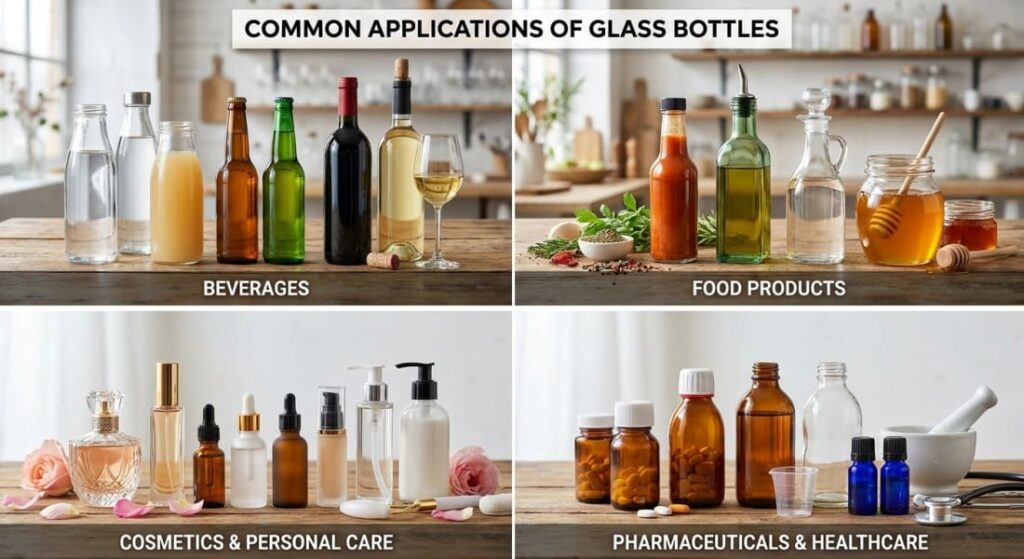
Understanding how different industries utilize glass can help you spark ideas for your own product lines. Because of its adaptability, glass is manufactured in countless shapes, sizes, and colors to meet the specific needs of various sectors. Here is a breakdown of the most common applications.
Glass Bottles for Beverages
The beverage industry is one of the largest consumers of glass packaging. Whether you are launching a new line of organic juices or a premium craft spirit, glass bottles for beverages offer the best protection for taste and carbonation. You will often see specific styles depending on the drink. For instance, glass bottles for water are usually clear and sleek to emphasize purity, while glass bottles for juice might feature wider mouths for easy pouring.
In the alcoholic sector, glass beer bottles are traditionally amber or green to protect the hops from UV light degradation, ensuring the beer tastes fresh. Similarly, wine glass bottles are engineered with thick bases and specific neck shapes to accommodate corks and allow the wine to age gracefully without oxidation. Overall, beverage glass bottles remain the gold standard for drinking experiences.
Glass Bottles for Food Products
In the culinary world, freshness and visual appeal are everything. Glass bottles for food packaging are heavily utilized because they do not absorb the strong odors of spices or the acidity of certain ingredients. If you are a food manufacturer, you need reliable food grade glass bottles to ensure consumer safety and product longevity.
For liquid and semi-liquid foods, glass is indispensable. Glass bottles for sauces are designed to handle hot-fill processes without warping. Glass bottles for oil, particularly olive oil, are often tinted to prevent light from turning the oil rancid. Vinegar glass bottles are essential because the high acidity of vinegar can degrade plastic over time, whereas glass remains entirely unaffected. Even thick, sticky items require specialized packaging, which is why wide-mouth honey glass bottles are so popular on grocery store shelves.
Glass Bottles for Cosmetics and Personal Care
The beauty and personal care industry relies on packaging to convey luxury and efficacy. Cosmetic glass bottles are the preferred choice for high-end brands. Because cosmetic formulations often contain active ingredients, acids, or volatile essential oils, they need a container that won’t react with the product.
Perfume glass bottles are perhaps the most iconic, often featuring intricate, custom molds and heavy bases to feel luxurious in the hand. For skincare, serum glass bottles usually come with pump or dropper closures to allow for precise application of expensive liquids. Lotion glass bottles provide an elegant touch to bathroom counters, appealing to consumers looking for a spa-like experience at home.
Glass Bottles for Pharmaceuticals and Healthcare
When human health is on the line, packaging cannot be compromised. The pharmaceutical industry strictly relies on pharmaceutical glass bottles due to their sterile, non-reactive nature. Medicine glass bottles are designed to keep pills, capsules, and liquids safe from moisture, oxygen, and light.
For liquid medications, syrup glass bottles often feature child-resistant caps and precise measuring markers. In holistic and alternative healthcare, essential oil glass bottles are mandatory. Because concentrated oils can dissolve plastics, glass bottles for essential oils—usually in amber or cobalt blue—are the only safe way to store these volatile botanical extracts long-term.
Glass Bottles for Home Fragrance and Specialty Products
Beyond food, drink, and body care, glass is heavily featured in home lifestyle products. Items like reed diffusers, room sprays, and scented candles require heat-resistant and non-porous containers. The elegant aesthetic of glass blends seamlessly with home decor, allowing brands to sell not just a fragrance, but a decorative piece for the living room.
How to Choose the Right Glass Bottles for Your Product
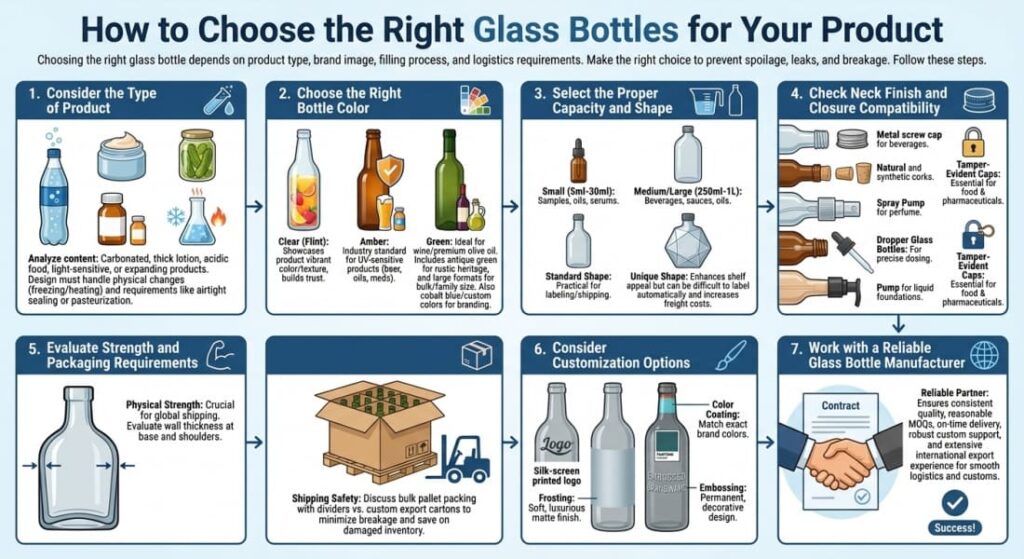
Choosing the right glass bottle involves much more than just picking a design you like. It depends heavily on your specific product type, your brand image, your factory’s filling process, and your logistics requirements. Making the wrong choice can lead to product spoilage, leaks, or shipping breakages. Follow these steps to ensure you make the best packaging decision.
1. Consider the Type of Product
The very first step is to analyze what goes inside the bottle. Is it a highly carbonated beverage, a thick cosmetic lotion, a highly acidic food item, or a light-sensitive pharmaceutical product? Does the product require airtight sealing or pasteurization? If your product expands when frozen or heated, you need to ensure the bottle design can handle those physical changes. Understanding your product’s chemical and physical nature dictates the basic requirements of your bottle.
2. Choose the Right Bottle Color
Color is not just about branding; it serves a crucial functional purpose. Clear (flint) glass is ideal if you want to showcase the vibrant color and texture of your product, building instant consumer trust. Amber glass is the industry standard for UV-sensitive products like beer, essential oils, and medicines.
If you are packaging wine or premium olive oil, you will likely need green glass bottles. Depending on your production scale, you might source large green glass bottles for bulk restaurant supplies, or perhaps a big green glass bottle format for family-sized portions. If your brand relies on heritage and nostalgia, utilizing an antique green bottle design can give your product a rustic, traditional feel. For strong visual branding that pops on the shelf, you can also opt for cobalt blue or completely custom-sprayed colors.
3. Select the Proper Capacity and Shape
Capacity directly impacts your pricing strategy and consumer usage habits. Small capacity bottles (5ml to 30ml) are perfect for cosmetic samples, essential oils, and concentrated serums. Medium to large bottles (250ml to 1 Liter) are standard for beverages, sauces, and edible oils.
When it comes to shape, unique silhouettes can drastically enhance your shelf appeal and brand recognition. However, keep in mind that highly unusual shapes may be difficult to label automatically on your production line and might take up more space in shipping cartons, thereby increasing your freight costs. You must balance visual appeal with logistical practicality.
4. Check Neck Finish and Closure Compatibility
A bottle is useless without the right closure. The neck finish of your bottle must perfectly match the cap you intend to use. Common closures include screw caps for beverages and syrups, natural or synthetic corks for wine and spirits, and spray tops for perfumes and room sprays.
If you are selling concentrated serums or essential oils, you will specifically need dropper glass bottles to allow consumers to dispense the product one drop at a time. For lotions and liquid foundations, pump closures are necessary. Additionally, if you are selling food or pharmaceuticals, you must consider tamper-evident caps to ensure consumer safety and comply with retail regulations.
5. Evaluate Strength and Packaging Requirements
If you plan to ship your products globally, the physical strength of your glass packaging is critical. You must evaluate the bottle’s wall thickness, especially at the base and shoulders, which are common impact points.
Furthermore, you need to discuss shipping safety with your manufacturer. How are the empty bottles packed? Will they be shipped in bulk on pallets with cardboard dividers, or pre-packed in custom export cartons? Ensuring high-quality export packaging from your supplier minimizes the risk of breakage during transit and saves you money on damaged inventory.
6. Consider Customization Options
To truly make the product your own, you should look into surface decorations. A plain bottle can be transformed into a piece of art through custom glass bottle design. You can utilize silk screen printing to apply your logo directly onto the glass, eliminating the need for paper labels.
Frosting gives the glass a soft, matte finish that feels highly luxurious. Color coating can match your exact brand Pantone colors. Embossing—where your brand name is raised in the glass itself—creates beautiful, permanent decorative glass bottles that consumers love to keep long after the product is gone.
7. Work with a Reliable Glass Bottle Manufacturer
All of your design and product planning relies on the execution of your supplier. You must work with a reliable partner to ensure your glass bottle packaging meets your standards every single time. Look for a manufacturer that offers stable quality, reasonable minimum order quantities (MOQs), on-time delivery, and robust custom development support. Importantly, they should have extensive international export experience so they understand the logistics and customs requirements of your target market.
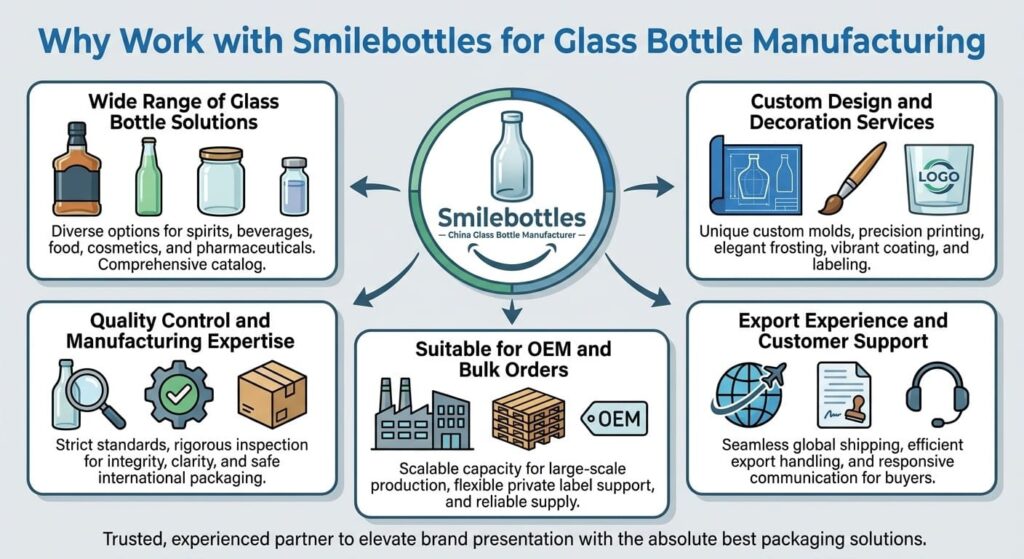
Why Work with Smilebottles for Glass Bottle Manufacturing
When you are ready to bring your packaging vision to life, you need a dependable manufacturing partner. While there are many options available, choosing an experienced glass bottle manufacturer in China can provide you with the perfect balance of competitive pricing, high-quality production, and incredible customization. As a premier China glass bottle manufacturer, Smilebottles stands out as a trusted leader in the industry. Here is why partnering with Smilebottles makes sense for your business.
Wide Range of Glass Bottle Solutions
Smilebottles does not just cater to one niche. We offer a massive, comprehensive catalog of glass bottle solutions. Whether you need heavy-based spirit bottles, lightweight beverage bottles, specialized food jars, or delicate cosmetic and pharmaceutical vials, we have the molds and the manufacturing capability to supply exactly what you need.
Custom Design and Decoration Services
We understand that standing out is critical for your brand. Smilebottles offers extensive custom design and decoration services. If you want a unique shape that no other brand has, our engineering team can help you develop custom molds. Beyond the shape, we offer comprehensive finishing services, including precision logo printing, elegant frosting, vibrant color coating, and labeling support. We turn standard glass into a premium brand asset.
Quality Control and Manufacturing Expertise
Quality is the foundation of our business. We utilize advanced manufacturing equipment and adhere to strict, consistent production standards. Every single bottle goes through a rigorous inspection process to check for structural integrity, clarity, and precise neck finishes. Furthermore, our expertise extends to safe packaging; we pack our glass securely to ensure it survives international transit without breakage.
Export Experience and Customer Support
Navigating global supply chains can be stressful, but Smilebottles makes it seamless. We possess years of international shipping experience, meaning we know how to handle export documentation, palletizing, and container loading efficiently. Our customer support team prides itself on highly responsive, clear communication. We are dedicated to supporting wholesale buyers, regional distributors, and independent brand owners through every step of the purchasing process.
Suitable for OEM and Bulk Orders
Whether you are scaling up a successful local brand or running a massive multinational corporation, we have the capacity to meet your needs. As an expert cosmetic glass bottle manufacturer and general glass supplier, we are well-equipped for OEM (Original Equipment Manufacturer) projects and bulk orders. We offer flexible private-label support and boast large-scale production capacity to ensure you never run out of stock during your peak seasons.
If you are looking for a trusted, experienced glass bottle manufacturer to elevate your brand’s presentation and protect your products, Smilebottles is here to help you find the absolute best packaging solution.
FAQ: Frequently Asked Questions About Glass Bottles
To help you finalize your packaging decisions, here are answers to some of the most common questions buyers ask about glass packaging.
Q1: Are glass bottles better than plastic bottles?
A1:Yes, in many ways. Glass offers superior purity because it does not leach chemicals into the product. It has a premium, heavy feel that consumers associate with luxury, and it is 100% infinitely recyclable, making it far better for the environment than most plastics.
Q2: Are glass bottles environmentally friendly?
A2:Absolutely. Glass is made from natural, abundant materials (sand, soda ash, and limestone). Because it can be recycled endlessly without losing quality, and because it can be easily washed and reused, it strongly supports sustainable and circular economy initiatives.
Q3: Do glass bottles protect products from UV light?
A3:Clear glass does not offer significant UV protection, but colored glass does. Amber, green, and cobalt blue glass bottles act like sunglasses for your product, blocking harmful UV rays that can degrade the color, taste, and efficacy of light-sensitive contents.
Q4: Are glass bottles safe for food and beverages?
A4:Yes. Glass is the safest packaging material for food and beverages. It is non-porous and chemically inert, meaning it will never react with highly acidic foods or hot-filled beverages, ensuring the contents remain entirely safe for human consumption.
Q5: What industries use glass bottles the most?
A5:The primary industries include the beverage sector (water, beer, wine, spirits), the food industry (sauces, oils, jams), cosmetics and personal care (perfumes, serums), pharmaceuticals (medicines, syrups), and the home fragrance industry (candles, diffusers).
Q6: How do I choose the right glass bottle supplier?
A6:You should evaluate potential suppliers based on their product quality, the range of customization options they offer, their minimum order quantities (MOQs), their lead times, and their international export experience. Reliable communication is also key.
Q7: Can glass bottles be customized?
A7:Yes, glass is highly customizable. You can customize the physical size and shape through new molds. You can also customize the surface via color coating, frosting, silk screen printing, and embossing, and choose unique closures to match your brand style.
Q8: Are glass bottles breakable during shipping?
A8:While glass is inherently breakable if dropped, the risk during shipping is extremely low if you work with a professional manufacturer. High-quality export packaging, using sturdy cardboard dividers and securely wrapped pallets, significantly reduces any risk of breakage during international transit.
Conclusion
For brands looking to combine long-term functionality, environmental responsibility, and stunning visual shelf appeal, glass bottles remains one of the smartest and most reliable packaging investments you can make.
If you are ready to take your product presentation to the next level and need high-quality custom glass bottles, Smilebottles is fully equipped and ready to support your next packaging project. Reach out today to discover how the right glass bottle can transform your brand.


