Table of Contents
ToggleAuthor: SmileBottles Editorial Team
Estimated Reading Time: About 12 Minute
If you are a brand owner, a product formulator, or a purchasing manager sourcing packaging, you already know that the right container does much more than just hold a liquid. It communicates your brand’s identity, protects your product’s integrity, and catches the consumer’s eye on a crowded retail shelf. Among the many packaging options available today, you might be asking yourself exactly what are blue glass bottles used for and whether they are the right fit for your specific product line.
This comprehensive guide Smilebottles will walk you through everything you need to know about this specific type of sustainable glass packaging. By the end of this article, you will understand what gives these bottles their iconic color, their functional benefits, their specific commercial applications, and how to source the perfect packaging for your next product launch.
What Are Blue Glass Bottles Made Of?
To fully appreciate the value of this packaging, it helps to understand the manufacturing process and the basic chemistry behind the material. When consumers or buyers ask what is blue glass, they are usually inquiring about how that brilliant, deep shade is achieved without compromising the safety of the container.
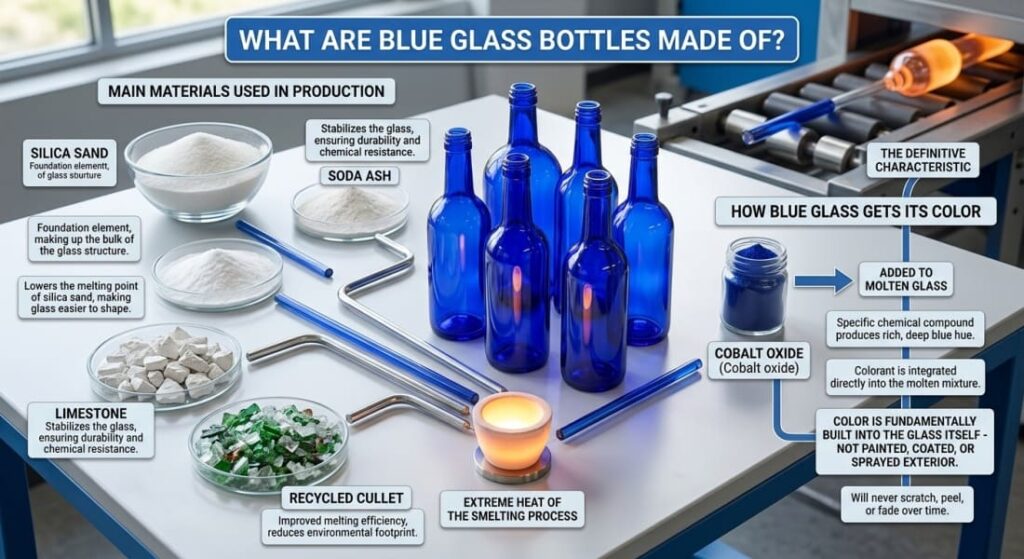
Main Materials Used in Production
At its core, a blue glass bottle is made from the same fundamental, natural ingredients as clear (flint) glass. The primary raw materials include:
Silica sand: The foundational element that makes up the bulk of the glass structure.
Soda ash: Added to lower the melting point of the silica sand, making the glass easier to shape and mold.
Limestone: Introduced to stabilize the glass, ensuring it is durable and resistant to chemical breakdown.
Recycled cullet: Crushed, recycled glass is often added to the mixture to improve melting efficiency and reduce the environmental footprint.
How Blue Glass Gets Its Color
The defining characteristic of a cobalt blue bottle comes down to a specific mineral additive. During the extreme heat of the smelting process, glass manufacturers add minute amounts of cobalt oxide to the molten glass mixture. It is this specific chemical compound that produces the rich, deep blue hue. (You will occasionally see this misspelled in search queries as kobalt blue, but the industry standard is always cobalt).
Because the colorant is integrated directly into the molten mixture, the color is fundamentally built into the glass itself. It is not painted, coated, or sprayed onto the exterior. This is crucial for your brand because it means the beautiful color will never scratch, peel, or fade over time.
Why Glass Is a Reliable Packaging Material
Regardless of color, glass remains one of the safest and most reliable materials for commercial packaging. It is entirely non-porous and chemically inert. This means that whether you are storing a highly acidic facial serum or a volatile essential oil, the blue bottle glass will not leach harmful chemicals into your product. Furthermore, the glass will not absorb the scent or flavor of the contents, preserving the absolute purity of your formula from the factory to the consumer’s home.
Why Are Blue Glass Bottles Popular?
Choosing the right packaging is a balancing act between aesthetics, functionality, and cost. There are several distinct reasons why brands continually opt for blue glass over clear plastics or other alternatives.
Premium and Eye-Catching Appearance
Walk down any beauty or wellness aisle, and your eyes are naturally drawn to the vibrant colors. Blue glass creates a highly distinctive shelf presence. Psychologically, consumers associate the color blue with purity, water, cleanliness, and tranquility. This makes it an incredibly powerful branding tool for wellness and beauty products. If you are marketing a high-end blue bottle moisturizer, the packaging immediately conveys a sense of luxury, freshness, and clinical efficacy before the customer even reads the label.
Eco-Friendly and Recyclable
Modern consumers are highly conscious of their environmental impact. One of the greatest cobalt blue glass benefits is its sustainability. Glass can be recycled infinitely without any loss in quality or purity. When you package your products in blue glass, you are communicating to your buyers that your brand values the environment. Furthermore, because these bottles are so aesthetically pleasing, consumers frequently wash and repurpose them as household decor, extending the life cycle of your packaging.
Safe for Sensitive Products
As mentioned, glass is incredibly stable. It provides a non-toxic, non-reactive environment. This is why you will frequently see cobalt glassware used in laboratories and premium apothecaries. It helps preserve the aroma, formulation quality, and purity of delicate botanical blends, serums, and tinctures that might otherwise degrade if placed in standard plastic containers.
Health and Wellness Associations
In the holistic and alternative medicine communities, there is a strong belief in cobalt glass health benefits. Some practitioners of color therapy (chromotherapy) believe that storing water or oils in blue glass and exposing them to sunlight can positively alter the frequency of the liquid. While your brand may or may not market based on this, the perceived blue glass water bottle benefits within the wellness community make these bottles incredibly popular for holistic health products.
Do Blue Glass Bottles Protect Products From UV Light?
One of the most common questions buyers ask is whether blue glass is strictly decorative or if it offers real functional protection.
How Light Affects Packaged Products
Visible light and invisible Ultraviolet (UV) rays can be highly damaging to certain chemical compounds. When plant extracts, fragrances, hops in beer, or botanical oils are exposed to UV light, a process called photo-oxidation occurs. This can cause the product to change color, lose its scent, degrade in potency, or even spoil prematurely.
Blue Glass vs. Amber Glass for Light Protection
It is important to be transparent about the protective qualities of your packaging. Blue glass does provide a moderate level of protection by absorbing certain wavelengths of visible light. However, if you are looking for absolute maximum UV protection, amber glass is generally superior. Amber glass blocks out almost all UV light (up to 99%), whereas blue glass allows some UV light to pass through.
When Blue Glass Is the Right Choice
So, when should you choose blue? Blue glass is the perfect choice when your brand needs a balance between moderate light protection and high visual appeal. If your product is light-sensitive but will generally be stored in a bathroom cabinet, a purse, or a retail box (away from direct, prolonged sunlight), blue glass provides more than enough protection. It is widely favored by brands that want to stand out from the traditional “apothecary” look of amber glass while still offering better protection than clear flint glass.
Common Uses of Blue Glass Bottles
The versatility of this packaging means it is utilized across a vast array of industries. Here is a breakdown of the most common commercial applications.
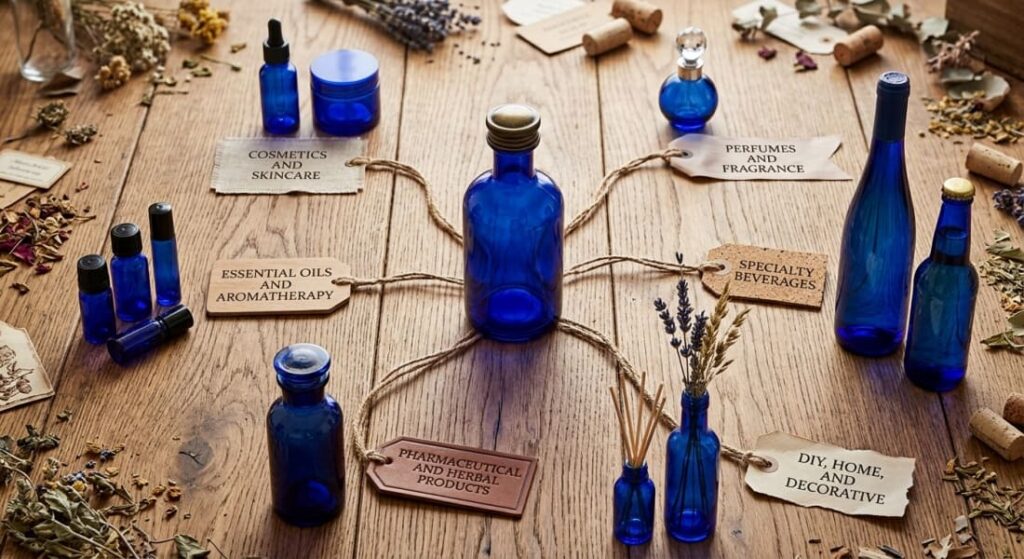
Essential Oils and Aromatherapy Products
Because essential oils are highly volatile and sensitive to light, they require robust packaging. Many aromatherapists consider dark glass to be the best glass bottles for essential oils. You will frequently see brands using blue essential oil bottles for single-origin oils, custom massage blends, and diffuser refills. For consumer convenience, small blue roller bottles are incredibly popular for applying essential oils directly to pulse points. Purchasing blue glass bottles for essential oils ensures that the delicate terpenes in your formulas do not degrade quickly.
Perfumes and Fragrance Packaging
The fragrance industry thrives on luxury. Blue glass perfume bottles offer an immediate sense of elegance and exclusivity. Whether you are bottling a high-end eau de parfum, a rich perfume oil, or a calming lavender linen spray, blue perfume bottles elevate the perceived value of the product.
Cosmetics and Skincare Products
The beauty industry is perhaps the largest consumer of this packaging. Brands frequently utilize blue dropper bottles for high-value facial serums, hyaluronic acid treatments, and botanical facial oils. Additionally, blue glass jars are heavily favored for premium eye creams, night masks, and organic lip balms.
Pharmaceutical and Herbal Products
For centuries, apothecaries have relied on dark glass. Today, that association with medicine has evolved into an association with clinical health. Modern herbalists and supplement companies rely heavily on blue tincture bottles for liquid herbal extracts, CBD oils, and homeopathic remedies.
Specialty Beverages and Decorative Drink Packaging
In the food and beverage sector, packaging is a massive differentiator. Premium mineral waters are often sold in a large blue glass bottle drink format to emphasize the water’s purity and origin. In the alcohol sector, a sleek blue wine bottle or distinct cobalt blue beer bottles can easily make a new craft beverage stand out in a crowded refrigerator case. If you are marketing high-end drinks in blue glass bottles, the packaging alone can justify a premium price point.
DIY, Home, and Decorative Uses
Beyond commercial liquids, there is a massive retail market for empty containers. Crafters and zero-waste enthusiasts love purchasing decorative blue glass bottles to make their own household cleaners, room sprays, and bath salts. A well-designed bottle glass blue in color is often kept as a vase or a reed diffuser vessel long after the original product is gone.
Blue Glass Bottles vs. Clear and Amber Glass Bottles
When planning your packaging strategy, you will inevitably have to compare blue glass to other common options. Here is how they stack up.
Blue Glass vs. Clear Glass
Clear (flint) glass is excellent if the actual color of your product is a major selling point (like a brightly colored fruit beverage or a visually striking pink serum). However, clear glass offers zero protection against light degradation. Blue glass is superior when you want to protect the product while maintaining a premium, distinctive look.
Blue Glass vs. Amber Glass
As discussed, amber glass provides the ultimate UV protection. If you are packaging a highly photosensitive pharmaceutical, amber is the safest bet. Furthermore, many brands utilize amber glass jars for bulk supplements or natural body butters. However, amber can sometimes look overly clinical or generic. Cobalt glass benefits your brand when you want to shift away from the traditional medicinal look and move toward a luxury, spa-like, or high-end cosmetic aesthetic.
Which Color Is Best for Your Product?
Choose Amber: For maximum UV protection and a traditional apothecary vibe.
Choose Blue: For luxury branding, a high-end spa aesthetic, and moderate light protection.
Choose Clear: When total product visibility is your only priority and light degradation is not an issue.
How to Choose the Right Blue Glass Bottle
If you are a B2B buyer or a business owner ready to place an order, selecting the right container involves more than just picking a pretty color. Here is your buying guide to ensuring you get exactly what you need.
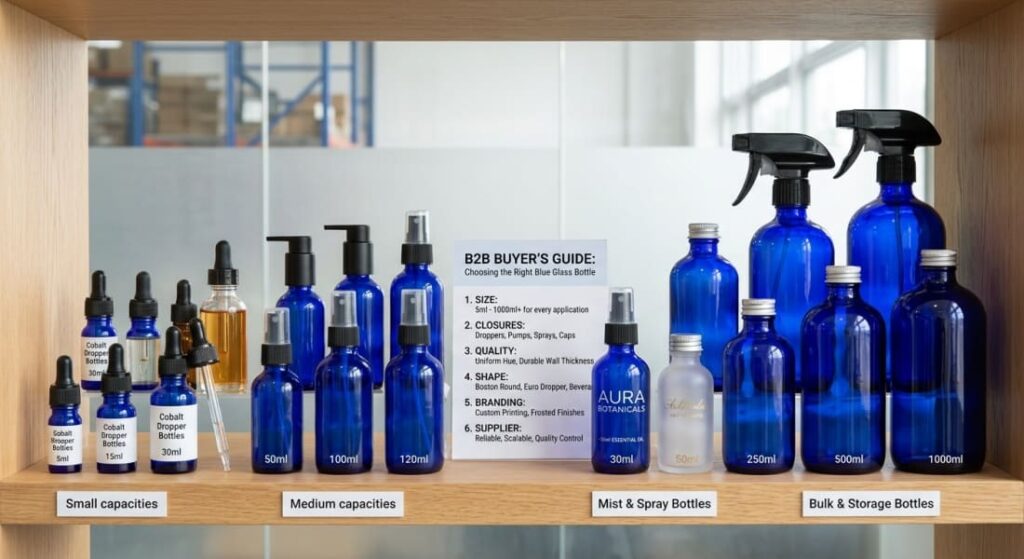
Choose the Right Bottle Size
Your product’s application dictates the size.
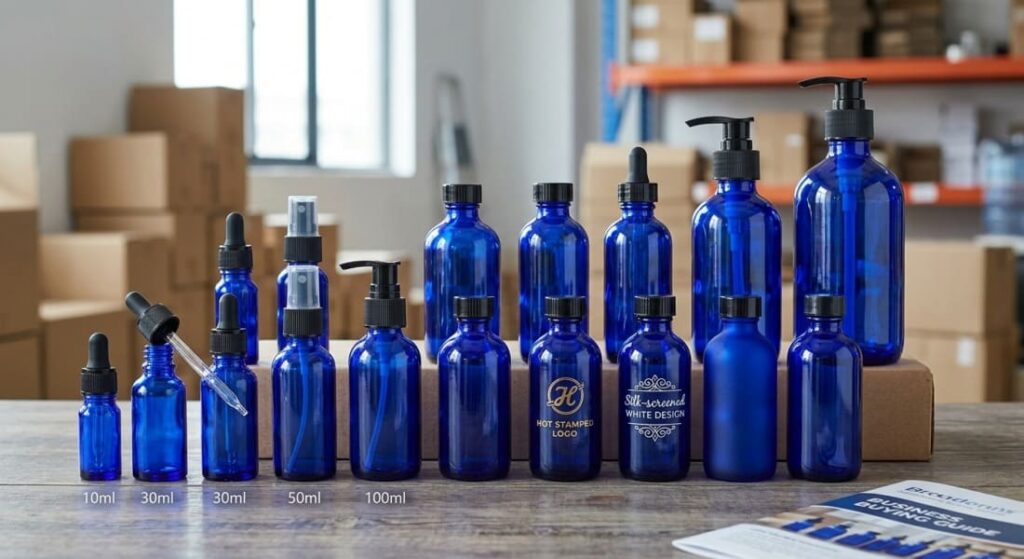
Small capacities (5ml – 30ml): Ideal for cobalt blue essential oil bottles, lip serums, and concentrated herbal tinctures.
Medium capacities (50ml – 120ml): Perfect for skincare toners, room sprays, and massage oils.
Large capacities (250ml – 1000ml+): Best suited for bulk wholesale liquids, beverage packaging, or large pump lotions.
Select the Best Closure Type
The neck finish of your bottle must perfectly match your closure.
Glass Pipettes: Pair perfectly with blue glass dropper bottles for precise dosing of serums and oils.
Fine Mist Sprayers: Essential for blue glass spray bottles used for perfumes, facial mists, and cleaning products.
Treatment Pumps: Ideal for thick lotions and gels.
Screw Caps & Polycone Lids: Best for bulk storage and preventing leaks during transit.
Check Glass Quality and Thickness
Not all glass is manufactured equally. When sourcing your packaging, you must evaluate the uniformity of the color. A reputable manufacturer will provide bottles that have a consistent, deep hue without streaks or bubbles. Additionally, the wall thickness of the glass must be durable enough to withstand the rigors of international shipping and daily consumer use.
Consider Bottle Shape and Neck Finish
The silhouette of your packaging speaks volumes. The classic “Boston Round” shape is beloved for its sturdy, curved shoulders and pharmaceutical history. “Euro dropper” shapes are standard for essential oils. If you are in the beverage market, a tall, slender neck is ideal. Always ensure the neck finish (e.g., 18/415, 20/400) aligns perfectly with the caps you intend to use.
Think About Branding and Customization
To truly stand out, your bottles need to reflect your unique brand identity. Look for suppliers who offer secondary processing. This includes silk-screen printing your logo directly onto the glass, hot stamping in gold or silver, or applying frosted finishes. Customizing your cobalt blue glass bottles ensures that your product cannot be easily replicated by competitors.
Evaluate Supplier Reliability
For a business, a packaging shortage can halt production and kill revenue. When searching for blue glass bottles wholesale, you must thoroughly evaluate the supplier. Look at their Minimum Order Quantities (MOQs), their quality control processes, and their lead times. A great supplier is a partner who scales with your business.
Why Choose Smilebottles for Blue Glass Bottles?
If you are looking for a reliable, world-class manufacturing partner, Smilebottles is your premier destination for high-quality glass packaging. We understand the specific needs of B2B buyers and brand owners.
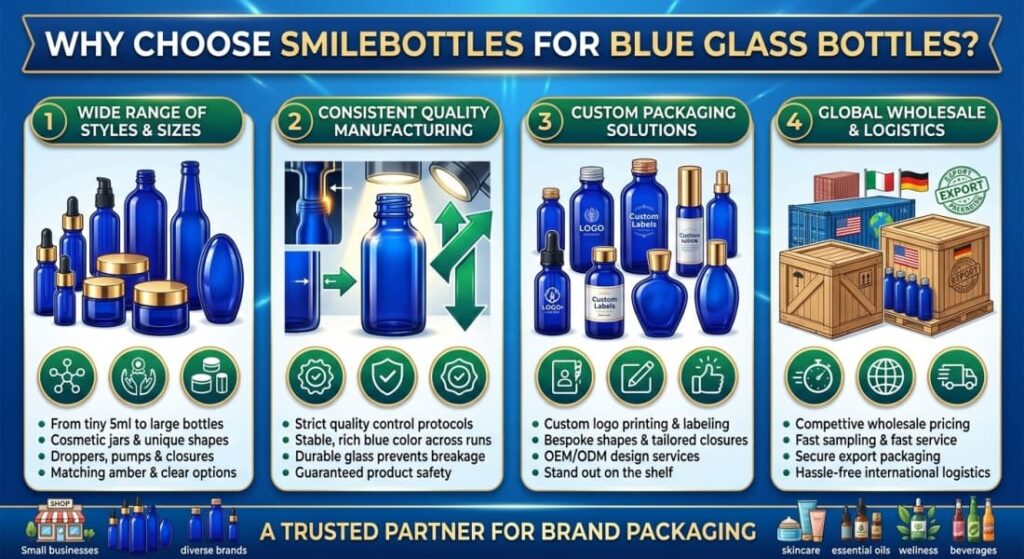
Wide Range of Blue Glass Bottle Styles
We manufacture an extensive catalog of packaging solutions. Whether you need tiny 5ml droppers, luxurious heavy-base cosmetic jars, or large beverage bottles, we have the molds and the manufacturing capacity to meet your needs. We also supply a vast range of matching amber glass jars and clear bottles, allowing you to source all your packaging under one roof.
Consistent Quality Manufacturing
At Smilebottles, we employ strict quality control protocols. We guarantee that our cobalt blue bottles maintain a stable, consistent color across every single production run. Our glass is engineered with durable wall thicknesses, ensuring your products arrive safely at your customers’ doors without breakage.
Custom Packaging Solutions
We don’t just sell empty vessels; we help build brands. We offer comprehensive OEM and ODM options. From custom logo printing and bespoke labeling to tailored caps and closures, our team will help you design a finished product that commands attention on the shelf.
Support for Wholesale and Global Buyers
We specialize in fulfilling cobalt blue glass bottles wholesale orders for the global market. We understand the logistics of international freight and utilize highly secure export packaging to protect your investment. With competitive pricing, fast sampling, and highly responsive customer service, we make the procurement process entirely stress-free.
A Trusted Partner for Brand Packaging
Whether you are an indie beauty brand launching your first skincare line, a wellness company expanding your essential oil offerings, or a beverage producer looking for a striking new look, Smilebottles is committed to your long-term success.
FAQ: Frequently Asked Questions About Blue Glass Bottles
Q1: What are blue glass bottles used for?
A1:They are widely used across multiple industries for packaging essential oils, premium perfumes, luxury cosmetics, herbal tinctures, DIY home products, and specialty craft beverages. They offer a unique blend of visual appeal and product protection.
Q2: Are blue glass bottles UV protective?
A2:They provide a moderate level of protection by reducing the penetration of visible and UV light. While amber glass offers the absolute strongest UV barrier, blue glass is highly effective for products that need some light protection but benefit from a more premium aesthetic.
Q3: Are blue glass bottles safe for essential oils?
A3:Absolutely. Glass is chemically inert, meaning it will not react with or break down when exposed to potent, undiluted essential oils. It is the industry standard for safe aromatherapy packaging.
Q4: Can blue glass bottles be recycled?
A4:Yes. Glass is 100% infinitely recyclable. Choosing this material supports sustainable packaging goals and appeals to eco-conscious consumers.
Q5: What is the difference between blue glass and amber glass bottles?
A5:The primary difference is light filtration and aesthetics. Amber blocks almost all UV light and has a traditional apothecary look. Blue allows slightly more light through but offers a brighter, cleaner, and often more luxurious branding appeal.
Q6: What closures can be used with blue glass bottles?
A6:Depending on the neck size and the product application, they can be paired with glass pipettes, fine mist sprayers, lotion pumps, metal or plastic screw caps, roll-on fitments, and even traditional corks.
Q7: Are blue glass bottles suitable for skincare packaging?
A7:Yes, they are extremely popular in the beauty industry. They are frequently used to package highly concentrated facial serums, toners, botanical oils, and organic moisturizers.
Conclusion
In conclusion, understanding what are blue glass bottles used for is the first step in elevating your brand’s packaging strategy. These versatile, stunning containers are far more than just a pretty aesthetic. They offer crucial functionality—from chemical stability and eco-friendliness to moderate light protection—making them indispensable across the beauty, wellness, pharmaceutical, and beverage sectors.
Whether you are seeking the perfect vessel for a delicate essential oil blend, a luxurious facial serum, or a standout craft beverage, choosing the right glass packaging can dramatically increase your product’s perceived value. By carefully considering factors like bottle size, closure compatibility, and manufacturer reliability, you can ensure your product safely reaches your customer while leaving a lasting visual impression. If your business is ready to upgrade its packaging and source premium, reliable containers at scale, Smilebottles is here to help you bring your brand vision to life.
 English