
Table of Contents
ToggleAuthor: SmileBottles Editorial Team
Estimated Reading Time: About 16 Minute
Whether you run a winery, a craft brewery, a cosmetics company, or a gourmet food business, the packaging you select plays a crucial role in protecting your product, attracting customers, and communicating your brand values. Green glass bottle packaging has remained a trusted choice for centuries, and its popularity shows no signs of fading.
In this comprehensive guide, you will discover everything you need to know about green glass packaging. Smilebottles will explore what gives these bottles their distinctive color, examine the various types available for different industries, and outline the key benefits that make them so widely used. Most importantly, you will learn how to choose the right green glass packaging for your specific products and why partnering with an experienced custom glass bottle manufacturer like Smilebottles can make all the difference for your business.
What Are Green Glass Bottles Made Of?
Understanding the composition of your packaging helps you make smarter purchasing decisions. When you know what goes into making green bottle glass, you can better appreciate its quality and functionality.
Basic Raw Materials Used in Green Glass
The foundation of all glass packaging starts with a few essential natural materials. Silica sand serves as the primary ingredient, forming the basic structure of the glass. Manufacturers add soda ash to lower the melting temperature, making production more energy-efficient. Limestone contributes to durability and chemical stability, which is particularly important when creating food safe glass bottles that need to protect their contents without any chemical interaction.
One of the most significant components in modern glass production is recycled glass, known as cullet. Using recycled content reduces energy consumption during manufacturing and supports the creation of sustainable glass packaging. This recycled content can make up a substantial portion of the raw materials, especially for colored glass bottles.
What Gives Glass Its Green Color?
You might wonder how manufacturers achieve that distinctive green hue. Natural glass made purely from sand often has a slight greenish tint due to iron impurities present in the raw materials. However, to create the rich, consistent green color you see in premium bottles green packaging, manufacturers deliberately add specific compounds.
Iron oxide and chromium are the primary coloring agents used to produce green glass. The exact proportions of these compounds determine whether you get light, vibrant green glass or deep, rich dark green glass bottles. When recycled cullet is used, manufacturers must carefully sort it by color to maintain batch-to-batch consistency.
Why Material Composition Matters
For you as a buyer, understanding material composition goes beyond mere curiosity. The specific blend of raw materials directly affects UV protection levels, which determines how well your products are shielded from light damage. Consistent composition ensures uniform color across your entire order, maintaining your brand’s visual identity.
The chemical makeup also influences structural integrity. High-quality bottle green glass resists breakage during filling, capping, and shipping, reducing product loss and protecting your bottom line. For products that are chemically sensitive, such as essential oils or acidic beverages, having stable, non-reactive packaging is essential.
Common Types of Green Glass Bottles and Jars
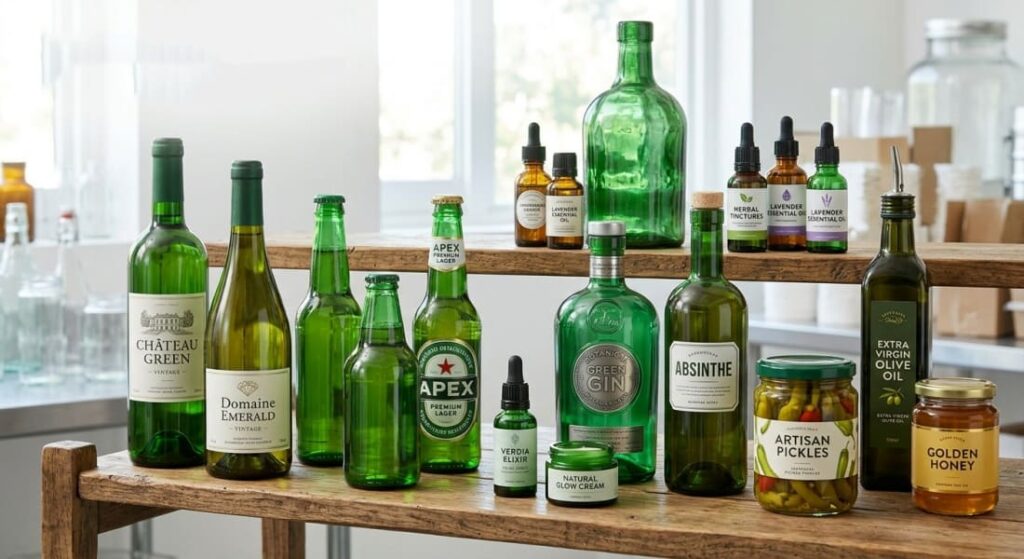
Green glass packaging comes in an impressive variety of shapes and sizes designed to meet the needs of different industries. Here is an overview of the most popular types you will encounter when sourcing your packaging.
Green Glass Bottles for Wine
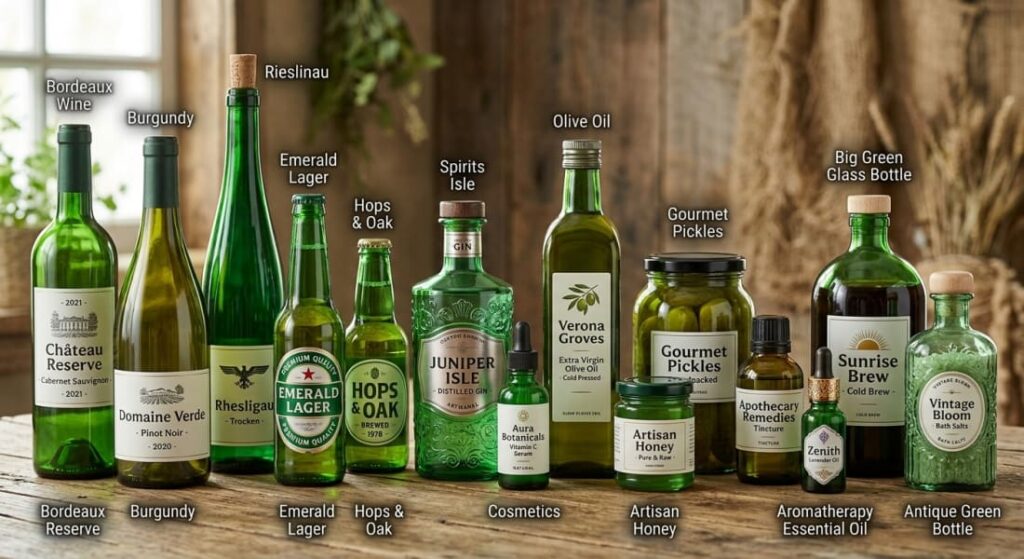
The wine industry has one of the longest relationships with green glass packaging. Any reputable wine bottle manufacturer will offer an extensive selection of green wine bottles in classic shapes. The high-shouldered Bordeaux style, the gently sloping Burgundy shape, and the tall, elegant Riesling form are all available in various shades of green.
Wineries choose green glass not just for its excellent light-blocking properties but also because it conveys tradition and quality. When consumers see a beautiful green wine glass bottle, they immediately associate it with craftsmanship and premium quality. This psychological connection has been built over centuries of winemaking tradition.
Green Glass Bottles for Beer
Walk through any beverage section, and you will spot plenty of green beer bottles on display. The typical styles include the familiar long-neck design and the shorter, wider stubby format. For many premium lager brands, especially those with European heritage, the green color is inseparable from their brand identity.
If you have ever wondered why are beer bottles green, the answer lies in both history and marketing. After World War II, when brown glass was in short supply, many European breweries turned to green glass. Consumers began associating this color with imported, premium beers. Today, that association remains strong, making green bottle beer packaging a strategic choice for brands wanting to project quality and sophistication.
Green Glass Bottles for Spirits and Liquor
Beyond wine and beer, many distilleries use green glass liquor bottles for their premium spirits. Gin, vodka, and absinthe frequently appear in elegant green bottles that create stunning visual appeal on bar shelves and in retail displays. The weight and clarity of green glass give spirits an unmistakably luxurious feel.
For craft distilleries looking to differentiate themselves, green glass offers excellent opportunities for custom decoration. The rich color provides a beautiful backdrop for metallic labels, embossed logos, and creative cap designs.
Green Glass Bottles for Cosmetics and Skincare
The beauty industry increasingly demands packaging that looks luxurious while supporting environmental goals. This has driven significant growth in sustainable packaging for cosmetics made from green glass. You will frequently encounter small green glass bottles used for premium facial serums, concentrated treatments, and natural skincare products.
Green glass dropper bottles are particularly popular for high-end formulations containing active ingredients that degrade under light exposure. The combination of precise dispensing and excellent protection makes these bottles ideal for vitamin C serums, retinol treatments, and botanical extracts. As a leading cosmetic bottle manufacturer, Smilebottles offers numerous options in this category.
Green Glass Containers for Food and Beverages
Food manufacturers rely heavily on green glass containers to protect flavor and freshness. Green glass bottles for olive oil are perhaps the most common example. Premium extra virgin olive oil contains delicate compounds that break down rapidly when exposed to light, making green glass protection essential for maintaining quality.
Green glass jars with lids serve countless purposes in the food industry, from storing specialty sauces and gourmet pickles to packaging artisan honey and preserved fruits. As a comprehensive glass jars manufacturer, Smilebottles provides green glass jars in capacities ranging from small sample sizes to large bulk containers.
Green Glass Packaging for Pharmaceuticals and Aromatherapy
The healthcare and wellness sectors depend on colored glass to protect sensitive formulations. Herbal tinctures, medicinal syrups, homeopathic remedies, and aromatherapy oils all benefit from green glass packaging. The non-porous, chemically stable nature of glass ensures that active ingredients remain potent throughout the product’s shelf life.
For aromatherapy products, green glass helps preserve the volatile compounds in essential oils while adding a natural, spa-like aesthetic that resonates with wellness-focused consumers.
Custom Green Glass Bottles for Specialty Products
Sometimes standard options simply will not capture your brand’s unique vision. Big green glass bottle formats work beautifully for bulk cold-brew coffee, specialty kombucha, or decorative home products. An antique green bottle design can add vintage charm to candles, bath products, or artisan goods.
When you need large green glass bottles with truly unique shapes or specialized features, working with a manufacturer that offers custom mold development gives you complete creative control. Custom glass jars are equally popular for brands wanting to stand out in crowded markets.
Why Are Green Glass Bottles So Popular?
Now we reach the central question: what makes green glass such an enduringly popular packaging choice? The answer involves multiple factors working together to create an unbeatable combination of benefits.
1. Better Protection from Light and UV Rays
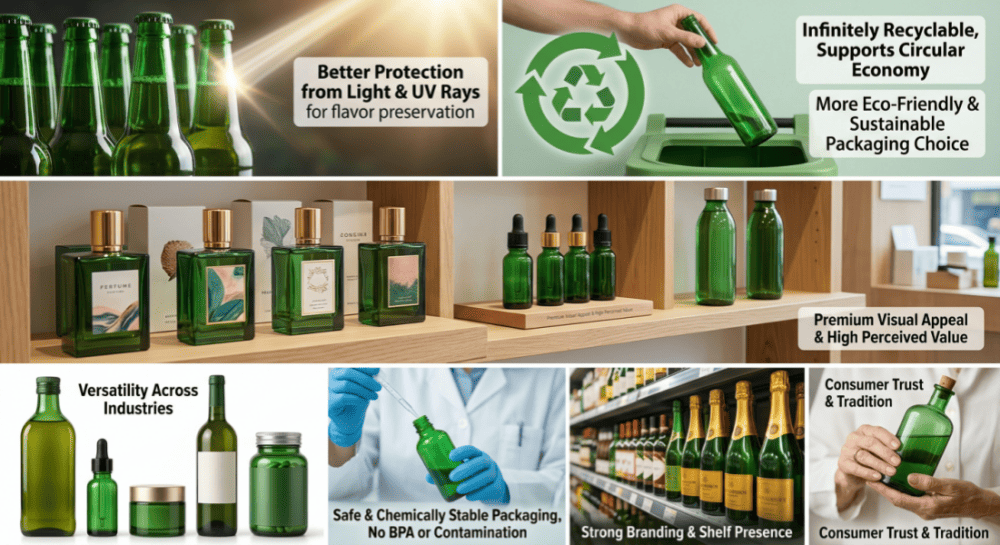
One of the most practical reasons brands choose glass bottle green packaging is superior light protection. Ultraviolet and visible light can trigger damaging photochemical reactions in many products. In beer, light causes hop compounds to break down, creating unpleasant “skunky” flavors. In oils and cosmetics, it accelerates oxidation and rancidity.
Green glass acts like sunglasses for your product, filtering out a significant portion of harmful light wavelengths. This protection extends shelf life, preserves flavor profiles, and maintains the effectiveness of active ingredients in skincare formulations.
2. A More Eco-Friendly and Sustainable Packaging Choice
Today’s consumers care deeply about environmental impact, and they actively seek brands that share their values. Eco friendly glass bottles appeal strongly to this growing demographic. Glass is infinitely recyclable, meaning it can be melted down and reformed repeatedly without any loss of quality or purity.
When you invest in recyclable glass bottles, you are choosing packaging that supports circular economy principles. Recyclable cosmetic packaging made from green glass helps beauty brands connect with environmentally conscious customers who scrutinize packaging choices carefully.
3. Premium and Attractive Visual Appeal
Visual appeal drives purchasing decisions, especially in retail environments where products compete for attention in seconds. Green glass naturally looks elegant, sophisticated, and distinctive. The color evokes nature, health, tradition, and quality.
Whether your packaging features bright emerald tones or deep forest hues, green glass packaging adds instant perceived value to your products. This premium appearance often allows brands to command higher price points compared to products in plain plastic containers.
4. Versatility Across Many Industries
Few packaging materials match the versatility of green glass. It comes in everything from tiny 5ml vials for essential oil samples to massive gallon containers for bulk storage. You can find it with screw caps, natural corks, dropper assemblies, lotion pumps, or metal lug closures.
This adaptability means that multi-product brands can maintain consistent green glass aesthetics across their entire line. A skincare company might use green glass dropper bottles for serums, green glass jars for creams, and green glass roll-ons for aromatherapy blends.
5. Safe and Chemically Stable Packaging
Safety is non-negotiable when packaging food, beverages, pharmaceuticals, or cosmetics. Glass is completely inert, meaning it does not react chemically with its contents. It contains no BPAs, releases no microplastics, and does not absorb or transfer flavors or odors.
This chemical stability makes glass the gold standard for products requiring pure, uncontaminated packaging. Consumers trust glass packaging precisely because of this long-established safety record.
6. Strong Branding and Shelf Presence
In retail environments crowded with plastic containers and cardboard boxes, the deep, rich color of green glass commands attention. The reflective surface catches light beautifully, drawing the eye and encouraging closer inspection.
The distinctive color also enables creative design approaches. Gold foil labels, crisp white typography, or bold black accents all pop dramatically against green glass backgrounds. This contrast creates memorable brand experiences that stick with consumers.
7. Consumer Trust and Tradition
Centuries of use have trained consumers to associate glass packaging with safety, quality, and authenticity. Fine wines, traditional medicines, and premium foods have historically come in glass containers. This deep-rooted association creates instant trust.
For brands wanting to convey heritage, craftsmanship, or natural authenticity, green glass delivers these messages without a single word of copy. The packaging itself communicates values that resonate with quality-conscious buyers.
Key Benefits of Green Glass Bottles for Different Products
Let us examine how green glass advantages translate specifically to various product categories, helping you understand the direct value for your particular business.
For Wine and Beer
Beverage producers choose green glass primarily for its flavor-protection properties. By blocking light that causes off-flavors, green bottles ensure that consumers experience the beverage exactly as the brewmaster or winemaker intended. Every beer bottle manufacturer and wine bottle manufacturer understands this critical function.
The traditional appearance of green wine bottles and green beer bottles also supports brand positioning. Consumers naturally perceive these products as premium, authentic, and worth the price.
For Cosmetics and Essential Oils
In the beauty space, green glass protects sensitive active ingredients from degradation while projecting luxury. Brands using recyclable cosmetic packaging appeal to the rapidly growing clean beauty movement. Your customers want elegant, heavy packaging they can feel good about recycling or repurposing.
Working with an experienced cosmetic bottle manufacturer ensures you get packaging that meets both functional requirements and aesthetic standards.
For Food and Beverage Products
For products like olive oil, artisan vinegars, specialty juices, and gourmet sauces, green glass preserves freshness and prevents oxidation. The inert nature of glass ensures no plastic tastes compromise carefully developed recipes.
Presenting food products in green glass also signals quality to consumers who associate this packaging with premium, natural, and healthy options.
For Health and Wellness Products
When selling supplements, herbal extracts, and therapeutic products, building trust is your primary challenge. Green glass creates an “apothecary” aesthetic that looks clean, professional, and reassuringly old-fashioned. Consumers feel confident that products in heavy, quality glass containers are safe, potent, and manufactured with care.
Are Green Glass Bottles Better Than Clear or Amber Glass?
When evaluating packaging options, you will inevitably compare different glass colors. Understanding the tradeoffs helps you make the best choice for your specific situation. Let us examine green glass vs clear glass and amber glass.
Green Glass vs Clear Glass
Clear glass (also called flint glass) excels when your product’s visual appearance is a major selling point. If you want customers to see a vibrant juice color or admire a crystal-clear spirit, clear glass showcases these features beautifully.
However, clear glass provides virtually zero protection against UV light. Light-sensitive products will degrade quickly without additional protection like opaque labels or secondary packaging. Green glass sacrifices some transparency but gains significant light protection while still allowing consumers to see fill levels.
Green Glass vs Amber Glass
Amber (brown) glass offers the strongest UV protection available, blocking nearly all harmful light wavelengths. It is the preferred choice for highly sensitive pharmaceuticals and some craft beers.
However, amber can appear clinical or heavy for certain product categories. Green glass provides an excellent middle ground: adequate light protection for most commercial applications combined with a brighter, more elegant appearance that aligns with natural and organic branding.
Which Color Is Right for Your Product?
Choosing the right glass color depends on three factors: your product’s light sensitivity, market expectations, and your brand aesthetic. If you are selling highly sensitive essential oils, you might need amber or very dark green. If you want a luxurious, spa-inspired feel, standard green often works better.
Market expectations matter too. Consumers expect premium olive oil in green glass; putting it in clear bottles might actually create confusion or suggest lower quality. Always balance your product’s technical requirements with the visual story your brand wants to tell.
How to Choose the Right Green Glass Bottles for Your Products
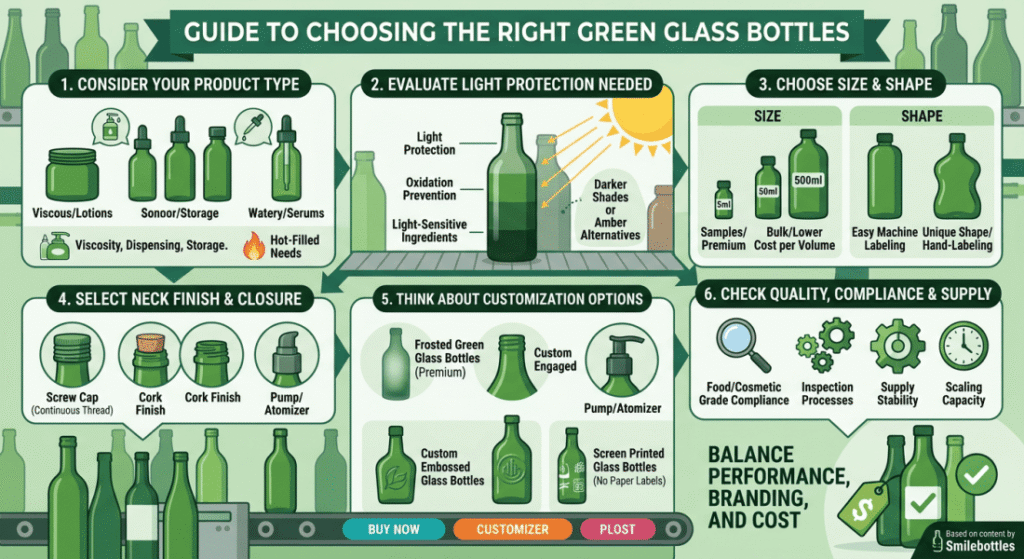
Making the right packaging decision involves considering numerous factors beyond just color. Here is a systematic approach to help you select the perfect bottles or jars for your products.
Consider Your Product Type
Start by clearly defining what you are packaging. Different products have different viscosity levels, dispensing needs, and storage requirements. Thick lotions need wide mouths for pumps, while watery serums require narrow necks for droppers. Hot-filled products demand thicker glass that resists thermal shock.
Evaluate the Level of Light Protection Needed
Consider how long your product typically sits on shelves and under what lighting conditions. If your formulation is highly vulnerable to oxidation or contains light-sensitive active ingredients, you may need darker green shades or should consider amber alternatives.
Choose the Right Bottle Size and Shape
Size affects everything from your pricing strategy to your shipping costs. Small green glass bottles work perfectly for travel sizes, samples, or premium concentrated products. Large green glass bottles suit bulk formats, family sizes, or products with lower price points per volume.
Shape impacts labeling efficiency too. Cylindrical bottles are easy and economical to label by machine, while unique tapered or faceted shapes may require slower hand-labeling processes.
Select the Appropriate Neck Finish and Closure
The neck finish determines which closures will fit your bottles. Common options include continuous thread finishes for screw caps, cork finishes for wine and spirits, crimp finishes for perfumes, and lug finishes for food jars. Ensure your manufacturer can supply or verify compatibility with your preferred closure type.
Think About Customization Options
To differentiate your brand, consider customization options that create unique packaging. Custom embossed glass bottles feature your logo or design elements molded directly into the glass surface. Frosted green glass bottles undergo special treatments to create soft, matte finishes that look and feel premium.
Screen printed glass bottles allow you to apply ceramic inks directly to glass surfaces, eliminating the need for paper labels. These printed designs are durable and waterproof, maintaining appearance throughout the product’s life. For truly unique needs, working with Smilebottles on custom glass jars or bottles gives you complete design freedom.
Check Quality, Compliance, and Supply Stability
Always verify your manufacturer’s quality control processes and relevant certifications. Food-contact and cosmetic-grade requirements vary by market, and compliance is essential. Ask about inspection procedures, defect rates, and how quality issues are handled.
Supply stability matters for production planning. Discuss minimum order quantities, typical lead times, and capacity for scaling orders as your brand grows. A supplier that takes months to deliver cannot support fast-moving product launches.
Balance Performance, Branding, and Cost
Finally, work through the economics carefully. Heavy, thick-based glass looks luxurious but costs more to ship. Custom molds require upfront tooling investments. Balance a design that elevates your brand with practical considerations that protect your margins.
Why Choose Smilebottles as Your Green Glass Bottle Manufacturer?
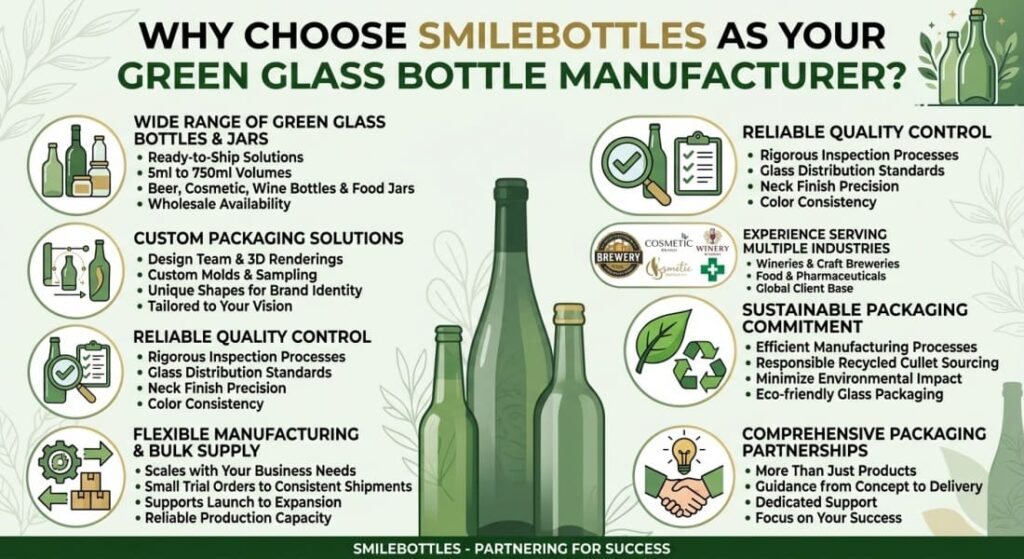
Selecting the right manufacturing partner is just as important as selecting the right packaging design. At Smilebottles, we provide more than just products—we offer comprehensive packaging partnerships. Whether you need a reliable beer bottle manufacturer, a flexible cosmetic bottle manufacturer, or an innovative custom packaging developer, our capabilities support your success.
Wide Range of Green Glass Bottles and Jars
Our extensive catalog includes ready-to-ship green glass packaging solutions for virtually every industry application. From tiny 5ml cosmetic vials to full-size 750ml wine bottles, we maintain inventory across popular formats. As an established glass jars manufacturer, we also supply green glass jars in numerous sizes for food, cosmetics, and home products.
Buyers looking for wholesale green glass bottles will find competitive pricing on bulk orders with reliable availability.
Custom Packaging Solutions
When standard options do not quite fit your vision, our design team helps bring your ideas to life. Perhaps you need uniquely shaped custom glass jars for a luxury candle line, or specialized bottles that no competitor offers. From initial 3D renderings through custom mold creation and production sampling, we guide you through every development step.
Reliable Quality Control
We understand that defective packaging damages your brand reputation and wastes your production resources. Our rigorous quality control processes ensure every item leaving our facility meets strict standards for glass distribution, dimensional accuracy, neck finish precision, and color consistency.
Experience Serving Multiple Industries
Our client base spans wineries, craft breweries, skincare brands, food manufacturers, and pharmaceutical companies worldwide. This diverse experience means we understand the specific compliance requirements, functional needs, and market expectations relevant to your industry.
Flexible Manufacturing and Bulk Supply
Whether you need a small trial order to test a new product concept or require consistent container shipments every month, our manufacturing capacity scales with your needs. We support growing brands from initial launch through international expansion.
Sustainable Packaging Commitment
We recognize that modern brands want to minimize environmental impact. Smilebottles prioritizes efficient manufacturing processes and responsible sourcing of recycled cullet, helping you deliver genuinely sustainable glass packaging to your customers.
FAQ:Frequently Asked Questions About Green Glass Bottles
To help you finalize your purchasing decisions, here are answers to questions we frequently receive from buyers.
Q1:Why are wine bottles green?
A1:Historically, early glassmakers could not completely remove iron impurities from their raw materials, resulting in naturally greenish glass. Winemakers discovered this color helped protect wine from sunlight that could spoil aging processes. Today, green wine bottles remain symbols of tradition and quality in the wine industry.
Q2:Why are beer bottles green?
A2:Like wine, beer requires protection from light that can cause “skunky” off-flavors. While amber glass provides stronger protection, green became associated with premium European lagers after World War II when brown glass was scarce. Many imported and craft brands maintain this color to signal quality and sophistication.
Q3:Are green glass bottles recyclable?
A3:Absolutely. Glass is 100% recyclable and can be recycled indefinitely without any loss of quality or purity. Using recycled glass in new production reduces energy consumption and landfill waste, making green glass an excellent choice for environmentally responsible packaging.
Q4:Are green glass bottles safe for food and cosmetics?
A4:Yes. Glass is generally recognized as safe by food and cosmetic regulatory agencies worldwide. It is impermeable, non-porous, and chemically inert, meaning it will not react with, absorb, or transfer anything to your product contents.
Q5:What products are best packaged in green glass bottles?
A5:Any product that benefits from light protection and premium presentation is well-suited for green glass. This includes wine, craft beer, extra virgin olive oil, essential oils, luxury skincare serums, herbal tinctures, and specialty beverages.
Q6:Can green glass bottles be customized?
A6:Yes, extensively. Options include custom molds for unique shapes, embossing or debossing for tactile logos, frosted finishes for matte appearances, screen printing for permanent graphics, and various closure and dispensing options. Custom decoration methods like hot stamping and color coating expand possibilities further.
Q7:How do I choose between green, clear, and amber glass?
A7:Consider your product’s light sensitivity, your brand positioning, and customer expectations. Green offers moderate light protection with elegant aesthetics. Clear maximizes product visibility but provides no light protection. Amber offers maximum UV blocking but may appear more clinical. Many brands choose green as the optimal balance.
Conclusion
Choosing the right packaging is a strategic decision that affects product quality, consumer perception, and brand success. Green glass bottles have maintained their popularity across industries because they deliver an exceptional combination of functional protection, environmental sustainability, and premium visual appeal.
At Smilebottles, we combine extensive product selection with custom development capabilities to serve brands at every stage of growth. Contact our team today to explore our catalog, discuss your custom packaging vision, and discover how our green glass packaging solutions can help your products succeed in competitive markets.