
Table of Contents
ToggleAuthor: SmileBottles Editorial Team
Estimated Reading Time: About 12 Minute
In this guide, you will learn what a syrup bottle really is, what it gets used for, why so many of them are amber, what sizes you should think about, and how to pick the right one for your business. Whether you are launching a new product or looking for a steady supplier of glass syrup bottles, this article will walk you through the details you actually need.
What Is a Syrup Bottle?
A syrup bottle is a container made to hold and pour liquid products in a controlled way. You will see them most often in pharmacies, health stores, and specialty food shops. The shape is usually round, with a narrow neck and a steady base so the bottle does not tip over easily.
You can find syrup bottles holding all kinds of liquids, such as:
Cough and cold medicines
Herbal extracts and tinctures
Liquid vitamins
Food flavorings
Specialty syrups like vanilla or fruit syrup
The two main materials are glass and plastic. Plastic is lighter and cheaper, but glass syrup bottles are what most premium brands choose. Glass does not react with the liquid inside, it holds up well over time, and it gives your product a clean, high-end look. For sensitive formulas, glass also offers better protection than plastic can.
The neck finish on a glass syrup bottle is usually standardized, which means you can match it to many different caps, droppers, or pouring inserts without much trouble.
Why Amber Is the Most Popular Color for Syrup Bottles
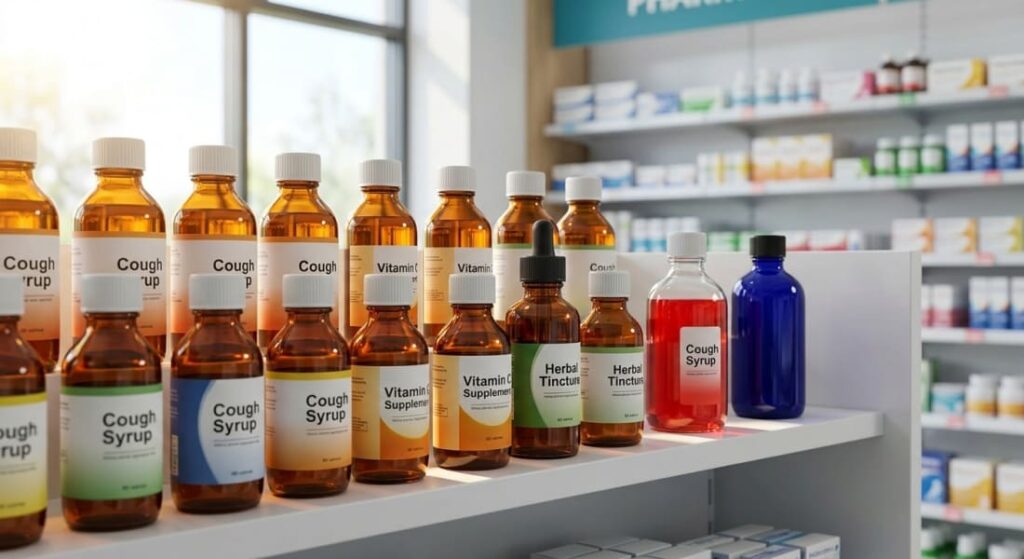
Walk into any pharmacy and you will notice something right away — most medicine bottles are amber. That brown-orange color is not just a style choice. There are real reasons behind it.
Amber Glass Helps Filter Harmful Light
UV rays and even regular visible light can break down the active ingredients in many liquid products. Amber glass blocks most of that light, which is why amber syrup bottles are the go-to choice for:
Medicinal syrups
Herbal tinctures
Essential oil blends
Vitamins and supplements
If your product has anything light-sensitive in it, you really do not want to put it in clear glass.
Amber Bottles Help Maintain Product Quality
Light damage does not just lower potency. It can change color, weaken aroma, and shorten shelf life. Amber glass medicine bottles help keep your formula stable from the day it leaves the factory to the day a customer finishes the last drop. For anything with active ingredients, this is one of the biggest benefits of amber glass bottles.
Amber Packaging Builds Trust in Health-Related Products
There is also a marketing side to this. People associate amber bottles with medicine and health products. When buyers see an amber syrup bottle on the shelf, they instantly read it as safe, professional, and trustworthy. That kind of instant recognition is hard to build any other way.
Are Syrup Bottles Available in Other Colors?
Yes, they are. Amber is the most common, but it is not the only option.
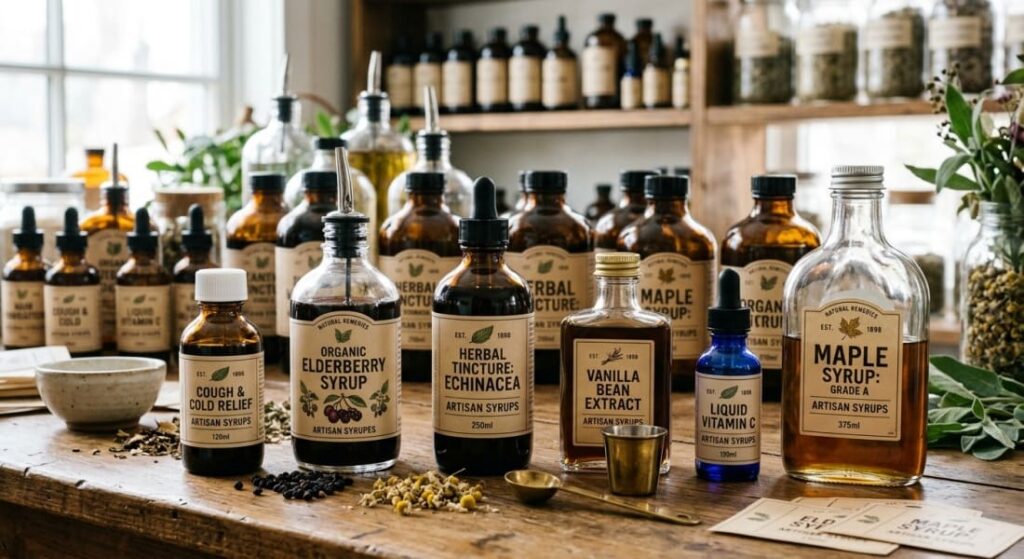
Clear glass works well when you want customers to see the product, such as colorful syrups or premium food products.
Green or blue glass can support a unique brand look, and it offers some light protection too.
Custom colors are possible for brands that want something different on the shelf.
That said, if your formula is sensitive to light, stick with amber. The other colors are mostly for branding or display purposes.
Why Use Glass Syrup Bottles?
You have probably seen plenty of plastic bottles out there. So why do so many serious brands still pick glass? Here are the reasons that actually matter to your business.
They Help Protect the Product
Glass does not react with what is inside it. That makes glass medicine bottles safe for pharmaceutical, herbal, and food-grade liquids. There is no risk of chemicals leaching into your formula, and no flavor or aroma transfer. Your product stays exactly the way you made it.
They Create a Professional and Premium Look
Glass simply looks better. It has weight, clarity, and a clean finish that plastic cannot match. If your brand sits in the pharmacy, supplement, or specialty food space, a glass syrup bottle sends the right message before anyone reads the label.
They Work with Different Closure Options
You can pair glass syrup bottles with almost any closure you need:
Screw caps
Child-resistant caps
Tamper-evident caps
Droppers and pipettes
Measuring cups
Pouring inserts
This flexibility makes glass a safe choice no matter what kind of product you sell.
They Support Safe and Accurate Dispensing
For medicine syrup bottle products, dosing matters. Glass bottles work well with dosage caps, spoons, oral syringes, and droppers, which helps your customers measure the right amount every time. This is especially important if you sell products for kids or elderly users.
They Are Recyclable and Sustainable
Glass can be recycled over and over without losing quality. If your brand cares about sustainability — and more buyers expect this every year — glass packaging supports that message in a real, visible way.
What Are Syrup Bottles Used For?
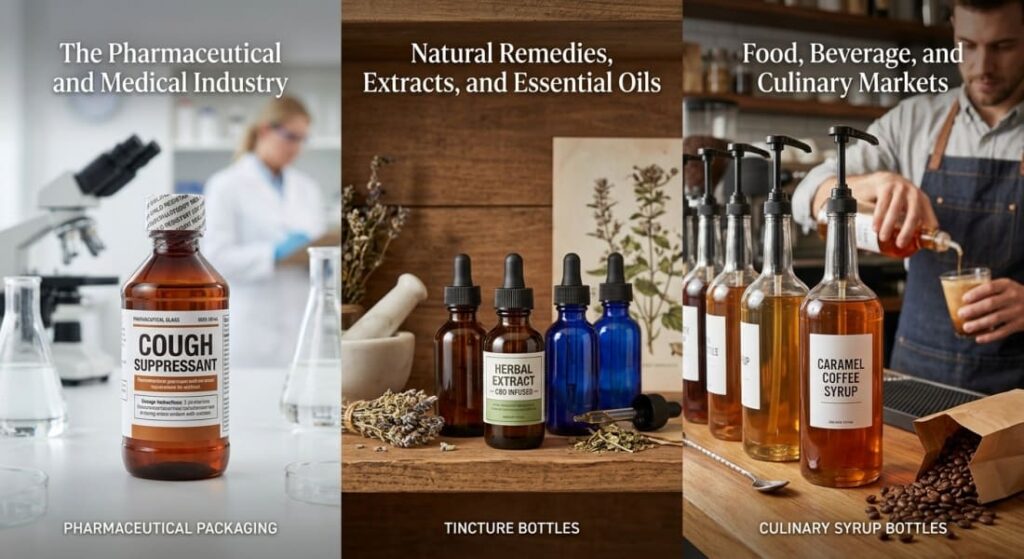
Syrup bottles show up in more industries than most people realize. Here are the most common uses.
Medicinal Syrups
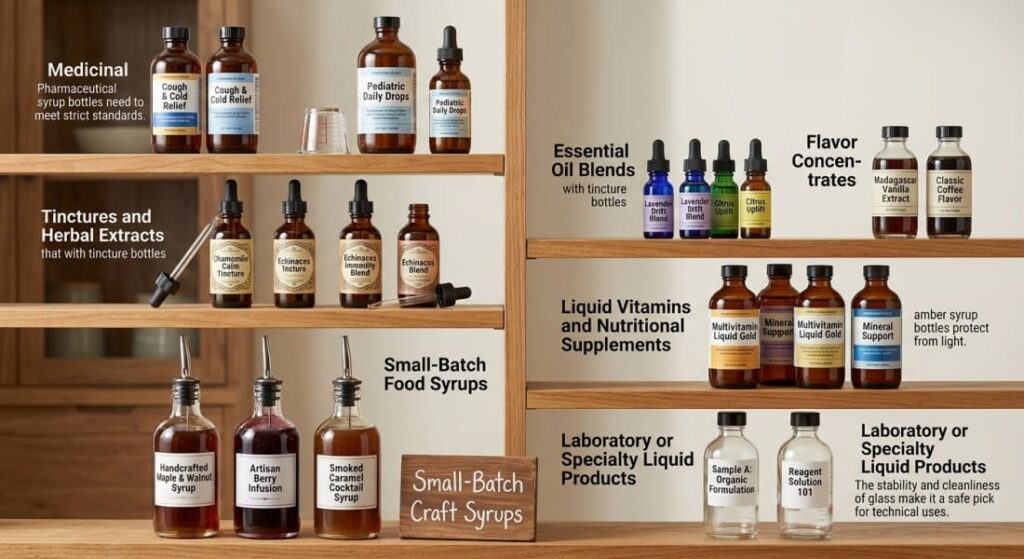
This is the classic use. Cough syrup bottles, pediatric medicine, digestive aids, and supplement syrups all rely on safe, well-designed packaging. Pharmaceutical syrup bottles need to meet strict standards, and glass is usually the material of choice.
Tinctures and Herbal Extracts
The herbal industry depends on tincture bottles for plant extracts, alcohol-based formulas, and traditional remedies. Glass tincture bottles keep these products stable and protect their active compounds from light and air.
Essential Oil Blends
Diluted essential oils, aromatherapy mixes, and wellness blends usually come in small glass bottles. Glass holds up to essential oils much better than plastic, which some oils can actually break down over time.
Flavor Concentrates
Vanilla extract, coffee flavorings, and bakery concentrates often come in syrup-style glass bottles. Glass keeps the flavors pure and adds a quality feel that customers notice.
Liquid Vitamins and Nutritional Supplements
Vitamin syrups, mineral supplements, and immune support liquids do well in amber syrup bottles, especially when the formula contains ingredients that lose potency in the light.
Small-Batch Food Syrups
Artisan vanilla syrup, fruit syrup, herbal infusion syrup, and cocktail syrup all benefit from glass packaging. Buyers in this market expect premium presentation, and glass delivers it.
Laboratory or Specialty Liquid Products
Labs and specialty manufacturers also use these bottles for sample liquids, reagent packaging, and trial formulations. The stability and cleanliness of glass make it a safe pick for technical uses.
Common Types of Syrup Bottle Closures and Accessories
Picking the right closure is just as important as picking the right bottle. The closure affects safety, ease of use, and how your customers experience your product.
Screw Caps
Simple, easy to use, and widely available. Screw caps work for general-purpose syrup bottle packaging where strict safety features are not required.
Child-Resistant Caps
If your product could be harmful to children, child-resistant caps are a must. Many markets require them by law for medicines, supplements, and certain chemicals.
Tamper-Evident Closures
These caps show clearly if a bottle has been opened. They are common in medicine and supplement packaging because they help build customer trust.
Droppers and Pipettes
For tincture bottles and concentrated liquids, droppers give your customers precise control over how much they use. They are standard in the herbal and essential oil markets.
Measuring Cups, Spoons, and Oral Syringes
These help your customers take the correct dose. They are especially important for children’s products and any liquid medicine.
Pouring Inserts
Pouring inserts give better flow control, reduce spills, and make the bottle easier to use day to day. They work well for food syrups and household products.
Key Factors to Consider When Choosing Syrup Bottles
Beyond size, there are several other things you need to think about before placing an order for bulk syrup bottles.
Material
Glass or plastic? For most pharmaceutical, herbal, and premium food products, glass wins on quality, safety, and brand image. Pharmaceutical glass bottles are the standard in industries where formula integrity matters.
Light Protection
If your product is light-sensitive, you need amber. If it is not, clear glass might be fine. Some brands also choose green or blue for a unique look.
Bottle Capacity
Match the size to how your product will actually be used. Buying the wrong size in large quantities is an expensive mistake.
Closure Compatibility
Make sure your bottle works with the cap you want to use. Always confirm neck finish details with your syrup bottle manufacturer before placing a big order.
Regulatory and Safety Requirements
If you are selling medicine or supplements, your pharmaceutical packaging bottles need to meet local standards. Different countries have different rules, and your packaging needs to follow them.
Branding and Customization
Think about how your bottle will represent your brand. Custom syrup bottles can include:
Custom labels
Embossing
Custom colors
Printing
Matched cap colors
A well-designed bottle helps your product stand out and gives your brand a more professional look.
Glass Syrup Bottles vs Plastic Syrup Bottles
A lot of buyers compare these two before deciding. Here is the honest breakdown.
Advantages of Glass
Non-reactive and safe for sensitive formulas
Premium look and feel
Fully recyclable
Does not absorb odors or flavors
Strong customer trust
Advantages of Plastic
Lighter weight
Lower shipping cost
Less risk of breakage
Sometimes cheaper per unit
Which One Is Better for Your Product?
It depends on your priorities. If your product is premium, sensitive, or health-related, glass is almost always the better pick. If you need to ship long distances at low cost and your product is not delicate, plastic might work for some applications. But for pharmaceutical syrup bottles and high-end food or supplement products, glass syrup bottles remain the standard for good reason.
How to Choose the Right Syrup Bottle Size
Picking the right size depends on your product, your market, and how your customers will use the bottle. Here is a quick guide.
30ml Syrup Bottles
Great for samples, trial sizes, travel products, and concentrated extracts. If you want buyers to try your product before committing to a bigger bottle, 30ml is a smart entry size.
60ml to 100ml Syrup Bottles
These suit retail-friendly products, personal-use formulas, and short-course treatments. Many over-the-counter medicines fit in this range.
120ml to 150ml Syrup Bottles
This is a popular range for everyday medicines and supplements. It gives your customers enough product for a few weeks of regular use.
200ml to 250ml Syrup Bottles
The 200ml syrup bottle is a strong pick for family-size products and longer treatment courses. The 250ml syrup bottle works well for larger family products, institutional use, or value-size retail. If your customers go through your product fast, these sizes give them better value.
How to Match Bottle Size to Your Product
When you are deciding on size, think about:
Dosage frequency — How many times a day will the product be used?
Treatment duration — How many days does one bottle need to last?
Retail positioning — Is your product premium and small, or value and large?
Shipping cost — Bigger bottles cost more to ship per unit.
Shelf space — Some retailers have strict size limits.
Consumer convenience — Will customers actually finish the bottle before it expires?
Get these factors right, and your packaging will support your sales instead of working against them.
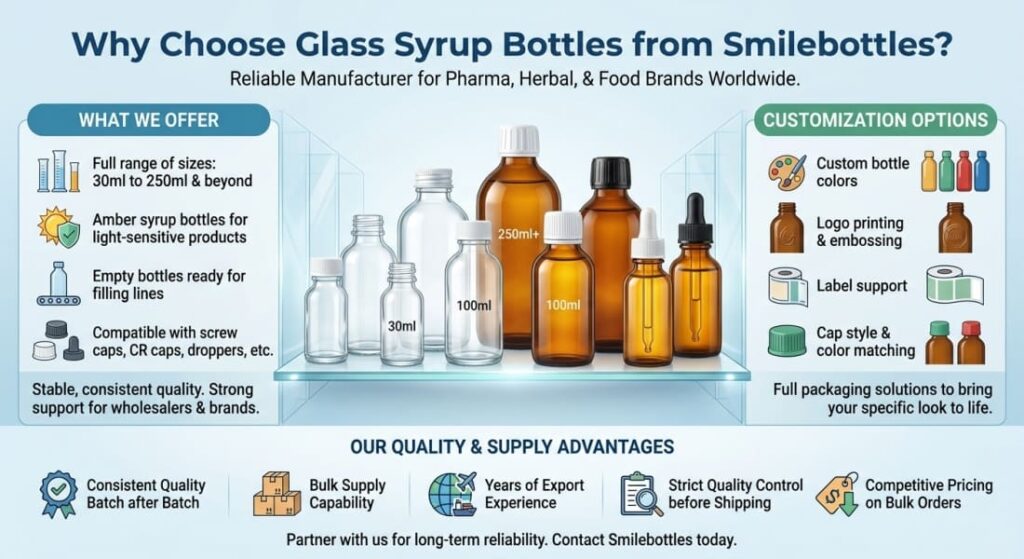
Why Choose Glass Syrup Bottles from Smilebottles?
If you are searching for a reliable syrup bottle manufacturer, Smilebottles is here to help. We focus on producing glass syrup bottles and related packaging for pharmaceutical, nutraceutical, herbal, and food brands around the world.
What we offer:
A full range of sizes from 30ml up to 250ml and beyond
Amber syrup bottles for light-sensitive products
Empty syrup bottles ready for your own filling line
Compatibility with screw caps, child-resistant caps, droppers, and more
Stable, consistent quality for serious brands
Strong support for wholesalers, distributors, and brand owners
Whether you need syrup bottles wholesale for a large production run or smaller quantities for a new product launch, we can match your needs.
Our Customization Options
We know packaging is part of your brand. That is why we offer:
Custom bottle colors
Logo printing and embossing
Label support
Cap style and color matching
Full packaging solutions
If you have a specific look in mind, our team can work with you to bring it to life.
Our Quality and Supply Advantages
When you order wholesale amber glass bottles or any other glass packaging from us, you get:
Consistent quality batch after batch
Bulk supply capability
Years of export experience
Strict quality control before shipping
Competitive pricing on bulk syrup bottles
We work with serious buyers who need a supplier they can count on long-term.
FAQ: Frequently Asked Questions About Syrup Bottles
Q1:What is the difference between a syrup bottle and a regular glass bottle?
A1:A syrup bottle is shaped and finished for controlled liquid dispensing. Regular glass bottles can hold many kinds of products, but syrup bottles are designed with the right neck, base, and shape for pharmaceutical, herbal, and food liquids.
Q2:Why are many syrup bottles amber?
A2:Amber glass blocks UV and most visible light, which protects light-sensitive contents. That is why so many cough syrup bottles and herbal products use amber glass.
Q3:Are syrup bottles only used for medicine?
No. You will find them holding herbal extracts, vitamins, flavorings, and food syrups too. The basic design works well for many liquid products.
A3:What sizes do syrup bottles come in?
The most common sizes are 30ml, 60ml, 100ml, 120ml, 150ml, 200ml, and 250ml. Custom sizes are also possible from many manufacturers.
Q4:Can glass syrup bottles be used with child-resistant caps?
Yes. Many glass syrup bottle designs are made to fit child-resistant and tamper-evident caps. This is especially important for medicine packaging.
A4:Are glass syrup bottles recyclable?
Yes. Glass can be recycled many times without losing quality, which makes it one of the most eco-friendly packaging materials available.
Q5:How do I choose the right syrup bottle for my product?
A5:Think about your product’s sensitivity to light, the right size for your customers, the closure you need, and your branding. A good supplier can help you sort through these choices.
Q6:Can syrup bottles be customized?
A6:Yes. Most manufacturers, including Smilebottles, offer custom syrup bottles with options for color, logo, label, and closures.
Q7:Where can I buy syrup bottles wholesale?
A7:Look for a supplier with strong manufacturing experience, consistent quality, and the ability to meet your volume needs. Smilebottles offers syrup bottles wholesale with full support from sample stage to bulk shipment.
Conclusion
Glass syrup bottles offer the best mix of protection, professional appearance, and sustainability. Amber syrup bottles add an extra layer of light protection, which is why they remain the top pick for medicine and herbal products. When you match the right size, the right closure, and the right design to your product, you set yourself up for stronger sales and happier customers.
If you are looking for a trusted partner for pharmaceutical syrup bottles, tincture bottles, or any other glass medicine bottles, Smilebottles is ready to help. Reach out to our team for free samples, custom sizing, closure matching, or bulk orders. We will help you find the right packaging for your product and your market — without the guesswork.