



Table of Contents
ToggleAuthor: SmileBottles Editorial Team
Estimated Reading Time: About 15 Minute
When you think about what keeps your medicines safe, effective, and ready to use, the bottle holding them probably isn’t the first thing that comes to mind. But it should be. The container you choose for pharmaceutical products plays a much bigger role than most people realize. Medicines are sensitive — to light, to air, to moisture, and even to the material touching them. If the packaging fails, the product fails.
This is exactly why amber glass has become a go-to choice for pharmaceutical packaging across the world. Whether you are formulating syrups, tinctures, essential oils, or solid medications, amber-colored glass offers a level of protection that few other materials can match.
In this article, you’ll learn why amber glass bottles are considered the best option for storing pharmaceuticals, how they compare to other packaging materials, and what you should look for when choosing the right bottle for your product. If you’re a buyer sourcing pharmaceutical packaging bottles in bulk, this guide will help you make smarter decisions.
Why Packaging Material Matters in Pharmaceutical Storage
Before getting into the benefits of amber glass, it helps to understand why packaging is such a critical part of the pharmaceutical industry. The right container doesn’t just hold the product — it protects it from the moment it leaves the production line until it reaches the end user.
The Role of Packaging in Protecting Drug Quality
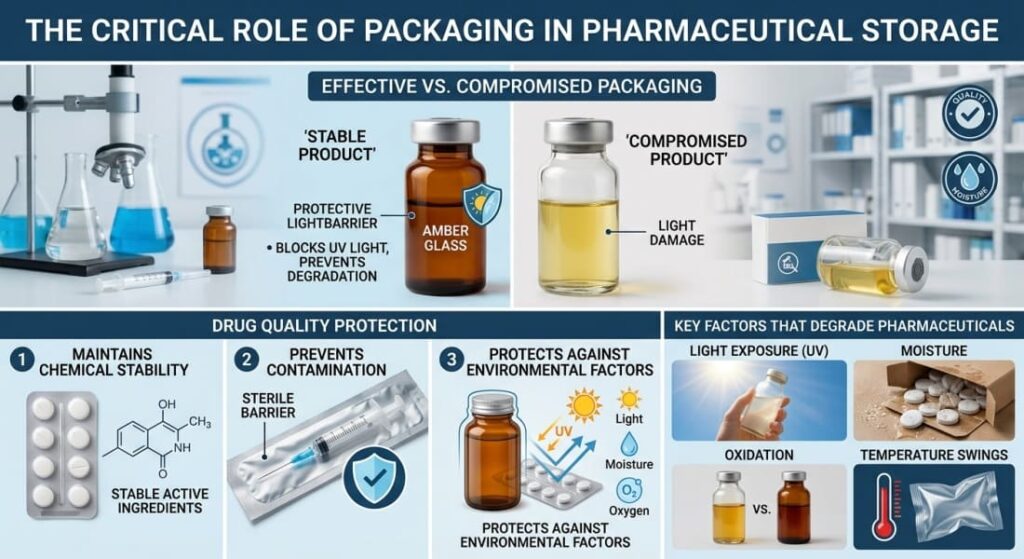
You probably already know that medicines have an expiration date. But what determines how long they stay effective? A big part of it is packaging. Good packaging:
Maintains the chemical stability of active ingredients
Prevents contamination
Protects against environmental factors
Extends the usable shelf life of the product
If you cut corners on packaging, you risk losing potency, breaking compliance rules, and damaging your brand’s reputation.
Key Factors That Can Degrade Pharmaceuticals
Several environmental factors can ruin a perfectly good batch of medicine, including:
Light exposure — especially UV rays that break down sensitive compounds
Moisture — which can cause clumping, dissolution, or microbial growth
Oxygen — leading to oxidation of active ingredients
Temperature swings — which speed up chemical reactions
Chemical interaction with the container — particularly with plastics or low-quality materials
So if you’re wondering why are some medicines stored in dark bottles, the answer is simple: light is one of the most damaging factors for many pharmaceutical compounds, and dark glass blocks it out effectively.
Key Benefits of Amber Glass Bottles for Pharmaceuticals
Now let’s look at why amber medicine bottles are trusted across the pharmaceutical industry. There are several real, measurable benefits of amber glass bottles that make them stand out.
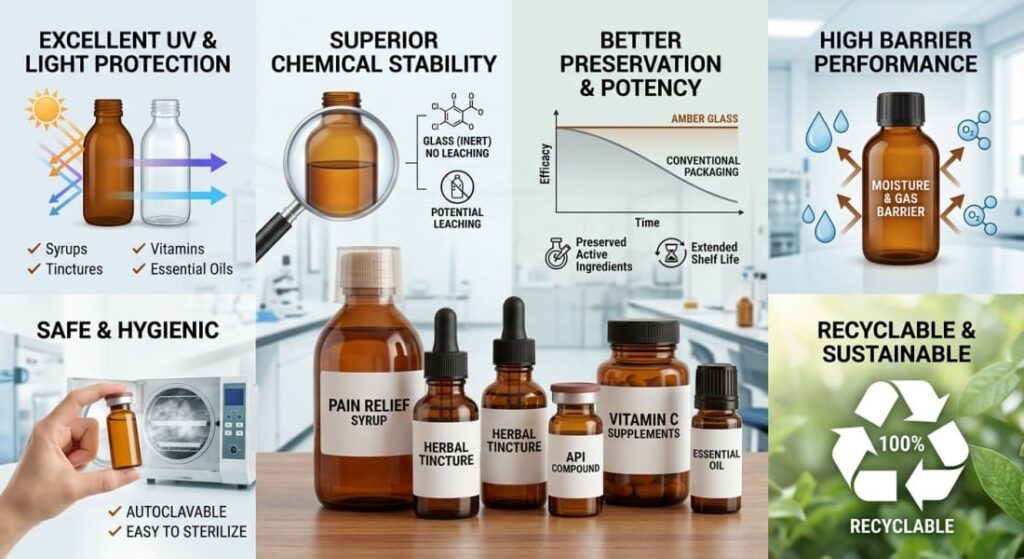
Excellent UV and Light Protection
This is the headline feature. The amber color isn’t just for looks — it’s a functional filter. Amber glass blocks most ultraviolet (UV) light and a large portion of blue light, both of which can cause photodegradation in many medicines.
The amber glass bottle function is essentially to act as a built-in light shield. This makes it especially useful for:
Syrups and oral suspensions
Tinctures and herbal liquids
Essential oils
Light-sensitive active pharmaceutical ingredients (APIs)
Vitamins and supplements
If you’re looking at the amber vial meaning more technically, it refers to a small dark-colored glass container specifically designed to keep light-sensitive contents stable.
Superior Chemical Stability
Glass is naturally inert. That means it doesn’t react with what’s inside. Unlike some plastics, amber glass won’t leach chemicals into your formulation, and it won’t absorb ingredients from the product either.
This is a major reason drugs stored in amber coloured bottle maintain their integrity longer. You don’t have to worry about the container changing the chemistry of the product.
Better Preservation of Potency and Shelf Life
When you combine UV protection with chemical inertness, you get a packaging solution that keeps your product effective for longer. Glass medicine bottles help preserve:
Active ingredient concentration
Color and clarity of the product
Consistency across batches
Overall shelf life when paired with a proper seal
For manufacturers, this means fewer returns, fewer complaints, and a stronger reputation.
High Barrier Performance Against Moisture and Gas
Glass provides one of the strongest barriers you’ll find in packaging. It doesn’t allow oxygen or moisture to seep through the walls of the bottle, unlike many plastic alternatives. For products that are hygroscopic (absorb moisture) or sensitive to oxidation, this is a major win.
Safe, Hygienic, and Easy to Sterilize
Amber glass can handle high-temperature sterilization without breaking down or releasing chemicals. This makes it ideal for pharmaceutical environments where hygiene is non-negotiable. You can sterilize, fill, seal, and ship with confidence.
Recyclable and Sustainable Packaging Choice
Sustainability is becoming a real factor in B2B purchasing decisions. Glass is 100% recyclable without losing quality, which makes it a more responsible choice compared to single-use plastics. If your brand values sustainability — or if your customers do — amber glass supports that message.
How Amber Glass Bottles Compare with Other Pharmaceutical Packaging Options
To really understand why amber glass dominates pharmaceutical packaging, let’s compare it to the alternatives.
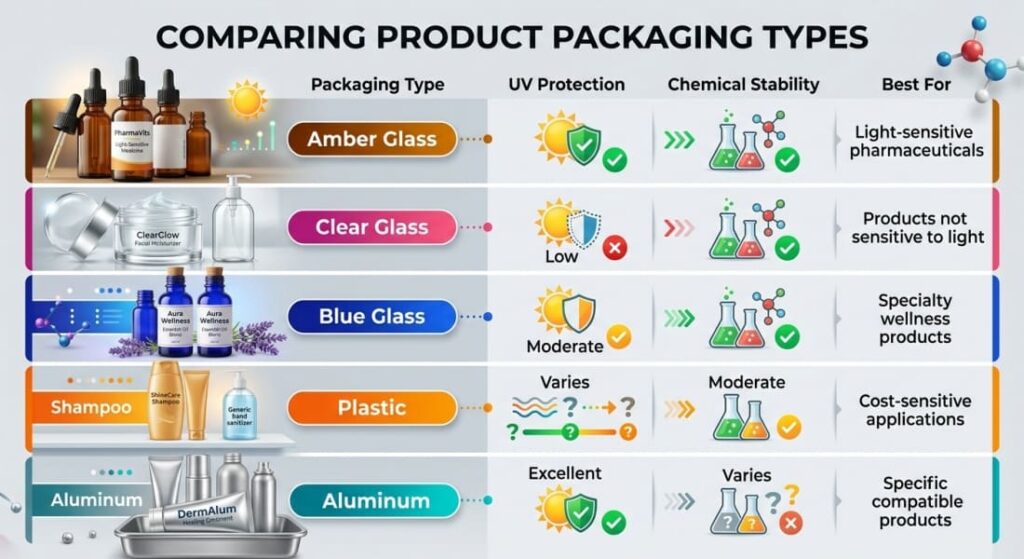
Amber Glass vs Clear Glass
Clear glass looks clean and lets you see the product inside, but it offers very little protection against light. For anything sensitive to UV, clear glass is a bad choice. Use clear glass only for products that aren’t affected by light exposure.
Amber Glass vs Blue Glass
Blue glass is sometimes used in cosmetics and specialty wellness products. It offers some UV protection, but not as much as amber. For pharmaceutical applications, amber is the safer and more reliable option.
Amber Glass vs Plastic Bottles
Plastic is cheaper and lighter, but it comes with trade-offs:
Some plastics allow oxygen and moisture to pass through
Plastics can leach chemicals into the product, especially over time
Plastic may react with certain pharmaceutical formulations
Plastic doesn’t carry the same premium perception as glass
For high-value or sensitive formulations, pharmaceutical glass bottles are simply the better choice.
Amber Glass vs Aluminum or Metal Containers
Metal containers block light well and are durable, but they aren’t compatible with every formulation. Some active ingredients react with metal. Glass gives you visibility (when needed), chemical inertness, and a more flexible design.
Common Pharmaceutical Applications of Amber Glass Bottles
Amber glass isn’t just for one type of product. You’ll find it used across many categories of pharmaceutical and healthcare goods.
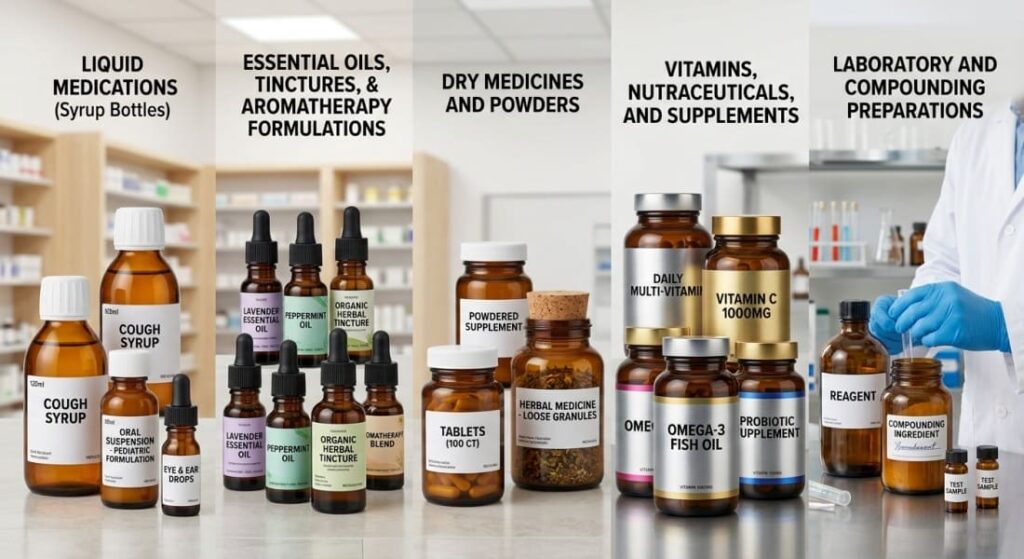
Liquid Medications
This is the biggest application. Pharmaceutical syrup bottles made of amber glass are used for:
Cough syrups
Oral solutions
Suspensions
Pediatric formulations
Eye and ear drops
The combination of light protection and chemical stability makes amber glass the standard for liquid medicines.
Essential Oils, Tinctures, and Aromatherapy Formulations
If you’re producing or sourcing amber glass bottles for essential oils, you already know how light can ruin volatile compounds. Amber glass keeps oils stable, preserves their aroma, and extends shelf life. The same applies to herbal tinctures and aromatherapy blends.
Dry Medicines and Powders
Even though we usually think of liquids, amber glass also works well for dry products:
Tablets and capsules
Powders
Granules
Herbal medicines
With a good closure, amber glass keeps these products dry and protected from light.
Vitamins, Nutraceuticals, and Supplements
The supplement industry has embraced amber glass for its premium look and protective properties. If you’re packaging vitamins or nutraceuticals, amber glass tells your customers you care about quality.
Laboratory and Compounding Preparations
Pharmacists doing compounding work, as well as labs handling small batches of reagents or test samples, often rely on amber glass containers. It’s a versatile option for professional use.
Key Features to Consider When Choosing Amber Glass Bottles for Pharmaceuticals
If you’re sourcing wholesale amber glass bottles, here’s what you should pay attention to before placing your order.
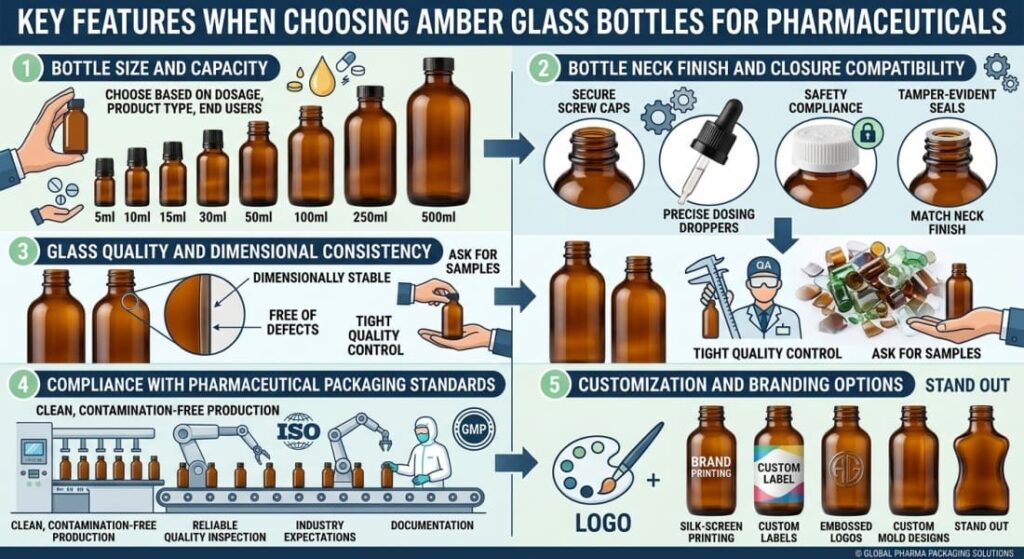
Bottle Size and Capacity
Common sizes include 5ml, 10ml, 15ml, 30ml, 50ml, 60ml, 100ml, 120ml, 250ml, and 500ml. Choose based on dosage, product type, and how your end users will handle it.
Bottle Neck Finish and Closure Compatibility
The closure is just as important as the bottle. You can choose from:
Amber glass bottles with screw cap — secure and easy to use
Amber glass bottles with dropper — perfect for tinctures, essential oils, and liquid medications that need precise dosing
Child-resistant caps for safety compliance
Tamper-evident closures
Lined caps for added sealing performance
Make sure the neck finish matches the closure system you plan to use.
Glass Quality and Dimensional Consistency
Inconsistent bottles cause problems on filling lines. You want bottles that are dimensionally stable, free of defects, and produced under tight quality control. Always ask for samples before placing a large order.
Compliance with Pharmaceutical Packaging Standards
Pharmaceutical packaging needs to meet strict standards. When you work with a serious pharmaceutical packaging manufacturer, you should expect:
Clean, contamination-free production
Reliable quality inspection
Material that meets industry expectations for pharmaceutical use
Documentation when needed
Customization and Branding Options
Your packaging is part of your brand. Custom amber glass bottles let you stand out with:
Silk-screen printing
Custom labels
Embossed logos
Custom mold designs
OEM/ODM packaging solutions
If you’re scaling up, having a flexible supplier for customization can save you a lot of time and cost.
Best Practices for Proper Use of Amber Glass Bottles
Even the best bottle won’t help if it’s not used properly. Here are some practical tips.
Store Products in Appropriate Conditions
Even with amber glass, you should still store your products in cool, dry environments. Amber glass protects from light, but it can’t change the surrounding temperature.
Use the Right Closure System
A bottle without a proper seal is just half a solution. Choose closures that match your product type and that provide airtight, leak-proof performance.
Avoid Physical Damage During Handling and Transport
Glass is durable but breakable. Use proper dividers, protective packaging, and careful logistics to prevent breakage during shipping.
Follow Product-Specific Filling and Storage Requirements
Every product has its own filling and storage requirements. Always follow the specifications outlined in your formulation documents and regulatory guidelines.
Inspect Bottles for Cleanliness and Integrity Before Use
Before filling, do a visual inspection. Check for cracks, chips, or contamination. A quick inspection now saves recalls later.
Why Manufacturers Choose Smilebottles for Pharmaceutical Amber Glass Bottles
If you’re searching for a reliable amber bottle supplier, here’s what makes Smilebottles a strong partner for pharmaceutical buyers.
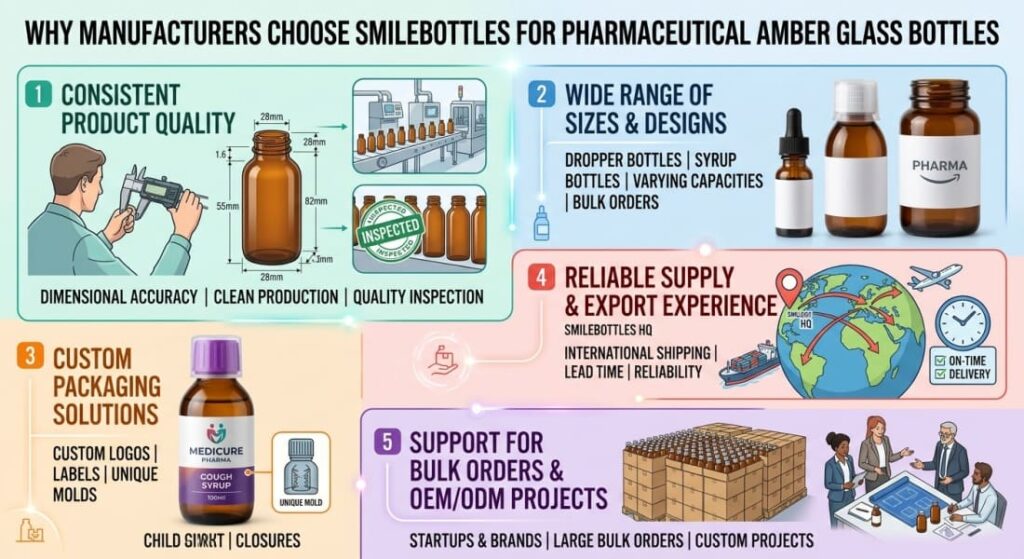
Consistent Product Quality
You can expect dimensional accuracy, clean production processes, and a strong quality inspection workflow. Consistency is the foundation of any pharmaceutical packaging relationship.
Wide Range of Amber Glass Bottle Sizes and Designs
Whether you need small dropper bottles or larger syrup bottles, Smilebottles offers a wide variety of shapes and capacities. This makes it easier to source everything you need in one place — including bulk amber glass bottles for high-volume needs.
Custom Packaging Solutions
You can work with the team to develop custom logos, printing, labels, and closure combinations that match your brand. If you need a unique mold, that’s also possible.
Reliable Supply and Export Experience
For international buyers, lead time and shipping reliability matter a lot. Smilebottles works with clients across multiple countries and understands what it takes to deliver on time.
Support for Bulk Orders and OEM/ODM Projects
Whether you’re a startup or an established pharmaceutical brand, Smilebottles supports both small custom projects and large bulk orders.
FAQ: Frequently Asked Questions About Pharmaceutical Amber Glass Bottles
Q1:Why are amber glass bottles used for pharmaceuticals?
A1:Because they block UV and blue light, keep contents chemically stable, and don’t react with sensitive formulations. They protect potency and extend shelf life.
Q2:Do amber glass bottles really block UV light?
A2:Yes. Amber glass blocks the majority of UV light and a significant portion of blue light. That’s the main reason it’s used for light-sensitive products.
Q3:Are amber glass bottles better than clear glass for medicine storage?
A3:For most medicines, yes. Clear glass doesn’t filter light, which can degrade many active ingredients. Amber glass is the safer choice for light-sensitive formulations.
Q4:Can amber glass bottles be used for liquid medicines?
A4:Absolutely. They’re one of the most common containers for syrups, suspensions, drops, and oral solutions.
Q5:Are amber glass bottles safe for essential oils and herbal extracts?
A5:Yes. They protect volatile compounds from light degradation and don’t react with the oils, which keeps your product fresh and stable.
Q6:Are amber glass bottles recyclable?
A6:Yes, glass is 100% recyclable and can be reused without losing quality.
Q7:What closures are best for pharmaceutical glass bottles?
A7:It depends on the product. Screw caps, droppers, child-resistant caps, and tamper-evident closures are all common. Match the closure to the product’s needs.
Q8:How do I choose the right amber glass bottle for my product?
A8:Think about volume, closure type, regulatory requirements, branding needs, and whether you need customization. Working with an experienced supplier helps make this easier.
Q9:Can amber glass bottles be customized for pharmaceutical brands?
A9:Yes. You can customize printing, labels, embossing, color tone, and even mold shape.
Q10:What sizes are available for pharmaceutical amber glass bottles?
A10:Common sizes range from 5ml to 500ml, with many standard options in between. Custom sizes are also available depending on the supplier.
Conclusion
Amber glass bottles continue to be one of the most reliable choices for pharmaceutical packaging because they get the basics right: they block light, they don’t react with the product, and they help preserve potency over time. Whether you’re packaging liquids, dry medicines, supplements, or essential oils, amber glass gives your product a level of protection that’s hard to beat.
When you’re choosing your packaging, remember to look beyond just the bottle itself. Pay attention to closures, customization options, quality control, and supplier reliability. The right packaging partner makes a big difference in how smoothly your operations run.
If you’re looking for high-quality amber glass bottles for pharmaceutical packaging, Smilebottles is ready to help you find the right solution for your product — whether you need standard sizes, custom designs, or bulk supply. Reach out anytime to discuss your packaging needs, and let’s make sure your products get the protection they deserve.


