
Table of Contents
ToggleAuthor: SmileBottles Editorial Team
Estimated Reading Time: About 15 Minute
Packaging has changed a lot over the past decade. It used to be simple — just a container to hold your product and keep it safe during shipping. But today, your packaging says something about who you are as a brand. It tells your customers whether you care about quality, the environment, and the experience you deliver.
That is why so many brands across food, beverage, beauty, wellness, and pharmaceutical industries are moving away from plastic and choosing glass packaging instead. And if you are here reading this, you are probably thinking about making that same move — or at least exploring whether it makes sense for your business.
This article walks you through the real reasons behind the shift, which industries are leading the way, what challenges you might face, and how to transition smoothly. Whether you are sourcing glass bottles for the first time or looking to scale up your current supply, this guide is built to help you make a better decision.
Why Glass Packaging Is Becoming More Popular
If you keep up with glass bottle packaging news or follow glass bottle supply news, you have probably noticed that demand for glass has been rising steadily. This is not a short-term spike driven by one trend. There are solid, practical reasons behind it.
Glass Is Eco-Friendly and Highly Recyclable
One of the biggest reasons brands are switching is the environmental pressure they are getting from customers, retailers, and sometimes even governments. Glass holds a real advantage here.
Recyclable packaging is not just a marketing phrase when it comes to glass — it is actually true. Glass is 100% recyclable. You can melt it down and turn it into new bottles and jars repeatedly without any loss in purity or structural quality. This is different from most plastics, which degrade a little every time they go through the recycling process. Eventually, recycled plastic becomes unusable. Glass does not work that way.
Using recycled glass also cuts down on the raw materials needed for production. For a glass bottle manufacturer, incorporating recycled content into production lowers energy costs and reduces the need for sand and other natural inputs. For your brand, it means you can make a genuine claim about sustainable sourcing — and that matters to your customers.
Glass also supports circular packaging systems, which is something more brands are actively working toward. The idea is simple: packaging goes back into the supply chain instead of ending up in landfills. Glass fits naturally into this model.
Glass Supports a Lower-Waste Packaging System
Now, it is fair to say that glass is heavier than plastic. That extra weight does affect shipping costs and, in some cases, transportation emissions. But the overall picture is more nuanced than a simple comparison.
When you combine glass with smart practices — like lightweight bottle designs, bulk ordering, local sourcing, and refill or reuse programs — it becomes a genuinely strong choice for sustainable packaging. Reusable packaging is one of the most practical ways to reduce long-term waste, and glass handles repeated use far better than plastic.
Many brands are now building refill programs around glass. Customers return the bottles, they get cleaned and refilled, and the same container serves its purpose many more times. This kind of system drastically reduces how much packaging material you actually need over time, and it also creates a nice touchpoint for customer loyalty.
Glass Helps You Respond to the Plastic Waste Problem
Plastic pollution is not going away as a public concern. Consumers are reading more about it, governments are passing more restrictions, and retailers are starting to factor packaging sustainability into their supplier decisions.
Plastic free packaging is something many buyers are actively searching for. If your competitors are still using single-use plastic and you switch to glass, that difference becomes visible on the shelf and in your marketing. It gives you a story to tell.
Countries in Europe, parts of Asia, and elsewhere have already introduced plastic taxes and bans on certain single-use items. If you sell into multiple markets, switching to glass earlier puts you in a better position when new regulations arrive — rather than scrambling to find alternatives under a deadline.
Consumer Preferences Are Pushing Brands Toward Glass
Beyond the regulatory and environmental side, there is a very practical business reason to consider: your customers are changing what they expect from packaging.
Health and Safety Are a Growing Priority
More buyers — both individual consumers and business procurement teams — are asking questions about what packaging materials might do to the products inside them. Glass gives you a clean answer.
Glass is chemically stable. It does not react with what is inside it. It will not absorb flavors, odors, or colors, and it does not leach any chemicals into the product. This makes it ideal for anything where purity matters: juice glass bottles, milk glass bottles, sauces, skincare, essential oils, supplements, and pharmaceutical products.
Glass vials, for example, are used in pharmaceutical and medical settings specifically because glass provides such a reliable barrier. If your product falls into any sensitive category — food, medicine, or personal care — glass packaging supports a safety message that plastic simply cannot match.
Glass Creates a Premium Look and Feel
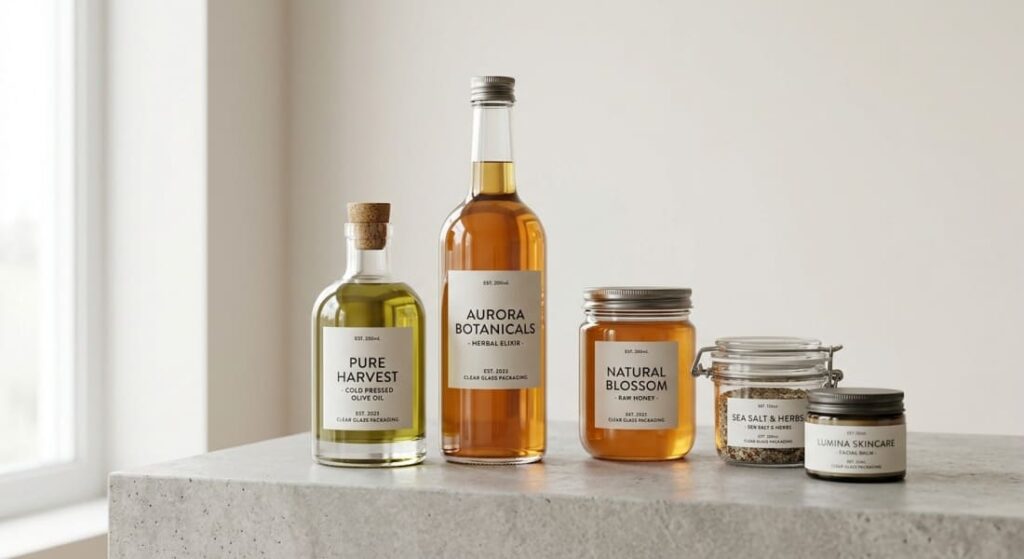
There is something about holding a glass bottle that plastic cannot replicate. The weight feels substantial. The surface feels clean. The clarity or the texture of frosted glass bottles signals quality before the customer even opens it.
Premium packaging is not just about looks — it directly affects how customers perceive the value of your product. When you use glass, you are communicating that the product inside is worth it. That perception supports higher price points and stronger brand positioning.
Perfume glass bottles are a classic example. The fragrance industry has relied on glass for decades because the container is part of the luxury experience. The same principle applies to high-end skincare, gourmet food products, and craft beverages. If you want your brand to sit in the premium tier, glass bottle packaging is one of the most direct ways to get there.
Brand packaging design choices also open up significantly with glass. You can work with custom shapes, different surface finishes, embossing, color coatings, and a range of glass bottle caps and closures to create something that is distinctly yours.
Different Industries That Are Leading the Transition
Glass is not limited to one type of product or market. Here is a look at where it is being used most actively — and why it works so well in each area.
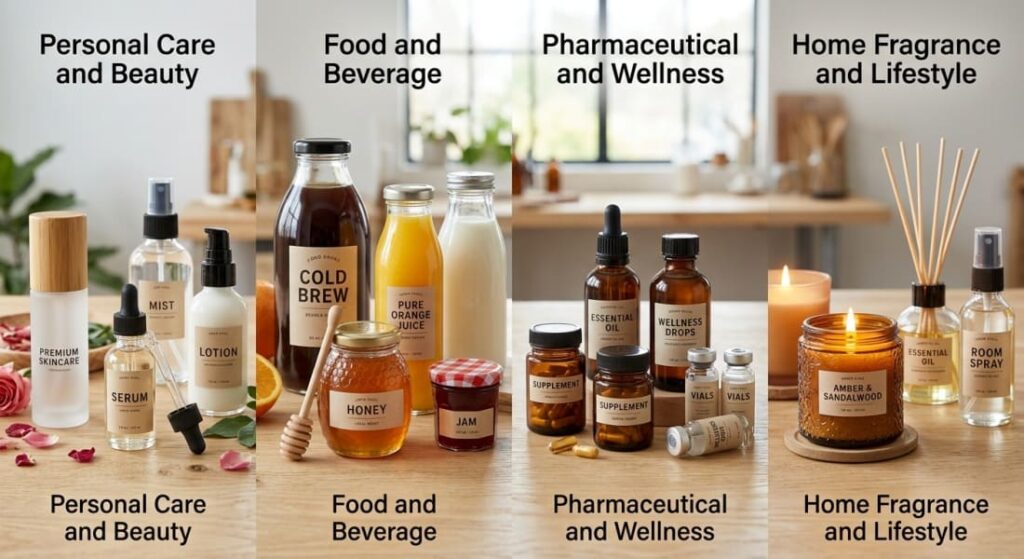
Personal Care and Beauty
The beauty industry is one of the fastest-growing markets for glass. Skincare brands especially are moving toward glass to signal purity and quality. Glass lotion bottles, glass dropper bottles for serums and facial oils, glass spray bottles for toners and mists, and frosted glass bottles for premium lines are all widely used.
If your brand is positioned as natural, organic, or high-end, glass packaging reinforces that message immediately. It also protects sensitive formulations better than plastic, which can allow air exchange or interact with certain ingredients over time.
Food and Beverage
Glass has a long history in food and beverage, and for good reason. It preserves flavor and aroma better than any plastic alternative. It is compatible with hot filling and pasteurization. And it lets customers see the product, which builds trust — especially for products like fresh juices, sauces, or artisan foods.
Glass beverage bottles cover everything from sparkling water and kombucha to craft beer and cold brew coffee. Juice glass bottles and milk glass bottles appeal to health-conscious consumers who want packaging that matches the quality of what is inside. Honey glass jars and jam jars are popular for artisan and specialty food brands because the glass jar itself looks beautiful on the shelf and at the table.
Pharmaceutical and Wellness
In this industry, packaging is not just about presentation — it is about safety and regulatory compliance. Glass has excellent chemical resistance, and certain types, like borosilicate glass, can handle extreme temperature changes without cracking. Amber glass bottles protect light-sensitive ingredients by blocking UV rays, which makes them standard for essential oils, tinctures, supplements, and many pharmaceutical products.
Glass vials are used for injectable medications and other medical-grade products where contamination prevention is critical. If you supply into the pharmaceutical or wellness space, glass is often not just a preference — it is a requirement.
Home Fragrance and Lifestyle
Candle glass jars have become a standard in the home fragrance market, and for good reason. Glass handles the heat of a burning candle safely, it looks clean and elegant, and it is easy to customize with labels, printing, or frosted finishes.
Reed diffuser bottles, room spray containers, and decorative glass vessels all fall into this category as well. The gift market and luxury home goods sector both rely heavily on glass because the packaging itself is part of the product experience.
Why Glass Packaging Is a Smart Long-Term Investment
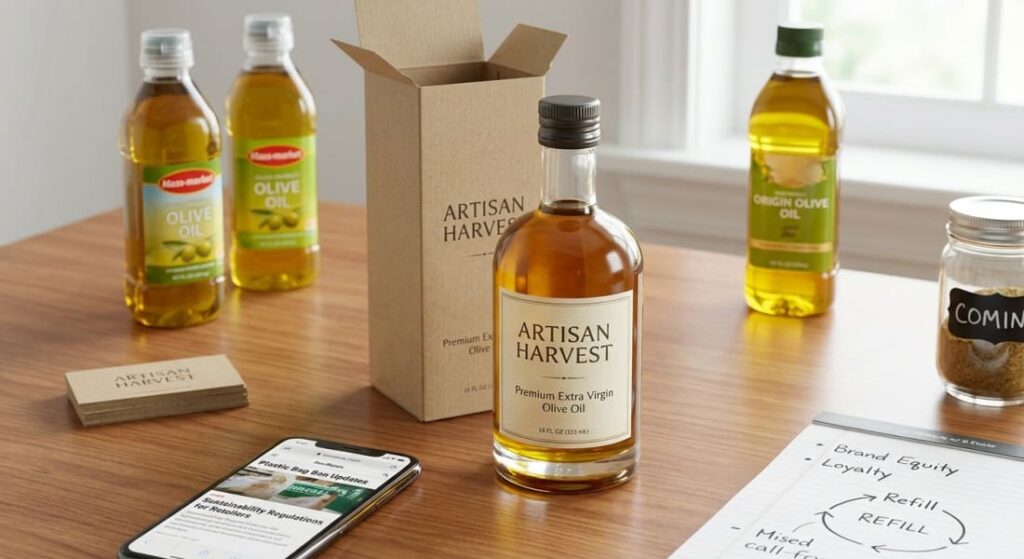
Yes, glass costs more than plastic upfront. But the way most experienced buyers think about it is not as a cost — it is an investment. Here is why that framing makes sense.
The Business Case for Spending More on Packaging
Better packaging also builds loyalty. When a customer receives a beautifully packaged product in glass, they remember the experience. They are more likely to share it, recommend it, and come back. That kind of goodwill is hard to put a number on, but it is real.
Glass also helps you stand out in crowded markets. When everything on the shelf is in plastic, a glass bottle immediately draws the eye. That visual differentiation is valuable, especially in retail environments where you have only seconds to attract a buyer’s attention.
Reusability Extends the Life of Your Packaging
Reusable packaging has become a selling point on its own. Many customers specifically seek out glass packaging because they plan to reuse the container after the product is gone. They store things in it, use it as a drinking glass, or repurpose it around the house. Every time they do, your brand stays in view.
Regulatory Trends Favor Glass
Keeping an eye on glass bottle supply chain news is useful here. More governments are introducing regulations that make plastic packaging more expensive or outright restricted. Retailers and large buyers are also starting to require sustainable packaging commitments from their suppliers.
If you switch to glass now, you are ahead of those requirements rather than reacting to them under pressure. That makes your supply chain more stable and your business more attractive to buyers who care about sourcing responsibly.
Common Challenges When Switching to Glass — and How to Handle Them
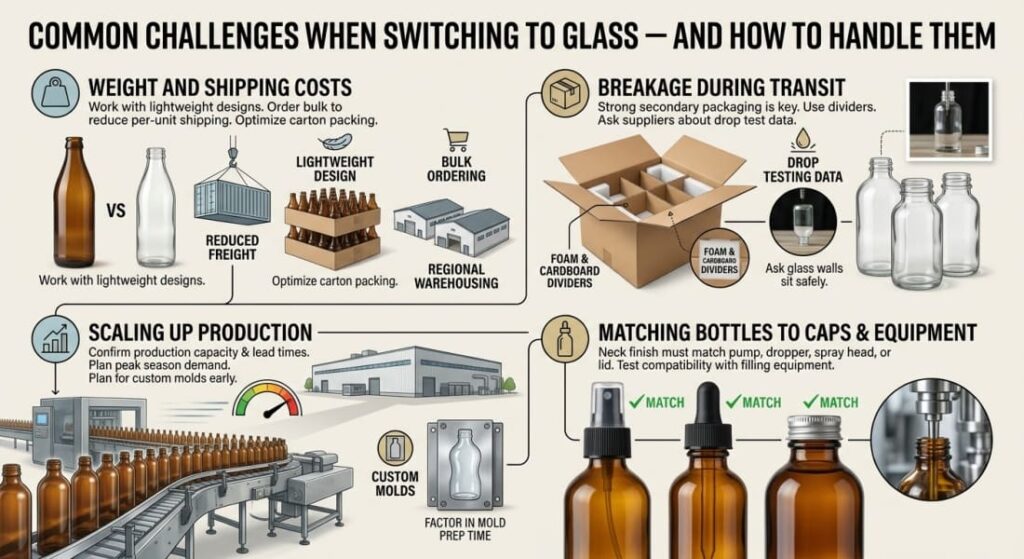
A realistic picture of glass packaging includes some challenges. Knowing them in advance helps you plan for them properly.
Weight and Shipping Costs
Glass is heavier. That is a fact, and it does affect freight. But there are several ways to manage this. Work with a glass bottle supplier who offers lightweight bottle designs without sacrificing strength. Order bulk glass bottles to reduce your per-unit shipping cost. Optimize your carton packing to reduce wasted space. And if possible, source from a supplier with regional warehousing or strong export logistics experience.
Breakage During Transit
Breakage is a real concern, but it is manageable. The key is proper secondary packaging: strong corrugated cartons, foam or cardboard dividers, and the right bottle thickness for your product weight. When you buy wholesale glass bottles, ask your supplier about their standard export packing and whether they have data from drop testing. A good glass bottle manufacturer will have this information ready.
Scaling Up Production
If you are growing fast, you need to know that your supplier can keep up. Before committing to a large volume, confirm production capacity, typical lead times, and how the supplier handles peak season demand. For custom glass bottles, mold preparation time needs to be factored in — this is not something you want to be figuring out when you are already behind on an order.
Matching Bottles to Caps and Filling Equipment
Getting your glass bottle caps and closures right is essential. The neck finish of the bottle needs to match the pump, dropper, spray head, or lid you plan to use. If you run an automated filling line, the bottles need to be compatible with that equipment. Always test samples thoroughly before placing a bulk order. A reliable supplier will support you through this process and flag any compatibility issues early.
How to Transition to Glass Packaging Without the Headaches
If you have decided that glass is the right direction, here is a practical approach to making the switch work.
Pick the Right Bottle Type for Your Product
This is where it starts. Different products need different glass. Amber glass bottles block UV light, making them right for essential oils, tinctures, and any product sensitive to light exposure. Clear glass bottles are best when you want customers to see the product — fresh juices, clear sauces, and beauty serums all benefit from transparency. Frosted glass bottles give a soft, premium look that works well in beauty and personal care. Green glass bottles are commonly associated with beverages, wine, and natural-style brands.
Glass dropper bottles are standard for facial oils and CBD tinctures. Glass spray bottles cover everything from toners to room sprays. Candle glass jars need wider mouths and heat-resistant glass. Honey glass jars need wide openings and strong seals. Think through your product’s specific requirements before selecting a bottle style.
Work with a Reliable Glass Bottle Supplier
This is one of the most important decisions you will make. A good glass bottle supplier should have a broad product range, real customization capability, transparent MOQ and pricing, and proven export experience. They should also have quality control processes in place and be responsive when issues come up.
If you are considering sustainable packaging solutions as part of your brand story, it also helps to work with a supplier who understands that positioning and can advise you on options like recycled glass content or lightweight designs.
Always Test Before You Commit to a Large Order
No matter how confident you are in a bottle selection, test samples first. Check the dimensions, the weight, how closures fit, how the bottle performs on your filling line, and how labels adhere to the surface. Do a basic drop test. Fill the bottle with your actual product and let it sit for a few weeks to check for any compatibility issues. Small problems found at the sample stage save significant money later.
Tell Your Customers About the Change
When you switch to glass, say so. Add a short message on your label explaining why you chose glass. Share the recycling instructions. Post about it on social media and your website. Customers who care about plastic free packaging and sustainability will respond well to knowing that you made a deliberate choice — and why.
Build Your Brand Story Around Sustainable Packaging
Glass bottle packaging can be the foundation of a broader sustainability message. Pair your glass bottles with recyclable packaging for outer cartons, minimal plastic in secondary packaging, and clean, simple brand packaging design. If you offer a refill program, communicate it clearly. These details add up to a brand identity that resonates with a growing segment of buyers who want to support businesses that align with their values.
Why Smilebottles Is a Partner Worth Considering
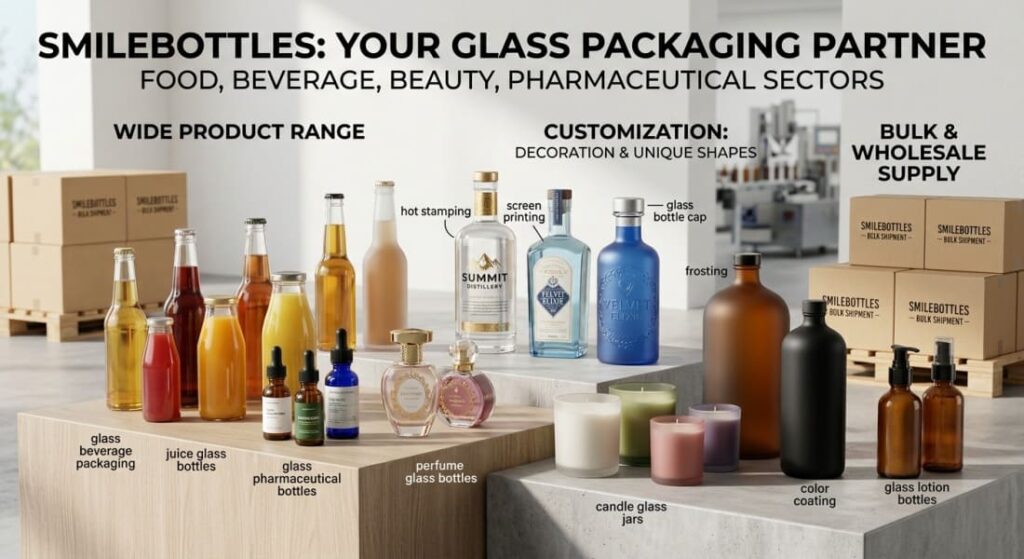
Smilebottles works with brands across food, beverage, beauty, personal care, pharmaceutical, and lifestyle sectors to supply glass bottle packaging at scale. Whether you need standard stock bottles or fully custom glass bottles, the goal is to help you find packaging that fits your product, your brand, and your budget.
A Wide Product Range
From glass beverage bottles and juice glass bottles to glass dropper bottles, perfume glass bottles, candle glass jars, glass vials, and glass lotion bottles — the catalog covers most product categories. If you are not sure which bottle type suits your product, the team can help you work through the options.
Customization That Sets Your Brand Apart
Glass bottle decoration options include color coating, frosting, screen printing, hot stamping, embossing, and custom glass bottle caps and closures. Custom glass bottles with unique shapes are also available for brands that want something completely their own. These customization options support stronger brand packaging design and give you better shelf differentiation.
Bulk and Wholesale Supply
For brands that need consistent volume, bulk glass bottles and wholesale glass bottles are available with stable lead times and competitive pricing. Whether you are placing your first sizable order or managing a mature supply chain, the process is designed to be straightforward.
Industry-Specific Expertise
Because Smilebottles works across so many sectors, the team understands the specific requirements that come with different product types — from pharmaceutical-grade containers to heat-resistant candle glass jars to light-blocking amber glass bottles for sensitive formulations.
FAQ: Practical Questions About Glass Packaging
Q1:Is glass packaging really better than plastic for my product?
A1: It depends on your priorities. If product safety, premium presentation, recyclability, and long-term brand value matter to you, glass is usually the stronger choice. Plastic is cheaper and lighter, but those advantages often come at a cost to brand perception and sustainability credibility.
Q2:Is glass packaging actually recyclable?
A2:Yes, genuinely. Glass is 100% recyclable with no quality loss across multiple cycles.
Q3:Which products work best in glass bottles?
A3:Beverages, juices, dairy, sauces, honey, skincare, essential oils, perfumes, supplements, medicines, and candles are all well-suited to glass. Essentially, any product where purity, safety, or premium presentation matter is a good candidate.
Q4:Will switching to glass significantly raise my shipping costs?
A4:It can raise them, but the impact varies based on bottle weight, order volume, and shipping distance. Choosing lightweight designs, ordering bulk glass bottles, and optimizing your carton packing all help control the cost.
Q5:Can I get bottles made to my own design?
A5:Yes. Custom glass bottles can be designed with unique shapes, surface treatments, colors, closures, and decoration. Custom molds take some lead time to prepare, so it is best to plan this into your product development timeline.
Conclusion
If you are ready to explore your options — whether you need wholesale glass bottles, custom glass bottles, or just want to understand what sustainable packaging solutions are available for your product — reach out to Smilebottles. Share your product details and requirements, and the team will help you find packaging that works for your brand, your customers, and your bottom line.