



Table of Contents
ToggleAuthor: SmileBottles Editorial Team
Estimated Reading Time: About 12 Minute
Anyone who’s ever opened a delivery box only to find broken glass and a puddle inside knows the feeling. It’s frustrating for the customer, and even worse for the business that sent it. Glass bottles filled with liquid are one of the hardest things to ship well. They’re heavy, they’re fragile, and once the cap loosens or the box gets dropped, you’re looking at a refund, a complaint, or both.
But here’s the thing, most shipping damage comes down to a handful of avoidable mistakes. Once you understand what causes breakage and leaks, you can pack your bottles in a way that survives almost anything the courier throws at them (sometimes literally).
This guide walks you through how to ship glass bottles of liquid the right way, what materials to use, how to pack step by step, how to pick the right box and carrier, and the small details that make a big difference.
Why Shipping Glass Bottles with Liquid Is Different
Shipping a t-shirt is easy. Shipping a bottle of bourbon? Not so much. A few reasons why.
Glass Breaks. Liquid Makes It Worse.
Glass on its own is fragile. Add liquid inside and you’ve doubled or tripled the weight, which means more force on every impact. Heavier boxes also tend to get handled more roughly because they’re harder to move.
Caps Loosen More Than You’d Think
Vibration, temperature swings, pressure changes during air freight, all of these can work a cap loose during transit. A perfectly sealed bottle at your warehouse might be leaking by the time it lands at its destination.
Couriers Aren’t Gentle
Boxes get tossed, stacked, dropped, and squeezed. That’s just reality. You can’t control the handling, but you can control the packing, and that’s where the work gets done.
Know the Shipping Rules Before You Pack
This part trips up a lot of new sellers. Before you ship anything, check the rules.
Carrier Policies Vary
FedEx, UPS, DHL, and USPS all have different rules for liquids, fragile goods, and alcohol. Some require certified packaging. Some won’t accept certain product categories at all. A quick read through their guidelines saves you headaches later.
Alcohol Has Its Own Set of Rules
In the U.S., USPS doesn’t allow alcohol shipments at all. FedEx and UPS require an approved alcohol shipping agreement before you can use their services. Some states block direct-to-consumer alcohol sales entirely. Check before you ship, not after.
Domestic vs International
Sending bottles overseas? You’ll need customs forms, accurate product descriptions, and sometimes import permits. Alcohol content, bottle size, and labeling all factor in. Get the paperwork right or your shipment can sit in customs for weeks, or worse, get destroyed.
Don’t Skip Insurance
Glass bottles with liquid are exactly the kind of shipment you want insured. Declare the real value, hang on to your packing photos, and keep tracking info handy. If something breaks, you’ll need it.
Best Packaging Materials for Glass Bottles with Liquid
Choosing the right materials is half the battle. Here’s what actually works when it comes to protective packaging for glass bottles.
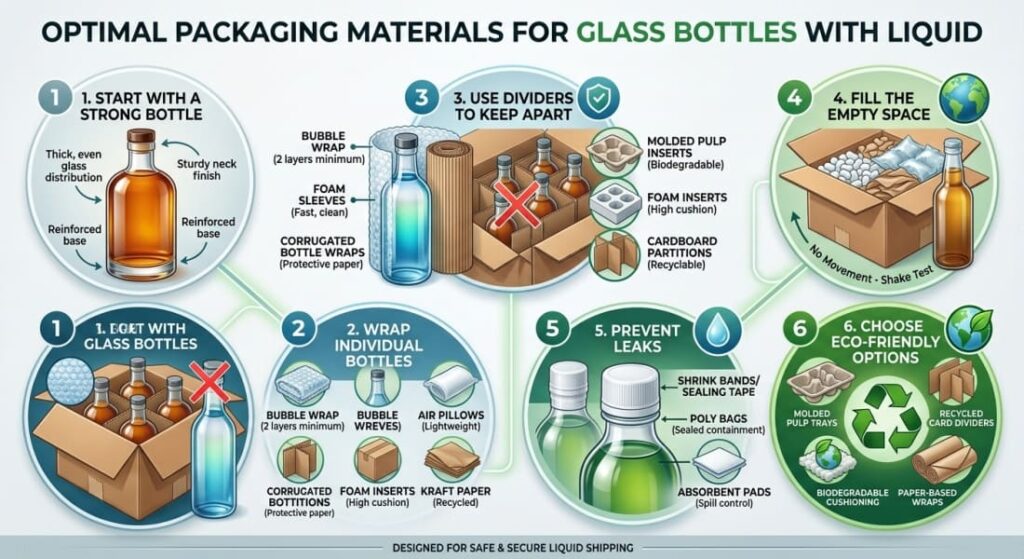
Start with a Strong Bottle
A well-made bottle survives a lot more than a cheap one. Look for thick bases, even glass distribution, and a neck that fits snugly with your closure. If the bottle itself is weak, no amount of packaging will save it.
Wrap Each Bottle Individually
You’ve got a few good options here:
Bubble wrap (still the go-to for most shippers)
Foam sleeves (clean, fast, and great for wine or liquor)
Corrugated bottle wraps
Styrofoam shippers for high-end protection
If you’re figuring out how to wrap glass bottles for shipping, the basic rule is two layers minimum, and cover the base, shoulder, and neck completely.
Keep Bottles Apart with Dividers
When you’re shipping more than one bottle, never let them touch. Use cardboard dividers, molded pulp inserts, foam inserts, or pre-made partitioned bottle shippers. Glass-on-glass contact is one of the top reasons bottles break in transit.
Fill the Empty Space
Cushioning matters. Packing peanuts, air pillows, kraft paper, corrugated pads, any of these work as long as you eliminate all movement inside the box. Shake the box when you’re done. If you hear anything shifting, add more.
Stop the Leaks Before They Start
Cap leaks ruin shipments. Use shrink bands or sealing tape around the closure, slip each bottle into a sealed poly bag, and toss in absorbent pads if you want extra protection. This is the foundation of any reliable glass shipping solution.
Going Green Without Sacrificing Protection
More customers care about sustainability these days, and the good news is eco friendly packaging for glass bottles has come a long way. Molded pulp trays, recycled cardboard inserts, biodegradable cushioning, and paper-based wraps all hold up well in transit.
How to Pack Glass Bottles with Liquid, Step by Step
If you’ve ever wondered how to pack glass bottles for shipping without overthinking it, here’s the process that works.
Step 1: Check Every Bottle First
Look it over. Any chips, cracks, or weak spots? Set it aside. Make sure the cap or cork fits properly. A bad bottle going into the box is a problem you can’t fix later.
Step 2: Seal the Bottle Tight
Tighten the closure, then add a layer of tape around the cap or use a shrink seal. That’s basically how to seal bottles for shipping properly, and it prevents most of the leaks people complain about.
Step 3: Add a Leak Barrier
Drop the sealed bottle into a poly bag and tie it off. If anything does leak, the bag keeps it contained instead of soaking the box.
Step 4: Wrap It Up
Two or three layers of bubble wrap, or a snug foam sleeve. Pay extra attention to the neck and base, those are the weak spots.
Step 5: Slide Bottles Into Dividers
Place each wrapped bottle into its own slot. Keep them upright when you can, since lying flat puts more pressure on the cap.
Step 6: Fill the Gaps
Pack cushioning into every empty space. Shake the box. If anything moves, add more filler.
Step 7: Double Box It
For valuable or long-distance shipments, put the packed box inside a larger outer box with at least two inches of cushioning around it. Honestly, this is the best way to ship glass bottles if you can’t afford damage.
Step 8: Seal and Label Clearly
Use strong packing tape on every seam. Add Fragile, This Side Up, and Liquid labels on multiple sides. Don’t assume the handlers will read just one.
Quick Checklist for Packing Glass Bottles with Liquid
Here’s a short version covering how to package glass bottles for shipping:
Tape or shrink-seal every cap
Wrap each bottle separately
Use dividers, never let bottles touch
Fill every void with cushioning
Double box when stakes are high
Add a poly bag as a leak barrier
Label the box clearly
Same approach works whether you’re shipping glass jars, liquor bottles, or any liquid-filled container.
Picking the Right Shipping Box
Your box is the outer armor. Picking the right shipping boxes for glass bottles is just as important as what’s inside.
Get the Strength Right
Check the ECT (Edge Crush Test) rating. For liquid-filled glass bottles, go with at least 32 ECT for single-wall, and 44 ECT or higher for double-wall.
Size Matters
Don’t use a box that’s too big. Extra space means extra movement, and movement breaks bottles. Match the box size to your bottle dimensions with just enough room for cushioning.
Use Bottle-Specific Boxes When You Can
Wine shippers, liquor cartons, and custom-fit inserts exist for a reason. They’re designed to hold bottles securely with less effort on your end.
When Double-Wall Is Worth It
Use double-wall boxes for long-distance routes, exports, heavy bottles (750ml and up), or any shipment where breakage isn’t acceptable.
Picking the Right Courier
Not all carriers handle fragile liquid shipments equally well. Some are great. Some, not so much.
Compare Their Fragile Policies
Find out who allows liquids, who handles alcohol, and who offers fragile-handling services. It’s worth the extra few minutes of research.
Faster Usually Means Safer
Express shipping costs more, but fewer handling points means less damage risk. For shipping liquid bottles, the upgrade often pays for itself.
Tracking and Insurance Aren’t Optional
Always ship with tracking, and always insure. Period.
Confirm Alcohol Eligibility
If you’re shipping liquor, double-check the carrier is approved for alcohol shipments in your destination region.
Cheap Isn’t Always Cheap
A few dollars saved on shipping can cost you a $50 bottle plus a customer service nightmare. Think about the full picture.
Common Mistakes That Cause Damage
Even experienced shippers slip up on these. Watch out.
Using thin boxes that can’t handle the weight
Skipping the cap seal step
Wrapping bottles loosely, or not at all
Leaving empty space inside the box
Letting bottles touch each other
Ignoring carrier rules for liquids and alcohol
Never testing the packaging before scaling up
Any one of these can ruin a shipment. Most of them are easy to fix once you know.
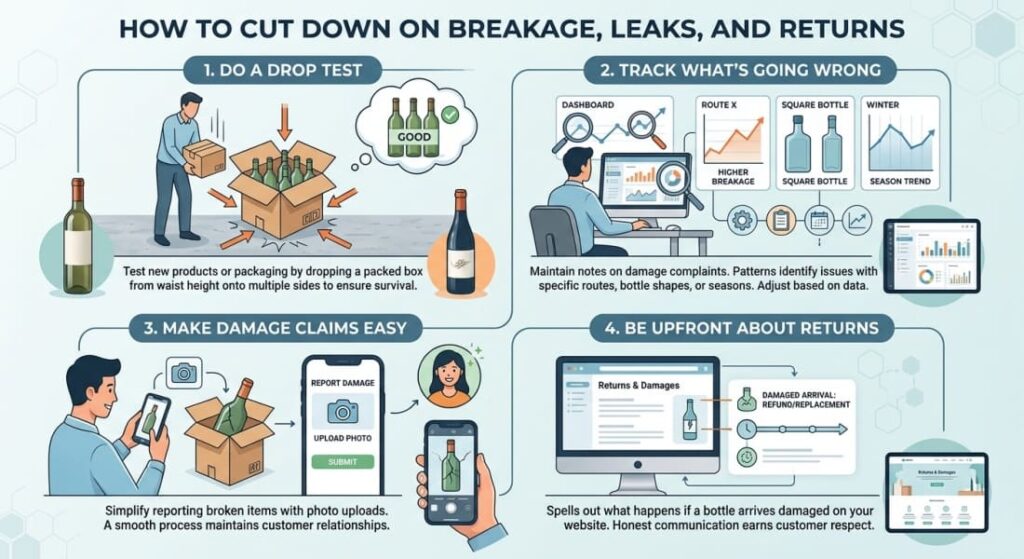
How to Cut Down on Breakage, Leaks, and Returns
Do a Drop Test
Before you launch a new product or switch packaging, pack a box and drop it from waist height onto different sides. If the bottles survive, you’re good.
Track What’s Going Wrong
Keep notes on damage complaints. Patterns will show up, maybe a specific route, a specific bottle shape, or a specific season. Adjust based on what you see.
Make Damage Claims Easy
When something does break, make it simple for the customer to report it with photos. A smooth process keeps the relationship intact.
Be Upfront About Returns
On your website, spell out what happens if a bottle arrives damaged. Customers respect honesty more than perfection.
Tips for E-commerce, Wholesale, and International Orders
Different shipments need different approaches.
E-commerce
Smaller orders pass through more hands. Use protective packaging that still looks good on the unboxing experience. Don’t skip cushioning just to save a little space.
Wholesale and Bulk
For large orders, consistency matters. Use the same carton specs across the order, palletize properly, wrap with stretch film, and add corner protectors. Stable pallets mean fewer broken bottles.
International
Stronger outer boxes, accurate customs forms, and an honest look at how long the box might sit in a warehouse somewhere hot. Over-pack rather than under-pack. International routes are tough on packaging.
A Few Other Glass Shipping Questions People Ask
Once in a while you’ll run into a slightly different shipping situation. If you ever need to ship glass tube items like sample vials or test tubes, the basics still apply, individual wrapping, snug dividers, and a solid outer box. How to mail glass of any kind really comes back to the same fundamentals.
On a completely different note, some people end up here after searching for things like ship inside a glass bottle or how to display a glass ship in a glass bottle. If you’ve ever wondered how to put a ship inside a bottle, the answer is that the ship’s masts fold flat, the glass ship in glass bottle model goes in through the neck, and then thin strings pull the masts upright once it’s inside. A glass bottle with ship inside is a craft tradition, not a shipping method, but it’s a nice reminder of how much skill goes into glass bottle design. At Smilebottles, we bring that same attention to detail to every liquor bottle we make.
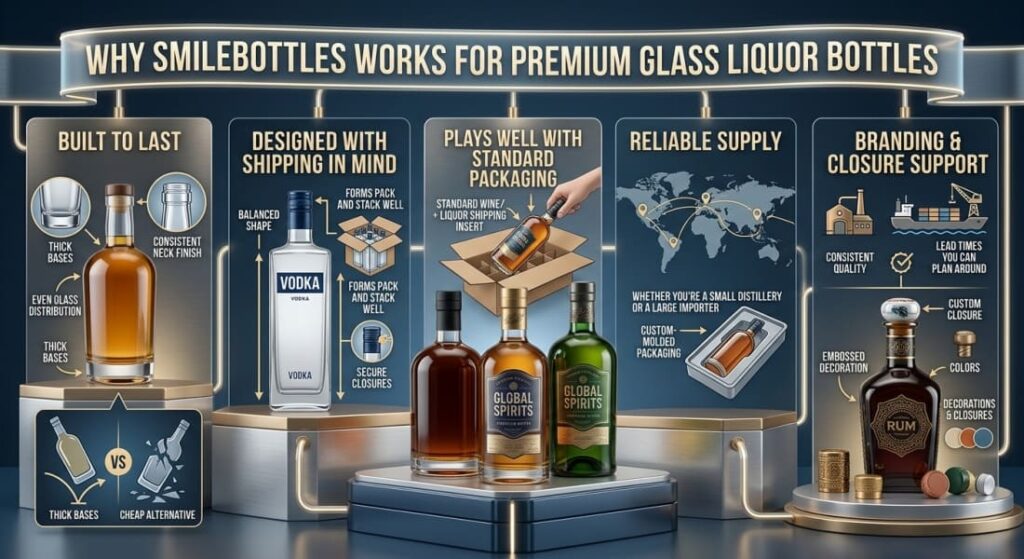
Why Smilebottles Works for Premium Glass Liquor Bottles
When the bottle itself is built well, the whole shipping process gets easier. That’s where Smilebottles comes in.
Built to Last
Our bottles have thick bases, even glass distribution, and consistent neck finishes. They handle the bumps and knocks of transit far better than cheaper alternatives.
Designed with Shipping in Mind
We think about stability and packing efficiency when we design our bottles. Balanced shapes, secure closures, and forms that pack and stack well.
Plays Well with Standard Packaging
Our bottles fit smoothly into standard wine and liquor shipping inserts, plus custom-molded packaging if that’s your route.
Reliable Supply
Whether you’re a small distillery or a large importer, you get consistent quality and lead times you can plan around.
Branding and Closure Support
From custom shapes and colors to closures and decoration, we’ll help you build a bottle that protects your product and looks great on the shelf.
FAQs About Shipping Glass Liquor Bottles
Q1:How do you ship glass bottles with liquid without breaking them?
A1:Start with thick-walled bottles. Seal the caps with tape or shrink bands. Wrap each bottle on its own. Keep bottles apart with dividers. Fill every gap with cushioning. Double box when it matters.
Q2:What’s the best packaging for shipping liquor bottles?
A2:The best packaging for glass bottles combines a sturdy double-wall corrugated box, foam or molded pulp inserts, individual wrapping, and a poly bag as a leak barrier.
Q3:Do glass bottles really need to be double boxed?
A3:For long-distance, international, or high-value shipments, yes. It makes a real difference in damage rates.
Q4:How do you keep bottle caps from leaking in transit?
A4:Tighten the cap firmly, add tape or a shrink band, and slip the bottle into a sealed poly bag as backup. That combination handles most leak issues.
Q5:Can you ship alcohol in glass bottles by courier?
A5:Yes, but only through carriers that are licensed and approved for alcohol. Always check your carrier’s specific rules before booking.
Q6:What kind of box works best for glass bottles?
A6:Double-wall corrugated boxes rated at 44 ECT or higher. Partitioned wine or liquor shippers are ideal when they fit.
Q7:Are eco-friendly materials strong enough?
A7:Yes. Molded pulp, recycled cardboard, and paper-based cushioning offer solid protection while keeping things sustainable.
Q8:How do you reduce damage on international shipments?
A8:Use double-wall boxes, add extra cushioning, fill out customs paperwork carefully, and pick carriers that have experience with fragile international freight.
Conclusion
Shipping glass bottles filled with liquid takes some effort, but it’s not complicated once you’ve got the process down. Pick strong bottles. Seal the caps. Wrap each bottle. Use dividers. Fill the gaps. Pick the right box and carrier. Test before you scale.
Get those basics right and your damage rates drop, your customers stay happy, and your shipping costs stay predictable.
If you’re looking for durable, premium glass liquor bottles built for safe shipping and strong shelf presence, Smilebottles is here to help. From standard shapes to fully custom designs, we’ll work with you to make sure your bottles look great and arrive in one piece, every single time.


