



Table of Contents
ToggleAuthor: SmileBottles Editorial Team
Estimated Reading Time: About 15 Minute
When you sell organic products, your packaging does more than hold the product. It tells your customer what your brand stands for before they even open the bottle or jar. If you position your business around purity, clean ingredients, sustainability, and product quality, your packaging has to support that message in a clear and believable way.
That is why glass remains one of the strongest options for organic brands across food, beverage, wellness, and beauty categories. Whether you sell kombucha, cold brew coffee, honey, herbal extracts, natural serums, or plant-based skincare, the container you choose affects freshness, safety, shelf appeal, and customer trust. In many cases, it also affects whether a buyer sees your brand as premium or ordinary.
You are also selling into a market where buyers pay close attention to materials. They read labels. They care about product integrity. They compare plastic, metal, and glass. They look for brands that stay consistent from ingredient sourcing to final presentation. That makes organic product packaging a real business decision, not just a design choice.
If you want packaging that matches the values behind organic products, glass gives you a strong advantage. It protects product quality, supports a clean brand image, works across many product categories, and helps you present your business in a way that feels honest and high value. For brands that want durable, attractive, and sustainable glass packaging, glass is often the best place to start.
Glass Packaging Protects the Purity of Organic Products
One of the main reasons you may choose glass for organic products is purity. Organic buyers usually want fewer unnecessary additives, fewer synthetic ingredients, and fewer hidden risks. That mindset does not stop at the formula. It extends to the container.
Glass is widely valued because it is non-reactive in many common food, beverage, and cosmetic applications. When you use a properly made glass bottle or jar, you are using a material that does not easily interact with the contents. That matters when your product contains natural acids, essential oils, plant extracts, active botanical ingredients, or delicate flavors.
If you sell juices, sauces, herbal liquids, wellness shots, or skincare products, your customers expect the product inside to stay true to its original form. Glass helps support that expectation. It does not carry the same consumer concerns that often come up with some other packaging materials, especially when people worry about odor transfer, material interaction, or long storage times.
This is especially important for products with sensitive formulas. If you are choosing glass bottles for essential oils, for example, you are not only choosing a container that looks premium. You are choosing one that fits the needs of a concentrated product that requires stability and reliable protection. The same is true for natural tinctures, serums, botanical blends, and fermented products.
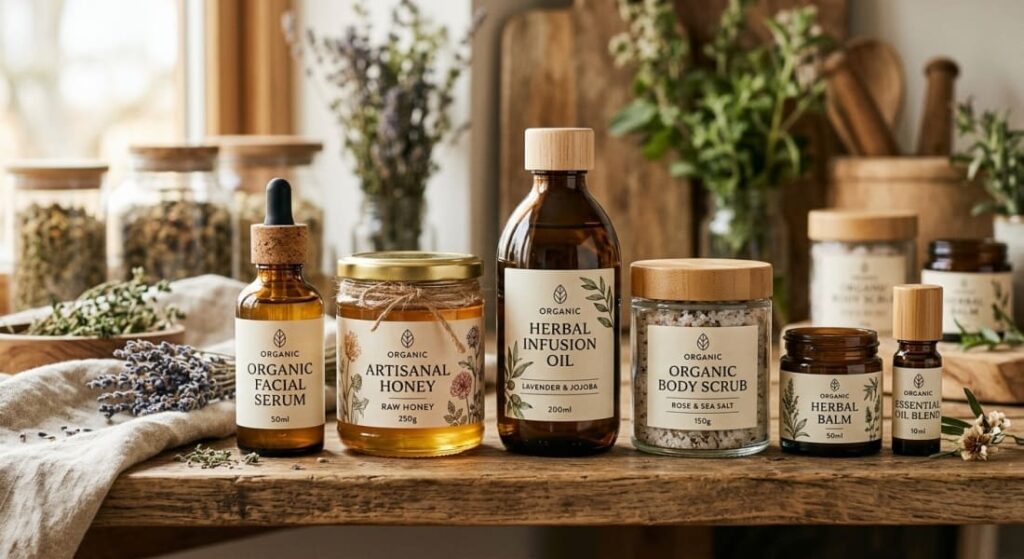
Many buyers also see glass as a cleaner material in a branding sense. Even before they understand the technical details, they often associate glass with honesty, purity, and product transparency. In a crowded organic market, that first impression matters. Your packaging should support the promise you make on the label, and glass does that better than most alternatives.
Glass Helps Preserve Freshness, Flavor, and Product Quality
Organic products often have fewer artificial preservatives, which makes product protection even more important. If you want to keep flavor, aroma, texture, and active ingredients in good condition, the right packaging choice can make a big difference.
Glass works well because it provides a strong barrier when paired with the right closure. That means your product is better protected from outside air, moisture, and contamination. For foods and beverages, this can help maintain original taste and aroma. For skincare and wellness products, it can help support formula stability over time.
This matters in many product categories. If you sell glass bottles for kombucha, you need packaging that supports freshness, carbonation handling, and a quality look on the shelf. If you are sourcing glass bottles for cold brew coffee, you want a bottle that preserves flavor while also giving your brand a more premium and authentic feel. Organic buyers often connect taste and freshness with packaging quality, even before the first sip.
Glass also does not absorb odors or flavors the way some materials can. That is useful when you sell spices, oils, sauces, coffee concentrates, fermented drinks, or natural cosmetics with essential oils and botanical fragrance. Your product should smell and taste like itself, not like the package.
Light-sensitive products need extra attention. In those cases, color matters as much as structure. Amber glass can help reduce light exposure for products such as herbal extracts, essential oils, and some skincare formulas. That is why many buyers look for amber glass dropper bottles wholesale when they need packaging that balances protection, function, and professional presentation.
If you are working with essential oil products, the package should never be an afterthought. Many buyers ask what the best bottles for essential oils are, and the answer usually comes down to material stability, light protection, closure quality, and filling compatibility. Glass checks those boxes well, which is why it is such a common choice in that category.
Glass Packaging Supports Sustainable and Eco-Conscious Brands
Sustainability is one of the strongest reasons organic brands move toward glass. Your customers may not expect perfection, but they do expect your packaging choices to make sense. If your product message centers on health, nature, and environmental responsibility, your container should support that story.
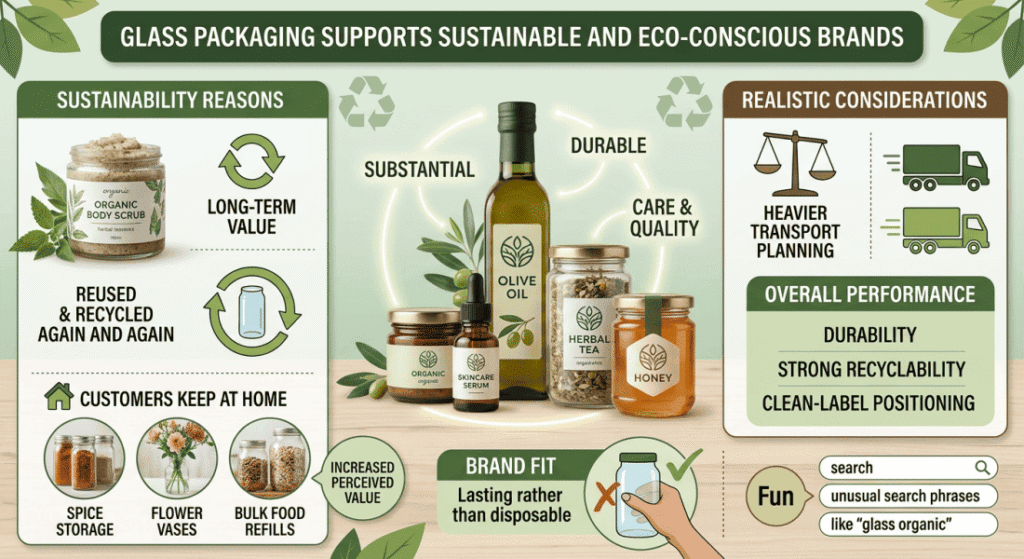
Glass has a strong reputation because it can be reused and recycled again and again. That makes recyclable glass packaging an appealing option for brands that want packaging with long-term value beyond a single use. Many customers also keep glass containers at home for storage, refill use, or decoration, which increases the perceived value of the product.
For many brands, eco-friendly glass packaging is not just about recycling. It is also about brand fit. Glass feels substantial. It looks durable. It suggests care and quality. Organic consumers often respond well to packaging that feels lasting rather than disposable.
It is still important to be realistic. Glass is not automatically the perfect solution for every product or shipping model. It is heavier than some alternatives, and transport planning matters. But when you compare it with the goals of many organic brands, it still performs very well. It offers durability, strong recyclability, and a brand image that lines up naturally with clean-label positioning.
You may even notice that some buyers type unusual search phrases like glass organic when they are looking for packaging that matches natural or clean products. The wording may be awkward, but the intent is clear: people want glass because it feels more in line with organic values.
If your brand wants packaging that looks responsible and supports a longer-term sustainability message, glass gives you a practical and market-friendly path.
Glass Packaging Builds a Premium Brand Image and Consumer Trust
Organic products often compete on quality, not just price. That means packaging has to help you communicate value quickly. Glass does this well because it naturally looks more refined than many other materials.
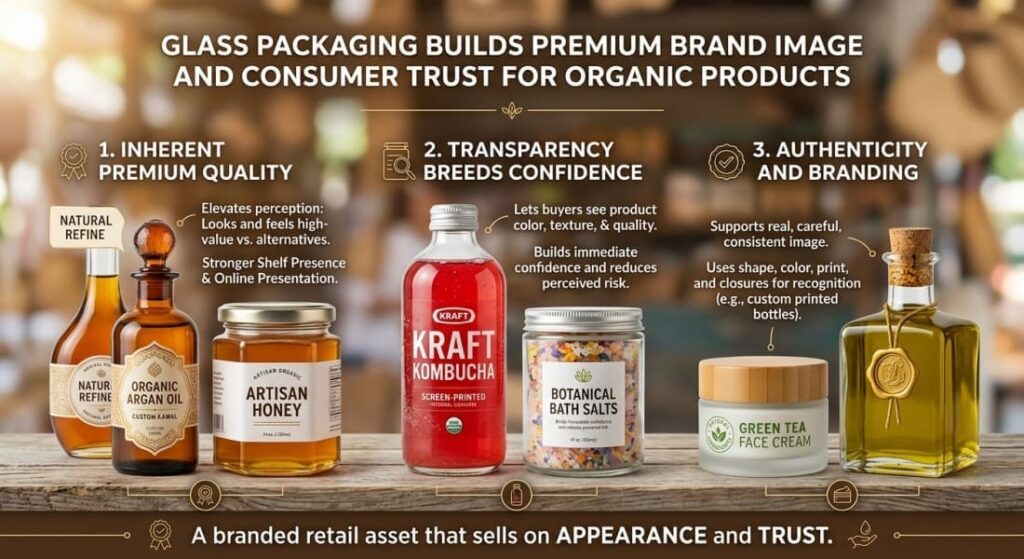
When a customer sees a glass jar or bottle, the product often feels more premium right away. That can help support stronger shelf presence, better online product presentation, and more confidence in the purchase. If your formula is high quality, your packaging should not make it feel ordinary.
Transparency also matters. Clear glass lets buyers see the color, texture, and appearance of the product inside. This is especially useful for honey, jams, infused oils, kombucha, juices, bath salts, botanical blends, and natural skincare. When buyers can see the product clearly, they often trust it more.
Glass also supports authenticity. Organic brands usually want to look real, careful, and consistent. Glass works well with that kind of branding because it feels stable and straightforward. It does not hide the product. It does not fight against the natural image you are trying to build.
For custom branding, glass gives you a lot of room to create a stronger visual identity. You can use shape, color, print, finish, and closure style to make your packaging more recognizable. Many growing brands invest in custom printed glass bottles because decoration can turn a functional container into a branded retail asset. When you combine good bottle design with a clear organic message, you create packaging that sells more effectively on both appearance and trust.
Practical Advantages of Glass Packaging for Manufacturers and Retailers
Glass is not only about image. It also offers practical advantages across production, filling, storage, and retail display.
One of the biggest strengths of glass is versatility. You can use it for beverages, sauces, condiments, honey, jam, dry ingredients, supplements, skincare, essential oils, and wellness products. Whether you need a compact bottle, a wide-mouth jar, or a premium cosmetic container, there is usually a glass format that fits the job.
That matters when you want to scale your product line. You may begin with a small number of items, then add seasonal products, gift formats, sampler sizes, or specialty blends. Glass gives you room to expand without changing your entire packaging direction.
It also gives you strong retail presence. On shelves, glass often catches the eye because it reflects light, shows the product clearly, and feels heavier and more valuable in the hand. That can influence buying decisions in stores and in product photography for online selling.
If you buy through wholesale glass packaging channels, you can usually find a wide range of standard designs for faster launch timelines. Standard formats are useful when you want to control cost, simplify sourcing, and move into production without waiting for a custom mold. If you need jars for food products, working with a reliable glass jar manufacturer can also help you match capacity, neck finish, and closure requirements more efficiently.
For larger-volume food packaging, many buyers specifically look for bulk glass jars with lids because that makes it easier to source the complete container system in one purchase. For beverage and apothecary lines, buyers often compare standard stock shapes such as boston round glass bottles wholesale because those formats are familiar, practical, and easy to pair with common closures.
All of this gives you flexibility. You can launch with stock packaging, refine your branding, and move into more specialized decoration or custom shapes once your product line grows.
Glass vs Plastic Packaging for Organic Products
If you are choosing packaging for an organic brand, the comparison between glass and plastic usually comes down to four things: purity, perception, sustainability, and market position.
Glass is often stronger on purity and brand trust. Buyers who care about organic ingredients often prefer packaging that feels clean, stable, and premium. Glass supports that perception very well. Plastic may offer lighter shipping weight and lower cost in some cases, but it usually does not create the same premium signal.
In terms of presentation, glass also tends to win. It looks more polished on a shelf, works well in photography, and gives the product a more substantial feel. For brands that want to justify premium pricing, this matters.
From a sustainability standpoint, plastic and glass each come with trade-offs. Plastic may weigh less, which can help with transport efficiency, but glass is widely recognized for reusability and recycling potential. For many organic brands, that is an important part of the decision.
There is also the matter of consumer emotion. People often trust glass more. That trust can be hard to measure on a spreadsheet, but it shows up in purchase behavior. If your customer is looking for high-quality honey, botanical skincare, kombucha, or herbal oil, the package they see first shapes how they judge what is inside.
So while plastic may fit some applications, glass is often the better choice when your priority is product integrity, clean positioning, and long-term brand value.
How to Choose the Right Glass Packaging for Organic Products
The right glass package depends on what you sell, how you fill it, how you ship it, and how you want your brand to be perceived.
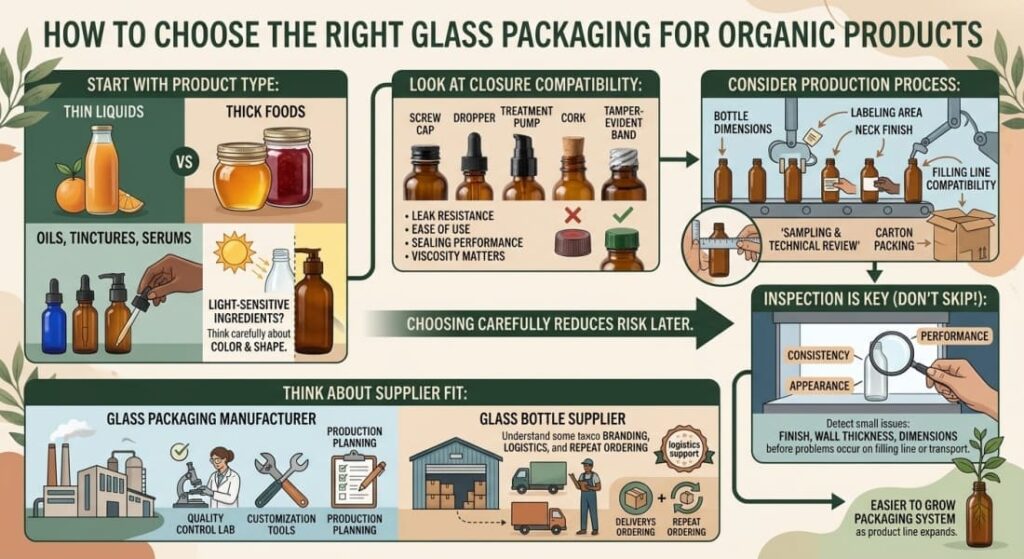
Start with product type. Thin liquids usually work best in bottles. Thick foods often need jars. Oils, tinctures, and serums may need smaller glass containers with droppers or treatment pumps. If your product contains light-sensitive ingredients, you should think carefully about color as well as shape.
Then look at closure compatibility. A good bottle without the right closure is not a complete solution. You need the correct cap, liner, dropper, pump, or tamper-evident option for your formula. Leak resistance, ease of use, sealing performance, and product viscosity all matter.
You should also consider your production process. Bottle dimensions, neck finish, labeling area, filling line compatibility, and carton packing all affect how smoothly the product moves from manufacturing to shipment. This is where sampling and technical review become important.
Inspection is another point that should not be skipped. Before decoration and final packing, you should know whether each raw glass bottle meets your standards for consistency, appearance, and performance. Small issues in finish, wall thickness, or dimensions can create bigger problems later on the filling line or in transport.
Finally, think about supplier fit. You are not only choosing a container. You are choosing a supply partner. A strong glass packaging manufacturer should be able to help with quality control, customization, production planning, and export support. A dependable glass bottle supplier should also understand how your packaging choice affects branding, logistics, and repeat ordering.
When you choose carefully at this stage, you reduce risk later. You also make it easier to grow your packaging system as your product line expands.
Why the Right Packaging Partner Matters
The container itself matters, but the supplier behind it matters just as much. Organic brands often need more than a basic stock bottle. You may need guidance on bottle weight, closure matching, decoration, transport protection, and production consistency. That is why working with a partner instead of just a seller makes a real difference.
If you want to build a product line that looks professional from the beginning, your supplier should be able to support both stock and custom solutions. Maybe you need a simple food jar today, but next season you may want decorated bottles, new capacities, or a different closure style. A supplier with deeper experience can help you plan that transition without creating sourcing problems later.
This is also where product range becomes valuable. If your business sells multiple organic products, it helps when one partner can support jars, beverage bottles, cosmetic containers, and treatment packaging within the same system. That simplifies communication and helps keep brand presentation more consistent.
For example, if you are building an organic wellness line, you may need beverage bottles, treatment bottles, and retail-ready jars under one sourcing plan. A supplier that understands those categories can help you choose the right format, whether you need stock containers or a more developed branding solution.
Why Smilebottles Is a Practical Choice for Organic Brands
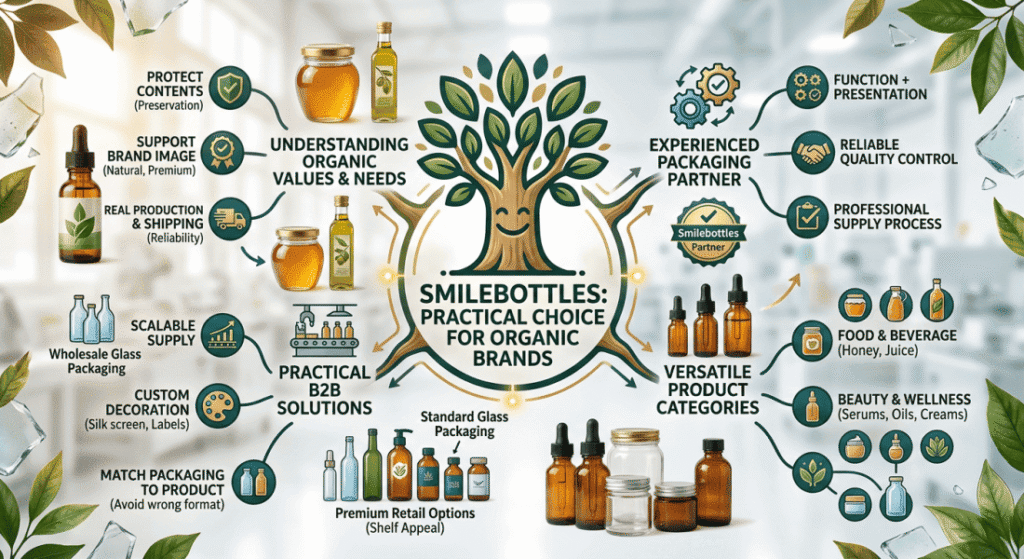
If you are sourcing packaging for an organic brand, you need a partner that understands both function and presentation. Smilebottles fits that role by focusing on glass packaging solutions for businesses that want reliable quality, customization options, and a professional supply process.
For food, beverage, beauty, and wellness products, the right packaging has to do several jobs at once. It needs to protect the contents, support your brand image, and work well in real production and shipping conditions. That is where an experienced supplier adds value.
If you work with Smilebottles, you can source packaging for many organic categories, from honey jars and beverage bottles to serum containers and oil packaging. Whether you need standard containers for quick production or more branded solutions for long-term growth, the goal is to match the packaging to the product instead of forcing the product into the wrong format.
That matters if you are looking for practical B2B options such as stock jars, custom decoration, or scalable supply. It also matters if you want a partner that understands what buyers mean when they search for packaging terms such as wholesale glass packaging or premium retail options with stronger shelf appeal.
FAQ: Frequently Asked Questions About Glass Packaging for Organic Products
Q1:Why is glass often better than plastic for organic products?
A1:Glass is often the stronger choice when your priorities are purity, premium image, and long-term brand trust. Organic buyers usually expect packaging that feels clean and stable, and glass supports that expectation better than most alternatives.
Q2:What organic products work best in glass packaging?
A2:Glass works well for beverages, sauces, honey, jam, supplements, essential oils, herbal extracts, natural skincare, and many wellness products. If your product benefits from better barrier protection and a stronger premium look, glass is usually worth considering.
Q3:Is glass a good choice for essential oils and natural skincare?
A3:Yes. Glass is widely used in those categories because it supports formula stability and premium presentation. Small-format treatment containers, especially amber styles, are common because they help protect sensitive formulas from light.
Q4:Can glass packaging be customized for branding?
A4:Yes. You can customize size, shape, bottle color, decoration, printing, labeling, embossing, and closure style. That is why many brands move from stock containers to decorated packaging once they want a stronger shelf identity.
Q5:How do you choose between bottles and jars?
A5:It depends on product texture and how the customer uses it. Liquids usually fit bottles better, while thicker products such as honey, jam, creams, and body scrubs often work better in jars. The right opening size and closure style also matter.
Q6:What should you ask before placing a bulk order?
A6:You should ask about dimensions, closure fit, decoration options, quality standards, lead time, carton packing, pallet efficiency, and sample approval. If you are buying at scale, you should also confirm whether the supplier can support repeat production consistently.
Conclusion
If you want your packaging to reflect the same standards as your organic product, glass is one of the smartest choices you can make. It helps protect purity, preserve flavor and formula quality, support sustainable branding, and create a stronger premium image in the market. It also gives you flexibility across food, beverage, wellness, and beauty categories, which makes it a practical long-term option as your product line grows.
When you choose glass, you are not only choosing a container. You are choosing how your brand will be seen, handled, trusted, and remembered. For organic products, that decision matters more than ever. If your goal is to combine product protection, shelf appeal, and a cleaner brand message, glass gives you a strong foundation to build on.


