
Table of Contents
ToggleAuthor: SmileBottles Editorial Team
Estimated Reading Time: About 15 Minute
If you run a food brand, sell sauces, jam, honey, baby food, ready meals, or any product packed in glass, you have probably heard your customers ask the same question many times: Are glass jars microwave safe? It sounds simple, but the real answer has more layers than most people expect. Some jars handle short reheating well. Others crack, leak, or break under the wrong conditions.
This guide walks you through everything you need to know, in plain language. You will learn what affects safety, which jars perform better, how to use them properly, and how to choose the right products for your brand.
Quick Answer: Yes, some glass jars are microwave-safe, but only if they are made from suitable heat-resistant glass, have no metal parts, and are free from cracks or damage. Always check the manufacturer’s instructions before microwaving a glass jar.
Note: Even when the glass is microwave safe, the jar can still get very hot during heating. Always handle it carefully.
Introduction: Can You Put Glass Jars in the Microwave?
If you are wondering can i put glass in the microwave, the honest answer is: it depends. Many people search for similar questions every day.They all come back to the same point — not every piece of glass is built the same way.
You may also hear these phrased as is glass microwavable,.The answer is the same in all cases: some glass is fine, some is not.
Whenever a customer asks can you put glass in the microwave , you should help them check:
Whether the jar is labeled microwave-safe
Whether it has a metal lid, ring, or decoration
Whether it has any chip or crack
Whether it just came out of cold storage
Whether the food inside heats evenly
These are the same things you should think about as a buyer before placing a wholesale order.
What Makes a Glass Jar Microwave-Safe?
To pick the right product, you need to understand what is actually happening inside the microwave.
How Microwaves Heat Food and Containers
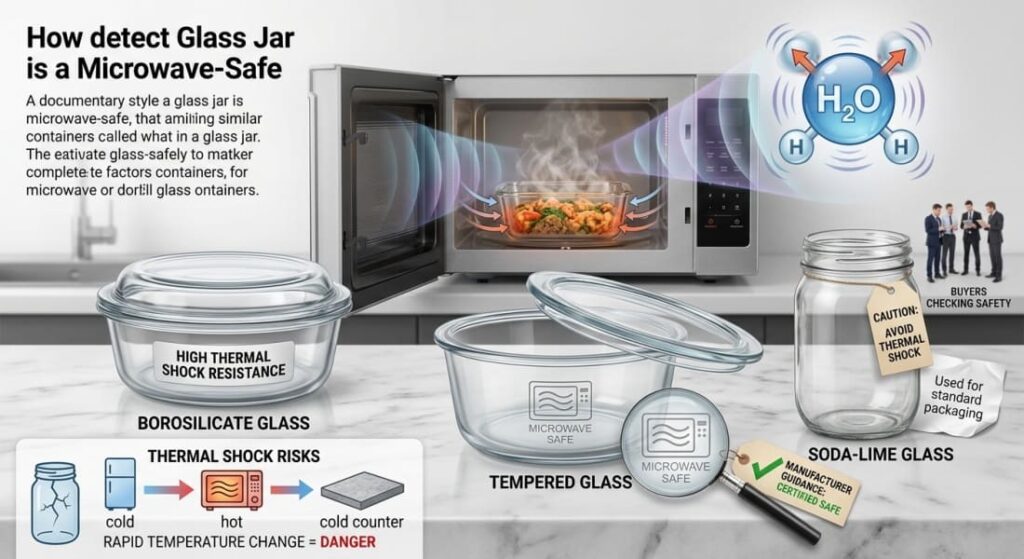
Microwaves mostly heat the water in food. The glass itself does not absorb much energy directly. That is why people often ask can you heat glass in microwave . The container heats up mainly because the food inside transfers heat to the walls.
Still, that does not mean every piece of glassware microwave safe by default. If the food gets very hot or heats unevenly, stress builds up in the glass and a weak jar can fail.
Types of Glass Used in Jars
Different glass types behave differently under heat. This is why the question is all glass microwave safe has a clear answer — no, it is not. The same goes for is all glassware microwave safe and is all glass microwavable.
Borosilicate glass. If you are asking is borosilicate glass microwave safe, the answer is generally yes. Borosilicate handles temperature changes much better than regular glass, which is why labs and premium kitchenware use it.
Tempered glass. Tempered glass is treated to handle stress better. It is common in food storage containers and bowls. If you wonder can you microwave a glass bowl or use a microwave glass bowl with glass lid, tempered glass is usually a safer choice than thin decorative glass. A glass bowl with glass lid for microwave use should be made from this kind of material.
Soda-lime glass. Most standard packaging jars use soda-lime glass. It can be used in the microwave under the right conditions, but it is more sensitive to thermal shock than borosilicate.
Why Thermal Shock Matters
Thermal shock is one of the main reasons jars crack. The risk goes up when:
A cold jar from the fridge goes straight into the microwave
A hot jar is set on a cold stone or metal counter
Cold liquid is poured into a freshly heated jar
So even when glass in the microwave safe in theory, real handling habits matter just as much as the material.
Labels and Manufacturer Guidance
The clearest signal is the label. If you see a microwave safe symbol on mason jars or any food container, that is far more reliable than guessing. When there is no label, no test report, and no manufacturer guidance, treat the jar with caution.
This is why so many buyers double-check before sourcing — they want to be sure glass is safe for microwave use before they put their brand name on it.
Benefits of Using Glass Jars for Food Storage and Reheating
Glass remains one of the strongest packaging choices for food and household products. If you are buying in bulk for resale or filling, these benefits matter to your customers as much as they matter to you.
Glass Is Non-Porous and Easy to Clean
Glass does not soak up flavors, oils, or odors. That makes it a strong choice for sauces, jams, honey, soup, dressings, and meal prep. Customers who want glass microwavable food storage containers prefer glass for exactly this reason — it stays clean and looks fresh, even after many uses.
Glass Gives Your Product Better Visibility
Clear packaging lets your customer see the texture and color of the product inside. For premium foods, dessert jars, and gift packaging, this visual factor often drives the buying decision.
Glass Supports Reuse and Sustainability
Many shoppers keep their jars after the first use. They store leftovers, spices, drinks, or pantry items in them. That is why questions like can i microwave glass jars, can i microwave a glass jar, and can i microwave glass are so common — people want a container that keeps working long after the original product is gone.
Glass Is Widely Seen as a Stable Food-Contact Material
You will often see comparisons with plastic. People search can you put glass tupperware in the microwave, because they want a more stable option for reheating. Glass is a strong answer to that need.
Glass Works Well for Both Home and Commercial Use
Cafés, restaurants, delis, retail food brands, and direct-to-consumer brands all use glass jars. As a buyer, that flexibility means one jar style can serve many channels.
Can All Glass Jars Go into the Microwave?
No. This is the part where many shoppers get confused. The questions can glass jars be microwaved, are glass jars microwavable,and are glass containers microwave safe all come down to the specific product, not glass in general.
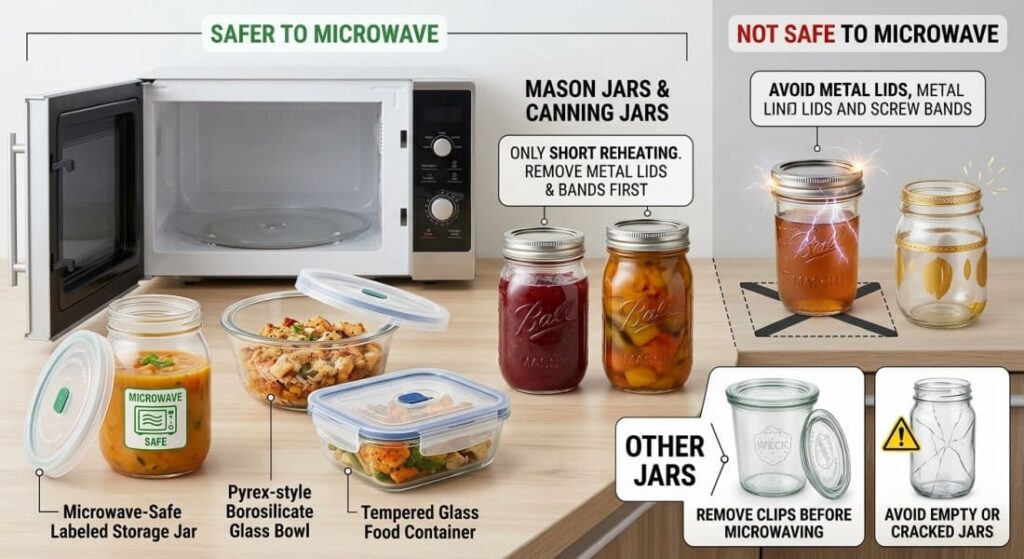
Glass Jars That Are Usually Safer
You can feel more confident with:
Jars labeled microwave-safe
Heat-resistant jars made for reheating
Borosilicate jars
Tempered glass food containers
Microwavable glass jars with lids that are clearly marked safe
A clearly marked microwave safe glass jar product, or a set of microwave safe glass jars and microwave safe jars, gives you a much safer starting point for your business.
Glass Jars That May Not Be Safe
Avoid microwaving:
Jars with metal lids, screw bands, or clips
Jars with metallic paint or gold/silver trim
Sealed jars
Cracked or chipped jars
Decorative jars not made for food heating
Thin, low-quality jars with no testing documents
Are Mason Jars Microwave-Safe?
This is one of the most searched topics in the entire category. Customers ask it in many ways: can you put mason jars in the microwave and are mason jars microwaveable.
The practical answer for all of them is the same: some mason jars handle short, gentle reheating, but only if you remove the metal lid and band first, you do not heat them empty, and you avoid quick temperature changes. Many older mason jars were made for canning, not microwaving, so always check the brand’s guidance.
You can also microwave glass mason jars when they are clearly marked safe, but never assume every mason jar is built for it.
What About Ball Jars and Canning Jars?
Buyers ask very similar questions about Ball jars: can you microwave ball jars,and microwave canning jars.
In short, many modern Ball and canning jars can handle light reheating if you take off the metal parts and warm the contents gently. But they were designed for preserving food, not for daily microwave use. Treat them with care.
Are Weck Jars Microwave-Safe?
Some buyers also ask are weck jars microwave safe. The glass body is generally suitable, but the metal clips must come off first. Always check the maker’s instructions.
What About Empty Jars and Lids?
Heating an empty glass jar in microwave use is not recommended. Without food to absorb the energy, heat builds unevenly and the risk of damage goes up. The same applies to a decorative microwave glass jar that was never made for reheating. Microwaving glass jar products empty is a common reason for cracks.
For lids, glass lids may be fine if they have no metal and are clearly labeled microwave-safe. Always leave room for steam to escape.
Common Risks of Microwaving Glass Jars
Even when glass microwave use is acceptable, you should know what can go wrong.
Cracking or Shattering from Thermal Shock
This is the biggest risk. A small temperature shock or a tiny chip can lead to a sudden break.
Superheated Liquids
Liquids in a microwave can heat past their normal boiling point and erupt when moved. Stir between heating intervals to reduce this risk.
Burns from Hot Surfaces
If a customer asks can you microwave a glass, or can i put a glass in the microwave, remind them that even if the glass survives, it can become very hot to touch.
Pressure Build-Up in Sealed Jars
Never microwave a tightly sealed jar. Steam pressure can build fast and push the lid off — or break the glass. This is one of the most common causes of accidents in home kitchens.
Hidden Damage from Chips and Cracks
A jar with a small chip or hairline crack is much weaker than it looks. Always inspect before heating. If you have any doubt, do not use it.
How to Use Glass Jars Safely in the Microwave
If you want to give your customers a good experience, share these simple rules on your packaging, product page, or care guide.
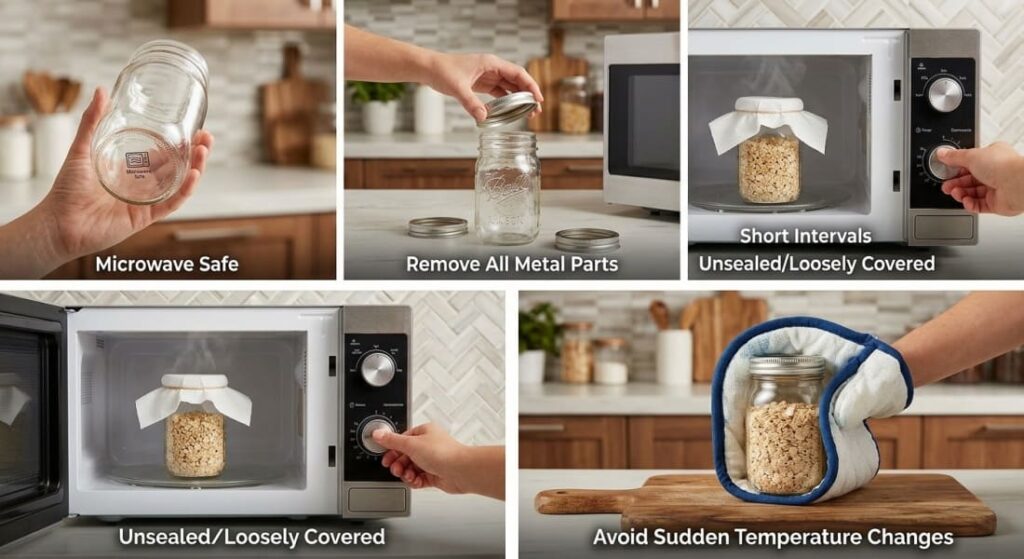
Check for a Microwave-Safe Label
This is always your first step. If you cannot find any clear marking or instruction, treat the jar with caution.
Remove All Metal Parts
Before placing any glass jar in microwave use, remove screw bands, lids, clips, foil seals, and any decorative metal.
Avoid Sudden Temperature Changes
Let a refrigerated jar sit at room temperature for a few minutes before heating. After heating, place the jar on a towel or wooden board, not on a cold stone counter.
Heat in Short Intervals
Use 15 to 30 second intervals for small portions. Stir between rounds to spread the heat. This helps you avoid hot spots and reduces pressure inside the jar.
Do Not Overfill
Leave space at the top for bubbling and expansion.
Keep the Jar Unsealed or Loosely Covered
Steam needs a way out. Use a microwave-safe cover if you want to reduce splatter.
Inspect Every Time
If you see chips, scratches, or cracks, do not microwave the jar.
Handle With Care After Heating
Use a towel or mitts. Let the contents settle before lifting or pouring.
Best Foods to Heat in Glass Jars — and What to Avoid
Foods You Can Usually Reheat Safely
These work well when you microwave glass jar products with care:
Soups and broths
Oatmeal
Sauces with enough moisture
Soft leftovers
Baby food, gently warmed and stirred well
When a customer asks can I microwave a jar of soup or sauce, the answer is usually yes, as long as the jar is suitable and you heat slowly.
Foods That Need Extra Caution
Be careful with:
Thick sauces
Cheese-heavy dishes
Oil-rich foods
Sugary spreads
Sticky foods like caramel
These heat unevenly and can form very hot pockets. A common question is can you microwave peanut butter jar — and the safer answer is no for direct jar heating. Peanut butter holds heat strongly, the jar is often not made for reheating, and the lid usually contains metal. Scoop a portion into a microwave-safe dish instead.
Foods to Avoid Heating in a Sealed Jar
Never microwave:
Sealed beverages
Carbonated drinks
Fermented products under pressure
Any tightly closed prepared food
Sterilizing Glass Jars in the Microwave: Is It a Good Idea?
If you sell jars to small food makers, home canners, or DIY brands, you will see plenty of questions about sterilization. People search for how to sterilise jars in a microwave
The basic method looks like this:
Wash the jars thoroughly with hot soapy water.
Leave a small amount of water inside each jar.
Microwave for about 30 to 60 seconds, just long enough for the water to steam.
Remove the jars carefully — they will be very hot.
Never microwave metal lids or bands.
This works for small-batch home use, but it is not a substitute for proper commercial sterilization. If you are running a food business, follow the right processing standards for your product type and local food safety rules.
How to Choose the Best Microwave-Safe Glass Jars for Your Business
If you are buying jars for resale, filling, or private-label packaging, microwave performance becomes part of your customer promise. Here is what to focus on.
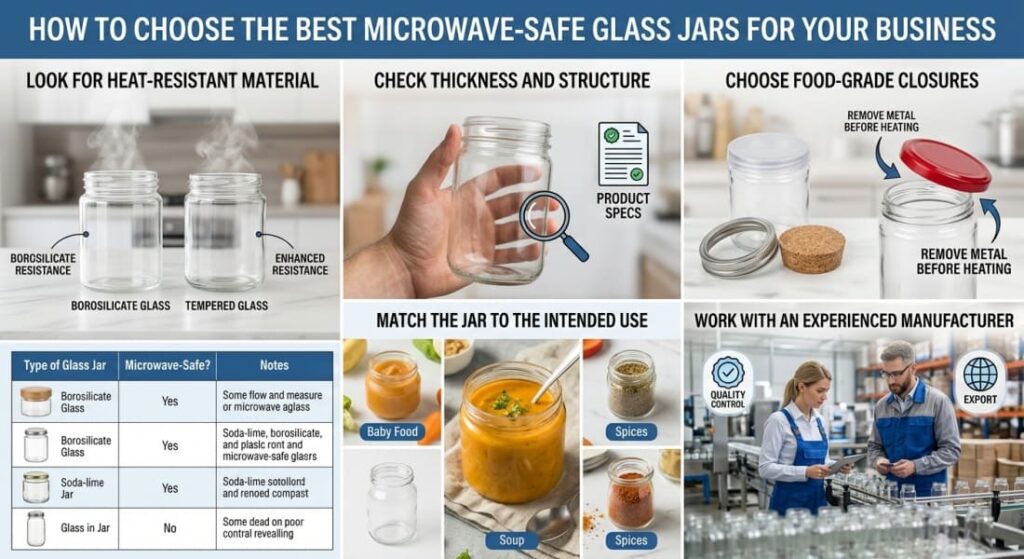
Look for Heat-Resistant Material
If reheating is part of how your customer will use the product, lean toward heat-resistant options. Borosilicate or tempered glass jars give you more confidence, especially for meal prep, baby food, soup, and ready meals.
Check Thickness and Structure
A good jar feels balanced — strong enough to handle daily use, but not so thick that it heats unevenly. Ask your supplier for product specs, not just photos.
Choose Food-Grade Closures
Make sure lids are made from food-safe material. Customers should be able to remove them easily before heating. If you offer specialty closures, include a short usage note on the label.
Match the Jar to the Intended Use
The best jar for jam is not always the best jar for soup. The best jar for candles is not the best jar for food reheating. Pick the product based on how your customer will actually use it.
Work With an Experienced Manufacturer
A reliable supplier gives you more than glass. You also get material knowledge, stable production, decoration options, and export support. This protects your brand long after the order ships.
Comparison at a Glance
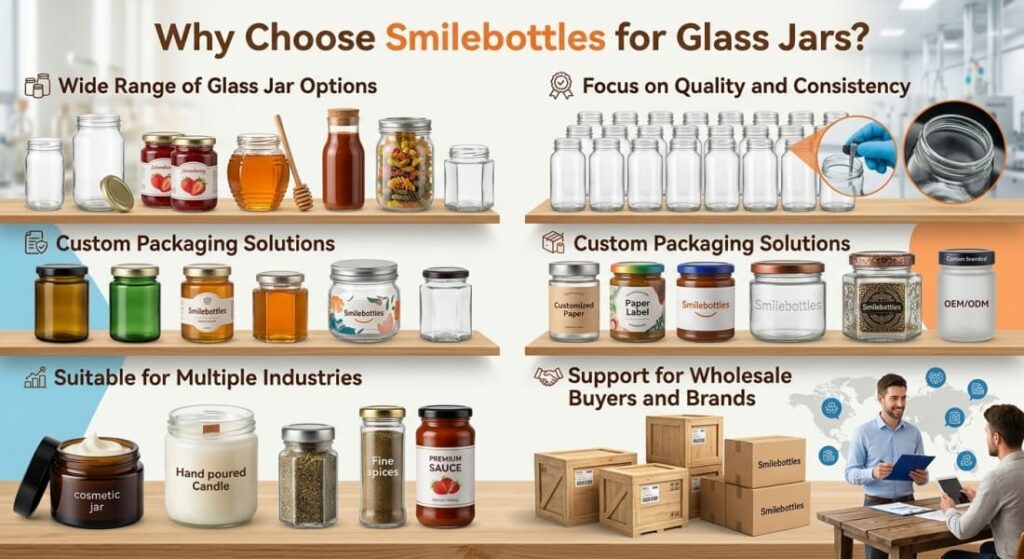
Why Choose Smilebottles for Glass Jars?
If you are sourcing jars for food, beverage, household, or retail packaging, you need a manufacturing partner who understands both product quality and your business goals.
Wide Range of Glass Jar Options
At Smilebottles, you can choose from many shapes, capacities, and neck finishes. Whether you need jam jars, honey jars, sauce jars, storage jars, or custom shapes, you can match the product to your market.
Focus on Quality and Consistency
When you buy in volume, consistency is everything. You need stable dimensions, dependable supply, and careful inspection. We focus on giving you packaging that performs the same way, order after order.
Custom Packaging Solutions
You may need custom logos, decoration, label-friendly surfaces, or special lids. Our OEM and ODM support helps you build packaging that fits your brand rather than something generic.
Suitable for Multiple Industries
Our jars serve food and beverage brands, honey and jam producers, sauce makers, cosmetics lines, candle brands, and gift packaging. One supplier, many possibilities.
Support for Wholesale Buyers and Brands
If you are buying for export, retail, or filling operations, you need a supplier who responds quickly and helps you make better choices. We work closely with wholesalers, distributors, and growing brands to support long-term partnerships.
FAQ: Frequently Asked Questions About Microwaving Glass Jars
Q1:Can I microwave a glass jar with the lid on?
A1:No, especially if the lid contains metal or seals tightly. Steam pressure can build up and cause the jar to break or the lid to pop off.
Q2:Can mason jars go in the microwave?
A2:Some can. If you ask can mason jars go in the microwave or can mason jars be microwaved, the short answer is yes for certain styles, but only after removing the metal band and lid and using gentle heating.
Q3:Why did my glass jar crack in the microwave?
A3:Most likely due to thermal shock, an existing chip, or very uneven heating. Cold-to-hot jumps are the most common cause.
Q4:Can I put a cold glass jar straight into the microwave?
A4:It is safer to let it warm up at room temperature for a few minutes. Sudden heat on cold glass is risky.
Q5:Is borosilicate glass better for microwave use?
A5:Yes. Borosilicate handles temperature changes more reliably than standard soda-lime glass.
Q6:Can I microwave baby food in a glass jar?
A6:Yes, with care. Remove the lid, heat in short intervals, stir well, and always test the temperature before feeding.
Q7:Are recycled glass jars microwave-safe?
A7:Not automatically. Safety depends on the design, the manufacturing process, and the intended use — not whether the glass is recycled.
Q8:How do I know if a glass jar is microwave-safe?
A8:Check the label, the product spec sheet, or the manufacturer’s guidance. If none of that is available, treat the jar carefully and avoid high heat.
Conclusion
If you are looking for reliable, customizable glass jars for food packaging, storage, or retail, Smilebottles offers a wide selection built for real-world use. Whether you are growing a food brand, expanding a product line, or sourcing for wholesale distribution, you can count on us for steady quality, flexible customization, and packaging support that helps your business grow.
When you choose the right jar from the start, you protect your product, your customer, and your brand — every time the microwave door closes.
 English