
Table of Contents
ToggleAuthor: SmileBottles Editorial Team
Estimated Reading Time: About 15 Minute
If you run an oil brand, own a food business, or simply care about the quality of what ends up in your kitchen, one question keeps coming back: what is the best container for oil? The bottle you choose does more than hold the product. It protects the flavor, guards the shelf life, and shapes how your customers feel about your brand the moment they pick it up.
In this guide, you’ll get a clear, practical look at the different container options on the market, why some materials work better than others, and how to match the right bottle to your product. Smileboottle will focus mainly on edible oil packaging — olive oil, cooking oil, infused oils, avocado oil, and specialty gourmet oils — because that’s where packaging decisions matter most.
Here’s the short answer up front, so you don’t have to scroll: for most edible oils, a dark glass bottle for oil with an airtight cap is one of the best containers you can choose. It protects the product from light and oxygen, doesn’t react with the oil, and looks great on the shelf. But there’s more nuance to it, and the rest of this article will walk you through the details so you can make the right call for your business.
Why Choosing the Right Oil Container Matters
Oil is more sensitive than most people realize. Even a good oil can turn dull, flat, or rancid faster than expected if it sits in the wrong oil container. That’s a problem for anyone selling oil, because packaging is directly connected to how the product tastes when it reaches the customer.
When you choose the right oil storage container, you’re doing several things at once:
You’re protecting flavor, aroma, and color.
You’re extending shelf life, which reduces returns and complaints.
You’re supporting your brand image on the shelf.
You’re giving buyers a product they’ll want to buy again.
If you sell in retail, on Amazon, or through gourmet channels, oil packaging is one of the first things a shopper notices. A well-chosen bottle tells your customer, “this product is worth the price.” A cheap or careless one does the opposite, no matter how good the oil inside actually is.
So the container of oil you pick isn’t just a shipping decision. It’s a marketing decision, a quality decision, and a shelf-life decision all rolled together.
What Causes Oil to Degrade?
Before you can pick the right container oil storage solution, it helps to understand what actually damages oil. Once you know the enemies, the packaging choice starts to make more sense.
Light Speeds Up Oxidation
Light — especially UV light — is one of the biggest reasons oil goes bad. When light hits oil, it triggers reactions that break down the natural compounds inside. This is why extra virgin olive oil left on a sunny windowsill can taste stale after only a few weeks.
This is also why so many buyers ask: what color bottle is best for olive oil? Amber and dark green are the usual answers, and we’ll come back to that later.
Oxygen Slowly Ruins the Flavor
Every time oil meets air, oxidation starts. That’s the process that produces the classic “rancid” taste. The more air the oil is exposed to — either through a loose cap or a permeable container — the faster it degrades. If you’re wondering how to prevent oil oxidation, the honest answer is: block the oxygen. A tight seal and a low-permeability material do most of the work.
Heat Makes Everything Worse
Warm storage speeds up every chemical reaction inside the bottle. Oils stored near stoves, ovens, or warm windows lose quality much faster than those kept in a cool pantry. Packaging can’t fully solve heat exposure, but a solid material like glass at least keeps the container itself stable.
The Container Material Itself Can Interact With Oil
Some materials aren’t neutral. Certain plastics can slowly release small amounts of substances into the oil, or absorb flavors and odors over time. This is why glass has such a strong reputation for food-grade storage — it simply doesn’t react.
Comparing Oil Storage Container Materials
Now let’s put the main packaging options side by side. When you know how each material behaves, it’s easier to decide what fits your product.
Glass Bottles
Glass is the go-to material for most premium and mid-range oils, and for good reason.
Strengths:
Chemically inert — doesn’t react with oil
Strong oxygen and moisture barrier
Available in clear, amber, and green
Looks premium on the shelf
Fully recyclable
Drawbacks:
Heavier than plastic
Can break if handled roughly
If you sell olive oil, avocado oil, infused oil, or any gourmet product, glass bottles for oil packaging are hard to beat. This is also the material most retail buyers expect when they see a quality brand.
Plastic Bottles
Plastic has its place, especially for very high-volume, low-cost products.
Strengths:
Lightweight and cheap to ship
Hard to break
Easy to squeeze for controlled pouring
Drawbacks:
Higher oxygen permeability than glass
Can absorb flavors over time
Doesn’t send a premium signal
Some plastics may raise chemical-interaction concerns for long-term storage
Plastic works for cooking oils that turn over quickly on supermarket shelves, but it’s rarely the right pick for premium positioning.
Metal Containers (Tin and Aluminum)
Metal cans are common for larger olive oil formats, especially in Mediterranean markets.
Strengths:
Excellent light blocking
Durable for shipping
Good for bulk sizes (3L, 5L)
Drawbacks:
Customers can’t see the oil
Doesn’t feel as personal as glass
Not ideal for small, premium presentations
Ceramic Containers
Ceramic is a niche option, often used for gift-style products.
Strengths:
Beautiful, artisanal look
Blocks light completely
Drawbacks:
Heavy and fragile
Product is invisible
Not practical for large runs
So What’s the Best Choice?
If you’re weighing all these options together, a dark glass bottle for oil hits the best balance for most edible oil brands. Metal makes sense for bulk. Plastic makes sense for budget lines. But for anything that’s meant to feel like a quality product, glass wins on protection, presentation, and trust.
Key Factors to Consider When Choosing an Oil Container
Once you’ve decided on a material, you still have to make the right choice within that category. Here’s what to think about.
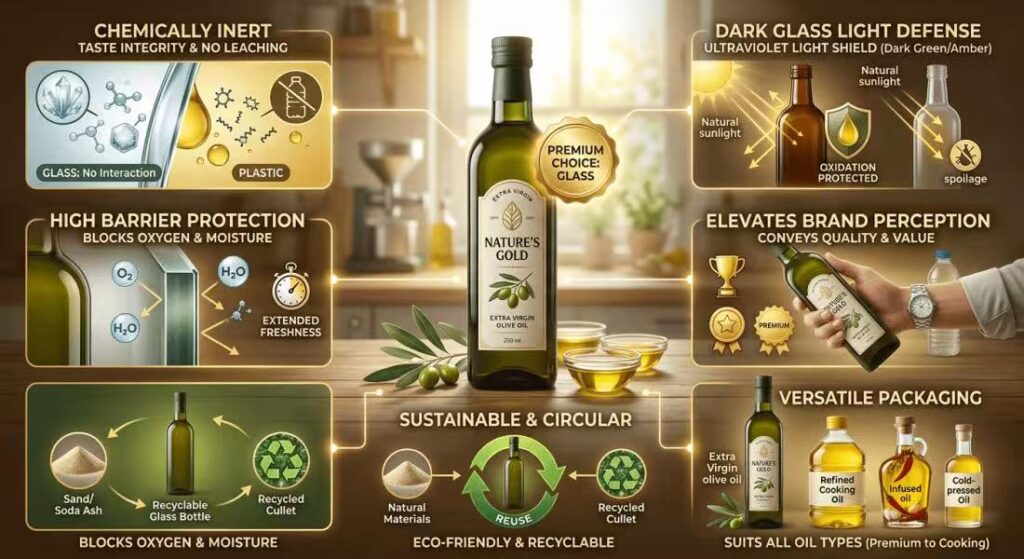
Material Compatibility With Oil
Your oil containers should never affect the taste of the product. Glass is neutral, which is why it works so well for cold-pressed and organic oils where purity matters. If you’re launching a premium line, this alone is often reason enough to choose glass.
UV Protection for Light-Sensitive Oils
Not every oil needs the same level of light protection, but most benefit from it. Buyers often ask does avocado oil need to be in a dark bottle — and the short answer is yes, it really does. Avocado oil is rich in delicate fats and chlorophyll, both of which break down under light. So should avocado oil be stored in a dark bottle whenever possible? Yes. The same rule applies to extra virgin olive oil, flax oil, and most cold-pressed products.
Dark green and amber glass are the two most common colors for light-sensitive oils. If your product is going to sit on a bright retail shelf, don’t skip this step.
Airtight Sealing and Oxygen Control
The bottle is only half the equation. The cap does the rest. A quality screw cap, a tamper-evident closure, or a pour-and-seal insert can make a real difference in how long the oil stays fresh after opening. If you’re serious about how to store cooking oil long term, an airtight cap combined with a small headspace inside the bottle goes a long way.
Ease of Pouring
Pouring may sound like a minor detail, but customers notice. A bottle for cooking oil with a well-designed neck and a drip-control insert feels premium every time it’s used. A bottle that drips down the side and leaves marks on the counter feels cheap, even if the oil inside is excellent.
Bottle Size and Format
Match the size to the use case. Some quick guidance:
100–250 ml: samples, gift sets, infused oil bottles, and specialty products
500 ml: standard retail size for premium oils
750 ml – 1 L: everyday household use
3 L – 5 L (usually metal): foodservice and bulk buyers
Smaller sizes are actually better for premium oils, because each bottle is finished before oxidation becomes an issue.
Branding and Shelf Appeal
Good oil bottle packaging design does a lot of quiet work. Shape, color, closure style, and label area all shape how a shopper feels about the product. A well-designed olive oil glass bottle can move a product from mid-shelf to premium tier without any change to the oil itself.
Sustainability
More buyers now care where their packaging ends up after use. Eco friendly oil packaging is no longer a niche request — it’s often a purchasing requirement, especially for European buyers and organic brands. Glass is one of the strongest materials here because it’s fully recyclable and can be reused endlessly without losing quality.
Why Glass Is One of the Best Containers for Oil Packaging
Let’s take a closer look at why glass keeps coming up as the recommended choice.
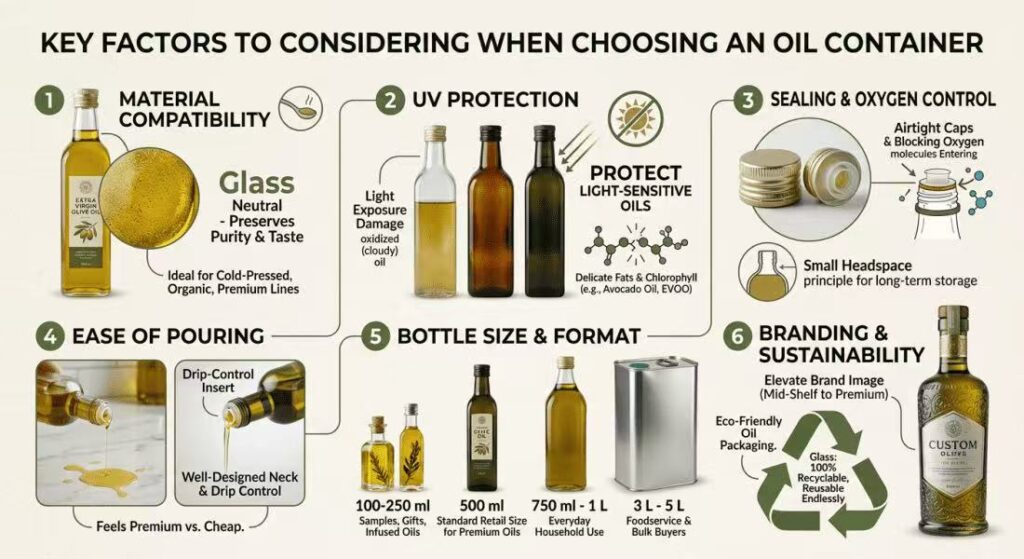
It Doesn’t React With the Oil
Glass is chemically stable. It won’t change the taste of your oil, won’t leach anything into it, and won’t absorb odors from one batch to the next. If you’re producing anything cold-pressed, organic, or premium, this is a real advantage.
It Blocks Oxygen and Moisture Well
Compared to most plastics, glass is far less permeable. That means the oil stays fresher longer, even under normal warehouse conditions.
Dark Glass Adds Light Protection
A dark glass bottle for oil — amber or dark green — gives your product a real advantage on the shelf and in the customer’s pantry. This is especially useful for products like extra virgin olive oil, avocado oil, and specialty infused oils.
It Elevates the Brand
Glass communicates quality without you having to say it. When a shopper picks up a heavy, well-shaped olive oil storage container, they immediately assume the product is worth more. That perception affects buying behavior in a way that plastic simply can’t match.
It Fits Sustainability Goals
If your brand story involves natural, organic, or eco-conscious values, glass supports that story. It’s recyclable, reusable, and produced from natural materials. That’s a much easier message to tell customers than the story around most plastics.
It Works for Every Kind of Oil
From a small infused oil bottles line to a full retail rollout of extra virgin olive oil packaging, glass handles everything. Whether you need a glass container for cooking oil, a decorative bottle for flavored oils, or a serious premium oil packaging solution, glass gives you room to design what you want.
When Is Glass the Best Choice for Oil Storage?
Here are the scenarios where glass really shines:
When you’re selling on retail shelves. Shoppers judge quickly, and glass wins that judgment.
When the oil is light-sensitive. Dark glass is genuinely the best container to store olive oil and other delicate oils.
When purity is part of your brand story. Cold-pressed, organic, and single-origin oils belong in non-reactive packaging.
When you want to support sustainability. Glass gives you a cleaner story than mixed-material or plastic packaging.
When you sell to home cooks who care. A dark cooking oil storage container in glass really does help oils last longer at home.
When Other Containers Still Make Sense
To be fair, glass isn’t always the answer.
Plastic can be fine for budget lines, high-turnover cooking oils, or products distributed in areas where breakage is a real concern.
Metal works well for bulk formats above 3 liters, especially for foodservice olive oil.
Ceramic fits niche gift markets, though it’s not practical at scale.
If you’re wondering about the best container to store used cooking oil at home — for filtering and reusing between fry sessions — a sealed glass jar in a cool, dark cupboard is usually your best bet. It won’t absorb odors, it won’t leach anything back into the oil, and you can see exactly how clean the oil looks before reusing it.
But for a brand selling into retail? Glass earns its place as the best container for cooking oil in almost every scenario.
How to Choose the Right Glass Bottle for Oil Packaging
Once you’ve decided on glass, there are still several choices to make. Here’s how to think through them.
Pick the Right Glass Color
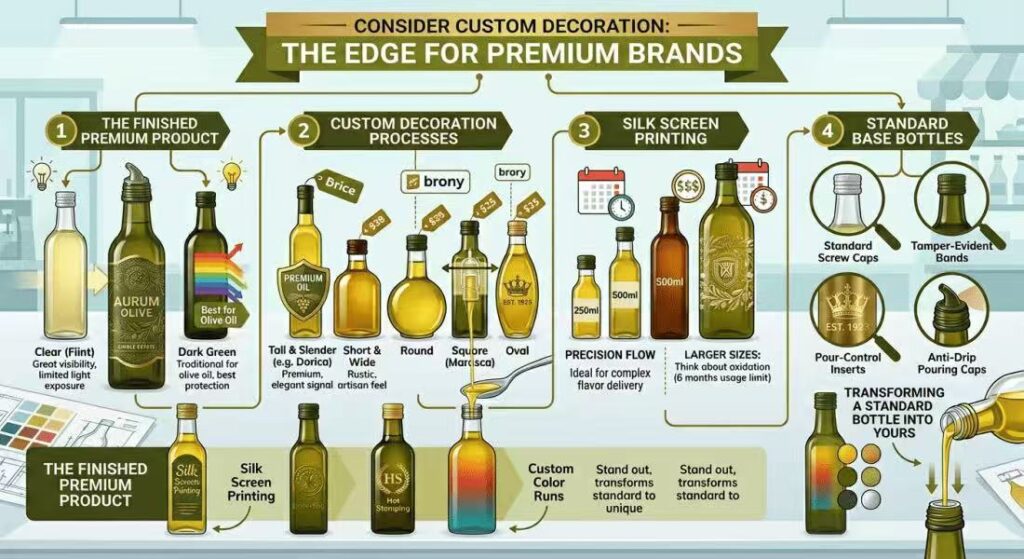
Clear (flint) glass: great when you want the oil to be visible, and light exposure will be limited.
Amber glass: strong UV protection, classic apothecary feel.
Dark green glass: the traditional choice for olive oil, and still the best bottle for olive oil in many markets.
Choose the Shape That Fits Your Brand
Round, square, Marasca, Dorica, tall, short — shape signals category and price point. A tall, slender bottle looks premium. A short, wide bottle feels rustic and artisan. Neither is better; it depends on the story you’re telling.
Match the Capacity to the Market
Think about how quickly your customer will finish the bottle. An oil that sits open for six months will oxidize no matter how good the packaging is. Smaller sizes protect flavor for premium products.
Get the Closure Right
The cap matters as much as the bottle. Options include:
Standard screw caps
Tamper-evident bands
Pour-control inserts
Anti-drip pouring caps
For high-end oils, an insert with a controlled flow is worth the small extra cost. It makes the daily experience feel considered.
Consider Custom Decoration
If you want your product to stand out, custom oil bottles with silk screen printing, embossing, hot stamping, or custom color runs can transform a standard bottle into something that feels uniquely yours. This is where a lot of premium brands find their edge — the bottle itself becomes part of the product.
Why Smilebottles Is a Trusted Choice for Oil Packaging
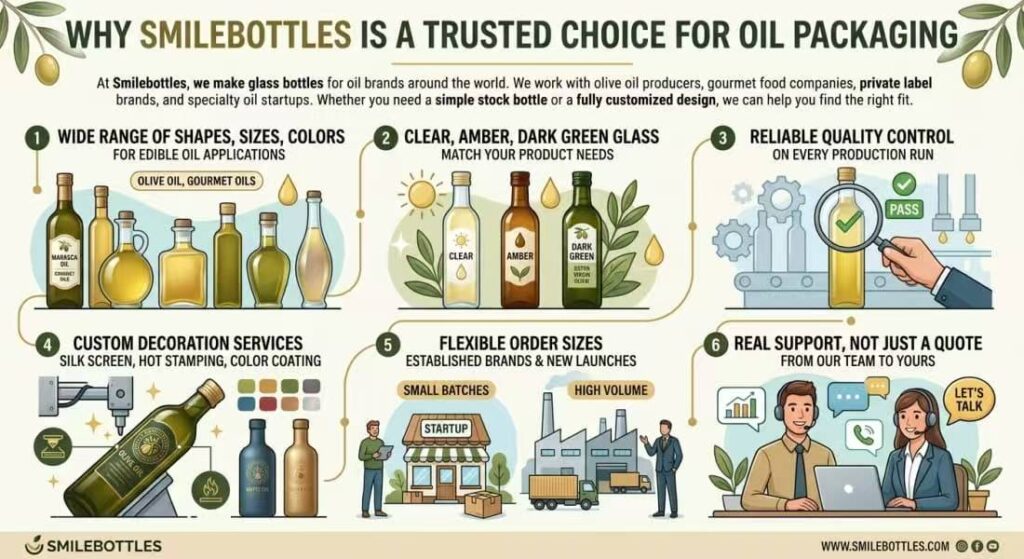
At Smilebottles, we make glass bottles for oil brands around the world. We work with olive oil producers, gourmet food companies, private label brands, and specialty oil startups. Whether you need a simple stock bottle or a fully customized design, we can help you find the right fit.
Here’s what you can expect when you work with us:
A wide range of shapes, sizes, and colors for edible oil applications
Options for clear, amber, and dark green glass to match your product needs
Reliable quality control on every production run
Custom decoration services including silk screen, hot stamping, and color coating
Flexible order sizes for both established brands and new launches
Real support from our team, not just a quote in your inbox
We know packaging is a big decision, and we’re happy to talk through your options before you commit to a design.
FAQ:Frequently Asked Questions About Beer Packaing
Q1:Is glass or plastic better for storing oil?
A1:Glass is generally the better choice. It doesn’t react with the oil, blocks more oxygen than most plastics, and looks better on the shelf. Plastic can work for budget lines and short-turnover products, but glass wins on quality.
Q2:Can oil be stored in clear glass bottles?
A2:Yes, but clear glass offers less light protection. If your oil will sit in a bright kitchen or on a lit retail shelf, dark glass is safer.
Q3:What color bottle works best for olive oil?
A3:Amber and dark green are the traditional picks. Both block a large portion of the light that damages olive oil.
Q4:Do airtight caps really matter?
A4:Yes. Oxygen is one of the biggest causes of rancidity. A tight, well-sealed cap keeps the oil fresh much longer once opened.
Q5:Are glass bottles safe for edible oil?
A5:Yes. Glass is one of the safest food-contact materials available. It’s chemically inert, easy to sterilize, and widely trusted across the food industry.
Q6:What size bottle is best?
A6:It depends on how fast the oil will be used. For premium oils, 250 ml to 500 ml is usually ideal so the product is finished before oxidation takes hold. For everyday cooking oils, 750 ml to 1 L is common.
Q7:How can I make my oil packaging feel more premium?
A7:Use good glass, choose a shape with character, pick a color that fits your brand, and finish it with a quality closure. Custom decoration such as silk screen or embossing can also take the packaging from standard to memorable.
Conclusion
The best container for storing oil isn’t just about protection — it’s about matching your product, your brand, and your customer. For most edible oils, a dark glass bottle with an airtight cap gives you the strongest combination of quality preservation, shelf appeal, and sustainability. It looks good, it works hard, and it tells your customer that the oil inside is worth the price.
If you’re planning your next product line, or just looking to upgrade your current packaging, glass is a safe bet that keeps paying off. And when you’re ready to talk about specific bottles, colors, closures, or custom designs, the team at Smilebottles is here to help you get it right.
 English