



Table of Contents
ToggleAuthor: SmileBottles Editorial Team
Estimated Reading Time: About 12 Minutes
Whether you are a distillery owner, a purchasing manager for a spirits brand, or a retailer of empty glass bottles, you likely face the same recurring questions from your consumers: Do rum expire? Does rum spoil if left on the shelf for too long? As a professional in the spirits industry, understanding the shelf life of your product is just as important as the distillation process itself. However, the longevity of rum isn’t just about the liquid; it is fundamentally about the packaging.
At Smilebottles, we understand that the vessel matters. As a specialized glass bottle manufacturer, we help rum brands improve shelf life, elevate product image, and ensure packaging performance. In this guide, we will explore the science of rum stability, answer the question does rum has an expiration date, and demonstrate why high-quality glass packaging is your best defense against time and the elements. By the end of this article, you will know exactly how to guide your customers to choose the right dropper glass bottles or standard spirit bottles to protect their liquid gold.

Understanding Rum Composition and Shelf Stability
To answer the question does rum go off, you first need to understand the chemical nature of the spirit you are bottling. Unlike wine or beer, which are biologically active and evolve rapidly in the bottle, rum is a distillate. This fundamental difference dictates its shelf life.
What Is Rum Made Of?
At its core, rum is a distilled alcoholic beverage made from sugarcane byproducts, such as molasses, or directly from sugarcane juice. The process involves fermentation, distillation, and often aging in oak barrels.
The resulting liquid is a mixture of water, ethanol (alcohol), and various congeners (flavor compounds). The alcohol by volume (ABV) typically ranges from 37.5% to over 50% for overproof varieties. This composition is simple, yet it is the foundation of the spirit’s stability. When you look at white rum expiry date concerns versus dark rum, the base composition remains largely the same, though the aging process introduces more complex organic compounds.
Why High Alcohol Content Helps Preserve Rum
The high alcohol content in rum acts as a potent preservative. Generally, any liquid with more than 20% ABV is hostile to bacteria and yeast. This is why you rarely see mold growing inside a bottle of spirits. Does alcohol expire? In the sense of becoming unsafe to drink due to bacterial growth, the answer is generally no.
While lower-alcohol beverages like cream liqueurs or wine can sour or curdle, strong spirits like rum create an environment where spoilage organisms cannot survive. This means that whether liquor expires or hard liquor expires is a question of quality, not safety.
Does Rum Actually Expire?
So, does rum expire? The short answer is no, not in the traditional sense. Unopened rum can last indefinitely. However, there is a distinct difference between “expiring” (becoming dangerous to consume) and “going bad” (losing flavor or quality).
Does unopened rum go bad? If the bottle is sealed perfectly and the glass is of high quality, a bottle of rum from 50 years ago can taste as good today as it did when it was bottled. However, once the seal is broken, the clock starts ticking slowly. Does rum go bad after opening? It won’t make you sick, but oxidation begins to strip away the volatile aromatics that give the rum its character.
As a packaging expert, your goal is to delay this degradation. This brings us to the critical role of packaging materials.

Why Glass Bottles Are Ideal for Rum Shelf Life
When you are selecting packaging for your brand, you have options: glass, plastic (PET), ceramic, or metal. However, for premium spirits, glass remains the undisputed king. Rum bottle design isn’t just about aesthetics; it is about preservation.
Key Properties of Glass for Spirit Packaging
Glass is chemically inert. This means it does not react with the rum inside. Unlike other materials that might degrade or interact with the high alcohol content over years of storage, glass remains neutral.
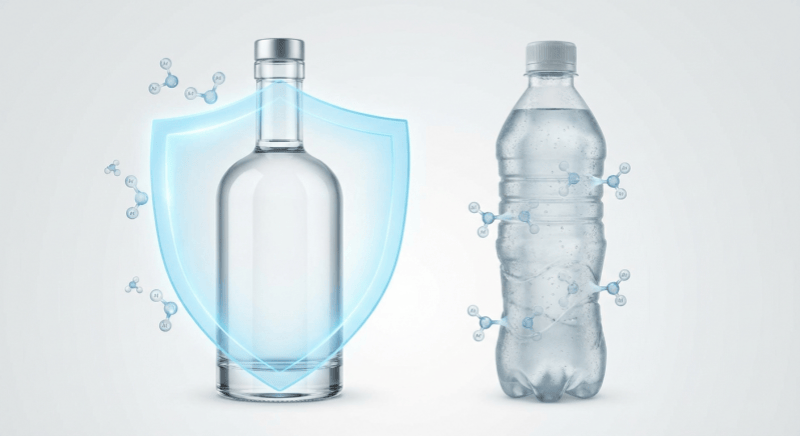
Furthermore, glass is impermeable. It is a non-porous material that acts as an excellent barrier against moisture and outside contaminants. When you pair a high-quality glass bottle from Smilebottles with a tight-fitting closure, you create a vault that locks the rum’s flavor profile in place. This is the primary reason why the shelf life of rum is so impressive when packaged correctly.
Glass vs Plastic vs Other Packaging Materials
You may have seen cheap spirits sold in a clear plastic flask or PET bottles. While these are lightweight and cheaper to ship, they are inferior for long-term storage.
Plastic Bottles: Over time, plastic is semi-permeable. Oxygen can slowly seep in, and alcohol can slowly evaporate out (a phenomenon known as “scalping”). Additionally, high-proof alcohol can interact with certain plastics over long periods, potentially leaching chemicals or altering the taste. If your customers ask, “Can rum go bad in plastic?”, the answer is that it is much more likely to degrade in quality than in glass.
Metal: While stainless steel is used for transport, it is rarely used for retail packaging due to cost and the risk of metallic off-flavors if the lining is compromised.
Glass Bottles: Glass ensures zero flavor transfer. It maintains the purity of the spirit. Whether it is old rum bottles found in a cellar or a new product on the shelf, glass guarantees that the liquid inside tastes exactly as the master distiller intended.
Light Protection and Colored Glass
Light is the enemy of stored spirits. UV rays can break down organic compounds in the rum, leading to discoloration and “lightstruck” off-flavors.
While clear glass is excellent for showing off the clarity of a white rum, it offers no UV protection. This is why you often see dark rums packaged in amber, antique green, or dead leaf green glass. As a brand owner, if you are asking how to store rum to maximize longevity, choosing colored glass is a proactive manufacturing step. At Smilebottles, we offer various tints that naturally filter out harmful UV wavelengths, adding an extra layer of protection to the shelf life of rum.
The Role of Closures in Shelf Stability
A glass bottle is only as good as its closure. Whether you use a natural cork, a synthetic T-top, or a screw cap (ROPP), the seal must be airtight.
Corks: Preferred for premium aesthetics, but they can dry out if the humidity is too low, leading to shrinkage and air ingress.
Screw Caps: excellent for preventing does rum spoil scenarios because they offer a very consistent, airtight seal.
The neck finish of the glass bottle must be manufactured with precision to ensure the closure sits perfectly. At Smilebottles, our quality control ensures that the neck dimensions are exact, preventing evaporation issues that lead people to ask how long rum lasts before the “angel’s share” takes too much.
How Glass Bottles Preserve Rum Better Than Other Packaging
Let’s dive deeper into the technical superiority of glass. Why exactly does glass prevent the scenario where does rum go bad?
Oxygen Ingress and Oxidation Control
Oxidation is the chemical reaction that occurs when rum meets air. It flattens the flavor, turning vibrant notes of vanilla and spice into something stale or cardboard-like.
In plastic packaging, the transmission rate of oxygen is measurable. In glass, it is virtually zero. The only entry point for oxygen is the closure. By using glass, you eliminate the entire surface area of the container as a source of ingress. This is vital for answering how long does rum last unopened—in a glass, the answer is decades. In plastic, it might only be a few years before quality dips.
Flavor Integrity and Sensory Stability
Rum is a complex balance of esters and aldehydes. These compounds are sensitive. Glass is non-porous and odorless. It does not absorb the rum’s bouquet, nor does it impart any “plastic” or “metallic” taste.
When you sellold rum bottles or premium aged varieties, the consumer pays for the nuance of the flavor. Glass ensures that sensory stability is maintained from the bottling line to the consumer’s glass, regardless of how long can rum last in the distribution chain.
Structural Strength and Long-Term Storage Safety
Glass provides rigid structural integrity. It does not dent like metal or buckle like plastic. This physical strength is crucial for stacking in warehouses and surviving international shipping.
Furthermore, glass withstands temperature fluctuations better than plastic, which expands and contracts significantly. This stability protects the seal integrity, ensuring that does unopened rum go bad remains a question with a negative answer.

Best Practices for Storing Rum in Glass Bottles
Even the best packaging needs proper storage. As a brand, you should educate your distributors and consumers on how do you store rum. Here is a guide you can pass on.
Ideal Storage Conditions for Rum
Does rum need to be refrigerated? No. High-proof spirits are shelf-stable at room temperature. The ideal environment is a cool, dark place with a stable temperature, ideally between 15°C and 20°C (59°F – 68°F).
Does rum need to be refrigerated after opening? Again, no. Unlike vermouth or cream liqueurs, standard rum does not require refrigeration. However, if you live in an extremely hot climate, refrigeration won’t hurt it; it serves to slow down evaporation, but it isn’t necessary for safety.
Light, Heat, and Humidity Management
Direct sunlight is detrimental. If a consumer asks how to store rum on a bar cart, advise them to keep it away from direct windows. Heat accelerates the evaporation of alcohol and the degradation of flavor compounds.
Humidity matters specifically for corked bottles. If the air is too dry, the cork can shrink. However, unlike wine, rum should be stored upright. Because the high alcohol content can degrade the cork if it stays in constant contact, you should not store rum bottles on their sides.
Handling Opened vs Unopened Rum Bottles
This is the most common area of confusion: how long does an opened bottle of rum last versus an unopened one.
Opened:Does opened rum go bad? It won’t spoil, but it will fade. How long does rum last once opened? generally, for optimal flavor, it should be consumed within 6 months to a year.
The “Half-Empty” Rule:How long does an open bottle of rum last depends on how much air is in the bottle. If the bottle is less than half full, oxidation accelerates. How long is rum good for after opened in this state? You might notice flavor changes within 3 to 6 months.
Storage Considerations for Bars and Retail Displays
Retailers often ask how long will rum last if it sits under bright display lights. As a bottle manufacturer, we advise brands to use UV-resistant coatings or colored glass for products destined for top-shelf display. For bulk storage, cases should remain sealed and off the floor.

Smilebottles: Your Partner for Premium Rum Glass Bottles
You now know that while rum is durable, its longevity depends heavily on the quality of the bottle. This is where Smilebottles steps in.
Who Is Smilebottles?
We are a leading glass bottle manufacturer dedicated to the spirits industry. We don’t just sell glass; we provide packaging solutions that protect your brand’s integrity. From small craft distilleries to major global suppliers, we understand the nuances of rum bottle sizes, neck finishes, and glass weight.
Glass Bottle Solutions Tailored for Rum Brands
We offer a wide array of options to suit your specific rum style:
Standard Profiles: Classic round and square designs in 700ml, 750ml, and 1L capacities.
Premium Options: Heavy-bottomed glass (extra flint) that conveys luxury and stability.
Custom Colors: From clear flint for white rums to deep amber and antique green to protect aged spirits.
Dropper Glass Bottles: For concentrated rum flavorings, bitters, or tinctures, we provide precision dropper bottles that ensure exact dosing and high-end presentatio
Design, Branding, and Technical Support
Your bottle is your brand’s ambassador. We offer custom mold services, allowing you to emboss your logo directly onto the glass. We help you navigate technical challenges—ensuring that your closure fits perfectly to prevent issues related to evaporation.
Sustainability and Quality Assurance
Sustainability is no longer optional. Our glass is 100% recyclable, appealing to eco-conscious consumers. We implement rigorous quality control to ensure every bottle leaving our factory is free from defects that could compromise the shelf life of rum.
How to Work with Smilebottles
Working with us is seamless. Whether you need a stock solution or a fully custom design, our team guides you from the initial concept to mass production and logistics. We help you answer the market’s demand for quality, ensuring that when a customer asks does Bacardi rum expire or does Captain Morgan expire, your brand stands beside them as a competitor with equally robust packaging.

FAQ: Rum Shelf Life and Glass Bottle Packaging
Here are the most common questions we encounter regarding rum storage and packaging.
Q1: Does rum expire in glass bottles?
A1: No, unopened rum in a properly sealed glass bottle does not expire. It can be stored for decades without spoiling.
Q2: How long does unopened rum last in glass bottles?
A2: Indefinite. As long as the seal is intact and it is stored away from extreme heat, it will last for generations.
Q3: Does rum go bad after opening?
A3: It does not become unsafe, but the quality degrades. How long does opened rum last? For peak flavor, consume within 6 to 12 months. How long is rum good for after opening depends on the air ratio; less liquid means faster oxidation.
Q4: Do white rum and dark rum have different shelf lives?
A4: The white rum expiry date is not technically different from dark rum. However, dark rums often have more complex flavor compounds that might change more noticeably over time once opened.
Q5: Is glass better than plastic for storing rum?
A5: Yes. Plastic allows for gas exchange over time; glass does not. For any brand asking can rum go bad in storage, glass provides the highest security against spoilage and flavor loss.
Q6: Does coconut rum go bad?
A6: This is a common exception. Does coconut rum go bad? Yes, often faster than pure rum. Flavored rums and rum creams contain sugar and additives that can spoil or separate. Their shelf life is shorter, often 6 months to a year after opening, and they sometimes benefit from refrigeration.
Q7: What bottle sizes are most popular for rum?
A7:Rum bottle sizes vary, but the industry standard is 750ml (USA) and 700ml (Europe). We also manufacture miniatures (50ml), flasks (200ml-375ml), and large format bottles (1.75L).
Final Thoughts
Are you ready to upgrade your packaging to match the quality of your spirit? Whether you need standard bottles or custom designs to ensure your rum lasts a lifetime, Smilebottles is here to help. Contact us today to discuss your packaging needs, request samples, or start a custom design project. Let’s ensure that when your customers ask how long is rum good for, the answer is “as long as you keep it in a Smilebottle.”


