Índice
AlternarAutor: Equipo editorial de SmileBottles
Tiempo estimado de lectura: Aproximadamente 16 minutos
What are the different types of glass bottles and their uses? You can sort most types of glass bottles in three practical ways: by color, by shape, and by the industry they serve. Clear, amber, green, blue, frosted, and black bottles each do a slightly different job. Shapes such as Boston rounds, dropper bottles, spray bottles, wine bottles, and beer bottles are built around specific products and closures. Your best choice comes down to how sensitive your product is to light, how you want your brand to look, and what kind of cap or dispenser you need. This guide walks you through each option so you can compare them and make a confident buying decision.
Why Glass Is Still a Popular Packaging Choice
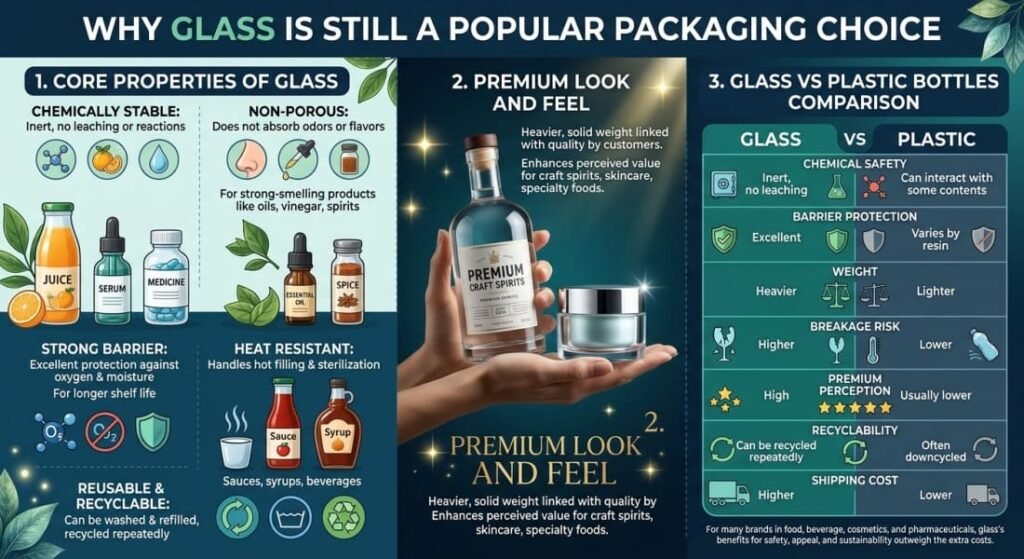
Before you look at specific bottle types, it helps to understand why so many brands still choose glass over other materials. The basic glass bottle function is simple: it holds and protects your product. But glass does this job in a few ways that other materials struggle to match.
The Properties of Glass Bottles
When you look at the properties of glass bottles, a few stand out:
Chemically stable. Glass is inert, so it does not react with most contents. Your juice, serum, or medicine keeps its original taste, smell, and formula.
Non-porous. Glass does not absorb odors or flavors, so it works well for strong-smelling products like essential oils, vinegar, and spirits.
Strong barrier. It keeps out oxygen and moisture far better than most plastics. That means a longer shelf life for many products.
Heat resistant. Many glass bottles can handle hot filling and sterilization, which matters for sauces, syrups, and some beverages.
Reusable and recyclable. You can wash and refill glass, and you can recycle it many times.
A Premium Look and Feel
Glass feels heavier and more solid in the hand. Customers often link that weight with quality. If you sell craft spirits, skincare, or specialty foods, glass can help your product look worth its price.
Glass vs Plastic Bottles
You may still be weighing glass vs plastic bottles for your line. Here is an honest comparison:
Factor | Glass | Plastic |
Chemical safety | Inert, no leaching | Can interact with some contents |
Barrier protection | Excellent | Varies by resin |
Peso | Heavier | Lighter |
Breakage risk | Más alto | Menor |
Premium perception | Alto | Usually lower |
Reciclabilidad | Can be recycled repeatedly | Often downcycled |
Shipping cost | Más alto | Menor |
Plastic wins on weight and impact resistance. Glass wins on product safety, shelf appeal, and long-term sustainability. For food, beverages, cosmetics, and pharmaceuticals, many brands decide the benefits of glass are worth the extra freight cost.
How Glass Bottles Are Classified
There are many different types of bottles on the market, and it can feel messy until you sort them. Most buyers find it easiest to think in three layers:
Color. This affects light protection and branding.
Shape and design. This affects how you fill, close, use, and store the product.
Application. This tells you which combinations are standard in your industry.
Let’s go through each one.
Types of Glass Bottles by Color
Your choice of glass bottle colors is not just about looks. Color controls how much light reaches your product, and light can break down vitamins, oils, hops, and active ingredients. Here are the most common options.
Clear Glass Bottles
Clear glass bottles (also called flint glass) are the most widely used option. They let your customer see exactly what is inside, which builds trust, especially for products with attractive colors or textures.
Common uses: Water and juice, Sauces, syrups, and dressings, Spirits like vodka and gin, Cosmetics and toiletries, Some pharmaceutical liquids
A clear glass water bottle is a good example. Shoppers like seeing pure, clean water, and clear glass delivers that. The trade-off is UV protection. Clear glass lets most light through, so it is not ideal for anything that degrades in sunlight unless you use secondary packaging like a box or label sleeve.
Amber Glass Bottles
Botellas de vidrio ámbar have a brown tint that comes from iron, sulfur, and carbon in the glass mix. That color blocks most UV light and a good share of visible blue light, which makes amber the go-to choice for light-sensitive products.
Common uses: Beer, Essential oils and tinctures, Medicines and syrups, Herbal extracts, Laboratory chemicals
If your product contains natural oils, vitamins, or plant extracts, amber is usually the safest color choice. The downside is lower visibility. Your customer will not see much of the product inside, so your label and branding need to do more of the work.
Green Glass Bottles
Green glass bottles come in shades from light “Georgia” green to deep antique green. They are closely tied to wine, beer, and olive oil, and many shoppers expect to see these products in green glass.
Common uses: Red and white wine, Beer, Sparkling water, Olive oil, Premium beverages
Green glass offers moderate UV protection. It filters some harmful light but not as much as amber. For many beverages, that balance works well, especially when you combine it with dark storage conditions.
Why Is Glass Green?
You may wonder why is glass green in the first place. Historically, it was an accident. Sand used to make glass naturally contains iron, and iron gives glass a greenish tint. Early glassmakers could not easily remove it, so green became the default color for bottles.
Today, manufacturers add controlled amounts of iron oxide and chromium oxide to create consistent green shades. Wine and beer producers kept green partly for its light protection and partly because customers came to associate it with quality and tradition. Green glass also uses a lot of recycled cullet, since mixed-color recycled glass works well in green production.
Blue Glass Bottles
Blue glass bottles, often called cobalt blue, get their color from cobalt oxide. They have a clean, striking look that stands out on a shelf.
Common uses: Skincare and serums, Essential oils and aromatherapy blends, Specialty water and wellness drinks, Personal care products
Blue glass blocks some light, but less than amber. You will usually pick blue for its branding effect rather than maximum protection. It works well for brands that want a calm, wellness-focused image.
Frosted Glass Bottles
Frosted glass bottles have a soft, matte finish made by acid etching or spray coating. The result looks smooth and elegant, and it diffuses light in a gentle way.
Common uses: Perfume, Serums and face oils, Premium spirits, Luxury skincare
Keep in mind that frosting is a surface finish. The actual light protection depends on the base glass color underneath. A frosted clear bottle will still let in plenty of UV, while frosted amber gives you both protection and a premium look. Frosting also adds a processing step, so expect a slightly higher unit cost.
Black Glass Bottles
Black glass bottles are dense and dark, often made with high levels of iron and other colorants, or finished with an opaque coating. They block nearly all light and create a bold, high-end look.
Common uses: Premium spirits, Luxury perfume, Men’s grooming products, Niche cosmetics
Other Colored Glass Bottles
Beyond the standard shades, you can find colored glass bottles in white opal, pink, violet, and fully custom tones. These are mostly used when you want your product to stand out in a crowded category. Some colors are made in the glass melt itself, while others are applied as a spray coating after forming. Coatings give you more color freedom with lower minimum orders, but melt-colored glass usually holds up better over time.
Glass Bottle Color Comparison
Bottle Color | UV Protection | Product Visibility | Common Uses | Brand Style |
Clear | Low | Alto | Water, juice, sauces, spirits | Clean, modern |
Amber | Alto | Low | Beer, medicine, essential oils | Functional, protective |
Green | Medium | Medium | Wine, beer, olive oil | Classic, traditional |
Blue | Medium-low | Medium | Skincare, aromatherapy | Calm, distinctive |
Frosted | Depends on base glass | Low to medium | Perfume, serums, spirits | Soft, luxury |
Black | Very high | None | Spirits, perfume | Bold, premium |
Types of Glass Bottles by Shape and Design
Color is only half the story. Glass bottle shapes affect how your product pours, how it fits on a filling line, what closure it takes, and how it packs into a carton. Many buyers search by style first, so it helps to know the main bottle shapes by name.
Boston Round Bottles
Boston round bottles have a cylindrical body, rounded shoulders, and a short neck. They are one of the most practical shapes you can buy. They are strong, easy to label, and compatible with a wide range of closures.
Usos comunes: Essential oils, Tinctures and herbal extracts, Laboratory reagents, Pharmaceutical liquids, Personal care products
Boston rounds usually come in amber, clear, blue, or green, and in sizes from about 15 ml up to 1 liter or more. They pair with screw caps, dropper caps, pumps, and sprayers, so you can use one bottle style across several products.
Glass Dropper Bottles
Glass dropper bottles are usually small Boston rounds or cylinders fitted with a glass pipette and rubber bulb. They let your customer measure out exact drops.
Usos comunes: Essential oils, Face serums, CBD and herbal tinctures, Hair oils
Dropper bottles work best for thin to medium liquids. If your formula is thick, you may want a pump instead.
Glass Spray Bottles
Glass spray bottles come with a fine mist sprayer or trigger sprayer. They spread liquid evenly and look much nicer than plastic spray bottles.
Usos comunes: Facial mists and toners, Room and linen sprays, Hair sprays, Natural cleaning products
When you order spray bottles, double-check the neck finish (for example, 18-415 or 20-410) so your sprayer fits properly and does not leak.
Roll-On Bottles
Roll-on bottles have a small ball fitted into the neck, so your customer can apply the product directly to the skin. They are common for perfume oils, essential oil blends, and natural deodorants.
Perfume Glass Bottles
Perfume glass bottles are where design really matters. They often have thick bases, unusual shapes, and heavy decoration. Most use crimp or screw neck finishes for spray pumps.
Usos comunes: Eau de parfum and cologne, Body mists, Luxury fragrance gift sets
Because the bottle is part of the product experience, many fragrance brands invest in custom molds here.
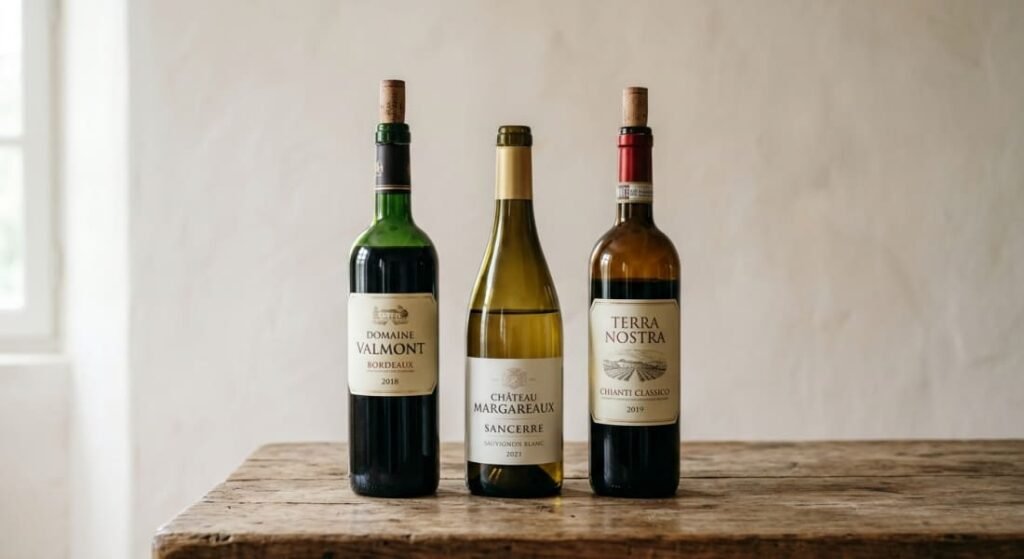
Wine Bottles
There are several standard wine bottle styles:
Bordeaux: straight sides and high shoulders, used for Cabernet, Merlot, and many reds.
Burgundy: sloped shoulders, used for Pinot Noir and Chardonnay.
Champagne / sparkling: thick walls and a deep punt to handle pressure.
Hock / Alsace: tall and slim, often used for Riesling.
Most glass bottles for wine are green or amber for light protection, while clear glass is common for rosé and some white wines. Brands that want to stand out often move to custom wine bottles with embossed logos or unique shoulder designs.
Botellas de cerveza
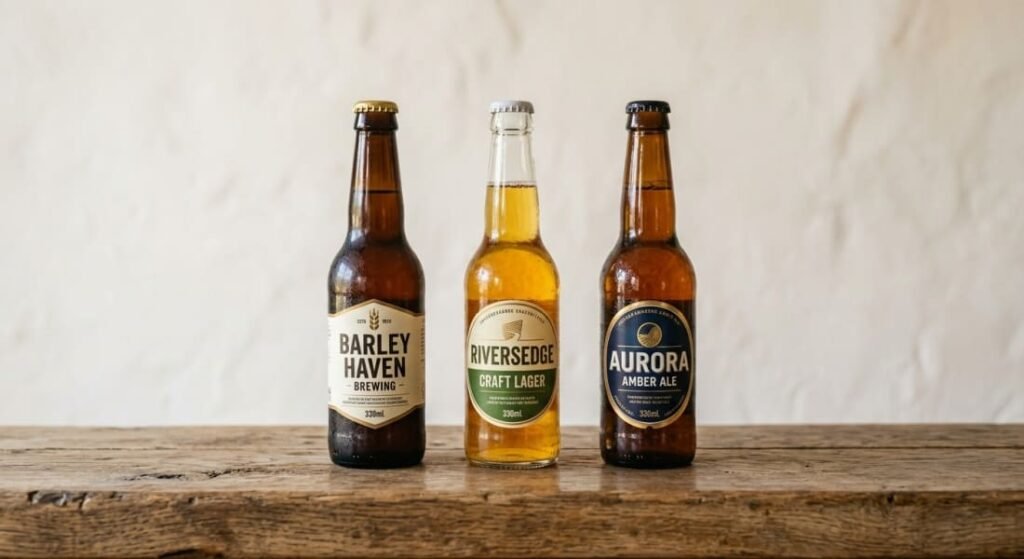
Beer glass bottles need to handle carbonation and pressure. The common styles include longneck, stubby, and heritage shapes, mostly with a 26 mm crown finish.
Amber is the top choice for beer, because hops react to light and create that “skunky” taste. Green and clear beer bottles exist, but they usually rely on boxes or specially treated hops to limit light damage.
Liquor Bottles
Liquor glass bottles cover whiskey, vodka, gin, rum, tequila, and liqueurs. They often have heavy bases, thick walls, and bar-top cork finishes. Since spirits sit on a back bar or shelf for a long time, bottle design plays a huge role in sales.
This is one of the most common categories for custom liquor bottles. Craft distillers often choose unique shapes, embossing, and decoration to build a recognizable brand.
Sauce and Oil Bottles
Food bottles are designed around pouring. Woozy bottles for hot sauce, marasca bottles for olive oil, and round bottles for syrups and dressings are all common.
Oil glass bottles for olive oil and specialty cooking oils are usually dark green or amber to protect against oxidation and light. Many include a pour spout or drip-free insert to keep the bottle clean.
Beverage Bottles
General beverage bottles hold water, juice, soda, kombucha, cold brew, and milk. They range from small 200 ml shots to 1 liter bottles. Neck finishes vary a lot, from crown caps to lug caps to screw caps, so make sure your bottle and closure supplier are on the same page.
Types of Glass Bottles by Industry
Looking at your own industry is often the quickest way to narrow down your options. Here is how the different types of bottle styles line up with common markets.
Beverage Industry
Typical bottles: water, juice, soda, beer, wine, and spirits bottles.
What you should consider:
Pressure resistance for carbonated drinks
UV protection for beer and wine
Shelf appeal for premium drinks
Closure type (crown, cork, screw cap, swing top)
Food Industry
Typical bottles: sauce bottles, oil bottles, vinegar bottles, syrup bottles.
What you should consider:
Pouring control
Food safety
Hot-fill compatibility
Tight sealing to prevent leaks
Cosmetics and Personal Care
Cosmetic glass bottles cover serums, lotions, toners, face oils, and perfumes. In this category, cosmetic glass bottles often double as a branding tool.
What you should consider:
Compatibility with pumps, droppers, and sprayers
Decoration options
How the bottle looks and feels in the hand
Light protection for active ingredients like vitamin C or retinol
Pharmaceutical Industry
Typical bottles: medicine bottles, syrup bottles, tablet bottles, and vials.
What you should consider:
Chemical resistance (Type I borosilicate for sensitive drugs, Type III soda-lime for many oral liquids)
Child-resistant closure compatibility
Light protection
Regulatory requirements in your market
Aceites esenciales y aromaterapia
Essential oil glass bottles are almost always amber or cobalt blue. Essential oils are concentrated and can break down in light, and some can even react with certain plastics.
When you shop for glass bottles for essential oils, look for:
Amber or blue glass
Orifice reducers or dropper caps for dosing
Tight-sealing caps to prevent evaporation
Small sizes like 5 ml, 10 ml, 15 ml, and 30 ml
Chemical and Laboratory Use
Laboratories use reagent bottles, sample bottles, and storage bottles, usually in amber or clear borosilicate glass. Chemical resistance and safe, clearly labeled closures are the main concerns here.
How to Choose the Right Glass Bottle for Your Product
Now that you know the main types of bottles, here is a step-by-step way to pick the right one.
Step 1: Think About Product Sensitivity
Ask yourself:
Does light affect my product’s color, smell, or potency?
Is it sensitive to oxygen?
Does it need hot filling or sterilization?
If the answer to the first question is yes, lean toward amber, green, or black glass.
Step 2: Choose a Color That Fits Both Protection and Branding
Clear for products that sell on appearance
Amber for maximum light protection
Green for wine, beer, and oils
Blue for wellness and beauty
Frosted or black for a luxury image
Step 3: Match the Shape to How Your Product Is Used
Think about your customer’s experience. A serum needs a dropper. A facial mist needs a sprayer. A hot sauce needs a controlled pour. Choose the shape that makes your product easy to use.
Step 4: Confirm Closure Compatibility
The neck finish is one of the most overlooked details, and it causes many problems later. Common closure types include:
Screw caps
Corks and bar tops
Tapones de corona
Dropper caps
Pumps and sprayers
Swing tops
Always order bottle samples together with closure samples and test them with your actual product before placing a large order.
Step 5: Plan Your Branding and Decoration
There are many ways to make a stock bottle look unique:
Printed glass bottles use screen printing or digital printing to apply your logo and text directly to the glass. This looks cleaner than a paper label and holds up to moisture.
Embossed glass bottles have raised logos or patterns molded into the glass. Embossing feels premium and is hard to copy.
Hot stamping adds metallic gold or silver details.
Frosting and spray coating change the surface color and texture.
Decals and labels give you flexibility for short runs.
Decorative glass bottles that combine two or three of these methods are common in spirits, perfume, and gift packaging.
Step 6: Consider Logistics and Production
Do not forget the practical side:
Heavier bottles cost more to ship.
Some shapes waste space on pallets.
Your filling line may only handle certain heights and diameters.
Minimum order quantities (MOQ) and lead times differ between stock and custom bottles.

Custom vs Standard Glass Bottles
When Standard Bottles Make Sense
Stock bottles come from existing molds, so you skip tooling costs. They are a good fit if you:
Are launching a new product and want to test the market
Need a fast turnaround
Have small to medium order volumes
Plan to make the bottle unique through labels or printing
When Custom Bottles Make Sense
Custom glass bottles are made from a mold designed for your brand. They are worth considering if you:
Sell in a crowded category like spirits or perfume
Want a shape that nobody else can use
Plan to sell large volumes over several years
Position your product as premium
Buying in Volume: Wholesale and Bulk Orders
If you run a growing brand, you will likely move from small sample orders to larger production runs. Wholesale glass bottles let you buy standard designs at better unit prices, and bulk glass bottles are usually shipped on pallets directly from the factory to your filling site.
A few tips when ordering in volume:
Ask for sample bottles and test them on your filling line.
Check pallet configuration and carton packing.
Confirm tolerance ranges for capacity, height, and neck finish.
Ask about quality inspection reports.
Plan for safety stock, since glass lead times can change during peak seasons.
When you compare glass bottle suppliers, look beyond price. Consistency, quality control, and communication matter just as much, because one bad batch can stop your production line.
Are Glass Bottles Sustainable?
More customers now look for sustainable glass packaging, and glass has a strong story to tell here. It is made from natural raw materials like sand, soda ash, and limestone, and it can include a high share of recycled glass, called cullet. Using cullet lowers furnace energy and reduces emissions.
Glass also has a long life beyond its first use. Many bottles are washed and refilled in returnable systems, and others get a creative second life. Some bars and home decor brands even cut old bottles into glass bottle glasses and candle holders.
You can also make your packaging greener by choosing lighter-weight bottle designs, using standard colors that recycle easily, and avoiding heavy coatings that may make recycling harder.
glass wine bottles
Why Brands Work With Smilebottles
As a glass bottle manufacturer, Smilebottles supplies bottles to beverage, food, cosmetic, and pharmaceutical brands. Here is what you can expect if you work with us:
A wide range of stock bottles in clear, amber, green, blue, and specialty colors
Mold design and development as a custom glass bottle manufacturer
Decoration options including screen printing, embossing, frosting, hot stamping, and spray coating
Quality checks on dimensions, capacity, and neck finish
Support with closures and packaging so your glass bottle and cap arrive ready to use together
Whether you need a single stock design or a full packaging line, working with an experienced glass packaging manufacturer can help you avoid costly mistakes and get to market faster.

Preguntas frecuentes: Frequently Asked Questions About Glass Bottles
P1:What are the main bottle types made from glass?
A1:The main types are usually grouped by color (clear, amber, green, blue, frosted, black), by shape (Boston round, dropper, spray, wine, beer, liquor, sauce), and by industry (beverage, food, cosmetic, pharmaceutical, essential oil, and lab use).
Pregunta 2:Which glass bottle color gives the best UV protection?
A2:Among common colors, amber gives the strongest UV protection. Black glass blocks even more light, but it is used mostly for premium spirits and cosmetics.
Pregunta 3:What are green glass bottles used for?
A3:Green glass is mainly used for wine, beer, sparkling water, and olive oil. It gives moderate light protection and has a classic, traditional look.
Pregunta 4:Why are amber bottles used for essential oils?
A4:Essential oils break down when exposed to light. Amber glass blocks most UV rays and helps keep the oils fresh and potent for longer.
Pregunta 5:Are clear glass bottles good for beverages?
A5:Yes. Clear glass is a great choice for water, juice, soda, and spirits where you want customers to see the product. For light-sensitive drinks, you may need extra protection like a box or a shrink sleeve.
Pregunta 6:Which type of glass bottle is best for cosmetics?
A6:It depends on your product. Dropper bottles suit serums and oils, pump bottles suit lotions, spray bottles suit mists and toners, and frosted or blue bottles help create a premium beauty look.
Conclusión
Glass bottles come in many colors, shapes, and styles, and each one serves a clear purpose. Clear glass shows off your product. Amber protects sensitive formulas. Green fits wine, beer, and oils. Blue, frosted, and black glass help you build a premium brand image. Shapes like Boston rounds, droppers, sprayers, and wine bottles are each built around how your product is filled, closed, and used. If you are planning a new product or want to upgrade your current packaging, working with an experienced manufacturer can help you find the right bottle the first time, whether you need a standard design or a fully custom solution.