
Índice
AlternarAutor: Equipo editorial de SmileBottles
Tiempo estimado de lectura: Aproximadamente 15 minutos
Si alguna vez te has parado frente a un estante lleno de bebidas alcohólicas y te has preguntado por qué algunas marcas venden esas botellas pequeñas junto a sus versiones de tamaño normal, ya estás pensando como un comprador de empaques. El tamaño de la botella no es un detalle menor. Determina cómo se ve tu producto, cuánto cuesta enviarlo, cómo reaccionan los compradores al verlo en el estante e incluso cómo se siente tu marca en las manos de alguien.
Para marcas de bebidas alcohólicas, destilerías y cualquier persona que se dedique a la adquisición de productos botellas de vidrio para licores, la elección entre botellitas de licor y los formatos estándar es un tema que surge una y otra vez. Y, sinceramente, no hay una única respuesta correcta. La elección adecuada depende de tu producto, tu mercado, tu presupuesto y el tipo de experiencia que quieras que tengan tus clientes.
Esta guía te explica todo lo que debes tener en cuenta antes de realizar un pedido, incluyendo las diferencias en cuanto a costo, casos de uso, imagen de marca, cumplimiento normativo y logística. Al finalizar, tendrás una idea mucho más clara de qué opción se adapta mejor a tu marca.
Por qué el tamaño de la botella es más importante de lo que crees
El tamaño de la botella influye en casi todos los aspectos del ciclo de vida de tu producto. Afecta el precio de tu bebida alcohólica, cómo se distribuye, cuánto espacio ocupa en un almacén y cómo perciben tus clientes el valor que contiene.
Cuando los compradores hablan de tamaños de las botellas de licor, en realidad se refieren a dos grandes familias:
Botellas pequeñas de alcohol — por lo general de 50 ml, 100 ml o 200 ml
Botellas estándar — por lo general, de 375 ml, 500 ml, 700 ml, 750 ml y 1 L
Ambos tienen su lugar. Los formatos mini son ideales para pruebas, regalos y viajes. Los formatos estándar son la columna vertebral de las ventas en tiendas y bares. Pero antes de elegir uno, debes entender qué aporta realmente cada formato a tu marca.

¿Qué son las botellas pequeñas de licor?
Botellas pequeñas de licor Son esas botellas de vidrio de formato pequeño que se ven a menudo en los minibares de los hoteles, en los carritos de las aerolíneas o en paquetes de regalo durante las fiestas. Son pequeñas, fáciles de llevar y sorprendentemente versátiles.
Tamaños comunes que encontrarás
Los más populares botellas pequeñas de licor se clasifican en varios tamaños:
Botellas de licor de 50 ml — el clásico tamaño “de avión” o de muestra
Botellas de licor de 100 ml — un poco más grande, popular para degustaciones de productos de alta gama
Botellas de licor de 200 ml — un término medio que se utiliza en algunos mercados minoristas
Cada país tiene sus propias preferencias en cuanto al tamaño, pero los 50 ml siguen siendo el estándar mundial para las botellas de licor en miniatura.
Donde las botellas pequeñas brillan
Por lo general, las botellas pequeñas de licor se usan para:
Programas de muestreo y kits de degustación
Minibares y servicio a la habitación en los hoteles
Mini botellas de licor de las aerolíneas servido en vuelos
Recuerdos de boda y regalos corporativos
Campañas promocionales y lanzamientos de nuevos productos
Cajas de suscripción y kits de prueba
Comercio minorista de viaje en aeropuertos y tiendas libres de impuestos
Si alguien está buscando dónde comprar botellas pequeñas de alcohol, a menudo están organizando un evento, administrando un negocio de hostelería o buscando empaques para una nueva línea de bebidas alcohólicas.
Las ventajas de apostar por lo pequeño
Las botellas pequeñas reducen la barrera de entrada para tus clientes. Si vas a lanzar un whisky de lujo a $80 la botella, no todos se arriesgarán a comprarlo. ¿Pero una botella pequeña a $7? Ahí sí que es más fácil decir que sí. Las botellas de licor de tamaño de viaje también funcionan de maravilla como regalo, para compras impulsivas y en paquetes de degustación que permiten a la gente probar varios sabores a la vez.
Además, son ideales si quieres despertar la curiosidad por un nuevo lanzamiento sin que los clientes se comprometan a comprar el producto completo.
Las ventajas y desventajas
Las botellas pequeñas no son perfectas. Por mililitro, su empaque y llenado resultan más costosos. El espacio para la etiqueta es reducido, lo que complica el diseño: tienes menos lugar para tu historia, las notas de cata y el texto legal. Además, algunos mercados restringen la venta de bebidas alcohólicas en formatos pequeños, por lo que te conviene revisar las regulaciones antes de hacer tu pedido botellas pequeñas de licor a granel.

¿Qué son las botellas estándar de licor?
Las botellas estándar son lo que la mayoría de la gente se imagina cuando piensa en una botella de licor. Se encuentran en las barras traseras, llenan los estantes de las tiendas y constituyen la base de tu línea de productos.
Tamaños estándar comunes
La alineación típica incluye:
Botellas de licor de 375 ml — medias botellas, que suelen usarse para licores de alta gama
Botellas de licor de 500 ml — común en los mercados europeos y en algunos licores
700 ml — formato estándar en Europa, Australia y la mayoría de los mercados de exportación
Botellas de licor de 750 ml — la norma estadounidense
Botellas de licor de 1 litro — se utiliza para la venta al por menor de productos a precio reducido y en tiendas libres de impuestos
Dónde funcionan mejor las botellas estándar
Las botellas de vidrio para licores de tamaño estándar son la opción ideal para:
Ventas en tiendas minoristas y licorerías
Bares, restaurantes y establecimientos de hostelería
Comercio electrónico y canales de venta directa al consumidor
Mercados libres de impuestos y de exportación
Líneas de productos premium y ultrapremium
Ediciones limitadas y lanzamientos para coleccionistas
Por qué los productos estándar siguen dominando las estanterías
Los formatos estándar te brindan mayor libertad de diseño. Tienes espacio para relieves, etiquetas grandes, cierres personalizados y bases decorativas pesadas. Además, el costo por mililitro de envasado es menor, lo que significa mejores márgenes a medida que aumentas la producción.
Para las marcas de bebidas alcohólicas que están desarrollando sus productos principales, las botellas de licor premium en tamaños estándar ofrecen una presencia en el estante y un valor percibido que las botellas pequeñas simplemente no pueden igualar.
Las desventajas
Las botellas estándar suponen un costo inicial más elevado para el cliente. Son más pesadas, lo que aumenta los gastos de envío, y ocupan más espacio en el almacén. Además, no son ideales para ofrecer muestras o para compras de prueba puntuales.
Mini vs. Estándar: las diferencias reales
Aquí tienes una comparación rápida para que puedas ver claramente las diferencias:
|
Factor |
Mini botellas de licor |
Botellas estándar de licor |
|
Tamaños comunes |
50 ml, 100 ml, 200 ml |
375 ml, 500 ml, 700 ml, 750 ml, 1 L |
|
Ideal para |
Muestras, obsequios, viajes |
Venta al por menor, bares, líneas premium |
|
Costo por ml |
Más alto |
Menor |
|
Label Space |
Limitado |
Generous |
|
Portability |
Excellent |
Moderate |
|
Shelf Impact |
Strong in sets |
Strong as standalone |
|
Consumer Commitment |
Low |
Más alto |
Brand Positioning
Mini bottles feel approachable, playful, and giftable. Standard bottles feel established, serious, and premium. Both can carry a luxury brand, but they tell different stories.
Cost Structure
If you look at cost per bottle, minis are cheaper. If you look at cost per milliliter of liquid packaged, standards win. For large production runs, wholesale liquor bottles in standard sizes almost always deliver better margins.
Logistics and Shipping
Minis mean more units, more handling, and more filling cycles. Standards mean fewer units, bigger pallets, and simpler warehouse flow. If you’re shipping internationally, those differences add up fast.
Compliance and Labeling
Every market has its own rules. ABV declarations, health warnings, origin statements, barcodes — all of it has to fit on the bottle. Minis make this a real design challenge. Standards give you breathing room.
Cuándo las botellas pequeñas de licor son la mejor opción
You should lean toward mini formats if any of these describe your situation:
You’re launching a new product. New brands, new flavors, or limited editions all benefit from a low-risk trial format. Letting people taste before they commit to a full bottle removes hesitation.
You sell through hospitality or travel channels. Hotels, airlines, cruise lines, and event venues all rely heavily on mini alcohol bottles for portion control and convenience.
You want to build gift sets or tasting kits. Holiday samplers, discovery packs, and curated collections all depend on small-format bottles. Decorative liquor bottles in mini sizes make strong gifting products, especially with personalized liquor bottles for weddings and corporate events.
Your brand focuses on impulse and convenience. Checkout displays, convenience stores, and small-format retail all favor minis.
You want to lower the entry price. A premium brand with an $80 full-size bottle can offer the same product in a $9 mini, which drops the barrier dramatically.
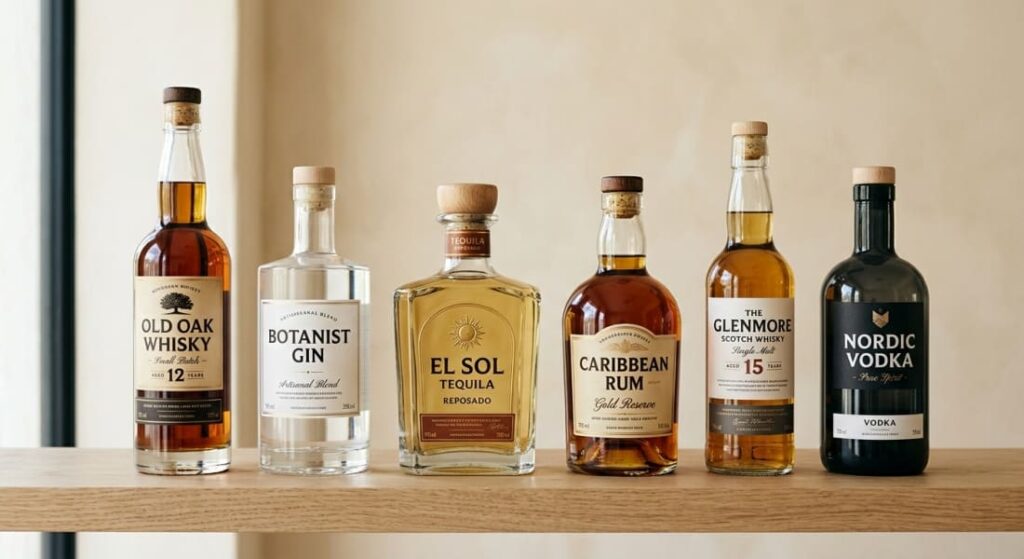
Cuándo las botellas estándar de licor son la mejor opción
Go with standards when:
You’re building a core retail line. Repeat purchases happen at standard sizes. Customers who love your product want the full bottle at home, not a mini.
You want strong premium shelf presence. Heavier glass, custom silhouettes, and premium closures all work better at standard sizes. Luxury branding needs room to breathe.
You need better cost efficiency at scale. Standards reduce your packaging cost per ml, which matters when you’re producing tens of thousands of units.
You need label space. If your brand story, tasting notes, and legal information take up real estate, you need the room standards offer.
You serve bars and restaurants. On-premise accounts almost always buy standard sizes. It’s just how the industry works.
Cómo elegir entre el formato mini y el estándar para tu marca
Here’s a practical way to think through the decision.
Start With Your Product and Your Audience
Who’s buying your spirit? If your audience is made up of new customers or gift buyers, minis help. If they’re repeat buyers or bar operators, standards win. A premium aged whiskey behaves differently from a flavored vodka or a craft gin — your packaging should match the drinking occasion.
Look at Your Sales Channel
Retail, e-commerce, duty-free, on-trade, direct-to-consumer — each channel has its own preferences. Duty-free loves 1L bottles. Hotels want 50ml. Supermarkets usually stock 750ml or 700ml. Match the format to the channel.
Think About Your Pricing Strategy
Are you building an accessible brand with easy entry points? Minis help. Are you anchoring your brand around premium positioning and higher margins? Standards work better.
Factor In Branding and Decoration
Custom embossing, hot stamping, frosting, metallic finishes — all of these look better with more surface area. If decoration is central to your brand, that pushes you toward standard sizes. If you’re working with a custom glass bottle manufacturer on both formats, make sure your designs scale properly between them.
Consider the Dual-Size Strategy
Here’s something a lot of brands overlook: you don’t have to choose. Many successful spirit brands run both formats at once. Minis handle sampling, gifting, and new customer acquisition. Standards drive repeat sales and retail revenue. The two formats work together — minis bring new buyers in, and standards keep them coming back.
Diseño y personalización que realmente importan
When you’re sourcing custom liquor bottles, a few decisions shape the final result more than anything else.
Bottle Shape
Round, square, flask, Nordic-style, or fully custom — your bottle silhouette becomes part of your brand identity. A unique shape makes your product recognizable from across the room.
Weight and Base Thickness
Heavy bottles feel premium. Lightweight bottles ship cheaper. The right choice depends on your positioning. Wine and spirits bottles at the luxury end almost always use heavier glass with thick bases.
Opciones de decoración
The usual options include: Embossing and debossing, Screen printing
Frosting, Spraying and coating, Pressure-sensitive labels, Hot stamping and foiling
, Metallization
Each adds cost but also builds brand value. Decoration decisions should match your retail price point.
Cierres
Screw caps, natural cork, synthetic cork, bar-top closures, tamper-evident seals — the closure sets the opening experience and influences perceived quality. Make sure your closure choice fits both your filling line and your brand.
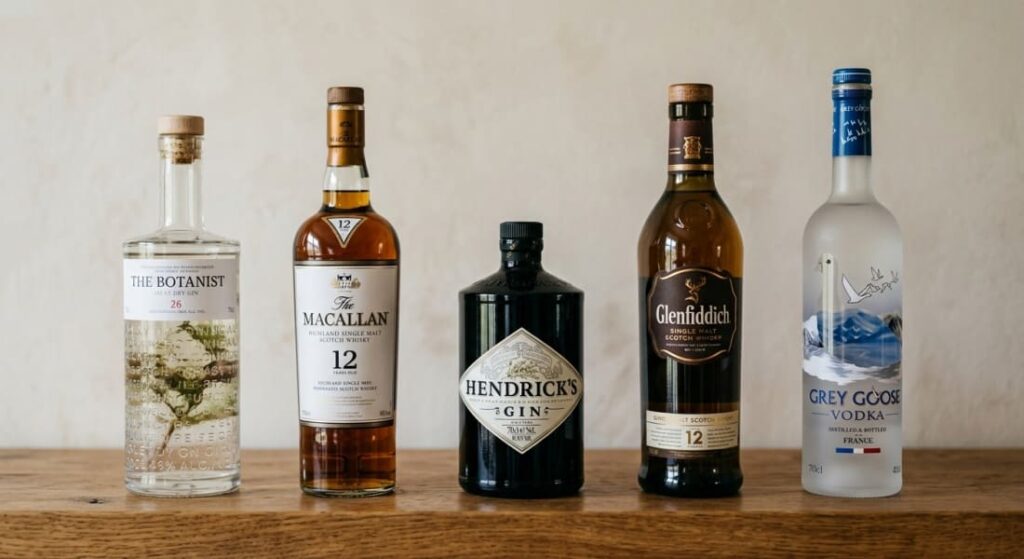
liquor bottles
Cumplimiento normativo, seguridad y exportación
If you plan to sell internationally, a few things need extra attention.
Regional Size Preferences
The U.S. uses 750ml. Most of Europe, Australia, and Asia use 700ml. Mix these up and your product won’t be allowed on shelves in the wrong market.
Labeling for Mini Bottles
Minis make labeling harder. You need to fit ABV, origin, volume, warnings, barcode, and brand information into a tiny space. Smart design and careful planning make this work.
Glass Quality
Consistency matters. Neck finishes have to match your filling line perfectly. Bottles need to survive shipping without breakage. A reliable liquor bottle manufacturer will have strict quality control on dimensions, glass clarity, and transport packaging.
Why Your Supplier Matters
A good liquor bottle supplier reduces your compliance risk, keeps production consistent, and helps you handle export logistics. These things matter more than you might think until the first time something goes wrong on a shipment.
Cómo ayuda Smilebottles a las marcas de bebidas alcohólicas
At Smilebottles, we work with distilleries, wine and spirits companies, and packaging buyers across many markets. We produce both mini and standard formats, and we help brands figure out which direction fits best.
Our capabilities cover:
Stock bottles across all common tamaños de las botellas de licor
Custom mold development for unique shapes
Decoration services including embossing, printing, frosting, and more
Closure matching and packaging support
Wholesale glass liquor bottles for both small and large production runs
Export support with experience in multiple regional standards
We think of ourselves less as a factory and more as a packaging partner. If you’re not sure whether to start with minis, standards, or both, we’re happy to walk through the trade-offs with you.
Guía rápida para la toma de decisiones
If you want the short version:
Choose mini bottles if you need sampling, gifting, travel-size convenience, or lower entry pricing.
Choose standard bottles if you need retail strength, premium shelf presence, lower cost per ml, and long-term core sales.
Choose both if you want to build a full customer journey from first taste to repeat purchase.

Preguntas frecuentes: Preguntas frecuentes Acerca del vidrio Liquor Bottles
P1:What size is considered a mini liquor bottle?
A1:A mini is usually 50ml, though 100ml and 200ml bottles are also sold as minis in some markets. The 50ml size is the most common worldwide.
Pregunta 2:What is the most common standard liquor bottle size?
A2:In the U.S., it’s 750ml. In Europe, Australia, and most of Asia, it’s 700ml. Both are considered standard full-size bottles.
Pregunta 3:Are mini liquor bottles more expensive than standard bottles?
A3:Per milliliter, yes. Mini bottles cost more to package and fill. But they can create higher per-serving revenue when used for sampling, gifting, or hospitality.
Pregunta 4:Which is better for a new spirits brand: mini or standard?
A4:It depends on how you want to launch. Minis build trial and awareness. Standards drive retail sales. Many new brands use both to cover more ground.
Pregunta 5:an mini liquor bottles be customized?
A5:Yes. You can customize the shape, closure, embossing, printing, and labels. The smaller surface area just takes more careful design work.
Pregunta 6:Are there different regulations for mini liquor bottles?
A6:Yes. Some countries restrict small-format alcohol sales, and labeling requirements vary. Always confirm compliance for each target market before production.
Conclusión
There’s no single right bottle size. The best choice is the one that matches your product, your market, and your long-term brand strategy.
Mini bottles work beautifully for trial, gifting, hospitality, and travel. Standard bottles anchor your retail presence, support premium positioning, and give you better margins at scale. Many brands find that running both at the same time builds a stronger customer journey — minis bring people in, standards keep them loyal.
If you’re weighing your options for your next project, think about where your customers meet your brand, what price point makes sense, and how you want the bottle to feel in someone’s hand. The answer usually becomes clearer once you line those things up.
And if you want a second opinion from someone who makes these bottles every day, we’re always open to a conversation. Smilebottles works with spirits brands on both mini and standard formats, and we’re happy to help you figure out the right mix for your product.
 Spanish (Colombia)
  English
  Russian
  Spanish (Chile)
  Spanish (Ecuador)
  Swedish
  Thai
Thai  Turkish
  Ukrainian