Índice
AlternarAutor: Equipo editorial de SmileBottles
Tiempo estimado de lectura: Aproximadamente 16 minutos
Glass gin bottles are still the standard across the category, from small craft distilleries to large international brands. But “glass” covers a lot of ground. You have to think about capacity, closure fit, decoration, weight, freight costs, minimum orders, and what buyers in each market expect. Miss one of these, and you could end up with bottles that look great in a design file but cause trouble on the filling line or crack during shipping.
This guide walks you through the main points to consider, so you can choose bottles for gin that protect your product, fit your budget, and suit the brand you’re building. It draws on the questions gin producers most often ask us at Smilebottles when they start a new packaging project.
Why Glass Is Still the First Choice for Gin Packaging
It Protects the Flavor You Worked Hard to Create
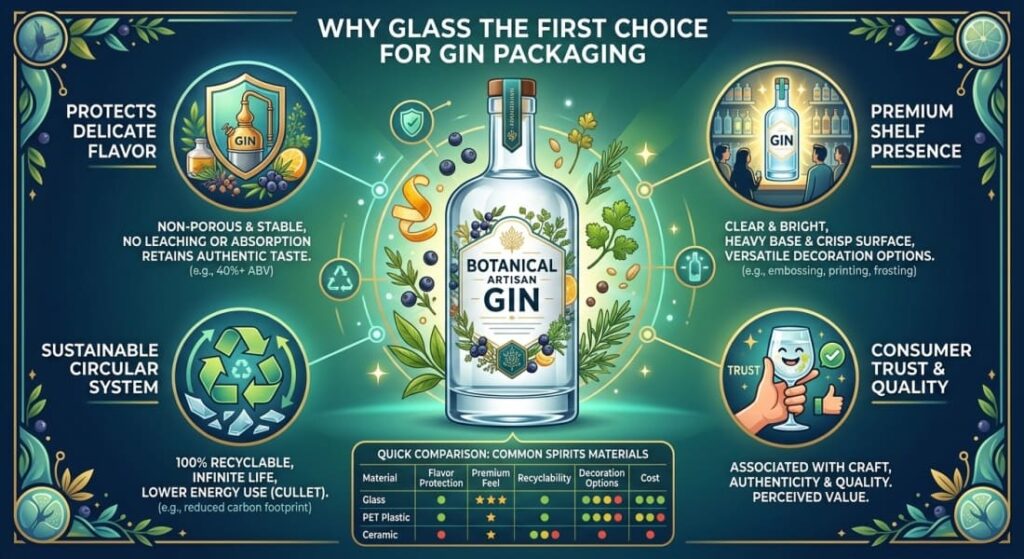
Gin is all about botanicals. Juniper, citrus peel, coriander, angelica, and the rest give your spirit its character, and those aromas are delicate. Glass is non-porous and chemically stable, so it won’t absorb flavors or release anything into your gin, even at 40% ABV or higher. It also acts as a strong barrier against oxygen and moisture. Your gin should taste the same in a customer’s glass as it did when it left your still, whether it’s opened next week or two years from now.
It Gives Your Brand a Stronger Shelf Presence
Clear, bright glass lets the liquid speak for itself. A heavy base and a crisp, clean surface tell shoppers they’re holding something well made, often before they’ve read the label. Glass also gives you more decoration choices than most other materials, from printing and frosting to embossed logos, which makes it easier to stand out in a crowded gin aisle.
It Fits Into a Circular Packaging System
Glass can be recycled many times without losing quality, and most major markets already have collection systems in place. Recycled glass (called cullet) melts at a lower temperature than raw materials, which reduces energy use during production. If sustainability is part of your brand message, glass gives you a credible starting point.
Consumers Already Trust It
People expect gin to come in glass. A spirit in a plastic bottle can feel cheap, no matter how good the liquid is. Glass carries a sense of craft and authenticity that fits the way most gin brands want to be seen.
Quick comparison: common materials for spirits
Material | Flavor Protection | Premium Feel | Recyclability | Opciones de decoración | Cost |
Glass | Excellent | High | High | Very wide | Moderate |
PET plastic | Fair | Low | Moderate | Limitado | Low |
Ceramic | Good | High | Low | Moderate | High |
Common Types of Glass Gin Bottles and How They’re Used
Standard Stock Bottles
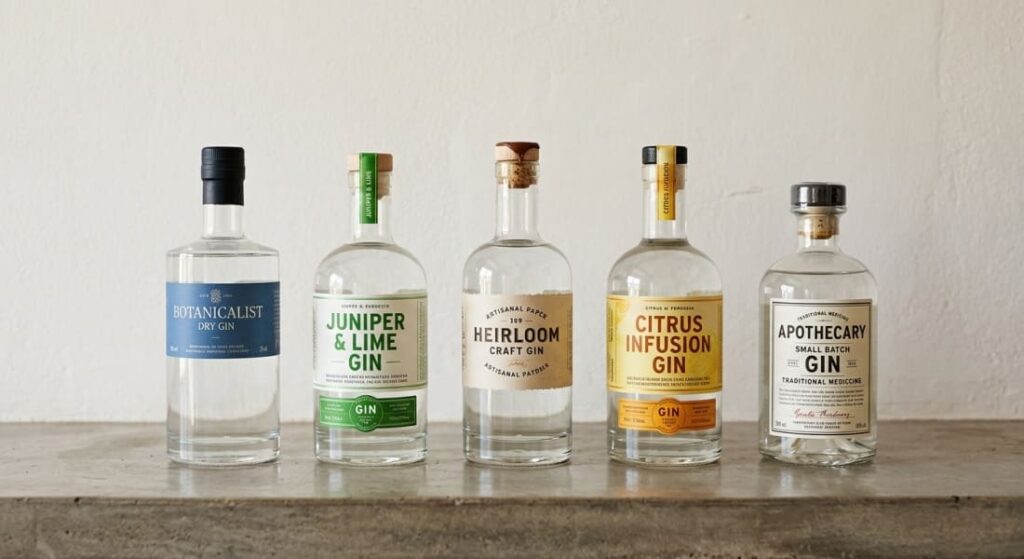
Stock bottles are ready-made designs that a factory produces in large runs. Round and square shapes are the most common. They’re cost-effective, easy to label, and usually available with short lead times and lower minimum orders. If you’re testing a new product, working with a limited budget, or need wholesale gin bottles quickly, stock designs are a practical place to start.
Many brands begin with stock wholesale glass bottles and add their own identity through labels, printing, and closures. This approach works well, and plenty of successful gins have never used a custom mold.
Custom-Shaped Bottles
Custom gin bottles are made from a mold designed only for your brand. You get a shape no competitor can copy, which helps shoppers recognize your gin from across a room. The trade-off is a higher upfront investment for mold development, longer lead times, and higher minimum order quantities. Custom shapes make the most sense once you have stable sales or a clear plan for growth.
Clear, Flint, and Colored Glass
Clear gin bottles are by far the most popular choice in the category, and for good reason. Most gin is crystal clear, and some newer styles are naturally colored (pink gins, color-changing gins, barrel-rested gins). Clear glass lets the customer see exactly what they’re buying.
Within clear glass, you’ll often see grades such as:
Standard flint: clear with a slight green or blue tint, especially visible at the base
Extra flint or super flint: lower iron content, so the glass looks brighter and more crystal-like
Colored glass is another option. Blue, green, amber, and black glass can become part of your brand identity, and darker shades offer extra protection from UV light. Just keep in mind that colored glass hides the liquid, so your label and bottle shape will need to do more of the visual work.
Frosted, Matte, and Decorative Finishes
Decorative gin bottles use surface treatments to create a softer or more tactile look. Frosting (by acid etching or spray coating) gives a smooth, velvety feel. Matte coatings in any color can make a bottle feel modern and refined. These finishes work well for craft, gift, and limited-edition releases. If you plan to use paper labels on frosted glass, test them first, since adhesion can be different from a smooth surface.
Mini Bottles and Large Formats
Mini gin bottles, usually 50ml or 5cl, are popular for tasting sets, hotel minibars, airline service, advent calendars, and gift boxes. They give new customers a low-risk way to try your gin, and they’re a great marketing tool. On the other end, 1L and 1.5L bottles are often used for on-trade service or special editions.
Bottle type overview
Bottle Type | Ideal para | Main Advantage | What to Watch |
Stock round/square | New brands, budget-conscious lines | Low MOQ, fast delivery | Less unique on shelf |
Custom-shaped | Established or premium brands | Strong brand recognition | Mold cost, longer lead time |
Clear/extra flint | Most gins, especially colored gins | Shows off the liquid | Shows every flaw in glass quality |
Colored glass | Distinct brand identity | UV protection, bold look | Hides the liquid |
Frosted/matte | Gift and craft editions | Soft, premium feel | Label adhesion, extra cost |
Mini (50ml) | Samples, gift sets, hospitality | Low-cost trial for customers | Higher cost per ml |
Key Design Elements That Shape Your Gin Bottle
Good gin bottle design balances looks with practical details. Here’s what you’ll need to think through.
Shape and Silhouette
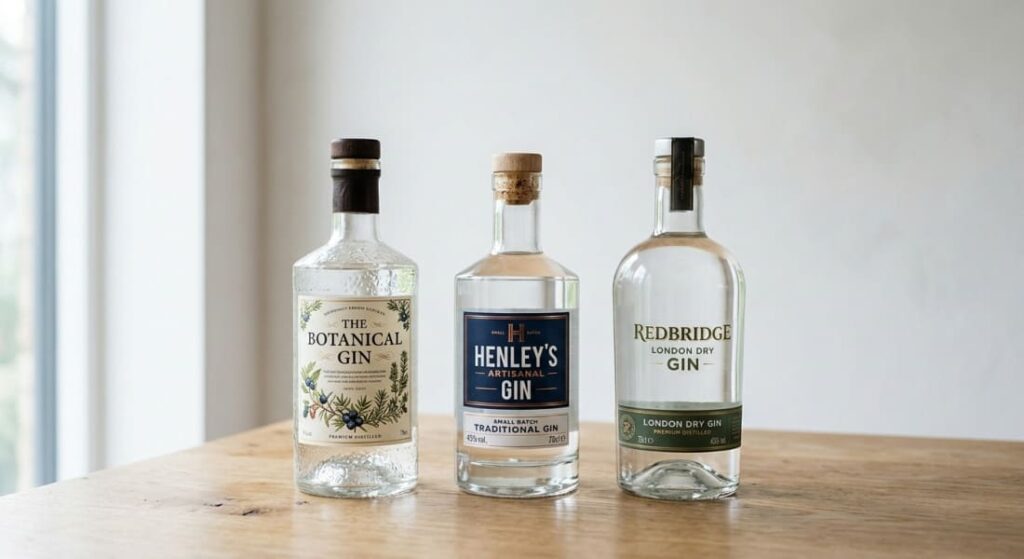
Tall and slim bottles look elegant and modern. Short, wide apothecary-style bottles feel old-world and crafted. Square bottles are bold and stack well in cartons. Whatever shape you choose, pick one up and pour from it. A bottle that looks striking but feels awkward in the hand will frustrate bartenders, and they’ll notice.
Size and Fill Capacity
Common gin sizes include 50ml, 200ml, 350ml or 375ml, 500ml, 700ml, 750ml, and 1L. Your target market matters here:
The UK and EU mostly use 70cl (700ml) for full-size spirits.
The US has long used 750ml, though 700ml is now also permitted.
Some markets have strict rules on which fill sizes are allowed, so check before you commit.
If you plan to sell in several regions, you may need two versions of the same bottle. It’s much easier to plan this at the start than to redesign later.
Neck Finish and Closure Compatibility
The neck finish is the shape of the bottle opening, and it must match your closure exactly. Gin commonly uses:
Bar-top stoppers: a cork or synthetic shank with a wood, metal, or plastic head. Very common in premium gin.
Screw caps: affordable, reliable, and easy to reseal.
Tamper-evident closures: required by some retailers and markets.
A poor fit between neck and closure can cause leaks, evaporation, or stoppers that are too tight to pull out. Always test closures on actual production samples, not just drawings.
Bottle Weight and Base
A heavy base gives a solid, quality feel, and many premium brands use thick bases for this reason. But extra glass means higher material costs and higher freight costs on every shipment. Lighter bottles cut your shipping bill and your carbon footprint. The right balance depends on your price point and how far your bottles need to travel.
Labeling and Printing
You have several ways to brand the surface of your bottle:
Pressure-sensitive labels: flexible, cost-effective, and easy to update
Screen printing: ink applied directly to the glass for a clean, “no label” look
Hot stamping: metallic foil for gold or silver details
Decals: detailed, multi-color graphics transferred onto glass
Screen printed glass bottles are a favorite for modern gin brands because the print looks like part of the bottle. It also holds up well in ice buckets and wet bar environments, where paper labels can peel or wrinkle.
Embossing and Custom Mold Details
Embossing creates a raised design in the glass, while debossing creates a recessed one. You might add your logo on the shoulder, a botanical pattern around the base, or a texture that customers can feel. Custom embossed glass bottles give your brand a permanent signature that no label can match. Since embossing is built into the mold, it doesn’t wear off and adds no extra decoration cost per bottle after the mold is made.
Modern Gin Packaging Trends to Know
Trends in gin bottle packaging move fast, but a few have stuck around long enough to shape how brands plan their bottles.
Clean, Minimal Design
Many newer brands are moving away from busy, vintage-style labels toward simple typography, lots of open space, and one or two strong visual elements. A minimal bottle relies heavily on glass quality, since there’s less decoration to hide flaws. Good premium gin bottle design today often means fewer elements done really well.
Lighter Bottles With a Premium Feel
Brands are increasingly asking for bottles that use less glass but still feel substantial. Careful design, such as a thicker base with thinner walls, can help you get there without making the bottle feel cheap.
Limited Editions and Seasonal Releases
Special colors, gift-ready finishes, and holiday packaging help you create buzz and give loyal customers something new to collect. Luxury gin bottles for these releases often use frosting, metallic coatings, or unique stoppers to set them apart from the core range.
Packaging That Tells Your Story
Shoppers want to know where your gin comes from. Some brands emboss a local landmark or use a glass color linked to their region. Others print botanical illustrations directly on the glass. The bottle becomes part of the story, not just a container.
QR Codes and Smart Packaging
QR codes on labels or back prints can link customers to cocktail recipes, distillery tours, or product details. Some premium brands use NFC tags to fight counterfeiting and track products through the supply chain.
A practical note: every added trend affects your cost and timeline. A multi-color print, a special coating, and a custom stopper can each add weeks to production. Plan for this early so your launch date doesn’t slip.
How to Choose the Right Glass Bottles for Gin
With so many options, it helps to work through your choices in order. Here’s how to narrow down the right glass bottles for gin for your brand.
Start With Your Brand Position
Are you a mass-market gin, a craft brand, or an ultra-premium label? Your bottle should match your retail price. A $25 gin in a heavy, embossed, hand-finished bottle will squeeze your margins. A $90 gin in a plain stock bottle may leave shoppers wondering what they’re paying for.
Think About Where and How You’ll Sell
Where your gin is sold affects what your bottle needs to do:
Retail shelves: shelf impact and front-facing branding matter most.
Bars and restaurants: a good grip, easy pouring, and a durable finish are key.
E-commerce: your bottle has to survive parcel shipping and look good in photos.
Gifting: presentation and secondary packaging count for a lot.
Balance Design Goals With Your Budget
Your main cost factors include:
Stock bottle vs. custom mold
Glass weight and grade (standard flint vs. extra flint)
Decoration type and number of colors
Closure type
Order volume
A good middle ground for many brands is a stock bottle with a custom print and a branded stopper. You get a distinct look without the mold investment.
Plan for Shipping, Storage, and Durability
Glass is strong, but it’s not unbreakable. Think about bottle weight, carton design, dividers, pallet layout, and how many bottles fit in a container. Small shape changes can make a big difference in how many units you can ship per pallet, and that adds up quickly across a year.
Check Regulations in Every Market
Before you finalize anything, confirm:
Allowed fill sizes in each target market
Labeling rules, including alcohol content, allergen info, and recycling marks
Food-contact safety standards for glass, inks, and coatings
Tamper-evidence requirements from retailers or local authorities
Your quick buyer checklist:
What is your target retail price?
Which markets will you sell in?
Which capacities do you need?
Do you need a custom mold, or will a stock bottle work?
Which closure style fits your brand?
What decoration methods do you want?
What is your expected first order and annual volume?
When do you need the bottles in your warehouse?
If you can answer these before you contact suppliers, you’ll get more accurate quotes and save a lot of back-and-forth.
Customization Options for Your Gin Bottles
Most custom spirit bottles combine several options. Here’s what you can change.
Custom Shapes and Exclusive Molds
The mold development process usually goes like this: your concept, a technical drawing, a 3D model or prototype, mold making, sample production, and final approval. This often takes several weeks before mass production can begin. Ask for a 3D printed model early. Holding a physical version helps you catch problems with grip, proportion, or label space before any steel is cut.
Glass Color
Besides flint and extra flint, you can choose amber, green, blue, black, and other shades. If you pick a custom color, ask how your supplier keeps it consistent from batch to batch. Slight color shifts between production runs can be noticeable when bottles sit side by side on a shelf.
Decoration Techniques
Each technique has its own strengths. This table can help you compare:
Technique | Look and Feel | Durability | Works for Low MOQ? | Best Use |
Screen printing | Clean, integrated print | Very high | Moderate | Core range branding |
Frosting/etching | Soft, misty surface | Very high | Moderate | Craft and premium lines |
Spray coating | Full color, matte or gloss | High | Moderate | Bold brand colors |
Estampado en caliente | Metallic shine | Moderate | Yes | Logo accents, luxury details |
Decals | Detailed, multi-color graphics | High | Yes | Complex artwork |
Embossing | Raised, tactile design | Permanent | Needs a custom mold | Long-term brand signature |
Paper labels | Flexible, easy to change | Lower in wet conditions | Yes | Test batches, frequent changes |
If your bottles will spend time in ice buckets or humid bars, direct printing or high-quality waterproof labels are safer choices than standard paper.
Closures and Caps
Your stopper is the first thing customers touch when they open your gin, so it matters more than you might think. You can customize the head material (wood, metal, glass, or synthetic), the color, and add a logo by engraving or printing. Pay attention to the shank too. Natural cork feels classic, while synthetic cork offers a more consistent seal.
Labels and Secondary Packaging
Your bottle, label, and gift box should look like they belong together. Check that box inserts fit the bottle’s actual dimensions, including tolerances. Good spirit bottle packaging thinks about the whole experience, from the shipping carton to the moment the customer pulls out the stopper. This matters even more in premium spirits packaging, where the unboxing moment is part of what the customer pays for.
Common Mistakes to Avoid
Choosing a Bottle Only for Its Looks
A beautiful bottle that doesn’t run on your filling line, tips over on conveyors, or won’t fit standard cartons will cost you money every single day. Always check the practical side.
Skipping Closure Testing
Mismatched closures are one of the most common problems we see. Stoppers that are too loose let gin evaporate, while ones that are too tight frustrate customers. Test with real bottles and real stoppers before you approve mass production.
Ignoring Label Limits
Curved shoulders, tapered bodies, and heavy embossing can make labeling difficult. Make sure your design leaves a clear, flat or evenly curved area for the label.
Underestimating Time
Custom projects almost always take longer than expected. Artwork changes, sample revisions, and holiday factory closures can push timelines back by weeks.
Forgetting About Compliance
The wrong fill size or missing label information can stop your gin at customs or keep it off retailer shelves. Check the rules in each market before ordering.
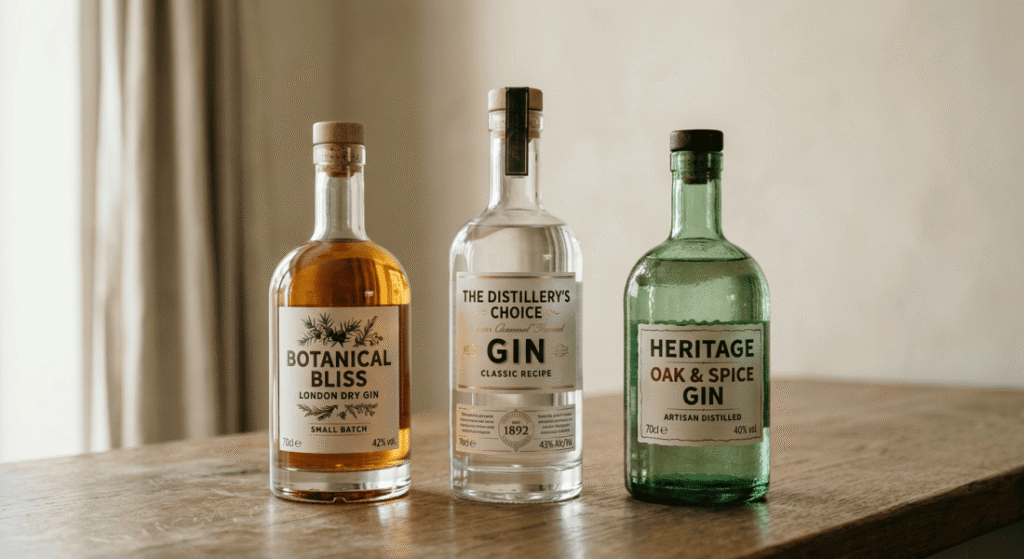
gin bottles
Practical Tips for a Smooth Bottle Project
Settle your brand position before you design. It guides every choice that follows.
Ask for samples early. Hold them, fill them, label them, and ship a few to see how they hold up.
Confirm closures before mass production. Don’t assume a fit based on drawings alone.
Think about e-commerce from day one. Parcel shipping is much rougher than pallet shipping.
Plan for growth. Make sure your supplier can handle larger reorders and keep quality steady over time.
Keep a spec sheet. Record dimensions, weight, color grade, closure specs, and decoration details so reorders stay consistent.
How to Choose a Reliable Gin Bottle Supplier
Your bottle quality is only as good as the factory behind it. Here’s what to look for when you compare suppliers.
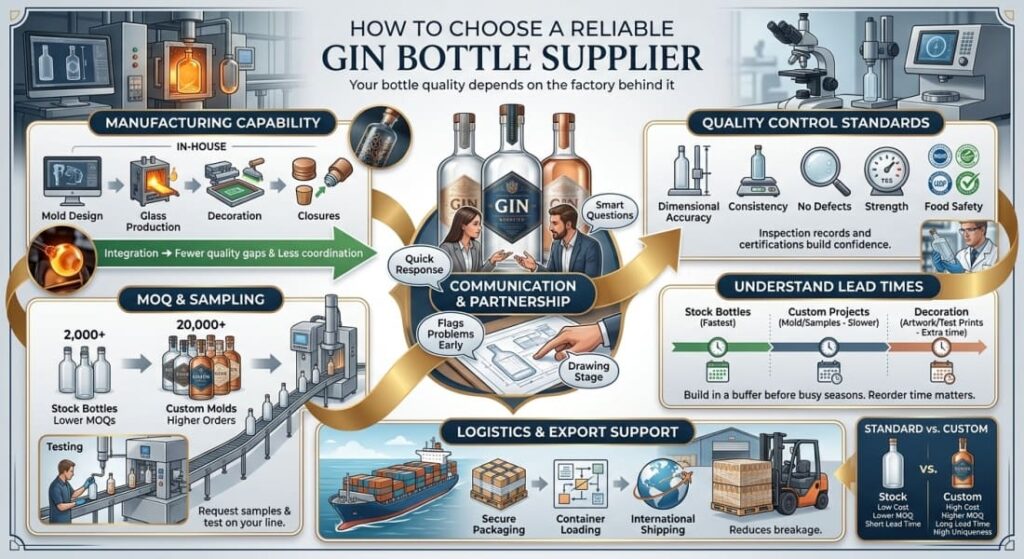
Check Their Manufacturing Capability
Un buen gin bottle supplier should be able to tell you clearly what they make in-house and what they outsource. Ask about:
Mold design and development
Glass production capacity
Decoration services such as printing, frosting, and coating
Closure sourcing and fit testing
Working with a glass bottle manufacturer that handles bottles, decoration, and closures together usually means fewer quality gaps and less time spent coordinating multiple vendors.
Ask About MOQ and Sampling
Minimum order quantities vary widely. Stock bottles often have lower MOQs, while custom molds usually need much larger orders to cover production setup. Decoration can also have its own minimums. Ask for samples before placing a full order, and if possible, test them on your own filling line.
Review Quality Control Standards
Ask how the supplier checks:
Dimensional accuracy, especially neck and height
Weight consistency
Surface defects such as bubbles, stones, and scratches
Wall thickness and strength
Packaging and pallet standards
A custom glass bottle manufacturer with clear inspection records and food-safety certifications gives you more confidence, especially when you’re selling into regulated markets.
Understand Lead Times
Lead times depend on the project:
Stock bottles: often the fastest, depending on inventory
Custom mold projects: longer, because of mold making and sample approval
Decoration: extra time for artwork approval, test prints, and production
Build in a buffer, especially before holiday seasons when factories are busy. Ask about reorder lead times too, not just the first order.
Look at Export and Logistics Support
If you’re importing bottles, packaging matters. Ask how bottles are packed, whether they use dividers or shrink-wrapped pallets, and how they plan container loading. An experienced liquor bottle manufacturer will have handled international shipping many times and can advise on reducing breakage.
Pay Attention to Communication
Good suppliers respond quickly, ask smart questions about your project, and tell you when something won’t work. That last point is important. You want a partner who flags a problem at the drawing stage, not after 30,000 bottles arrive.
Standard vs. custom bottles at a glance
Factor | Stock Bottle | Custom Mold Bottle |
Upfront cost | Low | Higher (mold investment) |
MOQ | Menor | Más alto |
Lead time | Shorter | Longer |
Brand uniqueness | Moderate (with decoration) | High |
Flexibility to change | Easy | Limited once the mold is made |
Preguntas frecuentes: Frequently Asked Questions About Glass Gin Bottles
P1:Why are glass bottles the best choice for gin?
A1:Glass doesn’t react with alcohol, keeps out oxygen and moisture, and preserves the botanical flavors of your gin. It also feels premium, offers wide decoration options, and is highly recyclable.
Pregunta 2:What size bottle is most common for gin?
A2:In the UK and EU, 700ml is the standard size. In the US, 750ml is most common, though 700ml is also allowed. Mini 50ml bottles are popular for samples and gift sets.
Pregunta 3:What’s the difference between clear and colored gin bottles?
A3:Clear glass lets customers see the liquid and works well for most gins, especially colored ones. Colored glass offers UV protection and a bold brand look, but it hides the gin inside.
Pregunta 4:Can glass gin bottles be fully customized?
A4:Yes. You can customize shape, color, embossing, printing, coatings, and closures. Many brands also work with suppliers on custom liquor bottles across their wider range, such as vodka, rum, or whisky, so the whole portfolio feels connected.
Pregunta 5:What closures work best for premium gin?
A5:Bar-top stoppers with wood or metal heads are the most popular choice for premium gin. Screw caps work well for value-focused lines and give a reliable seal.
Pregunta 6:Are glass gin bottles environmentally friendly?
A6:Glass is endlessly recyclable and widely collected in most markets. You can improve its footprint further by choosing lighter bottles and simpler decoration.
P7:How long does a custom gin bottle take to develop?
A7:It depends on complexity, but custom mold projects usually take several weeks for design, mold making, and sample approval, plus production time. Stock bottles with decoration are typically faster.
Conclusión
The best glass gin bottles balance all three jobs: good looks, practical function, and responsible material use. Start with your brand position and your target market. Then work through capacity, closures, decoration, and logistics.
Whether you need gin bottles for a small first batch or a full custom range, a clear plan makes the whole process easier. If you’d like to talk through bottle options, closures, or decoration for your next gin project, the Smilebottles team is happy to help you compare choices and request samples.