Índice
AlternarAutor: Equipo editorial de SmileBottles
Tiempo estimado de lectura: Aproximadamente 16 minutos
You’ve likely spent months on your formula. You tested textures, adjusted actives, and argued over fragrance levels. Your customer, though, sees the bottle before any of that. They pick it up, feel the weight, look at the finish, and decide in a few seconds whether the product seems worth the price.
That’s why choosing among skincare packaging manufacturers is a bigger decision than it first looks. The right partner protects your formula, keeps your launch on schedule, and helps your product look the way you pictured it. The wrong one can leave you with leaking pumps, uneven frosting, and a shipment that arrives three weeks late.
This guide explains what packaging manufacturers do, which packaging types and materials fit which products, and how to judge a supplier before you place an order. If you’re sourcing glass bottles and jars for a new line or replacing a current supplier, you should finish with a clear idea of what to look for and which questions to ask.
Why Skincare Packaging Matters for Your Brand
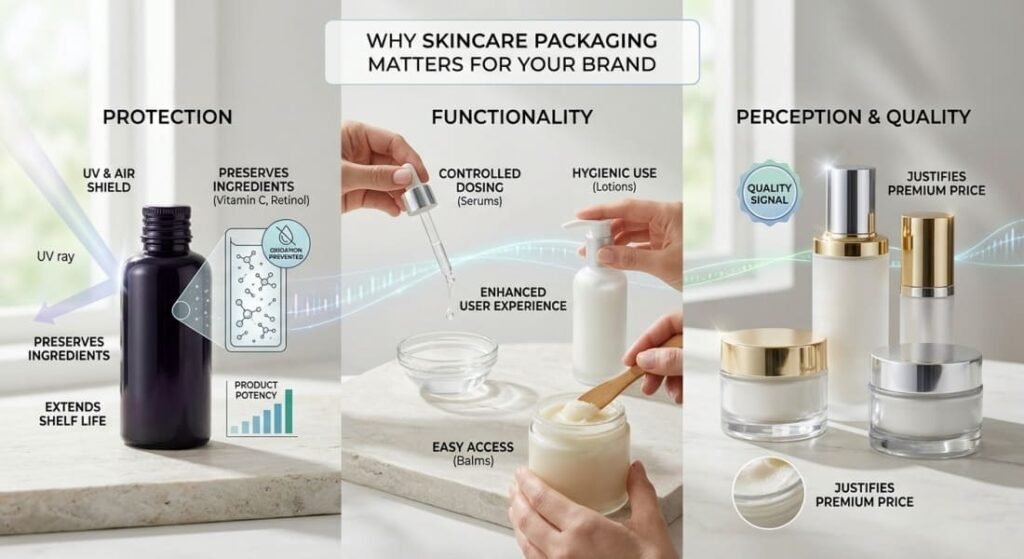
Good packaging for skincare products does three jobs at once. It protects what’s inside, it makes the product easy and clean to use, and it tells your customer what kind of brand you are.
Protection comes first. Vitamin C, retinol, and many plant oils break down when exposed to light and air. A bottle that lets in too much UV, or a closure that doesn’t seal well, can shorten shelf life and change how the product performs. Customers rarely blame the bottle when this happens. They blame the product.
Your packaging also affects how people use the product. A dropper gives controlled doses of a serum. A pump keeps fingers out of a lotion. A wide jar makes a thick balm easy to scoop. If the packaging doesn’t suit the formula, users notice quickly.
Finally, there’s perception. Premium skincare packaging such as a heavy glass bottle, a smooth frosted surface, or a clean metallic collar signals quality before anyone reads the ingredient list. This matters most when you’re asking customers to pay a higher price.
What Do Skincare Packaging Manufacturers Do?
What a Manufacturer Handles for You
A cosmetic packaging manufacturer produces the containers your product goes into. This covers bottles, jars, droppers, pumps, caps, and airless systems. Most good manufacturers do more than make containers, though. They can help you:
Pick the right container size and neck finish for your filling line
Match closures to bottles so they fit and seal properly
Check whether a container will work with your formula
Add branding through printing, hot stamping, coating, or labeling
Scale from a small first order to regular bulk production
A capable beauty packaging manufacturer works almost like an extension of your product team. They’ll point out problems before production starts. For example, they might tell you that a certain pump won’t handle a thick cream, or that a deep color coating may hide your fill level.
Manufacturer, Supplier, or Trading Company?
You’ll find three main types of sellers when you search, and the difference affects price, quality control, and communication.
Type | What They Do | Good For | Things to Watch |
Manufacturer | Owns production lines and controls quality directly | Custom projects, consistent bulk orders | MOQs may be higher for custom work |
Supplier / distributor | Sources from one or several factories | Mixed orders, fast access to stock items | Less control over production details |
Trading company | Acts as a middleman between you and factories | Convenience, one contact for many items | Less transparency, possible markups |
A skincare packaging supplier that doesn’t manufacture isn’t automatically a bad choice. Some distributors keep large stock and ship quickly. However, if you need custom colors, special decoration, or tight quality control, working directly with a factory usually gives you more control. Before you commit to any cosmetic bottle supplier or beauty packaging supplier, ask plainly whether they produce the items themselves or source them from somewhere else. An honest answer tells you a lot.
Types of Skincare Packaging Used by Beauty Brands
Glass Bottles for Serums, Oils, Toners, and Essences
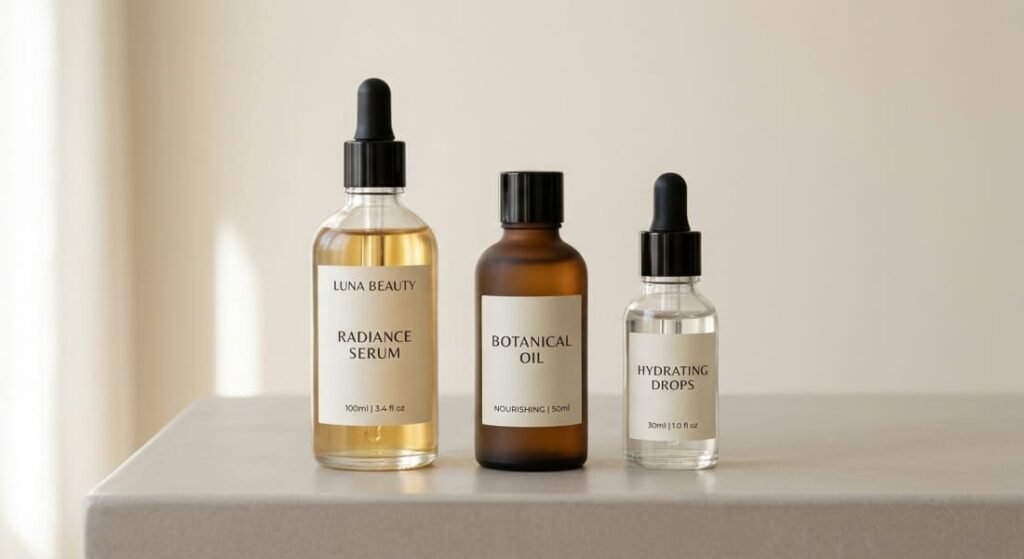
Skincare glass bottles are still the first choice for many serums and oils, and the reasons are practical. Glass doesn’t react with most formulas, it keeps scent and texture stable, and it feels substantial in the hand.
Common glass bottle styles include:
Dropper bottles: These are standard for serums and facial oils. Common sizes run from 15ml to 50ml. A good dropper bottle manufacturer will offer different pipette types (glass, plastic, or graduated), bulb materials, and collar finishes.
Pump bottles: These suit lotions, cleansers, and lighter creams. A lotion bottle manufacturer should be able to match pump output (for example 0.15cc or 0.25cc per stroke) to your product’s thickness.
Essential oil bottles: These are usually amber or cobalt blue with orifice reducers or droppers. An experienced essential oil bottle manufacturer will know which reducer sizes control flow for thin oils.
Boston round and custom shapes: Boston rounds are classic and affordable. Custom shapes help your product stand out on the shelf.
Cream Jars for Moisturizers, Balms, and Masks
Jars work best for thick products that don’t pour, such as night creams, balms, clay masks, and body butters. Your options include:
Single-wall jars: These are simple and cost-effective.
Double-wall jars: An inner and outer layer gives more visual depth and a more luxurious feel.
Thick-bottom glass jars: The heavy base adds weight and premium appeal.
When you talk to a cream jar manufacturer, ask about inner liners and sealing discs. These small parts keep air out and stop product from creeping into the thread. A reliable skincare jar supplier or cosmetic jar manufacturer will include these as standard options instead of treating them as an afterthought.
Airless Bottles and Pump Packaging
Airless skincare packaging uses a piston or pouch system that pushes product up without letting air back in. This works well for formulas with sensitive actives, preservative-free products, and anything prone to oxidation.
There are some trade-offs. Airless systems cost more than standard bottles, and some very thick or very thin formulas don’t dispense well through them. When you work with an airless bottle manufacturer, always test your actual formula in samples before you approve bulk production. A system that works perfectly with one cream can struggle with another.
Tubes, Ampoules, and Specialty Containers
Tubes suit face wash, eye cream, and sunscreen. They’re light and easy to squeeze.
Ampoules are used for single-dose or short-course concentrated treatments.
Roll-on bottles are popular for eye serums and spot treatments.
Closures and Accessories
Closures are where many packaging problems start. Make sure your supplier can provide:
Droppers in glass, plastic, or with metal collars
Lotion and treatment pumps
Fine mist sprayers for toners and facial mists
Screw caps in plastic, aluminum, or wood
Inner plugs and orifice reducers
Spatulas for jar products
Quick Guide: Which Packaging Fits Which Product?
Producto | Recommended Packaging | Why It Works |
Serum | Glass dropper bottle or airless bottle | Protects the formula and gives accurate dosing |
Facial oil | Amber or dark glass dropper bottle | Helps shield light-sensitive oils |
Moisturizer / cream | Glass jar or airless pump | Easy access, or more hygienic use |
Toner / essence | Bottle with reducer, pump, or mist sprayer | Controls flow and reduces waste |
Lotion | Glass pump bottle | Clean and convenient for daily use |
Eye cream | Small jar, tube, or roll-on | Small doses and precise application |
Essential oil | Amber glass with reducer or dropper | Protects from light and controls drops |
Common Materials for Skincare Packaging
Glass Packaging
Cosmetic glass packaging remains popular for good reasons:
It’s chemically stable. Glass doesn’t leach into formulas or absorb fragrance.
It feels premium. Weight and clarity raise the product’s perceived value.
It’s recyclable. Glass can be recycled many times without losing quality.
It’s reusable. Many customers keep and reuse attractive glass bottles.
Amber, green, and cobalt glass also offer light protection, which matters for oils and vitamin-based serums. The main downsides are weight and fragility. Glass costs more to ship, and it needs good protective packing in transit. For most mid-range and high-end brands, glass skincare packaging is still well worth these trade-offs.
Plastic Packaging
Plastics such as PET, PP, PE, and acrylic are light, cheap, and come in many shapes. They’re a common choice for mass-market products, travel sizes, and items used in the shower where breakage is a risk. Acrylic jars can look like glass at a lower weight, though they tend to scratch more easily.
Aluminum and Metal Components
Aluminum shows up in caps, collars, tubes, and some bottles. It’s light, blocks light completely, and gives a clean, modern look. Many brands pair glass bottles with aluminum dropper collars or caps.
Sustainable and Eco-Friendly Materials
More buyers now check packaging before they buy. Sustainable skincare packaging options include:
Recyclable glass: This is one of the simplest ways to make recyclable skincare packaging that recycling systems already handle.
PCR plastic: Post-consumer recycled plastic reduces the need for new material.
Bamboo and wood caps: These look natural, but check how they’re bonded to inner liners.
Mono-material designs: Using a single material makes recycling easier.
Refillable systems: Refillable skincare packaging, such as a glass jar with a replaceable inner cup, keeps the main container in use for longer.
If your brand promotes eco friendly skincare packaging, make sure your claims match the actual materials. Customers and regulators are both getting stricter about vague green claims.
Glass vs. Plastic at a Glance
Factor | Glass | Plastic |
Estabilidad química | Excellent | Good, but depends on the resin |
Premium look | High | Medium (acrylic can come close) |
Weight | Heavier | Light |
Breakage risk | Más alto | Low |
Recyclability | High, and repeatable | Varies by type and local systems |
Unit cost | Usually higher | Usually lower |
Best for | Serums, oils, premium creams | Mass-market, travel, shower products |
Customization Options for Skincare Packaging
Stock bottles are a solid starting point, but custom skincare packaging is what makes your product recognizable. Customization can be small, such as a logo printed on a stock bottle, or as large as a fully original mold.
Bottle and Jar Shapes
Round, square, cylindrical, flat-shoulder, and slanted-shoulder bottles all send different signals. Round bottles feel classic. Square and flat-shoulder styles look more modern. If you want a shape no one else has, a custom mold is the way to go. Keep in mind that new molds add cost and lead time, and they usually need larger order quantities.
Color Options
Glass can be made in clear, amber, green, or blue, or it can be coated afterward in nearly any color. Spray coating lets you match your brand color closely. Gradient coatings, where color fades from the bottom to the top, are a popular choice for serums.
Surface Decoration Methods
Silk screen printing: This is durable and sharp, and it suits logos and text.
Hot stamping: Gold, silver, or rose gold foil gives a premium touch.
Frosting: This creates a soft, matte surface. Frosted cosmetic bottles are among the most requested finishes for serum lines because they look clean and feel smooth in the hand.
Spray coating: This adds solid or gradient color.
UV coating and electroplating: These create glossy or metallic effects.
Labeling: This is the most flexible choice for small runs and frequent formula changes.
Frosted glass skincare bottles paired with a white or gold silk-screened logo are a common combination because they look refined without being loud.
Closure Customization
Your closures should match your bottles in color, finish, and style. You can customize dropper bulbs, collars, pump heads, and caps. Some brands use bamboo caps for a natural look or child-resistant closures for certain products.
Skincare Packaging Ideas That Work
If you’re stuck on skincare packaging design, here are some skincare packaging ideas that work well in practice:
Use one bottle shape across your whole line and change only the color or label per product.
Choose amber glass for oils and actives so the protection fits naturally into your brand story.
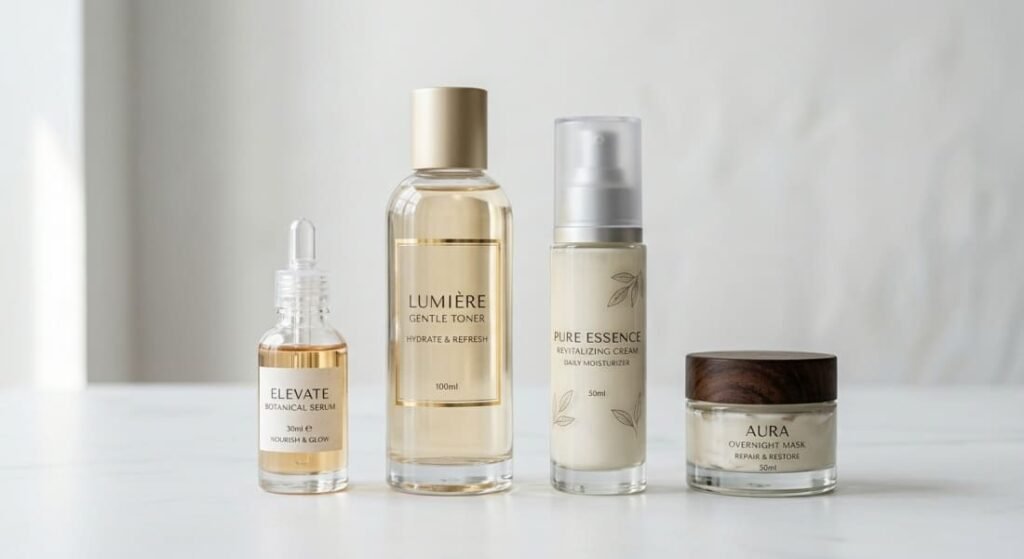
Pair frosted glass with a single metallic accent for a clean, high-end look.
Use heavy-base jars for your hero cream to make it feel special.
Offer a refill pouch or inner cup for your best-selling jar product.
When the design is planned carefully, luxury skincare packaging doesn’t need to be complicated. Often one strong material choice and one good finish do more than three decoration techniques stacked together.
Most suppliers can produce custom cosmetic bottles at several levels, from printing on stock bottles to fully custom molds. Ask which level fits your budget and timeline before you go too far into design work.
What Defines a Top Skincare Packaging Manufacturer?
There isn’t one “best” supplier for every brand. A factory that’s perfect for a global brand ordering 500,000 units may not suit a startup ordering 3,000. The better question is which supplier fits your needs.
Key Qualities to Compare
The strongest cosmetic packaging manufacturers usually share these traits:
Consistent product quality from batch to batch
Real customization ability for shapes, colors, and decoration
Clear and realistic MOQs
Honest lead times
Experience exporting to your market
Design and technical support
Several material and closure options
Sustainable product choices
Categories of Manufacturers
As you research, you’ll find that most suppliers fall into a few groups:
Glass bottle specialists focus on glass bottles and jars, with deep knowledge of finishes and decoration.
Full-service packaging suppliers offer glass, plastic, tubes, and boxes from one source.
Luxury packaging specialists focus on high-end decoration and heavy glass.
Sustainable packaging providers focus on PCR, refillable, and recyclable options.
Low MOQ suppliers serve startups and indie brands with smaller orders.
A skincare packaging company may fit more than one of these groups. Decide which one matters most to you, and start your search there.
Typical Sourcing Regions
China: This is the largest producer, with a wide product range, competitive pricing, and strong glass production.
Europe: Known for high-end glass and luxury decoration, usually at higher prices.
South Korea: Strong in innovative closures and airless systems.
United States: Offers shorter shipping for US brands and good stock availability, often at a higher unit cost.
Sourcing Locally vs. Overseas
Local suppliers give you easier communication and faster delivery, but often at higher prices and with fewer options. Overseas suppliers, especially in China, usually offer more choices and better pricing. In exchange, you’ll need to plan for longer shipping times and handle logistics more carefully. Many brands use a mix: overseas for main bulk orders and local stock for urgent restocks.
How to Choose the Right Skincare Packaging Manufacturer
This is where your research turns into a decision. Work through these steps before you sign off on any order.
Check What They Specialize In
Look at the supplier’s main product range. If you need glass serum bottles, a skincare bottle manufacturer that mostly makes glass will usually know more than a general supplier that only lists a few glass items. Ask what share of their production goes to skincare and cosmetics.
Confirm Material and Decoration Capabilities
Can they frost, coat, print, and hot stamp in-house? Or do they send this work to other factories? In-house decoration usually means better color matching and fewer delays.
Ask About MOQ and Scalability
This matters a lot for new brands. Low MOQ skincare packaging is often available for stock items, sometimes in the low thousands per SKU. Custom colors and decoration usually need higher quantities, and new molds need higher quantities still. Ask two questions: what’s your MOQ today, and can you support my volumes if I grow?
Review Their Quality Process
Ask how they inspect products, what defect rate they accept, and what happens if a shipment has problems. A supplier with a clear answer is usually more reliable than one who just says “our quality is very good.”
Test Their Communication
Pay attention to how fast and how clearly they reply during the quoting stage. If emails are slow and vague before you’ve paid anything, they probably won’t improve after you do. Good skincare packaging suppliers give you itemized quotes, clear lead times, and honest answers about what’s possible.
Plan for Lead Time and Logistics
Your timeline includes several stages:
- Sample production (often 1–3 weeks)
- Mold development for custom shapes (often several weeks)
- Mass production
- Decoration
- Shipping and customs
Build in extra time. Packaging delays are one of the most common reasons product launches slip.
Always Request Samples
Never skip this step. When samples arrive:
- Fill them with your actual formula
- Check how closures fit and seal
- Test pumps and droppers many times
- Look at decoration quality in good light
- Leave a filled sample on its side for a few days to check for leaks
Compare Total Value, Not Just Unit Price
A bottle that’s two cents cheaper isn’t a good deal if 3% of your order arrives cracked or your pumps fail in customers’ hands. Consider defect rates, customer complaints, and how easy the supplier is to work with.
If you need a fully original design, look for a custom skincare packaging manufacturer with in-house mold and decoration teams. They can manage the whole project from drawing to delivery, which cuts down on handoffs and mistakes.
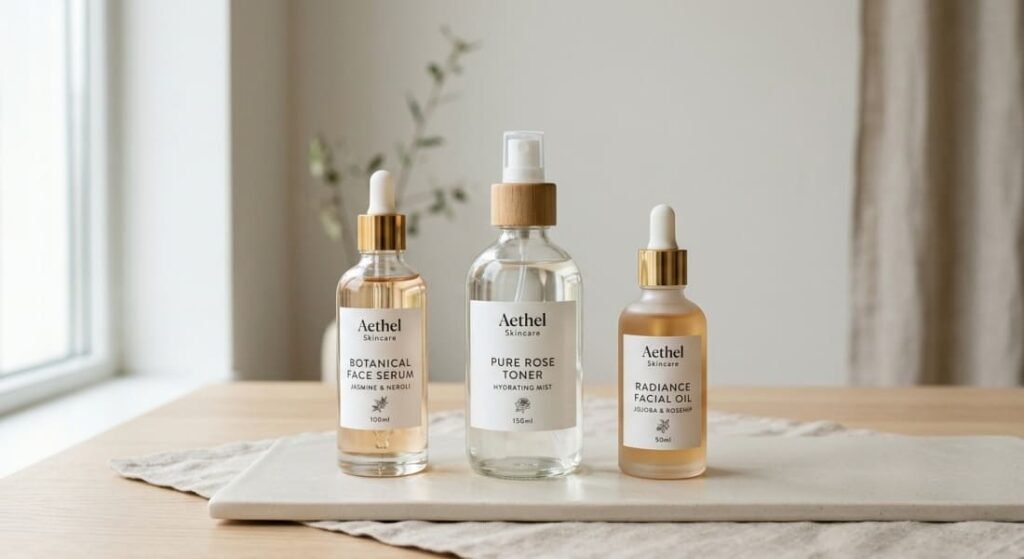
glass essential oil bottles
Why Working with a Reliable Packaging Partner Helps You Grow
Better Product Protection
Good seals, consistent dimensions, and solid glass mean fewer leaks, fewer breakages, and formulas that stay stable for longer.
Consistent Brand Presentation
When your bottles, caps, and decoration match from batch to batch, your products look professional on any shelf or website. Color differences between orders are more noticeable than many brands expect, especially when old and new stock sit next to each other.
Smoother Launches
A reliable supplier hits their deadlines. That means you can plan marketing, retail launches, and inventory with confidence.
Long-Term Savings
Fewer defects mean fewer returns, fewer complaints, and less wasted product. Over a year, these savings usually outweigh small differences in unit price.
Room to Grow
As your brand moves from one hero product to a full range, a supplier with broad cosmetic packaging solutions can grow with you. You can add new sizes and product types without starting over with a new factory each time. Complete skincare packaging solutions from one partner also keep your line visually consistent as it expands.
Why Smilebottles Is a Strong Option for Skincare Glass Packaging
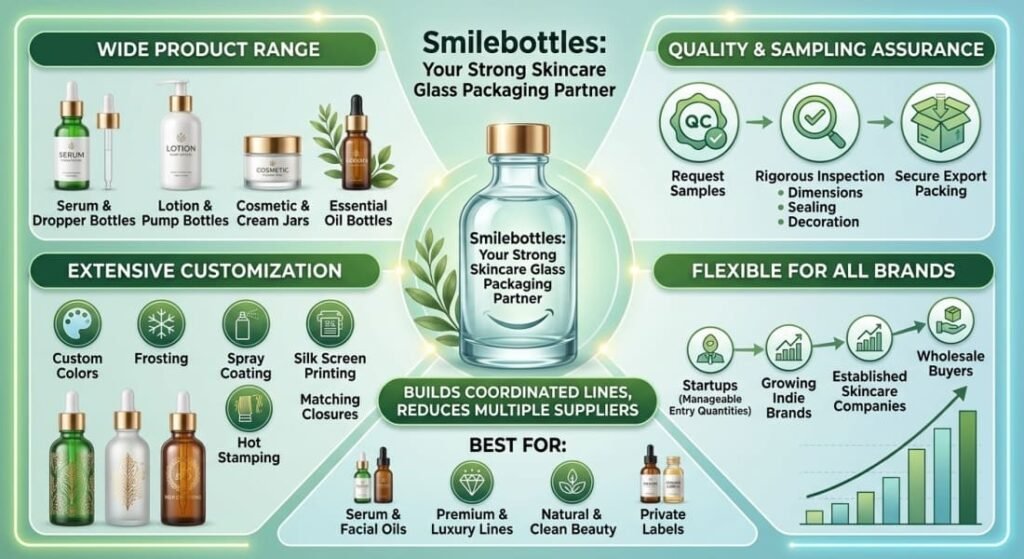
If glass is your main packaging material, Smilebottles is worth considering. As a cosmetic glass bottle manufacturer focused on skincare and beauty, Smilebottles produces:
Serum and dropper bottles
Lotion and pump bottles
Cosmetic and cream jars
Essential oil bottles
Custom-shaped glass packaging
Customization Support
Smilebottles offers custom colors, frosting, spray coating, silk screen printing, hot stamping, and matching closures. This makes it easier to build a coordinated line instead of piecing parts together from several suppliers.
Quality and Sampling
You can request samples before bulk production to check fit, finish, and compatibility with your formula. Production goes through inspection for dimensions, sealing, and decoration quality, and export orders are packed to protect glass during shipping.
Flexible for Different Brand Stages
Smilebottles works with startups ordering their first batches, growing indie brands, established skincare companies, and wholesale buyers. Stock items help keep entry quantities manageable, and custom projects are available as your volumes grow.
Who It Suits Best
Smilebottles is a particularly good fit for:
Serum and facial oil brands
Premium and luxury skincare lines
Natural and clean beauty brands
Private label businesses that need consistent glass packaging
If your brand relies on glass to communicate quality and protect sensitive formulas, it makes sense to talk with a specialist like Smilebottles.
Preguntas frecuentes: Frequently Asked Questions About Skincare Packaging
P1:What is the best packaging for skincare products?
A1:It depends on your formula and your brand. Light-sensitive oils and actives do best in amber or dark glass. Thick creams suit jars or airless pumps. Lotions work well in pump bottles. Start with what the formula needs, and then think about appearance.
Pregunta 2:What should you look for in a skincare packaging manufacturer?
A2:Focus on quality control, customization ability, MOQ, lead times, export experience, and clear communication. Always test samples before you commit to bulk orders.
Pregunta 3:Can skincare packaging be customized for private label brands?
A3:Yes. You can customize bottle shape, color, finish, printing, and closures. Even a stock bottle with a custom color and logo can look clearly branded.
Pregunta 4:What are typical MOQs for skincare packaging?
A4:They vary a lot. Stock glass bottles may start from a few thousand units. Custom decoration usually needs more, and custom molds need more still. Ask each supplier for their exact numbers.
Pregunta 5:Is sustainable skincare packaging more expensive?
A5:Sometimes it costs more up front, especially for refillable systems or PCR materials. However, it can strengthen your brand image and appeal to buyers who care about the environment. Glass is a good middle ground because it’s recyclable and not unusually expensive.
Conclusión
Choosing a packaging partner isn’t just about finding the lowest price. The supplier you pick affects how well your formula holds up, how your product looks on the shelf, and whether your launch happens on time.
Start by matching packaging types to your formulas. Then decide which materials and finishes fit your brand. Shortlist suppliers who specialize in what you need, test their samples carefully, and compare total value instead of unit price alone.