Índice
AlternarAutor: Equipo editorial de SmileBottles
Tiempo estimado de lectura: About 16 Minute
If you’re trying to decide between a blue glass bottle y green glass bottles for your next product, here’s the short answer. Blue usually works best for skincare, essential oils, aromatherapy, and wellness products. Green is the more familiar choice for beer, wine, olive oil, and other food and drink. Both colors give your product more light protection than clear glass, but neither one blocks light as well as amber.
This guide covers how each color is used, what it does well, where it falls short, and the practical questions to ask before you place an order. Whether you’re launching a new serum line or sourcing bottles for a craft brewery, you should come away with a clearer idea of which option fits your product.
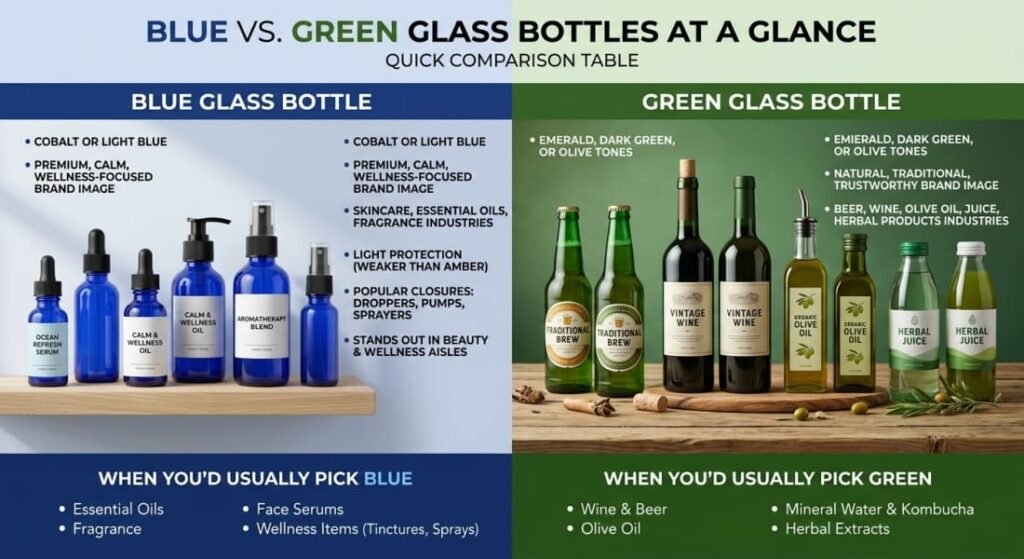
Blue vs. Green Glass Bottles at a Glance
Before getting into the details, it helps to see the main differences side by side.
Quick Comparison Table
Factor | Blue Glass Bottle | Green Glass Bottle |
Typical look | Cobalt or light blue, clean and distinctive | Emerald, dark green, or olive tones |
Brand image | Premium, calm, wellness-focused | Natural, traditional, trustworthy |
Common industries | Skincare, essential oils, aromatherapy, fragrance | Beer, wine, olive oil, juice, herbal products |
Light protection | Better than clear, weaker than amber | Better than clear, weaker than amber |
Popular closures | Droppers, pumps, sprayers, screw caps | Crown caps, corks, screw caps, pourers |
Shelf effect | Stands out in beauty and wellness aisles | Fits buyer expectations in food and drink aisles |
Best for | Premium personal care and specialty products | Food, beverages, and natural product lines |
When You’d Usually Pick Blue
Blue tends to be the better fit when you sell essential oils, face serums, facial oils, fragrance, bath and body products, or wellness items such as tinctures and room sprays. In these categories, the bottle is often part of how customers judge quality. A cobalt bottle on a white shelf or a product photo catches the eye quickly.
When You’d Usually Pick Green
Green is the safer choice when you sell wine, beer, olive oil, mineral water, kombucha, or herbal extracts. Shoppers in these categories have been buying green glass for generations, so the color signals “this is the real thing” before they even read the label.
Why Colored Glass Bottles Continue to Grow in Demand
Protection, Presentation, and Sustainability
Colored glass bottles solve three problems in one package. First, the tint filters part of the light that can break down oils, vitamins, fragrances, and some active ingredients. Second, color gives your product an identity on the shelf without needing heavy printing. Third, glass is reusable and widely recycled, which matters more every year to both retailers and end customers.
For many small and mid-sized brands, that combination is hard to beat. You get a package that protects the product reasonably well, looks more expensive than plastic, and supports the sustainability claims your customers increasingly expect.
Why Brands Are Moving Away from Plastic for Premium Products
If your product sits in the mid-to-high price range, plastic can work against you. Customers often link it with lower quality, and some worry about chemicals leaching into oils or alcohol-based formulas. Glass is inert, so it won’t react with most formulas or absorb scents, and it doesn’t hold onto odors between uses.
There’s also the practical side. Essential oils and some solvents can soften or stain certain plastics over time. Glass avoids that problem completely, which is one reason so many beauty, food, and healthcare brands have switched over.

What Blue Glass Bottles Are Best Used For
Common Applications of Blue Glass Bottles
Blue glass bottles show up most often in personal care and wellness. Typical uses include:
- Essential oils and oil blends
- Face serums and facial oils
- Beard oils and hair oils
- Perfumes and roll-on fragrances
- Room sprays and linen mists
- Herbal tinctures and wellness drops
- Small-batch spirits and specialty drinks
A large share of buyers looking for blue glass bottles for essential oils want 5ml to 100ml sizes in the Boston round shape. These sizes are easy to hold, simple to label, and work with a wide range of closures. Most of them end up as glass bottles with dropper tops, since a dropper lets your customer measure a few drops at a time without wasting product. Euro dropper inserts (orifice reducers) are another common choice for essential oils because they control flow without a rubber bulb.
Blue is also one of the most popular colors for glass bottles for aromatherapy, especially roll-on bottles and diffuser blends. For glass bottles for skincare, you’ll often see blue paired with a treatment pump or a dropper with a white, black, or gold collar.
Key Benefits of Blue Glass Bottle Packaging
The biggest advantage of blue is visual. It looks clean, calm, and slightly upscale, which suits skincare and wellness brands well. It also gives your product more protection from light than clear glass, although you should still store sensitive formulas away from direct sunlight.
Other benefits worth noting:
It photographs well for online stores and social media
It pairs easily with white, silver, and gold labels or prints
It’s widely available in standard sizes, so you don’t always need custom tooling
It’s fully recyclable and easy for customers to reuse
Why Blue Glass Bottles Appeal to Premium and Wellness Brands
Blue has a strong link with water, calm, and cleanliness. That’s why so many spa, self-care, and natural beauty brands use it. If your brand story is built around relaxation, purity, or ritual, blue supports that message without extra explanation.
It also helps you stand out. Amber still dominates the essential oil category, so a cobalt bottle can make your product easier to spot on a crowded shelf or in an online marketplace where dozens of similar products appear in a single search. On a product page, a blue bottle against a light background often looks more polished than amber, which can matter when your customers are buying based on photos alone.
Why Green Glass Bottles Remain a Trusted Packaging Choice
Common Applications of Green Glass Bottles
A green glass bottle is one of the most familiar packages in the food and drink world. You’ll see green in:
Wine, especially still reds, whites, and sparkling wines
Beer and cider
Olive oil and other edible oils
Mineral and sparkling water
Juice and kombucha
Herbal extracts and supplements
Natural and organic cosmetics
Green beer bottles are a classic example. Many well-known European lagers have used green for decades, and customers recognize it right away. Keep in mind, though, that green glass doesn’t fully protect beer from the light reaction that causes a “skunky” flavor. If your beer will sit under bright store lights, brown glass or secondary packaging like closed cartons will give you better results.
Olive oil glass bottles are another big category. Dark green dorica and marasca bottles are common because they help slow down light-related oxidation and give the oil a traditional, Mediterranean look.
Key Benefits of Green Glass Bottles
Green offers you a few clear advantages:
Better light protection than clear glass
A long history in wine, beer, and oil packaging, which builds instant trust
A natural, fresh, and earthy image
Wide availability in standard beverage shapes and sizes
Strong recycling infrastructure in many countries, since green glass is collected in large volumes
Why Green Glass Is Popular in Beverage and Food Packaging
A lot of it comes down to expectations. When shoppers pick up wine or olive oil, they’re used to seeing green. A product in an unusual color can still sell, but you’ll need to work harder to explain why it’s different.
Green beverage glass bottles also fit standard filling lines well. Most wine, beer, and soda bottles follow common neck finishes, such as 26mm crown finishes for beer and standard cork or screw cap finishes for wine. That makes it easier to source closures and run your bottles on existing equipment.
Green is also starting to show up more in natural beauty. Green glass cosmetic bottles work well for organic skincare, herbal hair care, and botanical products, where the color reinforces a plant-based brand story.
Blue Glass Bottle vs. Green Glass Bottles: Key Differences That Matter
Difference in Brand Positioning
Blue usually reads as modern, calm, and premium. Green reads as natural, fresh, traditional, and organic. Think about the first word you want customers to associate with your product. If it’s “luxury” or “relaxing,” blue is a strong fit. If it’s “natural” or “authentic,” green usually works better.
Difference in Typical End Use
Blue leans toward personal care: skincare, essential oils, fragrance, and wellness. Green leans toward consumables: beer, wine, oil, juice, and herbal products. There’s overlap, of course. Some brands use blue for gin or water, and others use green for skincare. But these general patterns hold across most markets.
Difference in Light Protection and Product Compatibility
This is where you should be careful. Both blue and green filter more light than clear glass, but neither offers the same level of UV protection as amber. If your formula is highly sensitive to light, such as certain vitamin C serums, some medicines, or unpreserved botanical extracts, amber may be the safer option.
If you prefer blue or green for branding reasons, you can still reduce risk by:
Using a thicker wall or darker shade
Adding an outer box or carton
Advising customers to store the product in a cool, dark place
Running stability tests on your formula in the actual bottle before launch
Difference in Consumer Perception
Customers tend to see blue as clean, calm, and spa-like. Green comes across as healthy, earthy, and environmentally friendly. Neither one is “better.” It depends on what your audience values and what they’re used to seeing in your product category.
Difference in Shelf Impact and Marketing Value
Blue is good at helping you stand out, especially in categories full of amber or clear glass. Green is good at helping you fit in where trust and tradition matter. A new olive oil brand may want to fit in with what buyers already trust. A new skincare brand may want to stand out. Your choice of color should support whichever approach you’re taking.

Which Industries Use Blue and Green Glass Bottles Most?
Cosmetics and Personal Care
This is where blue really shines. Many frascos de vidrio para cosméticos for serums, oils, and toners come in cobalt blue, often paired with droppers or pumps. Green appears too, mostly for natural and herbal lines.
When you’re sourcing glass bottles for cosmetics, look beyond color. Check how well the bottle works with your pump or dropper, whether the neck finish matches standard closures (such as 18-415 or 20-410), and whether the glass is thick enough to survive shipping.
Food and Beverage
Green dominates here, especially for wine, beer, oil, and water. Blue shows up as a niche choice for premium gin, specialty water, and some craft spirits.
If your product goes into contact with food or drink, make sure you’re buying food grade glass bottles. Ask your supplier for test reports that match your market’s rules, such as FDA requirements in the US or EU food contact regulations in Europe. Most soda-lime glass is safe for food contact, but you still need the documents on file if a retailer or inspector asks.
Pharmaceutical and Healthcare Packaging
Pharmaceutical glass bottles have stricter requirements. Depending on the product, you may need Type I borosilicate glass or Type III soda-lime glass, along with documents that meet pharmacopeia standards. Amber is still the standard color for many light-sensitive medicines.
Blue and green are more common for herbal tinctures, homeopathic remedies, supplements, and some over-the-counter wellness products. If you’re in this space, talk to your supplier early about glass type, test reports, and child-resistant or tamper-evident closures.
Home Fragrance and Wellness
Blue is a favorite for reed diffusers, room sprays, pillow mists, and aromatherapy blends. It fits the calm, relaxing tone most of these products aim for. Green also works well for herbal or garden-inspired scents.
Specialty and Custom Packaging Markets
Both colors are popular in boutique and gift packaging. You’ll see them in hotel amenities, seasonal gift sets, subscription boxes, and private label lines. In these cases, color is often chosen to match a brand palette rather than for technical reasons, and decoration plays a bigger role.
How to Choose the Right Glass Bottle Color for Your Product
Start with Product Sensitivity
Ask yourself a few simple questions:
Does your formula break down or change color in light?
Does it contain oils that can turn rancid?
Will it sit under store lights or in a sunny window?
How long does it need to last after opening?
If your answers point to high sensitivity, put protection first. That might mean choosing a darker shade, adding a carton, or comparing blue and green with amber before you decide.
Match the Bottle to Your Brand Positioning
Next, think about your brand. A minimal skincare line may look great in cobalt blue with a white print. A farm-to-table olive oil brand may feel more authentic in dark green with a kraft paper label. The bottle should feel like it belongs to your brand, not like a generic container you picked because it was in stock.
Consider Industry Expectations
Your customers already have expectations. Wine, beer, and olive oil buyers are used to green. Beauty and wellness shoppers are used to blue and amber. You can break these rules, but do it on purpose and make sure the rest of your packaging explains why.
Check Bottle Size, Shape, and Closure Compatibility
This step is where many buyers run into trouble. Before you commit, confirm:
Capacity: Does the bottle hold your fill volume with the right headspace?
Shape: Boston round, square, cylinder, or a custom design?
Neck finish: Does it match the closure you plan to use?
Closure type: Dropper, screw cap, pump, sprayer, cork, crown cap, or tamper-evident cap?
Filling line: Will the bottle run smoothly on your equipment?
Always request samples with the actual closures attached. Fill them, cap them, turn them upside down, and leave them for a few days. It’s a simple test, but it catches most leaking and fit problems before they reach your customers.
Evaluate Customization and Bulk Supply Needs
If you want your bottle to look unique, custom glass bottles give you more freedom. You can change the shape, add embossing, choose a special shade, or apply a frosted finish. Frosted blue or green bottles are especially popular in skincare because they look soft, modern, and premium.
For branding, custom printed glass bottles let you skip paper labels altogether. Screen printing, hot stamping, and spray coating hold up better in bathrooms and fridges, where labels tend to peel.
If you’re planning a larger launch, ask about bulk glass bottles wholesale pricing early. Things to clarify include:
Minimum order quantity (MOQ) for standard and custom items
Color consistency between production batches
Lead times for molds, samples, and mass production
Export packaging, such as cartons, dividers, and pallets
Whether closures can be sourced and packed together
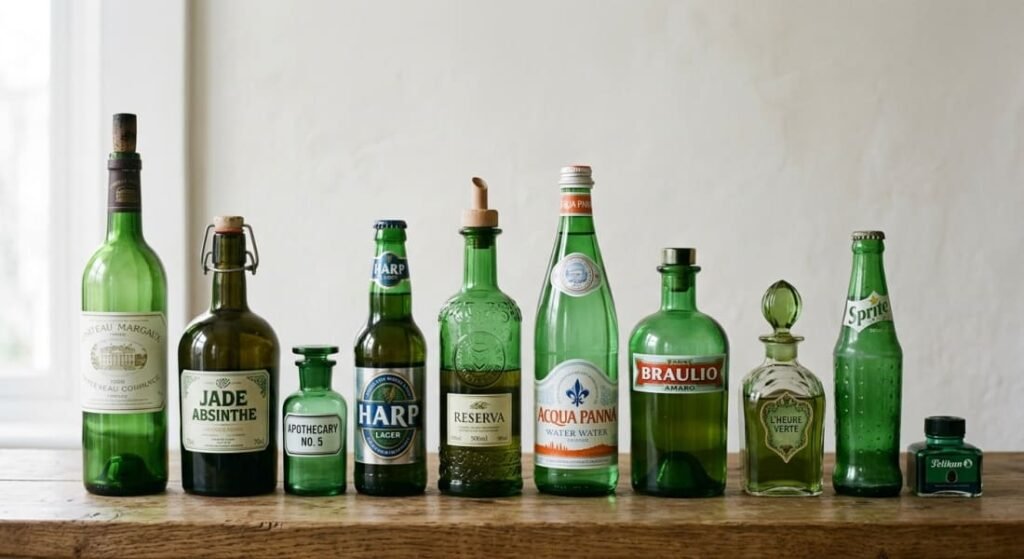
different green glass bottles
Common Mistakes to Avoid When Selecting Colored Glass Bottles
Even experienced buyers make these mistakes. Watching for them can save you time and money:
Choosing by color alone. A bottle that looks right but doesn’t protect your formula or fit your closure isn’t the right bottle.
Skipping closure testing. Small differences in neck finish can cause leaks, loose caps, or droppers that don’t seat properly.
Ignoring your filling line. Unusual shapes or very light bottles may tip over or jam on automatic equipment.
Forgetting about label space. Curved or decorative shapes can leave little room for the information your market requires.
Not checking color consistency. Shades can vary between batches. Ask for approved color samples and keep them on file.
Leaving compliance until the end. Food, cosmetic, and pharmaceutical packaging all need paperwork. Gather it before production, not after.
Sustainability Benefits of Blue and Green Glass Bottles
Why Glass Supports Circular Packaging Goals
Glass is one of the most practical options if you want sustainable glass packaging. It can be melted down and remade many times without losing quality, and it’s accepted in most curbside and bottle bank programs.
Recyclable glass bottles in blue and green are generally sorted by color at recycling plants. Green glass is collected in large volumes because of the wine and beer industries. Blue is collected in smaller amounts, and in some regions it may be grouped with green. You can check your local system and share simple recycling tips on your label if you want customers to dispose of the bottle correctly.
Why Sustainability Matters to Modern Brands
Customers notice packaging. Many of them now actively look for eco friendly glass bottles and avoid single-use plastic where they can. Retailers are also setting packaging goals, and some markets are introducing rules that make plastic more expensive or harder to use.
Choosing glass helps you stay ahead of these changes and gives your brand a believable sustainability message. Just make sure your claims are honest and specific. “Packed in recyclable glass” is clear and easy to defend. Vague claims like “100% green packaging” can backfire.
Colored Glass as a Long-Term Packaging Investment
Glass also holds its value with the end user. A nice blue dropper bottle or a heavy green oil bottle is often reused at home for DIY blends, cooking oil, or decoration. That means your brand stays on the kitchen counter or bathroom shelf long after the product runs out. Add in better product protection and a more premium look, and glass often pays for itself through repeat sales and stronger brand recognition.
Why the Right Glass Bottle Manufacturer Matters
What You Should Look for in a Supplier
Finding a reliable proveedor de botellas de vidrio is just as important as choosing the right color. When you compare options, look for:
Consistent quality and color across batches
A wide range of sizes and shapes
In-house decoration, such as printing, frosting, coating, and hot stamping
Mold development for custom designs
Matching closures, including droppers, pumps, and caps
Clear and realistic lead times
Experience with export packaging and shipping documents
How a Manufacturer Supports Better Packaging Decisions
A good glass bottle manufacturer does more than ship bottles. They can help you choose a shape that suits your filling line, recommend a closure that won’t leak, and point out problems before you spend money on a full production run. They can also advise on wall thickness, shade options, and whether a standard bottle will do the job or a custom one is worth the investment.
This kind of support matters most when you’re launching something new. A short conversation with an experienced supplier can save you weeks of back-and-forth and help you avoid costly reorders.
How Smilebottles Supports Blue and Green Glass Bottle Projects
At Smilebottles, we work with brands in cosmetics, beverage, food, and healthcare that need blue or green glass packaging. You can choose from standard bottles in a range of capacities, or work with us on custom shapes, colors, and decoration. We also help match closures, prepare samples for testing, and arrange export packaging for bulk orders. If you’re not sure which color or bottle style fits your product, you can send us your product details and we’ll share practical recommendations based on what has worked for similar brands.

Preguntas frecuentes: Frequently Asked Questions About Blue and Green Glass Bottles
P1:Are blue glass bottles good for essential oils?
A1:Yes. Blue glass bottles are a popular choice for essential oils because they filter part of the light and look clean and premium. They don’t block light as well as amber, so keep your oils away from direct sunlight and consider an outer box for long-term storage.
Pregunta 2:What is the best glass bottle color for essential oils?
A2:Amber offers the strongest light protection, which is why many brands use it. Blue is the best choice if you want a more distinctive look while still getting better protection than clear glass. Many brands use amber for bulk storage and blue for retail products.
Pregunta 3:Why are green glass bottles used for beverages?
A3:Green glass filters some light, which helps protect flavor, and it has a long tradition in wine, beer, and olive oil. Customers recognize it immediately, and most beverage filling lines are set up for standard green bottle shapes and neck finishes.
Pregunta 4:Do blue and green glass bottles protect products from light?
A4:They both protect better than clear glass, but neither matches amber. If your product is very light-sensitive, run stability tests in the actual bottle, use a darker shade, or add secondary packaging.
Pregunta 5:Can colored glass bottles be customized?
A5:Yes. You can customize blue and green glass bottles with screen printing, hot stamping, frosting, spray coating, embossing, and custom molds. You can also choose specific shades and match closures to your brand colors. Custom work usually comes with a higher MOQ and a longer lead time.
Pregunta 6:Are colored glass bottles recyclable?
A6:Yes, blue and green glass bottles are recyclable. Most recycling plants sort glass by color, and green glass is collected in particularly large amounts. Check local recycling rules in your markets so you can give your customers accurate disposal instructions.
P7:Which bottle color is better for cosmetics?
A7:Blue is more common for serums, oils, and wellness-style skincare. Green works well for organic, herbal, and plant-based beauty lines. Choose based on your formula’s light sensitivity and the brand image you want.
Pregunta 8:Which bottle color is better for food and beverage products?
A8:Green is usually the better choice for wine, beer, olive oil, and many natural drinks because customers expect it. Blue can work for premium water, gin, or specialty drinks where you want the product to stand out.
Conclusión
There’s no single right answer, but there is a right answer for your product. Blue glass bottles are usually the better fit for skincare, essential oils, aromatherapy, fragrance, and other premium or wellness products. Green glass bottles are the more natural choice for beer, wine, olive oil, juice, and herbal or natural product lines.
Whichever color you lean toward, base your decision on four things: how sensitive your product is to light, what your brand stands for, what your customers expect to see, and how well the bottle works with your closures and filling process. Get samples, test them properly, and don’t be afraid to ask your supplier questions. A little extra time at the start makes your launch smoother and keeps your product looking and performing the way it should.