
Table of Contents
ToggleAuthor: SmileBottles Editorial Team
Estimated Reading Time: About 15 Minute
If you’ve ever picked up a roll on bottle and felt the ball glide smoothly across your skin, you already know that the small metal or glass sphere at the top does a lot more than most people realize. It controls how much liquid comes out, how the product feels, and whether the formula inside stays stable over time. For brands sourcing packaging, the roller ball is one of those details that quietly makes or breaks the customer experience.
This guide walks you through everything you need to know before choosing a roller ball material for your roll on bottles. Whether you’re building a perfume line, an essential oil brand, or a skincare range, the goal here is to help you make a smart, confident decision, not just pick the cheapest option and hope it works.
Why the Roller Ball Material Actually Matters
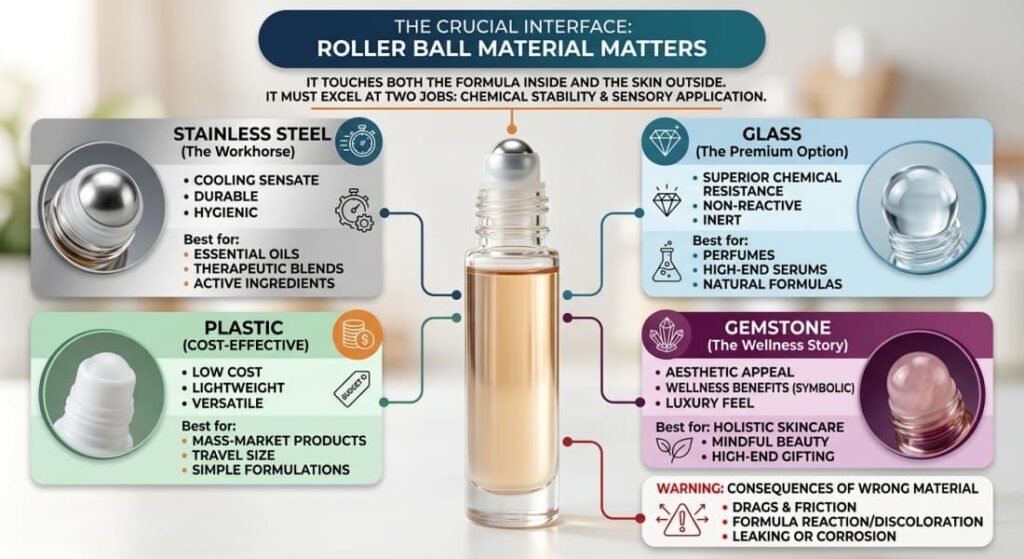
The roller ball is the part of the bottle that touches both the formula inside and the skin outside. That means it has to do two jobs well at the same time: stay chemically stable with your product, and feel good during application.
When the material is wrong for the job, you’ll notice problems fast. The ball might drag instead of glide. The formula might discolor or react. In worst cases, the ball can loosen, leak, or corrode. None of that is good for a brand trying to build repeat customers.
Here’s the short version if you’re skimming: the best roller ball material for your roll on bottle packaging depends on your formula, your target customer, and your price point. Stainless steel is the workhorse. Glass is the premium option. Plastic keeps costs down. Gemstone gives you a luxury wellness story. Each one has its place.
Common Roller Ball Materials Used in Roll On Bottles
Let’s break down the four main options you’ll come across when you’re sourcing from a roll on bottle supplier.
Stainless Steel Roller Ball
The stainless steel roller ball is probably the most widely used option in the industry, and for good reason. It’s durable, resists corrosion when the right grade is used, and gives a slight cooling feel on the skin, which customers tend to love, especially with under-eye serums or headache relief blends.
Steel handles most oil-based and water-based formulas well. It’s the go-to roller ball for essential oils, and it also works well for perfumes, deodorants, and cosmetic serums. Just keep in mind that not every “stainless steel” ball is the same. Lower grades can react with acidic or high-alcohol formulas, so always confirm the grade with your supplier and run a compatibility test before mass production.
Glass Roller Ball
The glass roller ball is chemically inert, which is a fancy way of saying it doesn’t react with almost anything you put next to it. That makes it ideal for pure essential oils, natural skincare, and any formula where purity is a selling point.
It also looks clean and premium, especially when paired with amber glass roll on bottles or frosted glass roll on bottles. The trade-off? Glass is more fragile than steel, and it doesn’t have the same cooling sensation. If your product will travel a lot or sit in checked luggage, that’s something to think about.
Plastic Roller Ball
The plastic roller ball is the budget-friendly choice. It’s lightweight, cheap to produce, and works fine for mass-market deodorant roll on bottles or promotional products where cost matters more than luxury feel.
The downside is that plastic can react with certain essential oils and strong alcohol-based fragrances. It also feels less premium in the hand, so if you’re positioning your brand as high-end, plastic probably isn’t the right call. But for high-volume, everyday personal care, it does the job.
Gemstone Roller Ball
The gemstone roller ball is where things get interesting. Rose quartz, jade, amethyst, obsidian — these natural stones are popular in aromatherapy, facial serums, and wellness products. They give your brand a story that steel or plastic simply can’t match.
The catch is that gemstones vary. Each stone is slightly different in size, texture, and finish, which means consistency across a large production run takes more effort. They’re also more expensive per unit. But for a wellness or spa brand, that premium feel can justify the price point.

Stainless Steel vs Glass vs Plastic vs Gemstone: A Quick Comparison
Here’s a side-by-side look to make things easier:
|
Material |
Main Advantages |
Main Limitations |
Best For |
|
Stainless Steel |
Durable, cooling feel, smooth glide |
Grade matters for compatibility |
Essential oil roll on bottles, deodorants, perfume roll on bottles |
|
Glass |
Chemically inert, premium look |
More fragile |
Pure essential oils, clean beauty, luxury skincare |
|
Plastic |
Low cost, lightweight |
Less premium, some compatibility issues |
Budget personal care, deodorants |
|
Gemstone |
Luxury wellness image, unique feel |
Higher cost, natural variation |
Facial serums, aromatherapy, spa brands |
If you’re not sure which one fits, keep reading — the next section will help you narrow it down.
7 Key Factors to Consider When Choosing a Roller Ball Material
Picking a material isn’t just about looks. Here are the seven things you should think through before placing an order.
1. Formula Compatibility
This one is non-negotiable. Some essential oils, especially citrus and cinnamon, are aggressive and can degrade lower-grade metals or certain plastics. Alcohol-heavy perfumes can also break down some materials over time. Always request samples and run a stability test with your actual formula for at least 30 to 60 days before committing to a large order.
2. Application Experience
Think about how your customer will actually use the product. Is it going on pulse points? Under the eyes? Along sore muscles? A cooling steel ball feels amazing on tired eyes but might be too much for a warming muscle rub, where a gentler glass or gemstone ball feels better.
3. Brand Positioning
Your packaging tells a story before your customer even opens the bottle. A gemstone ball in a frosted bottle whispers luxury and wellness. A plastic ball in a clear plastic tube says budget and convenience. Match the material to the story you want to tell.
4. Durability and Shipping
If you sell online, your bottles are going to get tossed around. Steel balls handle drops better than glass or gemstone. If most of your sales happen through e-commerce, factor that into your choice, or invest in better protective packaging.
5. Cost and MOQ
Prices vary a lot. Plastic is cheapest, followed by standard steel, then glass, and gemstone at the top. When you’re buying bulk roll on bottles or wholesale roll on bottles, the per-unit difference adds up quickly. Get quotes for different materials at your target volume before deciding.
6. Leak Prevention
The ball has to fit its housing perfectly. Even the best material fails if the tolerances are off. This is where working with a reliable roll on bottle manufacturer really pays off — cheap suppliers often cut corners on the housing, and you’ll find out the hard way when returns start rolling in.
7. Sustainability
More customers care about this every year. Refillable roll on bottles with glass bodies and steel or glass balls are easier to market as sustainable. Plastic is harder to sell as eco-friendly, though it does have its own recycling story if you frame it right.
Best Roller Ball Materials for Different Product Types
Different products call for different combinations. Here’s how it usually breaks down.
Essential Oil Roll On Bottles
For essential oil roll on bottles, stainless steel and glass are the top picks. Both handle pure oils without reacting. Amber or cobalt blue glass bodies protect the oil from light, and a steel ball gives that satisfying cool touch. If your brand leans into crystal healing or aromatherapy, a gemstone ball adds real value.
Perfume Roll On Bottles
Perfumes are usually alcohol-based, which rules out most low-grade plastics. Steel and glass both work here. A lot of niche perfume brands go with clear or frosted glass and a steel ball because it looks clean and applies evenly. Roller bottle sizes for perfume typically run 5ml to 10ml, which is perfect for purse-friendly packaging.
Skincare and Eye Serums
Cooling matters here. Steel is the clear winner for eye serums and de-puffing products because the cold feel is a selling point on its own. Some premium skincare brands use gemstone balls for face serums, where the “gua sha effect” adds perceived value.
Deodorant Roll On Bottles
For deodorant roll on bottles, cost and durability matter more than luxury. Plastic balls are common for mass-market deodorants, while natural and organic brands often upgrade to glass bottles with steel balls to signal a cleaner positioning.
Wellness and Aromatherapy
Gemstone balls dominate here. The story sells the product. Pair them with frosted or amber glass and you’ve got packaging that photographs well and looks great on a wellness shelf.
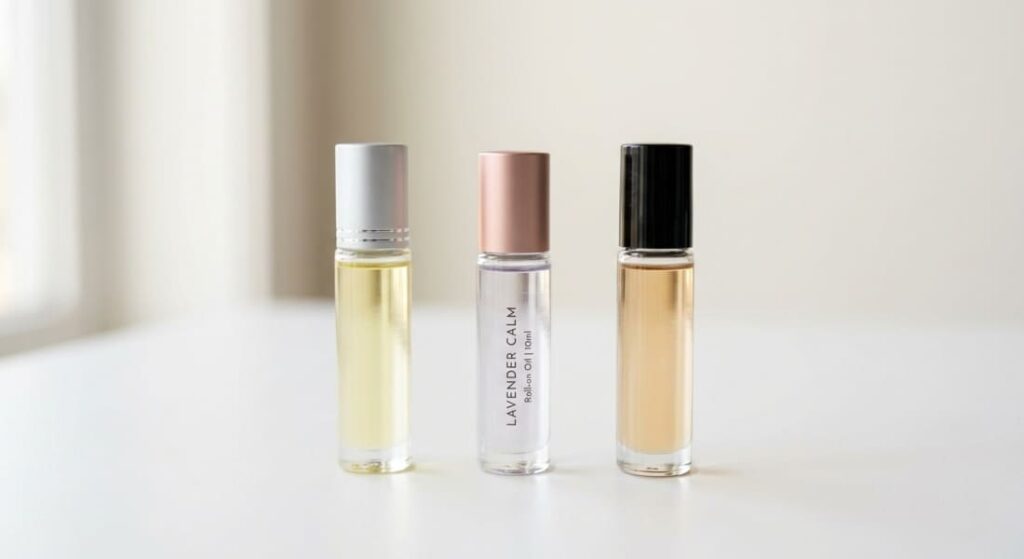
Matching the Roller Ball to Your Brand
If you’re still on the fence, here’s a simple way to think about it:
Premium beauty or clean skincare? Go with glass or high-grade steel.
Wellness, spa, or aromatherapy? Consider gemstone.
Everyday personal care at scale? Steel or plastic depending on price.
Pure essential oils? Steel or glass, and definitely amber glass roll on bottles to protect the oils from UV.
Your packaging should feel like a natural extension of the product inside. If there’s a mismatch — say, a premium organic serum in a cheap plastic tube — customers notice, even if they can’t articulate why.
Customization Options for Roll On Bottle Packaging
Once you’ve picked your material, there’s a whole other layer of decisions to make. Here’s what’s usually on the table when you work with a good supplier.
Bottle Sizes
Common roller bottle sizes include 3ml, 5ml, 10ml, 15ml, and 20ml. The 10ml size is the industry standard for essential oils, while 5ml works well for perfume samples and travel-friendly SKUs.
Bottle Materials and Colors
Glass roll on bottles come in clear, amber, cobalt blue, green, frosted, and custom-colored versions. Amber and cobalt protect light-sensitive formulas. Frosted glass roll on bottles feel premium and hide fingerprints, which is a small but nice detail.
Caps and Closures
Plastic caps are standard and cheap. Aluminum caps look more premium. Bamboo caps fit natural and eco-friendly branding. Some brands also add tamper-evident seals for retail markets.
Decoration
Silk screen printing, hot stamping, custom labels, frosting, and spray coating are all options for adding your logo and design. If you’re just starting out, custom labels give you the most flexibility at the lowest cost. Once you’re ordering in real volume, screen printing or hot stamping usually looks better and lasts longer.
OEM and Private Label
If you’re a growing brand, look for a supplier that supports private label and OEM services. That means they can help you build a custom SKU from scratch — bottle, ball, cap, decoration — rather than making you piece it together yourself.
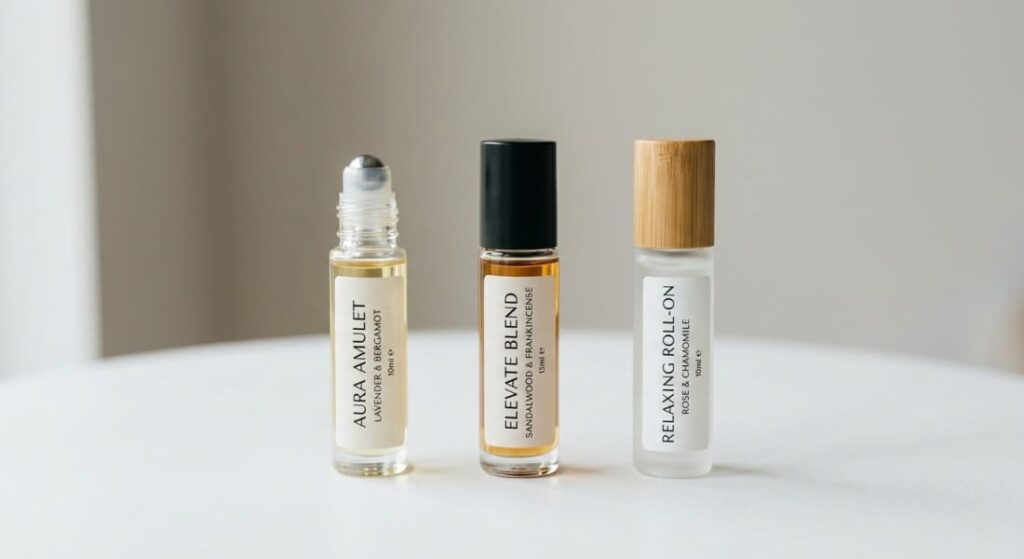
Glass Roller Bottles With Different Roller Balls
Common Mistakes to Avoid
A few things we see brands get wrong, over and over:
Buying on price alone. The cheapest ball almost always costs more in the long run through returns, leaks, or reformulation.
Skipping compatibility testing. Always test your actual formula with the actual ball for at least a month before mass production.
Assuming all steel is the same. Grade matters. Ask specifically what grade of stainless steel is being used.
Ordering before seeing samples. Photos lie. Always get physical samples in hand before placing a bulk order.
Mismatching the packaging with the product. A luxury serum in a cheap tube damages your brand more than saving a few cents helps.
How a Good Manufacturer Makes Your Life Easier
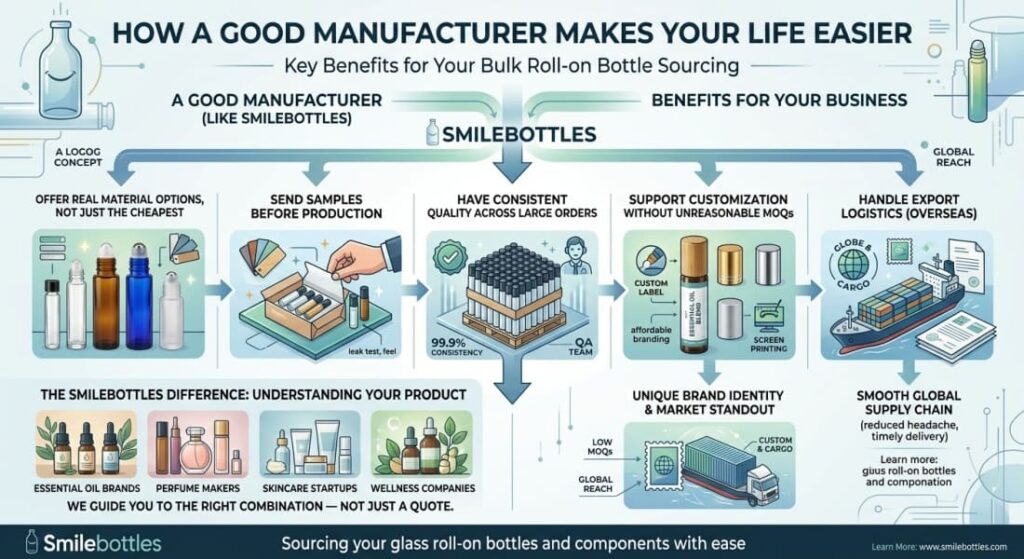
Not every supplier is equal. When you’re buying empty roll on bottles in bulk, the manufacturer you choose affects everything from lead times to product consistency.
A good manufacturer will:
Offer real material options, not just the cheapest thing they have in stock
Send samples before you commit to production
Have consistent quality across large orders
Support customization without unreasonable MOQs
Handle export logistics if you’re overseas
At Smilebottles, we’ve been helping brands source glass roll on bottles and matching components for a long time. We work with essential oil brands, perfume makers, skincare startups, and wellness companies of all sizes. If you’re comparing suppliers, the main thing to look for is whether they actually understand your product and can guide you toward the right combination — not just quote you a number.
FAQ: Frequently Asked Questions About Glass Roll-on Bottles
Q1:What is the best roller ball for essential oils?
A1:Stainless steel and glass are the two safest choices. Steel gives you durability and a cooling feel, while glass is chemically inert and works with even the most reactive oils.
Q2:Are stainless steel roller balls safe for essential oils?
A2:Yes, when you use the right grade. 304 or 316 stainless steel handles most essential oils well. Lower grades can react with acidic or citrus-heavy blends over time.
Q3:Is a glass roller ball better than steel?
A3:Not better — different. Glass is more chemically stable, so it’s the safer choice for pure oils. Steel is more durable and gives a cooling sensation. Pick based on your priorities.
Q4:Do plastic roller balls work for cosmetics?
A4:They work for mass-market products where cost is the main concern. For premium cosmetics or products with active ingredients, glass or steel is usually a better fit.
Q5:Which material gives the best cooling feel?
A5:Stainless steel wins here. That cool touch on the skin is one of the reasons it’s so popular for eye serums and headache relief blends.
Q6:Are gemstone roller balls practical for commercial production?
A6:Yes, but expect more variation between units than you’d see with steel or glass. If your brand story leans into wellness or aromatherapy, that variation is often part of the appeal.
Q7:What size roll on bottle works best for perfume?
A7:5ml and 10ml are the most popular sizes for perfume. They fit easily in a bag and give customers a reasonable number of applications without being bulky.
Conclusion
The right choice starts with knowing your formula and your customer, then testing before you commit. Talk to your supplier. Ask for samples. Run compatibility tests. And when you find the combination that works, stick with it — consistency is what turns first-time buyers into loyal customers.
If you’re exploring options for glass roll on bottles, refillable formats, or custom roll on bottle packaging, feel free to reach out to us at Smilebottles. We’re happy to send samples, walk you through the choices, and help you land on a setup that fits your product and your brand.
 French
  English
  Russian
  Spanish (Chile)
  Spanish (Colombia)
  Spanish (Ecuador)
  Swedish
  Arabic
  Portuguese