
Table of Contents
ToggleAuthor: SmileBottles Editorial Team
Estimated Reading Time: About 12 Minute
Packaging is not just a vessel for holding liquid; it is the silent ambassador of your brand. A carefully chosen liquor bottle tells a story of heritage, craftsmanship, and market positioning. Whether you are sourcing alcohol in glass bottles for a craft startup or an established enterprise, understanding the vast landscape of types of liquor bottles is essential.
In this comprehensive guide, we will walk you through the different types of liquor bottles available in the market. We will explore how different spirits require specific designs, how to navigate the complex world of alcohol bottle types, and why partnering with the right liquor bottle manufacturer—like Smilebottles—can elevate your product from ordinary to extraordinary.
Why Different Types of Liquor Use Different Glass Bottles
Have you ever wondered why a premium cognac is rarely packaged in the same tall, slender bottle as a modern vodka? The reasons go far beyond simple aesthetics. The use of different liquor bottles for various spirits is deeply rooted in history, functional necessity, and consumer psychology. When you are developing your liquor packaging design, understanding these underlying principles is key.
Brand Identity and Shelf Appeal
In the highly competitive beverage market, your liquor bottle design must fight for attention on crowded shelves. Premium spirits often utilize heavier bottle bases (known as the punt or glass weight) and elegant silhouettes to convey luxury. When consumers pick up premium liquor bottles, the physical weight of the glass subconsciously signals a higher value. Conversely, a minimalist, lightweight design might appeal to an eco-conscious, modern demographic. Unique alcohol bottle shapes help your product stand out and become instantly recognizable.
Tradition and Category Expectations
Consumers have built-in expectations. Whiskey, vodka, gin, and tequila often follow recognizable packaging styles established over centuries. When a customer is looking for different bottles of alcohol, their brain quickly categorizes products based on silhouette. If you put a heavy, dark rum into a bottle traditionally used for clear vodka, it may cause cognitive dissonance for the buyer. Respecting liquor bottle names and traditional shapes ensures your product instantly communicates what is inside.
Bottle Functionality and Protection
A glass bottle liquor container does more than look good; it protects the spirit. Light-sensitive products, particularly those with delicate botanicals or dark aging profiles, often require colored glass to prevent UV degradation. Furthermore, the neck design, shoulder width, and overall balance of the bottle influence how easily a bartender can pour it. Every time you evaluate bottles of alc for your product line, you must consider how it feels in the hand.
Market Positioning
Are you launching a mass-market product or a luxury, limited-edition spirit? Luxury, craft, mainstream, and flavored spirits often use entirely different packaging approaches. For instance, high-volume hard liquor bottles prioritize packing efficiency and fast filling line speeds, while an ultra-premium release might feature complex, asymmetrical shapes that require careful hand-packing.
Glass Bottles for Different Types of Liquor
To help you make the best purchasing decision, let us break down the specific packaging norms and trends for different spirits. If you are examining alcohol bottles for a new product line, aligning your choice with these category standards is a great place to start.
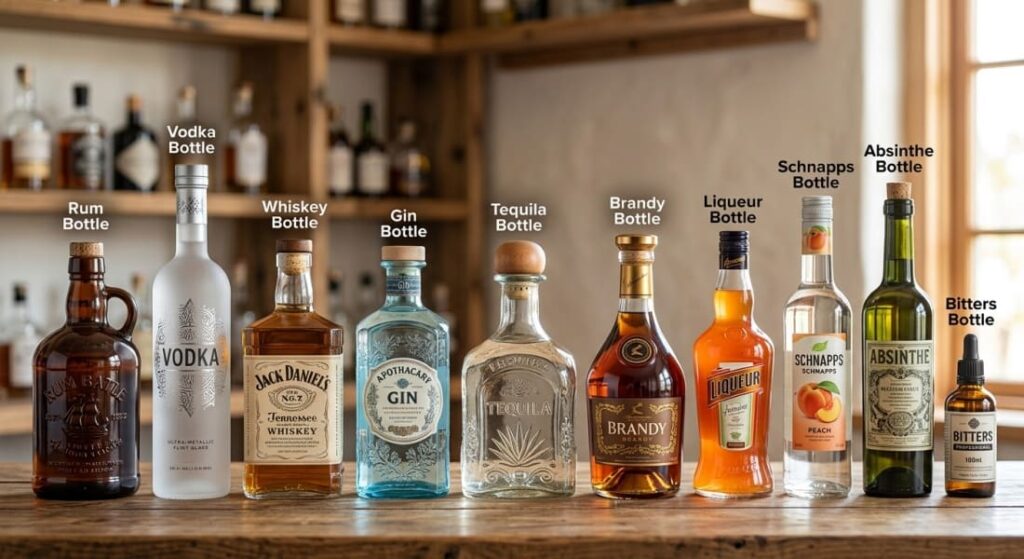
Rum Bottles
The history of rum is filled with maritime adventures and tropical origins, and rum bottles often reflect this rich heritage. Glass rum bottles range from classic, stout, round shapes (reminiscent of pirate jugs) to highly elegant, tall designs for aged reserves. Dark rum brands typically prefer heavier bottles in amber or clear glass to highlight the rich, mahogany liquid. Spiced and flavored rums often use distinctive, custom packaging to stand out in a lively, youthful market. If you are looking for a reliable rum bottle manufacturer, you should ensure they can provide common sizes like 375ml, 700ml, and the standard 750ml, paired with robust bar top corks or screw caps.
Vodka Bottles
Because vodka is traditionally a clear, unaged spirit, vodka bottles must do all the heavy lifting when it comes to visual marketing. The liquid has no color to hide behind, which is why glass vodka bottles usually feature tall, sleek, minimalist designs made from ultra-clear flint glass to emphasize purity and clarity. Frosted finishes, intricate screen printing, and metallic decals are incredibly popular. As a purchasing manager talking to a vodka bottle manufacturer, you will want to ask about the clarity of their glass, as any impurities or bubbles will be highly visible.
Whiskey Bottles
Whiskey is a category defined by tradition, aging, and masculine elegance. Whiskey bottles frequently utilize strong, broad-shouldered shapes. Glass whiskey bottles might be round, square, or mimic the style of classic crystal decanters. A heavy-bottom design is almost mandatory for premium whiskey, as it communicates substance and quality. Bourbon, Scotch, and Rye may use slightly different visual styles, but embossing, antique-inspired labels, and natural cork finishes are universal.
Gin Bottles
Gin is experiencing a global renaissance, driven by craft distilleries highlighting unique botanicals. Consequently, gin bottles are among the most creative in the industry. Glass gin bottles frequently feature elegant, apothecary-inspired designs that hint at gin’s medicinal origins. Many gin brands choose distinctive custom shapes, incorporating complex textures, embossed botanical details, and vibrant glass colors like blue, green, or even black.
Tequila Bottles
Tequila packaging is deeply tied to its Mexican heritage and the artisanal process of harvesting agave. Tequila bottles often boast bold, recognizable silhouettes. From tall, slender cylindrical bottles to stout, hand-crafted artisan looks, glass tequila bottles are incredibly diverse. Premium tequila brands often invest heavily in custom molds to create packaging that looks like a work of art. Thick glass, heavy wooden closures, and prominent embossed logos are standard for high-end expressions.
Brandy Bottles
Brandy bottles usually emphasize sophistication, history, and European heritage. Round shoulders, wider bodies, and classic pear-like forms are incredibly common. Glass brandy bottles for high-end cognac-style products often take inspiration from luxury decanters, paired with rich gold decorations and darker-toned labels. The packaging is designed to look perfect sitting on a leather armchair side table next to a cigar.
Liqueur Bottles
The liqueur category includes everything from bitter herbal digestifs to sweet cream liqueurs. Because of this vast variety, liqueur bottles have the widest range of styles. Glass liqueur bottles can be slim, curved, asymmetrical, or highly decorative. Clear glass is most commonly used to showcase the vibrant, artificial, or natural colors of the product. Sometimes referred to informally in search queries as a liquer bottle, these containers often require special consideration for their closures, as the high sugar content in liqueurs can cause traditional corks to stick.
Schnapps Bottles
Typically consumed in celebratory, casual environments, schnapps bottles are often tall, narrow, and straightforward. Clear glass is the standard, allowing the bright colors of fruit-flavored schnapps to shine through. The design supports a fresh, approachable brand image. Screw caps are frequently used for ease of opening and resealing.
Absinthe Bottles
Absinthe carries an aura of mystery, bohemian history, and vintage charm. Absinthe bottles almost exclusively draw on vintage or antique apothecary designs. Dark green glass is standard, helping to protect the delicate botanicals from UV light while enhancing the “green fairy” aesthetic. Long necks, intricate vintage labels, and classic silhouettes help reinforce the authenticity of the product.
Bitters Bottles
Used in dashes rather than pours, bitters bottles are distinctly smaller than standard liquor containers. Typical sizes range from 50ml to 200ml. These functional bottles often utilize amber glass to protect the highly concentrated liquid and project a medicinal, professional image. They require specialized closures, such as dropper tops or dash cap inserts, to allow bartenders precise control.
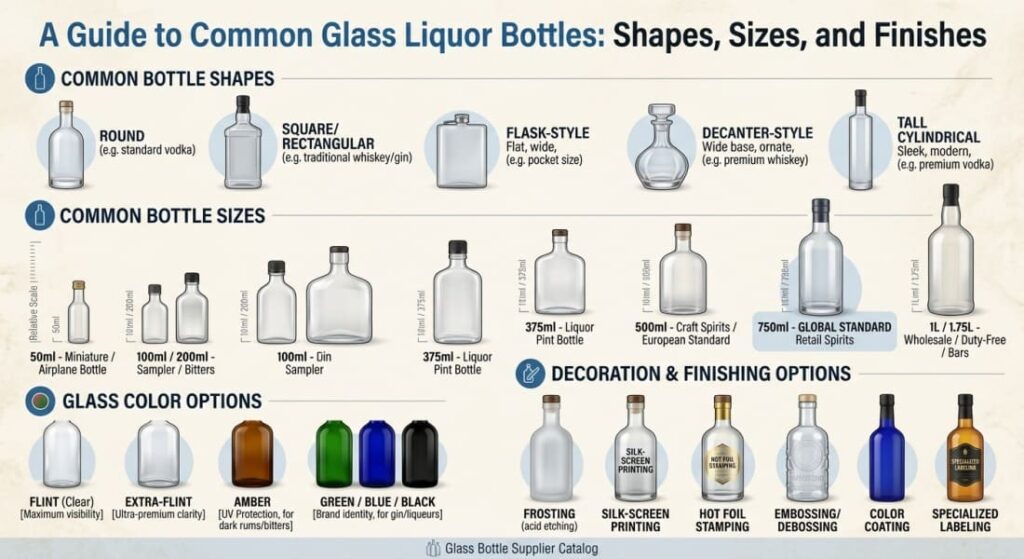
Common Glass Liquor Bottle Shapes, Sizes, and Finishes
When navigating the vast catalog of a custom glass bottle supplier, it helps to understand the standard terminology for liquor bottle shapes and liquor bottle sizes. Knowing these terms will streamline your communication with your manufacturing partner.
Common Bottle Shapes
If you are researching clear liquor bottles names and shapes, you will generally encounter:
Round Bottles: The most versatile and common, easy to label, and highly efficient on filling lines.
Square/Rectangular Bottles: Offer a broad facing for large labels and project a strong, traditional image (popular for whiskey and gin).
Flask-style Bottles: Flat and wide, traditionally used for smaller, pocket-sized containers.
Decanter-style Bottles: Wide bases, ornate stoppers, used exclusively for ultra-premium spirits.
Tall Cylindrical Bottles: Sleek and modern, heavily favored in the vodka and iced wine markets.
Common Bottle Sizes
Understanding global sizing standards is crucial for compliance and sales.
50ml: Also known as airplane bottles or miniatures, ideal for sampling.
100ml / 200ml: Often used for bitters or premium samplers.
375ml: The traditional liquor pint bottle format.
500ml: Popular in European markets for craft spirits.
750ml: The 750ml liquor bottle size is the undisputed global standard for retail spirits.
1L / 1.75L: Bulk sizes primarily targeted at wholesale buyers, bars, and duty-free retail.
Glass Color Options
While searching for different alcohol bottles, you will notice glass color plays a major role:
Flint (Clear) Glass: The industry standard, offering maximum visibility of the liquid. Extra-flint is used for ultra-premium clarity.
Amber Glass: Provides excellent UV protection, frequently used for bitters, dark rums, and medicinal-style spirits.
Green/Blue/Black Glass: Used heavily in the gin and specialty liqueur markets to establish a strong visual brand identity.
Decoration and Finishing Options
A plain bottle can be transformed into a masterpiece through finishing techniques. Options include frosting (acid etching), silk-screen printing, hot foil stamping, embossing, debossing, color coating, and specialized labeling.
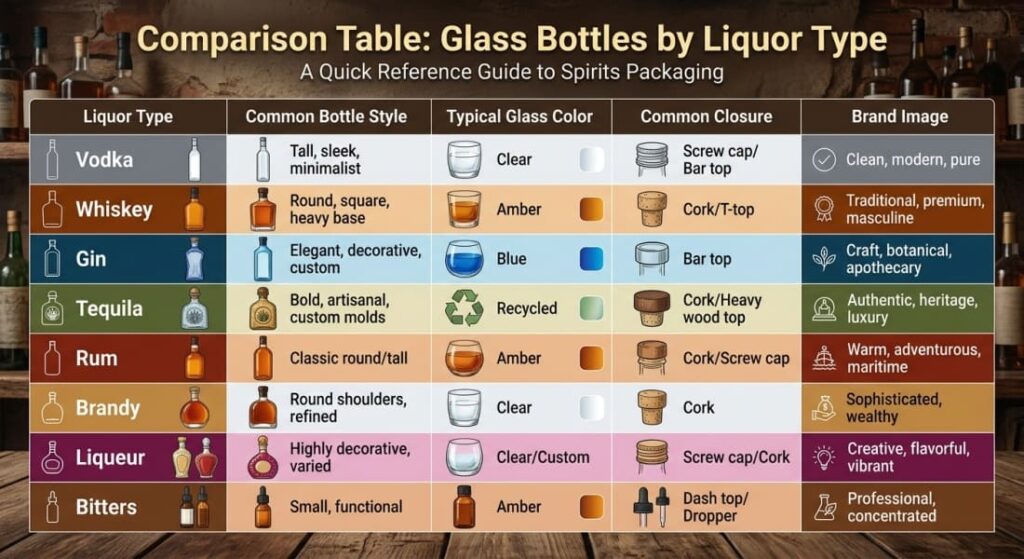
Closure Options for Different Liquor Bottles
You cannot finalize your types of alcohol bottles without considering how you will seal them. Liquor bottle closures are vital for preserving the integrity of the alcohol, preventing leaks during shipping, and adding a tactile element to the consumer’s experience.
Screw Caps
Also known as RoPP (Roll-on Pilfer Proof) caps, screw caps are cost-effective, highly secure, and convenient. They are excellent for high-volume products, flavored liquors, and mainstream brands.
Cork and Bar Top Closures
Natural and synthetic corks provide a premium appearance and the satisfying “pop” that consumers love. They are the industry standard for whiskey, high-end rum, tequila, and gin.
T-top Closures
A variation of the bar top, T-tops feature a prominent head made of wood, glass, metal, or heavy plastic. They offer a strong shelf impact and are a favorite for luxury spirits.
Specialty Closures
Depending on your product, you may need functional closures like built-in pourers, dash tops for bitters, or tamper-evident shrink capsules that provide security and branding real estate.
How to Choose the Right Glass Bottle for Your Liquor Brand
With so many different liquor bottles available, how do you make the right choice?
Match the Bottle to the Spirit Category: You want to align with consumer expectations while maintaining enough uniqueness to stand out. A classic shape with a unique decoration is often a winning formula.
Consider Your Brand Positioning: Premium products demand heavier glass, deep embossing, and high-end cork closures. Mass-market products must prioritize glass weight, shipping efficiency, and cost control.
Evaluate Manufacturing and Logistics: A beautiful bottle is useless if it shatters during transit. Consider the bottle weight, packing efficiency, shipping safety, the manufacturer’s Minimum Order Quantity (MOQ), and production lead times.
Think About the Target Market: Are you selling to high-end nightclubs, boutique liquor stores, or massive retail chains? The environment where your bottle will be displayed should dictate its design.
Custom Glass Liquor Bottles: How Unique Packaging Builds Your Brand
In a saturated market, standard off-the-shelf packaging sometimes isn’t enough. Investing in custom liquor bottles is one of the most effective ways to build brand equity.
Why Customization Matters
Customization helps your brand stand out on crowded shelves, justifies a premium price point, and drastically improves brand memorability. When consumers see personalized liquor bottles with your logo physically embossed into the glass, it signals that your company is established and invested in quality.
Popular Customization Options
Working with a top-tier liquor bottle manufacturer allows you to create a custom bottle shape from scratch. You can develop proprietary molds, utilize custom color spraying, or design a unique neck finish that perfectly matches a bespoke closure.
Standard vs. Custom
If you need a fast launch and lower tooling costs, high-quality standard bottles with custom decoration (like silk-screening) are ideal. However, if you have the lead time and want undeniable brand ownership, developing custom glass bottles for spirits is the ultimate long-term strategy.
Bottle Size Standards in Different Liquor Markets
Understanding the standard liquor bottle sizes across the globe is the key to a successful export strategy. You don’t want to arrive in a new market only to find your alcohol packaging is non-compliant.
US Market: Why 750ml Is the Standard
For a long time, the TTB (Tax and Trade Bureau) in the US was very strict. A 750ml bottle of alcohol was one of the few sizes allowed for distilled spirits. While regulations have loosened slightly recently to allow 700ml bottles in some cases, the 750ml 750ml standard is still what consumers and distributors expect. If you are entering the US, a 750ml liquor bottle is your safest bet for mainstream success.
EU Market: Why 70cl Is Common
In 1990, the European Union passed a directive making 700ml (70cl) the standard size for spirits. This was done to prevent “slack-filling” and to make it easier for consumers to compare prices. If you are selling in Paris, Berlin, or London, the 70cl bottle is the industry standard.
Other International Markets
Australia and New Zealand: Primarily use the 700ml bottle or 70cl.
South Africa: Follows the 750ml standard.
Travel Retail (Duty-Free): This is where you will see 750 ml vs 1 liter comparisons. 1-liter bottles are the standard for duty-free shops to offer “more value” to travelers.
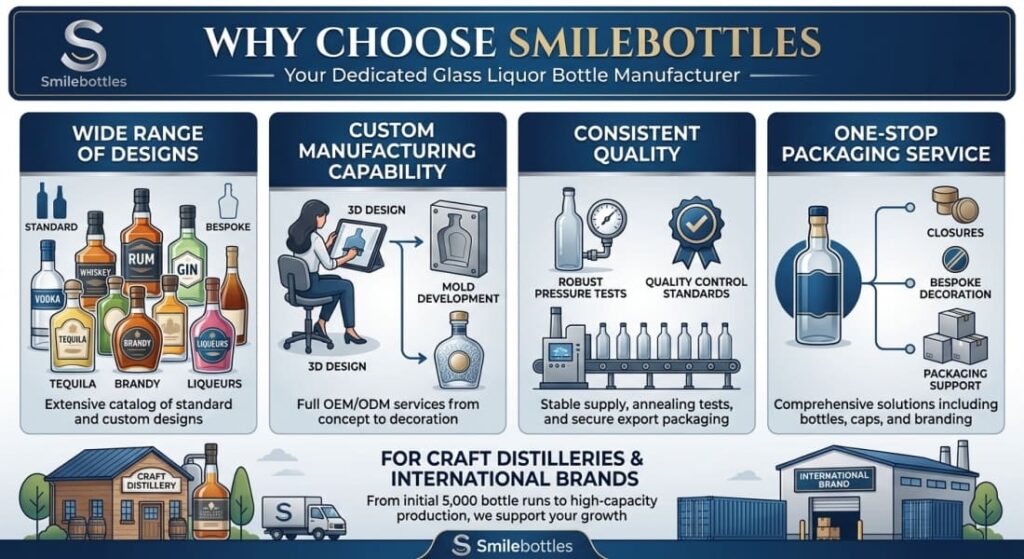
Why Choose Smilebottles as Your Glass Liquor Bottle Manufacturer
Finding a reliable custom glass bottle supplier can be daunting. As a leading liquor bottle manufacturer, Smilebottles is dedicated to providing superior packaging solutions for distilleries and brands worldwide.
Wide Range of Designs: We offer an extensive catalog of both standard and bespoke bottles for vodka, whiskey, rum, gin, tequila, brandy, liqueurs, and more.
Custom Manufacturing Capability: From initial 3D design and mold development to final decoration and closure matching, our OEM/ODM services bring your vision to life.
Consistent Quality: We understand that wholesale liquor bottles must meet strict quality control standards. We provide stable supply, robust pressure and annealing tests, and secure export packaging.
One-Stop Packaging Service: We don’t just sell glass; we offer comprehensive solutions including the bottle, closures, bespoke decoration, and packaging support.
Whether you are a craft distillery looking for your first 5,000 bottles or an international brand needing high-capacity production, Smilebottles has the expertise to support your growth.
FAQ: Frequently Asked Questions About Different Liquor Glass Bottles
Q1:What is the best glass bottle for whiskey?
A1:The best whiskey bottles typically feature heavy glass bases (punts), broad shoulders, and high-clarity flint glass. The heavyweight implies quality and tradition.
Q2: Are clear glass bottles suitable for all spirits?
A2:While clear (flint) glass is perfect for vodka, gin, and white rum, spirits that are sensitive to UV light (like some aged products or organic botanical mixes) may benefit from amber or colored bottles alcohol to prevent flavor degradation.
Q3:What size is most common for liquor?
A3:The 750ml liquor bottle size is the standard for retail worldwide. However, 1L and 1.75L are common for wholesale, and the liquor pint bottle (375ml) is popular for convenience retail.
Q4:Can I customize a glass bottle for my liquor brand?
A4:Absolutely. As a premier custom glass bottle supplier, Smilebottles can help you design custom liquor bottles featuring embossed logos, unique shapes, and specialized surface treatments.
Q5:What should I consider when importing wholesale liquor bottles?
A5:When sourcing wholesale liquor bottles, you must factor in the glass weight (which affects shipping costs), the manufacturer’s quality control processes, the MOQ, and the reliability of their export packaging to prevent breakage.
Conclusion
The packaging you choose is the physical handshake between your brand and your customer. As we have explored, the types of liquor bottles you select—from tall, sleek glass vodka bottles to heavy-set, traditional glass whiskey bottles—dictate how the world perceives your spirit.
Brands must carefully consider bottle shape, size, glass color, finish, and closures when designing their products. By partnering with an experienced and capable liquor bottle manufacturer like Smilebottles, you guarantee that your product not only looks stunning on the shelf but performs flawlessly on the production line.
Ready to bring your spirit to life? Contact Smilebottles today to discuss your standard or custom glass packaging needs, and let us help you build a brand that consumers will never forget.