
Table of Contents
ToggleAuthor: SmileBottles Editorial Team
Estimated Reading Time: About 14 Minutes
When you are sourcing glassware for your brand, retail store, or hospitality business, understanding the manufacturing process behind the products is absolutely essential. Whether your customers are asking about the durability of your products or you are trying to select the best customization options for a promotional campaign, knowing how drinking glasses are made gives you a massive competitive advantage.
You might occasionally find yourself wondering about specific dimensions, like how tall is a champagne bottle compared to a standard flute, or how to select the perfect vessel for a specific beverage. To make those decisions effectively, you first need to understand the foundation of glassware. This comprehensive guide will walk you through the entire glassware manufacturing process, from the raw sand to the final polished cup. By the end of this article, you will know exactly what to look for, how to avoid common quality issues, and how to choose a reliable manufacturing partner for your business.
What Raw Materials Are Used to Make Drinking Glasses?
If you want to know how glassware is made, you have to start with the recipe. The quality, clarity, and durability of your final product depend entirely on the raw materials melted down in the furnace. Most everyday drinkware is made from soda-lime glass. Understanding the soda lime glass composition will help you evaluate the materials your supplier is using.
Silica Sand: The Core Ingredient
The foundation of almost all commercial glass is silica sand (silicon dioxide). When you are looking for high clarity and strength, the quality of the silica sand for glass manufacturing is paramount. It provides the core structure and hardness of the glass. However, pure silica has an incredibly high melting point, which makes it very difficult and expensive to process on its own.
Soda Ash: The Melting Agent
To make the melting process more energy-efficient and manageable, manufacturers add soda ash (sodium carbonate). Soda ash effectively lowers the melting temperature of the silica sand. This not only speeds up production but also significantly reduces the energy consumption of the factory furnaces.
Limestone and Dolomite: The Stabilizers
While soda ash helps the sand melt, it also makes the resulting glass water-soluble—which is obviously useless for a drinking cup. To counter this, limestone and dolomite are added to the mix. These materials introduce calcium and magnesium, which act as stabilizers. They restore the chemical durability of the glass, ensuring it won’t break down when exposed to liquids, detergents, or varying temperatures.
Recycled Glass (Cullet)
Modern factories heavily rely on recycled glass, known in the industry as cullet. Using cullet speeds up the melting process because it melts at a lower temperature than raw materials. This saves massive amounts of energy, reduces raw material consumption, and supports global sustainability goals.
Additional Refining Agents and Colorants
Depending on your specific order, the factory may add other trace minerals. Decolorizers are used to neutralize the natural greenish tint of iron impurities in the sand, resulting in crystal-clear glass. If you are ordering colored glassware, specific metal oxides (like cobalt for blue or copper for green) will be mixed into the batch.
Step-by-Step Drinking Glass Manufacturing Process
Understanding how are glass cups made requires looking at the industrial journey from dry powder to molten liquid. The production floor of a glass factory is a highly controlled environment.
Step 1: Batch Preparation
The first step is batching. The raw materials mentioned above are stored in massive silos. They are carefully weighed and mixed together in a large blender. For you, as a buyer, the precision of this step is critical. If the batching is inconsistent, the chemical makeup of the glass changes, leading to fragile or cloudy products.
Step 2: Furnace Melting
Once mixed, the batch is continuously fed into a massive industrial furnace. These continuous tank furnaces operate 24 hours a day, 7 days a week, reaching temperatures of around 1500°C (2700°F). Here, the raw materials melt together, undergoing chemical reactions that transform them into a glowing, molten liquid.
Step 3: Refining and Homogenization
Molten glass initially contains thousands of tiny gas bubbles created by the chemical reactions. During the refining stage, the temperature is raised slightly, and refining agents cause these bubbles to expand, rise to the surface, and escape. The glass is also continuously homogenized to ensure the chemical composition is uniform throughout. If you have ever received a sample with annoying bubbles or wavy lines (called cords) in the glass, it means the factory rushed this specific step.
Step 4: Conditioning the Molten Glass
Before the glass can be shaped, it must be cooled down slightly to reach the perfect working viscosity. The molten glass flows from the melting furnace into a conditioning channel called a forehearth. Here, the temperature is carefully lowered so the glass becomes thick and pliable—ready for the molding machines.
How Drinking Glasses Are Formed into Different Shapes
If your customers ask how is a glass cup made, this is the stage where the magic happens. The glowing liquid finally takes on a recognizable shape.
The Role of Glass Gobs
At the end of the forehearth, the molten glass is pushed through a feeder and cut by mechanical shears into precise, glowing cylinders called gobs. The weight of each gob is strictly controlled, as one gob equals exactly one drinking glass.
Automated Molding Lines
In industrial production, these gobs fall through a delivery system into a glass forming machine. These are highly complex, automated, high-speed lines that can produce thousands of glasses per hour. As a buyer, choosing a factory with advanced automated lines ensures you get better dimensional consistency across large-volume orders.
Pressing, Blowing, and Press-and-Blow Methods
The glass forming process generally falls into three main categories, depending on the type of cup you are purchasing:
1 Pressing: A metal plunger presses the hot gob into a mold. This is generally used for items with thicker walls.
2 Blowing: The gob is dropped into a mold, and compressed air is blown into it, forcing the glass against the walls of the mold. This is used for lighter, thinner shapes.
3 Press-and-Blow: The press and blow glass process is a hybrid method. First, a plunger creates a preliminary shape (a parison), and then compressed air blows it out to its final size in a secondary mold. This offers incredible shape accuracy and wall-thickness consistency.
Customization Through Mold Design
Your brand’s unique identity heavily relies on glass mold design. The mold dictates the capacity, the shape, and the wall thickness. If you want an embossed logo on the bottom of the cup, or a textured diamond pattern on the sides, it is carved directly into the metal mold.
Key Finishing Processes in Drinking Glass Production
Just because the glass has a shape doesn’t mean it is ready for your customers. The post-forming steps dictate the safety and premium feel of the product.
The Critical Annealing Process
When the hot glass leaves the mold, the outside cools much faster than the inside. This creates massive internal stress. If left alone, the glass would spontaneously shatter. To prevent this, the glasses are sent through a long, temperature-controlled tunnel kiln called a lehr. The glass annealing process carefully reheats the glass and then cools it down very slowly and evenly. This relieves internal stresses, resulting in durable drinking glasses that won’t break easily in your customers’ hands.
Cutting, Trimming, and Rim Forming
Depending on the manufacturing method, there may be excess glass at the top of the cup (the moil) that needs to be removed. The glass is scored and hit with a localized thermal shock to snap off the excess cleanly.
However, a freshly cut edge is dangerously sharp. To make the glass safe and comfortable for drinking, the rim must be finished. A smooth rim drastically improves the drinking experience, and it is one of the first things a quality inspector will check.
Polishing
To give the glass a brilliant, premium shine, factories utilize a glass polishing process. Often, this involves flame polishing glass, where sharp, intense gas flames are directed over the surface and the rim of the glass. This slightly melts the very outer layer, smoothing out microscopic imperfections and mold seams, leaving a flawless, comfortable finish.
Surface Decoration and Treatment Options for Drinking Glasses
Many brands rely on customized aesthetics to stand out in the market. Once the base glass is manufactured, you have a wide array of decoration options.
Direct Printing and Decals
If you want your logo proudly displayed, screen printing on glassware is a highly popular and cost-effective method. Ceramic inks are pushed through a mesh screen directly onto the glass, and then the glasses are baked in an oven to fuse the ink permanently to the surface. For multi-colored or highly intricate designs, water-slide decals can be applied by hand and then baked.
Sandblasting and Etching
For a premium, frosted look, sandblasting is an excellent choice. Abrasive materials are blasted against the glass at high pressure, creating a matte finish. Acid etching provides a similar frosted look but leaves a slightly smoother, more refined feel.
Organic Color Coatings
If you want vibrant, full-coverage colors without relying entirely on colored raw glass, organic spray coatings can be applied. These improve the appearance and can even enhance scratch resistance.
Choosing the Right Type of Glassware for Your Market
As a buyer, knowing the manufacturing process is only half the battle. You must also know how to select the right product line for your target audience. Whether you are stocking a high-end restaurant, a lively bar, or a retail home goods store, the shape of the glass matters. Let’s explore the popular categories you should consider adding to your inventory.
Cocktail and Barware Essentials
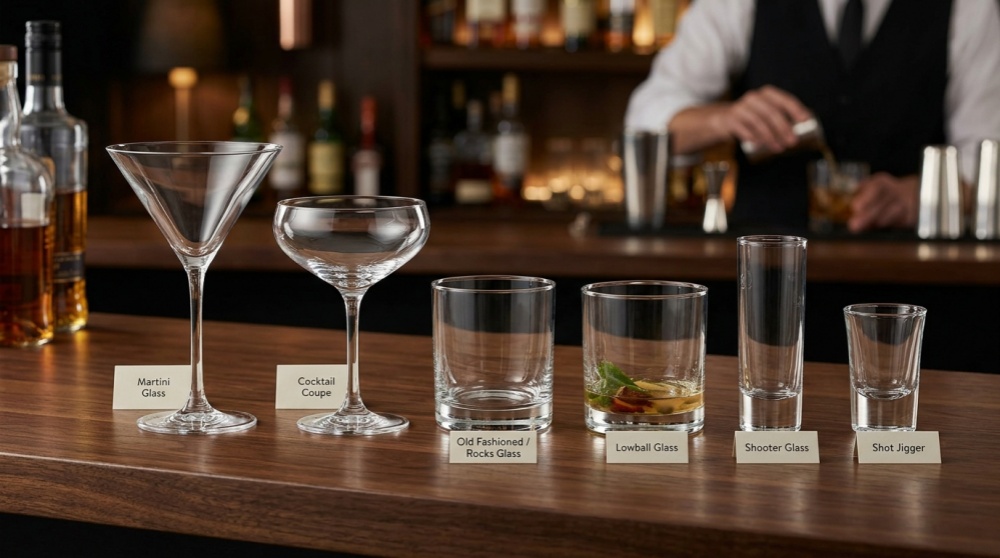
When outfitting a bar, versatility and presentation are everything. The classic cocktail glasses category covers a wide range of shapes designed to enhance the aromas and visual appeal of mixed drinks.
If your clients are serving elegant, up-drinks (drinks chilled with ice but served without it), they will be looking for the iconic V-shaped silhouette of traditional martini glass cocktails. These long-stemmed beauties keep the drinker’s warm hands away from the cold liquid. For a more vintage, trendy aesthetic, many buyers are pivoting toward cocktail coupe glasses. With their broad, shallow bowls, coupes are incredibly popular for craft cocktails and even champagne.
If your customers prefer shorter, sturdier drinkware, they will want lowball glasses. Also commonly referred to as the old fashioned glass, this short tumbler features a thick, heavy base that is perfect for “muddling” ingredients (like sugar and bitters) directly in the glass. Because these are frequently used for drinks served over ice cubes or large spheres, they are universally known as rocks glasses. Having a high-quality line of old fashioned rocks glasses in your catalog is an absolute must, as they are the backbone of any bar’s inventory. Sometimes, buyers simply search for a versatile cocktail glass or glass cocktail glasses, so having a varied portfolio of both stemmed and flat-bottomed options is crucial.
Shot Glasses and Specialty Drinkware
For high-volume nightlife venues, durability and exact measurements are key. You will need to source a reliable shooter glass for layered mixed shots, as well as a standard, heavy-based shot glass jigger for straight liquor pours. Interestingly, minor typos in purchasing orders happen all the time—whether a client types “I need a durable shot galss” or “I want unique cocktail cups,” they are fundamentally looking for the same thing: precision-manufactured, chip-resistant small glassware.
What Makes a Glass High Quality?
No matter which style you choose, your clients will expect high quality drinking glasses. What does this mean in practical terms?
Clarity: The glass should be completely transparent, lacking a yellow or green hue.
Rim Feel: The rim must be exceptionally smooth, usually achieved through flame polishing.
Weight Balance: Especially in a rocks glass, the heavy base should feel balanced in the hand, not clumsy.
Uniformity: The wall thickness should be even all the way around to prevent structural weak points.
How Manufacturers Control the Quality of Drinking Glasses
You cannot risk receiving a shipping container full of defective products. A reputable factory implements strict quality control (QC) at multiple stages.
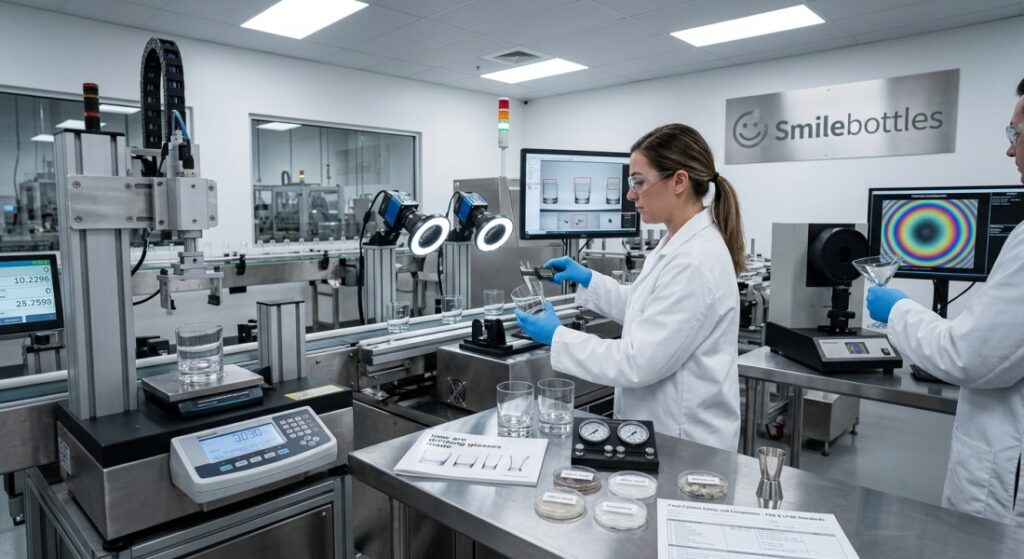
Dimensional and Capacity Checks: Inspectors constantly measure the height, diameter, and wall thickness. If the dimensions are off, the glass won’t fit into your custom retail packaging, and the liquid capacity will be wrong—which is a disaster for bars trying to control liquor pours.
Strength and Stress Testing: Glasses are tested for impact resistance and thermal shock. Polariscopes are used to analyze the internal stress of the glass to ensure the annealing process was successful.
Visual Defect Inspection: High-speed cameras and human inspectors look for unacceptable defects. They check for bubbles, embedded stones (unmelted raw material), cords, cracks, and mold seam deformations.
Safety and Compliance: If you are importing, the glassware must meet strict food-contact safety standards (like FDA or LFGB regulations). The raw materials and any decorative inks must be tested to ensure they do not leach lead or cadmium into beverages.
Why Recycled Glass Matters in Modern Glass Manufacturing
Many modern buyers and eco-conscious consumers frequently ask: are drinking glasses recyclable? The answer is a resounding yes. Glass is 100% recyclable and can be melted down endlessly without any loss in quality or purity.
As mentioned earlier, incorporating recycled cullet into the manufacturing process dramatically lowers the melting point of the batch. This means the factory burns less fuel and emits fewer greenhouse gases. Sourcing your products from a manufacturer that prioritizes the use of recycled materials allows you to market your brand as an environmentally responsible choice, which is a powerful selling point in today’s retail landscape.
Why Smilebottles Is Your Trusted Drinking Glass Manufacturer
Finding a factory that can consistently deliver on quality, customization, and volume is the hardest part of the supply chain. If you are looking for a highly capable drinking glass manufacturer, Smilebottles is your ultimate partner.
As a premier drinking glass supplier and glass tumbler manufacturer, we control every step of the process—from sourcing premium raw materials to precision mold design and advanced flame polishing. Whether you are looking for thick-walled old fashioned glasses for a hospitality chain or intricately decorated promotional items, we operate as a dedicated custom glassware manufacturer tailored to your exact specifications.
We offer extensive OEM capabilities, strict compliance with international food-safety standards, and robust export packaging solutions to ensure your bulk orders arrive flawlessly. With Smilebottles, you are not just buying glass; you are securing a reliable, long-term supply chain advantage.
FAQ About Drinking Glass Manufacturing
Q1: How are drinking glasses made in factories?
A1: They are made by melting a precise mixture of silica sand, soda ash, and limestone at ultra-high temperatures. The molten glass is then cut into gobs, dropped into automated molding machines, shaped via pressing or blowing, cooled slowly in an annealing lehr, and finally polished.
Q2: What is annealing in glass manufacturing?
A2:Annealing is a controlled heating and slow-cooling process. It relieves the internal thermal stresses that build up during the forming process, preventing the glass from shattering and ensuring long-term durability.
Q3: Can drinking glasses be customized with my logo?
A3: Absolutely. You can customize glasses through mold design (for embossed logos), screen printing, sandblasting, or decal applications.
Q4: What is the difference between soda-lime glass and borosilicate glass?
A4: Soda-lime glass is the standard for most everyday drinking cups, barware, and bottles. Borosilicate glass contains boron trioxide, giving it extreme resistance to thermal shock. Borosilicate is typically used for labware, coffee carafes, or double-walled tea glasses.
Q5: How do manufacturers test the quality of drinking glasses?
A5: Manufacturers use a combination of automated optical sorting machines and manual inspections to check for visual defects like bubbles and cracks. They also perform dimensional measurements, capacity checks, and thermal/impact stress testing.
Conclusion
Understanding the journey from raw silica sand to a beautifully finished cocktail coupe allows you to make incredibly informed purchasing decisions. The secret to sourcing the best products lies in knowing how the batching, melting, forming, annealing, and finishing processes impact the final cup. When you know what makes a glass durable, safe, and visually appealing, you can confidently navigate the market and select the perfect inventory for your business. Always prioritize a reliable manufacturing partner who values strict quality control and advanced production techniques. Reach out to Smilebottles today to discuss your next custom glassware project, and let us help you bring your vision to life.
 English