


Table of Contents
ToggleAuthor: SmileBottles Editorial Team
Estimated Reading Time: About 13 Minutes
The global spirits market is crowded. Whether a consumer is walking down an aisle in a retail store or scrolling through pages on an e-commerce site, they are bombarded with choices. In this competitive landscape, the liquid inside the bottle is the product, but the bottle itself is the salesman. Before a customer ever pulls the cork or unscrews the cap to taste your vodka, whisky, or gin, they have already judged it. They have judged its quality, its price point, and its personality—all based on glass container packaging. Bottle design is not just about holding liquid; it is a strategic tool. The visual elements—color, weight, shape, and finish—act as a silent salesperson. They communicate your brand story without saying a word. A heavy, dark bottle whispers “tradition and luxury,” while a sleek, clear bottle shouts “modern purity.”
At Smilebottles, we understand that bottles for alcohol are the bridge between your craft and your customer. As a professional manufacturer, we see daily how the right packaging transforms a startup brand into a market leader. This guide will explore how specific design choices influence consumer psychology and sales, helping you choose the perfect vessel for your spirit.
How Glass Bottle Packaging Influences Consumer Behavior
First Impression at the Shelf and Online
In the split second a consumer glances at a shelf, your product has to win a battle for attention. Glass liquor bottles are the first physical touchpoint a customer has with your brand. High shelf visibility is achieved through contrast. If every competitor is using a standard round bottle, a square or custom-shaped bottle stands out.
In the digital age, this is even more critical. On social media or online stores, your product is often reduced to a thumbnail. Fancy glass liquor bottles with distinct silhouettes or vibrant colors capture the eye faster than generic designs. The visual appeal in a photo can be the deciding factor between a click and a scroll past.
Psychology of Glass Packaging
Consumers rely on heuristics—mental shortcuts—to make decisions. They use the appearance of glass bottles as a proxy for the quality of the spirit inside.
Weight: A bottle with a heavy base (often called a “slug”) feels substantial in the hand. Psychologically, weight equates to value. This is why premium brands often use heavier glass.
Clarity: High-quality flint glass signals purity, essential for white spirits like vodka and gin.
Color: Dark glass often signals aging and complexity, triggering associations with heritage.
Brand Recognition and Memory
Think of the most famous spirit brands in the world. You can likely identify them just by their silhouette. Consistency in glass bottle design art helps build this recognition. When a brand uses a unique shape across its range, it creates a “family look” that makes new product launches easier. Design your own liquor bottle shapes to ensure that even if the label is peeled off, customers recognize it as your brand.
Impact on Purchase Decisions
Attractive packaging drives impulse buys. A consumer looking for a gift will almost always choose the “best-looking” bottle over a plain one, even if they know nothing about the taste. Alcohol bottles that look premium justify a higher price point in the consumer’s mind, increasing their willingness to pay.
The Role of Spirit Bottle Color in Branding
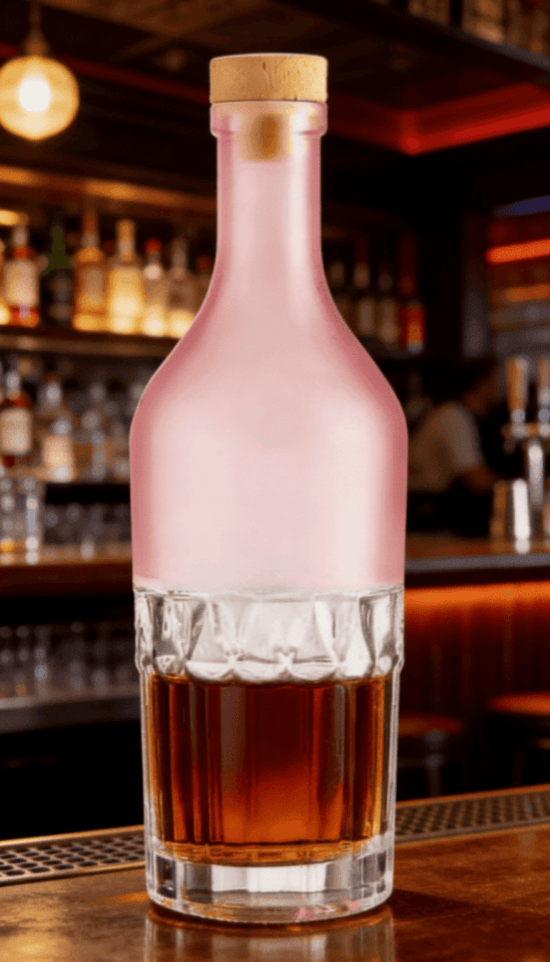
Color is one of the most powerful tools in packaging. It protects the liquid, but it also sets the mood. When it comes to colors alcohol can be perceived very differently based on the glass tint.
What Is Frosted Glass for Spirits
Definition & Process:
Frosted glass is created by treating glass spirit bottles with acid etching, sandblasting, or spraying to create a matte finish. This technique turns transparent glass into a semi-opaque, soft-touch surface.
Branding Impact:
Frosted bottles scream “modern elegance.” They are incredibly popular for premium vodkas and gins. The “icy” look suggests the product should be served chilled. It offers a soft luxury that feels sophisticated rather than flashy.
Practical Benefits:
Beyond aesthetics, frosted glass hides fingerprints better than glossy glass, ensuring the bottle looks pristine on a bar shelf. It softly reveals the liquid level without giving away everything, adding a layer of mystery.
What Is Colored Glass for Spirits
Definition:
This refers to colored alcohol bottles where the glass is tinted during the manufacturing process (mass-colored) or sprayed afterward. Common colors include amber, green, blue, and black.
Color Associations in the Market:
Amber/Brown: The classic choice for whiskey, rum, and brandy. It mimics the color of the aged spirit and suggests warmth and history.
Green :Green liquor bottle brands are often associated with traditional herbal liqueurs, Jägermeister styles. A liquor bottle green tint signals nature and botanical ingredients.
Blue: Often used for gin or tequila to suggest freshness, water, and crispness. Red white and blue bottles are sometimes used for patriotic themes or specific flavored vodkas.
Black: Black color liquor bottles usually signify ultra-premium or “night” editions. They create total mystery.
Functional Benefits:
Coloured alcohol bottles offer superior UV protection. Light can degrade the organic compounds in spirits, altering the taste. Darker glass acts as sunglasses for your product.
What Is Clear (Flint) Glass for Spirits
Definition:
Also known as “flint” glass, these are transparent, clear liquor bottles designed to show off the liquid inside with maximum clarity.
When to Use Clear Glass:
If you are selling a crystal-clear vodka or a gin with beautiful botanical infusions, hide nothing. Clear liquor bottle names in the industry—like Absolut or Grey Goose—rely on the visible purity of the liquid. It is also essential for colorful alcoholic liqueurs where the liquid itself provides the color (e.g., a bright red aperitif).
Branding Effect:
Clear glass signals honesty. It says, “We have nothing to hide.” However, because alcohol in glass bottles that are clear has no UV protection, these products are best for spirits that are shelf-stable and less prone to light damage.
Key Differences Between Frosted, Colored, and Clear Glass Bottles
Visual Message:
Glass bottle colors dictate the mood. Clear is for refreshment; colored is for tradition; frosted is for contemporary luxury.
What colour is alcohol usually? It ranges from clear to amber. If your liquid color is unappealing, use a colored bottle.
Cost and Production:
Standard flint and amber are generally the most cost-effective. Bottle color achieved through spraying or frosting involves extra processing steps, which can slightly increase the cost per unit. However, for a premium spirit bottle, this investment often yields a high ROI in sales price.
Popular Glass Liquor Bottles and Branding Applications
Common Bottle Styles for Spirits
Different spirits have “codes” or standard shapes that consumers expect. Breaking these codes can be risky, but also rewarding.
Spirits:
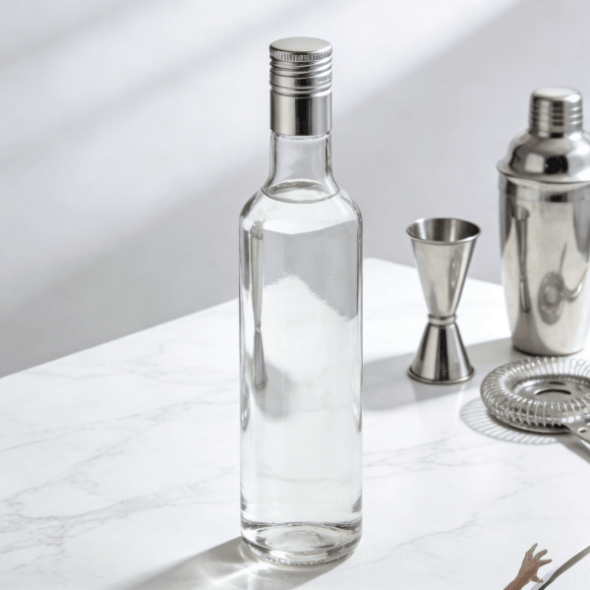
Vodka & Gin: Usually housed in tall, cylindrical bottles like the “Oslo” or “Nordic” styles.
Whiskey & Rum: Consumers expect short liquor bottles or square decanter styles with broad shoulders. A glass liquor decanter style suggests the bottle is worthy of being displayed on a home bar cart.
Moonshine: The trend of using moonshine bottles (often styled like mason jars with handles) plays heavily on the “illegal” and rustic history of the spirit.
Standard vs. Custom:
Many startups begin with standard glass bottles empty of decoration to save on mold costs. However, as liquor bottle suppliers, we often see brands transition to custom molds once they have achieved a certain volume. A custom shape is intellectual property; it protects you from counterfeits.
Decoration and Marketing Applications
Once you have the shape, the decoration brings it to life.
Labels: Paper labels are classic, but screen printing directly on the glass (ACL) is becoming standard for premium glass spirit bottles.
Surface Treatment: Bottle colouring via spray painting can turn a standard flint bottle into a matte black or glossy red icon. You can create colorful alcohol bottles with gradients (ombre) that fade from opaque to clear.
Embossing: Adding your logo directly into the glass mold adds a tactile element that stickers cannot achieve.
Key Factors in Bottle Design That Affect Spirits
Protection and Product Stability
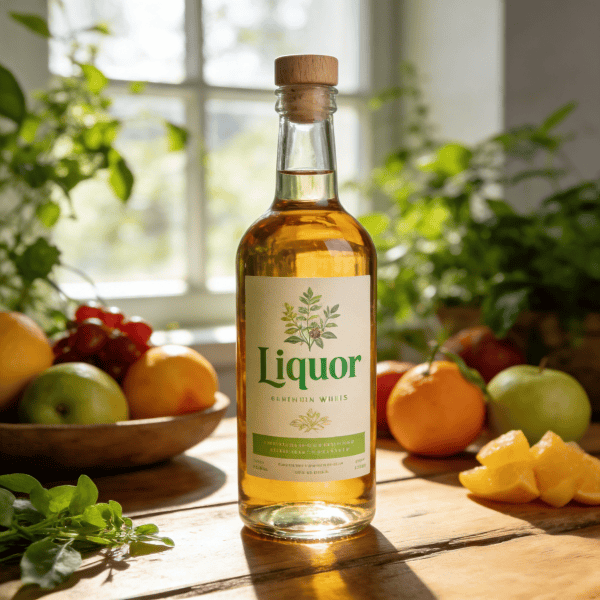
You must ask yourself: What colour is alcohol going to be after six months on a shelf? If you use clear glass for a delicate whiskey, it may turn pale. Colored liquor bottles are not just aesthetic; they are preservatives. High-quality closures (corks, screw caps) paired with the right neck finish are vital to prevent evaporation (the “angel’s share”).
Functionality and Ergonomics
A bottle must be pourable. Bartenders hate heavy, slippery bottles that are hard to grip. A spirit bottle with a long neck is preferred in the “on-trade” (bars and restaurants) because it allows for easy grabbing and pouring. If your bottle is too wide, it won’t fit in a standard speed rail, meaning bartenders won’t keep it close at hand.
Sensory Expectations and Perceived Quality
When a consumer picks up a bottle, the glass bottle design art communicates price. Thick glass walls and a heavy base (slug) make the product feel expensive. Fancy glass liquor bottles often weigh significantly more than standard ones. This “heft” validates the purchase price before the consumer even tastes the spirit.
Sustainability and Brand Values
Modern consumers care about the planet. While heavy glass implies luxury, there is a growing trend toward “lightweighting” to reduce carbon footprints during shipping. Using high percentages of recycled glass (PCR) in your glass bottles is a strong marketing message. Brands can balance this by using smart designs that look premium without excessive weight.
The Shape of Spirit Bottles
Shape as a Category and Brand Signal
Shape serves as a shorthand for category. If you see a tall, slender bottle, you think vodka or schnapps. If you see a stout, square bottle, you think bourbon. Spirit bottle manufacturers have thousands of molds that fit these categories.
Masculine vs. Feminine: Sharp angles and squares are often perceived as masculine (Scotch), while curves and soft lines are seen as feminine or unisex (Cream liqueurs, Gin).
Aesthetic and Practical Considerations
Glass bottle shape affects logistics. Square bottles pack more efficiently in cases and on pallets than round bottles, saving shipping costs. However, round bottles are easier to label on high-speed automatic lines.
Label Area:Ensure your empty liquor bottles ideas include a flat panel. Complex curves can wrinkle labels, looking unprofessional.
Custom Shapes for Strong Brand Identity
Investing in a custom mold from spirits bottle manufacturers like Smilebottles creates a unique asset. It prevents copycats. Think of the Coca-Cola contour bottle; the shape is the trademark. For spirits, a unique decanter bottle shape can make your brand instantly recognizable on a back bar.
The Volume of Spirit Bottles
Size matters. The volume of your liquor bottle dictates the consumption occasion and the price point.
Common Bottle Sizes and Their Typical Uses
Miniatures (50ml – 100ml): Small glass spirit bottles and 100ml spirit bottles are crucial for sampling. They are great for airline sales, hotel mini-bars, and gift sets.
Flash Sizes (200ml – 375ml):200ml liquor bottles and 350ml glass bottles fit in a pocket or purse. They are accessible price entry points for consumers who want to try the product without buying a full bottle.
Standard (700ml – 750ml): This is the industry standard. 750ml glass liquor bottles wholesale is the most common search because it fits the US market, while 700ml is standard in the EU. 750 ml liquor bottles are the bread and butter of retail.
Large Format (1L – 1.75L): 1-liter bottles for sale are standard for Duty-Free travel retail and bars. Large handles (1.75L) are for parties and value buyers.
How Volume Influences Branding and Sales
Empty spirit bottles for sale in smaller sizes allow brands to create “tasting sets,” which are high-margin gift items. Conversely, releasing a “Magnum” (1.5L) version of your standard bottle creates buzz and signals success. It implies your brand is a celebration drink.
Volume, Logistics, and Production Practicality
Shipping air is expensive. The efficiency of your glass container packaging impacts your bottom line. Glass spirit bottles wholesale orders usually come palletized. A slight change in bottle diameter can change how many fit on a pallet, drastically altering shipping costs.
How to Choose the Right Bottle for Your Spirit
Start with Your Brand Positioning
Are you a budget-friendly mixing vodka or a $100 sipping rum? Your bottle must match. A cheap plastic cap on fancy glass liquor bottles kills the illusion of quality.
Consider Product and Technical Requirements
If you are producing a spirit medicine bottle style (reminiscent of old apothecaries), ensure the neck finish works with a cork. If you are bottling a carbonated pre-mixed cocktail, you need pressure-rated glass.
Select the Best Combination of Color, Shape, and Volume
Market: If you are targeting the nightclub scene, use colorful liquor bottles or bottle color that glows under UV light.
Export: If exporting to Australia or the UK, check local regulations on standard sizes. You might need glass spirit bottles Australia Australia-specific sizes (700ml) versus US sizes (750ml).
Color: Decide on the bottle color. Does a green liquor bottle fit your organic gin? Does a black-colored liquor glass fit your coffee liqueur?
Balance Aesthetic Appeal with Cost and Sustainability
Custom design your own liquor bottle projects require mold fees. If you are a small batch distiller, looking for empty liquor bottles, bulk or stock spirit bottles with unique decoration (spraying/printing) is a smarter financial move than creating a new mold immediately.
Work with a Professional Bottle Manufacturer
Don’t just buy from a trader. Work with spirit bottle manufacturers who understand the chemistry of glass. At Smilebottles, we guide you through the technical drawings, the bottle coloring options, and the closure compatibility.
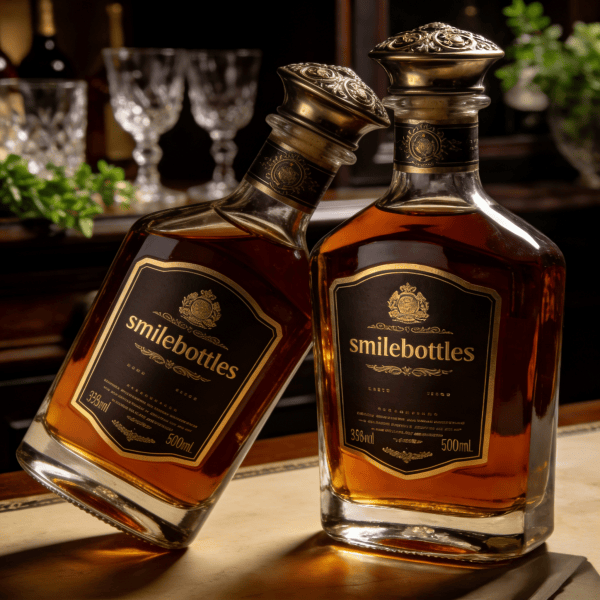
Why Choose Smilebottles for Your Spirit Bottles
Choosing the right partner is as important as the design itself. Here is why Smilebottles is the preferred partner for brands worldwide.
Complete Range of Bottles and Volumes
We don’t just sell one type. We offer bottles for liquor in every conceivable size. From small glass spirit bottles for samples to 750ml glass liquor bottles wholesale for mass retail, and even giant 1-liter bottles for sale. Whether you need glass spirit bottles NZ standards or US standards, we have the molds.
Custom Design and Branding Capabilities
We specialize in helping you design your own liquor bottle. We can take a sketch and turn it into a 3D rendering, and then a real glass sample. We offer deep processing: bottle colouring, frosting, decal printing, and hot stamping. We can create colorful liquor bottles that match your brand’s Pantone perfectly.
Quality, Safety, and Technical Reliability
We ensure our glass bottles are free from defects and strong enough for automated filling lines. We understand that alcohol in glass bottles requires food-grade safety and precise neck finishes to prevent leaking.
Flexible Order Quantities and Competitive Pricing
Whether you are a home distiller looking for empty spirit bottles for sale or a major brand needing glass bottles for bar distribution globally, we have solutions. We bridge the gap between small craft needs and large industrial requirements.
Professional Support and Long-Term Partnership
We are not just liquor bottle suppliers; we are consultants. We help you navigate the confusing world of glass bottle colors, glass spirit compatibility, and logistics.
FAQ: Quick Answers for Oil Brands and Buyers
Frequently Asked Questions (FAQ)
Q1Which bottle color should I choose for my spirit?
A1 It depends on the product. When it comes to colors alcohol can be light-sensitive. Use colored liquor bottles(amber or green) for aged spirits to protect them. Use clear liquor bottles for vodka or gin to show purity.
Q2 What is the difference between frosted, colored, and clear glass bottles?
A2 Clear liquor bottles are transparent. Coloured alcohol bottles have pigment added to the glass melt or are sprayed. Frosted bottles have a matte, sandblasted finish.
Q3 Which bottle volume is most popular in my target market?
A3 In the USA, 750 ml liquor bottles are the standard. In Europe, the UK, and Australia (search for glass spirit bottles UK or glass spirit bottles wholesale), 700ml is the legal standard.
Q4 Can I use the same bottle design in different sizes?
A4 Yes! We recommend keeping the glass bottle shape consistent to build a brand family. We can produce your shape in 100ml spirit bottles, 200ml liquor bottles, and standard sizes.
Q5 Does frosted or sprayed glass increase my packaging cost a lot?
Q6 It adds a small margin for the secondary processing, but it significantly increases the perceived value. Fancy glass liquor bottles often command a higher retail price that covers this cost easily.
Q7 Are your bottles suitable for automatic filling and labeling machines?
A7 Yes. Our glass alcohol bottle production follows strict dimensional tolerances suitable for high-speed lines.
Q8 What are the minimum order quantities for custom bottles?
A8 This varies by design, but generally, custom molds require higher MOQs than stock glass bottles empty. Contact us for specific details on glass spirit bottles wholesale.
Q9 Can Smilebottles help me develop a completely custom bottle design?
A9 Absolutely. We are expert spirit bottle manufacturers. We handle the 3D design, mold creation, and sample production.
Q10 Do you offer environmentally friendly or lightweight bottle options?
A10 Yes. We are constantly innovating with lighter-weight glass container packagingto reduce carbon footprints without sacrificing strength.
Conclusion
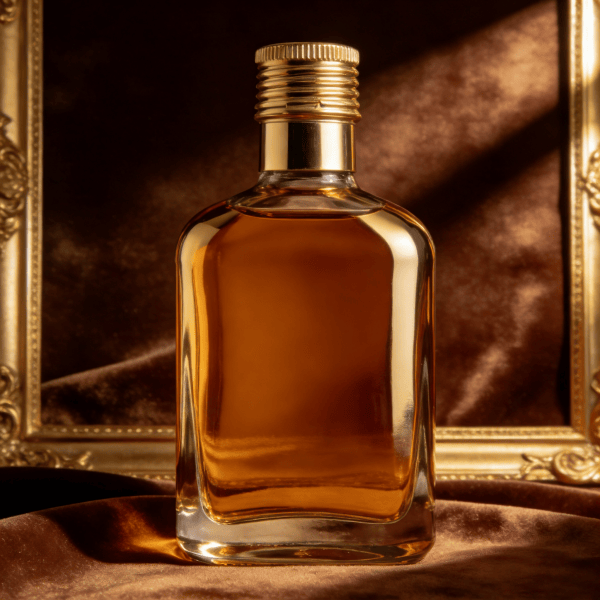
Your packaging is the face of your brand. Bottle color, shape, and size are not just aesthetic choices; they are business decisions that directly impact sales and brand perception. A well-chosen liquor bottle tells a story of quality, heritage, or modern innovation before a drop is drunk. Don’t leave your brand’s first impression to chance. Treat your glass spirit bottles as a strategic investment.
Contact Smilebottles today. Whether you need 750ml glass liquor bottles wholesale, unique colored liquor bottles, or professional advice on glass bottle design art, our team is here to help. Let us help you put your drinks in bottles that sell themselves.


