


Table of Contents
ToggleAuthor: SmileBottles Editorial Team
Estimated Reading Time: About 16 Minutes
If you are in the business of spirits packaging, wine packaging, or beverage packaging, you deal with numbers every day. Whether you are a distillery owner planning your next bottling run, a procurement manager sourcing containers, or a retailer stocking shelves, one question comes up constantly: how many ml in an oz? Understanding the conversion between metric (milliliters) and imperial (ounces) is not just a math problem; it is a critical part of your packaging strategy. A slight miscalculation can lead to labeling errors, legal compliance issues, and customer confusion.
At Smilebottles, as a trusted glass bottle manufacturer, understand that choosing the right packaging—from a standard fifth of alcohol to precise dropper glass bottles—requires accurate data. In this guide, we will break down everything you need to know about oz to ml conversions, standard liquor bottle sizes, and how to select the perfect glass packaging for your brand.
Why ml and oz Matter for Liquor Bottles
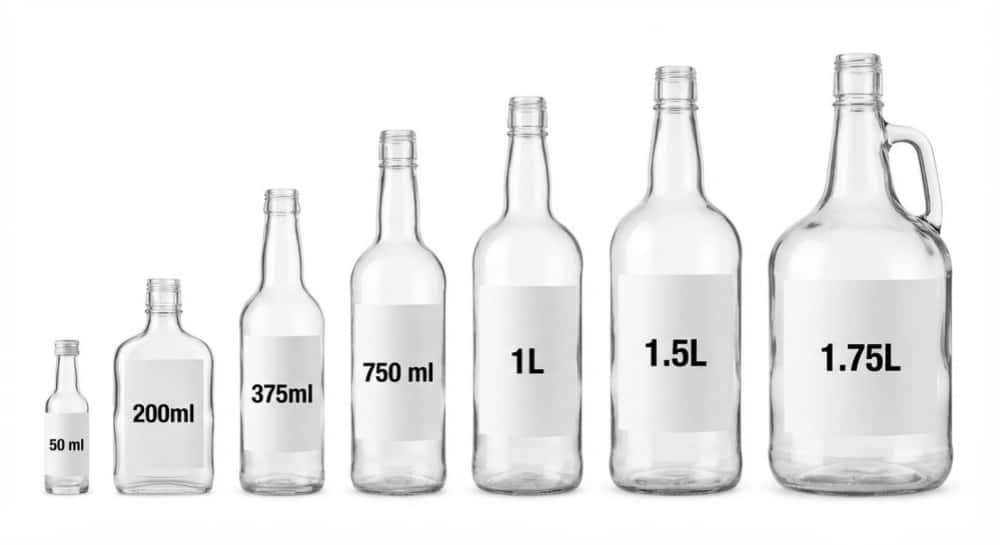
You might wonder why the industry doesn’t just stick to one system. The reality is that the global alcohol market is a mix of traditions and regulations. While the US relies heavily on Fluid Ounces (fl oz), the rest of the world—and the scientific community—operates in Milliliters (ml).
As a buyer, you need to be fluent in both. Your customers might ask, “How many ml in an ounce?” or compare prices based on volume. If you are sourcing bottles from a manufacturer like Smilebottles for a global market, you need to ensure your 750 ml in oz conversion is accurate for your label design.
Understanding these measurements helps you:
Ensure Compliance: Meet strict TTB (US) and EU regulations regarding net contents.
Optimize Pricing: Accurately calculate cost-per-ounce or cost-per-ml.
Maintain Consistency: Ensure your filling lines are calibrated correctly, whether you are filling a handle of vodka or a tiny essential oil dropper bottle.
What Is an Ounce and What Is a Milliliter?
Before we dive into the complex math of converting 750 ml to oz, let’s establish the basic definitions.
The Basics – Ounce (oz) vs. Milliliter (ml)
When we ask how many milliliters are in an oz, we are comparing two very different systems. The milliliter (ml) is a unit of volume in the metric system. It is the standard used worldwide for almost all liquid packaging, from soda cans to pharmaceutical vials. The ounce is trickier. There are different types of ounces, but for your industry, only one matters: the US fluid ounce.
What is a Fluid Ounce (fl oz)?
It is crucial to distinguish between weight and volume. When you see “oz” on a bag of sugar, that is weight. When you see “oz” on a bottle of whiskey, that is volume.
The U.S. fluid ounce (fl oz) is the volume unit used for liquids.
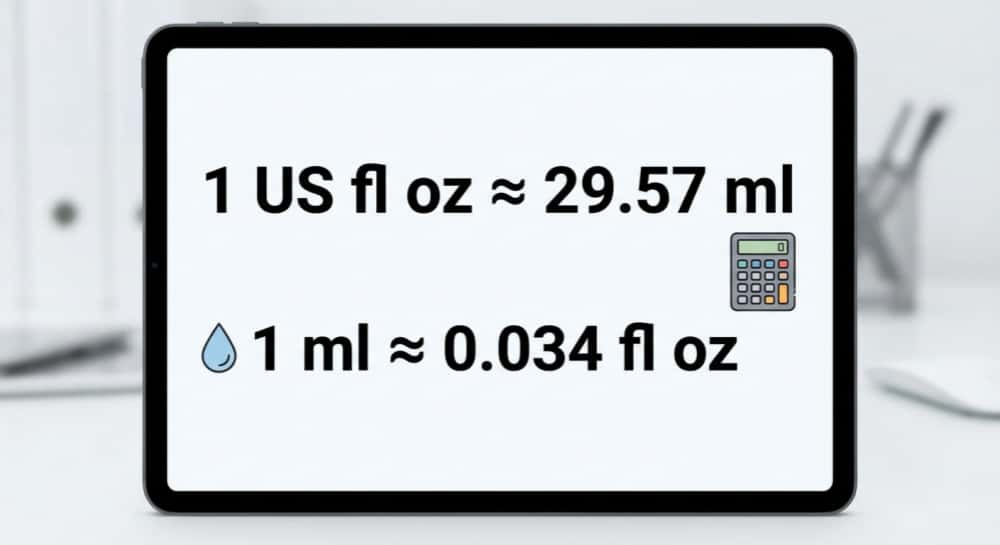
When people ask 1 oz ml conversions, they usually mean: 1 US fl oz ≈ 29.5735 ml.
In many practical settings, such as bartending or rough estimation, this is rounded. You will often hear that one ounce equals how many ml? The answer is commonly rounded to 30 ml, but for packaging and labeling, you must use the precise 29.57 oz to ml conversion factor.
What Is a Milliliter?
A milliliter is 1/1000th of a liter. It is the gold standard for precision. Whether you are filling spirit bottle sizes or tiny cosmetic containers, the milliliter leaves no room for ambiguity. This is why ml in an oz how many is such a vital conversion to master—it bridges the gap between American consumer habits and global manufacturing precision.
How to Convert Between ml and oz (With Simple Formulas)
As a professional, you don’t always have a converter handy. Here is how to handle the math when you need to perform a fluid ounce to ml calculation or vice versa.
Core Conversion Factors
To get accurate results, memorize these two numbers:
1 oz is equivalent to how many ml? 29.57 ml.
1 ml is how many ounces? 0.0338 fl oz.
Conversion Formulas
From Ounces to Milliliters:
If you have a volume in ounces and need the metric equivalent, multiply by 29.57.
Formula: Volume (oz) × 29.57 = Volume (ml)
Example: If you have a 1.5 liter to oz query, you first convert liters to ml (1500), but if you are going the other way, say for a cocktail recipe requiring 2 oz: 2 × 29.57 = 59.14 ml.
From Milliliters to Ounces:
This is the most common task for bottle buyers. You have a 750 ml bottle to ounces question. Divide the ml by 29.57.
Formula: Volume (ml) ÷ 29.57 = Volume (oz)
Example: convert 750 ml to ounces: 750 ÷ 29.57 ≈ 25.36. This is why you often see “25.4 fl oz” on a standard wine label.
Quick Practical Shortcuts
If you are on the factory floor or at a trade show and someone asks how many ml or in an oz, you can use these “rules of thumb”:
1 oz in ml is roughly 30 ml.
2 oz equals how many ml? Roughly 60 ml.
how many ml is half an oz? About 15 ml.
However, for your official packaging specifications with Smilebottles, always stick to the precise decimal points.
Volume Conversion in Different Industries
The importance of knowing ml to oz varies depending on what product you are bottling.
Food & Beverage (Bars and Restaurants)
Bartenders live and die by the pour. They need to know standard shot size ml to control costs.
How many ounces in a shot glass? In the US, a standard shot is usually 1.5 oz, which is about 44 ml. However, some places pour a “short shot” of 1 oz (approx. 30 ml) or a “double” of 2 oz (approx. 60 ml).
When designing custom glassware or mini-bottles for this sector, knowing how many ml in a glass ensures your product fits the pour spout perfectly.
Distilleries and Liquor Brands
For you, 750 ml to oz conversion is a legal matter. Your label must state the net quantity of contents.
If you label a bottle as 750 ml, the US TTB requires you to know that this is 25.36 oz to ml equivalent.
You also need to calculate yield. If you produce 1,000 liters of gin, knowing how many onces in 750ml helps you determine exactly how many bottles you can fill and sell.
Cosmetics and Dropper Bottles
At Smilebottles, we see a huge demand for dropper glass bottles. These are typically small, used for essential oils, serums, or CBD tinctures.
Common sizes include 15 ml, 30 ml, and 50 ml.
Customers often ask: how much is 1 ounce in ml for a serum bottle? A standard 1 oz dropper bottle is technically 30 ml in the industry context.
what is 15ml in oz? It is roughly 0.5 fl oz.
Precision here is vital. If a dosage instruction says “1 ml,” the consumer needs to know exactly what that looks like.
Glass Bottle Volume Definitions and Measuring Systems
When you order bottles from us, we talk about “capacity.” But there are two types of capacity you must understand to answer how many ml in bottle questions accurately.
Nominal Capacity vs. Brimful Capacity
Nominal Capacity: This is the commercial volume. When you ask for a 750 ml in oz bottle, you want it to hold 750 ml of liquid at a standard fill level (usually partway up the neck).
Brimful Capacity: This is the total volume if you filled the bottle to the very top, ready to spill over.
Why does this matter? If you are calculating how many oz in a 750 ml bottle, you need to leave “headspace” for expansion. A bottle with a nominal capacity of 750 ml might have a brimful capacity of 770 ml or 780 ml.
Measuring Glass Bottle Capacity
As an expert manufacturer, Smilebottles uses precise water-filling and weighing methods.
We weigh the empty bottle (tare).
We fill it with distilled water at a specific temperature.
Since 1 gram of water is roughly 1 ml, this confirms the volume. This ensures that when you sell a bottle of water is how many ounces or a bottle of whiskey, the volume is exactly what is claimed on the label.
Common Liquor Bottle Sizes and Their Conversions
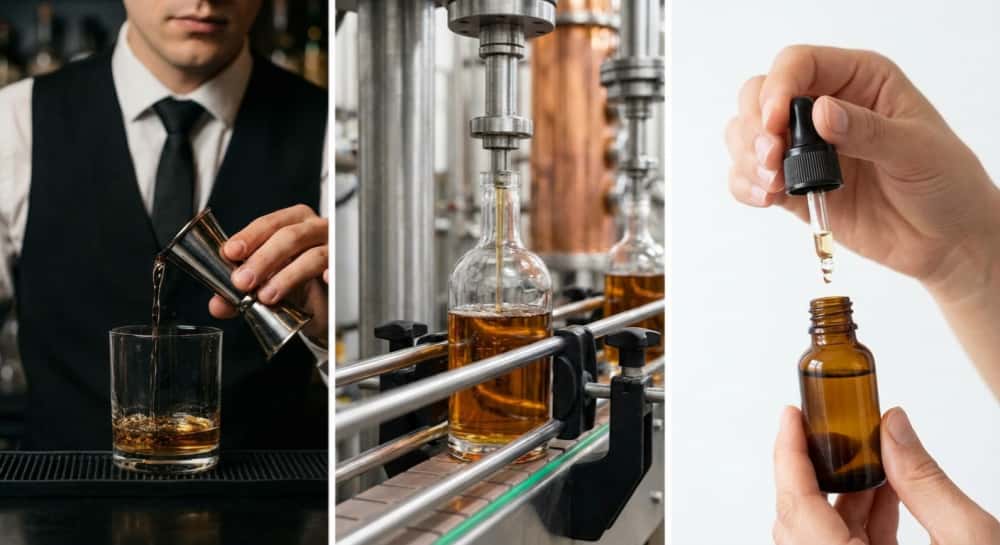
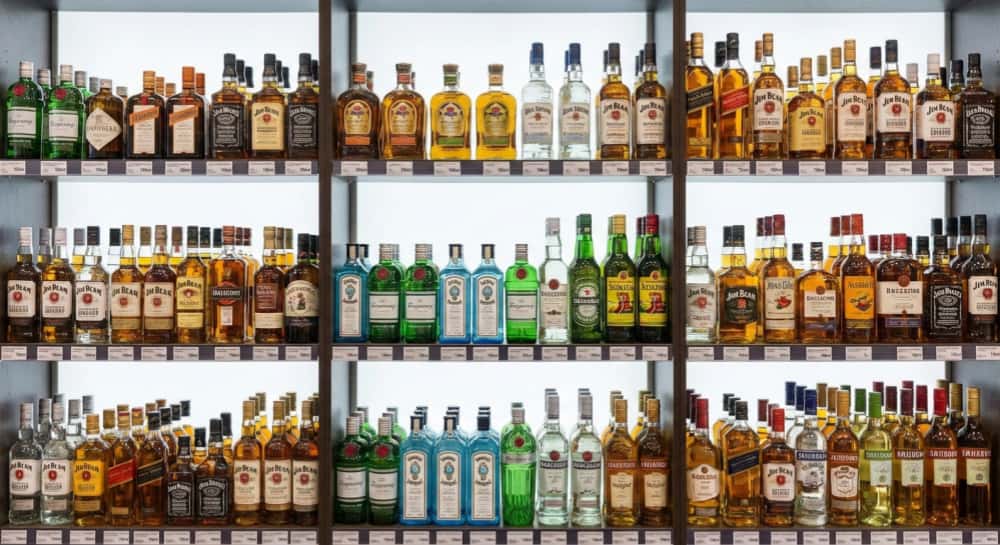
This is the most critical section for your SEO and your purchasing decisions. Below is a detailed breakdown of standard liquor bottle sizes chart information.
The “Miniatures” (Nips and Airline Bottles)
50 ml: This is the standard “nip” or airline bottle.
50 ml to oz: Approximately 1.7 fl oz.
Common queries: how many ounces is 50 ml, how much is 50 ml in ounces, and 50 ml is how many ounces.
Usage: Samples, airline service, gift sets.
Small Flasks and Quarter Bottles
100 ml: What is 100 ml in oz? Approx 3.4 fl oz.
Usage: Pocket flasks, large samples.
200 ml: 200 ml to oz: Approx 6.8 fl oz.
Usage: Often used for mixers or smaller spirit gifts.
The “Pint” and “Half Bottle”
375 ml: Known as a “split” or “half bottle” (half of a 750).
375 ml to oz: Approx 12.7 fl oz. Roughly equivalent to a standard soda can plus a sip.
Usage: Half-bottles of wine, smaller spirit bottles.
The Standard Size (The Fifth)
750 ml: The industry standard.
750 ml to oz: 25.36 fl oz (often rounded to 25.4). Historically, a “fifth” was one-fifth of a gallon (25.6 oz). The modern metric 750 ml bottle replaced it but kept the nickname.
How many shots are in a handle vs a fifth? A 750 ml bottle contains about 17 standard (1.5 oz) shots.
The Liter
1000 ml (1 Liter): How many ounces is 1000ml? 33.8 fl oz.
Usage: Duty-free shops, bar rail bottles (easier for bartenders to grab).
The Handle (Magnums and Up)
1.5 L (1500 ml): A Magnum of wine.
How many oz is 1500ml? Approx 50.7 fl oz.
1.75 L (1750 ml): The “Handle.” 1750 ml to oz: 59.2 fl oz.
handle of vodka? This is the large bottle with a glass or plastic handle, essential for parties.
How many shots are in a handle? Approx 39 shots (at 1.5 oz each).
Detailed Conversion Reference Table
To help you transform oz to ml quickly, here is a reference list about the most common liquor bottle sizes we receive at Smilebottles.
|
Milliliters (ml) |
Approximate Ounces (fl oz) |
|
1 ml |
0.03 oz |
|
10 ml |
0.34 oz |
|
15 ml |
0.5 oz |
|
30 ml |
1.01 oz |
|
40 ml |
1.35 oz |
|
50 ml |
1.7 oz |
|
60 ml |
2.03 oz |
|
100 ml |
3.4 oz |
|
150 ml |
5.07 oz |
|
200 ml |
6.8 oz |
|
250 ml |
8.45 oz |
|
375 ml |
12.7 oz |
|
400 ml |
13.5 oz |
|
500 ml |
16.9 oz |
|
700 ml |
23.7 oz |
|
750 ml |
25.4 oz |
|
1000 ml |
33.8 oz |
|
1750 ml |
59.2 oz |
Why Accurate ml–oz Conversions Matter in Glass Liquor Bottle Packaging
You might think close enough is good enough, but in glass manufacturing, precision is everything.
Legal and Regulatory Compliance
If you label your product as containing 750 ml, but the bottle only holds 25 oz (which is 739 ml), you are underfilling. This can lead to massive fines and product recalls. Knowing how many ounces are in 750 ml exactly (25.36 oz) ensures your “Fill Point” is set correctly at the factory.
Consistency in Brand Image and Pricing
Imagine a customer comparing your bottle to a competitor’s. If you are using a European standard 700 ml bottle (how many oz is 700ml? 23.7 oz) but pricing it the same as a US standard 750 ml bottle (25.4 oz), consumers might feel shortchanged if the labeling isn’t clear. Conversely, using a 4.2 oz is how many ml (approx 124 ml) a custom bottle can set your brand apart, but you must market the volume clearly.
Production Efficiency
Your filling machines are calibrated to specific volumes. If you buy a stock bottle that varies slightly in internal volume, your machine might overfill (wasting product) or underfill (legal risk). Smilebottles ensures that when you order a 200 ml equals how many oz bottle, the internal cavity is molded to strict tolerances.
Smilebottles – Your Expert Partner for Glass Liquor Bottle Packaging
Navigating the world of transform oz to ml and selecting the right bottle size can be overwhelming. That is where we come in.
Who We Are
Smilebottles is a premier manufacturer of glass bottles. We specialize in serving liquor brands, wholesalers, and packaging distributors. We don’t just sell glass; we provide solutions. Whether you need a standard fifth of alcohol bottle or a unique custom shape, we have the molds and the expertise.
Our Standard and Custom Volume Options
We offer a vast range of molds ready for production:
Spirits: Everything from 50 ml to oz miniatures to 1.75 liter to oz handles.
Dropper Bottles: For your essential oils and tinctures, we provide precise 1 oz in ml (30ml) and 15 ml equals how many ounces (0.5 oz) options.
Custom Shapes: Want a bottle that holds exactly 48 ml, or how many ounces (1.6 oz)? We can create custom molds to match specific volume requirements for unique marketing campaigns.
Precision Volume Control and Quality Assurance
We know that ml in an oz how many is a question of science, not guesswork.
We use advanced quality control to measure the brimful and fill-point capacities of every batch.
We ensure that your 750 ml bottle-to-ounces conversion is accurate on the production line, so your labels are always compliant.
How to Work With Smilebottles
If you are looking to source high-quality glass bottles:
Define your volume: Do you need 750 ml, 700 ml, or a custom size?
Contact us: Send us your requirements.
Design & Sample: We will provide technical drawings showing the exact oz in 750 ml capacity levels.
Production: We manufacture, inspect, and ship to your location.
FAQ – Common Questions About ml in oz and Liquor Bottle Sizes
Here are the answers to the most frequent questions buyers ask us, covering the specific keywords you deal with daily.
Q1:How many ml in an oz?
A1:There are approximately 29.57 ml in 1 US fluid ounce.
Q2:How many ounces in a 750ml bottle?
A2:There are 25.36 fluid ounces in a 750ml bottle. This is the standard size for wine and spirits.
Q3:How many ounces in a handle of liquor?
A3:A handle is 1.75 Liters (1750 ml). Therefore, there are 59.2 fluid ounces in a handle.
Q4:How many ml is 1.5 oz?
A4:This is a standard shot size. 1.5 oz is approximately 44 ml.
Q5:What is 750 ml in ounces for labeling?
A5:Most brands label it as 25.4 fl oz.
Q6:How much is 50 ml in ounces?
A6:50 ml is approximately 1.7 fluid ounces. This is the standard size for airline bottles.
Q7:How many oz is 100ml?
A7:100 ml is roughly 3.4 fluid ounces, which is the limit for carry-on liquids in air travel.
Q8:How many ml in a glass of water?
A8:A standard drinking glass is usually 8 oz to 12 oz. Since 1 oz is equal to ml (approx 30), a glass is between 240 ml and 360 ml.
Q9:How many ounces is 200 ml?
A9:200 ml is approximately 6.8 fluid ounces.
Q10:What is 1 1 2 oz in ml?
A10:1.5 oz (one and a half ounces) is 44.36 ml.
Q11:How many ml in 16oz?
A11:16 oz is a standard US pint. 16 oz is how many ml? It is 473 ml.
Q12:How many oz is 700 ml?
A12:700 ml is the standard European spirit size. 700 ml equals how many ounces? It is 23.7 fl oz.
Q13:How many ounces is 1000ml?
A13:1000 ml (1 Liter) is 33.8 fluid ounces.
Final Thoughts
Navigating the numbers—from 750 ml to oz to calculating how many ml per oz for your filling line—is a fundamental part of the spirits packaging business. Whether you are launching a new tequila in a 750 ml bottle or a CBD line in a 1 oz dropper bottle, accuracy is your best friend. Remember, 1 oz is always approx 29.57 ml, and a fifth is always 750 ml. Keeping these ml to ounces liquid conversion factors in mind will help you avoid costly mistakes and communicate clearly with your customers.
At Smilebottles, we are more than just a manufacturer; we are your technical partner. We ensure that every bottle we produce meets strict volume standards, so you never have to worry about how many ml in an ounce—we’ve already measured it for you.


