



Table of Contents
ToggleAuthor: SmileBottles Editorial Team
Estimated Reading Time: About 15 Minutes
As a brand owner, distillery manager, or purchasing director, understanding the types of liquor bottles available is one of the most critical steps in bringing your product to market. The right container does more than just hold liquid; it tells your brand’s story, preserves the quality of the alcohol, and directly influences a customer’s buying decision.
If you are planning to purchase packaging for your spirits, you might be wondering about the vast array of liquor bottle types. From traditional classics to modern, unique glass bottles, the options can feel endless. In this comprehensive guide, we will walk you through the different liquor bottles on the market, helping you navigate the choices so you can select the perfect match for your brand. Whether you are looking for a reliable liquor bottle supplier or simply exploring the different types of alcohol bottles to inspire your next product line, this article covers everything you need to know.
How Are Liquor Bottles Classified?
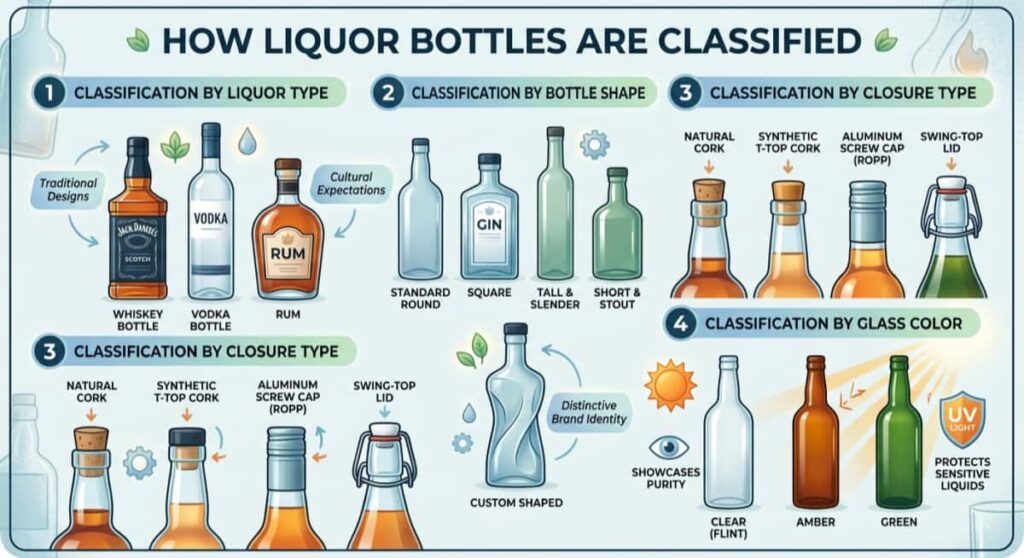
Before diving into specific spirits, it helps to understand how the packaging industry categorizes different types of bottles. Generally, manufacturers and buyers classify these containers in a few primary ways:
1. Classification by Liquor Type
Different spirits have deep-rooted historical traditions that dictate their packaging. For example, the expectations for a whiskey container differ vastly from those of a vodka container.
2. Classification by Bottle Shape
The physical silhouette of the glass is crucial. When looking at bottle shapes, you will find standard round, square, tall, and short options, as well as highly customized shaped bottles that break the mold entirely.
3. Classification by Closure Type
How the container is sealed is just as important as the glass itself. Common closures include natural corks, synthetic T-top corks, aluminum screw caps (ROPP), and swing-top lids.
4. Classification by Glass Color
Glass color is not just for aesthetics; it serves a functional purpose. Clear (flint) glass showcases the liquid’s purity, while amber or green glass protects sensitive liquids from harmful UV light.
Common Types of Liquor Bottles by Spirit
When you are sourcing packaging, the most common starting point is looking at the specific spirit you are bottling. Let’s break down the types of alcohol bottles by their intended contents.
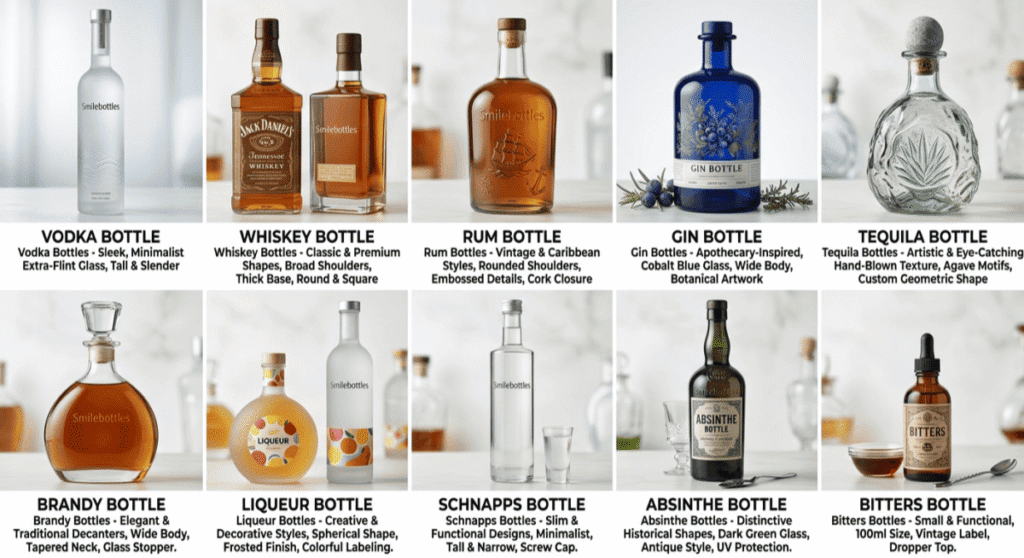
Vodka Bottles – Sleek and Minimalist Designs
Vodka is typically clear, and its packaging reflects a sense of purity, filtration, and modern elegance. A standard vodka bottle shape is usually tall, slender, and cylindrical. Brands often choose clear vodka bottles made from extra-flint glass to highlight the crystal-clear nature of the liquid inside.
When you explore vodka bottle design, you will notice a trend toward minimalism. Because the spirit itself has no color, the glass acts as a blank canvas. Many brands use frosting, silk-screen printing, or subtle embossing to stand out. If you are bottling a premium vodka, opting for a heavy glass base can instantly elevate the perceived value of your product.
Whiskey Bottles – Classic and Premium Shapes
Whiskey, bourbon, and scotch rely heavily on heritage and tradition. The classic whiskey bottle shape is generally shorter and wider than vodka packaging. It features broad shoulders and a very thick, heavy glass bottom. This weight gives the consumer a sense of substance and quality, which is essential for premium whiskey bottles.
You will often see the iconic square whiskey bottle in this category. Square shapes not only look authoritative and traditional on a bar shelf, but they are also incredibly efficient for shipping and storage. Whether you choose round or square, whiskey bottles are designed to showcase the rich amber color of the aged spirit.
Rum Bottles – Vintage and Caribbean Styles
Rum has a colorful history tied to nautical adventures, tropical climates, and pirate lore. Therefore, rum bottle design often leans into rustic, vintage, or Caribbean aesthetics.
Vintage rum bottles frequently feature rounded shoulders, short necks, and sometimes a slightly bulbous body. It is also common to see embossed glass—perhaps a raised ship, an anchor, or a tropical crest—integrated directly into the glass. These rum bottles often use cork closures to complete the traditional, old-world feel.
Gin Bottles – Apothecary-Inspired Bottles
Gin originated as a medicinal liquor, and modern gin bottle design still frequently nods to this apothecary history. These containers often feature a wider body and a shorter neck.
While clear glass is common, many gin bottles utilize dark green or blue glass. A beautiful blue bottle decoration or intricate botanical artwork printed directly on the glass is very popular in the craft gin market. Because gin relies heavily on complex botanical recipes, the packaging often features detailed, artistic labels to match.
Tequila Bottles – Artistic and Eye-Catching Designs
If there is one spirit category that embraces bold, artistic packaging, it is tequila. Tequila bottle design is heavily influenced by Mexican culture and craftsmanship.
While standard Mixto tequilas might use basic shapes, high-end 100% agave spirits often utilize unique tequila bottles. You will find artisanal glass, hand-blown textures, and intricate agave leaf motifs. If you want your brand to stand out, investing in custom tequila bottles with unusual geometries or heavy, decorative stoppers is a proven strategy. These tequila bottles are often kept by consumers long after the liquor is gone because they look like pieces of art.
Brandy Bottles – Elegant and Traditional Forms
Brandy and Cognac are synonymous with luxury and after-dinner elegance. Traditional brandy glass bottles often mimic the look of high-end crystal decanters.
Standard brandy bottles feature a wide, sweeping body that tapers up to a short, elegant neck. This specific shape implies a slow, relaxed pouring experience. The glass is usually clear to display the deep, rich tones of the aged alcohol.
Liqueur Bottles – Creative and Decorative Styles
Liqueurs—ranging from coffee and cream to bright fruit flavors—are the most visually diverse category. Because the liquids themselves are often brightly colored, liqueur bottles lean into fun and creativity.
You will frequently see decorative liquor bottles in this space. Brands use everything from spherical shapes to tall, frosted glass. The goal of a liqueur container is to promise a sweet, flavorful, and enjoyable experience.
Schnapps Bottles – Slim and Functional Designs
Traditional European schnapps bottles prioritize function and elegance. They are almost universally tall, very slim, and feature a long neck. This allows for a controlled, easy pour, which is ideal for a spirit often served in small, chilled shot glasses. The minimalist nature of these containers keeps the manufacturing costs reasonable while maintaining a sophisticated European flair.
Absinthe Bottles – Distinctive Historical Shapes
Absinthe has a mysterious and highly ritualistic background. Absinthe bottles often feature a distinct historical shape: a tall body with a slightly curved or bulbous neck. Because absinthe is highly sensitive to light, these containers are almost always made of dark green or amber glass. The antique look of the glass helps sell the traditional “Green Fairy” experience to the buyer.
Bitters Bottles – Small and Functional Packaging
Bitters are highly concentrated flavor extracts used in drops or dashes for cocktails. Therefore, bitters bottles are quite different from standard spirit packaging.
A cocktail bitters bottles is small—usually ranging from 50ml to 150ml. The most critical feature is the closure. These containers require dasher tops or glass droppers to ensure the bartender can control the exact amount of liquid dispensed. Though small, these bottles often feature intricate, vintage label designs.
Standard Liquor Bottle Sizes and Capacities
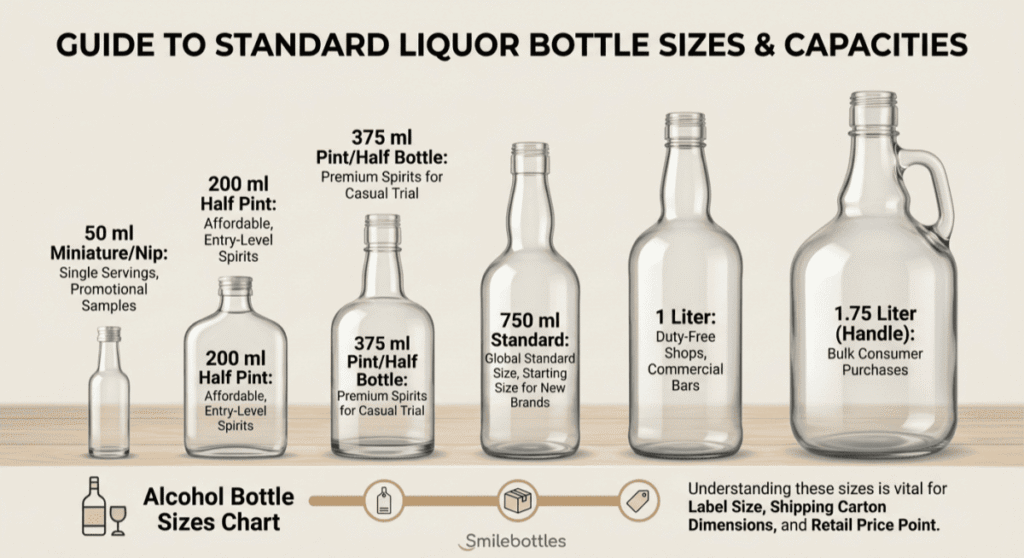
As a buyer purchasing in bulk, you must understand standard capacities. The size of the container dictates your label size, your shipping carton dimensions, and your retail price point. Here is a breakdown of common liquor bottle sizes( Click here to check the article about the liquor bottle size ):
50 ml (Miniature/Nip): Used for single servings, airline travel, and promotional samples.
200 ml (Half Pint): A popular size for affordable, entry-level spirits.
375 ml (Pint/Half Bottle): Exactly half of a standard bottle, often used for premium spirits where a full bottle might be too expensive for a casual trial.
750 ml (Standard):The standard liquor bottle size globally (though 700ml is standard in Europe). If you are launching a new brand, the 750ml liquor bottle is where you must start.
1 Liter: Commonly used for duty-free shops and commercial bars (well drinks).
75 Liter (Handle): Used for bulk consumer purchases.
If you are planning your product lineup, creating an internal alcohol bottle sizes chart will help you align your packaging choices with your target retail price and consumer usage habits. Understanding these liquor bottle sizes is vital for accurate inventory and logistics planning.
Exploring Liquor Bottle Shapes and Their Functions
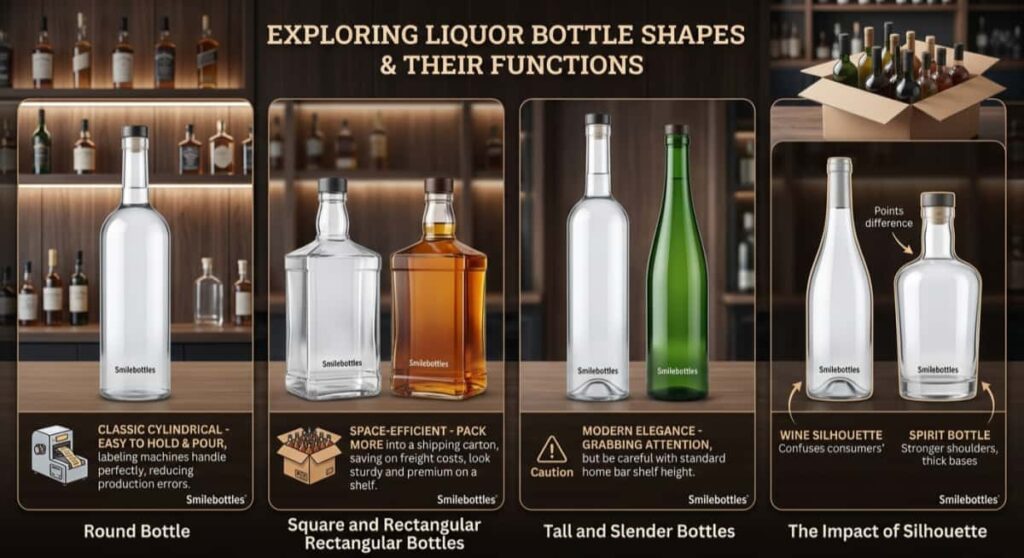
Beyond the type of spirit, you must consider the physical geometry of the glass. The glass bottle shapes you choose impact everything from shelf visibility to shipping costs. Let’s look at the specific bottle shape names and their practical functions.
Round Bottles
The classic cylindrical shape is the most common in the industry. It is easy to hold, easy to pour, and highly cost-effective to manufacture. Labeling machines handle round bottles perfectly, reducing production errors.
Square and Rectangular Bottles
As mentioned earlier, a square shape is highly space-efficient. You can pack more square bottles into a shipping carton than round ones, saving on freight costs. They also look incredibly sturdy and premium on a shelf.
Tall and Slender Bottles
Tall liquor bottle shapes project modern elegance. They stand head and shoulders above shorter bottles on a retail shelf, grabbing attention. However, you must be careful—if they are too tall, they might not fit on standard home bar shelves.
The Impact of Silhouette
When buyers think of packaging, they sometimes confuse spirits with wine. A wine bottle silhouette (like the classic Bordeaux or Burgundy shape) features a gentle slope and a specific punt (the indentation at the bottom). While you can use a wine shape for spirits, it may confuse consumers. Spirit bottle shapes usually feature stronger, broader shoulders and thicker bases to differentiate them from wine.
Creative and Unique Bottle Designs
In a crowded market, standard shapes sometimes aren’t enough. Many brands are turning to bottle design art to capture consumer attention.
If you want your product to go viral or become a collector’s item, you might explore weird shaped bottles or odd shaped glass bottles. Think of containers shaped like skulls, weapons, animals, or geometric diamonds. These funny shaped bottles and fun shaped bottles act as an instant marketing tool. Consumers love to buy a designer bottle to keep as a display piece.
When brainstorming decorated bottles ideas, look outside the spirits industry for inspiration. For instance, you might look at ergonomic designs for water bottle to see how comfortable grips are integrated into glass, even though typical water bottle shapes are much simpler. Alternatively, consider how your packaging will look in advertising. When planning photoshoots featuring models with bottles, a visually striking, unique bottle will photograph beautifully and draw the eye immediately.
From an intricate drawing of bottle concepts to the final manufactured product, creating shaped glass bottles or a bottle shaped glass that defies convention requires working with a skilled manufacturer who understands custom mold creation. While unique shaped glass bottles cost more to produce, the return on investment in brand recognition is often massive.
Glass Types and Colors Used in Liquor Bottles
The material itself is a crucial decision for bulk buyers. Glass liquor bottles are preferred over plastic because glass is inert; it will not alter the taste of the alcohol over time. Furthermore, glass feels premium and is 100% recyclable.
Here are the main glass types you will encounter:
Flint Glass (Clear): The standard clear glass used for vodka, gin, and white rum. For ultra-premium spirits, manufacturers use “Super Flint” or “Extra Flint” glass, which removes all iron impurities to provide diamond-like clarity.
Amber Glass: This brown glass provides excellent UV protection, preventing sunlight from degrading the flavors of the liquid. It is occasionally used for traditional whiskeys or specialty spirits.
Green Glass: Often used for absinthe or certain gins. It offers mild UV protection and a strong vintage aesthetic.
Black/Opaque Glass: Achieved through coating or dark glass mixtures, black bottles scream luxury and mystery. They are excellent for limited-edition releases.
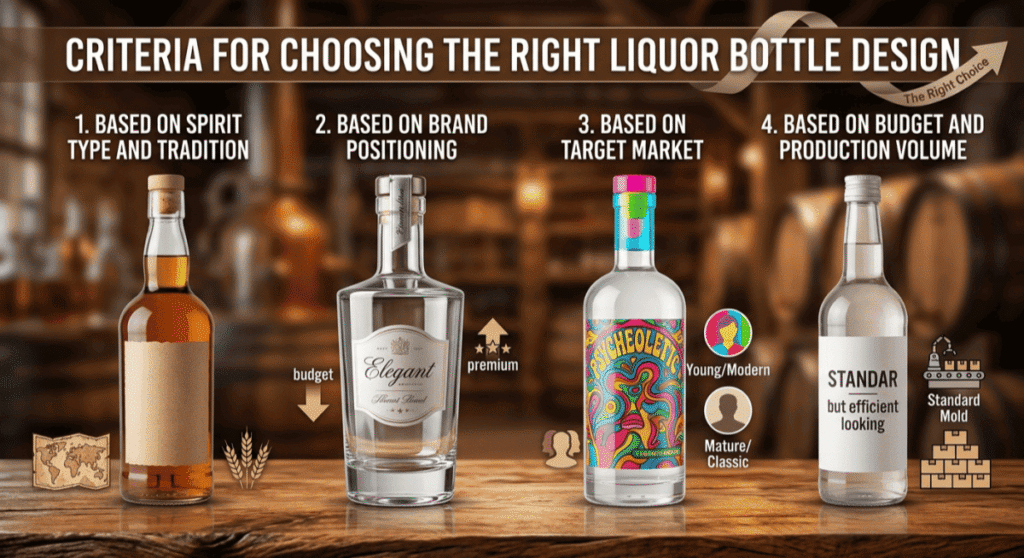
How to Choose the Right Liquor Bottle for Your Brand
With so many interesting glass bottles available, how do you make the right choice? As a buyer, you should evaluate the following criteria to find the best liquor bottle design for your project:
1. Based on Spirit Type and Tradition
Does your spirit have a historical expectation? If you are bottling a traditional Scotch, a tall, frosted, minimalist cylinder might confuse your buyers. Honor the tradition of the spirit category while finding subtle ways to modernize it.
2. Based on Brand Positioning
Are you selling a budget-friendly well drink or an ultra-premium sipping spirit? Premium brands need heavier glass, thicker bases, and perhaps custom molds. Value brands should stick to standard round bottles that are lightweight and cheap to ship.
3. Based on Target Market
Who is drinking your product? A younger demographic might be drawn to glass shaped bottles with bright, silk-screened artwork. A mature demographic might prefer a classic, heavy, paper-labeled container with a natural cork.
4. Based on Budget and Production Volume
Custom molds are fantastic, but they require higher Minimum Order Quantities (MOQs) and upfront tooling costs. If you are a startup, choosing a high-quality standard mold and dressing it up with an exceptional label and closure is often the most cost-effective strategy.
Why Smilebottles Is Your Best Choice for Liquor Bottles
Finding the right packaging is only half the battle; finding the right manufacturing partner is the key to success. If you are looking for a reliable liquor bottle supplier, Smilebottles is your ultimate destination.
As a premier manufacturer of bulk liquor bottles, we understand the complexities of the B2B purchasing process. Here is why brands around the world trust us with their packaging:
Extensive Range of Designs: Whether you need standard round bottles, square whiskey designs, or apothecary gin shapes, we have a massive catalog of existing molds ready for production.
Custom Manufacturing Capabilities: Do you have a vision for a completely unique bottle? Our engineering team can take your rough sketch or drawing of a bottle and turn it into a precise 3D mold. We specialize in producing complex, shaped bottles that make your brand stand out.
High-Quality Materials: We use top-tier extra-flint glass to ensure your clear spirits shine brilliantly, and we offer robust amber and colored glass options for UV protection.
Competitive Pricing and Global Supply: Because you are buying directly from the manufacturer, we offer highly competitive pricing for bulk orders, backed by years of export experience and strict quality control certifications.
At Smilebottles, we don’t just sell glass; we provide packaging solutions that elevate your brand’s market presence.
FAQ Frequently Asked Questions About Liquor Bottles
To help you finalize your purchasing decisions, here are answers to some of the most common questions buyers have:
Q1:What is the most common liquor bottle shape?
A1:The round, cylindrical shape is the most common due to its ease of manufacturing, structural integrity, and ease of labeling. However, square bottles follow closely behind, especially in the whiskey sector.
Q2:Can I use a wine bottle for liquor?
A2:While physically possible, it is not recommended. Consumers subconsciously associate a wine bottle silhouette with lower-proof fermented grape juice. Liquor requires packaging that communicates the strength and nature of a distilled spirit.
Q3:Why do premium liquors come in heavier bottles?
A3:A thick glass base (often called a “punt” or “sham”) adds significant weight to the container. In consumer psychology, heavier packaging is directly associated with higher quality and justifies a premium price point.
Q4:How much does it cost to make a custom shaped bottle?
A4:The cost varies depending on the complexity of the mold and the weight of the glass. While there is an initial tooling fee for the custom mold, ordering bulk liquor bottles from a direct manufacturer like Smilebottles drives the per-unit cost down significantly, making custom shapes very accessible for growing brands.
Q5:Why are some liquor bottles dark colored?
A5:Dark glass, such as amber or dark green, filters out ultraviolet (UV) light. UV light can break down the complex organic compounds in certain spirits (like the botanicals in gin or the herbs in absinthe), altering the flavor and color. Dark glass protects the liquid’s integrity.
Conclusion
Navigating the world of spirit packaging doesn’t have to be overwhelming. By understanding the types of liquor bottles available—from classic, heavy-based whiskey containers to sleek, modern vodka cylinders—you can make informed decisions that align with your brand’s identity and budget.
Remember, the bottle you choose is the physical handshake between your brand and the consumer. It must look appealing on the shelf, feel substantial in the hand, and function perfectly for the bartender pouring it. Whether you decide to rely on traditional shapes or break the market with wildly unique glass bottles, your choice of packaging is a foundational pillar of your brand’s success. If you are ready to source the highest quality glass packaging for your distillery or brand, Smilebottles is here to help. Explore our extensive catalog of standard designs or contact our team today to start designing your custom mold. Let us help you turn your vision into a reality with the perfect glass liquor bottle.


