
Table of Contents
ToggleAuthor: SmileBottles Editorial Team
Estimated Reading Time: About 14Minutes
Bottled coffee is everywhere now. Cold brew in the fridge aisle, iced lattes at convenience stores, single-origin shots at specialty cafés, and flavored coffee drinks on e-commerce shelves — the category keeps growing every year. If you are building a coffee brand or running a beverage business, the bottle you put your coffee into is not a small detail. It shapes how your product tastes, looks, sells, and survives on the shelf.
As a glass bottle manufacturer working with coffee and beverage brands every day, we at Smilebottles see the same questions again and again. Which shape works best for cold brew? What size sells fastest? Which cap seals properly for milk coffee? How do you keep shipping costs reasonable when glass is heavier than plastic?
This guide will walk you through everything you need to know about choosing the right glass bottles for coffee, from material and shape to closures, filling process, and common buying mistakes. Whether you are a startup launching your first SKU or an established brand adding a new line, you will find practical advice you can use right away.
Why Coffee Packaging Is Important for Your Brand
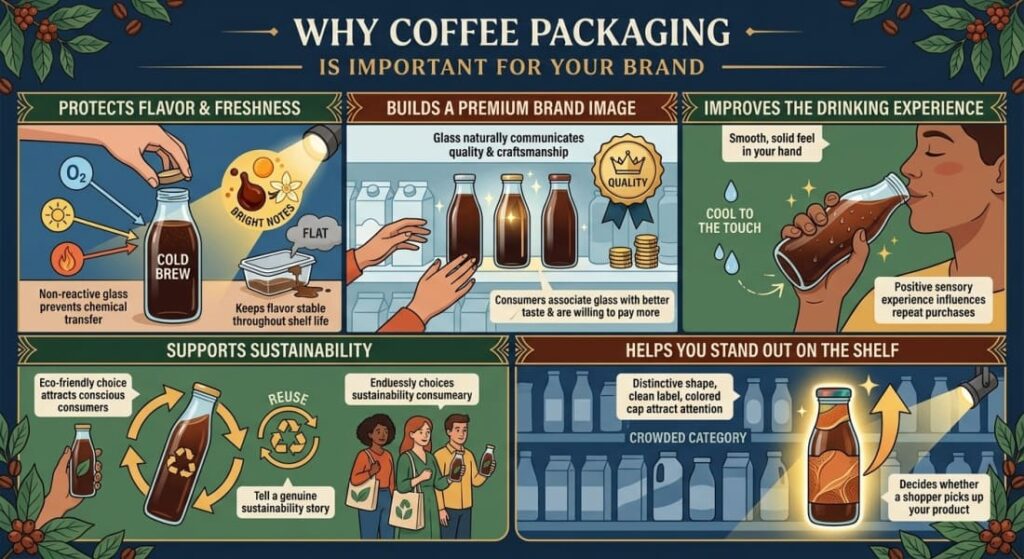
Before you pick a bottle, it helps to understand why coffee bottle packaging matters so much. It is not just a container — it is part of your product.
Protects Coffee Flavor and Freshness
Coffee is sensitive. Oxygen, light, heat, and contact with reactive materials can all change how it tastes. Within a few days, a poorly packaged cold brew can lose its bright notes and turn flat. Glass coffee bottles are non-reactive, which means they do not transfer any smell, chemical, or aftertaste to your drink. For cold brew, milk coffee, and ready-to-drink lattes, a proper seal and the right material are critical to keep the flavor stable throughout shelf life.
Builds a Premium Brand Image
Walk down any beverage aisle and notice which products look more expensive. Most of them are in glass. Coffee glass bottles naturally communicate quality, cleanliness, and craftsmanship. Consumers associate glass with better taste, and they are usually willing to pay more for it. If you want your coffee to feel premium — not just taste premium — glass does half the marketing work for you.
Improves the Drinking Experience
The way a bottle feels in your hand matters. Glass is smooth, solid, and cool to the touch. Drinking straight from a well-shaped glass bottle feels different from plastic. For cafés, hotels, and on-the-go retail, this sensory detail can influence repeat purchases more than you might think.
Supports Sustainability
Glass is endlessly recyclable and often reusable. More consumers today actively look for eco-friendly packaging, and many will switch brands for it. Using glass beverage bottles lets you tell a sustainability story without greenwashing.
Helps You Stand Out on the Shelf
The coffee drinks category is crowded. A distinctive bottle shape, a clean label, a colored cap — these small design choices decide whether a shopper picks up your product or walks past it.
How to Choose the Best Glass Bottles for Coffee Drinks
This is the core of the guide. Choosing the right bottle is not about picking whatever looks nice in a catalog. You need to think through your brand, your customers, your production process, and your logistics. Here is how to approach it step by step.
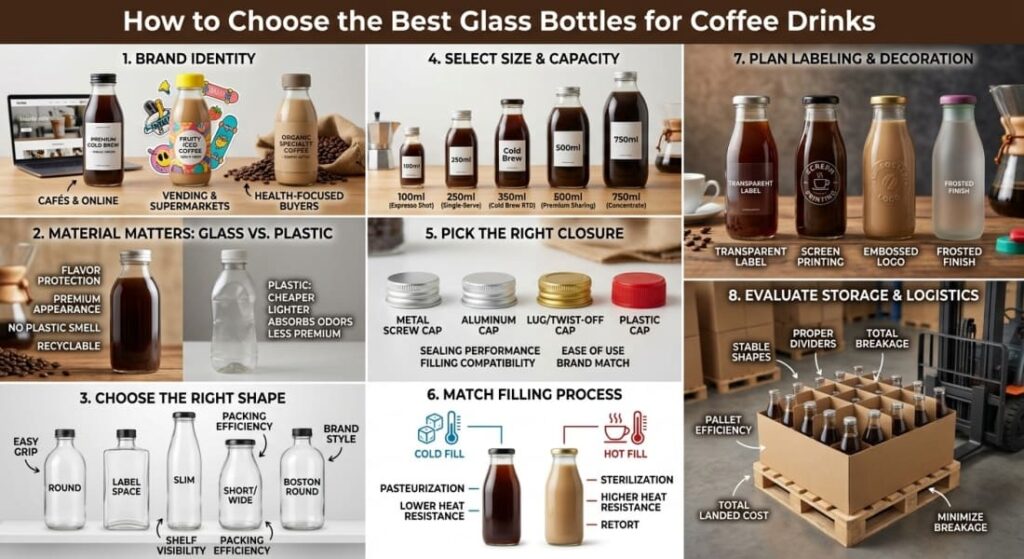
1. Start With Your Brand Identity
Before you contact any glass bottle supplier, define your brand. Ask yourself:
Is your coffee premium, everyday, natural, playful, or trendy?
Where will it be sold — cafés, supermarkets, hotels, vending machines, or online?
Who is your customer — young office workers, health-focused buyers, specialty coffee drinkers, or mass-market shoppers?
The answers shape every packaging decision that follows. A premium single-origin cold brew brand will choose a totally different bottle than a fun, fruity iced coffee aimed at Gen Z.
A few quick examples:
Premium cold brew → slim, tall, minimalist clear glass.
Café-style latte → round bottle with plenty of label space.
Organic specialty coffee → simple clear glass with kraft-paper labels and matte caps.
Flavored iced coffee for young consumers → bold shapes, colored caps, shrink sleeves.
2. Material Matters: Why Glass Beats Plastic for Coffee
Plastic is cheaper and lighter, but for coffee it has real drawbacks. Plastic can absorb and transfer odors. It does not feel premium. And consumers increasingly associate it with waste.
Glass bottles for coffee offer:
Flavor protection — glass is inert and never affects taste.
Premium appearance — makes your drink look high-end instantly.
No plastic smell — especially important for cold brew and black coffee, where subtle notes matter.
Recyclability — supports your sustainability messaging.
Visual display — clear glass lets the color and texture of your coffee sell itself.
If your brand competes on quality, glass is almost always the right call.
3. Choose the Right Bottle Shape
Shape affects both branding and function. Here are the most common options for coffee:
Round bottles — classic, comfortable to hold, versatile for almost any coffee drink.
Square bottles — modern look, great for shelf visibility and brand differentiation.
Slim/tall bottles — elegant and premium, popular for specialty cold brew.
Short and wide bottles — stable, good for dairy coffee drinks and single-serve café beverages.
Boston round bottles — clean and professional, widely used for cold brew glass bottles and functional coffee drinks.
When reviewing shapes, ask:
Is it easy to grip?
Does it work with my label design?
Will it pack efficiently in cartons and pallets?
Does it fit standard cup holders and fridge shelves?
Does it match my brand style?
4. Select the Right Size and Capacity
Size affects price positioning, drinking occasion, and shipping cost. Here are the common capacities for beverage glass bottles used in coffee:
|
Bottle Size |
Best For |
Typical Use |
|
100ml–150ml |
Espresso shots, samples |
Tasting, gift sets |
|
200ml–250ml |
Single-serve coffee |
Cafés, retail, on-the-go |
|
300ml–350ml |
Cold brew, iced coffee |
Most popular RTD size |
|
500ml |
Larger serving |
Premium cold brew, sharing |
|
750ml–1000ml |
Concentrate, family size |
Home use, café supply |
Pick size based on:
Your product type (espresso, cold brew, latte, concentrate, flavored coffee).
The drinking occasion.
Your price point.
Carton packing efficiency and shipping cost.
If you also sell glass coffee syrup bottles for cafés or retail, larger sizes like 500ml and 750ml with pump-compatible necks are worth considering.
5. Pick the Right Closure
A beautiful bottle means nothing if it leaks. Closure compatibility is one of the most overlooked parts of coffee packaging.
Common options:
Metal screw caps — strong seal, reliable, widely used for cold brew and iced coffee.
Aluminum caps — lightweight, clean, premium feel.
Lug / twist-off caps — suited for pasteurized or hot-filled drinks.
Plastic caps — cheaper and available in many colors, but less premium.
Tamper-evident caps — build consumer trust on retail shelves.
When choosing a cap, check:
Sealing performance.
Compatibility with your filling process (cold fill, hot fill, pasteurization).
Ease of opening and reclosing.
Whether the color and finish match your brand.
6. Match the Bottle to Your Filling Process
This is where many brands make costly mistakes. Not every bottle works for every process.
Cold brew usually uses cold fill or pasteurization.
Milk-based coffee often needs hot fill or retort sterilization.
Coffee concentrates may require higher heat resistance and stronger closures.
Before ordering, confirm with your beverage bottle manufacturer:
Temperature resistance of the glass.
Pressure tolerance during filling and processing.
Closure compatibility with your filler.
Sealing performance after cooling.
Storage and transport conditions.
If your coffee contains milk, sugar, or dairy alternatives, shelf-life and sterilization demands change. Always test before mass production.
7. Plan Labeling, Decoration, and Customization
The right decoration turns a plain bottle into a brand. A good custom glass bottle manufacturer can offer: Paper and kraft labels, Transparent labels (great for showing coffee color), Shrink sleeves, Screen printing, Frosted finishes, Embossed logos, Colored caps, Custom bottle molds, and Custom carton packaging.
A few quick tips:
Transparent labels look modern and show off the cold brew color beautifully.
Screen printing gives a durable, premium feel.
Embossed logos add a tactile detail that competitors can’t easily copy.
If volumes allow, a custom mold makes your bottle unmistakable on the shelf.
8. Evaluate Storage, Shipping, and Total Cost
Glass is heavier than plastic, so logistics deserve real attention.
Choose stable shapes that pack efficiently.
Use proper dividers and cartons to prevent breakage.
Calculate pallet loading and container efficiency.
Look at the total landed cost, not just the unit price.
A slightly more expensive bottle that ships safely and looks premium can support a higher retail price and deliver better ROI than a cheap bottle that breaks or looks ordinary. If you are working with a china glass bottle supplier, ask specifically about export packing standards and breakage rates.
Common Mistakes When Choosing Glass Coffee Bottles
After years of working with coffee brands, we see the same mistakes repeat. Avoid these and you will save time, money, and headaches.
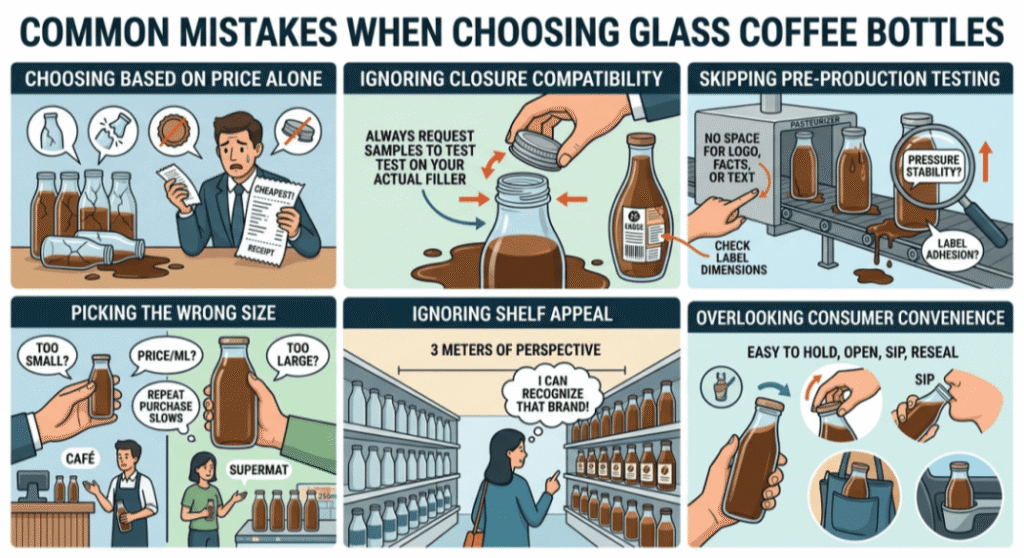
Choosing Based on Price Alone
The cheapest bottle is rarely the best value. Poor glass quality means more breakage, weaker seals, and inconsistent dimensions that fail on your filling line. A low unit price can quickly turn into a high total cost.
Ignoring Closure Compatibility
A beautiful bottle with the wrong neck finish is useless. Always confirm that your bottle and cap match exactly, and always request samples to test on your actual filler.
Picking the Wrong Size
Too small and your price looks high per ml. Too large and repeat purchase slows down. Study your sales channel — a 250ml bottle that wins in cafés may flop in supermarkets where 350ml is the standard.
Forgetting About Label Area
Some shapes photograph beautifully but leave barely any flat surface for labels. You still need room for your logo, product name, ingredient list, nutrition facts, barcode, and legal text. Check label dimensions before you commit.
Skipping Pre-Production Testing
Never go to mass production without testing. Run your actual coffee through the bottle. Check for leakage, pressure stability during pasteurization, label adhesion in refrigerated conditions, and transportation safety.
Ignoring Shelf Appeal
Packaging needs to work from three meters away. Can shoppers recognize your brand at a glance? Do the bottle, cap, label, and coffee color work together visually?
Overlooking Consumer Convenience
If your target customer drinks on the go, the bottle must be easy to hold, open, sip from, reseal, and fit into a bag or cup holder. Small details decide whether someone buys your product twice.
Clear Glass or Amber Glass for Coffee?
A question we get often. Clear glass is usually best for cold brew, iced coffee, and milk-based coffee drinks, because the color of the product itself is part of the appeal. Amber glass makes sense if you want a craft look, if light exposure is a concern, or if your coffee brand leans into a more traditional aesthetic. For most iced coffee glass bottles and cold brew glass bottles, clear is still the winner.
Why Smilebottles Is a Reliable Partner for Coffee Brands
If you are looking for wholesale glass bottles for your coffee line, here is what Smilebottles brings to the table.
A Wide Range of Bottle Options
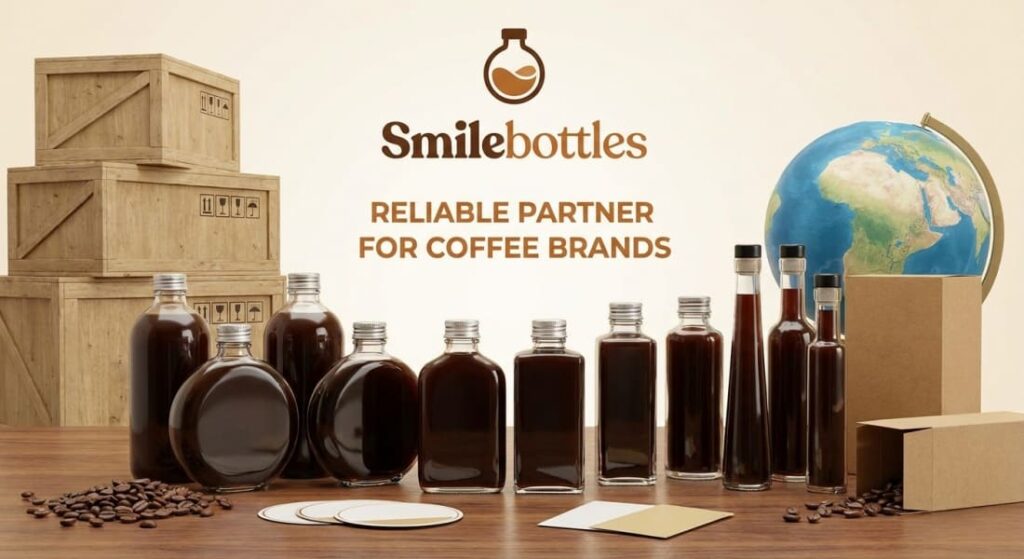
We offer round, square, slim, Boston round, and custom shapes in sizes from 100ml to 1000ml+. Whether you need classic coffee glass bottles, specialty cold brew formats, or glass coffee syrup bottles for café use, we have options ready.
Full Customization
As a custom glass bottle manufacturer, we help you develop unique packaging — custom molds, embossed logos, screen printing, colored caps, frosted finishes, and tailored carton designs. If you have a sketch or reference image, we can turn it into a production-ready bottle.
Strict Quality Control
Stable dimensions and consistent quality matter on a high-speed filling line. We control every stage of production, from raw material selection to final inspection, so every bottle performs the same.
Professional B2B Support
We work with startups, growing brands, beverage factories, distributors, and private label projects. Our team helps you pick the right bottle, provides samples for testing, advises on closure matching, and supports you through scale-up.
Global Export Experience
As an experienced china glass bottle supplier, we ship to coffee brands around the world. Our export packing is designed to minimize breakage during long ocean freight, and we handle documentation and logistics support.
Flexible for Every Size of Buyer
Small brands get hands-on advice and flexible minimums. Larger brands get stable capacity, consistent quality, and long-term supply agreements.
FAQ: Frequently Asked Questions About Glass Bottles for Coffee Drinks
Q1:Are glass bottles good for coffee drinks?
A1:Yes. Glass does not affect flavor, looks premium, and is fully recyclable. It is the preferred material for cold brew, iced coffee, lattes, and coffee concentrates sold at a premium price point.
Q2:What size bottle is best for cold brew coffee?
A2:The most popular sizes are 250ml, 300ml, 350ml, and 500ml. 300ml and 350ml are the strongest sellers in most retail channels. 500ml works well for premium or sharing formats.
Q3:Can I use glass bottles for milk coffee or lattes?
A3:Yes, but milk-based drinks need careful attention to sterilization and sealing. Choose heat-resistant glass, a strong cap, and always test with your specific production process.
Q4:What cap works best for coffee glass bottles?
A4:Metal screw caps, aluminum caps, and tamper-evident caps are the most common. The right choice depends on your neck finish, filling method, and brand style.
Q5:Is glass really better than plastic for coffee?
A5:For premium positioning, yes. Glass protects flavor, looks better, and supports sustainability messaging. Plastic is cheaper and lighter but rarely delivers the same brand impression.
Q6:Can I customize bottles for my coffee brand?
A6:Absolutely. Smilebottles offers custom printing, labels, embossed logos, colored caps, and even custom molds. Customization helps you stand out and protects your design from copycats.
Q7:How do I prevent breakage during shipping?
A7:Choose strong bottles, use proper cartons and dividers, test your packing design, and work with a supplier that understands export requirements. Packaging engineering is just as important as the bottle itself.
Conclusion
Choosing glass bottles for coffee is one of the most important decisions you will make for your brand. The right bottle protects flavor, matches your identity, fits your filling process, and catches the shopper’s eye on a crowded shelf. The wrong one costs you money, customers, and reputation.
Take your time with material, shape, size, closure, and customization. Test before you scale. And work with a glass bottle manufacturer who understands coffee, not just glass.
At Smilebottles, we help coffee brands worldwide build packaging that looks premium, performs reliably, and ships safely. Whether you are developing your first cold brew SKU or expanding an established line, we are ready to help you find the right bottle — and build it at the quality and price you need.
 English