Table of Contents
ToggleAuthor: SmileBottles Editorial Team
Estimated Reading Time: About 15 Minutes
If you are a packaging buyer, a product developer, or a brand owner, you have likely spent countless hours perfecting the shape, color, and label of your product’s glass bottle packaging. However, if you turn any standard glass container upside down, you will notice a series of embossed symbols, numbers, and letters. These marks are far from random. Understanding the markings on the bottom of glass bottle packaging is crucial for quality control, supply chain traceability, and regulatory compliance.
Whether you are sourcing custom molds for a new beverage line or ordering standard pharmaceutical vials, these markings communicate vital data. In this comprehensive guide, we will break down exactly what these symbols mean, how your business can use them to maintain quality, and how to choose a reliable glass bottle manufacturer to partner with for your next big project.
What Do the Markings on the Bottom of a Glass Bottle Mean?
Before we dive into the specific codes, let’s look at a quick summary. If you are inspecting a sample from a new supplier, here is the short answer to what you are looking at.
The markings on the bottom of glass packaging generally include identification and production codes. Typically, these embossed details show the manufacturer’s brand or logo, the specific mold number, the glass material type, the nominal capacity, recycling information, and sometimes a patent or design registration.
Not all bottles carry the same markings. The exact symbols depend heavily on the country of origin, the application (e.g., food, cosmetics, or pharmaceuticals), the specific factory, and regional legal requirements. While some bottles display detailed technical data, others might only have a simple logo and a cavity number.
Common Markings Found on the Bottom of Glass Bottles
When you receive a shipment of packaging, your quality control team should know exactly how to read the base of the container. This is the core of understanding your packaging supply chain. Here is a detailed breakdown of the most common markings you will encounter.
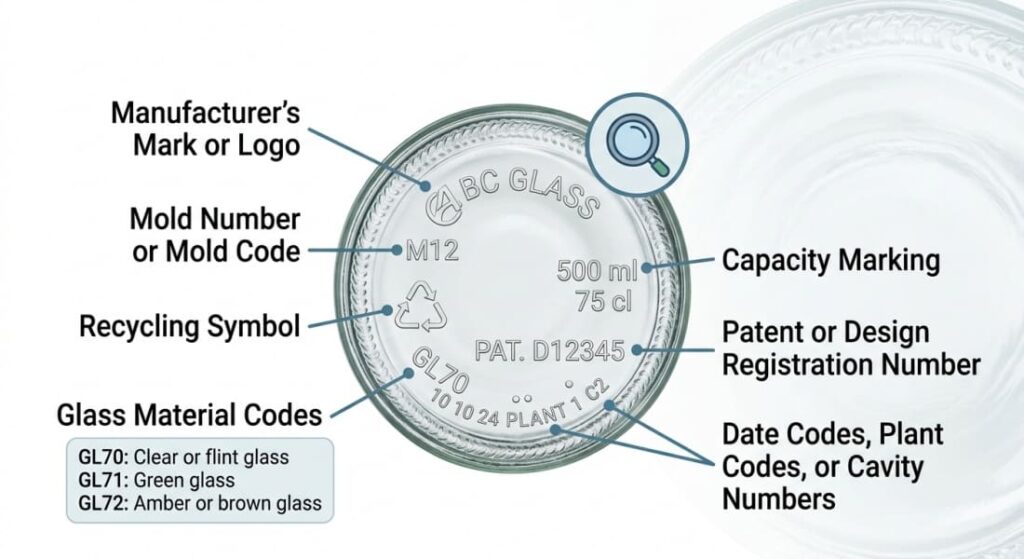
Manufacturer’s Mark or Logo
The most prominent marking is usually the brand symbol, logo, or initials of the factory that produced the container. This helps you and regulatory bodies identify exactly who made the packaging. It might appear as a stylized embossed logo, a combination of letters, or a specific symbol unique to that company.
For buyers, this matters immensely for traceability and authenticity. If you source products from multiple suppliers, the manufacturer’s mark ensures you can trace a specific batch back to the right factory. When working on custom manufacturing projects, you can even request that your own brand’s logo be embossed on the base, creating a proprietary design that competitors cannot easily copy.
Mold Number or Mold Code
Glass bottles are produced at high speeds using metal molds. Because a single production line uses multiple molds simultaneously, each mold is assigned its own identification number. This number or letter-number code is stamped into the glass.
Why should you care about this as a buyer? The mold code is your best tool for quality control. If your filling line repeatedly encounters a defect—such as a bottle that doesn’t seal correctly or has an uneven base—your team can look at the mold number. If every defective bottle shares the same mold code, you can immediately inform your supplier to repair or replace that specific mold, saving you from a massive loss of product.
Recycling Symbol
Sustainability is a massive priority for modern brands. Many bottles include a recycling-related mark, usually a variation of the universal recycling triangle. This symbol indicates that the bottle can enter the local recycling stream.
Glass is 100% recyclable and can be processed repeatedly without losing its purity or structural integrity. Depending on the market you are selling into, placing these glassware symbols on the base might be a legal requirement to assist local waste management facilities in properly sorting materials.
Glass Material Codes
Along with recycling triangles, you will often find specific material identification codes. In international packaging systems, these codes tell recycling centers exactly what type of glass they are handling.
Common codes include:
GL70: Clear or flint glass.
GL71: Green glass.
GL72: Amber or brown glass.
When you are importing packaging or selling products internationally, using the correct GL code on your bottles ensures your packaging complies with environmental documentation and sorting regulations.
Capacity Marking
For brands in the food, beverage, and cosmetic industries, volume accuracy is strictly regulated. Many bottles show volume-related information on the base. This indicates either the nominal capacity (the intended volume of the product) or the brimful capacity (the absolute maximum volume if filled to the very top).
You might see markings like “500 ml”, “75 cl”, or “1 L”. This is critical for filling accuracy and legal compliance. If a consumer standards agency tests your product, the volume inside must match the label and the physical capacity marking on the bottle.
Patent or Design Registration Number
If you are purchasing a unique, proprietary bottle shape, the base might include patent numbers or registered design references. These numeric codes protect the intellectual property of the bottle’s shape, decorative design, or functional packaging elements (like a special pouring neck).
For sourcing teams, seeing a patent number is a reminder that the design is protected. It helps you avoid copyright infringement risks and ensures you are buying from the legitimate owner of that design.
Date Codes, Plant Codes, or Cavity Numbers
To further narrow down production timelines, many factories include tiny digits or dots that represent the exact production date, the specific plant location (if the manufacturer has multiple facilities), and the cavity number within the mold.
If a consumer files a complaint about a compromised product, these microscopic marks allow you to trace the exact day, factory, and machine that produced the bottle. It provides an airtight system for investigating complaints and managing recalls if necessary.
A Simple Table of Glass Bottle Bottom Markings
To make things easier for your procurement and quality assurance teams, here is a quick-reference guide to the marks you will see on your packaging.
|
Marking |
Common Form |
Meaning |
Why It Matters for Your Brand |
|
Manufacturer’s logo |
Symbol, initials, embossed mark |
Identifies the bottle maker |
Helps with sourcing, authenticity, and traceability. |
|
Mold code |
Number or letter-number code |
Identifies the production mold |
Supports pinpoint quality control and defect tracking. |
|
Recycling symbol |
Recycle icon |
Indicates recyclability |
Supports sustainability goals and local waste sorting. |
|
Glass code |
GL70 / GL71 / GL72 |
Identifies glass color/material type |
Useful for international recycling compliance and documentation. |
|
Capacity marking |
250ml / 500ml / 75cl |
Indicates bottle volume |
Crucial for filling accuracy and legal weight/volume compliance. |
|
Patent/design number |
Numeric code |
Refers to a protected design |
Helps identify intellectual property and avoids copy risks. |
|
Plant/date/cavity code |
Small digits or letters |
Tracks exact production origin |
Essential for rapid defect tracing and recall management. |
Why Glass Bottle Markings Matter for Buyers and Brand Owners
You might think that as long as the bottle looks good on the shelf, the bottom doesn’t matter. But for B2B buyers and brand owners, these marks are powerful supply chain tools.
First, they improve product traceability. If your product is shipped globally, knowing the exact factory and mold that produced the container helps you maintain strict oversight. Second, these marks support quality assurance. When you communicate with your supplier about tolerances or defects, quoting the cavity or mold number makes the conversation factual and actionable.
Furthermore, these markings provide compliance-related information. Many countries strictly enforce packaging laws regarding capacity and recyclability. Having the correct markings prevents your shipments from being held up in customs. Finally, they reduce sourcing risks in custom glass packaging projects. When your custom mold has your unique identifier on the bottom, it prevents unauthorized third parties from using your tooling.
How to Read Glass Bottle Bottom Markings Correctly
When a new sample arrives at your desk, how should you inspect it? Here is a step-by-step approach for your team.
Start With the Manufacturer’s Logo
Turn the bottle over and look for the primary embossed logo or initials. Compare this mark with your known supplier documentation. If you are buying a stock bottle from a distributor, this mark tells you who the actual manufacturer is.
Identify Production Codes
Look around the outer edge of the base for mold numbers, cavity numbers, or plant codes. Document these numbers when you approve a sample. If you ever need to discuss quality variations with your supplier later, you will reference these exact codes.
Check the Material or Recycling Information
Locate the glass codes (like GL70) or recycling symbols. Confirm that these match your company’s sustainability claims and the regulatory requirements of the countries where your product will be sold.
Review Capacity Information
Find the volume marking. Verify that this nominal capacity aligns with your filling line equipment and your label claims. Precise filling is legally required, and the base mark is the standard reference point.
Ask the Manufacturer for a Marking Guide
Not all codes are publicly standardized. Factory-specific date codes or cavity formats can look like random dots to the untrained eye. Reliable manufacturers will provide you with technical drawings or a specific code explanation document so your quality team knows exactly how to read their internal tracking system.
Do All Glass Bottles Have the Same Bottom Markings?
A very common question among packaging buyers is whether every bottle features this exact same set of information. The answer is no; markings vary significantly by manufacturer and purpose.
The marks on your packaging will differ depending on the country of manufacture and the industry. A heavy spirits bottle will have different markings compared to a lightweight pharmaceutical vial. Furthermore, standard public molds often carry generic factory marks, whereas custom private molds might feature very minimal markings to keep the base looking clean and premium for cosmetic brands.
Some bottles carry only a faint mold number, while others are packed with detailed compliance, volume, and traceability information. This is why discussing bottom markings with your supplier during the design phase is so important.
How to Choose a Reliable Glass Bottle Manufacturer
Understanding markings is only half the battle; the other half is partnering with a manufacturer who utilizes these systems to guarantee quality. When you are evaluating a new supplier for your glass packaging, keep these criteria in mind.
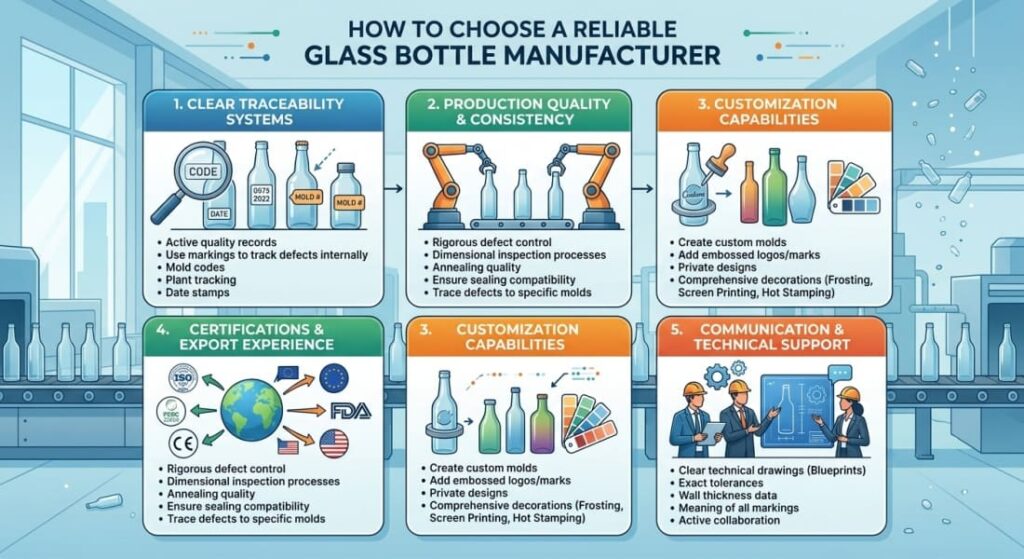
Look for Clear Traceability Systems
A professional manufacturer does not just stamp numbers on a bottle for decoration. They use mold codes, plant tracking, and date stamps as part of an active quality record system. Ask potential suppliers how they use bottom markings to track defects internally.
Check Production Quality and Consistency
You need a partner with rigorous defect control. Ask about their dimensional inspection processes, annealing quality, and how they ensure sealing compatibility. If a supplier cannot explain how they trace a defective bottle back to its mold cavity, they lack the quality control you need.
Evaluate Customization Capabilities
Can the supplier create custom molds for your brand? Can they easily add your embossed logo or specific base markings to a private design? A great partner should also offer comprehensive decoration options, such as frosting, screen printing, hot stamping, and labeling, giving you a complete packaging solution.
Review Certifications and Export Experience
Look for manufacturers who are intimately familiar with international packaging requirements. If you are exporting to Europe or North America, your supplier must know exactly which capacity and recycling marks are legally required on the base of the bottle.
Confirm Communication and Technical Support
Reliable suppliers do not hide their processes. They should be able to provide you with clear technical drawings (blueprints) of your bottle, outlining exact tolerances, wall thickness, and a detailed legend of what every single bottom marking means.
Why Smilebottles Is a Trusted Partner for Glass Bottle Packaging
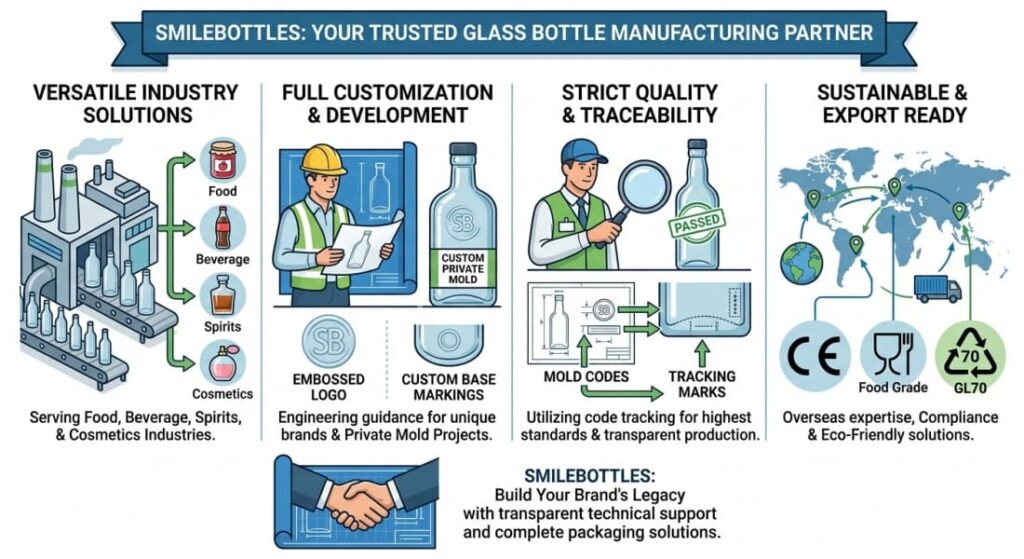
If you are looking for a reliable glass bottles manufacturing partner who understands the critical details of glass production, Smilebottles is here to help. We offer professional glass bottle manufacturing tailored to a wide variety of industries, including food, beverage, spirits, and cosmetics.
At Smilebottles, we provide full support for both standard bottle supply and highly customized bottle development. If you want to build your brand’s legacy with a private mold project featuring your own logo embossing and custom base markings, our engineering team will guide you through the process. We also offer extensive surface decoration and complete packaging solutions.
Our production facilities maintain strict quality control and thorough production traceability. We know how to utilize mold codes and tracking marks to ensure every batch you receive meets the highest standards. With years of experience serving overseas buyers, wholesalers, and brand owners, we are familiar with the compliance marks required for global export.
Furthermore, we are deeply committed to sustainable packaging, ensuring our bottles carry the proper recycling codes to support your brand’s environmental goals. When you work with Smilebottles, you receive transparent technical support to help you understand bottle specifications, tolerances, markings, and production details from the first sample to the final shipment.
FAQ: Frequently Asked Questions About Glass Bottle Bottom Markings
To further assist your purchasing and design teams, we have compiled the most common questions regarding these essential symbols.
Q1:What do the numbers on the bottom of a glass bottle mean?
A1:The numbers typically refer to production tracking data. They often represent mold numbers, specific cavity codes within a machine, factory plant codes, or precise capacity information (such as 750ml).
Q2:Can I identify the manufacturer from the bottom mark?
A2:In most cases, yes. If the bottle features a recognizable logo, initials, or a specific manufacturer’s symbol, you can trace the container back to its factory. Your supplier can provide documentation to confirm their specific maker’s mark.
Q3:Are all bottom markings standardized?
A3:No. While things like recycling triangles and GL material codes follow international guidelines, many production and mold codes are entirely manufacturer-specific. Every factory has its own internal system for tracking cavities and dates.
Q4:What does GL70 mean on glass packaging?
A4:In international packaging material classification systems, GL70 indicates that the bottle is made of clear (flint) glass. This code is primarily used to help recycling facilities sort glass by color. GL71 is used for green glass, and GL72 is for amber glass.
Q5:Does a recycling symbol mean the bottle is made from recycled glass?
A5:Not necessarily. The presence of a recycling triangle or arrows usually indicates that the bottle is recyclable and can be processed by local facilities. It does not automatically mean the bottle was manufactured using post-consumer recycled (PCR) glass, though many modern glass factories do use a high percentage of recycled cullet in their production.
Q6:Why is the mold code important?
A6:The mold code is a vital quality assurance tool. If a buyer notices a recurring defect—such as an uneven rim or a weak base—they can read the mold code and report it to the factory. The manufacturer can then isolate, repair, or replace that specific mold without having to stop the entire production line.
Q7:Can custom glass bottles have special bottom markings?
A7;Absolutely. When you invest in a private, custom mold for your product, you have control over the base design. Custom bottles can include your brand’s logo, specific company initials, unique mold identifiers, and other embossed details that elevate your packaging and protect your design from counterfeiters.
Conclusion
The symbols, letters, and numbers found on the base of your packaging are far more than manufacturing afterthoughts. The markings on the bottom of glass bottles provide critical data regarding the manufacturer, the specific mold, the material composition, volume capacity, recycling standards, and even design protection. For buyers, importers, and brand owners, understanding these markings is an essential part of managing supply chain quality, ensuring international compliance, and facilitating effective product traceability. By knowing how to read these codes, you empower your quality control teams to make smarter, faster packaging decisions.
If you are currently looking for a reliable glass bottle manufacturer capable of delivering exceptional quality, precise traceability, and custom design options, Smilebottles is ready to assist. Contact us today to discuss your packaging needs, and let us help you create bottles that proudly carry your brand into the future.
 English