
Table of Contents
ToggleAuthor: SmileBottles Editorial Team
Estimated Reading Time: About 15 Minute
Choosing and caring for the right glass spray bottle are matters so much. If you sell finished products or buy packaging in bulk, you are not only buying glass. You are buying a full user experience. The way the pump feels, the way the mist looks, and the way the closure seals all affect how your buyer sees your brand.
You may also notice that buyers search in many different ways. Some search by product type, some search by problem, and some search by simple use questions. For example, you may see searches for a glass bottle sprayer, a glass sprayer bottle, or even a typing mistake like water spary. Behind those search terms, the real question is usually the same: which bottle and sprayer combination will work well, last longer, and suit the liquid inside?
Introduction: Why Proper Sprayer Use and Maintenance Matter
A sprayer is the working part of the package. The glass body stores the formula, but the pump, nozzle, dip tube, and closure control how the liquid is delivered. If any of those parts are poorly matched or badly maintained, performance drops quickly. That can mean uneven mist, weak spray, dripping, or full pump failure.
Proper care also matters because different liquids behave differently. A simple water spray is easy for most pumps to handle, but alcohol blends, essential oils, strong cleaners, or thicker formulas place more stress on the sprayer. If you choose the wrong pump or skip routine cleaning, you increase the chance of clogging, corrosion, or leakage.
For your business, this is not a small detail. A sprayer problem can lead to product returns, bad reviews, wasted formula, and extra after-sales work. On the other hand, when your bottle works smoothly from the first use to the last refill, you build trust. That is one reason many buyers now prefer a reusable glass spray bottle instead of cheap disposable packaging.
Before First Use: How to Prepare a New Glass Bottle Sprayer
Before you fill and ship a new bottle, you should prepare it correctly. First use is when many problems begin. If the bottle is not cleaned, the dip tube is not checked, or the pump is not primed, the sprayer may fail even though the parts are fine.
Inspect the Bottle and Sprayer Parts
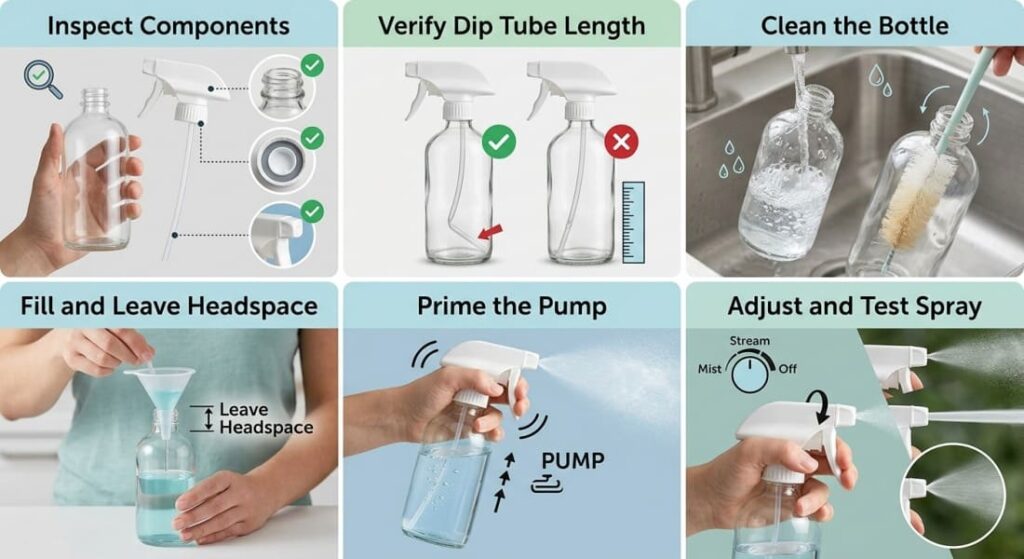
Start with a simple visual check. Look at the bottle body, neck finish, cap, nozzle, pump head, gasket, and dip tube. If you buy empty glass spray bottles in bulk, sample inspection matters even more. Check for chips, hairline cracks, damaged threads, bent dip tubes, and loose closures before you fill the bottles.
Dip tube length is especially important. If the tube is too short, it may not reach the last part of the liquid. If it is too long, it may bend inside the bottle and reduce flow. You should always match the tube length to the bottle height.
Clean the Bottle Before Filling
New bottles can collect dust during production, packing, and transport. Before first use, rinse the bottle with warm water. If needed, wash it with mild soap and rinse again until the inside is clean. Let the bottle dry fully if your formula needs a dry container.
This step matters whether you are filling a cosmetic mist, a room spray, or a basic water spray bottle. Clean packaging protects your formula and helps the sprayer stay cleaner from the start.
Fill with a Compatible Liquid
Do not overfill the bottle. Leave enough headspace for the pump to work well. If you fill too close to the neck, the pressure balance may be affected and leakage becomes more likely.
You should also confirm that the liquid suits the sprayer material. Thin liquids usually spray easily. Thick, sticky, or heavy formulas need more careful pump selection. This is one reason a bottle used for cleaners may need a different sprayer from one used for skin care.
Prime the Pump Properly
Before first use, many buyers search how to prime a sprayer pump or how to prime a spray bottle. Priming simply means pressing the pump several times until the air leaves the system and liquid starts moving through the dip tube and nozzle.
To do it correctly, fill the bottle, tighten the closure, make sure the nozzle is open, and press the trigger or pump several times. New pumps often need a few strokes before they spray normally. That is not a defect. It is part of normal setup.
Check the Spray Setting and Closure Fit
If the nozzle is adjustable, test the settings before regular use. Turn it gently between mist, stream, and off positions if those options are available. Make sure the closure is secure but not forced too hard. Overtightening can damage threads or seals.
At this stage, it is smart to run a simple water test. Watch the pattern carefully. A smooth, even output is a good sign. If the bottle is a sample for production approval, this test should be part of your quality check.
Best Practices for Everyday Use of Glass Bottle Sprayers
If your product page or instruction card needs clear usage guidance, you may need to answer how to use a spray bottle, in language that feels easy and natural. The basic advice is simple, but small habits make a real difference in performance.
Hold the Bottle Upright
Most sprayers work best when you keep the bottle upright. If you tilt the bottle too far, the dip tube may pull air instead of liquid. That can cause weak spray, uneven mist, or a temporary stop in flow. For end users, this is one of the easiest mistakes to make.
Use the Right Spray Mode
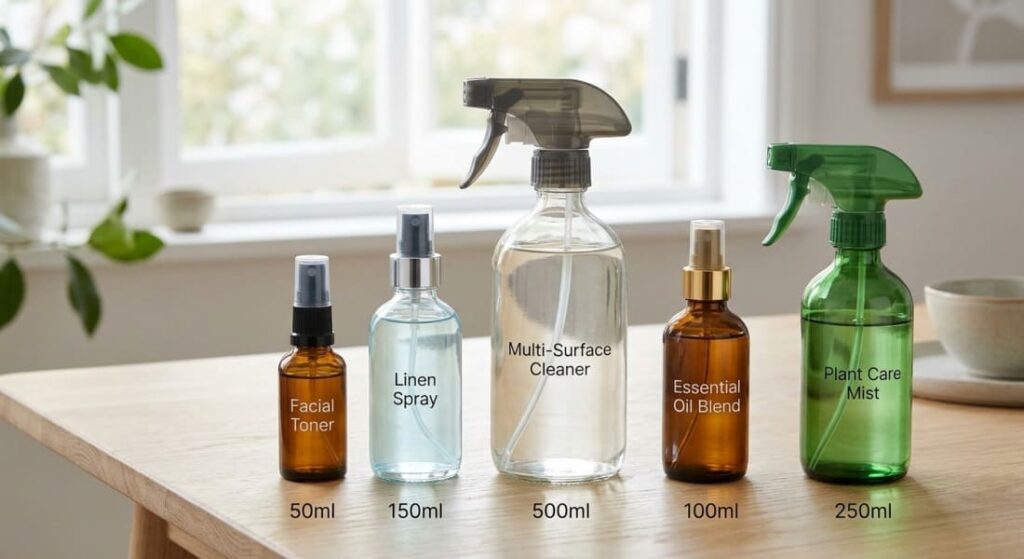
A fine mist setting works well for facial mists, linen sprays, room sprays, and gentle plant care. A stream setting works better for cleaning and targeted use. If your bottle has an adjustable nozzle, show your buyer how to choose the right setting instead of forcing the nozzle between positions.
Use Smooth, Even Pressure
Do not pump harder than necessary. Fast, aggressive pumping can wear the mechanism more quickly, especially in lower-grade sprayers. Smooth, steady pressure usually gives a better result and a more even output.
Wipe the Nozzle After Use
If liquid dries around the opening, the next spray may be weaker or uneven. This matters even more with oils, soap-based products, and mineral-rich water. For simple plant care or ironing use, a bottle may look clean from the outside but still collect residue around the tip over time.
Test the Output Pattern
When you evaluate a sample, pay attention to the spray bottle spraying water during a test run. The spray should come out evenly, without side spray, dripping, or large drops. This small test tells you a lot about nozzle quality and pump consistency.
How the Sprayer Works and Why It Sometimes Fails
Before you compare pump types, you may ask how does a spray bottle work. The short answer is simple: when you press the trigger or pump, the mechanism creates pressure that pulls liquid up through the dip tube and pushes it out through a small nozzle opening.
Inside the sprayer, several small parts work together. The dip tube lifts the liquid. The pump chamber builds pressure. The spring and piston help move the liquid. The nozzle shapes the liquid into mist or stream. If one of those parts is blocked, worn, or poorly matched, the spray pattern changes.
That is why one sprayer can feel perfect with a room spray and fail quickly with a strong cleaner or oil-heavy blend. It is not only about bottle appearance. It is about pump design, material compatibility, and output style.
In simple terms, a mist sprayer turns liquid into finer droplets, while a stronger pump or squeeze design gives a heavier stream. A basic squirt bottle may have a simpler mechanism, but a spray bottle uses a more controlled system to manage output and user feel.
How to Keep a Glass Bottle Sprayer in Top Condition
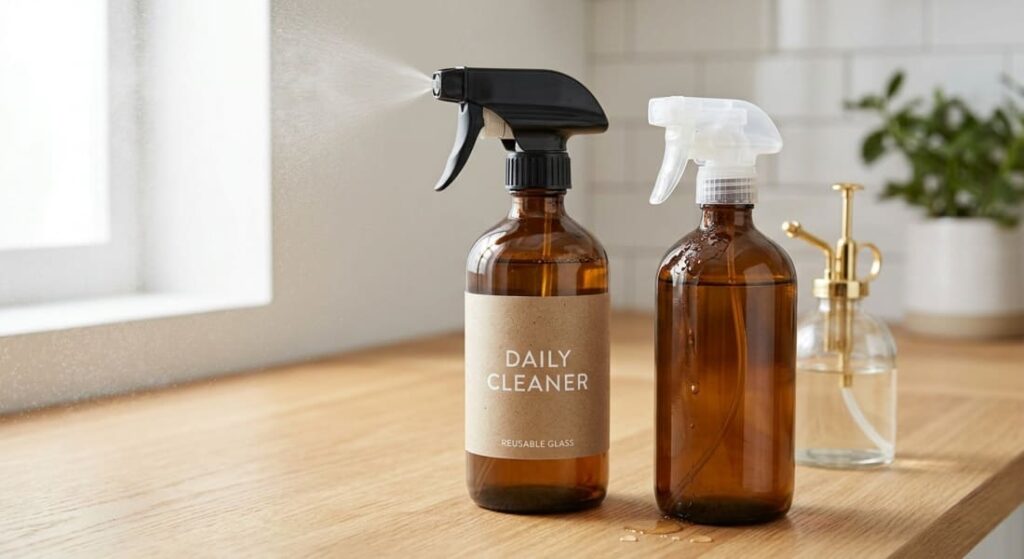
A sprayer works better and lasts longer when you clean it before residue becomes a problem. That matters for home use, but it matters even more when you sell filled bottles or expect repeat orders from wholesale buyers.
Why Routine Cleaning Matters
Every formula leaves something behind. Water can leave mineral traces. Oils can leave a film. Cleaners can dry around the nozzle. Skin care formulas can leave sticky buildup in the pump pathway. Over time, that buildup affects pressure, spray quality, and seal performance.
Routine cleaning keeps the spray pattern stable and lowers the risk of internal damage. It also helps you protect product hygiene when a bottle is reused.
Simple Cleaning Steps
A simple cleaning process works for most bottles:
Empty the remaining liquid.
Rinse the bottle with warm water.
Add mild soap if needed and shake gently.
Refill with clean water.
Pump clean water through the sprayer several times.
Wipe the nozzle and closure dry.
Let the parts dry before refilling if the next formula requires a clean container.
These steps are enough for normal maintenance between refills.
Deep Cleaning the Sprayer
If you have used an oil-based formula, a sticky beauty product, or a cleaner that dries fast, a deeper cleaning helps. Flush the sprayer with warm water, then soak removable parts in mild soapy water. Rinse well and test the spray pattern again with clean water before putting the bottle back into use.
Prevent Buildup and Corrosion
Do not leave an incompatible formula sitting in the sprayer for too long. If you switch from one liquid to another, clean the pump first. That one habit helps prevent residue from drying inside the system and gives you a more consistent spray pattern over time.
How to Clean a Clogged Spray Nozzle
Your care instructions should clearly explain how to clean a spray bottle, how to clean a spray bottle nozzle, and how to unclog a spray bottle nozzle so the end user can keep the product working properly.
Signs of a Blocked Nozzle
A clogged spray nozzle usually shows clear signs. The spray turns weak, drips instead of misting, shoots to one side, or stops completely. If the bottle worked well before and suddenly starts acting differently, the nozzle is one of the first places you should check.
Simple Steps to Unclog the Nozzle
Remove the sprayer if possible and rinse the nozzle under warm water. If you see mineral or oil buildup, soak the nozzle in warm water with a little white vinegar. Then flush the system with clean water.
Do not push a hard metal tool into the nozzle opening. That can damage the shape of the opening and ruin the spray pattern. If you need to loosen buildup, use a soft brush, a wooden toothpick, or gentle soaking instead.
How to Prevent Future Clogs
You can avoid many clogging problems with simple habits. Clean the nozzle after using oils or thick liquids. Do not let product sit unused for a long time. Flush the sprayer before storage. If you are using mineral-rich water, filtered or distilled water often helps reduce buildup.
Troubleshooting Common Glass Bottle Sprayer Problems
Sooner or later, you or your buyer may run into a common pump issue. In search terms, this often shows up as spray bottle not spraying. Most of the time, the cause is not complicated. It is usually air in the system, dried residue, wrong nozzle position, or a worn pump part.
When the Sprayer Does Not Spray at All
Start with the basics. Check whether the nozzle is set to off. Make sure there is enough liquid in the bottle. Confirm that the dip tube reaches the liquid and is not bent badly. Then reprime the pump. Many “not working” complaints are solved by one of these simple checks.
If the problem stays, remove the sprayer and flush it with warm water. Then test again with clean water. If the pump still fails, the internal spring, piston, or seal may be damaged.
When the Nozzle Is the Problem
Sometimes the pump works, but the nozzle opening is blocked or partly damaged. In that case, buyers often search how to fix a spray bottle nozzle. The best first step is cleaning, not forcing. Rinse the tip, soak it if needed, and turn the nozzle gently through its settings. If the pattern is still wrong, replacement is usually better than rough repair.
When the Whole Sprayer Refuses to Work
If basic cleaning and priming do not solve the issue, you may need a more complete answer to how to fix a spray bottle that won’t spray. Work through the problem in order: check liquid level, open the nozzle, tighten the closure, clean the tip, inspect the dip tube, flush the pump, and test with clean water. If none of those steps help, the sprayer is likely worn out or incompatible with the liquid.
When You See Leaks
A leaking spray bottle can come from several causes. The cap may be loose. The seal may be damaged. The neck finish may not match the pump. The bottle may be overfilled. The pump may also be cracked after repeated use or poor transport handling.
When you test a sample or a finished product, check for leaks around the neck, under the collar, and near the nozzle after several sprays and after storage. A bottle that looks fine right after filling may start leaking later if the closure fit is not correct.
What Causes Problems Most Often
In real buying and after-sales situations, the most common causes are simple: poor cleaning habits, the wrong liquid for the pump, low-grade sprayer parts, and mismatch between bottle and closure. That is why wholesale buyers should test the real formula, not just water, before confirming production.
Maintenance Tips for Different Types of Liquids
Not every liquid behaves the same way inside a sprayer. If you want fewer complaints and better product life, you should match both the maintenance advice and the pump design to the formula you are selling.
Essential Oils and Aromatherapy Blends
The best spray bottle for essential oils is usually not the same product you would choose for a general cleaner. Essential oils can affect some plastic parts, leave oily residue, and block fine openings over time. That is why many brands prefer an amber glass spray bottle for light-sensitive oil blends. Amber glass protects the formula better and also gives your product a more premium look.
If you sell oil-based or fragrance-heavy formulas, clean the nozzle more often and test material compatibility before a full order. The bottle may handle the formula well, while the sprayer fails if its materials are not suitable.
Cleaning Solutions
The best spray bottle for cleaning usually needs stronger output, good chemical resistance, and a comfortable trigger. Kitchen sprays, glass cleaners, bathroom cleaners, and car-care products often work better with a stronger pump than a cosmetic mist sprayer.
For these formulas, you should also watch for residue around the nozzle and stress on the internal spring. Some cleaners are acidic or alkaline, which means material compatibility matters a lot.
Water-Based Sprays and Plant Care
A standard water spray bottle seems simple, but even water can cause problems over time if it contains minerals. Hard water can slowly build deposits inside the tip and pump pathway. That is why filtered or distilled water often helps with plant misting, ironing, and salon use.
Beauty, Skin Care, and Hair Products
A fine mist spray bottle is often the better choice for toners, facial mists, hair refresh sprays, and room fragrance. These products depend on a soft, even output. Your buyer does not want strong droplets hitting the skin or hair like a cleaner spray.
Keep hygiene standards high with these products. Clean the bottle before filling, avoid touching the inside of the sprayer, and flush the pump between formula changes. If the formula is thick or sticky, test it carefully before choosing a mist sprayer.
Proper Storage Tips to Extend Sprayer Life
Storage has a direct effect on sprayer life. Even a well-made bottle can start showing problems if it is left in heat, direct sun, or dirty conditions for too long.
Store Bottles Upright
When you keep bottles upright, the dip tube stays in the right position, and the risk of leaks is lower. Upright storage also helps you avoid liquid collecting around the nozzle or collar.
Keep Away from Heat and Direct Sunlight
Heat can affect both the formula and the sprayer parts. High temperature may weaken plastic components, change liquid pressure inside the bottle, or reduce formula stability. Direct sun can also be a problem for essential oils, botanical sprays, and some beauty formulas.
Use Clean, Dry Storage Conditions
Dust and dirt can settle around the nozzle, which increases the chance of contamination or blockage. Clean storage is especially important if you handle refill bottles, bulk-packed components, or sample units before final filling.
Label Bottles Clearly
If you work with multiple products, clear labels save time and prevent mistakes. A simple label with product name, fill date, and batch note can help you manage cleaning schedules and avoid using the wrong liquid in the wrong sprayer.
Easy Maintenance Checklist for Glass Bottle Sprayers
A short checklist makes your article more useful because your buyer can scan it quickly and apply it right away.
After Each Use
Wipe the nozzle clean.
Store the bottle upright.
Close the nozzle if the sprayer has an off setting.
Keep the bottle away from heat.
Weekly Care
Check the spray pattern.
Flush the pump with warm water if residue is forming.
Inspect the closure for early signs of leaks.
Look for buildup around the nozzle.
Monthly Maintenance
Empty and deep clean the bottle if needed.
Soak the nozzle if mineral or oil buildup is visible.
Check the dip tube and closure fit.
Replace damaged sprayers before they fail in use.
Good Habits to Remember
The biggest problems usually come from small habits: overfilling the bottle, skipping cleaning, storing it on its side, or using a liquid that the sprayer was not designed to handle. If you avoid those mistakes, you will get much better performance from the same packaging.
Choosing the Right Sprayer for Your Glass Bottle
If your goal is to help buyers choose correctly, you need to explain that not every sprayer fits every formula or every bottle. The bottle size, neck finish, viscosity of the liquid, spray output, and end use all have to line up.
Fine Mist or Trigger: Which One Fits Your Product?
A trigger spray bottle works best when you need more output and more force. It suits household cleaners, plant care, pet products, fabric care, and industrial liquids. It is easy to use repeatedly and gives better coverage on larger surfaces.
A mist pump is better when you want a soft cloud of product rather than a strong stream. This is why a fine mist sprayer is often preferred for beauty products, room sprays, and lighter plant applications.
Choose for the Formula, Not Just the Look
A beautiful bottle means little if the sprayer fails in real use. Thin water-based formulas can work with many pumps. Heavy, oily, acidic, or alcohol-rich liquids need more testing. If you only choose by appearance, you risk leaks, clogging, or poor output later.
Check Neck Finish and Tube Length
Always confirm that the bottle neck and sprayer thread match exactly. A mismatch can cause leaks or poor sealing even when both parts look fine separately. Tube length should also be cut to suit the bottle. This is a small detail, but it affects how much liquid the user can actually reach.
Think About Refill Use and Reuse
If you want your product to feel eco-friendly and premium, a refillable system matters. Buyers increasingly like glass because the bottle can stay in use while the pump or liquid is replaced. That is one reason a reusable design sells well in home care and lifestyle categories.
Consider Branding and Customization
If you sell under your own brand, packaging appearance matters too. This is where custom glass spray bottles can support your positioning. You can choose bottle color, capacity, decoration, label area, and matching sprayer style so the package fits your market instead of looking generic.
What Business Buyers Should Check Before Placing a Bulk Order
If you buy sprayers in quantity, you should look at more than price. The real cost of a weak pump shows up later in product complaints, damaged shipments, and lost repeat business. A good spray bottle sprayer should be tested not only for appearance, but also for performance over time.
Start with samples. Fill them with your real formula, not just water. Test priming speed, output pattern, leakage after transport, closure fit, and comfort in use. Store samples for a period of time and test again. Some issues only appear after the formula sits inside the pump.
Also think about the market you serve. If you sell wellness products, an amber bottle with a soft mist may suit you better. If you sell cleaning products, you may need a stronger output and a larger bottle. If you sell refill kits, easy cleaning and long-term reuse matter more.
At this stage, it also helps to check neck finish accuracy, dip tube length, spray output, sealing quality, and compatibility with your liquid. Those details matter more than a low unit price if you want reliable long-term performance.
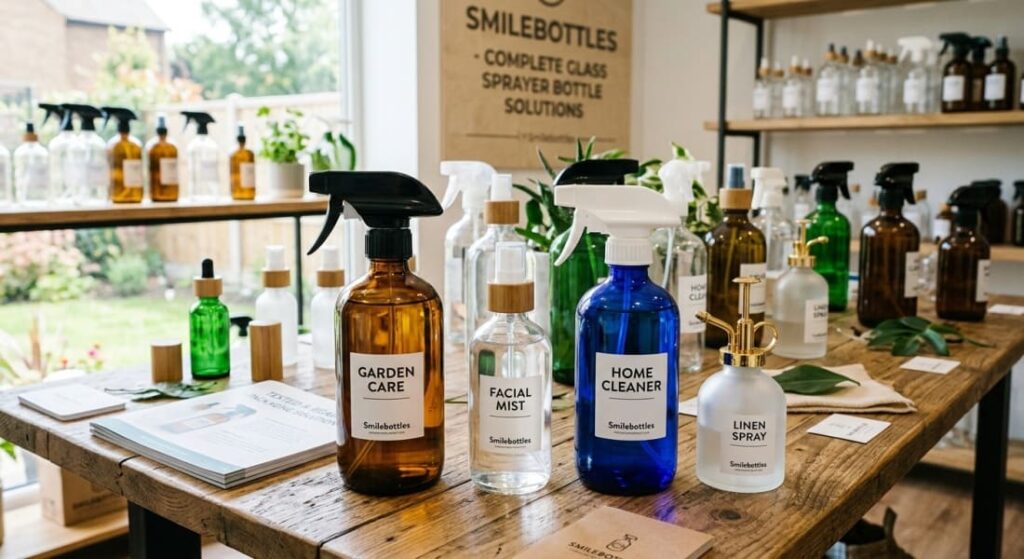
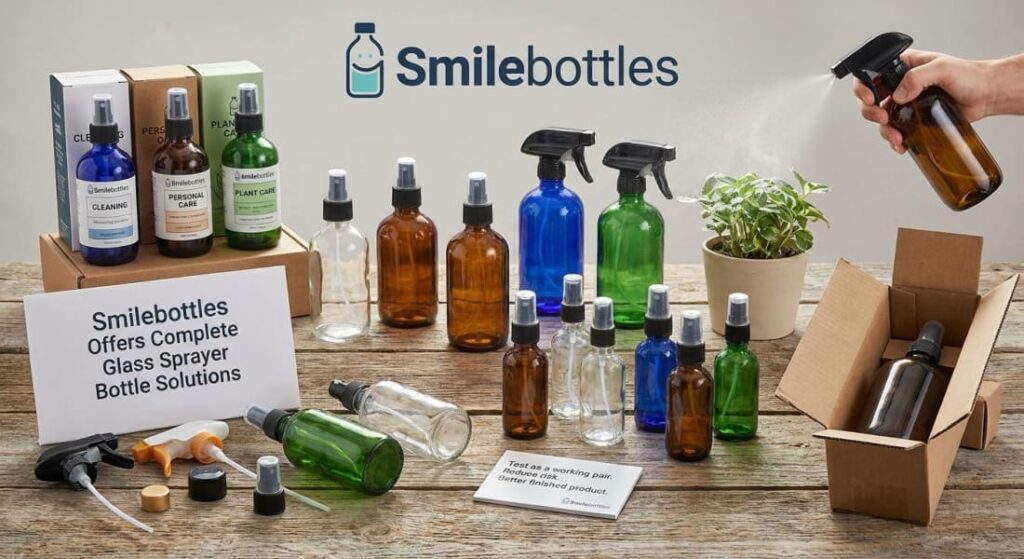
Smilebottles Offers Complete Glass Sprayer Bottle Solutions
At Smilebottles, you can approach sourcing with the full picture in mind. Instead of treating the bottle and pump as separate items, you can test them as a working pair. That helps you reduce risk before mass production and gives your buyers a better finished product.
You can choose from clear and colored bottles, mist sprayers, trigger sprayers, and packaging options for cleaning, personal care, home fragrance, and plant care. If you need brand differentiation, you can also develop customized packaging with matching components and practical compatibility support.
That support matters because the right package is not only attractive. It also needs to fill easily, seal well, spray smoothly, and survive transport. A bottle that looks premium but leaks after shipping will not help your business grow. A bottle that feels right in the hand and performs well is much more likely to win repeat orders.
If you want to build a stronger private-label or wholesale line, it helps to work with a manufacturer that understands glass weight, neck finish matching, sprayer selection, decoration options, and formula compatibility together. That is the kind of detail that makes a package easier to sell and easier to use.
FAQ: Frequently Asked Questions About Glass Bottle Sprayers
Q1:Why does a new sprayer sometimes need several pumps before it works?
A1:Because air is still inside the dip tube and pump chamber. New sprayers usually need a few strokes to pull liquid up and create normal output.
Q2:Can you use the same bottle for different liquids?
A2:Yes, but you should clean it fully between formulas. This matters even more when you move from oils to water-based liquids or from cleaners to beauty products. Residue from the first formula can affect the second one.
Q3:Is glass better than plastic for spray packaging?
A3:For many products, yes. Glass looks more premium, supports reuse, and works well with formulas that need a more stable package. It is especially popular for home fragrance, skin care, natural cleaning products, and essential oil blends.
Q4:What should you do if the spray becomes weak after a few weeks?
A4:Start with cleaning. Flush the system with warm water, clean the nozzle, and check whether the liquid is leaving residue. If the sprayer still performs poorly, inspect the tip and pump for wear.
Q5:Should you replace the whole bottle when the pump fails?
A5:Not always. If the glass body is still sound, replacing the sprayer is usually enough. This is often the better choice for cost control and sustainability.
Q6:How long does a sprayer usually last?
A6:That depends on how often you use it, what liquid is inside, how well you clean it, and how good the materials are. A high-quality sprayer used with the right formula and basic maintenance will usually last much longer than a low-cost pump used with an incompatible liquid.
Conclusion
If you want your spray packaging to perform well, you need to think beyond the bottle itself. The right sprayer, the right formula match, and the right maintenance habits all work together. When you inspect new parts, prime the pump correctly, clean the nozzle, store the bottle well, and choose a pump that suits the liquid, you reduce complaints and improve the user experience.
Whether you need standard bottles or tailored packaging support, Smilebottles can help you choose the right glass-and-sprayer combination for your market. When you make that choice carefully, your packaging does more than hold a liquid. It helps your product work the way it should.
 English