



Table of Contents
ToggleAuthor: SmileBottles Editorial Team
Estimated Reading Time: About 18 Minutes
When you work in pharmaceutical or supplement procurement, you know that sourcing the right packaging is about much more than just finding a container to hold your product. You are looking for a reliable barrier that protects your formulations from the moment they leave your facility until the patient or consumer finishes the last dose. One of the most critical decisions you will make during this process involves pill bottle colors.
Whether you are launching a new line of sensitive vitamins, sourcing bulk containers for prescription medications, or rebranding a wellness supplement, the color of the glass directly impacts your product’s shelf life and market success.
Introduction: Why Pill Bottle Color Matters in Pharmaceutical Packaging
The role of packaging in drug and supplement protection
Your primary goal when selecting packaging is to protect the integrity of the active pharmaceutical ingredients (APIs) or nutritional compounds. Drugs and supplements are highly sensitive to environmental factors like moisture, oxygen, and light. While the physical material of the bottle keeps moisture and air out, the color is your frontline defense against light degradation.
Why bottle color is more than a design choice
It is easy to look at a catalog of containers and choose a color based on what looks best with your brand’s logo. However, in the pharmaceutical industry, color is primarily a functional feature. The hue of the glass dictates which wavelengths of light can penetrate the bottle. Making the wrong choice can lead to failed stability tests, loss of product potency, and shortened expiration dates.
What this guide will cover
In this comprehensive guide, we will walk you through everything you need to know about colored glass packaging. We will explore the science behind light protection, compare the standard colors available on the market, explain how to choose the right color for your specific formulations, and show you how to source bulk packaging effectively for your filling lines.
The Science Behind Colored Glass Pill Bottles
How light affects pharmaceuticals and nutraceuticals
When you manufacture a drug or a dietary supplement, the chemical compounds are stable under controlled conditions. But once exposed to light, many of these compounds experience a process called photodegradation. Light energy causes the molecules to break down or alter their chemical structure. This can result in a loss of medicinal efficacy, a change in the product’s color or odor, or in worst-case scenarios, the creation of harmful byproducts.
The difference between UV light, visible light, and product degradation
Not all light causes the same amount of damage. Ultraviolet (UV) light is invisible to the human eye but carries high energy. This high-energy light is the most destructive force for pharmaceutical formulations. Visible light, particularly in the blue and violet spectrums, can also cause damage over prolonged exposure. When you see drugs stored in amber coloured bottle packaging, it is specifically because this color blocks the most harmful wavelengths of UV and blue light from reaching the medicine inside.
How colored glass helps protect sensitive formulations
By using uv protection glass bottles, you essentially put sunglasses on your product. Different glass colors absorb different wavelengths of light, preventing that light from passing through to the tablets or capsules. This means you can store products in brightly lit pharmacies or grocery store aisles without worrying about the active ingredients degrading under fluorescent lights or sunlight.
Why glass remains a trusted material for pharmaceutical packaging
You might wonder why glass is still preferred over plastic for high-end or sensitive formulations. Glass is naturally non-porous and chemically inert. It will never leach harmful chemicals into your product, and it provides an absolute barrier against oxygen. When you combine the inert nature of glass with the light-filtering properties of specific colors, you get an unmatched storage environment.

Common Glass Pill Bottle Colors and Their Uses
When browsing supplier catalogs, you will consistently see a few standard colors. Understanding the specific B2B use case for each will help you make the best purchasing decision.
Amber glass pill bottles
This is the heavyweight champion of pharmaceutical packaging. An amber glass pill bottle provides the highest level of protection against UV light, blocking nearly all light wavelengths under 450 nanometers.
Best known for: Maximum UV and visible light protection.
Commonly used for: Light-sensitive prescription medicines, antibiotics, high-potency vitamins, and herbal extracts.
Why amber is the industry standard: It is cost-effective to produce in bulk and universally recognized by consumers as a symbol of serious medicine. If you are sourcing an amber medicine bottles wholesale order, you are choosing the safest route for formulation stability. Many buyers simply refer to this format as a brown bottle medicine container, and it remains the top choice for compliance with strict pharmaceutical regulations.
Blue glass pill bottles
Blue glass, often referred to as Cobalt Blue, offers moderate light protection. It blocks some UV rays but lets through more visible light than amber.
Moderate light protection: Suitable for products with mild light sensitivity.
Premium and distinctive appearance: Blue glass immediately looks like a high-end, luxury product.
Common for: Wellness brands, premium sleep aids, essential oil capsules, and specialty nutraceuticals.
Green glass pill bottles
A green pill bottle offers a similar level of moderate light protection to blue glass but evokes a completely different consumer response.
Good for brand differentiation: Green stands out on a shelf filled with amber and white plastic.
Often used for: Natural, organic, plant-based, or herbal products.
A balance between protection and appearance: It keeps products reasonably safe from light while strongly signaling “health and nature” to your buyers.
Clear glass pill bottles
Clear glass offers absolutely no protection from UV or visible light. However, it still holds a prominent place in the packaging industry.
Maximum visibility of the product: If you manufacture visually appealing products—like brightly colored gummy vitamins or liquid-filled bi-layer capsules—clear glass lets the consumer see exactly what they are buying.
Best for: Products with zero or very low light sensitivity, or products sold inside secondary packaging (like a fully enclosed cardboard box).
Pros and cons compared with amber glass: While you lose the light protection of an amber bottle, you gain maximum transparency and a clean, modern aesthetic. We call these transparent pill bottles, and they are excellent for fast-moving consumer goods.
Custom-colored glass pill bottles
Sometimes standard colors do not fit your marketing strategy.
Tailored packaging: If your brand identity demands something entirely unique, you might source a custom pill bottle.
Special colors: For instance, a women’s wellness brand might specifically request a pink medicine bottle to align with their branding and stand out in a crowded market.
Important considerations: When ordering custom colors, you need to discuss Minimum Order Quantities (MOQs), production timelines, and tooling costs with your manufacturer, as these will be higher than standard stock colors.
What Each Pill Bottle Color Does: Key Functions and Benefits
UV and light protection
Why do some medications require stronger protection than others? It comes down to the chemical bonds of the APIs. Some vitamins, like Vitamin C and B12, degrade rapidly when exposed to UV light. Colored pill bottles, specifically in dark amber, act as a physical barrier. If your formulation requires strict adherence to light-exposure limits, amber is the only logical choice to prevent your product from losing efficacy before its expiration date.
Product stability and shelf life
Your supply chain relies on predictability. Bottle color helps preserve the potency and quality of your product, directly impacting how long it can sit on a shelf. A light-sensitive product stored in clear glass might only pass stability testing for six months, while the exact same product in amber glass could remain stable for two years. Better packaging means less expired inventory and better profit margins.
Safety and patient compliance
Color plays a massive role in product identification. In a household medicine cabinet, having distinct colors helps patients avoid confusion. Additionally, you have to consider regulatory label requirements. The painkiller bottle info on side of bottle needs to be highly legible. If you are using a very dark custom bottle, you will need to plan for high-contrast label printing to ensure patients can safely read dosage instructions and warnings. Dark glass also pairs perfectly with standard child-resistant and tamper-evident closure systems.
Branding and marketing value
Never underestimate how color influences consumer perception. Amber says “clinical and effective.” Blue says “premium and calming.” Green says “natural and holistic.” Using colored glass helps you build a strong brand identity and differentiate your product lines on crowded retail shelves.

Amber vs. Clear vs. Blue vs. Green: Which Pill Bottle Color Is Best?
When making a bulk purchasing decision, you need to weigh your formulation’s needs against your marketing goals. This comparison will help you clarify which direction to take.
Best choice for light-sensitive pharmaceuticals
Amber Glass. There is no contest here. If you are packaging prescription drugs, over-the-counter pain relievers, or sensitive vitamins, amber provides the heavy-duty UV filtration required to pass rigorous industry stability tests.
Best choice for product display and visibility
Clear Glass. If your product is highly stable and you want the consumer to see the physical capsules or gummies, clear glass is your best option. Just ensure your supply chain doesn’t expose the pallets to direct sunlight for extended periods.
Best choice for natural or premium branding
Blue and Green Glass. If your product has mild light sensitivity but you want to charge a premium price point, blue and green glass elevate the perceived value of the product far beyond standard amber or white plastic.
Best all-around option for pharmaceutical packaging
Amber Glass. It is the most widely manufactured, cost-effective, and protective option available.
Here is a quick reference guide to help your team make decisions:
|
Color |
Light Protection |
Product Visibility |
Branding Effect |
Typical Use |
|
Amber |
High |
Low |
Professional / pharmaceutical |
Medicines, vitamins |
|
Blue |
Medium |
Low |
Premium / wellness |
Specialty products |
|
Green |
Medium |
Low |
Natural / organic |
Herbal supplements |
|
Clear |
Low |
High |
Clean / transparent |
Low light-sensitive products |
|
Custom |
Varies |
Varies |
Strong differentiation |
Branded packaging |
How to Choose the Right Glass Pill Bottle Color for Your Product
If you are currently planning a new product launch or looking to switch packaging suppliers, follow this framework to make the right choice.
Consider your product’s sensitivity to light
Before you look at aesthetics, talk to your formulator or contract manufacturer. Ask them directly: “Does this API degrade under UV or visible light?” If the answer is yes, narrow your search immediately to amber or highly coated opaque bottles.
Evaluate storage and transportation conditions
Think about your product’s journey. Will it sit in a brightly lit warehouse? Will it be displayed in a pharmacy window? If your supply chain lacks light control, you need a protective bottle color regardless of the product’s mild sensitivity.
Match bottle color with your brand positioning
If you are selling a premium marine collagen supplement, an amber bottle might look too much like a standard pharmacy drug. A blue or custom frosted glass bottle might justify a higher retail price by appealing to the consumer’s desire for luxury wellness products.
Review labeling, compliance, and regulatory needs
Your packaging must accommodate compliance. As mentioned earlier, if the safety warnings or ingredient lists are hard to read because the label blends into the bottle color, you could face regulatory pushback. Ensure your design team creates labels that contrast well with your chosen glass color.
Balance protection, appearance, and cost
Standard clear and amber glass bottles are typically the most cost-effective because glass manufacturers produce them continuously. Blue, green, and custom colors are run in smaller batches, which can increase the per-unit cost. Balance your need for a unique appearance with your target profit margins.
Why Colored Glass Is Popular in the Pharmaceutical and Supplement Industry
As a buyer, you have likely noticed a massive shift back toward glass packaging in recent years, especially among high-end supplement brands.
Trusted protection for sensitive formulations
Brands know that glass offers an impermeable barrier against oxygen. When you add the UV filtering of colored glass, you create an environment that plastic simply cannot replicate.
A premium look and feel compared with plastic
Consumers associate weight with quality. A glass bottle feels substantial in the hand. When a buyer pays $50 for a month’s supply of premium vitamins, presenting them in a heavy, colored glass bottle validates their purchase decision far better than a flimsy plastic tub.
Sustainability and recyclability advantages
Glass is infinitely recyclable without a loss in quality. As consumers and regulatory bodies demand more sustainable packaging solutions, moving your product lines into glass helps future-proof your brand against upcoming plastic taxes and bans.
Compatibility with pharmaceutical and nutraceutical products
Glass is chemically inert. It does not contain BPA, phthalates, or other plasticizers that could potentially leach into your drug formulation over time.
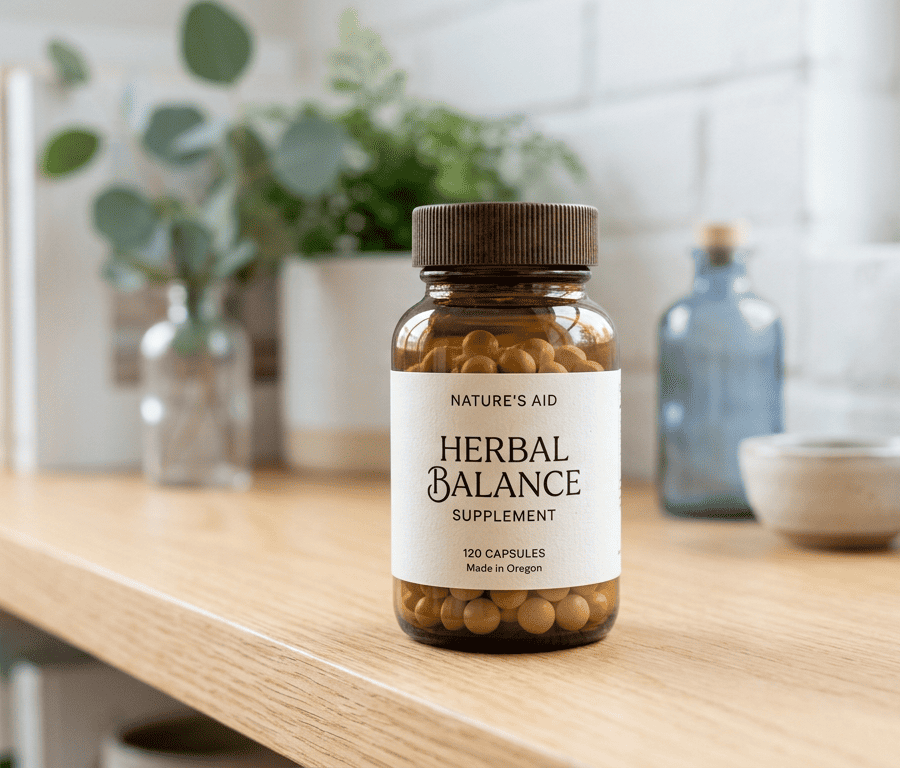
Custom Glass Pill Bottles for Pharmaceutical Brands
If you want to completely break away from standard packaging, working with a manufacturer on a custom project is the way to go.
Available custom color options
Beyond the standard colors, you can request custom spraying or tinting. We frequently help brands develop unique aesthetics, whether that means a sleek matte black bottle for sports nutrition or a soft pastel hue for beauty supplements.
Printing, labeling, and decoration possibilities
When you order custom bottles, you aren’t limited to paper labels. You can utilize silk-screen printing, hot stamping, or frosting directly onto the glass. This ensures your branding never peels off or fades during the product’s lifespan.
Closure options: child-resistant caps, tamper-evident closures, screw caps
The bottle is only half of the packaging equation. Your glass bottles must be paired with the right closures. If you are packaging drugs, you will strictly need Child-Resistant (CR) caps. For supplements, simple screw caps with induction seal liners may suffice. Make sure your glass manufacturer can provide compatible, high-quality closures that match the neck finish of your custom bottles.
Custom sizes and bottle shapes
You don’t have to stick to the standard round packer shapes. Square bottles, wide-mouth apothecary jars, and slim cylinder profiles can help your product jump off the shelf.
What buyers should discuss with a manufacturer before ordering
When approaching a manufacturer for custom glass, always lead with your numbers. Discuss your required volume, ask about the MOQ for custom colors, request lead times for mold creation, and always ask for physical samples to run through your automated filling lines before committing to a bulk order.
Why Choose Smilebottles for Glass Pharmaceutical Packaging
If you are looking for a reliable partner to handle your packaging supply chain, Smilebottles is built to support your B2B requirements.
Wide range of glass pill bottle colors and sizes
We maintain an extensive inventory of standard amber, clear, blue, and green bottles in sizes ranging from small 30ml vials to large 500ml bulk packers. This ensures we can cover your entire product portfolio.
Support for custom packaging projects
If you need a completely bespoke design, our engineering team will work with you from CAD drawing to final mold creation, ensuring your custom bottle is optimized for high-speed filling lines.
Quality control and manufacturing consistency
We understand that an out-of-spec bottle neck can jam your capping machinery and cost you thousands in downtime. Our facility adheres to strict quality control protocols, ensuring every batch you receive matches the approved specifications.
Solutions for pharmaceutical, supplement, and wellness brands
We understand the different compliance needs of OTC medicines versus herbal supplements. We can guide you to the right glass type and closure system for your specific market category.
OEM/ODM and bulk order support
Whether you are a contract manufacturer looking for wholesale pricing on millions of units or a growing brand needing a reliable OEM partner for custom packaging, we have the export experience and production capacity to deliver on time.

FAQ Frequently Asked Questions About Glass Pill Bottle Colors
Q1:Why are most pharmaceutical pill bottles amber?
A1: Amber is the most efficient and cost-effective color for blocking high-energy UV light (wavelengths below 450nm). Because most active pharmaceutical ingredients are susceptible to photodegradation, amber has become the default industry standard for safe drug storage.
Q2:Do blue or green glass bottles protect medicine from UV light?
A2:Yes, but to a lesser extent than amber. Blue and green glass filter out some UV rays and visible light, making them suitable for products with moderate light sensitivity. However, they are not recommended for highly unstable prescription medications.
Q3:Are clear glass pill bottles safe for pharmaceuticals?
A3:They are only safe if the specific medication or supplement has been proven stable under light exposure. Clear glass provides zero UV protection, so it should only be used for formulations that do not degrade when exposed to light.
Q4:Can I order custom-colored glass pill bottles?
A4:Absolutely. We regularly produce custom colors to help brands differentiate themselves. Just keep in mind that custom colors usually require higher minimum order quantities and slightly longer lead times than standard in-stock colors.
Q5:Which bottle color is best for vitamins and supplements?
A5:It depends on the vitamin. B-complex vitamins and Vitamin C degrade in light, so amber or dark custom colors are best. For shelf-stable minerals or visually appealing gummies, clear glass is perfectly fine.
Q6:Does bottle color affect shelf life?
A6:Yes, significantly. If a light-sensitive product is placed in a clear bottle, the light energy will break down the active ingredients, shortening the product’s effective shelf life. Placing that same product in an amber bottle blocks the light, extending the shelf life.
Q7:Are colored glass pill bottles better than plastic bottles?
A7:For premium protection, yes. Glass offers a superior barrier against oxygen and moisture compared to plastic, and it does not leach chemicals. When you add the UV filtration of colored glass, it is the safest environment for long-term drug storage.
Q8:What is a good pill bottle example for a new organic supplement?
A8:A great option for an organic brand is a 100cc green glass packer with a bamboo or smooth black screw cap. The green color protects the botanicals inside while communicating a natural, eco-friendly aesthetic to the consumer.
Q9:Why are prescription bottles orange when I get them from the pharmacy?
A9:If you’ve ever looked at a standard pharmacy vial and wondered why are pill bottles orange, the answer lies in cheap plastic production. Decades ago, pharmacies needed a cheap, translucent material that offered basic UV protection so pharmacists could easily see the pills inside while still offering some light defense. Orange PET plastic became the standard for temporary prescription dispensing.
Q10:Why are medicine bottles orange in plastic, but brown in glass?
A10:When comparing plastic to glass, orange plastic is cheap and offers enough protection for the few weeks a patient holds a prescription. But for long-term manufacturing and premium shelf-life protection, amber (brown) glass is far superior. It is much denser and blocks significantly more harmful light than thin orange plastic.
Q11:What closure options are available for glass pill bottles?
A11:You can pair your glass bottles with child-resistant (push-down and turn) caps, standard continuous thread screw caps, tamper-evident dropper assemblies, or metallic lids, depending on your product’s regulatory requirements.
Conclusion
By partnering with an experienced glass manufacturer like Smilebottles, you gain access to the knowledge, inventory, and production capabilities needed to scale your business safely. We understand the B2B demands of the pharmaceutical packaging industry and are ready to help you find the perfect colored glass solution for your next product launch. Contact us today to discuss your requirements and request samples for your filling lines.


