Table of Contents
ToggleAuthor: SmileBottles Editorial Team
Estimated Reading Time: About 16 Minutes
If you are sourcing products for your inventory, you need to know exactly how to guide your customers when they are comparing glass vs plastic food containers. Making the right choice impacts not only the shelf life and safety of the food but also your brand’s reputation in a highly competitive market.
In this comprehensive guide, you will learn everything you need to know about the great debate of food storage containers glass vs plastic. We will dive deep into safety standards, durability, cost-effectiveness, environmental impact, and consumer trends. Whether you are stocking up for a retail store or launching a new line of premium kitchenware, understanding the nuances of glass vs plastic food storage containers will help you make an informed, profitable decision.
Introduction: Why Choosing the Right Food Storage Material Matters
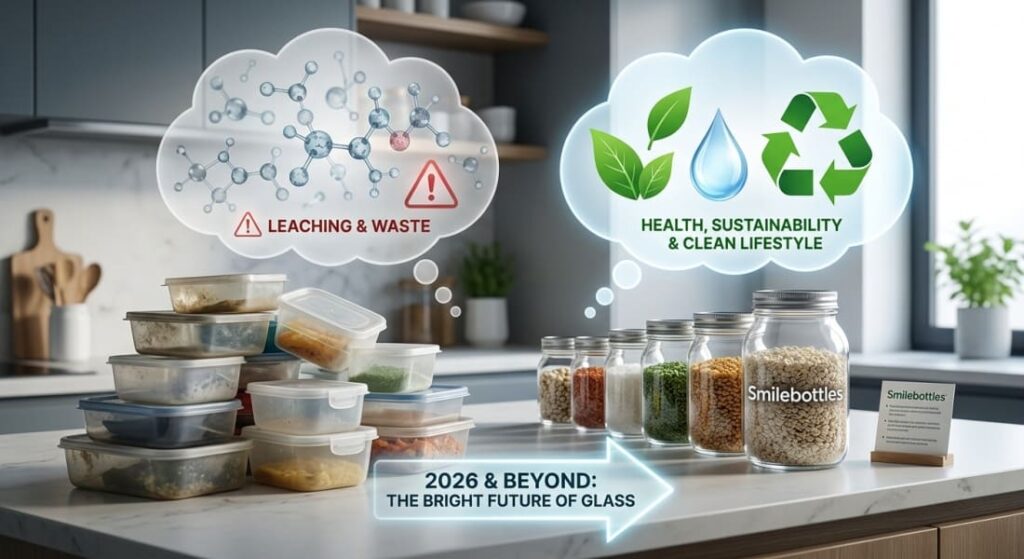
Today, when consumers look for glass food storage containers, they are driven by a desire for a healthier, cleaner lifestyle. They are looking to avoid the chemical leaching associated with plastics, especially when food is heated. Furthermore, the global push toward sustainability means that end-users are actively seeking out eco-friendly food storage containers that will not end up sitting in a landfill for centuries.
By the end of this article, you will have a crystal-clear understanding of both materials. You will discover the technical differences, the pros and cons, and ultimately, why partnering with a reliable manufacturer to source high-quality glass food storage jars is a brilliant move for your business in 2026 and beyond.
What Are Glass Food Storage Containers?
When we talk about food grade glass containers, we are referring to storage vessels made primarily from natural raw materials like silica sand, soda ash, and limestone. These ingredients are melted down at incredibly high temperatures to form a solid, non-porous material that is entirely inert. This means glass does not react chemically with the food stored inside it, making it one of the purest and safest packaging options available on the market today.
For B2B buyers, understanding the specific types of glass is crucial. Most premium glass meal prep containers are made from borosilicate glass, which includes boron trioxide. This addition makes the glass highly resistant to thermal shock, meaning it can go from a freezing environment directly into a hot oven without cracking. Standard soda-lime glass is also popular for everyday pantry storage jars, offering excellent clarity and durability at a lower price point.
Key Features of Glass Containers
1 Non-Porous Surface: Unlike other materials, glass has a microscopic structure that is completely smooth and non-porous. It does not harbor bacteria, nor does it trap leftover food particles.
2 Heat Resistance: High-quality glass can withstand extreme temperatures, making these products highly versatile. They can be used for baking, reheating, and freezing.
3 Supreme Transparency: Glass offers unmatched clarity. Whether you are a consumer organizing a pantry or a brand displaying premium jam, the transparency of glass allows the quality of the food to shine through.
4 Structural Integrity: Over time, glass does not warp, bend, or degrade. A glass container will maintain its exact shape and structure for decades if not dropped.
Advantages of Glass Food Storage Jars
If you are wondering why your customers are actively searching for non toxic food containers, the advantages of glass provide the answer.
First and foremost is the absolute lack of chemical leaching. Because glass is inert, you never have to worry about harmful toxins migrating into the food, even when dealing with highly acidic foods like tomato sauce or citrus. Secondly, glass is entirely odor and stain-resistant. You can store a potent garlic curry in a glass bowl one day, wash it, and store delicate vanilla sugar in it the next day without any residual smell.
Additionally, glass is highly versatile. Customers love that they can seamlessly move a container from the freezer to the microwave or oven. As microwave safe food containers, glass vessels (when the lids are removed) offer unparalleled convenience for meal prepping. Finally, glass is 100% recyclable and infinitely reusable, making it the ultimate choice for environmentally conscious consumers.
Disadvantages of Glass Containers
To make an informed purchasing decision, you must also understand the drawbacks. Glass is inherently heavier than plastic. If you are shipping bulk orders of glass jars, you will need to account for higher freight costs and robust packaging materials to prevent damage in transit.
Furthermore, while tempered and borosilicate glasses are strong, they are still breakable. Dropping a glass container on a hard tile floor will likely result in shattering. Lastly, the upfront manufacturing and retail cost of glass is higher than plastic. However, this is often offset by the product’s long lifespan, a point you can easily use to educate your retail customers.
What Are Plastic Food Storage Containers?
Plastic containers have been a staple in kitchens and commercial food packaging for over half a century. Manufactured from synthetic or semi-synthetic organic compounds, plastics can be molded into almost any shape, color, and thickness.
When evaluating plastic containers vs glass, it is essential to understand that not all plastics are created equal. The safety, durability, and cost of a plastic container depend entirely on the specific polymer used in its manufacturing.
Types of Plastic Used in Food Containers
1 PP (Polypropylene – Recycling Code 5): This is the most common plastic used for food storage. It is relatively heat-resistant, sturdy, and generally considered safe for food contact. Many affordable meal prep containers are made from PP.
2 PET (Polyethylene Terephthalate – Recycling Code 1): Often used for single-use water bottles and disposable food packaging, PET is lightweight and clear, but it is not designed for heat exposure or long-term reuse.
3 Tritan: A modern, premium plastic that mimics the clarity of glass. It is marketed as being free of BPA and other bisphenols. It is highly shatter-resistant and often used for high-end water bottles and premium plastic storage.
Advantages of Plastic Containers
There is a reason plastic became so ubiquitous. It is incredibly lightweight and highly portable. If your customers are commuters who take their lunch on a crowded train, or parents packing snacks for toddlers, the lightweight nature of plastic is a significant benefit.
Plastic is also highly durable in terms of impact resistance. It will not shatter if dropped, making it ideal for outdoor events, picnics, and households with small children. From a B2B sourcing perspective, plastic is very cheap to manufacture and inexpensive to ship globally due to its low weight and unbreakability.
Disadvantages of Plastic Containers
Despite the conveniences, the drawbacks of plastic are becoming harder for consumers to ignore. The primary issue driving the glass vs plastic food storage debate is chemical safety. When exposed to heat (like in a microwave or dishwasher), many plastics can break down at a microscopic level, releasing chemicals into the food.
Even when you offer bpa free plastic containers, research has shown that some alternative chemicals used to replace BPA (like BPS) can still act as endocrine disruptors. Furthermore, plastic is highly porous. It absorbs food odors and stains easily—everyone has experienced a plastic container permanently stained orange by pasta sauce. Finally, the environmental impact of plastic is severe. It degrades slowly, contributes to microplastic pollution, and is often difficult to recycle efficiently.
Glass vs Plastic Food Storage: A Side-by-Side Comparison
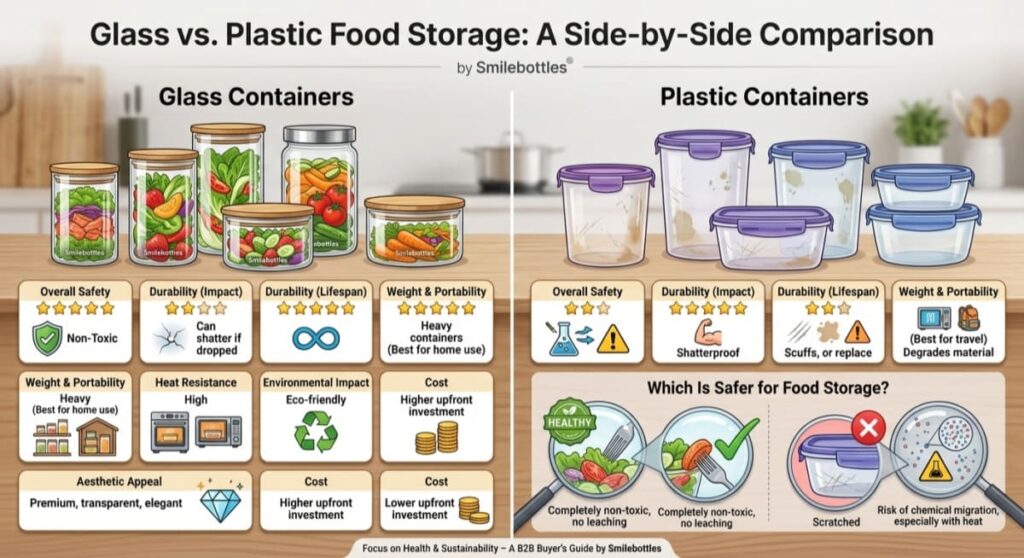
As a buyer, you need a clear, objective look at how these two materials stack up against each other. When weighing a glass container vs plastic container, you have to look at the daily realities of how end-users interact with the product.
Below is a detailed comparison table that highlights the core differences. You can use this data to educate your own customers or to justify the transition to glass in your product lineup.
|
Feature |
Glass Containers |
Plastic Containers |
|
Overall Safety |
⭐⭐⭐⭐⭐ (Inert, no leaching) |
⭐⭐⭐ (Prone to microplastics & leaching) |
|
Durability (Impact) |
⭐⭐⭐ (Can shatter if dropped) |
⭐⭐⭐⭐⭐ (Shatterproof) |
|
Durability (Lifespan) |
⭐⭐⭐⭐⭐ (Lasts decades, won’t warp) |
⭐⭐⭐ (Scratches, stains, and warps over time) |
|
Weight & Portability |
Heavy (Best for home use) |
Light (Best for travel) |
|
Heat Resistance |
High (Oven & Microwave safe) |
Medium (Microwave use often degrades material) |
|
Environmental Impact |
Eco-friendly (Highly recyclable) |
Less sustainable (Contributes to pollution) |
|
Aesthetic Appeal |
Premium, transparent, elegant |
Functional, can become cloudy |
|
Cost |
Higher upfront investment |
Lower upfront cost |
Which Is Safer for Food Storage?
If we are strictly discussing plastic food containers safety, glass is the undisputed winner. Consumers are increasingly terrified of microplastics entering their diets. When a plastic container is scratched by a fork or heated in a microwave, tiny plastic particles and chemical additives can migrate into the food.
Glass, on the other hand, is completely non-toxic. It requires no chemical additives to maintain its shape or clarity. When a consumer uses glass, they are ensuring that the only thing they are tasting is their food. This is a massive selling point for health-conscious demographics.
Which Is Better for Meal Prep?
The answer to this depends on the user’s lifestyle. For sheer portability, a commuter might prefer plastic. However, for true meal prep enthusiasts, glass vs plastic food containers is an easy debate to settle.
Meal prepping usually involves cooking large batches of food, storing them in the fridge or freezer, and reheating them days later. Glass is vastly superior here. It transitions from cold to hot environments seamlessly and safely. Additionally, if you are organizing a fridge, utilizing square glass storage containers is incredibly efficient. The square shape maximizes shelf space, while the transparent glass allows you to easily identify the meals without opening the lids.
Which Is More Eco-Friendly?
Sustainability is no longer just a buzzword; it is a primary purchasing driver. In the battle of glass vs plastic storage containers regarding the environment, glass wins easily. Glass is made from abundant natural resources and can be recycled indefinitely without losing quality or purity. Plastic degrades every time it is recycled, eventually ending up in a landfill or the ocean. Stocking glass products aligns your business with the global eco-friendly movement.
When Should You Choose Glass vs Plastic?
Helping your customers choose between plastic vs glass storage containers means understanding their specific use cases. Neither material is entirely obsolete, but they serve very different purposes in the modern kitchen and commercial packaging sectors.
Choose Glass If You:
Store Hot Food: If you are pouring hot soups, stews, or freshly cooked sauces into a container, glass is the only safe choice. It will not melt, warp, or release toxins under heat.
Care About Health & Sustainability: For buyers who want a zero-waste lifestyle and a toxin-free kitchen, glass is mandatory.
Want Long-Term Storage: Whether it is dry pantry goods like rice and flour or long-term freezer meals, the airtight nature of glass keeps food fresher for longer.
Value Aesthetics: Let’s face it, a pantry lined with matching small glass storage bowls with lids looks incredibly chic and organized compared to a mismatched pile of stained plastics.
Choose Plastic If You:
Need Ultra-Lightweight Solutions: Backpackers, construction workers, or children taking lunch to school benefit from the lightweight nature of plastic.
Have Strict Budget Constraints: For large, temporary gatherings where containers might not be returned, cheap plastic serves a practical, low-cost purpose.
Require Shatterproof Environments: In places like commercial pool decks or specific industrial kitchens where broken glass is a massive safety hazard, high-grade plastic is necessary.
Why More Brands Are Switching to Glass Containers
If you are a B2B buyer, a food brand, or a retailer, you must pay attention to market trends. The debate over are glass containers better than plastic has largely been settled in the minds of premium consumers. As a result, commercial brands are aggressively pivoting to glass packaging.
1 Eco-Conscious Consumer Demand
Today’s consumers vote with their wallets. They actively seek out brands that share their environmental values. When a brand packages its spices, jams, or meal prep kits in glass, it immediately communicates a commitment to sustainability. Buyers are willing to pay a premium for products housed in glass because they perceive the packaging as a value-add—they can clean and reuse the jar long after the original product is gone.
2Tightening Regulations on Plastics
Governments worldwide are cracking down on single-use plastics and harmful chemical additives. By transitioning your product lines to glass now, you are future-proofing your business against upcoming regulations and taxes on plastic packaging.
3. The Premiumization of Kitchenware
There has been a massive growth in the premium home goods market. Consumers want their kitchens to look like they belong in a magazine. Storing food in high-quality, beautifully designed glass jars elevates the home cooking experience. Brands that offer aesthetically pleasing glass solutions are capturing a highly profitable market segment.
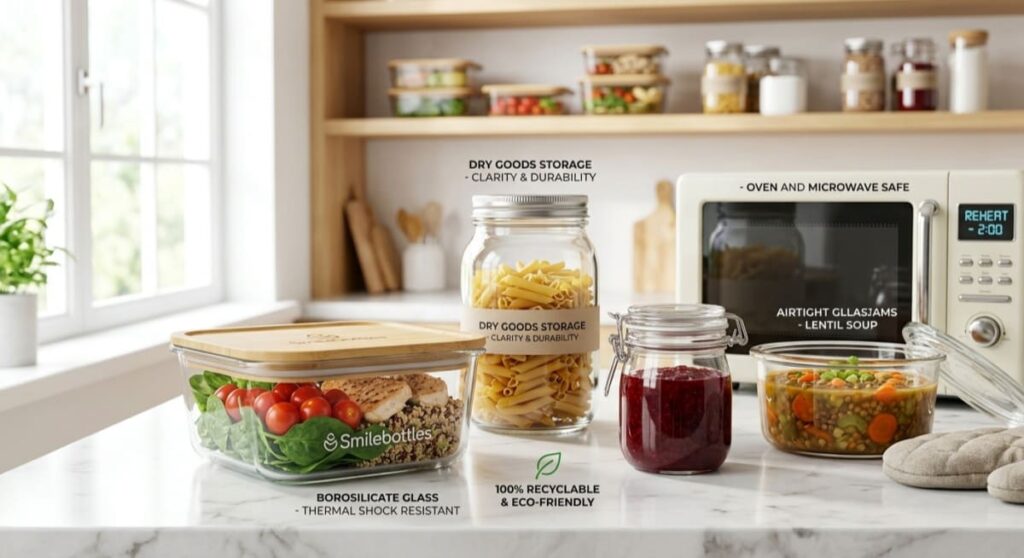
Smilebottles – Your Professional Glass Food Storage Container Manufacturer
Understanding the market is only half the battle; sourcing the right product is where you win. When you are ready to invest in premium glass inventory, you need a manufacturing partner you can trust. That is where Smilebottles comes in.
Who We Are
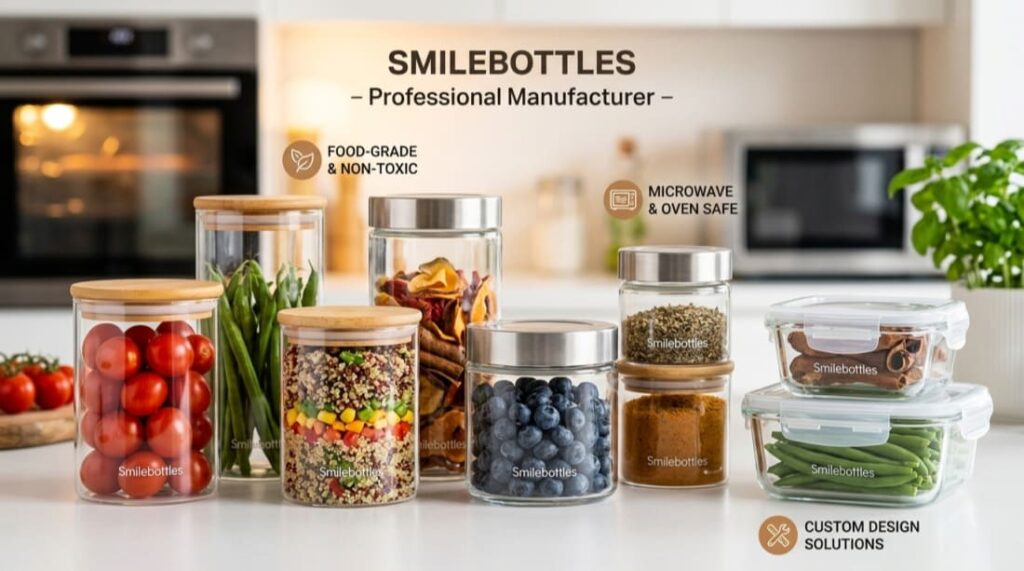
Smilebottles is a premier manufacturer specializing in high-quality glass packaging solutions. With years of expertise in the glass industry, we understand the exact needs of B2B buyers, wholesalers, and retail brands. We don’t just make glass; we engineer solutions that help your business grow and meet the soaring consumer demand for safe, sustainable food storage.
Our Product Advantages
When you source from Smilebottles, you are guaranteed excellence. Our glass food storage jars are manufactured using strict quality control standards.
Food-Grade Materials: We use premium, high-density glass that is 100% free of lead, BPA, and other harmful chemicals. Our products meet rigorous international safety standards.
Custom Design Options: We understand that brands need to stand out. We offer customized shapes—whether you need sleek cylinders or space-saving square glass storage—as well as custom branding, embossing, and a wide variety of lid options (including bamboo, stainless steel, and food-grade silicone).
Versatility: From massive bulk storage jars for pantries to small glass storage bowls with lids for precise meal prep, our catalog covers every possible consumer need.
Why Choose Smilebottles?
Partnering with Smilebottles means partnering with reliability.
Unmatched Quality Control: Every batch of our glass containers undergoes rigorous thermal shock and impact testing. We ensure that the products you receive are flawless.
OEM/ODM Services: Do you have a unique vision for a food storage line? Our engineering team provides comprehensive OEM and ODM services to bring your exact design to life.
Global Export Experience: We know how to handle glass. We utilize specialized, reinforced packaging to ensure your bulk orders arrive at your warehouse safely, significantly reducing breakage and loss during transit.
Scalable Bulk Manufacturing: Whether you are testing a new product line or rolling out a massive nationwide retail campaign, our high-capacity factories can meet your volume demands on time and within budget.
By choosing Smilebottles, you are not just buying containers; you are securing a competitive edge in a market that is rapidly abandoning plastic.
FAQ Frequently Asked Questions About Glass Food Containers
When your customers are making the transition from plastic to glass, they will have questions. Being able to answer these confidently will build trust and increase your sales.
Q1:Are glass containers safer than plastic?
A1:Yes, absolutely. When consumers ask, “are glass containers better than plastic?” regarding health, the answer is a resounding yes. Glass is an inert material, meaning it will not leach any chemicals, microplastics, or toxins into food, regardless of how hot the food is or how many times the container is washed.
Q2:Can glass containers break easily?
A2:While glass is naturally breakable, the premium borosilicate and tempered glass used in high-quality food storage containers is engineered for durability. It is designed to withstand daily kitchen bumps and knocks. However, it is still glass, so it should be handled with reasonable care to avoid drops on hard surfaces like concrete or tile.
Q3:Are glass containers microwave safe?
A3:Yes. One of the greatest benefits of glass is its heat resistance. You can safely reheat food in the microwave using glass containers. Note: Always advise customers to remove lids before microwaving, especially if the lids contain metal components or are made of plastic/bamboo, to ensure maximum safety and longevity of the seal.
Q4:Do glass containers cost more?
A4:Initially, yes. The manufacturing and shipping costs of glass are higher than plastic. However, they offer a far better return on investment. A plastic container may warp, stain, and need replacing within a year, while a high-quality glass jar can last for decades. It is a long-term investment in health and kitchen organization.
Q5:Is BPA-free plastic safe enough?
A5:This is a common question. While bpa free plastic containers are certainly a step up from older plastics containing Bisphenol A, they are not entirely foolproof. Many manufacturers substitute BPA with BPS or BPF, chemicals that emerging research suggests may have similar endocrine-disrupting properties. For true peace of mind, glass remains the only completely inert and safe option.
Conclusion
To summarize the key differences: plastic offers lightweight portability and impact resistance at a lower price point. However, it falls significantly short when it comes to long-term safety, heat resistance, and environmental sustainability. On the other hand, glass stands out as the ultimate champion for health, food preservation, and eco-friendliness. If you are prioritizing the well-being of your customers, the purity of stored food, and the future of our planet, glass is undeniably the superior choice. As a business, shifting your focus and inventory toward high-quality glass products is not just an ethical choice; it is a highly profitable strategy aligned with global market trends. Your customers are actively looking for better, safer ways to store their food.
Are you ready to elevate your product offerings and provide your customers with the premium, safe storage solutions they are searching for? Contact Smilebottles today. Let our expertise in glass manufacturing help you build a robust, beautiful, and highly successful product line that your customers will trust for a lifetime.
 English