Table of Contents
ToggleAuthor: SmileBottles Editorial Team
Estimated Reading Time: About 15 Minute
Picking the right glass bottle size seems straightforward until you’re actually doing it. Get it right and your product feels purposeful, ships cleanly, and sits well on a shelf or in a bathroom cabinet. Get it wrong and you end up with a bottle that holds too little, costs too much to ship, or just doesn’t match what your customers expect.
This guide walks you through everything you need to know about glass bottle sizes — from quick size references to category-specific recommendations — along with the practical factors that most guides skip over entirely.
Standard Glass Bottle Sizes: Oz to mL Conversion Guide
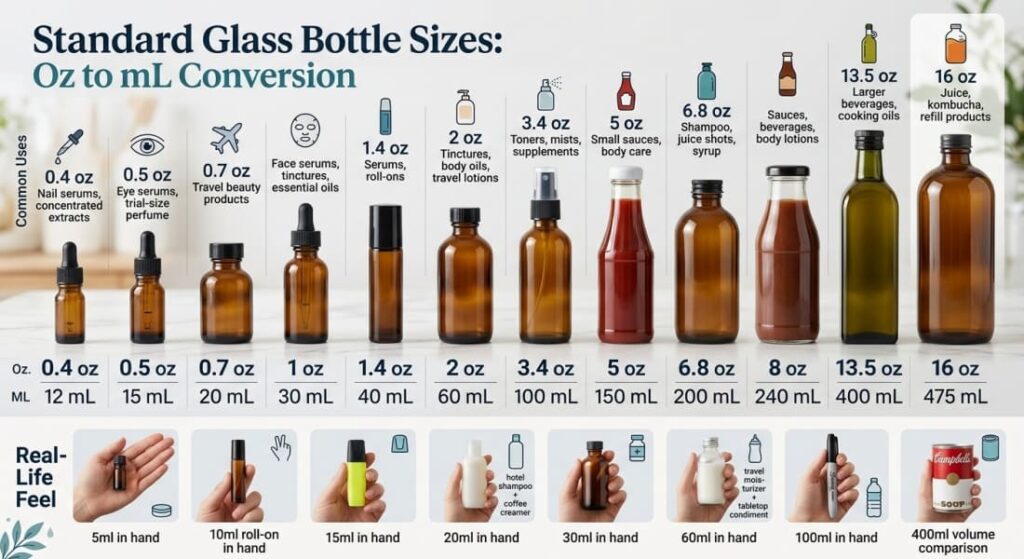
Before you can choose the right size, it helps to understand what the common sizes actually look like in real life. One of the first things buyers run into is the oz-to-mL confusion. Both units are used depending on the market, so understanding the conversion makes comparing options a lot easier.
Ounces (oz) | Milliliters (mL) | Common Uses |
0.4 oz | ~12 mL | nail serums, concentrated extracts |
0.5 oz | ~15 mL | eye serums, trial-size perfume |
0.7 oz | ~20 mL | travel beauty products |
1 oz | ~30 mL | face serums, tinctures, essential oils |
1.4 oz | ~40 mL | serums, roll-ons |
2 oz | ~60 mL | tinctures, body oils, travel lotions |
3.4 oz | ~100 mL | toners, mists, supplements |
5 oz | ~150 mL | small sauces, body care |
6.8 oz | ~200 mL | shampoo, juice shots, syrup |
8 oz | ~240 mL | sauces, beverages, body lotions |
13.5 oz | ~400 mL | larger beverages, cooking oils |
16 oz | ~475 mL | juice, kombucha, refill products |
Now, what do these sizes actually feel like in hand? That’s a fair question for anyone ordering samples or comparing options.
A 5ml bottle size is very small — roughly the size of a lip balm cap. If you hold one in your hand, it barely covers your palm. It’s commonly used for perfume samples or concentrated essential oil blends, and it’s not really meant for everyday-use products. When customers ask how big is a 5 ml bottle, the honest answer is: smaller than most people expect.
A 10ml bottle size in hand is just slightly larger — about the length of your index finger and thin enough to fit between two fingers. It works well for roll-ons, sample kits, and high-potency tinctures.
The 12 ml size falls between 10ml and 15ml and is less common, but you’ll see it in nail care and eye treatment products where a very small, precise amount is dispensed each use.
A 15ml bottle size in hand is about the same height as a standard highlighter marker cap. It’s a popular choice for eye serums, concentrated facial treatments, and trial-size fragrance — small enough to feel premium, large enough to last a few weeks of daily use.
A 20ml bottle size is roughly the size of a hotel shampoo bottle. When buyers ask how big is 20ml bottle, a useful comparison is a standard single-serve coffee creamer — compact and pocketable, commonly used in travel-ready beauty and skincare lines.
A 30ml bottle size in hand is one of the most versatile and widely used sizes in cosmetics and wellness. It’s about the height of a standard medicine bottle and fits comfortably in a coat pocket or small pouch.
A 40ml bottle size in hand is noticeably wider or taller than a 30ml, still pocketable but with more presence — often used for serums, premium facial oils, and mid-size tinctures where a longer supply period matters.
When people ask how big is 60 ml bottle, think of a travel-size moisturizer or a small tabletop condiment bottle. For a quick 3 oz bottle size comparison, 3 oz is approximately 90mL — slightly larger than 60mL. The practical takeaway is that a 60mL bottle sits comfortably under the standard TSA 100mL carry-on limit, making it a smart choice for travel-positioned products.
100 ml bottle dimensions vary by shape, but a typical cylindrical 100mL bottle stands around 12–14 cm tall with a diameter of about 4–5 cm. It’s a standard toner or facial mist size and fits easily into most skincare routines.
200ml bottle size in hand is more substantial — about the height of a large permanent marker or a small water bottle. It works well for hair care, body lotion, juice shots, or cooking sauces where a reasonable daily portion is needed.
When it comes to how big is 400 ml, think of a standard can of soup — that’s roughly the volume you’re working with. You’d reach for this size for larger beverages, bottle sizes for oil like cooking or infused specialty oils, or bulk skincare refills where the customer is getting more product for their money.
The 2oz bottle size (approximately 60mL) and the 5 oz bottle size (approximately 150mL) are both common in food and personal care — the 2oz for concentrated products, the 5oz for sauces and body care items that are used more generously.
What Factors Determine the Right Glass Bottle Size?
Size is about more than capacity. Before you settle on a volume, think through these factors carefully.
Product Type and Viscosity
Thin liquids like serums, oils, and tinctures work well in narrow-neck bottles because they pour cleanly and don’t need a wide opening. Thick creams or balms are harder to get out of a bottle and usually belong in jars. If your product is pourable but thick — like a syrup or heavy body oil — pay attention to neck diameter before you commit to a specific size.
Dosage and Frequency of Use
How often does your customer use the product? A daily face serum should probably be 30–50mL so it lasts four to six weeks. A high-potency supplement taken in small drops might be fine at 15–30mL. Matching your bottle size to the product’s actual usage cycle helps customers avoid running out too quickly — or holding on to a product past its shelf life.
Target Market and Purchase Behavior
If you’re selling premium skincare, customers expect smaller, more concentrated bottles. If you’re in the food and beverage category, bigger volumes often suggest better value. Gift and travel formats have their own expectations — smaller is usually better. Think about where your product lives in the buyer’s daily life before picking a volume.
Storage, Shipping, and Shelf Space
Heavier and larger glass bottles cost more to ship and are more likely to break in transit. If you’re selling direct-to-consumer online, this matters more than it might in a retail context. On the retail side, shelf height and slot dimensions can actually constrain your bottle height — worth checking if you’re going into a specific retailer or chain.
Labeling and Decoration Space
A 5mL vial gives you almost no surface area for branding. A 100mL bottle has room for a full label with a logo, ingredient list, instructions, and barcode. If your product has regulatory labeling requirements — food products, supplements, or cosmetics sold in specific markets — you need enough surface area to comply. Flat panels on the bottle make label application easier; fully round bottles can make small text harder to read once applied.
Closure Compatibility
Your bottle size needs to match the neck finish. A 30mL serum bottle with an 18mm neck takes a different dropper insert than one with a 20mm neck. If you’re planning to use pumps, sprayers, or specialty droppers, confirm that neck dimensions work with your chosen closure before you finalize an order. Getting this wrong means retooling your packaging, which is expensive and time-consuming.
Glass Bottle Size Guide by Product Category
Best Glass Bottle Sizes for Skincare and Cosmetics
Glass bottles for skincare tend to run smaller than other categories because skincare formulas are often concentrated and the price per mL is high. The most common choices are:
15mL for eye serums, targeted treatments, and intensive concentrates
30mL for the classic face serum format — the 30ml serum bottle is probably the most recognized format in premium skincare globally
50mL for essences and premium moisturizing serums
100mL for toners, facial mists, and lightweight fluids
120–200mL for body oils, hair serums, and larger-format skin care
Amber glass is a common choice here because it filters UV light, which matters for vitamin C serums and other light-sensitive formulas. Frosted glass is popular for brands that want a clean, minimal aesthetic.
Essential oil bottle sizes tend to sit on the smaller end. Single oils are typically 5mL, 10mL, or 15mL, while blended oils and roll-on formats often come in 10mL or 15mL. If you’re putting together a sampler set, you might work with 5mL or even smaller vials to keep the kit price accessible.
Best Glass Bottle Sizes for Food and Beverage Products
Food and beverage packaging lives by different rules than cosmetics. Portion size, shelf presence, and convenience all factor in.
Glass bottles for hot sauce are typically 60mL, 100mL, or 150mL — enough product to be useful, but small enough to sit on a kitchen table without being awkward. Sauce bottle sizes across condiments like hot sauce, soy sauce, and specialty dressings generally range from 60mL to 250mL, with smaller formats popular in premium or gift set contexts.
For glass bottles for juice, the most popular sizes are 250mL, 330mL, and 500mL. The 250mL single-serve format has been pushed hard by premium cold-pressed juice brands over the last decade. Juice bottle sizes in the kombucha space tend toward 330mL or 355mL to align with consumer expectations from the craft beverage market.
Olive oil bottle sizes in retail are typically 250mL or 500mL, with 750mL and 1L formats common for family use or restaurant supply. The 250mL size works well for premium or flavored oils because it limits oxidation after opening — a real concern for quality-focused brands.
If you’re working with bottle sizes for oil more broadly — whether cooking oil, infused specialty oils, or wellness oils — the 200mL to 400mL range gives you flexibility between a gift format and a regular-use bottle.
Best Glass Bottle Sizes for Tinctures and Supplements
Tincture bottle sizes are fairly standardized across the herbal supplement and wellness market. The 1 oz tincture bottle (30mL) is the most common format because it holds enough for a typical 30-day supply of a low-dose product and the price point is accessible for first-time buyers. Larger volumes like 60mL and 120mL are popular when the formula is lower potency or used multiple times daily.
Amber glass is almost universal in this category because most tincture formulas are sensitive to light. Dropper caps are standard, and child-resistant versions are required in several markets — check the regulations for wherever you’re selling.
If you’re launching a trial or starter format, a 15mL tincture bottle works well and keeps the entry price low enough to reduce purchase hesitation.
Best Glass Vial Sizes for Perfume and Samples
Standard perfume bottle sizes in retail are typically 30mL, 50mL, and 100mL. The 30mL format is popular for niche and artisan fragrances because it keeps the retail price manageable while still signaling that the product is premium. Sampling formats are usually 1–2mL spray vials or 1.5–3mL dabbers.
For travel fragrance, a 5–10mL atomizer is the standard — large enough to last a trip, small enough to pass through airport security. Roll-on formats in 10mL are also popular because they’re less likely to leak in a bag.
Glass Bottle vs. Glass Jar: Which Is Right for Your Product?
This question comes up regularly in skincare and food. The short answer is: if your product pours, use a bottle. If your customer needs to scoop it, use a jar.
Bottles are better for liquids, oils, and anything dispensed with a dropper, pump, or sprayer. They offer controlled dosing and feel cleaner in daily use. Jars work well for creams, balms, thick masks, and spreadable food products. Jars are also easier to access when the product is nearly empty, which matters for customer satisfaction.
From a branding perspective, bottles tend to read as more controlled and refined. Jars give a product a more artisan or accessible feel. Neither is better in absolute terms — it depends entirely on your product and your customer.
How Bottle Size Affects Branding, Cost, and Customer Experience
The size you choose sends a signal before anyone opens the product. A 15mL serum at a premium price point tells the customer the formula is concentrated and high-value. A 500mL bottle at a similar price communicates something very different.
Smaller bottles can drive repeat purchases and reduce upfront price resistance. Larger bottles suit value-oriented buyers or customers who want to minimize packaging waste. If you’re building a product line, offering two sizes — a standard and a travel or trial format — gives buyers a lower-commitment entry point without cannibalizing your full-size sales.
On the cost side, glass adds weight quickly as size increases. Shipping costs scale with weight, and breakage risk increases with bottle size and glass thickness. If you’re shipping direct-to-consumer, run the freight numbers for your target bottle size before committing to a production order.
How to Select the Right Closure for Your Bottle
Closures and bottles need to be chosen together, not separately. A dropper insert, a pump, and a screw cap all require a compatible neck finish — usually described by diameter (18mm, 20mm, 24mm, 28mm, and so on).
Droppers work well for serums, tinctures, and essential oils where precision dosing matters. Pumps are standard for lotions, liquid soaps, and facial cleansers. Sprayers are used for mists, toners, and surface-clean products. Screw caps are the default for food, beverage, and bulk wellness products.
If your product is intended for families or sold in regulated markets, child-resistant closures may be required — this is especially relevant for tinctures, supplements, and household cleaning products.
Common Mistakes to Avoid When Choosing Glass Bottle Sizes
A few things consistently trip up buyers who are new to glass packaging sourcing:
Choosing a size based on aesthetics alone leads to problems down the road. A bottle that looks great at a trade show might be too heavy to ship economically, or too tall for your target retailer’s shelf dimensions.
Forgetting to factor in dosage leads to customer complaints. If your 30mL serum runs out in two weeks at the recommended dose, that’s a product experience problem — not just a sizing issue.
Ignoring closure compatibility until the last step is an expensive mistake. Confirm neck dimensions with your supplier before finalizing your bottle selection, not after.
Skipping label space planning is common with small bottles. If you need to include an ingredient list, dosage instructions, and a barcode in a legible font size for regulatory compliance, a 5mL or 10mL bottle may not be able to carry all of that information. Check early.
How to Choose a Reliable Glass Bottle Manufacturer
Once you know what size you need, finding the right supplier matters just as much as the spec itself. Here’s what to look for.
A strong glass packaging manufacturer should carry a wide range of sizes and shapes — not just the common ones, but also specialty formats that give your brand a distinctive look. Custom glass bottles are an important option for brands that want unique shapes, embossed logos, or specific color finishes that standard stock items can’t deliver.
Look at whether the supplier can handle your volume needs at your current stage. If you’re starting small, find a glass bottle manufacturer with reasonable minimum order quantities and the ability to scale up as your brand grows. Wholesale glass bottles with consistent quality across large runs is a different challenge than sampling, and your supplier’s quality control process matters significantly here.
Bulk glass bottles with lids are a frequent request — asking about closure sourcing and compatibility during your initial conversation will save time later. A supplier who can provide matched closures with the bottles simplifies your procurement considerably.
Look for experience in your specific product category. A supplier with deep experience in skincare packaging may offer different stock shapes, finishes, and closure options than one focused primarily on food and beverage. Some manufacturers offer OEM and ODM services, meaning they can work directly with your design team or develop a custom bottle from a brief.
At Smilebottles, we work with brands across skincare, beverages, supplements, and fragrance. Our range covers sizes from 5mL to 1L, with options for custom shapes, colors, finishes, and closures — and flexible MOQs for brands at different stages of growth. If you’re trying to match a bottle to a specific closure or need sizing advice before placing an order, that’s exactly the kind of conversation we’re built for.

FAQ: Frequently Asked Questions About Choosing the Right Glass Bottle Size
Q1:What is the most common glass bottle size for serums?
A1:30mL face serum bottle is the most widely used size in premium skincare. It balances portability, perceived value, and a typical four-to-six week supply at standard daily application rates.
Q2:What size tincture bottle do most brands start with?
A2:The 1 oz tincture bottle (30mL) is the standard starting point. It’s familiar to supplement buyers, works with standard dropper closures, and covers a typical 30-day supply for many formulas. The 60mL size is the next most common for products used more frequently or over a longer period.
Q3:Are smaller bottles better for premium products?
A3:Often yes. Smaller sizes reinforce the idea that the formula is potent and concentrated, which supports a higher price per mL. That said, the right answer depends on your product’s actual dosage and your customer’s expectations going in.
Q4:What size bottles work best for hot sauce?
A4:Glass bottles for hot sauce are typically 60mL–150mL for tabletop formats. Retail multipacks and larger-format condiments sometimes use 200–250mL bottles. The right size depends on how quickly your customer goes through the product and how you want it to sit on a table or shelf.
Q5:Does bottle size affect shipping cost?
A5:It does, especially with glass. Larger and heavier bottles increase per-unit shipping cost and require more protective packaging material. If you’re selling direct-to-consumer online, make sure to factor freight into your unit economics before settling on a size.
Q6:What’s the practical difference between a 60mL and a 100mL bottle?
A6:A 60mL bottle is compact and pocketable — roughly the size of a travel moisturizer. A 100mL bottle is noticeably larger and reads more like a standard skincare or pharmaceutical product. Since 100mL is the TSA carry-on liquid limit, it’s also the maximum size you can offer if you want your product to be travel-compliant without triggering a separate conversation with airport security.
Conclusion
There’s no single right answer for glass bottle sizing. The best size for your product depends on what it is, how often your customers use it, what your brand is communicating, and how the bottle will be shipped and stored.
Start with the practical requirements — dosage, viscosity, closure compatibility — and then layer in the brand and commercial considerations. Use the size references and category charts in this guide as a starting point, and when in doubt, order samples in two or three sizes before committing to a full production run. Seeing and handling the bottles in person almost always changes the decision.
If you’re sourcing glass packaging for skincare, food, beverages, supplements, or fragrance, working with an experienced glass packaging manufacturer makes the process significantly smoother. The right supplier can help you navigate size options, closure compatibility, and customization details — whether you’re placing your first order or scaling an existing line.
 Portuguese
  English
  Russian
  Spanish (Chile)
  Spanish (Colombia)
  Spanish (Ecuador)
  Swedish
  Arabic
  French