Содержание
ПереключитьАвтор: Редакционная команда SmileBottles
Примерное время чтения: About 16 Minute
Glass bottle colors affect much more than how your product looks on a shelf. The right bottle color can help protect your formula from light, support your brand, and fit your budget, while the wrong one can lead to faded ingredients or off-flavors. Before you place an order for цветные стеклянные бутылки, it helps to know what each option can and can’t do.
Quick answer: If your product is sensitive to light, start with amber glass bottles. They offer strong UV protection at a reasonable cost. Clear glass bottles work best when you want customers to see the product and light exposure isn’t a major concern. Green glass bottles suit wine, olive oil, and natural brands, but they usually protect less than amber. Blue glass bottles are mostly a branding choice, while black glass bottles can block the most light if the glass is truly opaque.
Why Bottle Color Matters
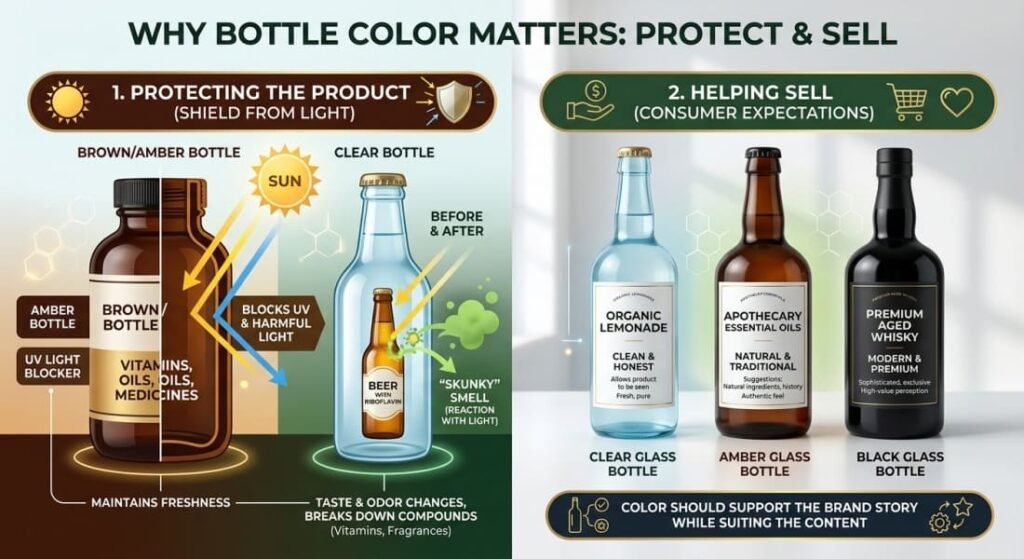
Your packaging has to protect the product and help sell it, and color plays a part in both jobs.
Light can break down vitamins, essential oils, plant extracts, fragrances, and some medicines. It can also change the taste of food and drinks. Beer is a classic example. Leave a bottle of beer in strong light, and riboflavin and hop compounds can react to create a “skunky” smell. That’s why so many bottled beers come in brown glass.
Color also shapes what buyers expect before they read your label. Clear glass feels clean and honest, amber can suggest a natural or apothecary-style product, and black often feels modern and premium. A color glass bottle should support the story your brand is telling, but it still needs to suit what’s inside.
What Color Is Glass?
If you’re wondering what color is glass, the simple answer is that pure silica glass is essentially colorless. So what is the color of glass when it’s made for everyday use? It’s usually clear with a slight tint because raw materials contain small amounts of other elements.
Is glass green by nature? Not exactly, but many people notice a glass with green tint when they look through the edge of a thick pane or bottle base. Why is glass green in these cases? The main reason is iron, which is commonly found in sand. Even a small amount can create a faint glass green color that becomes easier to see as the glass gets thicker.
The color of glass can be changed on purpose by adjusting the formula. Different additives and furnace conditions produce the many colours of glass used in packaging today.

How Color Glass Bottles Are Made
Most color glass bottles get their shade in one of two ways: the color is built into the glass, or it is applied to the surface after the bottle is formed.
When color is built into the glass, manufacturers adjust the batch during melting. Iron, sulfur, and carbon are commonly used to make amber. Chromium and iron can produce green, and cobalt creates deep blue. Exact recipes vary between factories, so two suppliers’ “amber” or “green” may not match perfectly.
Surface coating starts with a formed bottle, usually clear, which is then sprayed with color and cured. This often makes custom shades easier to produce, and minimum order quantities may be lower. However, a coating can scratch, and it may not offer the same light protection as a dark glass body. Ask your supplier which method they use and request transmission data if protection matters.
Consistency matters too, especially if you reorder regularly. Thicker areas of glass look darker, so a bottle’s shape can change how its color appears. Before production, agree on a reference sample, or ideally samples showing the acceptable light and dark limits. Check them under the same lighting so everyone is judging the color in the same way.
The Most Common Glass Bottle Colors and Their Uses
Clear Glass Bottles
Clear glass lets customers see your product’s color, texture, and fill level, which is useful for juices, sauces, spirits, and many cosmetics. It also gives you a neutral background for labels and printing.
The downside is limited light protection. Clear glass may block some shorter UV wavelengths, but it still lets through plenty of the light that can harm sensitive formulas. If you want to use it for a sensitive product, consider protective outer packaging and test how the product holds up under realistic lighting.
Amber Glass Bottles
What is amber glass? It’s brown or honey-toned glass that is commonly made with iron, sulfur, and carbon. It’s one of the most practical choices in packaging.
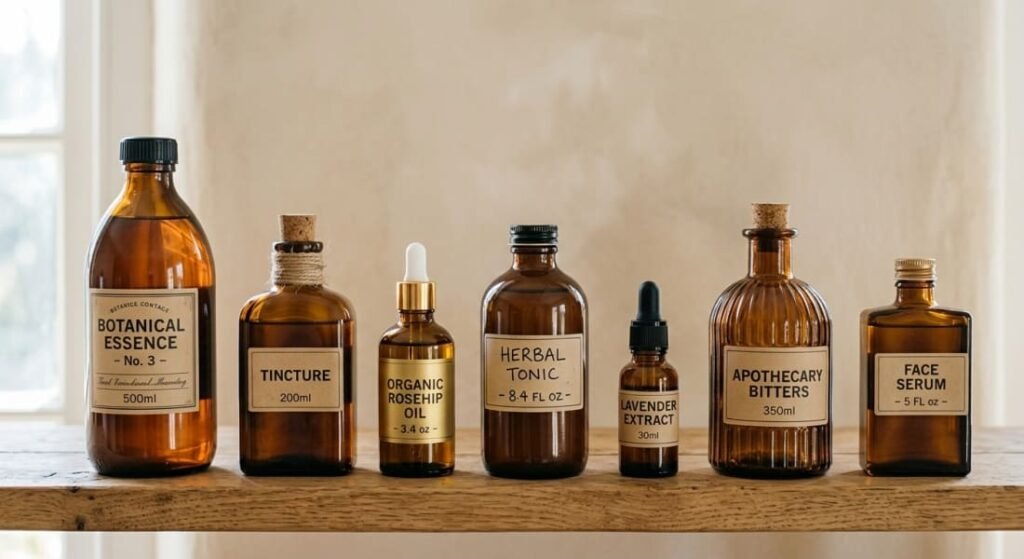
The main amber glass bottle function is light protection. Good amber glass blocks most UV light and some of the blue light that can also damage sensitive ingredients. That’s why an amber color bottle is so common for essential oils, herbal tinctures, serums, supplements, beer, and many pharmaceutical products.
You may also come across yellow bottle glass, which can range from a pale straw shade to a warmer honey tone. It can look great, but don’t assume it protects as well as dark amber. The lighter the shade, the more important it is to review the actual light transmission data.
Green Glass Bottles
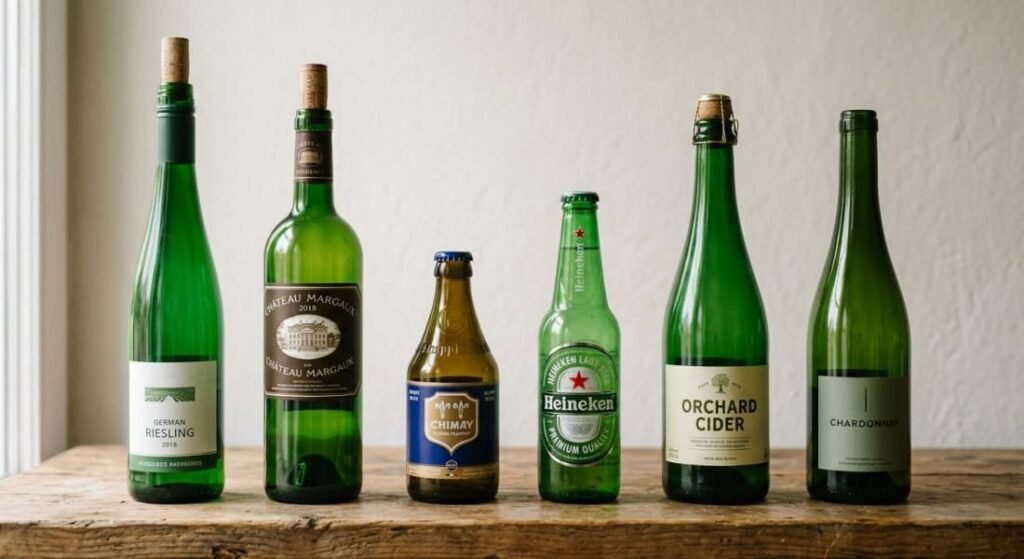
Green has a long history in wine, olive oil, and sparkling drinks. The green glass colour can range from pale sage to deep forest, and darker shades generally block more light. A color green bottle can also suit natural, organic, and traditional brands.
Protection varies widely, so don’t treat every glass bottle green shade the same way. For wine or olive oil, a darker green is often a sensible choice. For a highly sensitive formula, amber or fully opaque packaging may be safer.
What Is Bottle Green?
What is bottle green? It’s a deep, dark shade of green named after traditional glass bottles. What color is bottle green in practical terms? Think of a rich forest green with slightly cool undertones. The widely used hex reference is #006A4E, though glass will look different from a flat color on a screen.
What does bottle green look like on an actual bottle? It looks dark and fairly muted, becoming brighter when light passes through thinner areas. Because the bottle glass green shade can vary with thickness, ask for a physical sample if you need a specific green bottle color for your brand.
Blue Glass Bottles
Cobalt blue is hard to miss, which makes it popular for wellness products, aromatherapy, skincare, and specialty drinks. Blue glass water bottles are also a common choice for premium hydration brands and gift products.
Blue is mainly an aesthetic choice, however. Cobalt glass still allows a good deal of blue light and some UV light through, so it’s not the best option for a formula that degrades quickly in light.
When comparing blue glass vs green glass, a dark green will often provide better protection, although the exact shade and glass thickness matter. Blue usually stands out more on a crowded shelf. Choose green if you want a natural or traditional feel, and choose blue if you want to create a more distinctive look.
Black Glass Bottles
Truly opaque black glass can offer excellent light protection and has a bold, high-end look, which is why it’s often used for premium spirits, fragrances, and skincare. Be sure to ask how the black is achieved, though. Some bottles are very dark green or amber, while others are clear glass with a coating. A simple test is to hold a bottle up to a strong light, but lab data will tell you much more.
Black also has practical trade-offs. Customers can’t see the fill level, so your label needs to communicate the contents clearly. Printing needs some thought too, since light inks and metallic finishes usually stand out best on a dark surface.
Frosted Glass Bottles
Frosted glass bottles have a soft, matte look created through acid etching, sandblasting, or a spray coating. They’re popular for perfumes, cosmetics, and premium drinks because they feel refined and diffuse light attractively.
Keep in mind that frosting is a finish, not a form of strong UV protection. A frosted clear bottle may scatter light, but it won’t protect a formula the way dark amber can. If you like the look but need more protection, consider frosting a darker bottle.
Custom Color Bottles
A custom color bottle can make your packaging easier to recognize, and it can work well for seasonal launches or a signature product line. The main things to check are minimum order quantity, color matching accuracy, lead time, and whether the color will remain consistent across repeat orders.
Standard color bottles are usually easier to source and cost less, so they’re often a sensible choice for a new product. You can always move to a custom shade once your sales volume can support it.
Comparing Bottle Colors: Which One Protects Best?
Among common bottle colors, fully opaque black offers the strongest protection, assuming the glass or coating really blocks light. Amber usually comes next and offers the best balance of protection, availability, and cost. Dark green generally provides moderate protection, while light green and cobalt blue offer less. Clear glass offers the least.
Exact performance depends on the glass recipe, shade, and wall thickness. A dark, thick bottle from one factory may block far more light than a lighter version from another. Use these rankings as a starting point, then request spectral transmission data for the specific bottle you plan to buy.
How to Choose the Right Color for Your Product
Start With Your Formula
Find out how sensitive your product is to light before you choose a shade. Your formulator or ingredient supplier can often tell you which ingredients are most at risk. If you already know your product is sensitive, shortlist amber or opaque packaging first. Then run stability tests in the bottle you plan to use, including exposure to shelf lighting.
Think About Where the Product Will Be Sold
A bottle sitting in a carton until it’s opened faces different conditions from one placed on a brightly lit store shelf or in a sunny café window. Secondary packaging can make clear glass more practical, but it won’t help once the customer takes the bottle out and leaves it on a counter or bathroom shelf.
Match the Color to Your Brand
Look at what your competitors use and decide whether you want to fit in or stand out. Amber instantly feels familiar in the essential oil category, for example, while black or frosted glass might help a skincare line look more upscale. Always test a colored bottle with your actual product and label, since the contents can change how the color looks. A pale liquid in clear glass may look elegant, while a dark oil in amber glass will look almost black.
Check Your Budget and Supply Chain
Common colors such as clear and amber are often easier to source in a wide range of sizes and neck finishes. Less common colored bottles may involve larger minimum orders, longer lead times, or fewer stock options. Ask about closures at the same stage, because matching caps and droppers can be harder to find for unusual shades.
Use the Right Terms When You Request a Quote
A color bottle name can mean different things to different suppliers, so send a physical sample or a clear reference whenever possible. Spelling can differ too. Buyers in the UK and Australia may ask about glass bottle colours or coloured bottles, and a catalog may group glass bottles coloured by shade. A buyer asking what colour is bottle green or looking for a glass green colour is usually talking about the same shades covered above.
Best Glass Bottle Colors by Industry
Food and Beverage
Clear glass is a strong choice for juices, sauces, and other foods where appearance helps drive the sale. Beer brewers generally favor amber for its protection, while winemakers often use green or clear depending on the wine style and how quickly it’s meant to be sold. Dark green and amber are both sensible choices for olive oil.
Эфирные масла и ароматерапия
Amber is the safe, familiar choice for essential oils. Blue is also common in wellness packaging, but if you use it, store the product away from light and test how well the oil holds up.
Cosmetics and Skincare
This category uses nearly every color. Amber suits active serums and natural formulas, frosted glass works well for creams and premium collections, and black can create a luxury feel. Vitamin C and retinol products deserve extra care, so review the packaging with your formulator before choosing a shade based on looks alone.
Pharmaceutical and Laboratory Products
Amber is the standard for many light-sensitive products in this field. Color alone doesn’t make a bottle compliant, though. Check the requirements for your market, such as USP standards in the United States, and confirm that your supplier can provide the right test documents.
Spirits and Premium Drinks
Clear glass is often used when the color of the liquid is part of its appeal, while black and custom shades can help a brand stand out. Darker bottles may also make sense for products that spend long periods under bright bar or store lights.
зеленые стеклянные бутылки
Are Colored Glass Bottles Recyclable?
Yes, colored glass is generally recyclable, but your local system will determine how it’s handled. Many recycling facilities sort amber green clear glass pieces into separate streams, as color purity affects what the recycled glass can become. Clear glass needs especially careful sorting because even small amounts of colored glass can tint a new batch.
Surface treatments are also worth considering. Heavy coatings, some decorations, and certain labels can make recycling more complicated, so ask your supplier about these if sustainability is a major selling point for your brand. Reuse is another option. Some small businesses cut empty bottles into glass bottle glasses or candle holders, which can make a nice story for a brand with a strong environmental focus.
Working With a Colored Glass Bottle Manufacturer
Once you’ve narrowed down your options, a good manufacturer can help you compare bottle shapes, finishes, and closures before you commit to a large order. «Smilebottles» supplies glass packaging in clear, amber, green, blue, black, and custom colors for customers in industries such as beverages, cosmetics, essential oils, and food. Options such as frosting, silk screen printing, hot stamping, and closure matching can also be reviewed during product development.
Whichever supplier you choose, ask for samples and check the color, wall thickness, and closure fit. Fill the samples with your real product and test them under real storage conditions. You should also ask how color consistency is controlled between production runs, since this can become a big issue once you start reordering.
Common Mistakes to Avoid
The most common mistake is choosing a color based on looks alone and only testing the product’s stability later. By then, you may already have labels, cartons, and marketing materials designed around the wrong bottle.
Another mistake is approving a color from a screen or a photo. Glass changes with light and thickness, so only a physical sample can show you what you’ll actually receive. Buyers also tend to forget about matching closures and may underestimate the lead time for custom shades. If you have a launch date in mind, raise these questions early.

Часто задаваемые вопросы: Frequently Asked Questions About Color Glass Bottles
Вопрос 1:Which color glass bottle offers the best UV protection?
A1:Fully opaque black glass generally offers the strongest protection, and amber is the best-known practical option. Check the supplier’s transmission data, since shades and coatings can vary.
Вопрос 2:Why are amber bottles used for essential oils?
A2:Amber glass helps block the UV and blue light that can degrade many essential oil compounds. It’s also widely available in dropper-compatible sizes, making it a practical option for this market.
Вопрос 3:Are clear glass bottles good for beverages?
A3:Yes, especially when the look of the drink helps sell it. If the drink is sensitive to light, test it carefully and think about using cartons or other outer packaging.
Вопрос 4:Does bottle color affect shelf life?
A4:It can, especially for products that are sensitive to light. Color won’t solve issues such as oxygen exposure or poor sealing, though, so your closure and formula matter as well.
Вопрос 5:Is blue or green glass better for light protection?
A5:Dark green generally protects better than cobalt blue, but the exact result depends on the shade and glass thickness. Compare transmission data for the actual bottles you’re considering.
Вопрос 6:Can you order custom-colored glass bottles?
A6:Yes, many manufacturers can make custom colors. Requirements vary depending on the method used, so ask about minimum order quantities, lead times, color tolerance, and how well the finish holds up in use.
Заключение
Start with what your product needs, then consider how you want it to look. Amber and opaque glass make sense for sensitive formulas, while clear glass works well when visibility matters most. Green, blue, and frosted finishes can give your brand more personality, as long as the product is still properly protected. Narrow your list to two or three options, order samples, and test them with your real product. If you need help comparing options, Smilebottles can provide advice and samples based on your product and packaging plans.