Table of Contents
ToggleAuthor: SmileBottles Editorial Team
Estimated Reading Time: About 15 Minute
Among all the shapes on the market, two options come up again and again: square and round. Both are widely used, both have long histories in packaging, and both work well when matched with the right product. The tricky part is knowing which one fits your brand better.
This article walks you through the real differences between square glass bottles and round glass bottles, where each one shines, where each one falls short, and how to make a choice you won’t regret six months later. Whether you’re sourcing wholesale glass bottles for a new product line or trying to decide on a redesign, the goal here is to give you a clear picture so you can move forward with confidence.
What Are Square Glass Bottles?
The basic definition
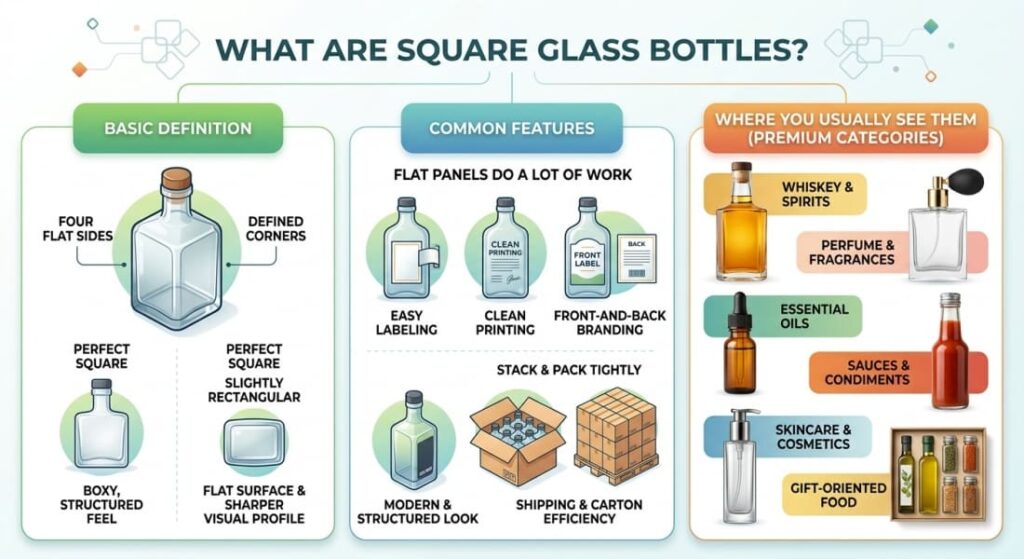
Square bottles glass refers to bottles built with four flat sides and defined corners. Some are perfect squares when you look down from above, while others lean slightly into a rectangular shape but still keep that boxy, structured feel. What ties them together is the flat surface and the sharper visual profile.
Common features you’ll notice
The first thing most people notice is the flat panels. Those panels do a lot of work — they hold labels well, take print cleanly, and let designers do more with front-and-back branding. The overall look tends to feel modern, structured, and a bit more deliberate than a rounded bottle.
Square bottles also stack and pack tightly, which becomes a real advantage once you start thinking about cartons, pallets, and shipping.
Where you usually see them
You’ll find square shapes across a lot of premium categories:
Whiskey, vodka, and other spirits
Perfume and fragrance bottles
Essential oils and aromatherapy products
Sauces, condiments, and specialty food
Skincare and cosmetics
Gift-oriented food packaging
If a brand wants to feel refined or slightly more upscale, square is often the first shape on the table.
What Are Round Glass Bottles?
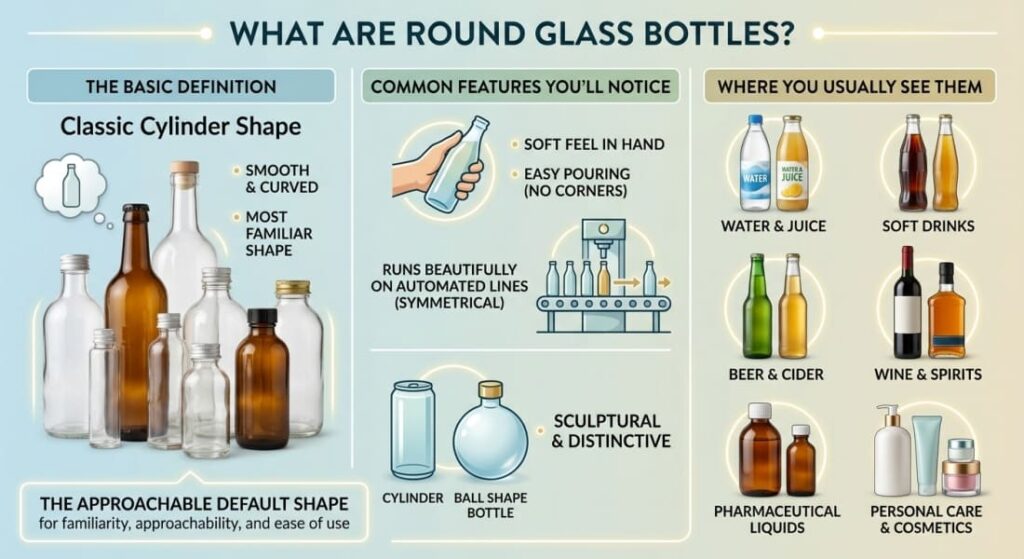
Round glass bottles are the classic cylinder — smooth, curved, and probably the most familiar shape in the entire packaging world. When someone says the word “bottle,” this is usually what pops into their head. The bottle round design has been used for centuries, and it still dominates a huge portion of the beverage and pharmaceutical markets.
Common features you’ll notice
Round bottles feel soft in the hand. There are no corners to catch on your fingers, and the smooth curve makes pouring feel natural. They also run beautifully on automated filling lines because the shape is symmetrical from every angle — machines don’t need to worry about orientation.
Some designers even push the shape further into a ball shape bottle, which gives a sculptural, distinctive look while keeping the friendly, curved feel of a traditional round design.
Where you usually see them
Round shapes dominate several categories:
Water, juice, and soft drinks
Beer and cider
Wine and certain spirits
Pharmaceutical liquids
Personal care and lotion bottles
Everyday cosmetic products
If a brand wants to feel approachable, familiar, or easy to use, round tends to be the default.
Square vs Round Glass Bottles: Key Differences at a Glance
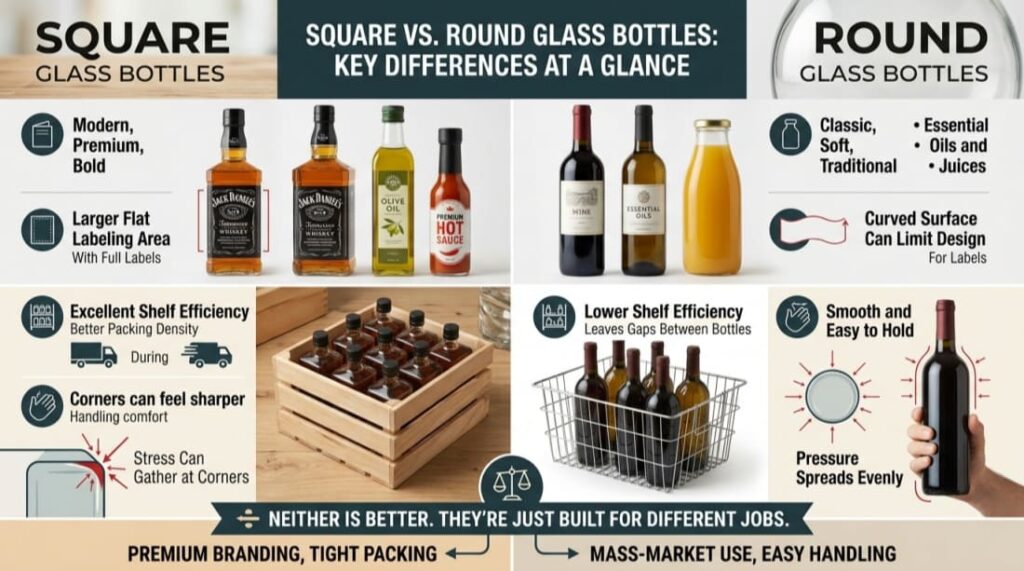
Sometimes the clearest way to understand a comparison is to see it side by side.
Advantages of Square Glass Bottles
Better use of storage and shipping space
This is probably the biggest practical win. Square bottles sit flush against each other with almost no wasted space. When you multiply that across a full carton, a pallet, and a shipping container, the difference gets serious. Brands that ship internationally or move large volumes often lean toward square shapes just for the freight savings.
Larger flat surfaces for labels and decoration
Flat panels give designers room to breathe. You can use bigger front labels, add detailed back labels with ingredients or brand stories, and apply techniques like silk screen printing or embossing without fighting the curve of the glass. If your brand relies on strong visual identity, this matters a lot.
Strong presence on the shelf
Walk down any premium spirits aisle and you’ll see it — square bottles catch the eye. The straight lines create a sense of order and quality, and they tend to stand out among the sea of rounded competitors.
Suitable for premium and niche products
Whiskey, high-end sauces, luxury cosmetics, boutique perfumes — these categories have leaned into square glass bottles for a reason. The shape communicates something specific about the product before the customer even reads the label.
Advantages of Round Glass Bottles
Comfortable grip and user-friendly design
Round bottles just feel right in the hand. There’s a reason beverage brands almost always use them — when you’re drinking, pouring, or squeezing, curves work better than corners. If your product is something people interact with often, comfort matters.
Timeless and versatile appearance
Round shapes never really go out of style. They work for a small craft brewery, a global juice brand, or a family-run olive oil business. The look is universal enough to fit almost any positioning.
Better pressure distribution
Physics is on the round bottle’s side here. Curved walls spread internal and external pressure more evenly, which is why carbonated drinks and pharmaceutical products often choose this shape. Fewer stress points means fewer chances of failure.
Common in automated filling lines
Most high-speed filling equipment was originally designed around round bottles. If you’re running large production volumes, round shapes usually mean faster line speeds, easier changeovers, and fewer compatibility headaches.
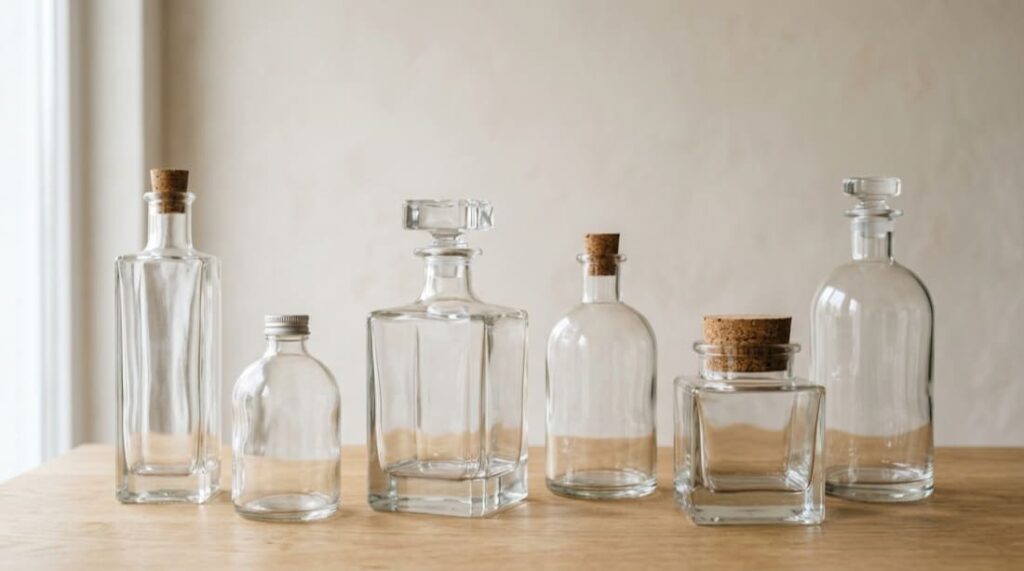
Potential Drawbacks of Both Shapes
No shape is perfect, and it helps to know the trade-offs before you commit.
Where square bottles fall short
Corners can be more vulnerable to impact if the bottle is dropped. Some people find the sharper edges less comfortable during long use. And if you’re developing a fully custom mold, tooling can cost a bit more depending on complexity.
Where round bottles fall short
That smooth curve costs you space — in cartons, on pallets, and on shelves. Labels have to work around the curve, which limits some design choices. And in a retail environment where everything is round, standing out becomes harder.
Which Bottle Shape Is Better for Storage, Shipping, and Display?
Storage efficiency
Square bottles win here almost every time. They line up cleanly with no gaps, which means more product per shelf, per warehouse rack, and per storage cage.
Shipping efficiency
Same story on the shipping side. If you’re moving thousands of units, the space savings from square bottles can lower your freight cost per unit noticeably. For anyone exporting or working with tight packaging budgets, this is worth calculating carefully.
Retail shelf display
Square creates order. Round creates warmth. Neither is wrong — it depends on what you want the customer to feel when they walk past your product.
E-commerce packaging considerations
For online orders, both shapes can work well as long as you use proper protective materials. Square bottles tend to fit inside boxes more efficiently, but round bottles roll less inside a package if they’re padded correctly. Whichever you choose, the packing method matters more than the shape itself.
Which Bottle Shape Is Better for Branding and Label Design?
Square bottles for bold, structured branding
Flat sides make it easier to run full-panel labels, place multiple layers of information, or apply premium decoration techniques. If your brand wants to feel serious, minimal, or luxurious, square usually delivers that better.
Round bottles for classic and approachable branding
Curves feel softer. They’re friendly, familiar, and easy to like. For beverages, wellness products, and anything meant to feel welcoming, round tends to communicate the right emotion.
Decoration options that work on both
Whichever shape you pick, you have plenty of decoration choices:Screen printing, Frosting, Spraying and color coating, Hot stamping, Embossing or debossing, Custom-colored glass
A skilled custom glass bottle manufacturer can adapt most decoration techniques to either shape, so don’t let this narrow your choice too early.
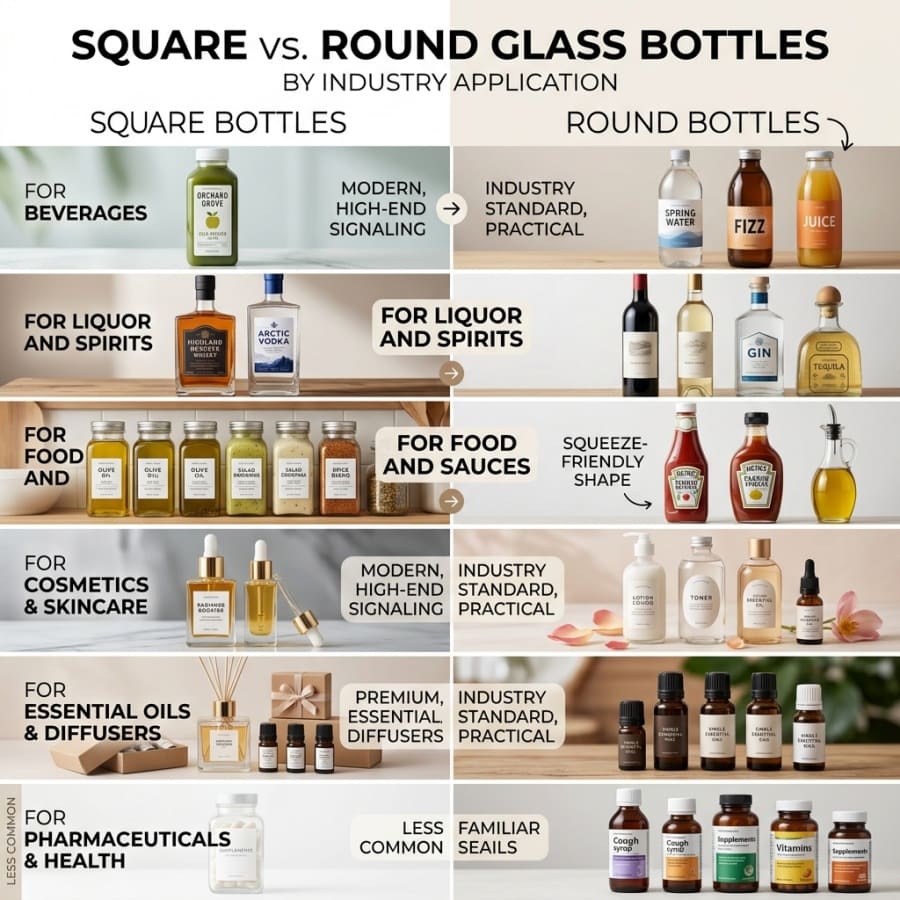
Square vs Round Glass Bottles by Industry Application
For beverages
Round dominates. Water, juice, beer, soda — the curved shape is the standard. That said, some premium juice brands and specialty drinks use square to signal something different.
For liquor and spirits
Square shows up a lot in whiskey, vodka, gin, and premium tequila. Round still holds strong for wine and traditional spirit styles. If your product is trying to feel modern or high-end, square is a strong option.
For food and sauces
Square bottles line up neatly on kitchen shelves and offer great label space for ingredient details. Round bottles pour more smoothly for certain sauces. Both work — it comes down to the user experience you want.
For cosmetics and skincare
Square gives a clean, editorial, modern feel. Round feels softer and more organic. Both are common, and many brands mix them across product lines.
For essential oils and diffusers
Square shapes photograph well and feel gift-worthy. Round shapes are practical, familiar, and cost-effective. Both have strong markets.
For pharmaceuticals and health products
Round is usually preferred here because of decades of compatibility with filling equipment, closures, and industry standards.
How to Choose Between Square and Round Glass Bottles
Choose square if you need:
Better carton and shelf efficiency
More labeling and print space
A premium, structured look
A distinctive presence in a crowded retail environment
Choose round if you need:
A comfortable, easy-to-hold shape
A traditional or widely accepted appearance
Compatibility with standard filling lines
A safe choice for beverages or pharmaceuticals
Ask yourself these questions before deciding
Before you commit to either shape, sit down and think through a few things:
What exactly will go inside the bottle?
Is this a premium product or a mass-market one?
Where will it be sold — retail shelves, online, or both?
How much do storage and shipping costs affect your margins?
Does your label design need a lot of flat space?
What closure and filling system will you use?
Answering these honestly will point you toward the right choice faster than any generic guide can.
Exploring the Different Types of Glass Bottle Shapes
Square and round get most of the attention, but they aren’t the only options. Looking at the broader range of types of glass bottle shapes helps you understand where these two fit — and whether something else might suit your product better.
You’ll find shapes like:
Oval and elliptical bottles
Boston round bottles
Bell-shaped or dome-shaped bottles
Flask-style bottles
Cylindrical bottles with tapered necks
Custom sculptural shapes
Each of these glass bottle shapes carries its own personality. Some feel apothecary-inspired, some feel industrial, some feel decorative. If you’re not sure whether square or round is truly the right fit, it’s worth reviewing the wider range with a supplier before making a final call.
Custom Glass Bottle Options Worth Thinking About
Once you’ve settled on a general shape, the real work of building a bottle begins. There are several details you’ll want to lock down early.
Capacity and dimensions
Think about how the bottle will be used, how it needs to feel in the hand, and whether it needs to match a standard size for regulatory or filling reasons.
Neck finish and closure compatibility
The neck determines what caps, droppers, sprayers, or pumps will fit. Getting this wrong causes headaches later, so match it to your filling line and closure supplier from day one.
Glass color
Common options include flint (clear), amber, green, and cobalt blue. Frosted glass and custom color coatings open up even more possibilities. Color affects both branding and UV protection for light-sensitive products.
Surface decoration
Decal, silk screen printing, coating, frosting, electroplating, and embossing all change how the bottle looks and feels. The right combination depends on your budget, your brand, and the production volume.
Custom mold development
If you want something truly unique, a custom mold is the way to go. The final shape should reflect your product positioning and brand identity — not just copy what competitors are doing. A capable square glass bottle manufacturer or round bottle producer can walk you through the mold design process step by step.
Working With Smilebottles on Your Bottle Project
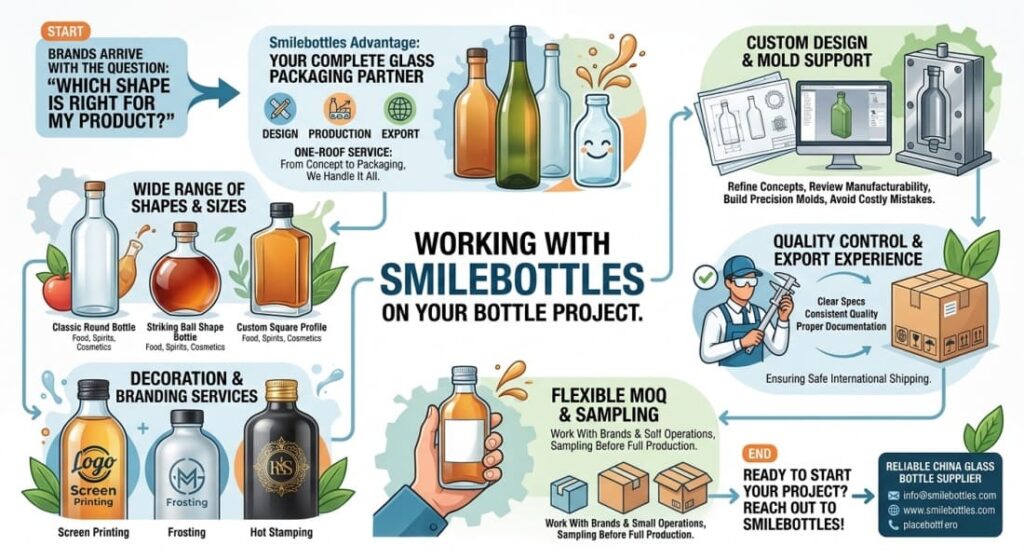
When brands come to Smilebottles, most of them arrive with the same question: “Which shape is right for my product?” As a glass bottle manufacturer based in China, we’ve spent years helping brands across food, beverage, spirits, cosmetics, and pharmaceutical industries find the answer.
What we bring to the table
Our team handles bottle design, mold development, production, decoration, and export packaging under one roof. That means fewer suppliers to coordinate and fewer chances for details to slip through the cracks.
Wide range of shapes and sizes
Whether you need a classic bottle round design, a striking ball shape bottle, or a fully custom square profile, we can produce it. Our range covers small dropper bottles all the way up to large liquor and beverage sizes.
Custom design and mold support
If you’re developing something new, we can help refine your concept, review it for manufacturability, and build the mold to match. Our engineers work closely with brands during this stage because it’s where most costly mistakes get avoided.
Decoration and branding services
From screen printing to frosting to hot stamping, we handle decoration in-house. This keeps quality consistent and shortens lead times.
Quality control and export experience
As an established glass packaging manufacturer China brands rely on, we understand what buyers need — clear specifications, consistent quality, proper documentation, and packaging that survives international shipping.
Flexible MOQ and sampling
We work with both established brands and smaller operations. Sampling is available before full production, so you can hold the actual bottle in your hand before committing to a large order.
If you’ve been searching for a reliable China glass bottle supplier, or you simply want a second opinion from a glass bottle supplier who has seen a lot of packaging projects, feel free to reach out.
FAQ: Frequently Asked Questions About Square and Round Glass Bottles
Q1:Are square glass bottles stronger than round glass bottles?
A1:Not necessarily. Strength depends on wall thickness, glass quality, and how the bottle is designed. That said, round shapes tend to distribute internal and external pressure more evenly, which is why they’re often chosen for carbonated drinks and pharmaceutical products.
Q2:Are square glass bottles more expensive?
A2:They can be, especially if you’re developing a fully custom mold with complex angles. But the story doesn’t end at the bottle itself — square bottles often save money later through better packing efficiency and lower freight costs. It’s worth looking at the total cost, not just the bottle price.
Q3:Which bottle shape is better for labels?
A3:Square usually wins here. Flat panels give you more usable label area and let you apply detailed printing without working around a curve.
Q4:Which bottle shape saves more shipping space?
A4:Square bottles pack more tightly with less wasted space. For anyone shipping large volumes, especially internationally, that adds up quickly.
Q5:Are round bottles better for beverages?
A5:For mainstream beverages, yes — round is the industry standard and works well with high-speed filling lines. But premium beverages sometimes choose square to stand out from the crowd.
Conclusion
What matters is matching the shape to your product, your customer, your logistics, and your brand story. Square works beautifully when you need efficiency, structure, and a modern edge. Round works beautifully when you need comfort, tradition, and reliability. The right choice for you is the one that aligns with all the pieces — not just the bottle itself, but everything around it.
If you’re weighing options for custom square glass bottles or round designs and want help thinking it through, Smilebottles is here to talk. Sometimes a short conversation with an experienced supplier saves months of second-guessing later.
 English