Innehållsförteckning
VäxlaFörfattare: Redaktionen för SmileBottles
Beräknad lästid: About 16 Minute
If you’re sourcing packaging for a new product line, you’ve probably noticed that boston round bottles come up again and again. That isn’t luck. The shape solves several practical problems at once. It protects the product, works with many closure types, fits on standard filling lines, and looks good on a shelf without much effort.
This guide explains what makes the Boston round so useful, where it fits best, and how you can choose the right size, color, and closure for your product. It also covers what to ask your supplier before you place a large order, so you avoid the mistakes many buyers learn the hard way.
What Is a Boston Round Bottle?
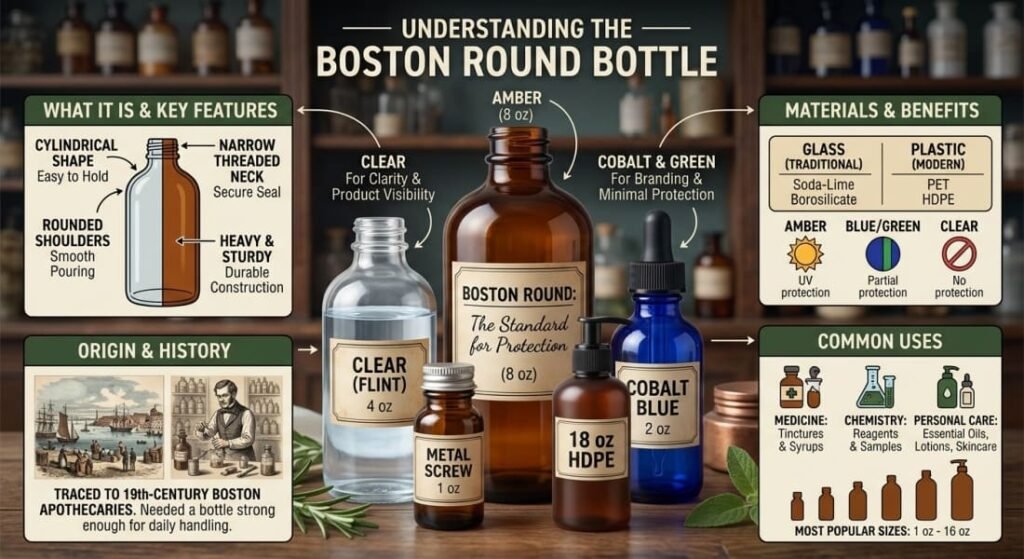
A boston round bottle is a cylindrical bottle with rounded shoulders and a narrow, threaded neck. It’s heavier and sturdier than many decorative bottle styles. That’s one reason it became the standard choice for liquids in medicine, chemistry, and personal care.
Where the Name Comes From
The name is usually traced back to the pharmacies and chemical suppliers of 19th-century Boston. Apothecaries needed a bottle that was easy to hold, easy to pour from, and strong enough to survive daily handling. The Boston round met those needs. Over time, it became the default “pharmacy bottle” in North America and later around the world.
That long history still matters today. People recognize the shape and connect it with remedies, oils, and carefully made products. If you sell herbal extracts, essential oils, or natural skincare, the bottle tells part of your story before anyone reads your label.
Common Materials, Colors, and Sizes
Boston rounds are made in both glass and plastic. Glass boston round bottles are the traditional version. Most are made from soda-lime glass, and some pharmaceutical uses call for borosilicate glass. Plastic versions are usually made from PET or HDPE.
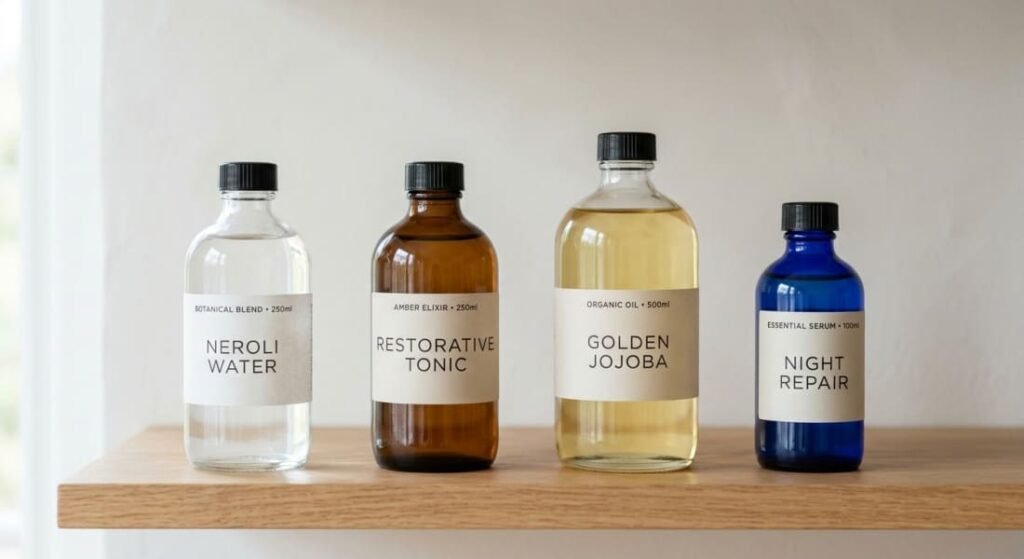
Color is one of the first choices you’ll make. Amber boston round bottles are the most common because amber glass filters out a large share of UV and blue light, which helps protect sensitive formulas. Clear boston round bottles (sometimes called flint glass) work well when you want customers to see the color or clarity of the product inside. Cobalt blue and green are also available. These colors are mainly chosen for branding, and they give less light protection than amber.
Sizes usually run from 0.5 oz up to 32 oz. The 1 oz, 2 oz, 4 oz, 8 oz, and 16 oz sizes are by far the most popular. We’ll look at what each size is typically used for later in this guide.
Design Features That Make the Boston Round So Practical
The Boston round looks simple, but each part of the shape has a purpose. Once you understand the design, it’s easier to see why so many brands keep coming back to it.
Rounded Shoulders
The curved shoulders help the liquid flow smoothly toward the neck when you pour. This reduces glugging and splashing. The shape also spreads stress more evenly than sharp, square shoulders, so the bottle is less likely to crack at that point during handling or shipping.
A Straight, Cylindrical Body
The straight body gives you a clean, even surface for labels. Wrap-around labels go on smoothly, and automatic labeling machines handle round bottles with very few problems. Round bottles also stand steadily on a filling line and pack neatly into partitioned cartons. If you plan to scale up production, these details save time and money.
A Narrow Neck with Standard Threads
Boston round necks use standard finishes such as 18-400, 20-400, 22-400, 24-400, and 28-400. In practice, this means you can pair the bottle with a wide range of caps, droppers, pumps, and sprayers from different suppliers, as long as the neck finish matches. The narrow opening also helps you control how much product comes out, which matters for essential oils, tinctures, and serums where customers need small, accurate doses.
Thick, Sturdy Walls
Glass Boston rounds usually have fairly thick walls and a solid base. They feel substantial in the hand, and they hold up better during handling than thin-walled specialty bottles. You still need good secondary packaging for shipping, but you’re starting from a stronger bottle.
Why Glass Boston Round Bottles Are Often the First Choice
Plastic has its place, which we’ll cover below. Even so, many brands choose glass first, especially for premium or sensitive products. Here’s why.
Glass Doesn’t React with Most Formulas
Glass is non-porous and chemically stable. It doesn’t absorb oils or fragrances, and it doesn’t leach compounds into the product. This is a big deal if you sell essential oils, which can break down some plastics over time, or products with alcohol, acids, or strong botanical extracts. Your formula stays the way you made it, and the scent stays clean.
Amber Glass Helps Protect Light-Sensitive Products
Many natural ingredients degrade when they’re exposed to light. Vitamin C serums, certain plant oils, herbal extracts, and some medicines all fall into this group. Amber glass blocks most UV light, so it helps extend shelf life and keeps the product working the way it should. That’s why amber has been the standard for pharmacies for so long.
A Premium Look Without Extra Decoration
Glass simply feels more valuable to most customers. A plain amber Boston round with a well-designed label can look high-end without any fancy printing or custom molding. For small and growing brands, that’s an easy way to look professional on a modest budget.
Easy to Clean, Refill, and Reuse
Glass can be washed and sterilized, and it holds up well to repeated use. Many customers keep their bottles for DIY blends, refills, or storage. This gives your packaging a longer life and keeps your brand in front of the customer after the product is gone.
Glass vs. Plastic Boston Round Bottles: Which Should You Choose?
This is one of the most common questions buyers ask, and the honest answer is that it depends on your product and your sales channel.
Plastic boston round bottles are lighter and won’t shatter if dropped. That makes them a sensible choice for some household cleaners, products used in showers or gyms, travel sizes, and high-volume items where shipping weight has a big effect on cost. If you’re already comparing quotes for plastic packaging bottles wholesale, PET Boston rounds can work well for water-based products that don’t contain strong solvents or high concentrations of essential oils.
Glass is usually the better fit when:
Your formula contains essential oils, alcohol, or active ingredients that may react with plastic
Your product is sensitive to light and needs amber protection
You want a premium look and feel
Your customers care about reuse and recyclability
Your product has a long shelf life and needs stable, long-term storage
Many brands end up using both. They choose glass for their main retail products and plastic for samples, travel kits, or bulk refills. If you aren’t sure, test your formula in both materials over several weeks. Check for changes in color, smell, and consistency, and look for any softening or swelling of the container.
Where Boston Round Bottles Are Used
The Boston round is used in so many industries because it adapts easily. Here’s how different sectors use it, and why the bottle works well for each one.
Pharmaceuticals and Nutraceuticals
The Boston round started in pharmacies, and it’s still one of the most widely used pharmaceutical packaging bottles today. Liquid medicines, cough syrups, oral solutions, and liquid supplements are often packed in amber glass Boston rounds with child-resistant or tamper-evident caps.
They’re also among the most popular bottles for tinctures. Herbalists and supplement brands usually choose 1 oz or 2 oz amber bottles with glass droppers. This setup lets customers measure exact doses while the amber glass protects the extract from light. If you sell regulated products, check that the bottle and closure meet the requirements in your market, such as FDA rules in the US or the relevant pharmacopeia standards.
Essential Oils and Aromatherapy
If you’re wondering what the best bottles for essential oils are, amber glass Boston rounds are near the top of almost every list. Essential oils are concentrated and often light-sensitive, and some of them can damage certain plastics. Glass keeps the oil stable, and amber helps protect it from light.
Small sizes are the norm here. Brands use 0.5 oz and 1 oz bottles with orifice reducers for single oils, and boston round bottles with droppers for blends and carrier oils. Larger sizes, such as 4 oz and 8 oz, are often used for massage oils or bulk refills sold to practitioners.
Skincare, Cosmetics, and Personal Care
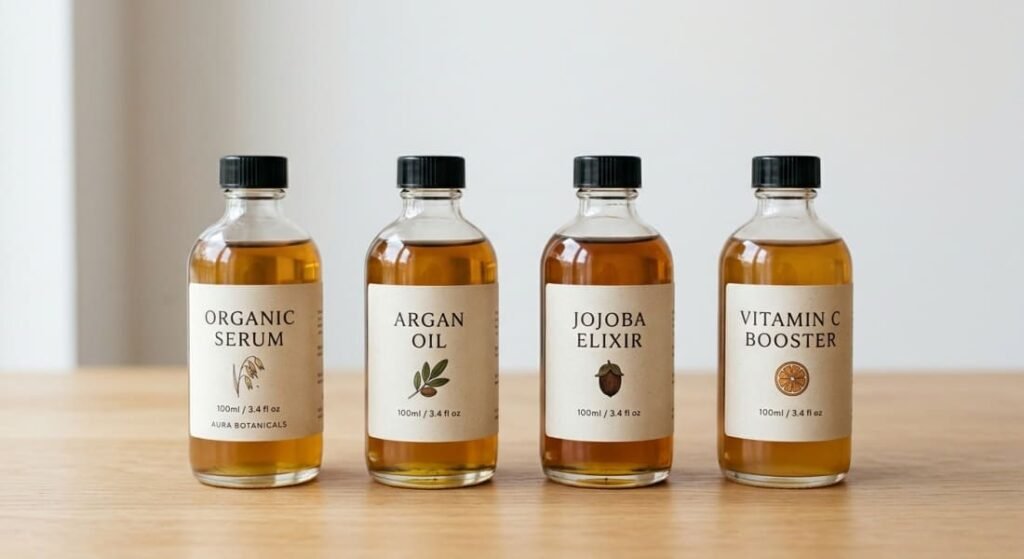
Glass Boston rounds are now common cosmetic packaging bottles for facial oils, serums, toners, beard oils, and hair treatments. A clear or frosted bottle works well for toners and mists where the product’s color is part of the appeal. Amber suits vitamin serums and botanical oils that need protection.
The closure you choose changes how customers use the product. A dropper works for serums, a fine-mist sprayer suits toners and facial mists, and a treatment pump is a good fit for thicker lotions. All of these can fit the same bottle, so you can keep a consistent look across your whole range.
Food, Beverage, and Wellness
Flavor extracts, cocktail bitters, syrups, hot sauces, and concentrated wellness shots are often sold in Boston rounds. Glass doesn’t carry over flavors, and the classic shape gives products an artisan, apothecary-style look. If you go this route, make sure the glass and closures are food-safe and meet local food-contact regulations.
Household, Laboratory, and Chemical Products
Laboratories have used Boston rounds for reagents and samples for a long time. Their chemical resistance and screw-thread seal make them a reliable way to store liquids. Cleaning concentrates, specialty solvents, and DIY home products also use them. With these products, it’s important to match the cap liner, such as PTFE or polycone, to the chemical. That keeps the seal from breaking down over time.
How to Choose the Right Glass Boston Round Bottle
This is where most buying mistakes happen. Work through these points in order, and you’ll narrow down your options quickly.
Start with Your Formula
Before you think about looks, think about what’s going inside the bottle. Ask yourself a few questions. Is your product sensitive to light? Does it contain essential oils, alcohol, or acids? Is it thin like water or thick like a lotion? Your answers decide the material, color, and closure. Everything else comes after that.
Pick the Right Color
If your product is sensitive to light, or you’re not sure, choose amber. It’s the safe default for oils, tinctures, and active skincare. Choose clear when the product’s appearance helps sell it and light sensitivity isn’t an issue. Cobalt blue and green are mainly branding choices. They look great, but they don’t protect the product the way amber does.
Choose the Right Size
The size you pick affects the price per unit, shipping costs, and how customers see value. Here’s how the most popular sizes are usually used:
1 oz boston round bottles (30 ml) are the go-to size for essential oils, tinctures, and serums. They suit dropper use, fit easily in a bag, and match a typical one- to two-month supply for many concentrated products.
2 oz boston round bottles (60 ml) are popular for larger serums, beard oils, liquid supplements, and roomy tincture sizes. They’re also a common “value size” for brands that offer a 1 oz version too.
4 oz boston round bottles (120 ml) work well for toners, facial mists, massage oils, extracts, and hand sanitizers. This size is large enough for daily use but still easy to hold.
8 oz boston round bottles (240 ml) are often used for body oils, syrups, liquid soaps, and cleaning concentrates. Many brands also offer this size as a refill option.
16 oz boston round bottles (480 ml) are used for professional and back-bar products, bulk essential oils, lab reagents, and refill stock sold to spas, salons, and clinics.
If you’re launching a new product, you don’t need every size. Many brands start with one retail size and one larger refill size, then add more based on customer feedback.
Match the Neck Finish and Closure
Every Boston round size has a matching neck finish. For example, 1 oz and 2 oz bottles commonly use a 20-400 finish, while 16 oz bottles often use 28-400. Your closures must match exactly, or the product will leak. Always confirm the neck finish with your supplier before you order caps, droppers, or pumps separately.
Then match the closure to how the product will be used. Here are the most common pairings:
Glass droppers for oils, serums, and tinctures that need measured doses
Orifice reducers with screw caps for essential oils dispensed drop by drop
Fine-mist sprayers for toners, room sprays, and facial mists
Treatment or lotion pumps for thicker liquids and creams
Child-resistant caps for medicines, CBD products, and anything risky if swallowed
Tamper-evident caps for supplements, food items, and regulated products
Phenolic or polypropylene caps with PTFE liners for chemicals and lab use
Plan for Filling, Shipping, and Storage
Think about your production process too. If you use a filling machine, check that the bottle’s dimensions and tolerances fit your equipment. For shipping, plan for dividers or molded inserts, especially if you sell online. Glass bottles that arrive broken cost you far more than better packaging would have.
Avoid These Common Mistakes
Over the years, the same buying mistakes keep coming up. Watch out for these:
Choosing clear glass for a light-sensitive formula because it “looks nicer”
Ordering caps and bottles from different suppliers without checking the neck finish
Ignoring the label panel height, then finding that your label doesn’t fit
Choosing a size based only on unit price, rather than on how customers will actually use the product
Skipping compatibility testing, especially with rubber dropper bulbs, which some essential oils can break down
Ordering too little for your first run and then paying higher prices on rushed reorders
Customization and Branding Options
Standard Boston rounds already look clean and professional. Still, you can do a lot to make them your own.
Labels are the most flexible and affordable option. Pressure-sensitive labels let you change designs easily, and they’re ideal when you sell many products or update packaging often.
Screen printing prints your design directly onto the glass. It gives a durable, high-end finish that won’t peel or scuff, which makes it a good choice for products that are handled often or exposed to moisture.
Hot stamping adds metallic foil details in gold, silver, or rose gold. It’s a popular choice for luxury skincare.
Frosting, spray coating, and matte finishes change the feel of the bottle completely. A frosted amber or matte black Boston round can look surprisingly modern while keeping the classic shape.
Closure colors and materials also play a part. Bamboo caps, black glossy droppers, or gold collars can shift the whole look without changing the bottle itself.
When you plan customization, consider minimum order quantities. Printing and coating usually require larger runs than plain bottles, so you may want to start with labels and move to direct printing as your volumes grow.
The Sustainability Side of Glass Boston Rounds
More customers now ask brands how their packaging affects the environment. Glass gives you a good answer, as long as you describe it honestly.
Glass can be recycled many times without losing quality, and it’s accepted in recycling programs in many regions. Glass Boston rounds are also easy to clean and reuse. Customers often keep them for DIY blends, homemade tinctures, or storage, which extends the bottle’s life well beyond your product.
If you want sustainable bottle packaging, you can go further by offering refill programs. You could sell 16 oz refill bottles alongside your 1 oz or 2 oz retail bottles, for example. That way, customers keep the smaller bottle and simply top it up. It’s a practical way to cut waste and build repeat sales at the same time.
Be careful with the claims you make on labels and websites. Words like “recyclable” and “reusable” are accurate for glass. Broad terms like “100% eco-friendly” are harder to support and may run into advertising rules in some markets. Being clear and specific builds more trust than big promises.
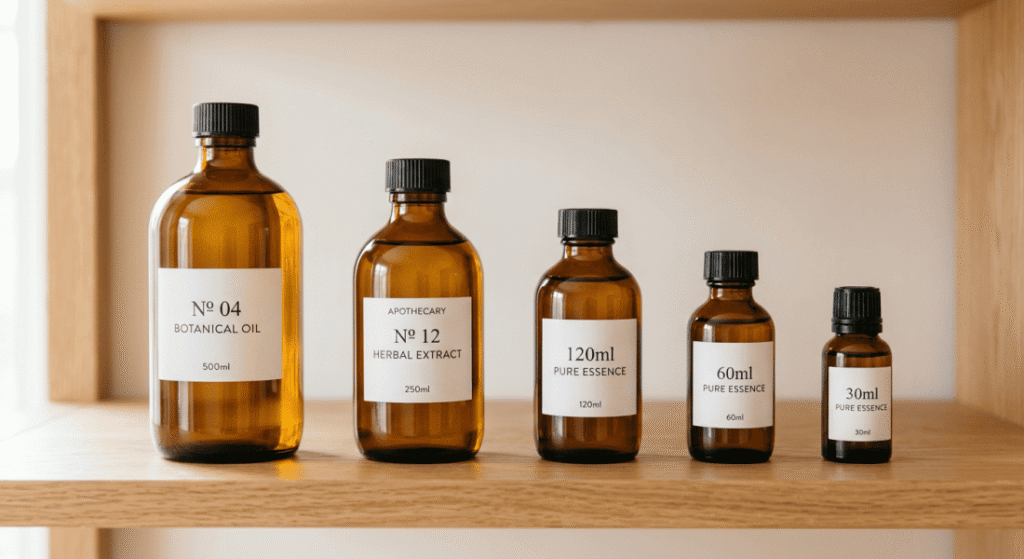
amber boston glass bottles
Buying Wholesale: What to Ask Your Supplier
Once you’ve settled on the bottle you need, the next step is sourcing. Buying wholesale boston round bottles lowers your unit costs a lot, but price shouldn’t be the only thing you compare.
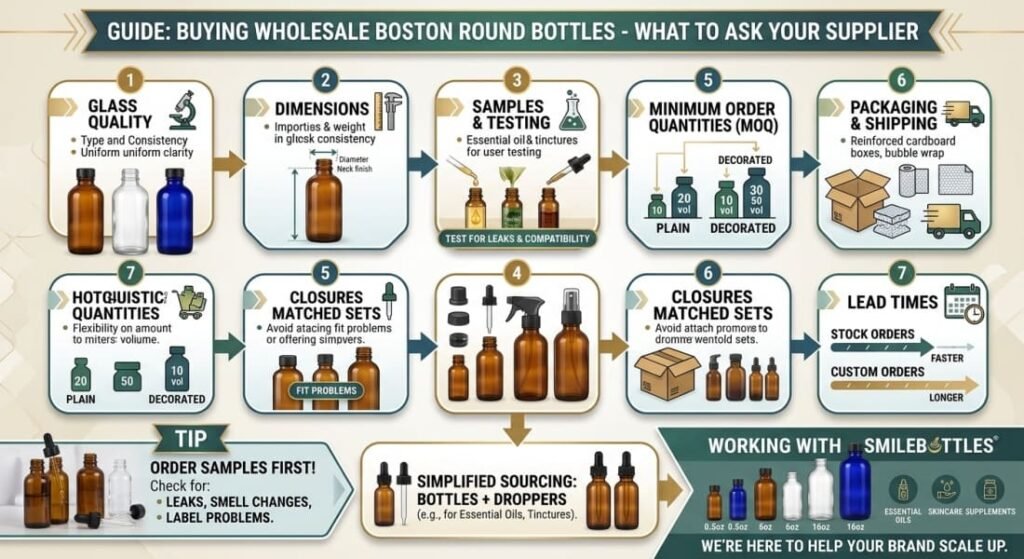
Before placing an order for bulk boston round bottles, ask your supplier:
What type of glass is used, and is it consistent from batch to batch?
What are the dimensional tolerances for height, diameter, and neck finish?
Can you get samples to test with your formula and your closures?
Are closures sold as matched sets, so you don’t run into fit problems?
What are the minimum order quantities for plain and decorated bottles?
How are bottles packed for shipping, and what is the typical breakage rate?
What are the lead times for standard stock and for custom orders?
If you’re sourcing for essential oils or tinctures, it often makes sense to buy bottles and closures together. Many buyers looking for amber glass bottles wholesale also need glass dropper bottles wholesale, and getting both from the same manufacturer means the droppers are already matched to the bottle necks. It also simplifies quality control and shipping.
Always order samples before committing to a large run. Fill them with your actual product, leave them for a few weeks, and check for leaks, smell changes, or label problems. This small step can save you from very expensive mistakes.
Working with Smilebottles
At Smilebottles, we manufacture glass Boston round bottles in a full range of sizes, from small 0.5 oz bottles up to 16 oz and larger, in amber, clear, cobalt blue, and other colors. We also supply matching caps, droppers, pumps, and sprayers, so you can source a complete packaging set from one place.
Our team works with brands in essential oils, skincare, supplements, and specialty liquids. We can help you compare sizes and closures, send samples for testing, and plan custom printing or finishes when you’re ready. Whether you’re placing your first order or scaling up an established product line, we’re happy to answer your questions and help you find the right fit.
FAQ: Frequently Asked Questions About Glass Boston Round Bottles
Q1:What are Boston round bottles used for?
A1:Boston round bottles are used for liquid products such as essential oils, tinctures, medicines, serums, toners, flavor extracts, and lab chemicals. Their rounded shoulders make pouring easy, their narrow necks allow controlled dispensing, and their straight bodies are simple to label. These features make them practical for many industries.
Q2:Why are amber Boston round bottles so common?
A2:Amber glass blocks most UV and blue light, which helps protect light-sensitive ingredients from breaking down. That’s why amber is the standard for essential oils, herbal tinctures, vitamin serums, and many medicines. If you’re unsure whether your product is light-sensitive, amber is usually the safer choice.
Q3:Are glass Boston round bottles better than plastic?
A3:For most oils, tinctures, and premium skincare, glass is the better choice because it’s non-reactive, protects flavor and scent, and looks more upscale. Plastic is lighter and won’t shatter, so it can suit some household products, travel sizes, and high-volume items where shipping weight matters most.
Q4:What size Boston round bottle should I choose?
A4:It depends on your product and how often customers use it. 1 oz bottles suit essential oils and tinctures. 2 oz and 4 oz bottles work for serums, toners, and supplements. 8 oz and 16 oz bottles are common for body oils, refills, and professional or bulk use.
Q5:What closures fit Boston round bottles?
A5:Boston rounds work with screw caps, glass droppers, orifice reducers, fine-mist sprayers, lotion pumps, child-resistant caps, and tamper-evident caps. The closure must match the bottle’s neck finish, such as 20-400 or 24-400, so always confirm the finish before ordering closures.
Q6:Are glass Boston round bottles recyclable?
A6:Yes. Glass is recyclable in many regions and can be recycled repeatedly without losing quality. Glass Boston rounds are also easy to clean and reuse, which makes them a good fit for refill programs and for brands that want more responsible packaging.
Conclusion
The Boston round has lasted for more than a hundred years because it works. It protects what’s inside, fits a wide range of closures, runs smoothly on filling and labeling lines, and looks professional with very little extra effort. Glass versions add chemical stability, light protection, and a premium feel that customers notice. If you’re planning your next order of glass Boston round bottles, the Smilebottles team is happy to help you compare options and send samples, so you can find the packaging that suits your product.