
Innehållsförteckning
VäxlaFörfattare: Redaktionen för SmileBottles
Beräknad lästid: About 16 Minute
If you’re planning a new product line or switching packaging suppliers, you’ve probably asked yourself how much does it cost to make a glass bottle. The honest answer is that it depends on several things. Two bottles that look almost the same on a shelf can have very different price tags once you account for weight, mold work, decoration, and shipping. This guide walks you through the real cost drivers, typical price ranges, the hidden costs that catch buyers off guard, and practical ways to keep your packaging budget under control. By the end, you should be able to read a supplier quote and understand what you’re paying for.
Quick Answer: The cost to make a glass bottle depends on bottle size, weight, shape, glass color, order quantity, mold fees, decoration, energy prices, labor, and shipping. A standard stock bottle ordered in large volumes can cost well under a dollar per unit. A custom, decorated bottle produced in a small run can cost several times more. The smartest way to compare prices is to look at your total landed cost, not just the factory unit price.
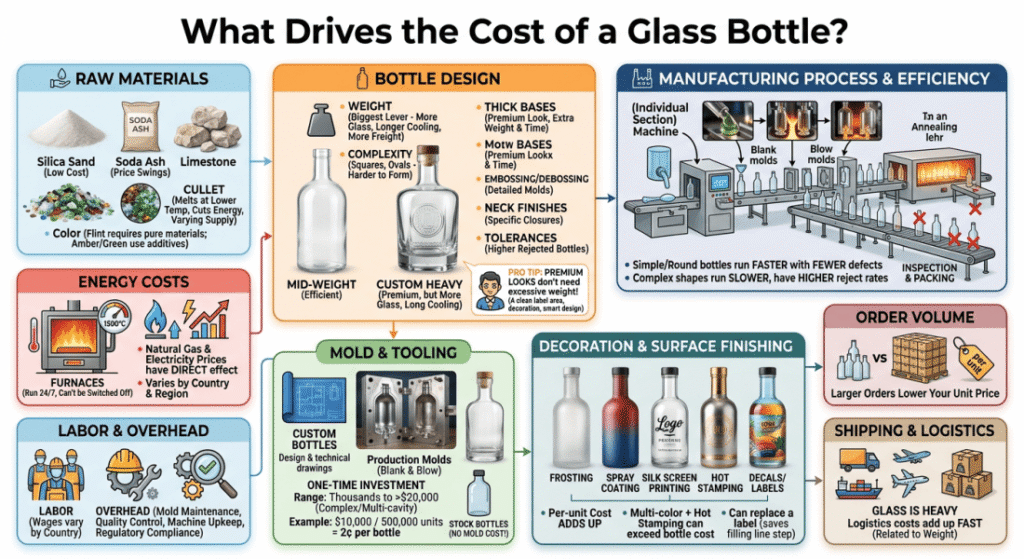
What Drives the Cost of a Glass Bottle?
When a glass bottle manufacturer builds your quote, they’re adding up several cost layers. Knowing these layers helps you see where you have room to save.
|
Cost Factor |
How It Affects Your Price |
|
Raw materials |
Higher material prices raise bottle cost |
|
Bottle weight |
More glass means higher production and freight costs |
|
Design complexity |
Complex shapes and finishes slow down production |
|
Mold and tooling |
Custom molds add an upfront investment |
|
Energy |
Furnaces run around the clock and use a lot of fuel |
|
Decoration |
Printing, frosting, and spraying add per-unit cost |
|
Order volume |
Larger orders usually lower your unit price |
|
Shipping |
Glass is heavy, so logistics costs add up fast |
Raw Materials
Glass is made mostly from silica sand, soda ash, and limestone, plus cullet (crushed recycled glass). Sand is cheap, but soda ash prices can swing quite a bit, and that shows up in your bottle price.
Color matters too. Flint (clear) glass needs purer materials and tighter control. Amber and green glass use different additives that change the batch recipe.
Cullet is worth knowing about. It melts at a lower temperature than raw materials, so a factory that uses a high share of recycled glass can cut furnace energy use. That can help keep your costs stable and support your sustainability goals at the same time. Keep in mind that cullet supply varies by region, so not every factory has the same access to it.
Bottle Size, Weight, and Design Complexity
Weight is one of the biggest cost levers you control. A heavier bottle uses more glass, takes longer to cool, and costs more to ship. If your bottle is 20% heavier than it needs to be, you’re paying that extra 20% in materials and freight on every single unit.
Design details also add up:
Unusual shapes (square, oval, or asymmetrical bottles) are harder to form evenly
Embossing and debossing require more detailed mold work
Thick bases look premium but add weight and cooling time
Special neck finishes may need custom closures
Tight dimensional tolerances can mean more rejected bottles
Here’s something many buyers don’t realize: a premium look doesn’t always need extra weight. A well-designed shoulder, a clean label area, and good decoration can make a mid-weight bottle look high-end without the extra glass.
Manufacturing Process and Production Efficiency
Most glass containers are made on IS (individual section) machines. Molten glass is cut into gobs, formed in a blank mold, then blown into the final shape. After that, bottles go through an annealing lehr to relieve stress, then surface treatment, inspection, and packing.
Simple, round bottles run faster and with fewer defects. Complex shapes run slower and often have higher reject rates. Since you’re indirectly paying for the bottles that get rejected, a design that runs smoothly is cheaper for everyone.
Energy Costs in Glass Production
Glass furnaces run 24 hours a day at temperatures around 1,500°C, and they can’t simply be switched off on weekends. That makes energy one of the largest costs in the entire process.
Natural gas and electricity prices have a direct effect on what you pay. When energy prices spiked in Europe in recent years, many glass producers there raised prices sharply. Energy costs also differ a lot between countries, which partly explains why the same bottle can be priced very differently depending on where it’s made.
Labor and Factory Overhead
Labor costs vary widely by country. On top of wages, a factory has overhead: mold maintenance, quality control staff, machine upkeep, admin, safety programs, and regulatory compliance. All of this gets built into your unit price, even though you never see it as a separate line on your quote.
Mold and Tooling Costs for Custom Bottles
If you choose stock glass bottles, you skip this cost entirely. The molds already exist, and the factory has already paid for them.
If you want a custom shape, you’ll need your own mold set. A custom glass bottle manufacturer will usually charge for:
Design and technical drawings
Sample molds or prototypes (in some cases)
Production molds (blank and blow molds)
Extra mold sets if you need multiple cavities for higher output
Decoration and Surface Finishing
Decoration is where many budgets quietly grow. Common options include:
Frosting (acid etching or sandblasting) for a soft, matte look
Spray coating for solid or gradient colors
Silk screen printing for logos and text printed directly onto the glass
Hot stamping for metallic gold or silver details
Decals and labels for full-color artwork
Embossing and debossing built into the mold
Each process adds labor, materials, and sometimes extra firing steps. Some can add a few cents per bottle. Others, like multi-color printing with hot stamping, can add more than the bottle itself costs.
On the plus side, direct decoration can sometimes replace a label, which saves a step on your filling line. It’s worth comparing both routes before you decide.
Glass Bottle Cost by Bottle Type
Different industries have different needs, and those needs shape the price.
Beverage Glass Bottles
For water, juice, soda, kombucha, and cold brew, the focus is usually on efficiency. Beverage brands tend to order high volumes and care a lot about weight and shipping costs.
A common question we hear is: how much does it cost to make a water bottle in glass compared with other materials? A standard glass water bottle can be very affordable at high volumes, often in the range of a few dimes per unit. Your total cost will depend on whether you want a basic crown-finish bottle, a screw-cap design, or a heavier swing-top bottle with hardware.
Lightweight designs are popular in this category because you’ll often ship large quantities over long distances.
Spirits Bottles
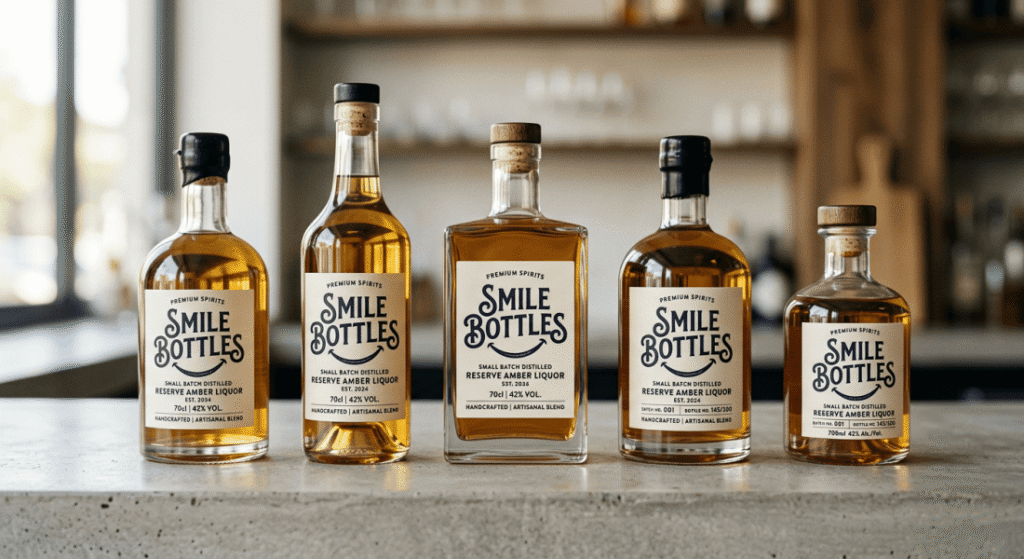
Spirits packaging is usually the most expensive category. Buyers want shelf impact, so bottles often have heavy bases, custom shapes, embossed logos, and premium decoration.
If you’re working with a liquor bottle manufacturer, expect to discuss:
Base thickness and overall weight
Cork, bar-top, or screw-cap neck finishes
Decoration options like frosting, printing, or metallic stamping
Mold costs if you want a unique shape
Many craft distilleries start with a stock bottle and a strong label, then switch to a custom bottle once sales justify the investment.
Food Jars and Bottles
Sauces, oils, honey, jams, and pickles usually go into jars or narrow-neck bottles. Your key concerns here are closure fit, sealing performance, and sometimes heat resistance for hot-fill or pasteurization.
A good glass jar manufacturer will help you match the jar finish to the right lug cap or continuous-thread cap, which matters a lot for shelf life and food safety.
Cosmetic and Personal Care Bottles
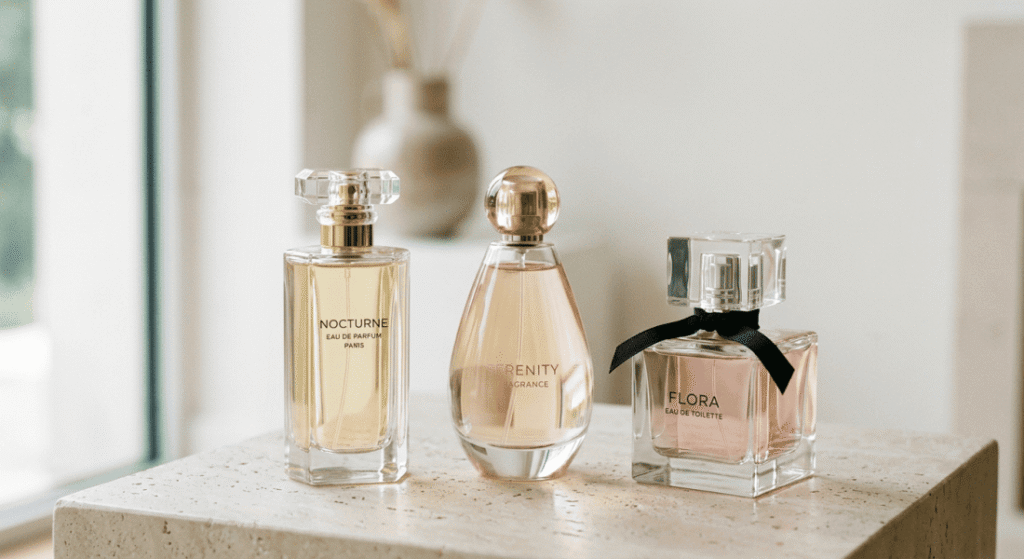
Serums, essential oils, perfumes, and lotions often use small bottles with tight tolerances. Pumps and droppers need a precise neck fit, or you’ll deal with leaks and customer complaints.
A reliable cosmetic glass bottle supplier pays close attention to finish quality, wall consistency, and decoration standards, because cosmetic buyers notice small flaws. The bottles are small, but decoration and accessories often make up a large part of the total cost.
Pharmaceutical-style bottles fit in here as well. For example, 16 oz boston round bottles are a popular stock option for tinctures, cleaning products, syrups, and refill products. Since they’re made in huge volumes, they’re usually cost-effective and easy to pair with standard caps, sprayers, and droppers.
How Production Volume Changes the Price
Order volume has a big effect on your unit price. This is true for almost every bottle manufacturer, regardless of location.
Why Large Orders Usually Lower Unit Cost
When you buy bulk glass bottles, several things work in your favor:
Setup costs (mold changes, machine adjustments) are spread over more units
Longer runs are more stable and produce fewer defects
Mold costs are spread over a larger number of bottles
Packing and freight are more efficient when you ship full containers
That’s why wholesale glass bottles are often priced in tiers. Your price per piece at 100,000 units can be noticeably lower than at 10,000 units.
Why Small Runs Cost More
Every production run needs time to change molds, adjust settings, and stabilize the glass. If your order only fills a few hours of machine time, those setup costs fall on a small number of bottles.
Custom projects with low quantities are hit hardest. You still pay for the mold, and you also pay a higher per-unit price. That’s why many factories set a minimum order quantity (MOQ) for custom work.
MOQ and Cost Planning
You can often get better pricing by planning ahead:
Estimate your annual demand, not just your first order
Combine orders across product lines that share the same bottle
Ask about blanket orders, where you commit to a yearly volume and receive shipments in batches
Check stock options first if your volumes are still small
If you’re comparing bottles wholesale, glass may look pricier per unit than plastic at first. Once your volumes grow, though, the gap often narrows, especially when you factor in brand value and recyclability.
Glass Bottle Manufacturing Costs by Country and Region
Where your bottles are made has a real impact on price. It’s not only about labor.
Why Costs Differ by Region
Here’s a quick overview of what shapes pricing in major regions:
|
Region |
General Cost Level |
Main Factors |
|
China |
Lower to moderate |
Large scale, broad supply chain, competitive labor costs, strong export experience |
|
Southeast Asia |
Lower to moderate |
Growing capacity, competitive labor, varying quality levels |
|
Europe |
Higher |
High energy prices, strict environmental rules, strong quality standards |
|
North America |
Moderate to higher |
Higher labor costs, shorter domestic shipping, fewer stock shape options in some categories |
|
Middle East |
Moderate |
Lower energy costs in some countries, growing regional capacity |
When you line up quotes from glass bottle manufacturers, USA and overseas alike, you’ll usually notice that domestic factories charge more per bottle but offer shorter lead times and simpler logistics. Overseas suppliers often offer lower unit prices and more custom flexibility, but you’ll need to plan for ocean freight, import duties, and longer timelines.
Other factors that shape regional pricing include environmental regulations, raw material access, factory scale, and exchange rates.
Lowest Price vs. Best Total Landed Cost
The cheapest factory price isn’t always the cheapest option once the bottles reach your warehouse. Your total landed cost includes:
Ex-factory bottle price
Export packaging (pallets, cartons, dividers)
Ocean or air freight
Insurance
Import duties and tariffs
Customs brokerage
Inland transport to your facility
Breakage and defect losses
Cost of delays if a shipment arrives late
Hidden Costs Buyers Often Overlook
Even experienced buyers sometimes miss these items. Building them into your budget early can save you from unpleasant surprises.
|
Cost Item |
Often Overlooked? |
Notes |
|
Closures |
Yes |
Caps, corks, pumps, liners |
|
Decoration |
Yes |
Screen printing, frosting, labels |
|
Freight |
Yes |
Glass weight matters a lot |
|
Compliance |
Yes |
Testing and documentation |
|
Warehousing |
Yes |
Inventory carrying costs |
Packaging and Freight
Glass needs protection during transport. Depending on your order, you might pay for cartons, dividers, pallets, shrink wrap, or bulk pallet packing. Bulk pallets are usually cheaper per bottle but need careful handling at your end.
Freight is often one of the largest add-on costs. Since glass is heavy, a lighter bottle design can save you real money on every container you ship.
Closures and Compatibility Testing
The bottle is only half the package. Caps, corks, pumps, sprayers, droppers, and liners all add cost. If the neck finish and closure don’t match properly, you could face leaks, loose caps, or product returns.
It’s a good idea to test closures with your actual product before placing a large order. Some liquids, like high-proof spirits or essential oils, can react with certain liner materials.
Decoration, Labeling, and Branding
If you’re not decorating the glass directly, you’ll still need labels, shrink sleeves, or neck tags. Label application also takes time on your filling line. Premium features like embossed labels, foil, or textured papers add more cost.
Quality Control and Compliance
Depending on your market, you may need food-contact certification, lead and cadmium testing, or specific documents for import. Third-party inspections before shipment are common for larger orders. These costs are small compared with the price of a rejected shipment, but they still belong in your budget.
Storage and Inventory Costs
Ordering in bulk can lower your unit price, but you’ll need space to store the bottles. Warehousing, insurance, breakage during handling, and cash tied up in inventory are all real costs. Try to balance volume discounts against storage costs.
Environmental Fees and Sustainability Requirements
More markets are adding packaging regulations. Extended Producer Responsibility (EPR) fees, recycled-content targets, and carbon reporting are becoming common in parts of Europe, North America, and elsewhere. Glass usually performs well here because it’s endlessly recyclable, but you should still check what applies to your target markets.
How to Reduce Glass Bottle Costs Without Sacrificing Quality
Cutting costs doesn’t have to mean cheaper-looking packaging. Here are practical ways to bring your spend down.
Choose a Stock Bottle When Possible
Stock glass bottles don’t require mold fees, usually have lower MOQs, and ship faster. You can still make them look unique with good decoration, a custom closure, or a strong label design.
Reduce Unnecessary Bottle Weight
Ask your supplier whether a lighter version of your bottle is available. Even a modest weight reduction can lower your material and freight costs on every order.
Simplify the Shape and Finish
Round bottles with standard neck finishes are the easiest and cheapest to produce. If you want a custom shape, keep the complex details to the areas that matter most visually.
Order in Economical Volumes
Look at your annual demand and see if you can move into a better price tier. Combining SKUs that use the same bottle can help you reach higher volumes.
Optimize Decoration Choices
One-color printing is cheaper than three colors. Partial frosting may give you the look you want for less than a full frost. Ask for decoration options at different price points before you choose.
Source Bottle and Closure Together
Buying bottles and closures from the same glass bottle supplier can reduce compatibility problems and may simplify shipping. You’ll also have one point of contact if something doesn’t fit.
Plan Shipping Early
Talk to your supplier about pallet layouts and container loading before production starts. A well-planned container can hold noticeably more bottles, which lowers your freight cost per unit.
Custom vs. Stock Glass Bottles: Which Offers Better Value?
This is one of the biggest decisions you’ll make, so it helps to weigh both sides.
|
Option |
Advantages |
Cost Impact |
|
Stock bottle |
No mold fee, faster lead time, lower MOQ |
Lower upfront cost |
|
Custom bottle |
Unique branding, stronger shelf presence |
Higher initial investment |
When Stock Bottles Make More Sense
Stock bottles are usually the better choice if:
You’re launching a new product and testing the market
Your volumes are still small or uncertain
You need packaging quickly
Your branding relies mainly on labels and decoration
When Custom Bottles Are Worth the Investment
Custom bottles can pay off when:
Your brand needs to stand out in a crowded category, such as spirits or premium cosmetics
You have stable, predictable volumes
Packaging plays a big role in your price positioning
You want to protect your look from competitors
How to Calculate Real ROI
Don’t stop at the unit price. Think about how the bottle affects your retail price, your shelf visibility, your shipping costs, and your brand image over the next few years. A custom bottle that helps you charge $5 more per unit can easily cover its mold cost within one production run.
different glass bottles
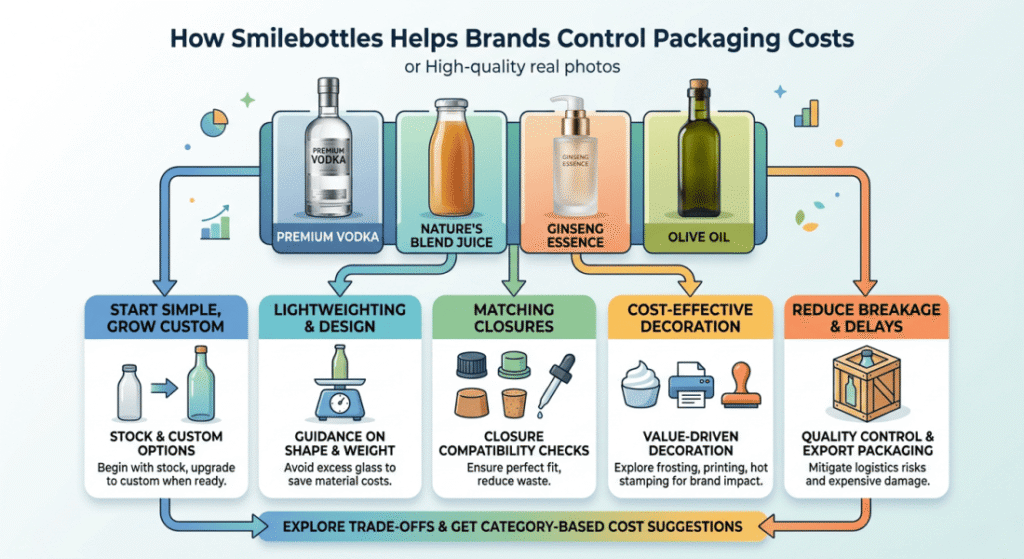
How Smilebottles Helps Brands Control Packaging Costs
As a glass packaging manufacturer, Smilebottles works with beverage, food, spirits, and cosmetic brands to balance appearance, performance, and total packaging cost.
In practice, that support usually includes:
Stock and custom bottle options, so you can start simple and move to custom when it makes sense
Guidance on shape, weight, and neck finish to avoid paying for glass you don’t need
Closure compatibility checks for caps, corks, pumps, and droppers
Decoration options including frosting, spraying, screen printing, and hot stamping
Quality control and export packaging to reduce breakage and delays
Category-based cost suggestions based on what works for similar products
Whether you’re comparing glass bottles manufacturer quotes for the first time or reviewing an existing supply chain, it helps to work with a team that can explain the trade-offs clearly.
FAQ: Frequently Asked Questions About Glass Bottle Manufacturing Costs
Q1:Is glass expensive compared with other packaging materials?
A1:So, is glass expensive? Per unit, glass usually costs more than PET plastic and is heavier to ship. However, it offers a premium feel, better product protection for many liquids, no chemical leaching concerns, and strong recyclability. For many brands, that added value outweighs the extra cost.
Q2:Why are custom glass bottles more expensive?
A2:Custom bottles need their own molds, take more setup time, and often run in smaller volumes. Complex shapes and decoration also slow down production and increase reject rates.
Q3:Does heavier glass always mean better quality?
A3:No. Weight can make a bottle feel premium, but good quality comes from even wall thickness, a clean finish, and accurate dimensions. A lighter, well-made bottle can perform just as well and cost less to ship.
Q4:What is the biggest cost in glass bottle manufacturing?
A4:Energy and raw materials are usually the largest production costs. For buyers, freight can also be a major part of the total landed cost, especially for heavy bottles shipped long distances.
Q5:Are glass bottles cheaper in bulk?
A5:Yes. Larger orders spread setup and mold costs over more units, and production runs more efficiently. Buying in bulk also improves freight efficiency.
Q6:Can Smilebottles supply matching caps, lids, or closures?
A6:Yes. Smilebottles can help you choose closures that fit your bottle’s neck finish and suit your product, which helps you avoid leaks and compatibility problems.
Conclusion
Try not to focus only on the unit price. Look at your total landed cost and think about how your bottle supports your product, your brand, and your margins. The right packaging choice protects your product, looks good on the shelf, runs smoothly on your filling line, and arrives at a reasonable cost.
If you’d like help estimating costs for your next project, you can reach out to Smilebottles with your bottle size, design ideas, expected order volume, and destination market. The team can help you compare stock and custom options and find a setup that fits your budget.
 Swedish
  English
  Russian
  Spanish (Chile)
  Spanish (Colombia)
  Spanish (Ecuador)
  Arabic
  French
  Portuguese