
Innehållsförteckning
VäxlaFörfattare: Redaktionen för SmileBottles
Beräknad lästid: About 16 Minute
Pick up a bottle of wine, a European lager, or a bottle of good olive oil, and there’s a good chance it’s green. Most people never think about it. But if you’re choosing packaging for your own product, the color of the bottle matters. It affects how your product holds up on the shelf, how buyers see your brand, and how well the bottle fits into recycling systems.
So, why are glass bottles green? The short answer is that iron in sand and other raw materials gives glass a natural green tint. Early glassmakers couldn’t easily remove it, so green became the default. Over time, brands kept green glass on purpose. It offers some protection from light, it looks classic and premium, and many consumers now expect certain drinks to come in it.
In this guide, you’ll learn where the color comes from, what it actually does for your product, how it compares with clear and amber glass, and how to choose the right green bottle for your brand.
The Short Answer: Why Green Glass Became So Common
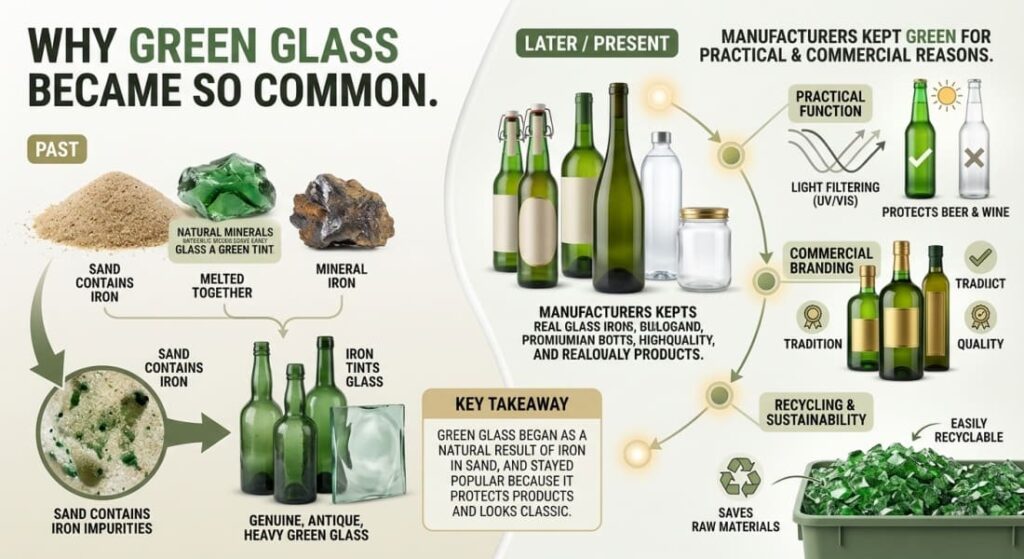
Natural Minerals Gave Early Glass a Green Tint
Glass is made mostly from silica sand, along with soda ash and limestone. Sand almost always contains small amounts of iron. When you melt these materials together, the iron stays in the glass and tints it green.
For centuries, glassmakers didn’t have reliable ways to purify their raw materials. So when people ask why is glass green so often in old bottles and windows, this is the main reason. Green wasn’t really a choice. It was simply what happened when you made glass with the materials available.
Manufacturers Later Kept Green for Practical and Commercial Reasons
Once the technology improved, glassmakers could make clear glass. But green didn’t disappear. Producers found that green bottles helped filter some of the light that can harm drinks like wine and beer. At the same time, buyers began to link green bottles with tradition and quality.
What started as a side effect of raw materials slowly turned into a deliberate packaging decision. Today, when you see green glass bottles on a shelf, the color is almost always intentional.
The History of Green Glass Bottles
Early Glass Production Was Less Refined
Glassmaking goes back thousands of years. Roman glass, medieval window glass, and early hand-blown bottles often had a light greenish or bluish cast. That pale glass green colour came straight from the minerals in the sand and the wood ash used in the batch.
Making truly clear glass took extra steps and extra cost. Glassmakers had to add decolorizing agents, such as manganese, to cancel out the green. For everyday bottles that held wine, oil, or medicine, most producers didn’t bother.
Green Glass Became Normal in Many Markets
As bottle production grew, especially in Europe, green bottles became part of daily life. Wine producers in France, Italy, and Germany used them for generations. People got used to seeing their wine in green, and that habit shaped what they expected to buy.
If you’ve ever found an old bottle in a field or an antique shop, you’ve probably seen that cloudy bottle glass green shade. Collectors often use this color to help date old bottles, since it shows how glass was made before modern refining.
Tradition Still Shapes Packaging Today
Modern factories can now produce clear, amber, blue, black, and almost any shade of green with good consistency. Even so, green remains one of the most popular choices for drinks. Classic wine bottle styles like the Bordeaux and Burgundy shapes are still closely tied to green glass, and many brands don’t want to break that visual connection.
What Makes Glass Green? The Science Behind the Color
If you want to know what makes glass green, the answer comes down to chemistry, raw materials, and how the furnace is run.
Iron Is the Main Reason
Iron shows up in silica sand, limestone, soda ash, and recycled glass. Even a very small amount affects the final color. Iron can exist in glass in two main forms:
Ferrous iron (Fe²⁺)gives glass a bluish-green tint.
Ferric iron (Fe³⁺)leans toward a yellowish tint.
The mix of these two forms decides the exact shade. That’s why some glass looks almost blue-green while other glass looks more yellow-green.
Colorants Create Specific Shades
For modern bottles, manufacturers don’t just rely on natural iron. They often add materials like chromium oxide to create a stronger, more stable green. By adjusting the amount of iron, chromium, and other additives, they can produce anything from a light emerald to deep olive green glass bottles that look almost brown in some lighting.
So the green glass colour you see on a modern wine bottle is planned. It’s controlled in the recipe, not left to chance.
Furnace Conditions Change the Shade
Temperature and the amount of oxygen inside the furnace also matter. In glassmaking terms, these are called oxidizing and reducing conditions. They shift the balance of the iron forms, which shifts the final color. Two batches with the same raw materials can come out slightly different if the furnace conditions change.
This is why good process control is so important when you need the same shade order after order.
Recycled Glass Can Affect Color Too
Factories often add cullet, which is crushed recycled glass, to the batch. It lowers melting energy and reduces the need for new raw materials. But if the cullet contains mixed colors, it can change the tint. Green glass is more forgiving here, since a little mixed-color cullet won’t stand out the way it would in very clear glass. More on that in the sustainability section below.
Do Green Glass Bottles Protect Products Better?
This is one of the most practical questions you can ask, and the honest answer is: yes, compared with clear glass, but not as much as amber.
Green Glass Reduces Some Light Exposure
Light, especially ultraviolet (UV) light and some visible blue light, can break down sensitive compounds in drinks and oils. Clear glass lets most of that light through. Green glass blocks part of it, which helps slow down some of the changes that light can cause.
The darker the glass, the more light it usually blocks. That’s one reason many producers of sparkling wine and aged red wine choose dark green glass bottles over lighter shades.
Why Light Protection Matters for Drinks and Oils
Light exposure can affect:
Flavor and aroma
Color
Freshness and shelf life
Chemical stability of certain ingredients
Products that often benefit from darker glass include wine, beer, kombucha, olive oil, vinegar, and some herbal or botanical products.
Green Is Helpful, But It Isn’t the Strongest Barrier
It’s important not to overstate this. Amber glass generally blocks UV light much better than green. Beer is a good example. When beer is exposed to light, certain hop compounds can break down and create a “skunky” off-flavor. Amber bottles protect against this far better than green bottles do.
So if your product is very sensitive to light, green may not be your best option on its own. You might need amber, a darker green, or extra protection like cartons and boxes. If your product is only moderately sensitive and you want a more refined look, green is often a smart middle ground.
Why Are Wine and Beer Bottles Often Green?
Why Are Wine Bottles Green?
People ask why are wine bottles green more than almost any other bottle question. There are three main reasons.
First, history. Many of the world’s best-known wine regions have used green glass for centuries, and their bottle styles became the global standard.
Second, protection. Wine can develop faults when it’s exposed to too much light over time. Green glass helps reduce that risk, especially for wines that are meant to age.
Third, expectation. Buyers often connect green wine bottles with authenticity and quality. A red Bordeaux in a green bottle simply looks “right” to many shoppers. Rosé and some white wines often go in clear or light glass because brands want buyers to see the color of the wine, but that’s a trade-off between looks and protection.
Why Are Beer Bottles Green?
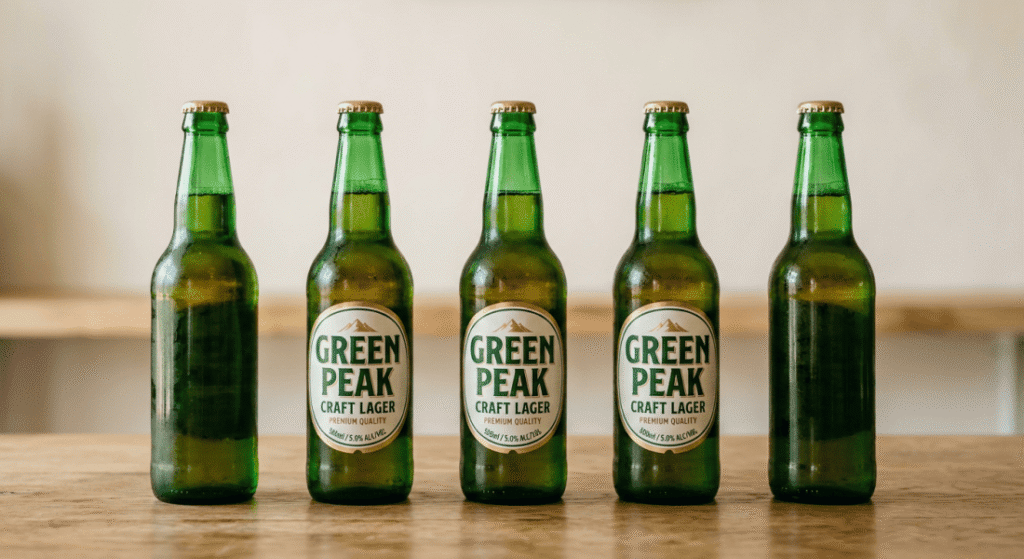
So why are beer bottles green when amber protects beer better? A widely shared story points back to the years after World War II, when amber glass was in short supply in parts of Europe. Some brewers switched to green bottles, and when those beers were exported, green started to signal an imported, higher-end European lager.
Whether every detail of that story holds up or not, the result is clear. Some of the world’s best-known beer brands are tied to green bottles, and the color became part of their identity. Today, brands choose green beer bottles mostly for recognition and shelf appeal, and many add other steps, like specific hop products or secondary packaging, to deal with light.
Bottle Color Shapes Buying Decisions
Color is often the first thing a shopper notices. Before anyone reads your label, the bottle has already sent a message. Green often reads as classic, natural, and refined. Clear can feel fresh and modern. Amber can feel practical and protective. When you pick your bottle color, you’re also picking part of your brand’s first impression.
Green vs Clear vs Amber Glass Bottles: What’s the Difference?
If you’re comparing options, this table gives you a quick view.
|
Bottle Color |
Light Protection |
Visual Appeal |
Common Uses |
|
Clear |
Low |
Lets buyers see the product |
Water, juice, spirits, sauces |
|
Green |
Moderate |
Premium, traditional |
Wine, beer, olive oil, sparkling drinks |
|
Amber |
Hög |
Practical, protective |
Beer, essential oils, medicine, supplements |
Clear Glass Bottles
Clear glass works best when you want buyers to see the product itself, such as a bright juice, a colored spirit, or a layered sauce. The downside is that it offers the least protection from light.
Green Glass Bottles
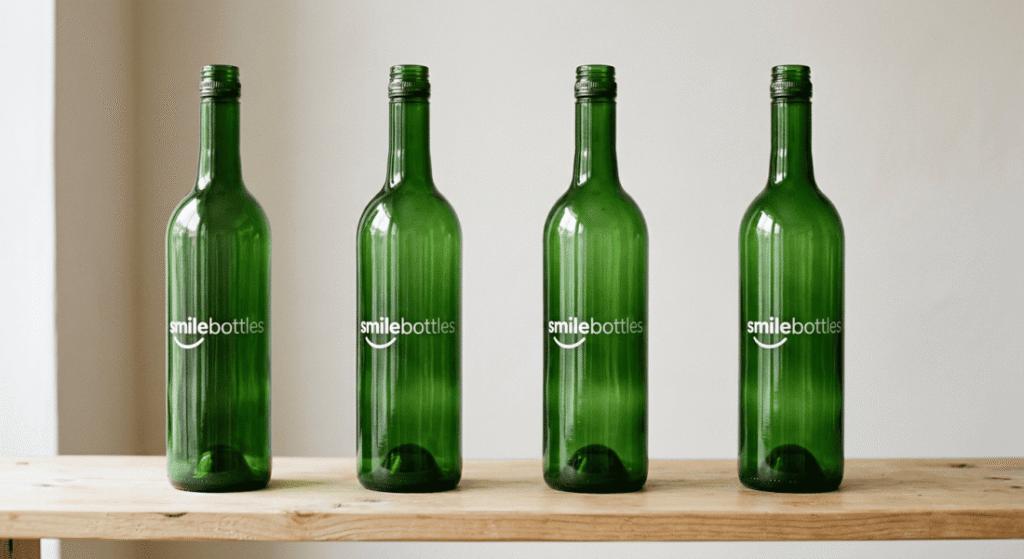
Green gives you a balance. You get some light filtering, a classic look, and strong links to wine, beer, and premium food products. It’s also easy to brand, since labels in gold, white, cream, and black tend to stand out well against green.
Amber Glass Bottles
Amber offers the strongest UV protection of the three. It’s common for pharmaceuticals, essential oils, supplements, and many craft beers. In some markets, though, amber can look more functional than premium.
Which Color Is Best for You?
There isn’t one right answer. Your choice depends on:
- How sensitive your product is to light
- How you want your brand to look
- What buyers in your category expect
- Your budget and order volume
- Your sustainability goals
What Does “Bottle Green” Mean?
If you’ve searched for the bottle green meaning, you’ll find that “bottle green” is also a color name. It describes a deep, dark green, taken from the shade of old glass bottles. You’ll see it on paint charts, fashion labels, and car colors.
Designers sometimes use the phrase glass bottle green for a slightly lighter, more transparent version of that shade. And when people talk about a soft, see-through glass green, they usually mean the pale tint you notice on the edge of a thick sheet of window glass.
Why does this matter to you? Because when you talk with a supplier, color names can mean different things to different people. “Bottle green” to your designer might not match “bottle green” to a factory. It’s always better to agree on a physical sample or a measured color standard before you place an order.
Why Brands Choose Green Glass Bottles Today
Green Supports a Premium, Traditional Image
Green has a long history in fine wine, champagne, and craft products. Using it can help your product feel established, even if your brand is new. That’s useful if you’re entering a crowded category where buyers look for quality signals.
Green Fits Natural and Sustainable Branding
Most people connect green with nature, plants, and freshness. If you sell organic, botanical, herbal, or eco-minded products, green glass supports that message without you having to say it on the label.
Green Helps You Stand Out
On a busy shelf, color plays a big part in how fast shoppers find you. A distinctive green shade can become a recognizable part of your brand over time. Some companies also use decorative green glass bottles with embossing, unusual shapes, or frosted finishes for gift sets, limited editions, or home décor products.
A Quick Summary of Green Glass Bottle Benefits
To pull it together, the main green glass bottle benefits are:
Moderate protection from light compared with clear glass
A classic, premium look
Strong links to wine, beer, and gourmet foods
Good fit with natural and eco-friendly branding
Good tolerance for recycled glass content
green essentil oil bottles
Is Green Glass Eco-Friendly?
Is Green Glass Recyclable?
Is green glass recyclable? Yes. Green glass can be recycled again and again without losing its basic quality. It can be melted down and turned into new bottles, which makes it a strong choice if you want to support a circular packaging model.
Green Glass Works Well with Recycled Content
Here’s a detail many buyers don’t know. Clear glass needs very clean, well-sorted cullet, because even small amounts of colored glass can tint it. Green glass is more flexible. Factories can often use higher amounts of mixed or lower-grade recycled green bottle glass without hurting the final look. In some regions, green cullet is actually in surplus because so much wine arrives in green bottles from other countries.
More recycled content generally means less raw material mining and lower melting energy. That makes green a practical option if you’re looking for eco friendly glass bottles.
Sustainability Is About More Than Color
Color is only one part of the picture. To make your packaging truly greener, you should also think about:
- Bottle weight (lighter bottles use less material and cost less to ship)
- Local recycling systems where your product is sold
- Whether the bottle can be reused or refilled
- Shipping distance and packing efficiency
- Energy use in production
A lightweight green bottle made with recycled content and shipped efficiently will usually do better than a heavy bottle of any color shipped across the world.
How Manufacturers Produce Consistent Green Glass Bottles
If you’re ordering bottles in volume, color consistency is a big deal. Your customers will notice if one batch looks lighter than the last.
Raw Material Selection
Good manufacturers control:
- The quality and iron content of the silica sand
- The type and amount of colorants
- The quality and color mix of recycled cullet
- Other additives that fine-tune the shade
Furnace Control
Stable temperature and careful control of oxidizing and reducing conditions keep the shade steady. Even small changes can shift the color, so experienced factories monitor this closely during every production run.
Quality Checks
Beyond color, bottles are checked for wall thickness, finish (the neck and opening), strength, weight, and size accuracy. These checks matter for filling lines, capping, labeling, and safe shipping. At Smilebottles, color and dimensional checks are part of routine production, because brands depend on each batch matching the approved sample.
When you talk with a supplier, ask how they measure color, what tolerance they allow, and whether they can keep a reference sample for future orders.
What Products Are Best Suited for Green Glass Bottles?
Wine and Sparkling Drinks
Green is the long-standing choice for red wine, many whites, and almost all champagne and sparkling wine. Darker shades suit wines meant for aging.
Beer and Fermented Drinks
Green works well for lagers, ciders, and kombucha where you want a classic or imported look. If your beer is heavily hopped and very sensitive to light, consider amber or extra packaging protection.
Olive Oil, Vinegar, and Specialty Liquids
Olive oil is quite sensitive to light and heat. Dark green bottles help slow down quality loss compared with clear glass. They also give your product a gourmet look that suits specialty food stores.
Wellness, Botanical, and Artisan Products
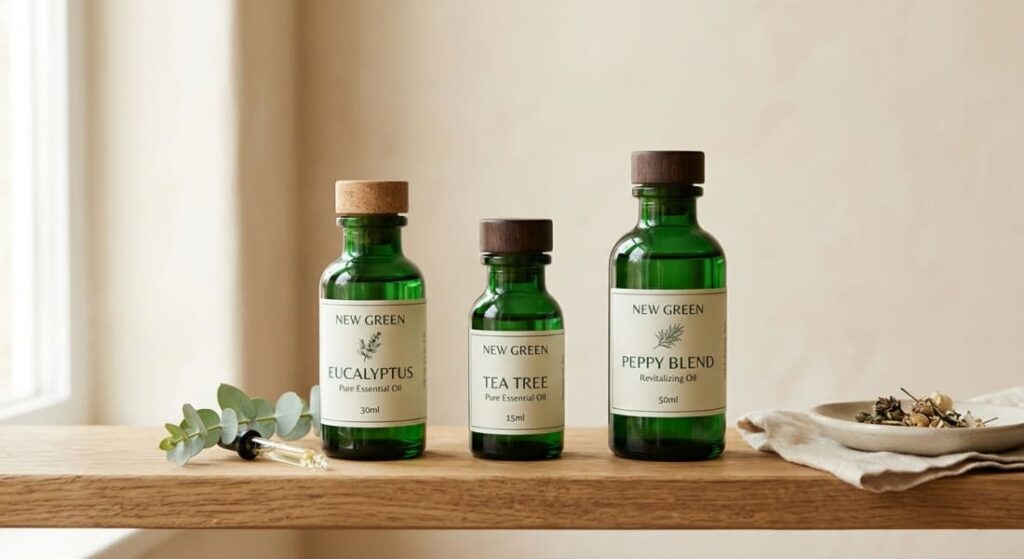
Herbal tinctures, natural cosmetics, craft spirits, and syrups often look great in green. The color matches a clean, natural, handmade feel.
How to Choose the Right Green Glass Bottle for Your Brand
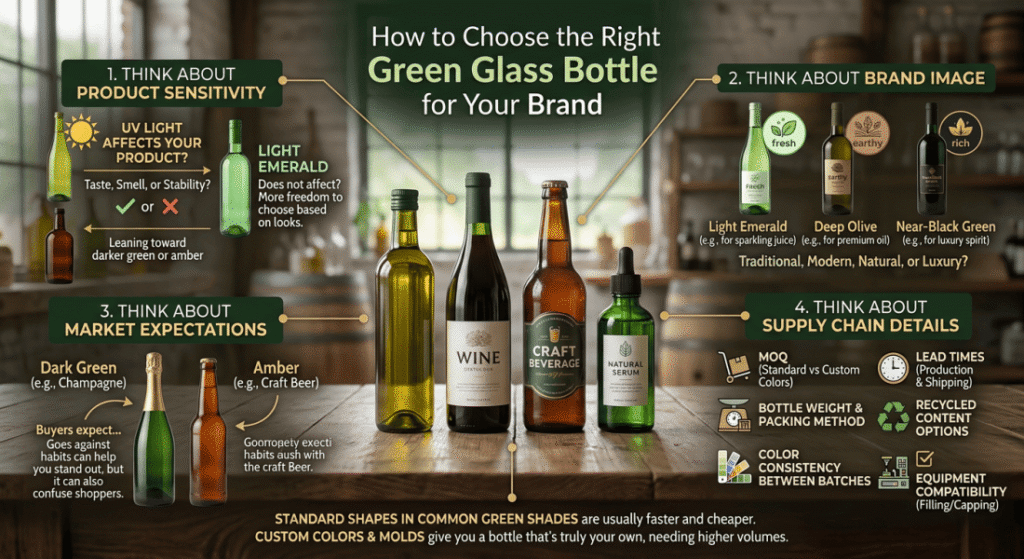
Think About Product Sensitivity
Ask yourself: Does light affect your product’s taste, smell, or stability? If yes, lean toward darker green or amber. If no, you have more freedom to choose based on looks.
Think About Brand Image
Do you want to look traditional, modern, natural, or luxury? A light emerald feels fresh. A deep olive feels earthy and rustic. A near-black green feels rich and premium.
Think About Market Expectations
Some categories have strong color habits. Buyers expect champagne in dark green and many craft beers in amber. Going against those habits can help you stand out, but it can also confuse shoppers. Make it a conscious choice.
Think About Supply Chain Details
When you’re sourcing wholesale green glass bottles, check:
- Minimum order quantities for standard and custom colors
- Lead times for production and shipping
- Bottle weight and packing method
- Recycled content options
- Color consistency between batches
- Compatibility with your filling and capping equipment
Standard shapes in common green shades are usually faster and cheaper. Custom colors and molds take more time and need higher volumes, but they give you a bottle that’s truly your own.
FAQ: Frequently Asked Questions About Green Glass Bottles
Q1:Why are wine bottles usually green?
A1:Because of long tradition in major wine regions, moderate protection from light, and strong buyer expectations.
Q2:Are green glass bottles better than clear bottles?
A2:For light-sensitive products, yes. Green blocks more light than clear glass. For products where you want buyers to see the contents, clear may suit you better.
Q3:Do green bottles block UV light?
A3:They block some UV light, more than clear bottles but usually less than amber bottles.
Q4:Is green glass natural or artificially colored?
A4:Both. A light green tint can come from natural iron in sand. Most commercial bottles use added colorants and careful furnace control to get a consistent shade.
Q5:Can green bottles be recycled with other colors?
A5:Many recycling systems sort glass by color. Green glass is recyclable and can often take in more mixed-color cullet than clear glass can.
Conclusion
Green glass started as an accident of chemistry. Iron in sand tinted early glass, and for centuries glassmakers simply worked with it. Over time, that natural color turned into one of the most trusted packaging choices in the world.
Today, green bottles stay popular because they do several things at once. They filter some harmful light, they carry a sense of heritage and quality, they help you stand out on the shelf, and they fit well into recycling systems. They aren’t the right choice for every product, but for wine, beer, olive oil, and many specialty drinks, they offer a practical balance between function and looks.