
Table of Contents
ToggleAuthor: SmileBottles Editorial Team
Estimated Reading Time: About 16 Minutes
You are not just looking for a simple vessel to hold liquid; you are searching for the perfect glass container for wine that protects your investment, enhances your brand identity, and appeals to your target market on the retail shelf.
In today’s highly competitive beverage industry, understanding the rich history, the precise manufacturing science, and the latest market shifts is essential to making the right purchasing decisions for your production line. Whether you are wondering how to select the right closures for your crisp summer whites or you want to deeply understand the long-term aging benefits of premium packaging, this comprehensive guide will give you the exact knowledge you need. By the end of this article, you will know exactly how to evaluate your options, understand global market shifts, and confidently choose the best packaging for your business. Let’s explore the fascinating journey of this industry, why glass remains the undisputed global standard, and how you can leverage these insights to boost your brand’s success.
The Evolution of Wine Containers: From Clay Amphorae to Modern Bottles
People often wonder about the origins of packaging and ask, where does a glass bottle come from originally? The earliest origins of glass making take us back to ancient Mesopotamia and Syria around 1500 BC. However, these early glass vessels were incredibly fragile, small, and purely decorative. They were basically luxury art pieces and were certainly not suitable for storing heavy liquids or surviving long-distance transport.
Because early glass was so weak, ancient Greek and Roman winemakers relied heavily on clay amphorae. These tall, heavy ceramic jugs were lined with pine resin to prevent leaking. Unfortunately, the resin inadvertently flavored the wine—a practice that actually survives today in the form of Greek Retsina wine. While amphorae were stackable in the hulls of cargo ships, they were incredibly heavy and highly prone to cracking during transport.
As the Roman Empire expanded into Northern Europe, they encountered tribes like the Gauls, who used wooden barrels. Barrels almost immediately replaced amphorae because they were lighter, much easier to roll, and highly durable. For centuries, wooden barrels and animal skin bags became the standard holding vessels.
However, wooden barrels had a major flaw: they were highly porous. Wine stored in barrels would oxidize quickly, meaning it usually had to be consumed within a single year before it turned into vinegar. If you look at ancient texts, nobody aged wine for decades because they simply did not have the technology to prevent spoilage. Winemakers desperately needed an airtight, neutral vessel.
The Shift to Glass: How Glass Became the Standard for Wine Storage
The major turning point in beverage history occurred in the 17th century. If you are ever asked the historical trivia question, when were glass bottles invented for the specific purpose of holding wine safely? You can point to the 1630s.
English diplomat and inventor Sir Kenelm Digby is widely credited with inventing the modern, heavy wine bottle. He developed a coal-fired furnace that burned much hotter than traditional wood-fired furnaces. This high heat allowed European glassmakers to produce thicker, stronger, and darker bottles. For the first time in history, winemakers had a vessel strong enough to survive bumpy horse-drawn transport, and dark enough to protect the delicate liquid from sunlight.
But this new invention required one more crucial element to become the ultimate storage solution: the cork.
Before this era, bottlenecks were often sealed with wax, cloth, or loose wooden stoppers, which were highly unreliable and let air seep in easily. When winemakers discovered that flexible bark from the cork oak tree could be compressed into the neck of these new, strong bottles, magic happened. The airtight seal created by the cork, combined with the impermeable nature of the glass, meant that wine could finally be aged. Instead of spoiling, the liquid evolved, developed complex secondary flavors, and smoothed out over decades.
By the time the Industrial Revolution arrived in the 19th century, glassmaking transitioned from hand-blowing individual pieces to mass manufacturing using molds. This allowed for the standardization of shapes and sizes, eventually leading to the standard 750ml capacity we use globally today.
Why Glass Is the Best Material for Wine Bottles
When you are purchasing packaging for your winery, you might step back and ask a fundamental question: objectively, what is the function of a glass bottle compared to modern alternative materials? The answer lies in chemistry, preservation, and consumer psychology. Here is why you should always prioritize this classic material.
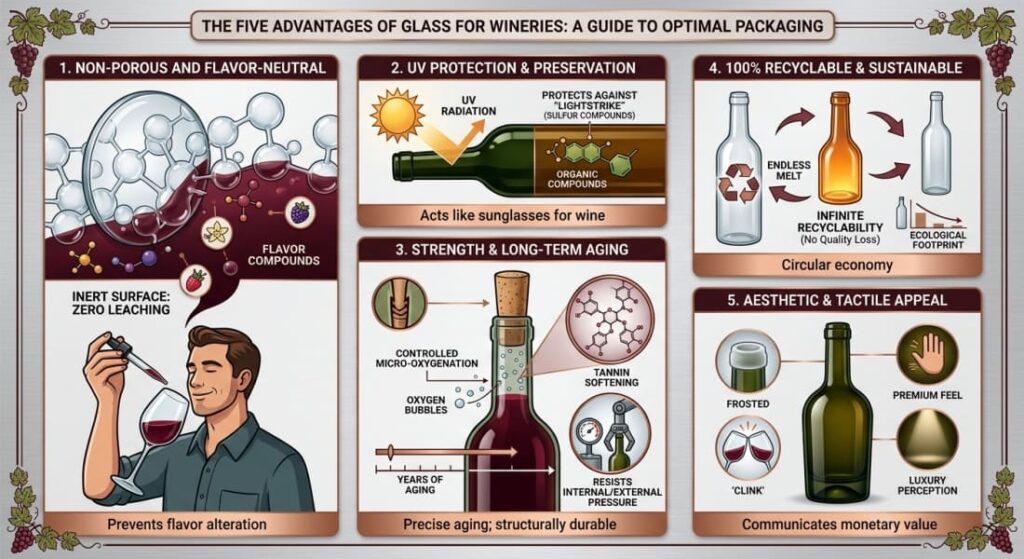
1. Non-Porous and Flavor-Neutral
Glass is a completely non-porous and inert material. Unlike plastic, aluminum coatings, or wood, it does not chemically interact with the liquid inside. When your winemaker spends years perfecting a flavor profile, the last thing you want is for the packaging to alter its taste. Your packaging ensures that the consumer tastes exactly what you intended, with zero chemical leaching.
2. UV Protection and Preservation
Ultraviolet light is one of your product’s greatest enemies. UV rays can cause chemical reactions that create sulfur compounds, leading to a fault known as “lightstrike.” This fault makes the liquid smell like damp cardboard. This is why you will notice the application of dark glass on wine bottle designs for red vintages meant to age. The dark amber or antique green tints act like sunglasses, protecting the complex organic compounds inside.
3. Strength and Long-Term Aging
A high-quality bottle, when paired with a proper closure, creates a micro-oxygenation environment. It allows an incredibly tiny, controlled amount of oxygen to interact with the wine over many years, which softens harsh tannins and builds complex aromas. No other packaging material safely allows for this precise, long-term aging process. Furthermore, the physical strength of the material allows it to resist internal pressure (crucial for sparkling wines) and the external pressure of automated bottling lines.
4. 100% Recyclable and Sustainable
When a modern consumer asks you about the ecological footprint of your brand, you can confidently explain the infinite recyclability of your packaging. A bottle can be melted down and turned into a new one endlessly without any loss of pristine quality or purity. It is the backbone of the circular economy in the beverage space.
5. Aesthetic and Tactile Appeal
You cannot ignore consumer psychology. This material feels heavy, cold, and premium. The smooth texture, the deep color, and the satisfying “clink” all contribute to the perceived monetary value of your product. A beautifully crafted bottle communicates luxury to your buyer before they even remove the cork.
Types of Wine Bottles and Their Unique Characteristics
As a B2B buyer, you know that bottle shape is not just about looking pretty; it is a geographic and historical indicator of the style of the liquid inside. Understanding the different types of wine bottles will help you align your product with long-standing consumer expectations. If you bottle a Cabernet in a Riesling flute, you will likely confuse your buyers.
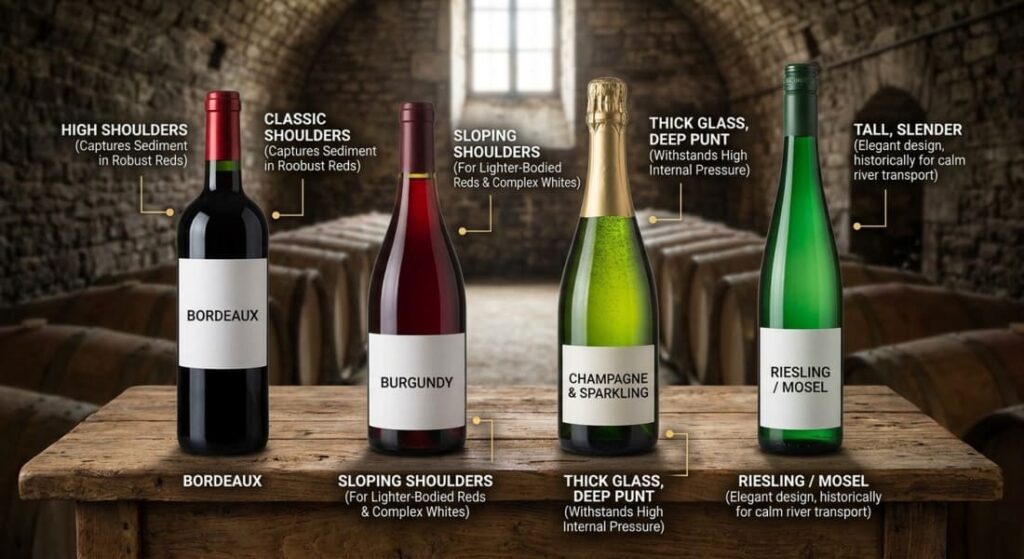
Bordeaux Bottles
This is the most common shape in the world. It features straight, tall walls and high, distinct shoulders. Historically, these high shoulders were designed to catch the heavy sediment that naturally occurs in older red wines (like Cabernet Sauvignon and Merlot) as the liquid is poured into a glass. If you are bottling robust red blends, this is your mandatory go-to choice.
Burgundy Bottles
The Burgundy style is characterized by its gently sloping shoulders and slightly wider base. Originally designed for Pinot Noir and Chardonnay originating from the Burgundy region of France, this shape is now used universally for elegant, lighter-bodied reds and complex, oak-aged whites. Because these lighter wines produce less sediment over time, the high shoulders of the Bordeaux design were completely unnecessary.
Champagne and Sparkling Bottles
Because sparkling wine contains high levels of carbon dioxide, the packaging must withstand immense internal pressure (often up to 90 psi, which is higher than the pressure in standard car tires). Therefore, these bottles are manufactured with significantly thicker walls, gentle sloping shoulders, and a very deep indentation at the bottom, known as a “punt.” The punt helps distribute the extreme pressure evenly across the base to prevent the vessel from exploding in the cellar.
Riesling / Mosel Bottles
Tall, slender, and highly elegant, these bottles are instantly recognizable on any retail shelf. They are traditionally used for Riesling, Gewürztraminer, and Pinot Gris. Because these wines were historically shipped down the calm waters of the Rhine River in Germany rather than across the turbulent oceans, the packaging did not need to be as thick or robust as Bordeaux shapes. This allowed for the beautiful, delicate, flute-like design we still see today.
How to Choose the Right Wine Bottle for Your Brand
When you are planning your next glass bottle wine production run, your purchasing decisions must be strategic. If you are preparing to launch a new vintage—perhaps a crisp Sauvignon Blanc for summer or a heavy Shiraz for winter—your packaging strategy needs to shift accordingly. Here is how you should guide your purchasing decisions:
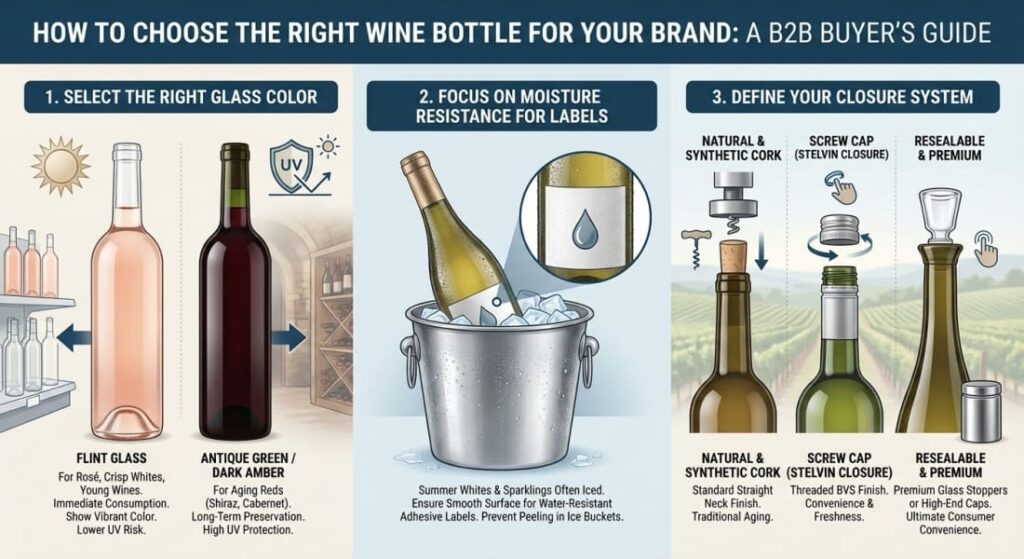
1 Select the Right Glass Color:
If you are selling a summer rosé or a young, crisp white, you should utilize clear (flint) glass. This allows the consumer to see the vibrant color of the liquid, which is highly appealing on a retail shelf. Because these products are meant to be consumed within a year or two of production, the risk of UV lightstrike is significantly lower. For serious reds meant to age for a decade, always opt for antique green or dark amber.
Focus on Moisture Resistance for Labels:
Summer whites are frequently plunged into ice buckets by the end consumer. Therefore, the glass wine bottles you source must have smooth, uniform surfaces that allow your labeling equipment to apply high-quality, water-resistant adhesive labels safely. If your bottles have an uneven surface finish, your labels will peel off in the ice bucket, damaging your brand image.
Define Your Closure System:
Are you using natural cork, synthetic cork, or screw caps? You must order bottles with the correct “neck finish.” Corks require a standard straight neck, while screw caps (also known as Stelvin closures) require a threaded BVS finish. Today, many premium brands are also opting for high-endresealable wine bottlesusing elegant glass stoppers (like Vinolok systems) or premium screw caps for ultimate consumer convenience, especially for wines meant to be enjoyed at outdoor events or over the course of a few days.
Navigating Consumer Novelty Trends vs. Professional Packaging
As a procurement professional, it is important to distinguish between bulk commercial manufacturing trends and consumer novelty fads. Sometimes, online search trends veer into the realm of novelty gifting.
For example, around the holidays, you might see consumers searching online for a gag gift like a wine glass with wine bottle attached—which is essentially a joke item allowing someone to drink an entire bottle at once. Similarly, novelty items like a silicone wine glass on the bottle stopper, or a humorous wine bottle with wine glass combination set, become highly popular on platforms like Amazon or Etsy for bachelorette parties and birthdays.
While these accessories are fun for end-consumers, they do not belong in your serious B2B production lines. As a professional winery or beverage brand, your goal is to source elegant, traditional, and structurally sound bulk bottles that respect the heritage of the liquid inside. Leave the gag gifts to the novelty accessory shops, and keep your focus firmly on premium, commercial-grade craftsmanship that elevates your brand identity.
Glass vs Alternative Wine Packaging: A Comparative Analysis
As you evaluate your international supply chain, you have likely noticed the rise of alternative packaging formats over the last five years. You may sometimes have to answer to investors or stakeholders about why you are not switching to cheaper plastics or boxes. Let’s look at how traditional materials hold up against these newcomers.
The Case Against Bag-in-Box:
Bag-in-box (BiB) is certainly useful for cheap, high-volume, fast-moving table wines. However, the plastic bladders inside the cardboard boxes are highly permeable to oxygen. A boxed product has a maximum shelf life of only 6 to 9 months before the liquid begins to degrade and oxidize. Traditional packaging, on the other hand, offers infinite shelf life. If you are producing premium wine, bag-in-box is unacceptable.
The Limitation of Aluminum Cans:
Cans are great for single-serve, casual summer drinking at the beach. But aluminum cans must be lined with BPA or special epoxies to prevent the high acidity of the wine from eating right through the metal. These internal linings can sometimes impart a metallic or synthetic taste to delicate vintages over time. Furthermore, you absolutely cannot age wine in a can.
Defending True Sustainability:
When discussing modern sustainable wine packaging, many incorrectly assume that lightweight plastics or cartons are better for the environment. However, plastic is derived from fossil fuels and often ends up in landfills. Glass, conversely, is made from sand, limestone, and soda ash—natural elements. More importantly, it is a 100% infinitely recyclable material. When you purchase this traditional packaging, you are investing in a true circular economy that eco-conscious buyers heavily respect.
Emerging Trends in Wine Packaging and Bottle Design
To stay ahead of your direct competitors, you must keep your finger on the pulse of modern consumer demands. The industry is evolving rapidly, and staying informed on current wine packaging trends will dictate how you source your materials over the next decade.
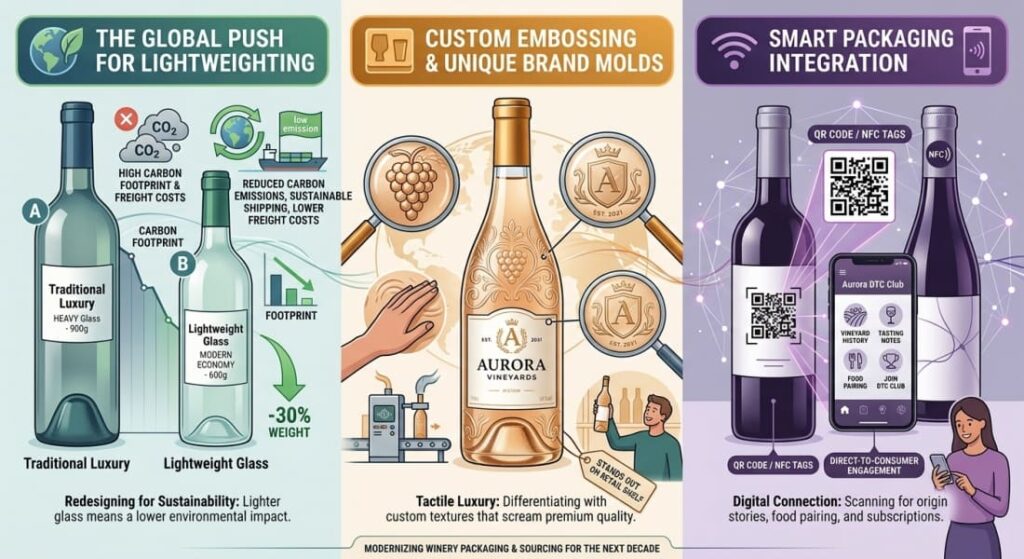
1. The Global Push for Lightweighting
For many decades, wineries operated under the assumption that heavier bottles with massive, deep punts signaled luxury and justified higher price tags. Today, that mindset is shifting drastically. Modern consumers and global distributors are highly conscious of carbon footprints. The heavier the item, the more fossil fuel it takes to ship it across the world, leading to high greenhouse gas emissions.
Today, the biggest trend is “lightweighting.” Advanced manufacturing techniques allow suppliers to create bottles that weigh 20% to 30% less than traditional luxury bottles without sacrificing any structural integrity. As a B2B buyer, switching to lightweight glass can drastically reduce your freight and shipping costs while simultaneously appealing to eco-conscious consumers.
2. Custom Embossing and Unique Brand Molds
With thousands of competing brands sitting on the retail shelf side-by-side, standing out visually is harder than ever. Because of this, more wineries are investing in proprietary, custom bottle molds. Instead of relying solely on a flashy paper label, brands are utilizing heavy glass embossing, where the brand’s logo, crest, or intricate floral designs are molded directly into the surface itself. This tactile experience screams premium quality as soon as the buyer picks it up.
3. Smart Packaging Integration
We are also seeing a rapid rise in seamless integration between classic manufacturing and modern digital technology. Clean, minimalist packaging designs are frequently being fitted with QR codes or NFC (Near Field Communication) tags integrated directly into the label or the closure shrink-wrap. This allows consumers to scan the product with their smartphones to learn about the vineyard’s history, read tasting notes, pair foods, or join a direct-to-consumer subscription club.
Why Choose Smilebottles As Your Trusted Manufacturing Partner?
Navigating the immense complexities of packaging procurement requires a partner you can implicitly trust. Because a single flaw in your packaging can halt your entire production line and cost you thousands of dollars in lost time, reliability is paramount. When you are looking for a highly reliable, communicative, and technically proficient glass wine bottle supplier, you need more than just a standard vendor; you need a manufacturing expert who deeply understands your specific industry needs.
At Smilebottles, we pride ourselves on being a premier, world-class wine bottle manufacturer dedicated to elevating your brand’s presence in the market. Here is exactly why beverage businesses and distributors worldwide choose us for their packaging procurement:
Uncompromising Quality Control:
We understand that an inconsistent neck finish or a structural weak point can jam your expensive bottling equipment. Our modern manufacturing facilities utilize state-of-the-art automated optical inspection machines to check for perfectly uniform wall thickness, accurate neck finishes, and flawless structural integrity. We ensure that every single unit arriving at your loading dock is ready for the bottling line.
Expert Custom Design Capabilities:
Do you want a proprietary shape that makes your brand completely unforgettable on the shelf? Our in-house design and engineering team will work with you directly, taking your vision from rough sketches to 3D CAD modeling, and finally to steel mold production. Whether you want deep custom embossing, a specific historical punt depth, or a rare antique tint, we have the technical capability to bring your vision to life.
Cost-Effective Bulk Purchasing Power:
We deeply understand the tight financial margins in the global beverage industry. Because we manage our own manufacturing end-to-end without middlemen, we are able to provide exceptionally competitive pricing for bulk wine bottles wholesale.Whether you need a few quick pallets for a limited boutique vintage or dozens of 40-foot shipping containers for a massive global retail release, we have the immense production capacity to scale with your business seamlessly.
A True Commitment to Sustainability:
At Smilebottles, we are deeply committed to the ecological future of our planet. Our manufacturing furnaces are optimized for high energy efficiency, and we actively incorporate high percentages of recycled cullet (recycled glass shards) into our production lines. This lowers the melting temperature, saves energy, and offers you the very best in eco-friendly packaging solutions to pass on to your consumers.
FAQ: Frequently Asked Questions About Wine Bottles
Q1:Why is the standard capacity exactly 750ml?
A1:There are many historical theories, but the most universally accepted and practical one dates back to 19th-century trade laws between Britain and France. The British imperial gallon is roughly 4.5 liters. A standard maritime case of wine was standardized to 2 gallons. If you divide those 2 gallons by 12 (the standard number of vessels in a wooden case), you get approximately 750ml per unit. It was simply a mathematical compromise specifically designed to make international trade and taxation calculations easier for port authorities!
Q2: What is the purpose of the “punt” (the deep dimple at the bottom of the bottle)?
A2:Historically, early European glassblowers created the punt to push the sharp, unfinished seam of the blown glass up into the base so the vessel could stand safely flat on a wooden table without wobbling. Today, it serves several modern purposes: it adds massive structural strength (which is completely essential for highly pressurized sparkling wines), it gives the sommelier a professional place to put their thumb while pouring at a table, and it helps gather and trap sediment at the bottom of aged ruby reds.
Q3:Does a heavier bottle mean a better quality wine?
A3:No, absolutely not. While heavily weighted packaging has traditionally been used as a marketing gimmick to convey a sense of luxury and justify high price points to uneducated consumers, the sheer weight of the packaging has absolutely zero scientific impact on the quality of the liquid inside. In fact, many of the world’s most ultra-premium, respected wineries are now actively switching to lighter designs to reduce their carbon emissions and meet modern eco-friendly guidelines.
Q4:Can I use screw caps on any traditional bottle design?
A4:No, you cannot. You must specify the correct “neck finish” when ordering your bulk supplies. Natural and synthetic cork closures require a standard, smooth, straight neck finish. Conversely, screw caps require a specifically threaded BVS (Bague Verre Stelvin) finish to allow the metal cap to grip the glass. You absolutely cannot interchange the two on your bottling line.
Conclusion
This beautiful, ancient material remains the undisputed, heavy-weight champion of the beverage industry because it perfectly balances exact scientific preservation with unmatched aesthetic luxury. By deeply understanding the different traditional shapes, embracing modern sustainability trends like lightweighting, and knowing exactly how to tailor your purchasing choices to your specific seasonal vintages, you set your business up for incredible, sustainable success on the global retail shelf.
You don’t have to navigate this vital B2B purchasing process alone. When you are ready to source premium, reliable, and beautifully crafted packaging for your next major vintage, trust the manufacturing experts.
Contact the team at Smilebottles today to discuss your custom branding designs, request physical samples to test on your bottling lines, and secure your long-term wholesale orders. Let us provide the perfect, flawless vessel so you can focus on what you do best—crafting exceptional wine.
 English