Table of Contents
ToggleAuthor: SmileBottles Editorial Team
Estimated Reading Time: About 15 Minute
Introduction: Why Perfume Packaging Design Matters More Than Ever
Think about the last time you bought a fragrance. Before you smelled anything, your eyes were already doing the work. You picked up a bottle because something about it pulled you in — the shape, the weight, the way light caught the glass. That silent conversation between product and buyer is exactly why perfume packaging design has become one of the most important parts of building a fragrance brand today.
Packaging isn’t just protection anymore. It shapes first impressions, drives buying decisions, and often decides whether a shopper reaches for your product or the one sitting next to it. Bottle silhouette, glass clarity, decoration technique, cap finish, and label details all feed into how buyers judge value — usually within a few seconds. Get those details right, and a mid-range fragrance can feel premium. Get them wrong, and even a beautiful scent can come across as forgettable.
The bar has moved higher too. Buyers today expect packaging that looks good, functions well, respects the environment, and communicates something real about the brand behind it. If you’re sourcing glass perfume bottles for a new launch or refreshing an existing collection, the choices you make now will shape how the market sees your product for years.
In this guide, you’ll walk through what makes strong perfume bottle design, the popular styles that resonate with today’s buyers, the biggest perfume packaging trends shaping the industry right now, how packaging reflects brand positioning, and the practical steps for taking a concept into real production. By the end, you’ll have a much clearer sense of which perfume bottle design ideas are worth investing in for your own line.
What Makes Great Perfume Packaging Design?
Successful fragrance packaging isn’t about one clever feature. It’s about how beauty, function, and brand identity work together in a small, everyday object. Miss any of those, and the whole thing feels off. Here’s a closer look at the elements that matter most.
Bottle Size and Shape
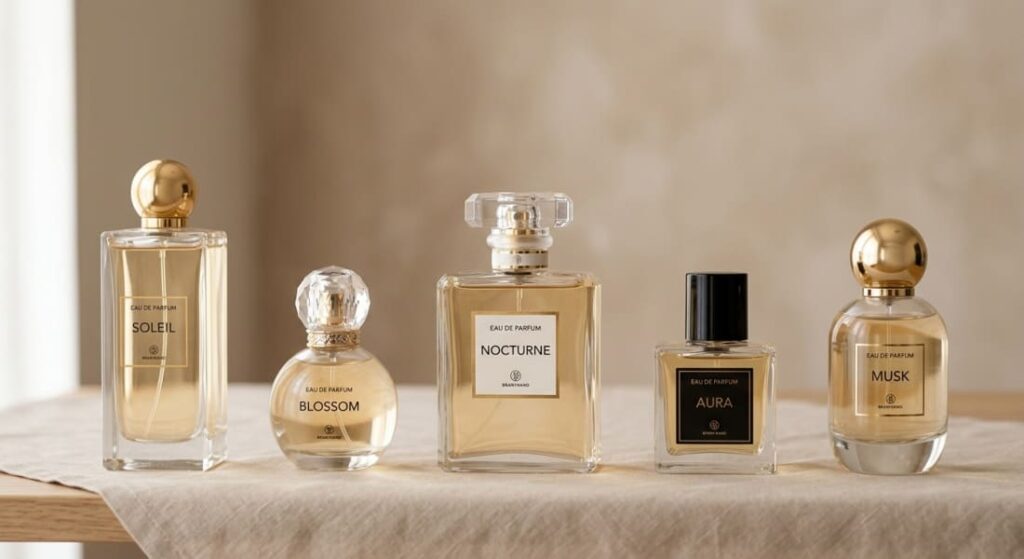
Size defines how your bottle lives in the world. Mini bottles and travel sizes between 5ml and 15ml suit sampling, travel retail, and gifting. Standard 30ml to 100ml formats cover most daily-use buyers. Larger collector editions create shelf presence and reward loyal fans of a scent.
Shape carries emotion. Round bottles feel soft, timeless, and often more feminine. Square and rectangular ones read as clean, modern, and premium. Sculptural or fully bespoke shapes signal artistry and belong to niche houses that want a bottle you’d recognize with the label removed — the kind of unique perfume bottle design buyers remember and talk about.
Color, Pattern, and Visual Identity
Color moves faster than language. Black signals luxury and mystery. Clear glass suggests purity and modernity. Gold points to prestige. Pastels feel young and soft. Deep jewel tones like emerald, sapphire, and amber convey depth and richness.
Label Design and Typography
Strong perfume label design is often minimal, because restraint tends to read more premium than a crowded label ever will. Just remember that legibility and durability matter too. A label that fades, peels, or blurs undermines everything else you’ve built.
Cap Design and Finishing Touches
Caps are one of the most underrated parts of the bottle. A beautiful piece of glass paired with a cheap cap loses its impact instantly. For perfume bottle cap design, common materials include zamac, Surlyn, wood, acrylic, and aluminum — each with a different weight, finish, and price point.
Outer Packaging and Unboxing Experience
Good fragrance packaging design treats the outer box as a real extension of the bottle instead of an afterthought. Texture, print quality, and how the bottle rests inside the box all decide whether the unboxing feels premium or basic.
Popular Perfume Packaging Styles and Their Brand Appeal
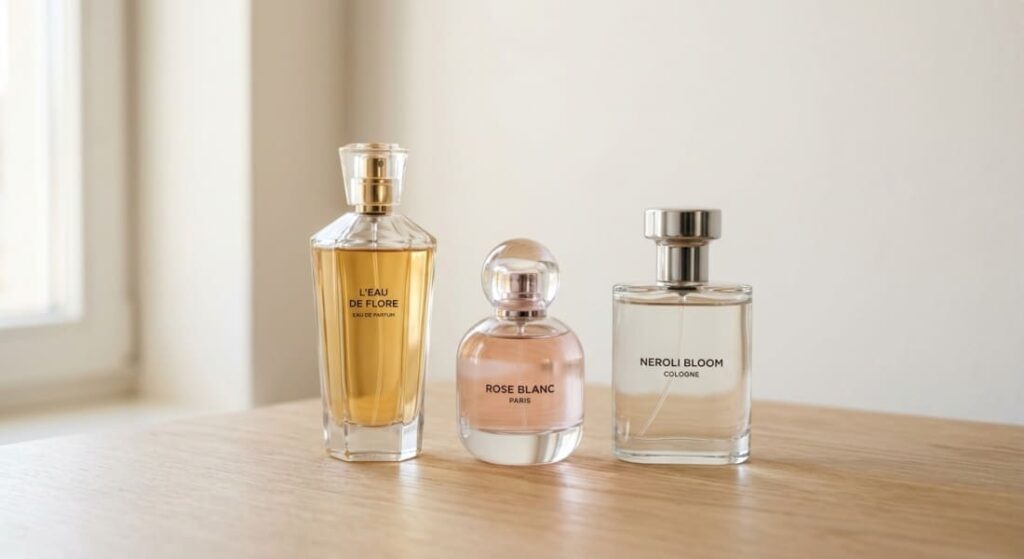
Different styles speak to different buyers, and each one carries expectations you can either meet or subvert. Here’s how the main directions read in the current market.
Modern Perfume Packaging
Clean lines, geometric shapes, minimal labels, and neutral color palettes define modern packaging. Transparency and negative space create a confident, understated feel. This style suits contemporary, niche, gender-neutral, and lifestyle brands that want to feel current without shouting for attention.
Classic Perfume Packaging
Balanced proportions, timeless silhouettes, gold accents, and serif typography borrow from the traditional codes of luxury. Heritage houses like Chanel and Guerlain built their visual identities on this language, and it still works for brands positioned around tradition, refinement, and long-earned trust.
Vintage-Inspired Perfume Packaging
Ornamental caps, antique-inspired silhouettes, and textured or aged-looking labels bring nostalgia and handcraft into the product. Vintage perfume packaging resonates with artisanal, romantic, or historically inspired concepts, and it photographs beautifully — a real advantage on social platforms where story-rich products get more engagement.
Luxury Perfume Packaging
Heavyweight glass, thick bases, custom caps, metallic accents, and often bespoke shapes define luxury perfume packaging. This category is about sensory impact — how the bottle looks, feels, and weighs in the hand. Every detail is engineered to convey exclusivity, and premium perfume bottles here often function as collector items long after the fragrance is finished.
Minimalist and Gender-Neutral Packaging
Minimalist perfume packaging has grown quickly, particularly among younger buyers and unisex lines. Simplified typography, restrained palettes, and clean silhouettes make it universally appealing. It feels confident, quietly premium, and easy to build a full range around without visual clutter.
Sustainable and Natural-Looking Packaging
Refillable systems, recyclable glass, FSC-certified paper boxes, and natural color palettes with wood or cork accents define this style. Sustainable perfume packaging isn’t a niche category anymore — it’s a genuine buying factor.
Top Perfume Packaging Design Trends Shaping the Market
The perfume and fragrances packaging market moves fast, but the trends below have real staying power. If you’re planning a launch or a refresh, these are the currents worth paying attention to.
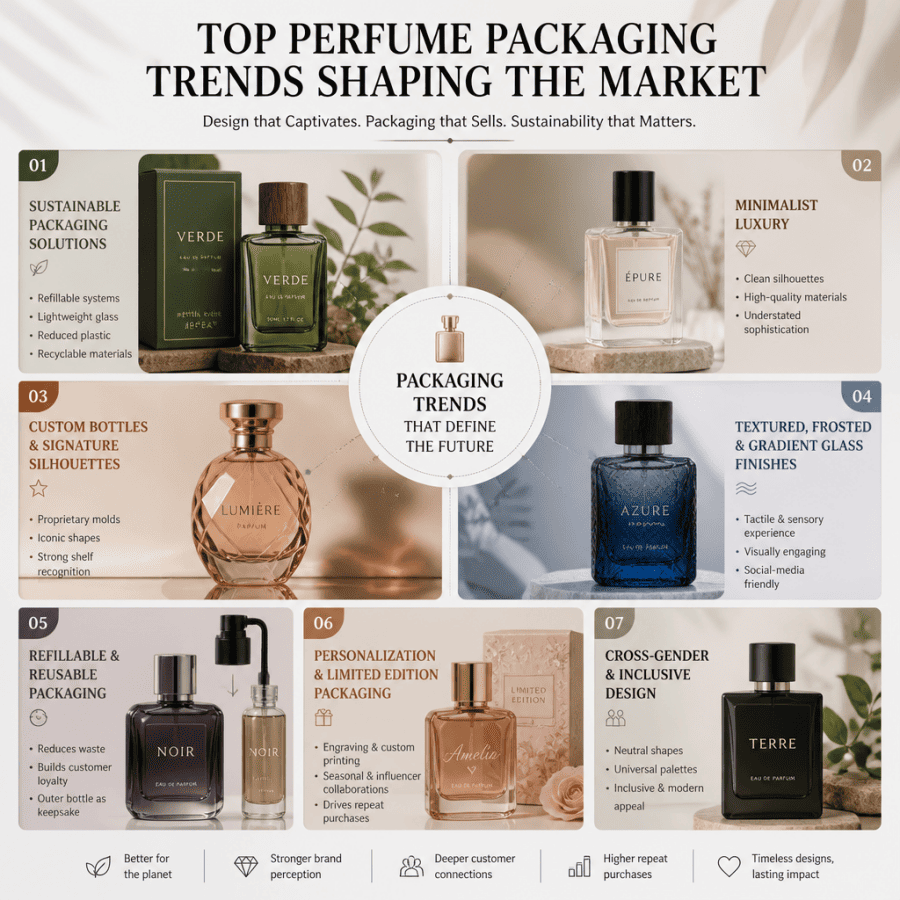
Sustainable Packaging Solutions
Refill programs, lightweight glass, reduced plastic, and recyclable outer packaging are becoming standard across every price tier. Brands are cutting decoration that doesn’t add real value and picking materials that support their environmental claims. Sustainability has moved from marketing language into how bottles are actually engineered.
Minimalist Luxury
“Less is more” continues to define the premium end of the perfume packaging market. Simple silhouettes, high-quality glass, and restrained decoration signal confidence. Heavy branding and over-decoration often look dated now, especially to design-literate buyers who read simplicity as sophistication.
Custom Bottle Shapes and Signature Silhouettes
Standard bottles make it harder to stand out. More brands are investing in custom perfume bottles with proprietary molds because a signature shape becomes part of the brand’s identity — it can’t be copied without obvious imitation. This is especially valuable for niche houses where shelf recognition drives repeat sales, and it’s why custom glass perfume bottles remain a strong long-term investment.
Textured, Frosted, and Gradient Glass Finishes
Tactile finishes are showing up everywhere. Frosted glass adds softness. Gradient color adds depth. Textured surfaces add a sensory layer that flat glass simply can’t match. These finishes also photograph well, which matters for brands that live and grow on social platforms.
Refillable and Reusable Perfume Packaging
Refillable perfume bottles are gaining serious momentum in both luxury and mid-market segments. Refill systems build long-term customer relationships, reduce waste, and give brands a strong story to tell. Luxury houses now often position the outer bottle as a keepsake and the refill pod as the consumable.
Personalization and Limited Edition Packaging
Engraved caps, custom printing, seasonal color runs, and influencer collaborations drive limited-edition sales. Personalization works especially well around holidays and gifting seasons, and it gives loyal buyers a real reason to come back for repeat purchases.
Cross-Gender and Inclusive Packaging Design
The old pink-for-women, black-for-men codes are fading. Neutral shapes, universal palettes, and understated branding reflect the rise of unisex fragrances and more inclusive buying patterns.
How Perfume Packaging Reflects Brand Positioning
Your packaging tells buyers where you sit in the market before they read a single word about your brand. Getting that signal right is one of the most important things good packaging does.
Matching Packaging to Target Audience
Younger buyers respond to bold, playful, or highly shareable designs. Mature luxury buyers prefer timeless elegance and quiet confidence. Eco-conscious consumers look at materials and refillability before anything else. Knowing exactly who you’re selling to sharpens every design decision that follows.
Packaging as a Storytelling Tool
Packaging can express heritage, ingredient origin, mood, place, or craftsmanship. A bottle inspired by Mediterranean architecture tells a different story than one built around futurism or Scandinavian minimalism. When you look at the best niche perfume brands packaging design, one thing stands out — every element of the perfume bottle packaging reinforces the same story. That kind of consistency is what makes those brands memorable.
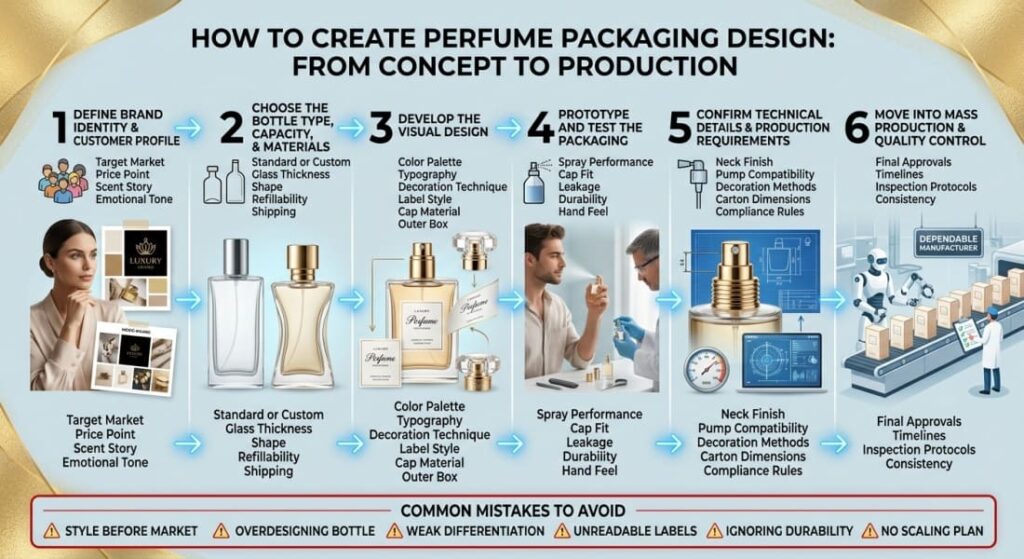
How to Create Perfume Packaging Design: From Concept to Production
If you’re building a fragrance brand from scratch or launching a new range, here’s the practical path from idea to finished product.
Step 1: Define the Brand Identity and Customer Profile
Before you touch any design, get clear on who you’re selling to, your price point, the scent story, and the emotional tone you want. Everything else follows from these answers.
Step 2: Choose the Bottle Type, Capacity, and Materials
Decide whether you’re going with standard bottles for a faster, cheaper launch, or custom fragrance bottles for stronger differentiation. Consider glass thickness, shape, finish, refillability, and how the design affects shipping and breakage risk.
Step 3: Develop the Visual Design
Bring together color palette, typography, decoration technique, label style, cap material, and outer box. Every element should reinforce the positioning you locked in during Step 1. This is where your perfume packaging design ideas start becoming a real, buildable product.
Step 4: Prototype and Test the Packaging
Test spray performance, cap fit, leakage, decoration durability, and how the bottle feels in the hand. This is where a lot of costly mistakes get caught before mass production begins.
Step 5: Confirm Technical Details and Production Requirements
Lock down bottle neck finish, pump compatibility, decoration methods, carton dimensions, and compliance requirements for your target markets. Small oversights here can create big downstream problems, especially with international shipping and retail labeling rules.
Step 6: Move Into Mass Production and Quality Control
Final approvals, production timelines, inspection protocols, and packaging consistency. A dependable perfume packaging manufacturer will walk you through this stage with clear communication and quality checks at every step, so surprises stay small.
Common Mistakes to Avoid in Perfume Packaging Design
A few pitfalls come up over and over:
Choosing a design style before understanding the target market
Overdesigning the bottle and losing shelf clarity
Weak differentiation from competitors
Labels that look good in renders but hard to read in real life
Ignoring shipping durability and breakage risk
No plan for scaling volume or controlling unit cost as sales grow
Catching these early saves both money and headaches later.
Why Glass Remains the Preferred Material for Perfume Packaging
If you’ve ever wondered why are perfume bottles made of glass, the answer is a mix of practical and sensory reasons. Glass is chemically inert, meaning it doesn’t react with fragrance oils or alcohol — it keeps the scent stable over long periods. It has a weight and clarity that plastic simply can’t replicate, and that weight signals quality the moment a buyer picks up the bottle.
Glass also opens up decoration options that other perfume packaging materials can’t match. Frosting, spray coating, metallization, embossing, hot stamping, and screen printing all work beautifully on glass surfaces. It’s recyclable, which supports the demand for greener packaging, and it works across every design direction — from crystal-clear minimalist bottles to thick-based luxury pieces to fully sculpted custom shapes.
For premium and niche perfumery, glass is still the default because nothing else delivers the same sensory experience. That’s why nearly every serious perfume bottle supplier and perfume packaging supplier builds their core catalog around glass.
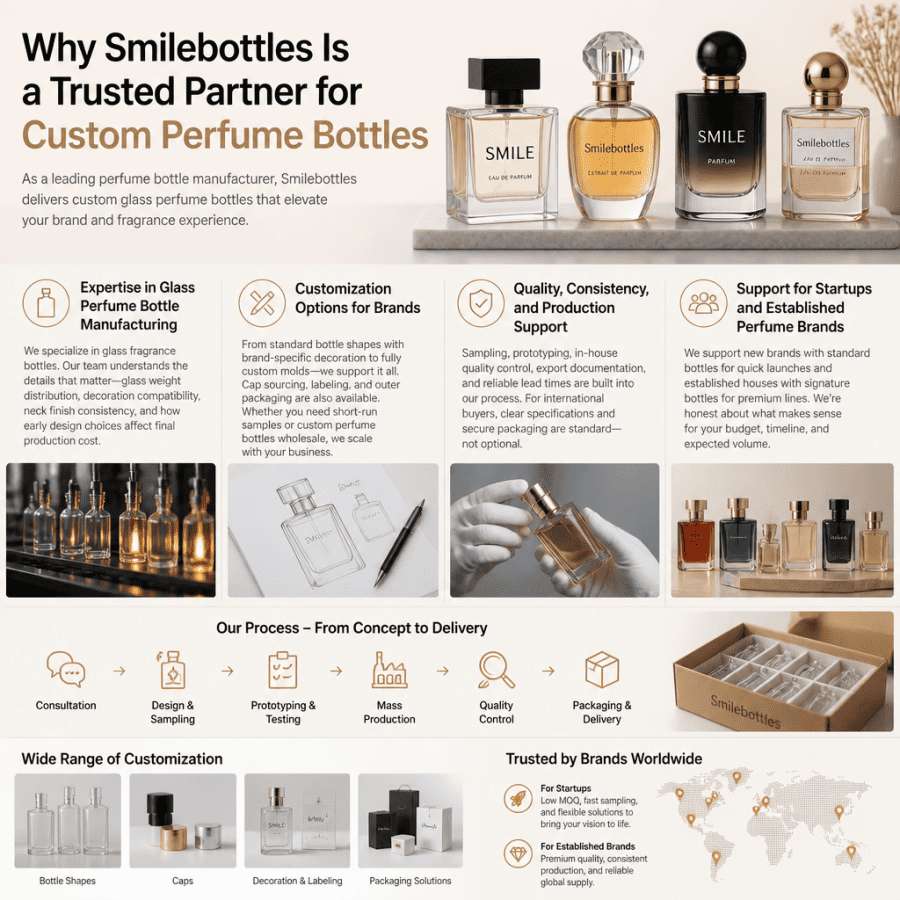
Why Smilebottles Is a Trusted Partner for Custom Perfume Bottles
If you’re evaluating options for a perfume bottle manufacturer, here’s a straightforward look at how we work at Smilebottles.
Expertise in Glass Perfume Bottle Manufacturing
We focus specifically on glass fragrance bottles, so the team understands the details that make a real difference — glass weight distribution, decoration compatibility, neck finish consistency, and how early design choices affect final production cost. Years of working with fragrance brands across different markets have shaped how we approach every project.
Customization Options for Brands
We support a wide range of options, from standard bottle shapes with brand-specific decoration all the way through to fully custom molds. Cap sourcing, labeling, and outer packaging support are all part of what we offer. Whether you need short-run samples or custom perfume bottles wholesale for a full product line, we can scale with the business.
Quality, Consistency, and Production Support
Sampling, prototyping, in-house quality control, export documentation, and reliable lead times are built into the process. International buyers need clear specifications and packaging that arrives intact, so these checks aren’t optional — they’re part of how we run production every day.
Support for Startups and Established Perfume Brands
We work with new brands that need standard bottles for a quick launch, and with established houses developing signature bottles for premium lines. The right path depends on where your business is today and where you’re taking it. We’re happy to be honest about what makes sense given your budget, timeline, and expected volume.
FAQ: Frequently Asked Questions About Glass Perfume Packaging Design
Q1:Why is glass commonly used for perfume bottles?
A1:Glass is chemically stable, so it doesn’t react with fragrance oils or alcohol and helps preserve scent quality over time. It also has a premium look and feel, supports many decoration methods, and is recyclable. That’s why most fragrance brands, especially in the premium and luxury tiers, still choose glass as their primary material.
Q2:What bottle shape is best for a luxury perfume brand?
A2:Strong luxury perfume bottle design often uses heavy square, rectangular, or custom sculpted forms with thick bases. Weight and proportion matter more than the silhouette itself. A well-balanced bottle with quality glass will feel luxurious no matter the shape, as long as the cap and finishes match.
Q3:How does perfume packaging influence customer buying decisions?
A3:Packaging shapes first impressions long before anyone smells the fragrance. Bottle weight, glass clarity, cap quality, label design, and outer box all contribute to perceived value. Studies across the fragrance packaging market consistently show packaging strongly influences whether shoppers pick up a product and how much they’ll pay, making it one of the most important marketing assets a fragrance brand has.
Q4:What are the latest trends in perfume packaging design?
A4:Current trends focus on sustainability, refillability, minimalist luxury, custom bottle shapes, textured glass finishes, gender-neutral design, and personalization. Digital features like QR codes for authentication and storytelling are also becoming more common in premium segments. Most innovative perfume packaging today blends several of these elements rather than relying on just one.
Q5:What is the difference between standard and custom perfume bottles?
A5:Custom makes sense for brands that want strong shelf differentiation and are planning long-term volume, while standard bottles work well for faster market entry.
Q6:Which decoration methods work best on glass perfume bottles?
A6:The best choice depends on your design, budget, and how the decoration needs to hold up during shipping and daily use. Combining two or three techniques often produces the most distinctive and premium-feeling results.
Conclusion
Trends like sustainability, minimalist luxury, refillability, and custom bottle shapes will keep shaping the perfume fragrances packaging market over the next few years. Buyers are more design-literate than ever, and the bar for creative perfume packaging keeps rising. If you’re ready to move from concept to production, working with an experienced glass bottle partner makes the process much smoother. At Smilebottles, we’re happy to walk through options, review a design for manufacturability, and help you build bottles that reflect what your brand actually stands for. Reach out whenever you want a second opinion or a starting point.
 English