
Table of Contents
ToggleAuthor: SmileBottles Editorial Team
Estimated Reading Time: About 15 Minute
At Smilebottles, a professional wine bottle manufacturer, we know that wine glass bottles and their closures must work together as a perfect system. A mismatched top can lead to leaks, spoilage, and ruined brand reputation. To help you make the best purchasing decisions for your business, we have put together this comprehensive guide on the various types of wine bottle closures. We will walk you through the pros, the cons, and the specific use cases for each option so you can confidently source the right packaging for your brand.
Introduction to Wine Bottle Corks and Closures
What exactly are wine bottle closures? Simply put, they are the stoppers, caps, or tops used to seal a glass bottle after the wine is filled. For centuries, the industry relied on just one material, but today’s market offers a wide variety of bottle closure types.
The choice you make directly affects the oxygen transfer rate (OTR) of the bottle, which controls how the wine ages. It also impacts the overall consumer experience. When your customers open your product, the sound and feel of the closure set their expectations for the quality of the drink. Whether you are searching for a traditional natural cork wine stopper or exploring modern metal caps, understanding the full range of options will help you match your packaging to your target market and budget.
Why Wine Bottle Closures Matter
You might wonder why so much attention is given to the top of the bottle. For businesses purchasing bottles of alcohol in bulk, the closure is not just a decorative piece; it is a highly functional tool. Here is why selecting the right closure matters for your production and sales:
Preserving Quality and Controlling Oxygen
Different wines need different amounts of oxygen to age properly. Premium red wines often benefit from micro-oxygenation, which is why traditional wine closures that allow a tiny amount of air to pass through are preferred. On the other hand, fresh white wines and rosés need to be protected from oxygen to maintain their crisp, fruity flavors.
Preventing Leakage and Contamination
Your products will likely travel long distances, facing temperature changes and physical movement. A secure seal prevents the wine from leaking out and stops harmful bacteria or excess air from getting in. This protects your investment during global shipping and warehousing.
Enhancing Brand Image and Consumer Experience
The closure is the very first thing your customer interacts with. A heavy glass bottle paired with a premium closure communicates luxury. A bright, colorful cap might communicate a fun, everyday drinking experience. The tactile feel of pulling a cork or twisting a cap plays a huge role in brand perception.

Main Types of Wine Bottle Closures on the Market
When you are sourcing packaging, you need to know exactly what is available. Below, we detail the primary wine closure types you can choose from today.
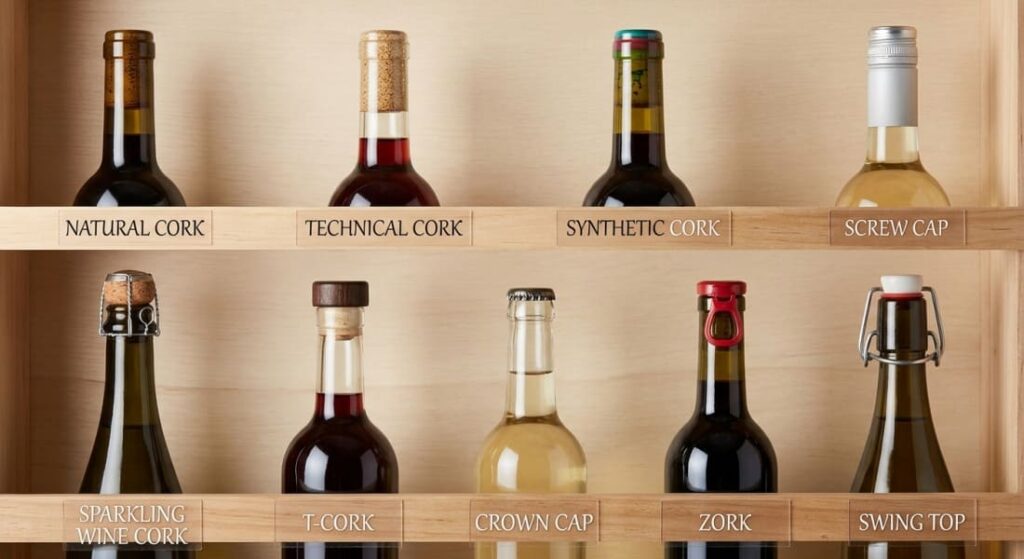
Natural Cork
For hundreds of years, the natural wine cork has been the gold standard for sealing wine. Harvested from the bark of cork oak trees, primarily in Portugal and Spain, this material is highly elastic and compresses perfectly into the neck of a glass bottle.
Advantages:
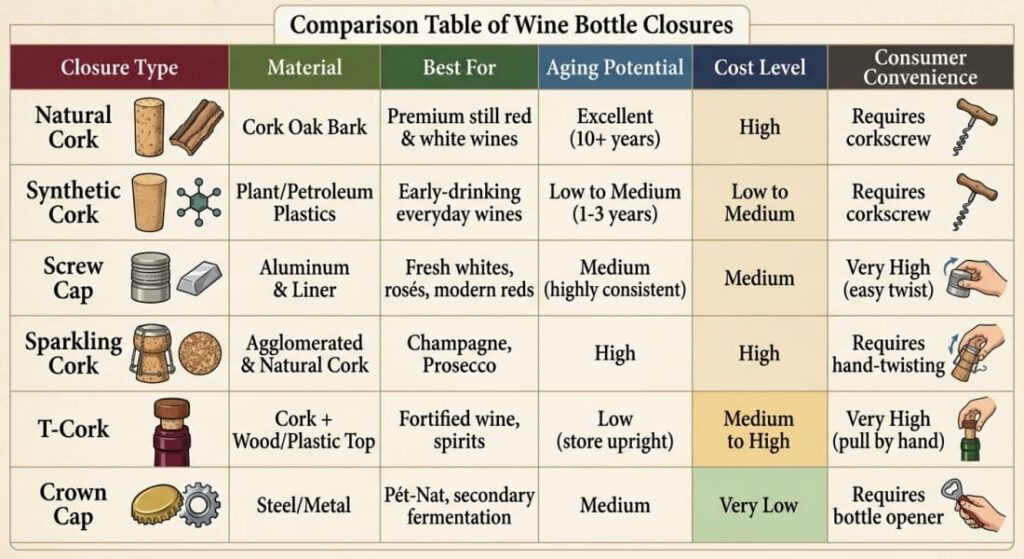
Natural corks allow a very small, consistent amount of oxygen to interact with the wine over years, making them the absolute best choice for wines that need to age. They also provide the classic “pop” sound that consumers associate with high-end wine.
Disadvantages:
Because it is a natural product, there is a small risk of “cork taint” caused by a chemical compound called TCA, which can give the wine a musty smell. Additionally, natural corks are the most expensive option on the market.
Technical Cork and Agglomerated Cork
If you want the look and feel of natural wood but need a more budget-friendly and reliable option, you should look into technical types of cork. These are made by taking natural cork granules and binding them together with food-grade adhesives.
Advantages:
They are much more affordable than solid natural corks. Because they are manufactured, they offer a highly consistent size and density, which reduces the risk of leakage on your production line.
Disadvantages:
While they look like wood, they do not have the same long-term aging capabilities as a solid piece of natural bark. They are best suited for mid-range wines meant to be consumed within two to three years of bottling.
Synthetic Wine Corks
If you want to completely eliminate the risk of TCA cork taint while keeping the traditional pulling experience, synthetic wine corks are an excellent choice. These are manufactured from plant-based plastics or petroleum-based polymers.
Advantages:
Synthetic options guarantee zero cork taint. They do not break apart or crumble, ensuring a clean opening experience. Furthermore, you can customize them in almost any color to match your brand’s aesthetic.
Disadvantages:
Synthetics do not expand and contract exactly like natural wood. Over a long period, they may lose their elasticity, allowing too much air into the bottle. Therefore, they are highly recommended for wines that will be consumed early, rather than those kept in a cellar for a decade.
Screw Cap Closures
Also known as Stelvin closures, aluminum wine screw caps have taken the industry by storm, particularly in regions like Australia and New Zealand. They consist of an aluminum cap with a specialized liner inside that seals against the glass lip of the bottle.
Advantages:
Screw cap wine bottles offer the most reliable and consistent seal available. They completely block oxygen (depending on the liner you choose), preserving fresh, fruity flavors perfectly. They are incredibly easy for consumers to open and reseal, making them perfect for restaurants and casual drinking.
Disadvantages:
Some traditional markets still associate screw caps with lower-quality wine, although this perception is rapidly changing. You must also ensure your glass bottles have the correct threaded neck finish (ROPP finish) to accept a screw cap.
Sparkling Wine Corks
The bottling line is more complex and requires specialized equipment compared to standard still wine corks. The glass itself must also be manufactured to withstand high internal pressure, which is something you must verify with your glass supplier.
T-Cork Closures (Bar-Top Stoppers)
Often referred to as bar-top closures, T-corks feature a shank (made of natural or synthetic cork) topped with a wider cap that can be made from wood, plastic, glass, or metal.
Advantages:
These are incredibly user-friendly because the consumer can remove and replace the stopper by hand without needing a corkscrew. They offer fantastic real estate for your branding—you can engrave or print your logo directly on the top.
Disadvantages:
T-corks are not designed for bottles that will be stored horizontally for long periods. The seal is not as airtight as a fully driven cork. Therefore, they are rarely used for standard still wines but are highly popular for fortified wines like Port, premium spirits, and specialty liqueurs.
Crown Cap Closures
You might associate crown caps strictly with beer, but a crown cap wine bottle is very common in specific winemaking processes. These metal caps are crimped tightly over a specialized lip on the glass bottle.
Advantages:
They are incredibly cheap, highly secure, and excellent at holding in pressure. They are heavily used during the secondary fermentation phase of traditional sparkling wine production. Recently, they have also become the go-to closure for trendy Pét-Nat (pétillant naturel) wines and modern craft ciders.
Disadvantages:
To open them, the consumer needs a bottle opener. Furthermore, unless you are marketing to a very trendy, young demographic, placing a crown cap on a standard bottle of still wine might confuse your buyers, as it lacks a premium, traditional appearance.
Zork Closures
The zork wine closure is an innovative, modern alternative designed to bridge the gap between the convenience of a screw cap and the traditional “pop” of a cork. It is a peel-and-reseal closure made of food-grade plastic.
Advantages:
Your customer does not need a corkscrew to open it—they simply peel off the tamper-evident band and pull. It still delivers a satisfying popping sound when opened and is very easy to reseal, making it highly convenient.
Disadvantages:
It remains a relatively niche product. Because it requires a specific bottle neck finish to grip properly, your packaging options may be more limited. Additionally, it can be more expensive than a standard synthetic cork or basic aluminum cap.
Swing Top Closures (Flip-Top)
Swing top closures consist of a glass or plastic stopper attached to a wire hinge and a rubber gasket.
Advantages:
They provide a distinctly artisanal, rustic, and premium look. Consumers love them because the bottles are easily reusable for water or homemade beverages long after the original wine is gone.
Disadvantages:
They are bulky, heavy, and expensive. The metal mechanisms can slow down automated bottling lines, meaning they are usually reserved for small-batch, specialty items rather than high-volume wine production.
The Great Debate: Cork vs Screw Cap Wine
One of the most common questions buyers face is deciding between cork vs screw cap wine packaging. The presence of a natural cork in wine traditionally signifies craftsmanship, history, and premium quality. It allows the wine to “breathe” over decades in a cellar. However, a small percentage of natural corks will always fail due to cork taint (TCA).
On the other hand, a screw cap virtually eliminates the risk of taint and oxidation. It guarantees that the wine tastes exactly the way the winemaker intended when the bottle was filled. While screw caps used to be seen as “cheap,” many of the world’s top wineries—especially in New Zealand and Australia—now use them for their most expensive, premium bottles. Your choice here should depend heavily on your target market’s preferences and the specific style of wine you are selling.
How to Choose the Right Closure for Your Wine Bottle
Selecting the ideal closure is a strategic business decision. As a buyer, you should evaluate the following criteria before placing an order for your packaging:
Consider the Type of Wine and Aging Requirements
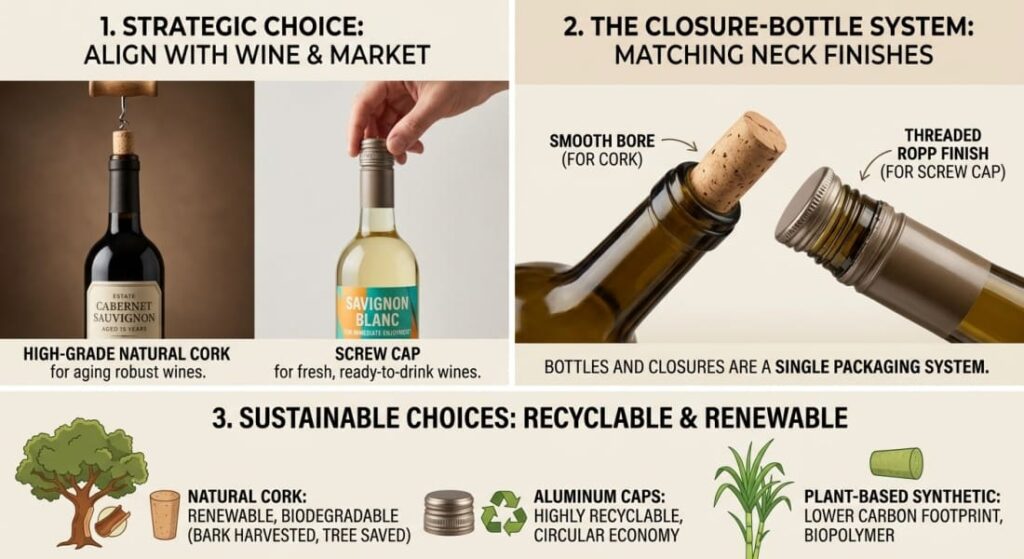
If you are bottling a robust Cabernet Sauvignon designed to sit in a collector’s cellar for 15 years, you should invest in high-grade natural corks. If you are bottling a crisp, bright Sauvignon Blanc intended to be consumed within six months of purchase, a screw cap or synthetic cork is your safest and most cost-effective bet.
Evaluate Your Target Market and Price Point
Who is buying your wine? If your product will sit on the top shelf of a high-end steakhouse, traditional buyers expect to see a natural cork pulled by a sommelier. If your wine is destined for supermarket shelves, airlines, or outdoor festivals, the convenience of a screw cap is a massive selling point.
Factor in Your Bottling Line Capabilities
You cannot simply switch from corks to screw caps without considering your production facility. Driving a cork requires a different machine than rolling and threading an aluminum screw cap. Always consult with your production manager or co-packer to ensure their equipment can handle the closure you want to buy.
Wine Bottle and Closure Compatibility: Why Systems Matter
At Smilebottles, we constantly remind our clients that the bottle and the closure are not independent items—they are a single packaging system.
Matching the Neck Finish
Every glass bottle is manufactured with a specific “neck finish.” A bottle designed for a natural cork has a smooth internal bore and a specific outer lip (often a cork mouth or bar-top finish). A bottle designed for a screw cap has distinct glass threads molded into the exterior of the neck (known as an ROPP finish).
You cannot put a standard screw cap on a cork-finish bottle, and you cannot easily drive a standard wine cork into a screw-cap bottle.
The Danger of Sourcing from Different Suppliers
When sourcing packaging, buying your bottles and corks from different vendors can be risky. Even minor differences in manufacturing tolerances—a fraction of a millimeter in the glass bore or the cork diameter—can lead to disaster. If the cork is too small, wine will leak out, and oxygen will flood in. If the cork is too large, it may crack the glass neck during insertion or be impossible for the consumer to remove.
Working with a comprehensive packaging supplier ensures that the glass neck finish perfectly matches the closure, saving you from costly product recalls and wasted inventory.
Sustainable Trends in Wine Bottle Closures
Modern consumers care deeply about the environment, and your packaging choices reflect your brand’s values. Sustainability is now a major purchasing factor.
Natural cork is actually one of the most eco-friendly packaging materials in the world. Cork oak trees are not cut down to harvest the material; instead, the bark is carefully stripped away by hand, and the tree naturally regenerates it over nine years. This makes natural cork a 100% renewable and biodegradable resource.
Aluminum screw caps and crown caps are highly recyclable. Most municipalities easily process aluminum, making it a great choice for brands pushing a “circular economy” message. Meanwhile, many synthetic cork manufacturers are transitioning away from petroleum plastics and are now producing stoppers made from plant-based biopolymers derived from sugarcane to lower their carbon footprint.
Smilebottles’ One-Stop Solutions for Wine Glass Packaging
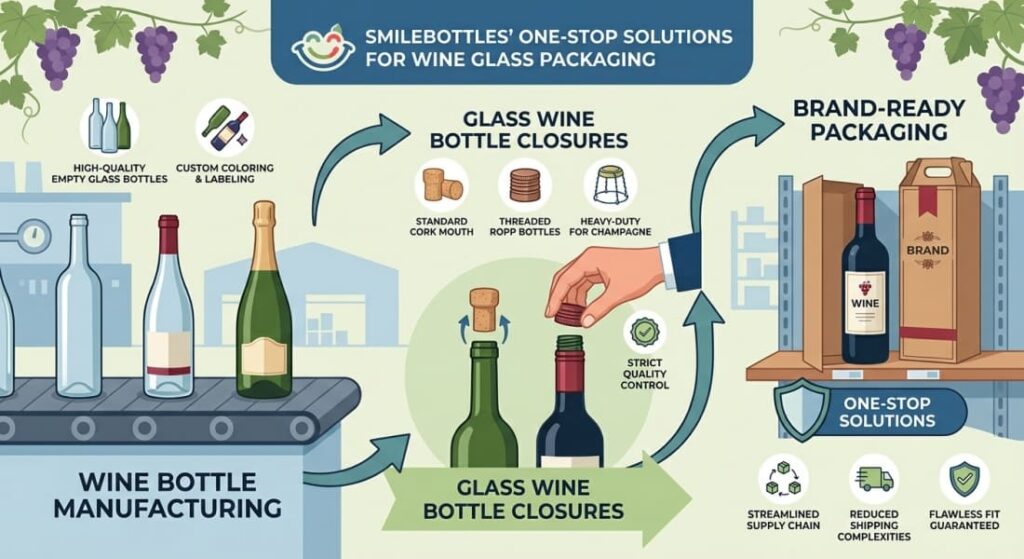
Navigating the world of packaging can be overwhelming, but you don’t have to do it alone. As an experienced wine bottle manufacturer, Smilebottles offers complete, one-stop solutions for your brand.
We do much more than just supply high-quality empty glass bottles. We provide a comprehensive range of glass wine bottle closures perfectly engineered to match our glassware. Whether you need standard cork mouth bottles, threaded ROPP bottles for modern screw caps, or heavy-duty bottles for champagne, we guarantee strict quality control so your closures fit flawlessly every single time.
By sourcing both your bottles and closures through Smilebottles, you streamline your supply chain, reduce shipping complexities, and eliminate the risk of mismatched packaging. We also offer custom decoration, labeling, and coloring services to ensure your final product stands out on the shelf.
FAQ: Frequently Asked Questions About Wine Bottle Corks and Closures
Q1: How do you seal bottles on a commercial line, and exactly how do you close a wine bottle with a cork safely?
A1: For commercial production, you cannot push a standard wine cork in by hand. You must use a mechanical corking machine. The machine features “jaws” that tightly compress the cork to a smaller diameter, rapidly plunge it into the glass bottle neck, and then release it. The cork then expands instantly to form a tight, leak-proof seal against the glass wall.
Q2: What makes a champagne bottle cork different from a standard wine cork?
A2: A traditional champagne bottle cork starts out much wider and perfectly cylindrical. It is usually made from a composite of agglomerated cork granules with discs of natural cork on the bottom that touch the wine. When forced into the bottle by a heavy-duty machine, only about half of the cork goes inside. The top half remains outside and expands, which is then secured down tightly by a wire cage to hold back the immense carbonation pressure.
Q3: Is natural cork better than a screw cap?
A3: “Better” depends entirely on the wine. For a high-end Bordeaux that needs to age for 20 years, a natural cork is better because it allows micro-oxygenation. For a vibrant New Zealand Sauvignon Blanc that should be drunk fresh, a screw cap is better because it prevents oxidation entirely.
Q4: Are synthetic corks safe for wine?
A4: Yes, absolutely. Modern synthetic corks are made from food-grade, FDA-approved materials. They will not impart any plastic flavors into your wine. They are highly reliable for wines intended to be consumed within one to three years of bottling.
Conclusion
Choosing the right seal for your wine is a critical step in your product’s journey from the winery to the consumer’s glass. By understanding the different types of wine bottle closures, you can protect your liquid investment, ensure a smooth bottling process, and create a memorable unboxing experience for your buyers.
From the historic elegance of a natural cork to the reliable convenience of a screw cap, every closure serves a distinct purpose. As a buyer, always keep your wine’s aging requirements, your target audience, and your production capabilities in mind.
And remember, the closure is only as good as the bottle it sits in. Partnering with a reliable, professional packaging supplier like Smilebottles ensures that your bottles and closures work together in perfect harmony. Contact our team today to discuss your next wine packaging project, and let us help you find the perfect fit for your brand.