Table of Contents
ToggleAuthor: SmileBottles Editorial Team
Estimated Reading Time: About 16 Minute
If you have ever walked down the wine aisle in a store, you probably noticed something interesting. Not every bottle looks the same. Some are tall and slim, some have wide shoulders, and some feel heavier the moment you pick them up. As a buyer sourcing bottles of wine packaging for your brand, these small details actually matter a lot.
In this guide, you will learn about the main wine bottle shapes, what wines usually go into each one, and how to pick the right bottle for your own product line. Whether you are a winery owner, a private label brand, or a distributor looking for a reliable wine bottle supplier, this article will give you the clarity you need before placing your next order.
Why Wine Bottle Shape Matters More Than You Think
Before we jump into the different wine bottle types, you should understand why shape is such a big deal in the wine industry. It is not just about looking pretty on the shelf.
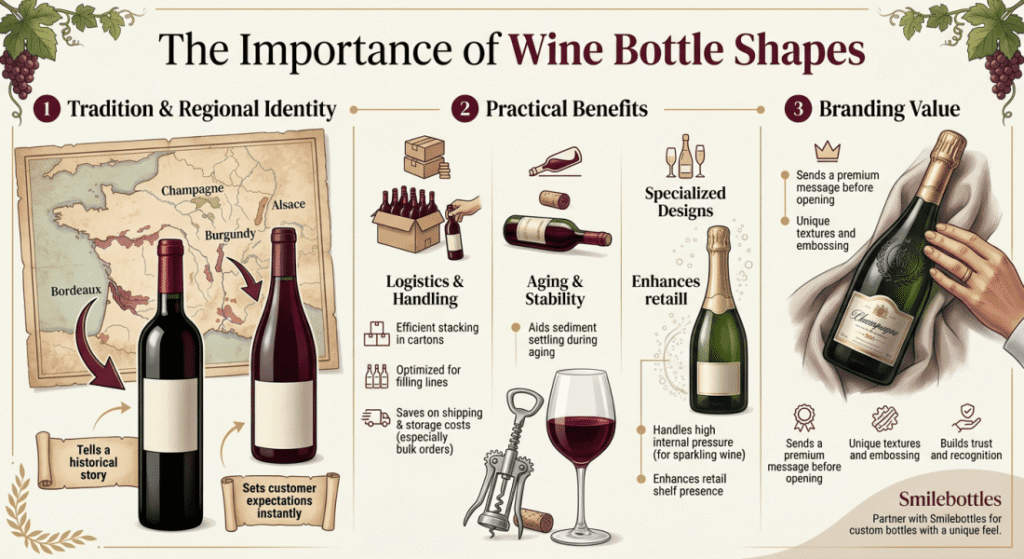
Tradition and Regional Identity
Most of the classic kinds of wine bottles you see today came from famous European wine regions. Bordeaux, Burgundy, Champagne, Alsace, the Rhône Valley, and parts of Germany all developed their own signature bottle designs over the centuries. When you use a specific shape, you are also telling a story about the wine inside.
For example, if you fill a Bordeaux-style bottle with Cabernet Sauvignon, customers instantly understand what kind of wine to expect. That is the power of shape.
Practical Benefits
Shape also affects how your bottles work in real life. This is something a lot of first-time buyers overlook. A good wine bottle design takes into account:
How easy the bottle stacks in cartons
How it handles pressure (very important for sparkling wine)
How sediment settles during aging
How the bottle looks on a retail shelf
How well it fits your filling line
If you are ordering bulk wine bottles or wholesale wine bottles, small design differences can save you a lot of money on shipping and storage.
Branding Value
Your bottle is often the first thing a customer touches. Heavy wine bottles, embossed wine bottles, and colored wine bottles all send a message before the wine is even opened. If you want to position your product as premium, the bottle needs to match.
This is why so many brands ask us at Smilebottles for custom wine bottles with a unique feel. It builds trust and recognition instantly.
Wine Bottle Anatomy: The Key Parts of a Wine Bottle
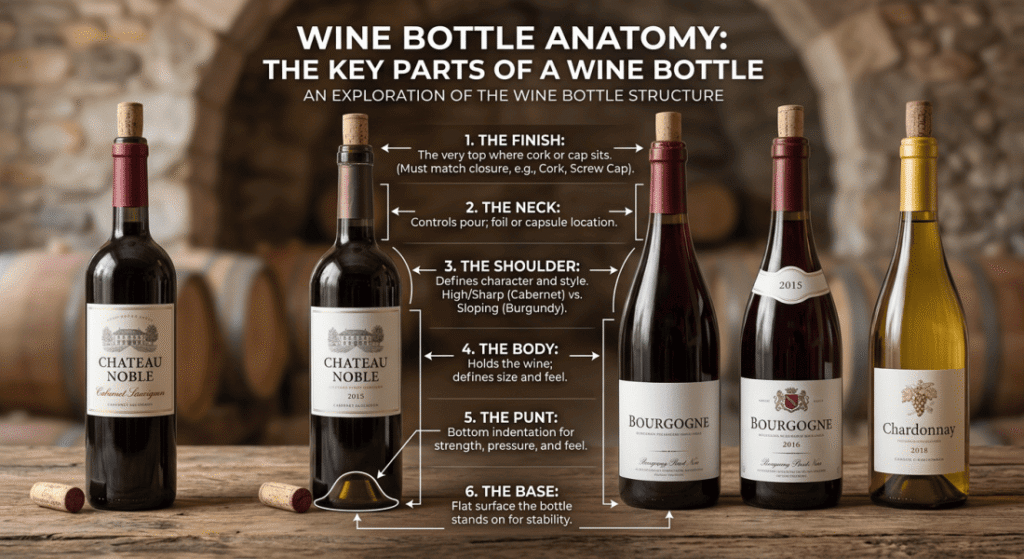
Before we look at each bottle style, let’s quickly walk through the parts of a wine bottle. Understanding the wine bottle anatomy will help you make better sourcing decisions later.
Here are the main parts of the wine bottle you should know:
1. The Finish
This is the very top of the bottle where the cork or screw cap sits. The finish must match your closure exactly, so always confirm this detail with your wine bottle manufacturer before production.
2. The Neck
The narrow part just below the finish. It helps control the pour and is often where you place your foil or capsule.
3. The Shoulder
This is where different bottle types really show their character. Some have high, sharp shoulders. Others slope gently. The shoulder is often the fastest way to tell one shape apart from another.
4. The Body
The main section that holds the wine. Body width and height define how your bottle feels in the hand.
5. The Punt
The wine bottle punt is the indentation at the bottom. You will find deep punts on Champagne bottles and shallow ones on some still wine bottles. Punts add strength, help handle pressure, and make the bottle feel more premium.
6. The Base
The flat surface the bottle stands on. A stable base is a must, especially if you ship internationally.
Once you understand these parts, it becomes much easier to compare wine bottle sizes and shapes side by side.
How to Identify Different Wine Bottle Shapes
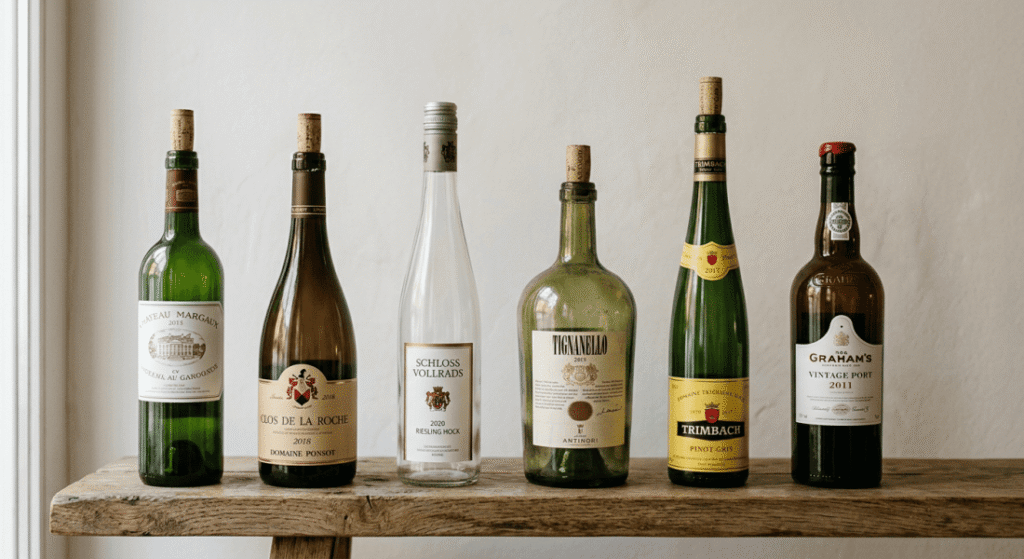
You might be wondering, “Why are wine bottles different shapes in the first place?” The answer is a mix of history, function, and marketing. Once you know what to look for, telling them apart is easy.
Here are the main things to check:
Shoulder style: high and sharp, or soft and sloping?
Overall height: tall and thin, or shorter and wider?
Punt depth: deep for sparkling wines, moderate for reds
Glass weight: premium wine bottles usually feel much heavier
Closure fit: cork, screw cap, or sparkling wire hood?
Now let’s go through the most common wine bottle types one by one.
The Most Common Types of Wine Bottles
Below are the classic wine bottle shape names you should know. These are the shapes you will most likely order if you are sourcing bottles for a winery, private label, or beverage brand.
1. Bordeaux Bottle Shape
The Bordeaux bottle shape is probably the most recognized bottle in the world. If someone asks you to picture a wine bottle, this is likely what comes to mind.
Main Features
Tall and straight body
Sharp, high shoulders
Medium to deep punt
Classic and structured look
Wines Often Bottled in Bordeaux Shape
Cabernet Sauvignon
Merlot
Cabernet Franc
Sauvignon Blanc
Bordeaux blends
The high shoulders serve a real purpose. They help trap sediment when you pour aged red wines. That is one reason this shape has stayed so popular for centuries.
If you are looking at red wine bottle shapes for your brand, the Bordeaux style is usually a safe and smart choice. It is easy to stack, easy to label, and universally accepted in every market.
2. Burgundy Bottle Shape
The Burgundy bottle shape feels softer and more artisanal. You can spot it right away because of the gentle sloping shoulders and wider body.
Main Features
Broader body
Gently sloping shoulders
Elegant, rounded silhouette
Wines Often Bottled in Burgundy Shape
Pinot Noir
Chardonnay
Some Gamay wines
Many premium wineries prefer this shape because it looks refined and traditional. If your brand story leans toward craft, terroir, or old-world winemaking, this bottle fits perfectly.
3. Pinot Noir Bottle Shape
You may have heard people talk about a Pinot Noir bottle shape as if it were its own category. In reality, Pinot Noir is almost always bottled in a Burgundy-style bottle. The reason is simple: Burgundy is the historic home of Pinot Noir.
If your winery focuses on Pinot Noir, you can still customize your bottle in many ways:
Use heavier glass for a premium image
Add embossing with your logo or crest
Choose a taller version for shelf presence
Pick a darker green or antique color
Customers expect Pinot Noir in a Burgundy-shape bottle, so meeting that expectation while adding your own twist is a smart move.
4. Rhône Bottle Shape
The Rhône bottle looks similar to the Burgundy bottle, but with a slightly taller and more structured feel. Some versions include an embossed crest near the shoulder, which gives it a regional and traditional touch.
Main Features
Sloping shoulders, similar to Burgundy
Often slightly taller
May include decorative embossing
Wines Often Bottled in Rhône Shape
Syrah / Shiraz
Grenache blends
Mourvèdre
Viognier
If your wine belongs to the Rhône family, this bottle helps you communicate that heritage right on the shelf. This is one of the more interesting choices among shaped wine bottles because it blends tradition with a bit of extra character.
5. Champagne Bottle Shape
The Champagne bottle shape is built for a very specific purpose: holding pressure. Sparkling wines produce a lot of internal pressure due to carbonation, so this bottle must be strong.
Main Features
Thick, heavy glass
Deep punt
Wide, sturdy body
Gradual shoulders
Wines Often Bottled in This Shape
Champagne
Cava
Prosecco (premium formats)
Sparkling wines
Pét-nat wines
You will notice that Champagne bottles are heavier than most other still wine bottles. That extra weight is not just for looks; it is safety. If you are producing sparkling wine, you must use a bottle designed for pressure. This is one place where you should never cut corners on quality.
6. Hock Bottle Shape (German Wine Bottle)
The Hock bottle is one of those elegant, tall, slender bottles you often see with German wines. Some people simply call it a German wine bottle because that is where it comes from.
Main Features of the Hock Bottle Shape
Tall and slim
Long neck
Almost no shoulder
Smooth, clean silhouette
Wines Often Bottled in Hock Bottles
Riesling
Mosel wines
German whites
Some Austrian whites
The Riesling bottle shape is basically the same as the Hock. If you produce aromatic white wines and want a distinctive look, this bottle is a great choice. It is instantly recognizable and reads as “white wine” from far away.
7. Alsace Bottle Shape
The Alsace bottle shape looks a lot like the Hock bottle at first, but there are small differences. Alsace bottles are usually even taller, more graceful, and often called flute bottles because of their long shape.
Main Features
Very tall and slender
Elegant and refined
Similar profile to the Hock bottle but with regional identity
Wines Often Bottled in Alsace Bottles
Riesling
Gewürztraminer
Pinot Gris
Muscat
Other aromatic whites
Alsace Bottle vs Hock Bottle
You may confuse the two, and that is normal. Here is a simple way to remember:
The Hock bottle shape is tied to Germany
The Alsace wine bottle is tied to the Alsace region of France
Both are tall and slender, but proportions and colors often differ
If your wine belongs to either tradition, matching the correct bottle helps build trust with your customers.
Unique and Unusual Wine Bottles
Now let’s talk about something more creative. Not every brand wants a traditional bottle. If you want to stand out, you can look at unique wine bottle shapes or unusual wine bottles that break the usual rules.
Some brands even go for a creative twist, like a corkscrew shape of wine bottle for limited editions, or a spiral, twisted, or asymmetrical bottle for premium releases. These designs are eye-catching and great for collectors.
Why Choose a Unique Bottle Design
Stand out from competitors
Build a stronger premium image
Tell your brand story visually
Attract collectors and gift buyers
Examples of Creative Bottles
Embossed wine bottles with your logo or crest
Extra heavy premium bottles
Frosted or matte finish bottles
Colored wine bottles in green, amber, blue, or black
Antique-style bottles with hand-finished touches
Things to Think About Before Going Custom
Before you jump into a fully custom bottle, keep these points in mind:
Mold cost can be high for brand new designs
You will need to meet a minimum order quantity
The bottle must fit your filling line
Carton packing must stay efficient
Freight cost may go up for unusual shapes
Closures must match your finish
At Smilebottles, we help customers balance creativity with practicality. A beautiful bottle is only useful if it also works in real production.
How to Choose the Right Wine Bottle Shape for Your Brand
You have seen the main shapes. Now the big question is: which one is right for your brand? Here is a simple framework you can follow.
1. Match the Bottle to the Wine
Start with the wine style:
Full-bodied reds usually go into Bordeaux bottles
Pinot Noir and Chardonnay usually go into Burgundy bottles
Sparkling wines need Champagne bottles
Aromatic whites work well in Hock or Alsace bottles
2. Think About Your Target Market
Ask yourself:
Are your buyers traditional or modern?
Where will the wine sell? Retail, restaurants, or online?
What image do you want on the shelf?
3. Consider Logistics
If you order in large volume, bottle weight and shape can seriously affect cost:
Heavier bottles cost more to ship
Odd shapes may not pack as efficiently
Fragile designs may break more easily during export
4. Choose the Right Closure
Different bottles work with different closures:
Cork
Screw cap
Mushroom cork with wire hood for sparkling wines
Always confirm the finish before ordering.
5. Add Custom Decoration
If you want your bottle to feel unique, consider:
Embossing or debossing
Screen printing
Frosting
Custom glass color
Special surface finishes
These details are what separate a regular bottle from a truly premium product.
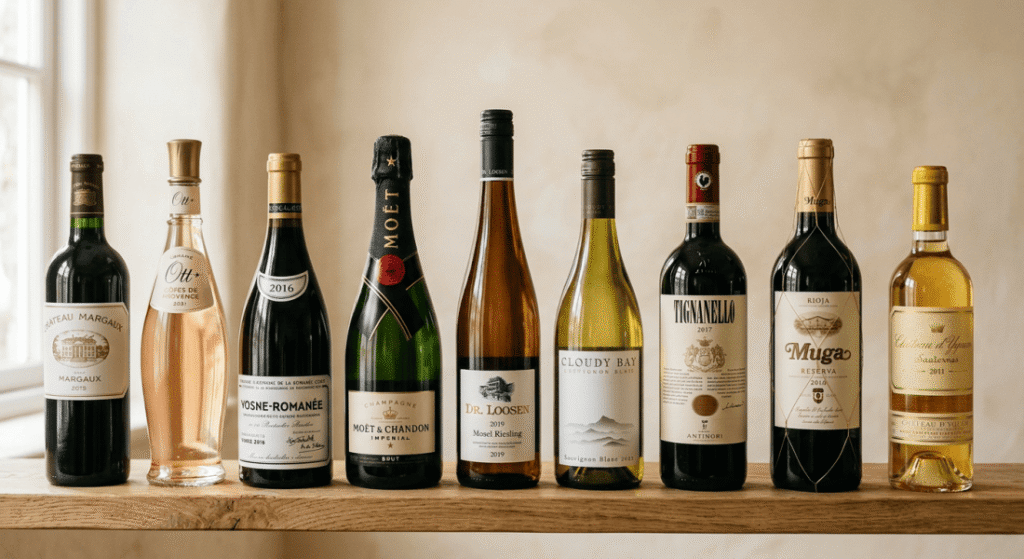
Why Choose Smilebottles as Your Wine Bottle Supplier
At Smilebottles, we have been helping wineries, private label brands, and beverage companies for years. We are more than a factory. We are your partner for finding the right bottle for your product.
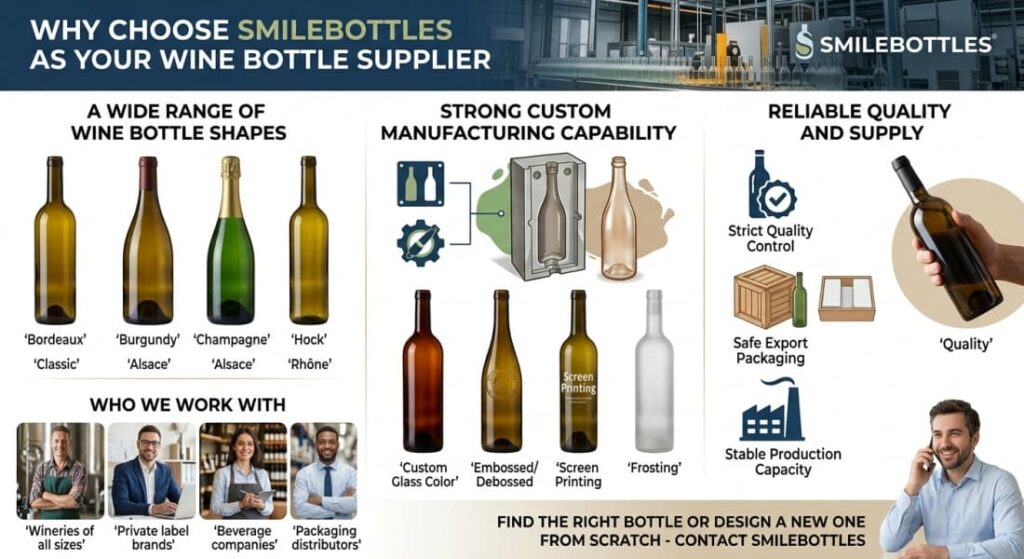
A Wide Range of Wine Bottle Shapes
We produce all the classic bottle styles, including:
Bordeaux
Burgundy
Champagne
Hock
Alsace
Rhône
Custom and unique designs
Whether you need standard shapes or custom wine bottles with your own mold, we can support you.
Strong Custom Manufacturing Capability
As a professional glass wine bottle supplier, we help you with:
New bottle mold development
Custom glass color
Embossing and debossing
Screen printing and frosting
Multiple capacities and finishes
If you have an idea, we can help turn it into a real bottle.
Reliable Quality and Supply
When you order wholesale wine bottles or bulk wine bottles, you need a factory you can count on. We focus on:
Stable production capacity
Strict quality control
Safe export packaging
Years of overseas shipping experience
Support for both small trial orders and large bulk orders
Who We Work With
Our clients include:
Wineries of all sizes
Private label brands
Beverage companies
Packaging distributors
If any of this sounds like you, feel free to reach out. We are happy to help you find the right bottle, or design a new one from scratch.
FAQ: Frequently Asked Questions About
About Wine Bottle Shapes
Here are some common questions buyers ask us at Smilebottles.
Q1:What is the most common wine bottle shape?
A1:The Bordeaux bottle is the most common shape worldwide. You will find it in almost every wine shop.
Q2:Why do wine bottles come in different shapes?
A2:The reasons include tradition, region, function, branding, and the type of wine inside. Each shape developed for a real reason, not just for looks.
Q3:What bottle shape is used for Pinot Noir?
A3:Pinot Noir is almost always bottled in a Burgundy-shaped bottle with sloping shoulders.
Q4:What is the difference between Bordeaux and Burgundy bottles?
A4:Bordeaux bottles have high, sharp shoulders. Burgundy bottles have soft, sloping shoulders and a wider body.
Q5:Why are Champagne bottles thicker?
A5:Because sparkling wines create high internal pressure. The bottle needs to be strong enough to hold it safely.
Q6:What is a Hock bottle?
A6:A Hock bottle is a tall, slender bottle traditionally used for German wines like Riesling.
Q7:Are bottle shape and bottle size the same thing?
A7:No. Shape refers to the form of the bottle. Size refers to the volume, such as 375ml, 750ml, or 1.5L.
Q8:Can I customize a wine bottle shape for my brand?
A8:Yes. With a custom mold and decoration options, you can create a completely unique bottle. Just keep in mind the mold cost and minimum order quantity.
Conclusion
Choosing the right bottle is one of the most important decisions you will make as a wine brand. The right wine bottle shape communicates your story, protects your wine, and helps you win on the shelf. Whether you go with a classic Bordeaux, a graceful Burgundy, a strong Champagne bottle, or a fully custom design, the shape you pick shapes how customers see your brand.
If you are still not sure which style fits your product, that is exactly where we come in. As an experienced wine bottle manufacturer, Smilebottles can guide you through the whole process, from picking a standard shape to building your own custom mold.
Reach out anytime. We would love to help you find the perfect bottle for your next project.
 English