
Table of Contents
ToggleAuthor: SmileBottles Editorial Team
Estimated Reading Time: About 15 Minute
If you’ve ever picked up a bottle of wine, a jar of honey, or a small vial of perfume, you’ve probably held glass in your hands without giving much thought to what it actually is. For something so common, glass has a surprisingly interesting story — and if you’re sourcing packaging for your brand, understanding that story matters more than you might think.
This guide walks you through what glass bottles are made of, how they’re produced, what makes them useful, and which types work best for different products. Whether you run a small cosmetic line, a beverage company, or a pharmacy brand, this article will help you make smarter packaging decisions.
Here’s the short version if you’re in a hurry: glass bottles are mainly made from silica sand, soda ash, and limestone, along with recycled glass called cullet. These raw materials are melted at very high temperatures, formed into shape, cooled slowly, and inspected before being shipped out to fill your products.
Now let’s get into the details.
Essential Glass Bottle Manufacturing Terms You Should Know
Before we dig into materials and processes, it helps to know a few words that come up often in the industry. You’ll see these terms on spec sheets, in factory conversations, and in supplier quotes.
Batch — the mixture of raw materials prepared before melting.
Cullet — crushed recycled glass added into the batch. Cullet in glass manufacturing plays a big role in reducing energy use.
Gob — a measured drop of molten glass used to form each bottle.
Annealing — a slow, controlled cooling process that removes internal stress from the glass.
Mold — the tool that shapes the bottle.
Neck finish — the top portion of the bottle where the cap, cork, or pump attaches.
Flint glass — the industry name for clear glass.
Amber glass — brown-toned glass that blocks UV light.
Container glass — glass produced specifically for bottles and jars.
Blow-and-blow process — a forming method commonly used for narrow-neck bottles like beer bottles.
Press-and-blow process — a forming method used for wide-mouth jars and some bottles.
IS machine — short for Individual Section machine, the workhorse of most glass bottle factories.
Once you know these words, reading supplier documents becomes much easier.
What Raw Materials Are Glass Bottles Made From?
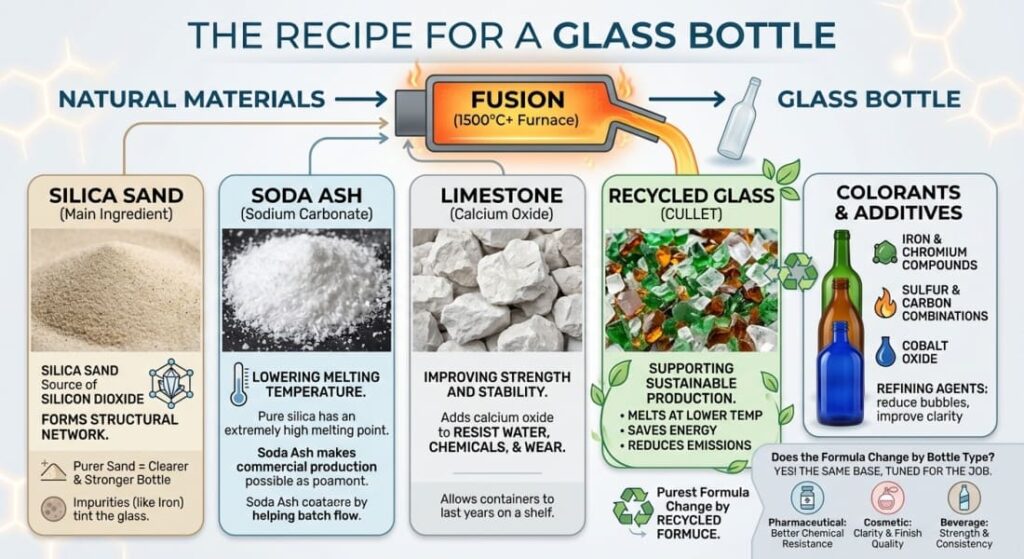
So, what is glass made of? At its core, the glass for bottle production comes from a handful of natural materials that have been used for centuries. The recipe hasn’t changed much, but modern factories are far more precise about ratios and purity.
Silica Sand: The Main Ingredient
Silica sand makes up the largest portion of the batch. It’s the source of silicon dioxide, which forms the actual structural network of glass. The purer the sand, the clearer and stronger the finished bottle. This is why factories are picky about where they source their sand — impurities like iron will tint the glass and affect appearance.
Soda Ash: Lowering the Melting Temperature
Pure silica melts at extremely high temperatures, which would make bottle production impossibly expensive. Soda ash (sodium carbonate) brings that melting point down and helps the batch flow more easily inside the furnace. Without it, glass manufacturing on a commercial scale simply wouldn’t work.
Limestone: Improving Strength and Stability
Limestone adds calcium oxide to the mix. It helps the finished bottle resist water, chemicals, and general wear. If you’ve ever wondered why glass containers can sit on a shelf for years without breaking down, limestone deserves some of the credit.
Recycled Glass (Cullet): Supporting Sustainable Production
Cullet is crushed recycled glass added back into the batch. Most modern factories use a significant percentage of cullet because it melts at a lower temperature than raw materials, which saves energy and reduces emissions. If sustainability matters to your brand — and for most buyers today, it does — asking your glass bottle supplier about their cullet ratio is a smart question.
Additional Ingredients and Colorants
Colors don’t come from paint. They come from small amounts of metal oxides or compounds added to the batch:
Iron and chromium compounds create green glass bottles.
Sulfur and carbon combinations produce amber glass bottles.
Cobalt oxide gives blue glass bottles their rich color.
Clear (flint) glass uses decolorizing agents to remove natural tints.
Refining agents are also added to reduce bubbles and improve clarity.
Does the Formula Change by Bottle Type?
Yes, and this is where things get practical. Pharmaceutical glass bottles often use a slightly different formulation with better chemical resistance. Cosmetic glass bottles may focus on clarity and finish quality. Beverage glass bottles are optimized for strength and consistency across large production runs. So when someone asks what a glass bottle is made of, the honest answer is: mostly the same base, tuned for the job.
How Are Glass Bottles Manufactured? Step-by-Step Process
If you’ve ever wondered how glass bottles are made or where glass bottles come from, this section walks through the full journey. Understanding the glass bottle manufacturing process helps you ask better questions when comparing suppliers.
1. Raw Material Batching and Mixing
Everything starts with weighing. Silica sand, soda ash, limestone, cullet, and any colorants are measured carefully and blended into a consistent batch. Precision matters here — even small ratio changes affect the final bottle.
2. Melting the Glass in the Furnace
The batch is fed into a furnace that runs around 1500°C. Over many hours, it turns into a smooth pool of molten glass. Furnaces run continuously, day and night, because reheating them from cold is extremely expensive.
3. Conditioning and Forming the Glass Gob
Once molten, the glass flows out and gets cut into gobs — small, uniform drops sized for each bottle. The temperature has to be exactly right. Too hot, and the glass sags. Too cool, and it won’t form properly.
4. Bottle Forming: Blow-and-Blow or Press-and-Blow
The gob drops into a mold, and this is where the shape happens. The blow-and-blow method is common for narrow bottles like a beer bottle or wine bottle. The press-and-blow method suits wide-mouth containers. Both methods are done on IS machines, which can produce thousands of bottles per hour.
5. Annealing: Removing Internal Stress
Freshly formed bottles are extremely stressed inside from the rapid temperature change. If they cooled naturally, most would crack. The annealing lehr is a long oven that slowly reduces the temperature in a controlled way, letting the glass relax.
6. Surface Treatment and Coating
Hot-end and cold-end coatings are applied to improve scratch resistance and make bottles easier to handle on high-speed filling lines. You won’t see these coatings, but you’d notice their absence — bottles would scuff, stick, and break far more often.
7. Inspection and Quality Control
Every bottle passes through checks for cracks, bubbles, dimensional errors, and finish defects. Automated cameras and pressure tests handle most of the work, with manual spot checks in between.
8. Packaging and Delivery
Approved bottles are palletized, wrapped, and prepared for shipment. For export orders, extra care goes into protection since bottles may travel across oceans before reaching your filling line.
That’s how glass bottles are manufactured from raw sand to finished packaging. The glass bottle production process is highly repeatable, which is why quality is so consistent when you work with a good factory.
Key Properties of Glass Bottles
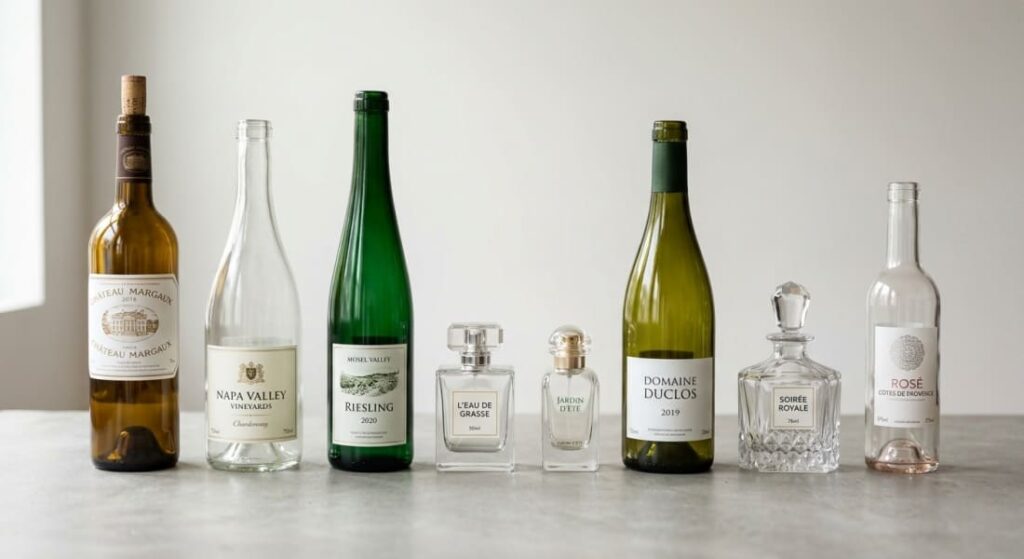
The properties of glass bottles are a big reason they’ve stayed relevant for thousands of years, even as new materials have come and gone. Here’s what makes glass bottle properties stand out.
Transparency and Premium Appearance
Glass has a clarity that plastic simply can’t match. When your product sits on a shelf, a clear glass bottle lets the customer see exactly what they’re buying — the color of a juice, the shine of an oil, the layers of a sauce.
Chemical Resistance and Product Safety
Glass is non-reactive. It doesn’t leach chemicals into your product, and your product doesn’t degrade the container. That’s why food grade glass bottles are trusted for so many applications, from baby food to specialty vinegars.
Excellent Barrier Performance
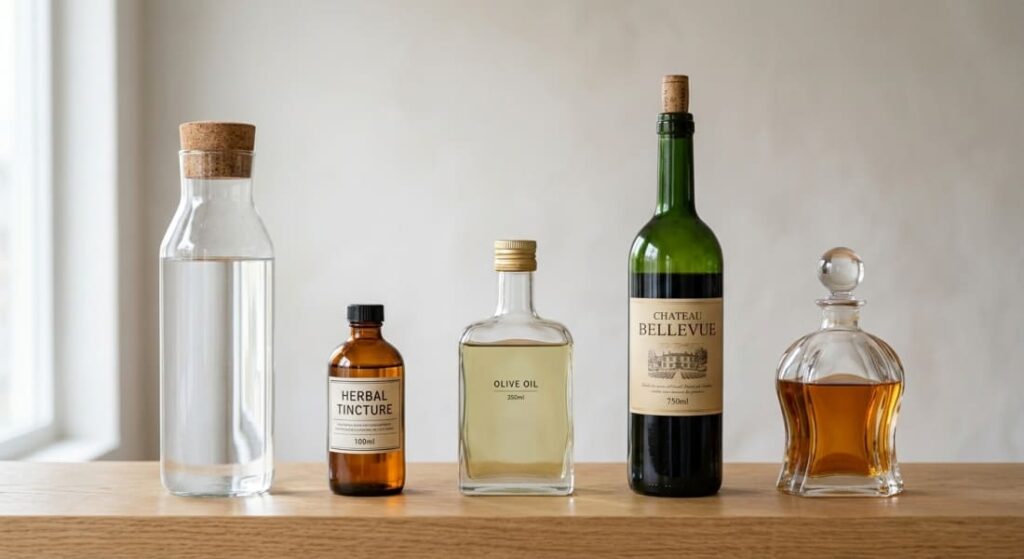
Glass doesn’t absorb odors or flavors. A bottle used for olive oil today would work just as well for water tomorrow (assuming it’s cleaned properly). This is one of the properties of a glass bottle that plastic can never fully replicate.
Heat Resistance and Thermal Stability
Glass handles heat well, which matters for hot-fill products, pasteurization, and sterilization. Just keep in mind that not every bottle is designed for every temperature — always confirm specs with your supplier.
Recyclability and Sustainability
Are glass bottles recyclable? Yes — and more importantly, they’re endlessly recyclable. Unlike plastic, which degrades each time it’s recycled, glass can be melted down and reformed without losing quality. Recyclable glass bottles are one of the reasons many brands are switching from plastic packaging.
Weight, Fragility, and Handling Considerations
To be fair, glass has trade-offs. It’s heavier than plastic, which raises shipping costs. And it can break if mishandled. So when you’re planning your logistics, factor in protective packaging and realistic breakage rates. These are real properties of glass bottle usage that any buyer should understand upfront.
The advantages of glass bottles usually outweigh the downsides, but knowing both sides helps you plan better.
Glass Bottles vs Plastic Bottles: What’s the Difference?
A lot of buyers ask: are glass bottles better than plastic? The honest answer is — it depends on your product and your priorities.
When comparing glass bottles vs plastic bottles, glass wins on:
Purity and taste preservation
Premium look and feel
Recyclability and long-term sustainability
Chemical stability
Perceived quality on the shelf
Plastic wins on:
Lower weight
Lower shipping costs
Impact resistance
Lower unit cost for basic packaging
For premium products — spirits, cosmetics, health supplements, artisanal foods — glass is almost always the better choice. For mass-market beverages where cost dominates, plastic still holds a large share. Your decision comes down to brand positioning, product needs, and budget.
Different Types of Glass Bottles and Their Common Uses
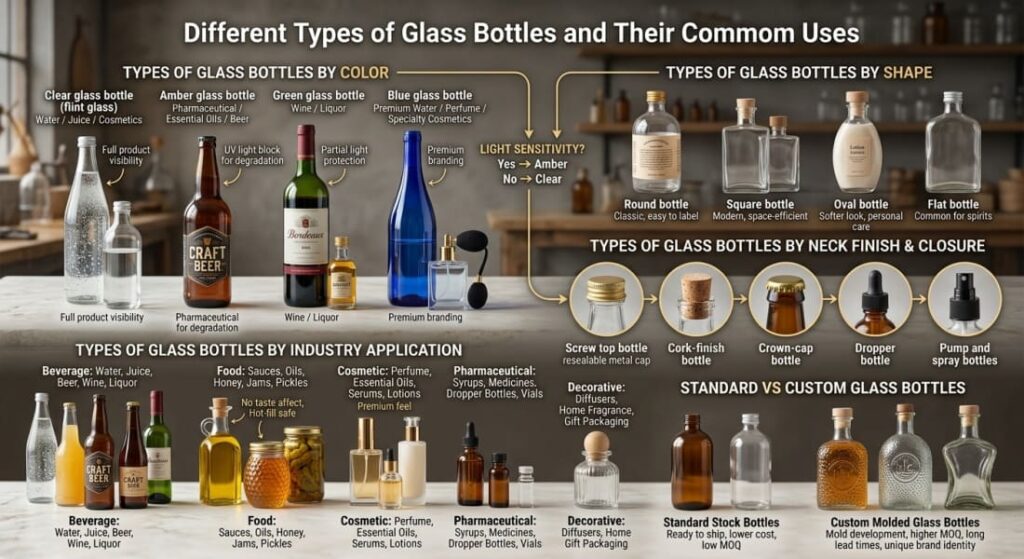
There isn’t one single kind of glass bottle. The types of glass bottles you can source vary by color, shape, closure, and purpose. Understanding these categories helps you match packaging to product.
Types of Glass Bottles by Color
Clear glass bottles (flint glass bottles) — Best when you want full product visibility. Common for water glass bottles, juice glass bottles, and cosmetic packaging.
Amber glass bottles — The brown color blocks UV light, which is why amber is the go-to for pharmaceutical glass bottles, essential oil glass bottles, and beer bottles.
Green glass bottles — Traditionally used for wine glass bottles and some liquor glass bottles. Offers partial light protection.
Blue glass bottles — Popular for premium water, perfume glass bottles, and specialty cosmetics.
If you’re stuck between amber vs clear glass bottles, think about your product’s light sensitivity. Anything that degrades under sunlight — oils, medicines, some beers — needs amber. Everything else is fair game for clear.
Types of Glass Bottles by Shape
Glass bottle shapes matter for branding, shelf presence, and practical filling. Common options include:
Round glass bottles — the classic, easy to produce and label
Square glass bottles — modern, space-efficient on shelves
Oval bottles — softer look, often used in personal care
Flat bottles — common for spirits
Custom shaped glass bottles — for brands wanting something unique
Types of Glass Bottles by Neck Finish and Closure
The neck finish decides what closure fits. You’ll usually choose from:
Screw top glass bottles — practical, resealable, widely used
Cork-finish bottles — traditional look for wine and premium spirits
Crown-cap bottles — the standard for beer
Dropper bottles — for essential oils and serums
Pump and spray bottles — common in cosmetics
Types of Glass Bottles by Industry Application
This is where the function of a glass bottle becomes very specific.
Beverage glass bottles cover water glass bottles, juice glass bottles, beer glass bottles, wine glass bottles, and liquor glass bottles. If you’re producing any alcohol bottle — whether it’s a liqueur bottle or a craft spirit — glass is the industry standard.
Food glass bottles and jars hold sauces, oils, honey, jams, and pickles. Glass bottles for food packaging are trusted because they don’t affect taste and they handle hot-fill processes well.
Cosmetic glass bottles include perfume glass bottles, essential oil glass bottles, serums, and lotions. Glass bottles for cosmetics give products a premium feel that plastic often can’t match.
Pharmaceutical glass bottles cover syrups, medicines, dropper bottles, and vials. Amber is dominant here because of light protection requirements.
Decorative glass bottles are used for diffusers, home fragrance, and gift packaging. These often feature custom shapes and finishes.
Standard vs Custom Glass Bottles
Standard stock bottles are ready to ship, cost less, and have low or no minimum order requirements. Custom glass bottles require mold development, higher MOQs, and longer lead times — but they give your brand something no competitor can copy. Custom molded glass bottles are worth the investment when your packaging is part of your brand identity.
How to Choose the Right Glass Bottle for Your Product
With so many glass bottle types available, choosing the right one can feel overwhelming. Here’s a practical way to work through it.
Start With Your Product Type
Different products have different needs. A cosmetic serum needs a dropper. A craft beer needs a crown cap. A premium olive oil needs a specific pour rate. Start with function, not aesthetics.
Think About Capacity and Dimensions
Your filling line has physical constraints. Bottle height, base diameter, and neck size all matter. If you’re just starting out, ask your filler what dimensions they can handle before you fall in love with a bottle.
Choose the Right Color
Match color to product needs. UV-sensitive products need amber or green. Products where visual appeal matters (juices, sauces, colored spirits) usually go clear.
Match the Finish to the Closure
The neck finish must match your cap, cork, pump, or dropper. This sounds obvious, but mismatched finishes are one of the most common problems for new buyers. Confirm this early with your supplier.
Consider Transportation and Durability
If you’re shipping internationally, weight and breakage matter. Lightweight designs save on freight but may need thicker packaging. Heavier bottles feel premium but cost more to move.
Standard or Custom?
If you’re launching quickly and want to test the market, wholesale glass bottles or bulk glass bottles from a stock catalog are the fastest path. If you’re building a long-term brand, custom shapes give you a real edge. Many buyers start with empty glass bottles wholesale for their first run and move to custom molds once volumes justify it.
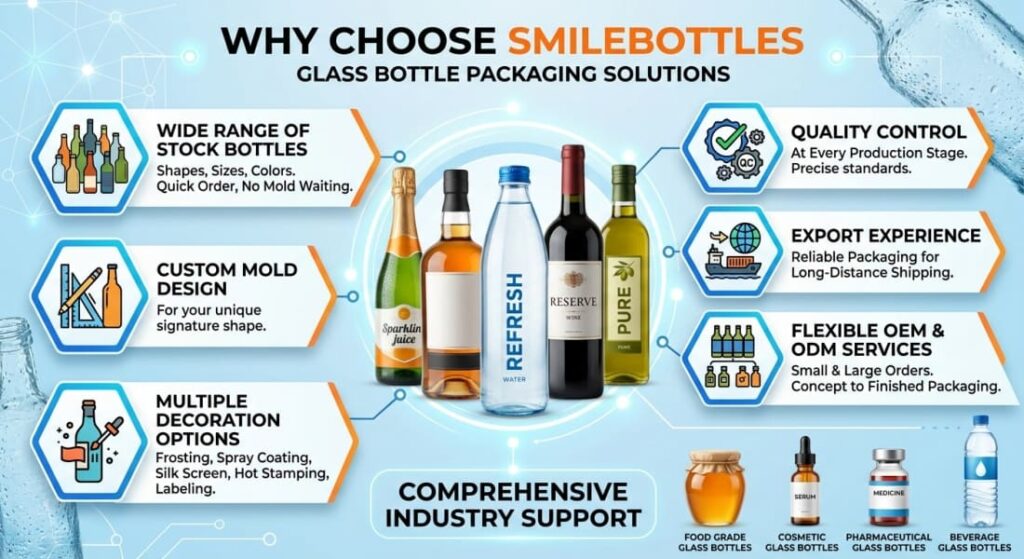
Why Choose Smilebottles for Glass Bottle Packaging Solutions
As a glass bottle manufacturer, Smilebottles works with brands across beverages, cosmetics, food, and pharmaceuticals. Here’s what we bring to the table:
A wide range of stock bottles in different shapes, sizes, and colors, so you can order without waiting for mold development
Custom mold design for brands that want their own signature shape
Multiple decoration options, including frosting, spray coating, silk screen printing, hot stamping, and labeling
Quality control at every stage of the glass bottle production process
Export experience with reliable packaging for long-distance shipping
Flexible OEM and ODM services for both small and large orders
Support for food grade glass bottles, cosmetic glass bottles, pharmaceutical glass bottles, and beverage glass bottles
As a custom glass bottle manufacturer, we help you go from concept to finished packaging without the guesswork. Whether you need a few pallets or a full container, we can match production to your scale.
FAQ: Frequently Asked Questions About Glass Bottle Materials and Types
Q1:What are glass bottles mainly made of?
A1:Glass bottles are made from silica sand, soda ash, limestone, and recycled glass called cullet. These materials are melted together at very high temperatures and then shaped into bottles.
Q2:Are all glass bottles made from the same materials?
A2:The base recipe is similar, but the exact formula changes based on the bottle’s purpose. Pharmaceutical bottles, for example, may use adjusted formulations for better chemical resistance.
Q3:What is cullet in glass manufacturing?
A3:Cullet is crushed recycled glass added back into the batch. It lowers energy use during melting and reduces the amount of new raw material needed.
Q4:How are glass bottles formed into different shapes?
A4:Molten glass is dropped into molds and formed using either the blow-and-blow or press-and-blow process. Different molds create different shapes, from round to square to fully custom designs.
Q5:What’s the difference between flint, amber, and green glass?
A5:Flint is clear glass with no added color. Amber blocks UV light and protects light-sensitive contents. Green offers partial protection and is common for wine and some beers.
Q6:Which type of glass bottle is best for beverages?
A6:It depends on the drink. Clear glass works for water and juice. Green suits wine. Amber is standard for beer. For spirits, both clear and colored options are common depending on branding.
Conclusion
Glass bottles have stayed relevant for a reason. Made from silica sand, soda ash, limestone, and recycled cullet, they combine natural materials with a manufacturing process that’s been refined for over a century. They protect what’s inside, look great on shelves, and can be recycled again and again.
Whether you’re choosing between amber and clear, deciding on stock or custom, or comparing glass with plastic, the right choice always comes back to your product and your brand. If you need help finding the right packaging — from standard shapes to fully custom molds — Smilebottles is here to help you get it right the first time.