



Table of Contents
ToggleAuthor: SmileBottles Editorial Team
Estimated Reading Time: About 16 Minutes
You have put immense effort into sourcing the finest olives for your extra virgin olive oil or distilling the purest botanical extracts for your essential oil line. However, the journey doesn’t end with extraction. The vessel you choose to house your liquid gold is just as critical as the product itself. Whether you are a brand owner looking for oil storage solutions for retail or a bulk buyer seeking the best container for storing oil, understanding the science of packaging is non-negotiable.
In this guide, we will explore why the material and volume of your bottle matter, compare the various containers for oil and vinegar, and explain why Smilebottles is your ideal partner for premium glass packaging.
Introduction: Why the Right Bottle Matters for Your Oils
When you browse the shelves of a high-end gourmet shop or a boutique spa, what catches your eye? It is almost always the packaging. But beyond aesthetics, the bottle for oil plays a functional role that directly impacts quality, shelf life, and user experience.
Oils—whether they are edible cooking oils like olive, vegetable, and seed oils, or volatile essential oils for aromatherapy—are chemically fragile. Placing them in the wrong oil container storage can lead to off-flavors, loss of therapeutic properties, and even safety issues.
This article will guide you through the pros and cons of plastic, steel, and glass, and demonstrate why glass oil bottles are the superior choice. As a professional manufacturer, Smilebottles specializes in crafting high-quality glass bottles for oils, supporting OEM/ODM services to help your brand stand out with custom shapes, volumes, and colors.
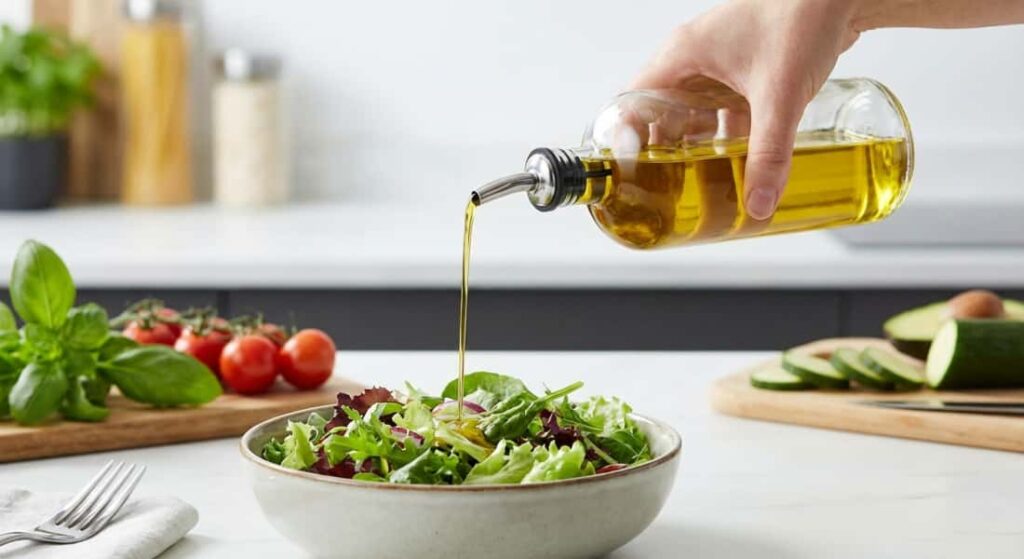
Why Proper Oil Storage Is So Important
You might wonder, does the container really make that much of a difference? The short answer is yes. Improper storage accelerates degradation, turning a premium product into a liability.
Preventing Harmful Oxidative Rancidity
To understand storage, you must understand the enemy. What causes oil to go rancid? Rancidity is a chemical reaction that occurs when oil molecules react with oxygen. This process breaks down fatty acids, producing unpleasant smells and bitter tastes.
For cooking oils, this means your nutritional quality drops—specifically the antioxidants in cold-pressed oils. For essential oils, oxidation changes the fragrance profile, rendering the oil useless for aromatherapy and potentially irritating to the skin. Choosing an airtight container for cooking oil or essential oil is your first line of defense.
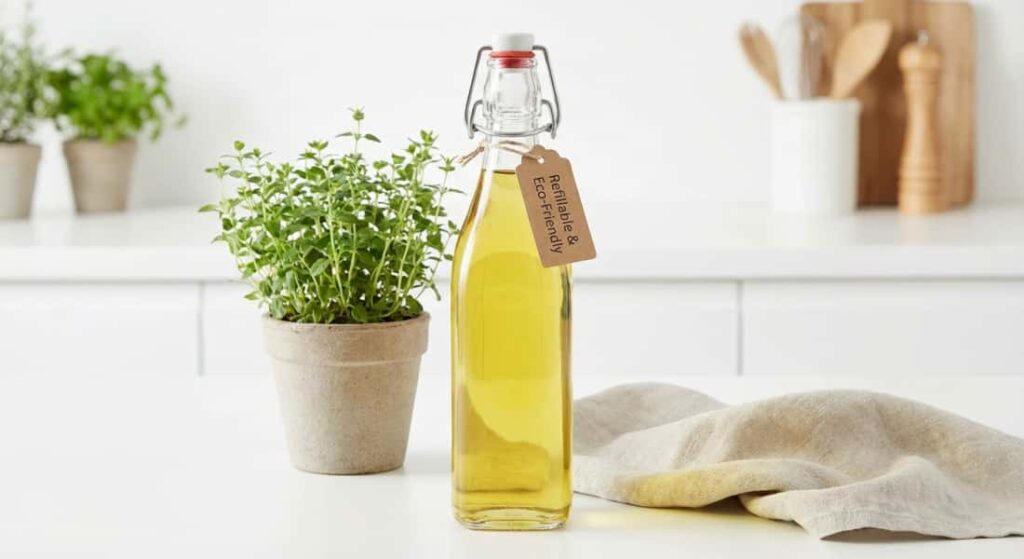
What Actually Destroys Your Oil? Main Enemies
To select the best container to store olive oil or aromatics, you need to protect them from four main environmental factors.
Light (Especially UV and Strong Sunlight)
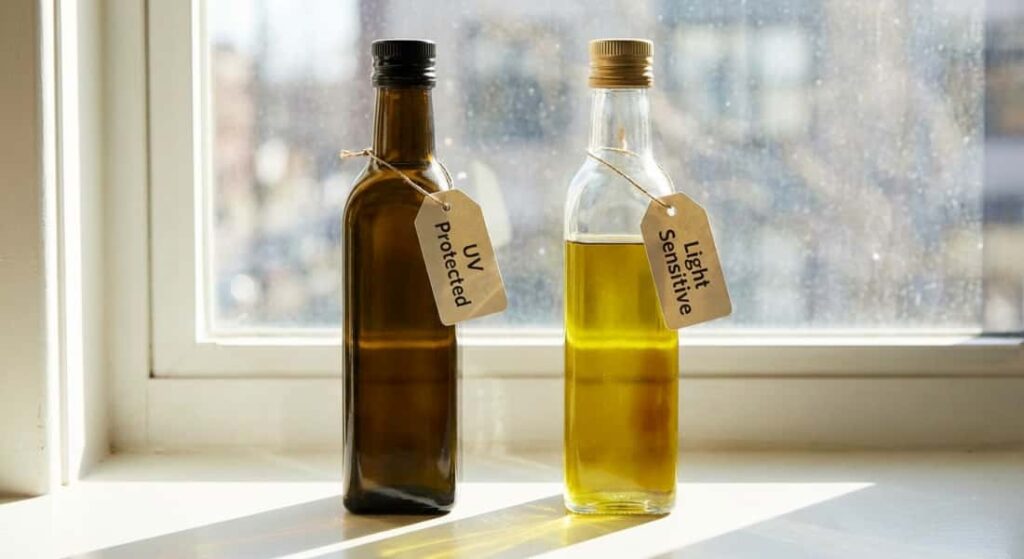
Light is a catalyst for oxidation. Just a few days of exposure to strong sunlight can ruin a batch of extra virgin olive oil. This is why you rarely see high-quality oils in clear plastic containers for oil options on the shelf.
Cooking Oils: Delicate oils like flaxseed and walnut are extremely light-sensitive.
Essential Oils: These are even more volatile. This is why amber glass essential oil bottles are the industry standard—they block specific wavelengths of UV light that degrade the oil.
Oxygen Exposure
Oxygen is the primary cause of spoilage. Air enters your container of oil through the headspace (the empty space above the liquid) every time you open the cap. If you use a permeable material, oxygen can even pass through the walls of the container over time. Minimizing this exposure is why glass oil bottles with precision closures are vital.
Heat and Temperature Fluctuations
High temperatures accelerate chemical reactions. Keeping a cooking oil storage canister next to the stove or oven is a common mistake. Ideally, oils should be kept in a cool, stable environment. For essential oils, heat can cause rapid evaporation of top notes, destroying the complexity of the scent.
Moisture and Hydrolysis
When moisture mixes with oil, it causes hydrolytic rancidity. This can happen if you refill a kitchen oil dispenser glass without drying it thoroughly, or if steam enters the bottle. A specialized oil safe container ensures moisture is kept out.
Types of Oil Containers: Glass vs. Plastic vs. Steel
When sourcing packaging, you generally have three options. Let’s compare them to see which is truly the best container for cooking oil.
Glass Oil Bottles
Glass is widely regarded as the gold standard.
Chemically Inert: Glass does not react with the oil. There is no leaching of chemicals, ensuring a glass container for cooking oil preserves the pure taste of your product.
Impermeability: It provides an absolute barrier to gases and moisture.
Aesthetics: A glass oil bottle with stopper looks premium on a dining table or vanity.
Sustainability: Glass is 100% recyclable.
Plastic Containers for Oil
While you will often see a large 5 quart oil jug or a 5 gallon oil container made of plastic for industrial kitchens, it is not ideal for long-term retail storage of premium oils.
The Risk: Many plastics are permeable to oxygen. Furthermore, an oil container plastic variant can leach chemicals (like plasticizers) into the oil, especially if the oil is acidic or stored in a hot environment.
Essential Oils: Never store pure essential oils in standard plastic. The potent compounds will dissolve the petrochemicals in the plastic, ruining both the container and the oil.
Stainless Steel and Metal Containers
A stainless steel container for oil or a metal oil container is durable and blocks 100% of light. You might see a silver oil container used for bulk transport.
Pros: Durable and light-proof.
Cons: You cannot see the volume inside. Unless it is high-grade stainless steel, there is a risk of metallic reactivity. Retail presentation is often less attractive than glass. A generic cooking oil storage can made of tin is common for cheaper oils but lacks the premium feel of glass.
Key Factors to Consider When Choosing an Oil Container
As a buyer, you need to evaluate several specs before placing a bulk order.
Material Safety, Inertness, and Purity
Whether you are bottling edible oil or cosmetics, safety is paramount. Glass is free from BPA and hazardous chemicals. For essential oils, glass is the only material that guarantees zero chemical migration, making it the best bottles for essential oils.
UV Barrier and Light Protection
Dark Glass: For essential oils and EVOO (Extra Virgin Olive Oil), you should opt for dark glass bottle for olive oil (usually antique green or amber) or cobalt blue for essential oils.
Clear Glass: If you are selling a fast-moving vegetable oil or a visually stunning infused oil with herbs, a clear glass for oil allows the customer to appreciate the product’s color.
Airtight Seal and Exposure to Air
The closure is just as important as the bottle. You need a system that prevents leaks during shipping and keeps air out.
Closures: Options range from screw caps and oil cans with spout attachments to droppers.
Fit: At Smilebottles, we ensure precise neck finishes so your cap creates a perfect seal.
Precision Pouring and Drip Control
Your customers hate messy, oily counters.
Cooking Oil: Look for an oil dispenser bottle equipped with a pour spout that cuts the flow cleanly. An automatic oil dispenser or a gravity-flip cap is also a popular trend.
Essential Oil: You need precision. Roll on oil bottles are great for direct skin application, while orifice reducers allow for drop-by-drop usage.
Volume Efficiency and Capacity
Choosing the right size is a balance between convenience and freshness.
Small Volumes: A 16 oz oil bottle (approx 500ml) or small bottles for oil (250ml) are perfect for premium olive oils because the user finishes them before the oil oxidizes.
Large Volumes: A cooking oil storage can or larger glass jugs (1L+) serve families well.
Essential Oils: Standard essential oil bottle sizes range from 5ml to 30ml because the product is highly concentrated.
Ease of Cleaning and Durability
If you are selling reusable oil holders or cruets, consumers want to be able to clean them. A wide-mouth oil tub or jar is easier to clean than a narrow neck, but a narrow neck offers better air protection. Glass is durable enough for the dishwasher, unlike many plastics.
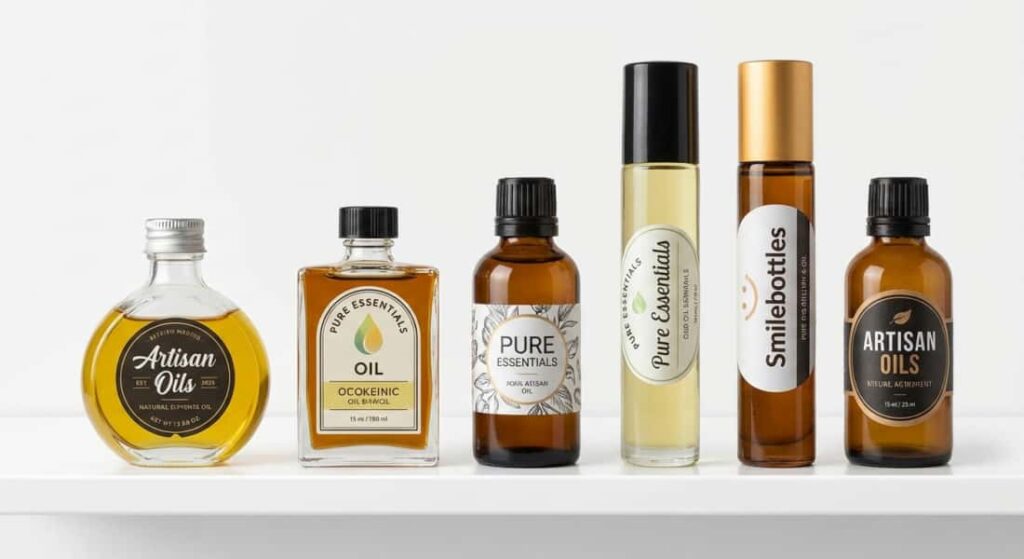
Why Glass Bottles Are the Best Choice for Storing Oils
Excellent Barrier and Protection
Glass is non-porous. Unlike a plastic container for oil, a glass bottle ensures that no oxygen seeps in and no essential aromas seep out. This makes it the definitive best container for olive oil.
Zero Chemical Migration and Pure Taste
When you store oil in a ceramic oil cruet (if unglazed inside) or low-quality metal, you risk altering the flavor. Glass ensures that the oil tastes exactly as it did the day it was pressed.
Sustainability and Eco-Friendly Image
Modern consumers are moving away from the disposable oil box or plastic jug. They prefer glass bottle storage because it is reusable and endlessly recyclable, aligning your brand with eco-conscious values.
How to Choose the Right Glass Bottle for Different Oils
Different oils have different needs. Here is how to match the bottle to the product.
Cooking Oils (Olive Oil, Vegetable Oil, Seed Oils)
For high-quality olive oil, protection is key.
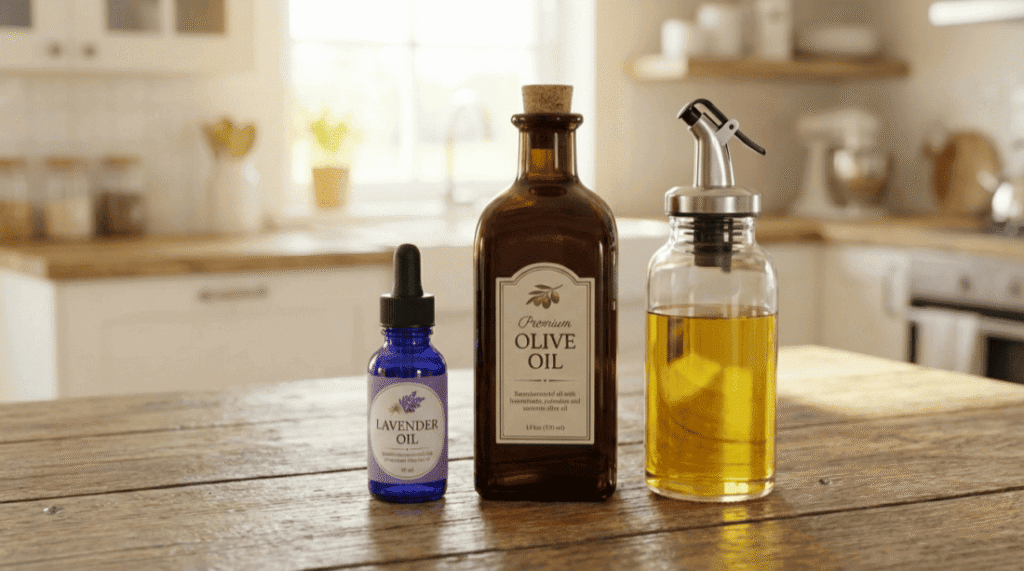
The Bottle: Choose an olive oil glass bottle in Marasca or Dorica shape. Dark green or amber is preferred to filter UV light.
The Pour: An oil cruet glass design with a flow-control spout enhances the cooking experience.
Design: Some brands emulate the oxo good grips precision pour glass oil dispenser style, which focuses on ergonomics and non-slip features.
Essential Oils and Aromatherapy Oils
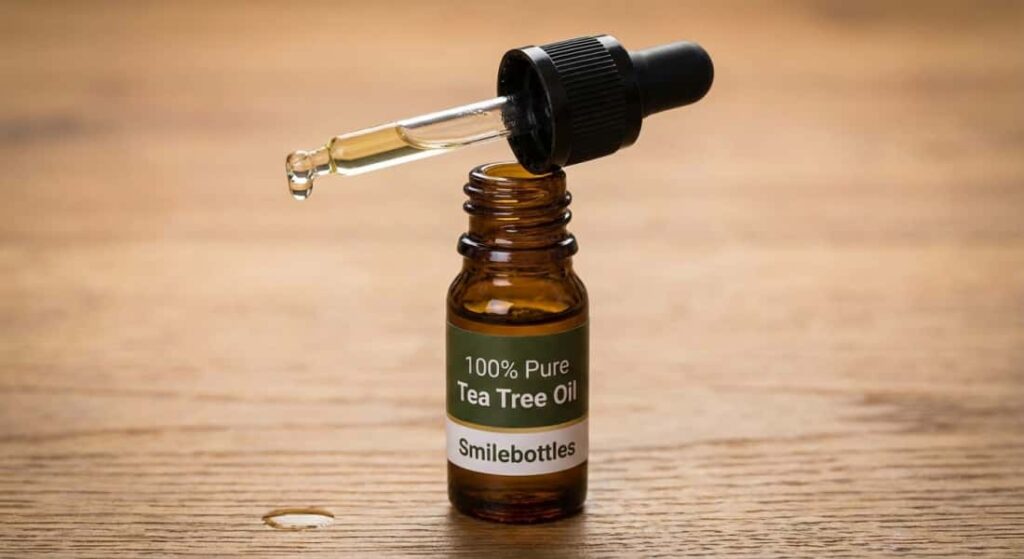
Material: You must use essential oil glass bottles. Amber is the most common, but blue and violet glass are also popular for branding.
Closures: For massage blends, roll on oil bottles are excellent. For pure diffusers oils, standard Euro-dropper caps are required.
Source: As a specialized essential oil bottle manufacturer, Smilebottles offers these in precise DIN standard sizes to ensure cap compatibility.
Used Cooking Oil (Consumer Tips)
While we sell new bottles, your customers often ask: how do you store used peanut oil or frying oil?
Advise them to cool the oil, filter it through an oil strainer container, and store it in a dedicated used cooking oil container.
A grease containers (often ceramic or metal with a strainer) is better than putting hot oil back into a plastic bottle.
Used cooking oil storage containers should be kept in the fridge to extend the life of the fat.
Practical Tips for Storing Oils in Glass Bottles
Educating your customers on how to store essential oils and cooking oils adds value to your brand.
Keep Oils in a Cool, Dark Place
Whether it is a container oil storage unit or a single bottle, keep it away from the stove. A dark pantry is better than a windowsill.
Use Within a Reasonable Time
Encourage customers to buy the right size. Small bottles for oil are better for walnut oil, which spoils fast. If they buy a bulk cooking oil storage can, suggest they decant it into a smaller kitchen oil dispenser glass for daily use to keep the main supply fresh.
Avoid Cross-Contamination
Never mix new oil with old oil in the same oil in container. The rancid compounds in the old oil will immediately spoil the fresh batch. Always wash the glass containers for olive oil thoroughly between refills.
Why Smilebottles Is Your Best Partner for Glass Oil Packaging
Finding a reliable supplier is difficult. Smilebottles simplifies the process.
Wide Range of Glass Oil Bottles
We offer a vast inventory of oil storage containers. From the classic 250ml olive oil glass bottle to sophisticated essential oil storage bottles in amber and blue, we have the molds ready for production.
Customization to Fit Your Brand
Do you want a unique shape that rivals the popular Oxo Good Grips Precision Pour Glass Oil Dispenser? Or perhaps a custom oil dispenser with an automatic cap fitting? We support custom mold development, logo embossing, and color spraying. Your glass oil bottles will be unique to your brand.
Quality Control and Global Service
We understand that a bottle for oil needs to run smoothly on your filling line. Our strict quality control ensures consistent dimensions, preventing breakage and stoppages. Whether you need a container for a ceramic oil cruet set or bulk industrial glass, we handle export logistics seamlessly.
FAQ About Glass Oil Containers
Q1: What is the single best container for olive oil?
A2: A dark-tinted (amber or green) glass bottle with an airtight pour spout is widely considered the best option to preserve flavor and antioxidants.
Q2: Do I really need amber glass essential oil bottles?
A2: Yes. Clear glass offers no UV protection. For essential oils to maintain their therapeutic grade, colored glass is essential.
Q3: Is a stainless steel container for oil better than a glass?
A3: Steel blocks light well, but you cannot see the oil level, and it lacks the premium shelf appeal of glass. For retail, glass is generally preferred.
Q4: How do you store used peanut oil safely?
A4: Filter it to remove food particles using an oil strainer container, place it in a sealed jar, and refrigerate it.
Q5: Can Smilebottles produce a custom 16 oz oil bottle?
A5: Absolutely. We can customize the shape, neck finish, and decoration of any 16 oz (approx 500ml) bottle to fit your brand guidelines.
Final Thoughts
The enemies of oil—light, oxygen, heat, and moisture—are relentless. But with the right packaging strategy, you can win the battle against rancidity. While a plastic container for oil might save pennies upfront, it costs you in product quality and brand reputation. Glass offers the perfect triad of benefits: absolute impermeability, chemical purity, and premium aesthetics. Whether you are bottling extra virgin olive oil or therapeutic lavender oil, glass oil bottles are the professional choice. Smilebottles is here to support your growth with high-quality, customizable glass packaging solutions. Don’t settle for generic containers. Contact us today to find the perfect glass container for cooking oil or essential oil and give your product the home it deserves.


