


Table of Contents
ToggleAuthor: SmileBottles Editorial Team
Estimated Reading Time: About 17 Minutes
If you are reading this guide, you are likely in the process of sourcing packaging for your brand and trying to figure out exactly where to buy glass bottles. Whether you are launching a new beverage line, expanding your cosmetic brand, or managing procurement for a large-scale food manufacturing company, choosing the right packaging is one of the most important decisions you will make.
Glass remains a top-tier choice across many industries. From beverages and spirits to food, cosmetics, pharmaceuticals, and home fragrances, glass communicates quality. Furthermore, as consumer preferences shift heavily toward eco-friendly options, the demand for sustainable glass packaging has skyrocketed. However, sourcing packaging for a business is very different from buying a few items for personal use. You need a reliable supply chain, consistent quality, and pricing that makes sense for your bottom line. The purpose of this guide is to help you understand the B2B market, show you the different channels available for procurement, teach you how to evaluate a potential partner, and provide practical advice on how to buy glass bottles in bulk. By the end of this article, you will have a clear roadmap to secure the best packaging for your products.
Understanding the B2B Glass Bottle Market
Before you start contacting suppliers, it helps to understand the current state of the B2B glass packaging industry. Knowing what drives the market will help you make better purchasing decisions.
Why Glass Bottles Remain in High Demand
Even with the rise of alternative plastics and metals, glass holds a unique position in the market. First, there is the aspect of recyclable glass bottles. Glass can be recycled endlessly without losing its quality or purity, making it a favorite for brands prioritizing the environment. Second, glass offers a premium appearance that instantly elevates the perceived value of a product. Third, glass boasts unmatched chemical stability. It does not leach chemicals into the product, making it the safest option for consumable goods.
Main Industries That Buy Glass Bottles in Bulk
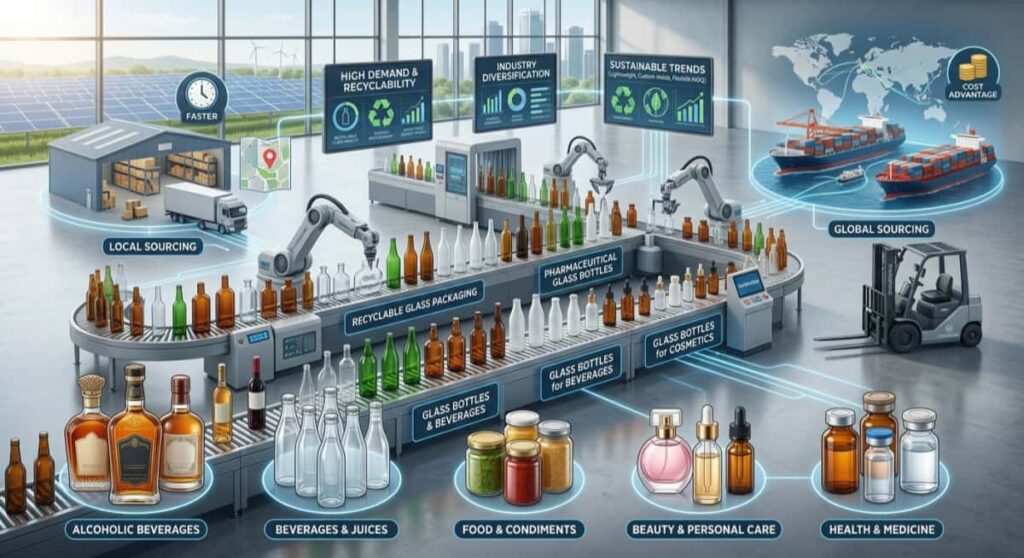
Different industries have completely different requirements for their packaging. The primary sectors driving bulk purchases include:
Alcoholic beverages: Spirits, wine, and beer require durable packaging that protects the liquid and stands out on the shelf.
Soft drinks and juices: The demand for glass bottles for beverages is growing as high-end juice and soda brands move away from plastic.
Food and condiments: Sauces, oils, and syrups rely on glass for food safety and shelf-life preservation.
Beauty and personal care: Glass bottles for cosmetics, perfumes, and essential oils are essential for brand positioning.
Health and medicine: Pharmaceutical glass bottles are strictly regulated and require high chemical resistance (like Type I borosilicate glass).
Home fragrance: Candles and reed diffusers rely heavily on decorative glass.
Current Trends in the Glass Bottle Market
When you look at sustainable packaging trends, several movements are shaping how businesses buy packaging. Manufacturers are developing lightweight glass bottles to reduce shipping costs and lower carbon footprints without sacrificing strength. There is also a massive shift toward personalization, meaning custom glass packaging is more accessible than ever. Flexible manufacturers are beginning to offer smaller Minimum Order Quantities (MOQs), and there is a rising demand for specific colors to protect light-sensitive products.
Global vs Local Sourcing in the Glass Packaging Industry
When sourcing your packaging, you will face the choice of buying domestically or looking overseas. Domestic suppliers usually offer faster communication and shorter delivery times. However, overseas glass bottle manufacturers—particularly in manufacturing hubs like China—offer significant cost advantages, immense production capacity, and much wider customization options. Your decision will depend heavily on your budget, timeline, and order volume.
Key Factors to Consider Before Buying Glass Bottles
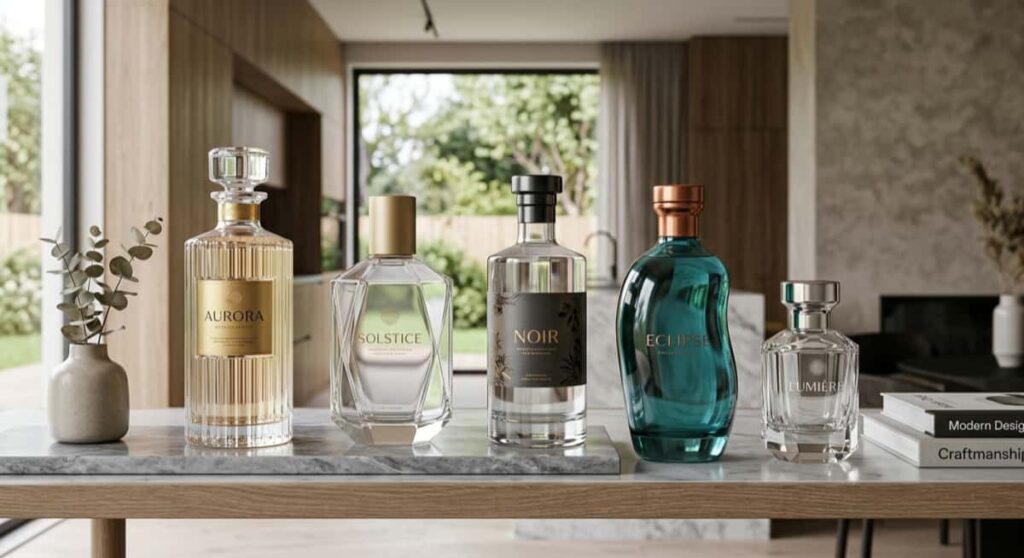
Buying in bulk means you cannot afford to make mistakes. A wrong specification can lead to production delays, leaks, or unsellable products. Here are the practical factors you need to outline before you start your search.
Bottle Type and Intended Application
You first need to define exactly what you are packaging. The types of glass bottles you choose must match the product. Beverage bottles have different pressure requirements than liquor bottles. Sauce bottles need wide mouths, while cosmetic bottles might need specific threading for pump sprayers. Make sure you clearly define your application before contacting a supplier.
Bottle Size, Shape, and Capacity
Glass bottle sizes vary wildly. You can choose from standard industry capacities (like 750ml for wine or 30ml for essential oils) or develop custom sizes. You also need to think about the shape. While a unique shape offers great shelf appeal, you must ensure it is compatible with your factory’s automated filling lines and your carton packing dimensions.
Glass Color and Material Options
The color of your glass is not just about aesthetics; it is about product protection. If you are packaging light-sensitive products like beer, essential oils, or pharmaceuticals, you will likely need amber glass bottles bulk to block UV rays. If you want to show off the clarity of a spirit or cosmetic serum, highly transparent flint glass bottles are the best choice. For a more muted, premium look, frosted glass bottles are incredibly popular in the beauty and liquor industries.
Closure Compatibility
A bottle is useless without the right cap. You must ensure the neck finish of the bottle perfectly matches your intended closure. Common closures include screw caps, cork finishes, crown caps, pump sprayers, droppers, and child-resistant caps. Always ask your supplier for the exact neck finish standard (such as GPI or DIN standards) to avoid leakage issues.
Customization and Branding Needs
To make your product stand out, you might want to look into glass bottle printing. Common decoration methods include silk screen printing, frosting, color spraying, and hot stamping. You can also opt for embossed glass bottles, where your logo is molded directly into the glass itself, offering a highly tactile and premium feel.
Order Quantity and MOQ
Your order volume dictates which suppliers will work with you. Stock bottles usually have lower MOQs, making them great for startups. However, if you want a custom mold, the MOQ will be significantly higher. You need to balance your current cash flow and storage capacity against the volume required by the supplier.
Certifications and Compliance Requirements
If you are packaging anything meant for human consumption or use, compliance is non-negotiable. You must ensure you are buying food grade glass bottles that meet local regulations (such as FDA standards in the US). Suppliers should be able to provide ISO certifications and heavy metal testing reports from third-party agencies like SGS.
Budget, Tooling Cost, and Total Landed Cost
Do not just look at the unit price of the bottle. You need to calculate the total landed cost. This includes the unit price, mold fees (if custom), decoration costs, carton or pallet packaging fees, shipping costs, and import duties or taxes.
Lead Time and Production Capacity
Stock items might ship within days, but custom orders often require a 30 to 45-day production schedule. You also need to account for peak season delays, such as the period leading up to major holidays. Ask your supplier about their daily production capacity to ensure they can scale with your business as you grow.
Where Can B2B Buyers Buy Glass Bottles?
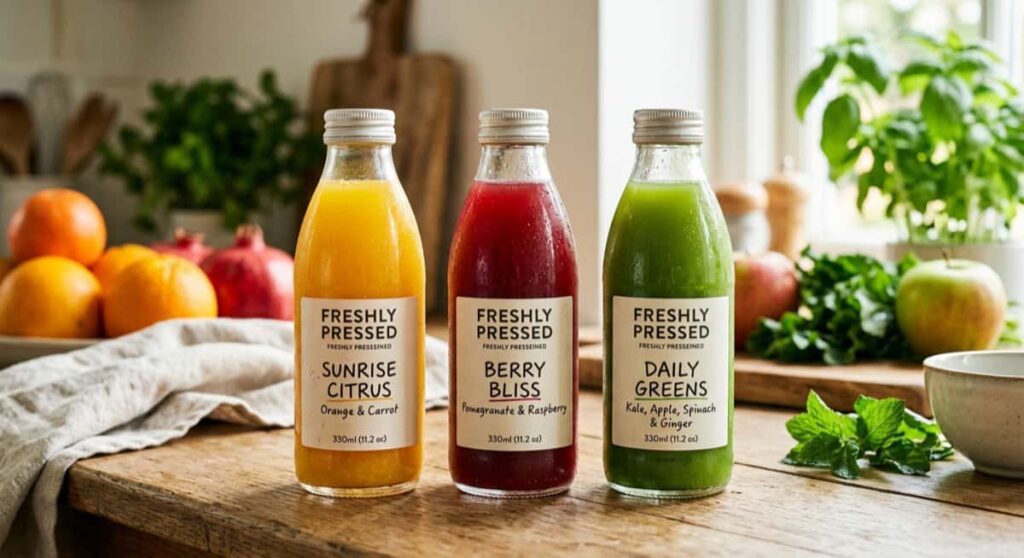
Once you know what you need, the next step is finding the right purchasing channel. There are several ways to source bulk packaging, and each has its pros and cons.
Buying Directly from Glass Bottle Manufacturers
If you are placing large orders, buying directly from a glass bottle manufacturer is usually the best route.
Pros: You get the best pricing because there is no middleman. You also have direct control over customization, mold development, and a stable long-term supply.
Cons: Factories often require high MOQs and you may face longer lead times for custom production runs.
Buying from Glass Bottle Wholesalers and Distributors
For small to medium businesses, a glass bottles distributor is often the safest choice. If you are looking for wholesale glass bottles or specifically beverage glass bottles wholesale, local distributors often keep large amounts of stock on hand.
Pros: They offer low MOQs and incredibly fast delivery since the stock is already imported and sitting in a local warehouse.
Cons: Your customization options are extremely limited, and the unit price will be notably higher.
Buying Through a Packaging Trading Company
A packaging trading company acts as an intermediary. They do not own the factory, but they have deep relationships with multiple factories.
Pros: They are excellent for one-stop sourcing. If you need a bottle from one factory, a specialized cap from another, and a custom label from a third, a trader will bundle it all together for you.
Cons: You pay a premium for their service, and you have less direct transparency regarding exactly which factory is making your goods.
Buying on B2B Marketplaces
Platforms like Alibaba, Made-in-China, and Global Sources are search engines for suppliers.
Pros: They offer incredibly convenient supplier discovery and make it easy to compare prices.
Cons: The risk of inconsistent quality is higher, and it can be difficult to tell if you are dealing with a real factory or just a middleman. You must carefully vet anyone you find on these platforms.
Buying from Industry Trade Shows
Attending packaging trade shows or industry-specific exhibitions (like cosmetics or beverage expos) is a traditional but highly effective sourcing method.
Pros: You get to meet suppliers face-to-face, hold the glass in your hands to feel its weight and quality, and build trust much faster than you would over email.
Which Purchasing Channel Is Best for Your Business?
Startups: Wholesalers and distributors (fast, low MOQ).
Growing brands: Trading companies or highly flexible manufacturers.
Large importers and brand owners: Direct manufacturers (best margins, high volume).
Highly customized projects: Direct manufacturers with in-house mold and decoration capabilities.
How to Evaluate Glass Bottle Suppliers
Finding a glass packaging supplier is easy; finding a reliable one is hard. You need a strict evaluation process to protect your investment.
Check Whether the Supplier Is a Factory or a Trader
Always ask for proof of manufacturing. A real glass bottle factory will gladly show you their production lines via a video call, provide their business licenses, and show ISO certifications. This matters because buying from the source gives you better pricing and quality control.
Review Product Range and Customization Capability
Look at their catalog. Do they specialize in your industry? A factory that only makes large wine bottles might struggle to produce tiny, precise dropper bottles for essential oils. Check if they offer in-house decoration and closure matching services.
Assess Quality Control Systems
Ask about their QC procedures. A good supplier should perform raw material inspections, dimensional checks, stress and leak testing, and visual defect control before packing.
Verify Certifications and Export Experience
Ensure they have experience exporting to your specific market (North America, Europe, etc.). Market regulations vary, and an experienced supplier will already know how to pack and document your shipment to pass through customs smoothly.
Request Samples Before Placing a Bulk Order
Never buy blind. Always request glass bottle samples. When they arrive, evaluate the glass thickness, the consistency of the neck finish, the clarity of the glass, its weight, and how well your chosen closure fits.
Compare MOQ, Lead Time, and Pricing Structure
Do not just accept the first quote. Compare tooling (mold) costs, payment terms (e.g., 30% deposit, 70% before shipment), and how their pricing scales as your volume increases.
Check Customer Reviews and Audit the Supplier
Look for online reviews, ask for customer references, or request case studies of past projects. If your order is very large, consider hiring a third-party inspection agency to visit the factory and conduct an audit before you send a deposit.
Glass Bottle Procurement Process and Best Practices
To ensure a smooth transaction, follow this standardized B2B procurement process.
Step 1: Define Your Requirements
Write down your exact needs: bottle application, target market, volume, closure type, decoration requirements, and required compliance standards.
Step 2: Shortlist Potential Suppliers
Compare several bulk glass bottles suppliers. Review their websites, verify their certifications, and ensure their capabilities match your needs.
Step 3: Request Quotations (RFQ)
Send a detailed RFQ. Include the bottle type, capacity, color, quantity, customization needs, and your destination port. The more detailed your RFQ, the more accurate the pricing will be.
Step 4: Test Samples and Confirm Specifications
Once you receive samples, test them rigorously. Fill them with your actual product to check for chemical reactions, test them on your automated filling lines, and run transport durability tests.
Step 5: Negotiate Terms
Negotiate the unit price, payment terms, Incoterms (like FOB or DDP), mold ownership (ensure you own the mold if you pay for it), and policies for claiming defects.
Step 6: Confirm Mass Production
Sign a detailed specification sheet. Approve the final pre-production sample and your artwork files. Confirm exactly how the bottles should be packed (e.g., pallets with shrink wrap and cardboard dividers).
Step 7: Arrange Inspection and Shipping
Before the goods leave the factory, arrange a pre-shipment inspection. Ensure the container loading plan is solid so the pallets do not shift during ocean transit.
Step 8: Monitor Supplier Performance
After receiving the goods, evaluate the supplier based on their on-time delivery rate, defect rate, and communication. This will determine if you build a long-term partnership with them.
Best Practices:
Always keep a master approved sample in your office to compare against mass production.
Build a buffer stock to protect against supply chain delays.
Never choose a supplier based entirely on the lowest price; cheap glass often leads to high breakage rates.
Common Challenges When Buying Glass Bottles in Bulk
Even with the best preparation, international B2B sourcing comes with hurdles. Here is how to handle them.
Quality Inconsistency
Sometimes the first batch is perfect, but the second batch has flaws. Prevent this by enforcing strict AQL (Acceptable Quality Limit) inspection standards and signing quality agreements before production begins.
Breakage During Shipping
Glass is fragile, and ocean freight is rough. To avoid opening a container full of broken glass, insist on high-quality, sturdy export cartons with internal dividers, or use rigid palletization with reinforced corner protectors and heavy shrink-wrapping.
Long Lead Times
Ocean freight can take anywhere from 15 to 45 days, plus the 30 days needed for production. You must share your sales forecasts with your supplier early so they can plan production well in advance.
MOQ Pressure for Custom Designs
If you cannot meet the high MOQ for a custom mold, a great strategy is to use a standard stock mold but invest your budget into premium surface decoration (like spraying or silk screening) to make it look custom.
Communication Gaps with Overseas Suppliers
Language barriers and time zone differences can cause misunderstandings. Always use clear, simple English. Rely on detailed technical drawings and physical samples rather than verbal descriptions. Get everything in writing.
Hidden Costs in International Sourcing
Be aware of hidden costs that can destroy your profit margins. These include sudden freight surcharges, import tariffs, inland transportation from the port to your warehouse, and third-party inspection fees.
Why More B2B Buyers Choose Direct Manufacturers Like Smilebottles
When you are ready to execute your sourcing plan, partnering with a reliable custom bottle manufacturer makes all the difference. This is why B2B buyers consistently turn to Smilebottles for their packaging needs.
Broad Range of Glass Bottle Solutions
Smilebottles provides comprehensive glass packaging solutions. Whether you need standard stock bottles for a quick launch or complex, unique shapes for a premium spirits brand, we cover multiple industries with expertise and precision.
Custom Design and Decoration Support
As a premier custom glass bottle manufacturer, we don’t just sell empty vessels; we help you build your brand. From initial mold development and 3D prototyping to advanced surface decoration like frosting, embossing, and hot stamping, we bring your vision to life.
Reliable Quality Control
We understand that an unlevel base or a slightly deformed neck finish can ruin your production line. Our production standards incorporate strict inspection processes at every stage of manufacturing to guarantee consistency across every single order.
Flexible Support for Different Business Sizes
We believe in supporting brands at every stage of their growth. Whether you are an ambitious startup, a regional distributor, or an established global brand, our team works to find a volume and pricing structure that fits your business model.
Export Experience and Global Service
Shipping glass internationally requires expertise. We provide robust international shipping support, handle the necessary export documentation, and maintain transparent communication so you always know where your cargo is.
One-Stop Packaging Support
You don’t need to juggle five different suppliers. Smilebottles offers one-stop support, helping you source the perfectly matched caps, closures, pumps, and exterior packaging to go along with your bottles.
How Smilebottles Helps Buyers Reduce Risk
We eliminate the anxiety of international sourcing through technical support, rigorous sample approvals, transparent communication, and highly stable delivery planning.
If you are looking for a reliable partner to elevate your product’s presentation, Smilebottles can help with both stock and custom glass packaging solutions tailored to your exact needs.
FAQ Frequently Asked Questions About Buying Glass Bottles
Q1:Where is the best place to buy glass bottles in bulk?
A1:The best place depends on your business size. Startups buying small quantities should look to local wholesalers. Established brands seeking customization and volume discounts should buy directly from an overseas glass bottle manufacturer.
Q2:Is it better to buy glass bottles from a manufacturer or a distributor?
A2:If you need fast delivery and low MOQs, a distributor is better. If you need low unit costs, high volume, and extensive customization, a direct manufacturer is the superior choice.
Q3:What is the MOQ for bulk glass bottle orders?
A3:MOQs vary widely. Stock bottles from a distributor might have an MOQ of just 1,000 to 5,000 units. Custom bottles from a factory usually require an MOQ of 20,000 to 50,000 units to justify the production run.
Q4:How can I tell if a glass bottle supplier is reliable?
A4:A reliable supplier will readily provide business licenses, ISO certifications, and third-party testing reports. They will send high-quality samples quickly, communicate professionally, and welcome third-party factory audits.
Q5:How long does it take to produce custom glass bottles?
A5:Typically, developing a new mold takes 15 to 20 days. Once the sample is approved, mass production takes another 25 to 35 days. Always factor in an additional 20 to 40 days for ocean shipping.
Q6:What certifications should a glass bottle supplier have?
A6:At a minimum, they should have ISO 9001 for quality management. If the bottles are for food or cosmetics, they should provide SGS testing reports and ensure materials comply with FDA, EU, or your local market’s safety standards.
Q7:How do I reduce breakage during international shipping?
A7:Never use floor loading for glass. Insist on palletized shipping. The pallets should use heavy-duty cardboard dividers between the bottles, reinforced corner boards, and multiple layers of tight shrink wrap.
Q8:Can I customize the shape and logo of my glass bottles?
A8:Yes. You can pay a tooling fee to create a custom mold for a unique shape. You can also customize standard bottles using techniques like silk screen printing, frosting, or labeling.
Q9:What affects the price of glass bottles?
A9:The price is driven by the weight of the glass, the complexity of the design, the color, the order volume (MOQ), and the extent of the surface decoration. Freight costs also significantly impact the total landed price.
Conclusion
Finding out exactly where to buy glass bottles is just the first step in your procurement journey. The best purchasing channel depends entirely on your specific order volume, customization needs, budget constraints, and timeline. Whether you choose to work with a local distributor for speed or an overseas factory for cost efficiency and customization, remember that evaluating your supplier is just as important as negotiating the price.
A cheap bottle that breaks in transit or leaks on the shelf will cost your business far more than investing in quality packaging from the start. Take the time to request samples, verify certifications, and audit quality control processes. By choosing a partner with stable manufacturing capabilities, deep export experience, and responsive customer support, you protect your brand’s reputation and ensure your product looks flawless in the hands of your consumers.


