
Table of Contents
ToggleEssential oils are potent, concentrated plant extracts that hold the soul of the plant. However, they are also incredibly fragile. The chemical compounds that give these oils their therapeutic benefits and wonderful aromas are highly sensitive to their environment. So choosing the glass bottle for essential oils is very important.
This article will guide you through everything you need to know about packaging. You will learn why dark glass bottles for essential oils are critical, the technical differences between amber glass bottles, cobalt blue glass bottles, green glass bottles, and clear glass bottles, and exactly how to choose the right glass bottles for essential oils.
Why do Essential Oils need the colored glass bottles?
Essential oils are volatile organic compounds. “Volatile” means they evaporate quickly at normal temperatures. “Organic” means they are derived from living matter, making them susceptible to decay and chemical changes.
The Essential oil’s feature: The UV Degradation, Oxidation, and Shelf Life
Pure essential oils have enemies in the natural world. They are highly sensitive to UV Light, Oxygen in the air, heat, and temperature changes.
In simple language: UV light breaks down the chemical “building blocks” of the oil. Oxidation turns a fresh, crisp scent into something sour or rancid. Heat and temperature changes, fluctuations can destabilize the oil’s molecular structure.
Many essential oils, particularly citrus oils (like lemon, grapefruit, and bergamot) and oils high in monoterpenes, contain components that oxidize easily. When UV light hits these oils, it acts as a catalyst. It breaks down the delicate chemical compounds that define the oil.
A proper dark glass bottle acts as a barrier. It effectively extends the shelf life and keeps the aroma stable, ensuring that the product your customer opens smells exactly as it did when it left the factory.
The light exposure will influence the essential oil
What happens if essential oils in glass bottles are exposed to light without protection? The degradation is often visible and smellable.
Fading or change of color: A vibrant yellow lemon oil may turn cloudy or pale.
Weaker smell or “off” smell: The sharp, therapeutic notes disappear, replaced by a flat or chemical-like odor.
Reduced effectiveness: In aromatherapy or skincare, an oxidized oil is not just useless; it can be skin-sensitizing or irritating.
What is dark glass, and how does dark glass work?
Dark glass bottle refers to containers that have colorants added during the manufacturing process to tint the material. The most common varieties are amber (brown), cobalt blue, and green. There are also opaque black or violet glass options.
These bottles are superior to clear glass because they act as a filter. Just as sunglasses protect your eyes from the sun, dark glass bottle protects the photosensitive liquid inside from harmful radiation. However, it is crucial for buyers to note that not all dark colors give the same protection. The color spectrum matters.
To determine the best color glass bottles for storing essential oils, we have to look at light transmission. The color pigments in the glass absorb or block specific wavelengths of the light spectrum.
Concerned with two types of light:
1.UV Protection (UVA / UVB): These invisible rays cause the most chemical damage.
2.Visible Light:Bright light can also accelerate heat buildup and degradation.
Generally speaking, darker and redder hues block more high-energy blue and violet light. This brings a critical industry fact: Amber glass bottle usually offers the best UV blocking properties. While blue glass bottles and green glass bottles are popular for marketing, brown glass bottles are the workhorse of preservation.
Types of colored glass bottles, the benefits, and functions
Overview: In the market, there are three kinds of colored glass bottles
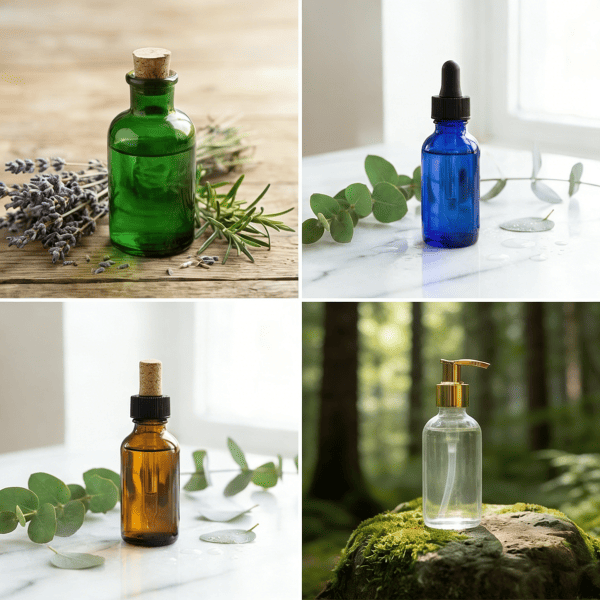
If you browse the catalog of a major supplier, you will predominantly see three options: amber glass bottles, cobalt blue glass bottles, and green glass bottles.
Clear glass bottles are also used in the industry, but they are mainly reserved for short-term usage, sample kits, or decorative items where the product will be kept in a box. Let’s break down the specific functions of each color to help you make an informed bulk purchase decision.
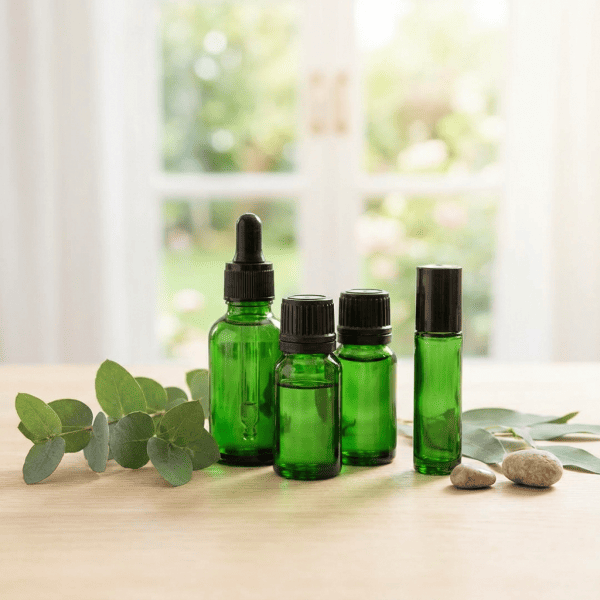
The green glass bottle
Green glass has a long history, often associated with olive oil, wine, and mineral water packaging.
Function of the green glass bottle
A green glass bottle provides moderate protection from visible light. It acts as a basic barrier against direct sunlight, filtering out some UV rays, but it allows more light to pass through compared to an amber glass bottle or a cobalt blue glass bottle. It is suitable for products with lower light sensitivity or essential oils that are used quickly or intended for display in shops where lighting is controlled.
Benefits of a green glass bottle
The primary benefit of a green glass bottle is aesthetic. It conveys a sense of nature, freshness, and organic origin. This makes it very popular for natural and herbal brands looking to communicate earth-friendly values. It offers a good balance between aesthetics and some level of protection. Furthermore, green glass is usually widely available and cost-effective for manufacturers.
Limitations of the green glass bottle
While beautiful, you must be realistic about its performance. Green glass bottles provide moderate protection, mostly aesthetic. It is not ideal for long-term storage of highly sensitive essential oils or rare absolutes that are expensive to produce. If you choose green glass bottles, we often recommend ensuring the bottles are stored in cartons or away from direct windows.
The amber glass bottles for essential oils
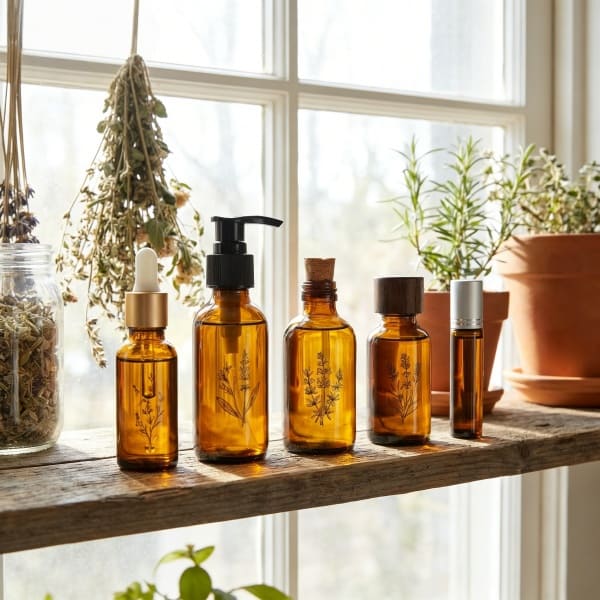
Whether you call them amber glass bottles for essential oils or brown glass bottles for essential oils, these are the gold standard in the pharmaceutical and aromatherapy industries.
Function of amber glass bottles
The amber glass bottle hue acts as a natural shield to reduce harmful ultraviolet (UV) light. The red and yellow pigments in the glass effectively neutralize blue and violet light waves.
Here is the critical data point for your quality control team: Amber glass bottles are the best for UV protection, as they can block 90% of UVA and UVB light. This high level of filtration prevents the photochemical reactions that spoil oils.
Benefits of amber glass bottles
An amber glass bottle is the best choice
Long-term storage: ideal for warehousing and retail shelves.
High-value, light-sensitive essential oils: such as Rose, Sandalwood, or Citrus oils.
Using amber glass bottles helps keep the aroma stable, the color natural, and the shelf life significantly longer. It is widely recognized by brands and professionals as the standard option. When a customer sees an amber bottle, they instinctively trust that the product inside is professional-grade.
Limitations of amber glass bottles
The main limitation is visual. The color is more “functional” than decorative. Some beauty brands feel that brown glass looks too medicinal or traditional. Customers may see it as less “luxury” than a cobalt blue glass bottle, but it is undeniably more protective.
The cobalt blue glass bottle of essential oil
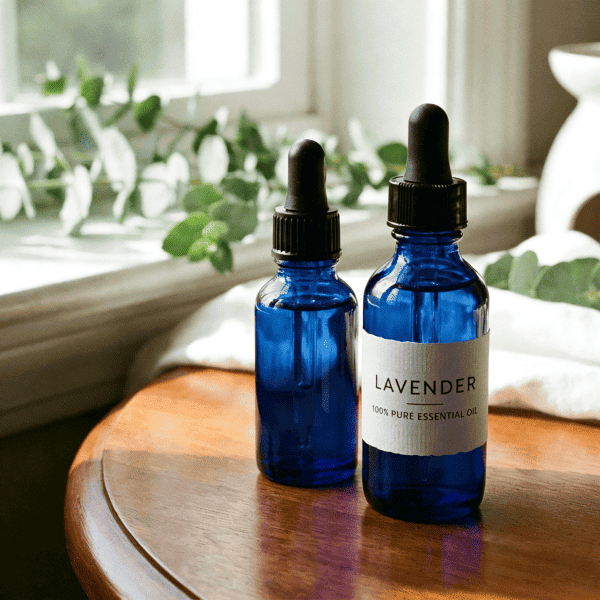
The essential oil blue bottle is instantly recognizable. It is vibrant, striking, and often associated with premium wellness products.
Function of the cobalt blue glass bottle
The cobalt blue glass bottle is an attractive deep blue that filters some UV and visible light. However, its filtration capacity is different from amber. While it blocks some wavelengths, the cobalt blue glass bottle provides less UV protection than the amber glass bottle. It allows more blue light to pass through, which can theoretically accelerate oxidation slightly faster than amber.
Benefits of cobalt blue glass bottle
The visual appeal of blue glass bottle is undeniable. It creates a strong visual impact for branding and marketing. It is incredibly popular for aromatherapy sets, gift packaging, and evening serums. It is still significantly better than a clear glass bottle for everyday use and offers adequate protection for general blends.
Limitations of the cobalt blue glass bottle
Because it is not as protective as an amber glass bottle, it is not ideal for very sensitive oils or long-term storage in bright environments. It is better for oils that will be used quickly by the consumer or display products where appearance is very important.
Clear glass bottle
Function and use of the clear glass bottles
A transparent or clear glass bottle allows full light exposure. This lets the customer see the texture and color of the essential oil, which can be visually pleasing for colorful blends. It is ideal for short-term storage, displaying samples at trade shows, or DIY blends that are quickly used up.
Limitations of the clear glass bottles
From a preservation standpoint, a clear glass bottle is no UV protection, only decorative or temporary use. It is not recommended for long-term storage of high-quality essential oils unless kept in a dark box, canister, or closed cabinet at all times.
Summary: Which type of colored glass is best for essential oils?
To simplify the decision-making process for your procurement team, here is a summary comparison:
Amber glass bottles: Best UV protection, ideal for long-term storage and photosensitive oils.
Cobalt Blue glass bottles: Good looking, medium protection, excellent for branding.
Green glass bottles: Moderate protection, mainly aesthetic, great for “natural” marketing.
Clear glass bottles: No UV protection, for temporary or decorative use only.
Short conclusion: For most essential oils and professional brands that prioritize product integrity, amber glass bottles are the safest choice.
How to select the right colored glass bottles for essential oil storage?
At Smilebottles, we help clients navigate these choices daily. Here is a guide on how to choose the right colored glass bottles for essential oil storage for your specific business needs.
Consider the type of essential oil
Analyze your product lineup. If you are selling light-sensitive oils like Lemon, Bergamot, Tea Tree, or Grapefruit, you should prefer amber to prevent rapid oxidation. If you are selling carrier oils (like coconut or jojoba) or synthetic fragrance oils, cobalt blue glass bottles or green glass bottles may be acceptable.
Consider where and how you store the oils. Where will your product sit?
Exposed to light:If your bottles will be on open retail shelves, spa displays, or bathroom counters, choose dark glass bottles for essential oils(preferably amber).
Stored in darkness: If your product comes in a thick cardboard tube or is meant to be kept in a drawer, you have more flexibility to choose green or blue for branding purposes.
Consider bottle size and usage frequency
Oxygen is just as damaging as light.
Small glass bottles (5ml, 10ml, 15ml): These are best for concentrated, pure oils. They minimize the “headspace” (air gap) in the bottle as the oil is used.
Droppers, roller bottles, spray bottles: Choose the format based on application. Roll-ons are great for perfumes, while droppers are standard for aromatherapy.
Closure types: caps, droppers, lids
The right colored glass bottles are only half the battle; the seal is the other half. An airtight closure is vital to prevent oxidation. Common options include:
Screw lids: These usually come with a polyethylene or foil liner that creates a tight seal. This is the industry standard for essential oils.
Cork stoppers: Color glass bottles with cork look vintage and artisanal. However, cork is porous and not fully airtight. It allows some evaporation and oxidation. We recommend corks only for bath salts or decorative oils, not for pure therapeutic oils.
Dropper caps and pipettes:For precise dosing (Euro-droppers or glass pipettes).
Roller ball inserts: For topical application.
Spray pumps:For room sprays or facial mists.
Other important information for choosing colored glass bottles
Durability comparison of different colored glass bottles
Buyers often ask: Are some colors more fragile? Generally, durability is determined by glass thickness and manufacturing quality, not color. However, at Smilebottles, we ensure high impact resistance across all colors. When shipping bulk orders, we utilize foam trays, dividers, and reinforced cartons to ensure safe transport.
Color glass bottles vs. plastic containers
Why is colored glass bottle preferred over plastic for essential oils?
Non-reactive: The Glass bottle does not chemically interact with the oil. Strong essential oils can eat away at plastic.
No plasticizer migration: There is no risk of BPA or other chemicals leaching into your pure oil.
Premium Image: Glass bottles feel heavier and more luxurious in the hand.
While plastic is okay for short-term travel or tiny samples, glass is the only choice for a serious brand.
Mini rectangle glass color bottles shopping
Recently, unique shapes have become a trend. Mini rectangle glass color bottles offer a distinctive, premium look compared to the standard round Boston bottle. When shopping for these:
Check the neck size (usually 18mm or 20mm) to ensure your caps fit.
Verify the capacity (ml) matches your label requirements.
Always ask your supplier for samples before bulk ordering to test the stability and durability of the square edges.
Best companies and brands for colored glass bottles
When vetting a manufacturer, look for:
Food-grade, cosmetic-grade glass: Ensure the glass meets safety standards.
Stable Color: High-quality manufacturers use “in-mass” color (where the glass itself is colored) rather than painted glass, which can scratch or peel.
Quality control: Look for ISO certifications.
Smilebottles positions itself as a premier manufacturer of glass bottles with extensive experience in the essential oil sector. We are capable of providing custom colors, unique shapes, and branding solutions that help your product stand out.
Top brands offering colored glass bottles suitable for essential oils
The market trend among top brands is a shift toward sustainable, reusable, and recyclable glass. Whether you prefer the classic look of amber glass bottles for essential oils or the modern appeal of matte black or frosted blue, the best suppliers offer consistency. A good supplier ensures that the Cobalt Blue you order today is the exact same shade as the one you order next year.
Best companies for buying colored glass bottles online
For B2B buyers looking online, follow these tips:
Check MOQ (Minimum Order Quantity): Some glass bottle factories require huge runs, while companies like Smilebottles offer flexibility.
Review printing options: Can the supplier print your essential oil glass bottles and labels directly? Screen printing looks more professional than paper stickers.
Compare logistics: Evaluate packaging safety and lead times.
Smilebottles invite you to contact the Smilebottles sales team for a custom quote, free samples, or to download our full catalog.
FAQ of Colored Glass Bottles
Here are answers to common questions regarding essential oil glass bottles:
1 Q: Which type of colored glass is best for essential oils?
A: Amber glass bottles are generally the best choice because they provide the strongest UV protection and help extend shelf life significantly compared to other colors.
2 Q: Can I store essential oils in clear glass bottles?
A: A Clear glass bottle is no UV protection, only decorative or temporary use, so for long-term storage, you should use dark glass instead to prevent the oil from spoiling.
3 Q: Are cobalt blue essential oil bottles safe?
A: Yes, they offer some UV protection and look beautiful, but the cobalt blue glass bottle offers less UV protection than the amber glass bottle, so they are better for oils that will be used quickly or kept indoors away from direct sun.
4 Q: How to choose the right colored glass bottle for essential oil storage?
A: Consider the light sensitivity of your oil, where it will be stored, the bottle size you need, and the closure type. For maximum protection, choose amber; for branding, choose blue or green. Store carefully.
Conclusion
Your essential oil brand relies on the quality of your product, and that quality depends on your packaging. Whether you are a large food factory or a boutique beauty retailer, choosing the right dark glass bottles for essential oils is an investment in your brand’s reputation.
At Smilebottles, we are more than just a manufacturer; we are your partner in packaging. From standard dark color glass bottles to custom-designed solutions, we provide the durability and protection your products deserve. If you are ready to upgrade your packaging, reach out to us today to discuss how we can help your essential oils shine safely.